What, If Anything, Can We Do About Systemic Racism?

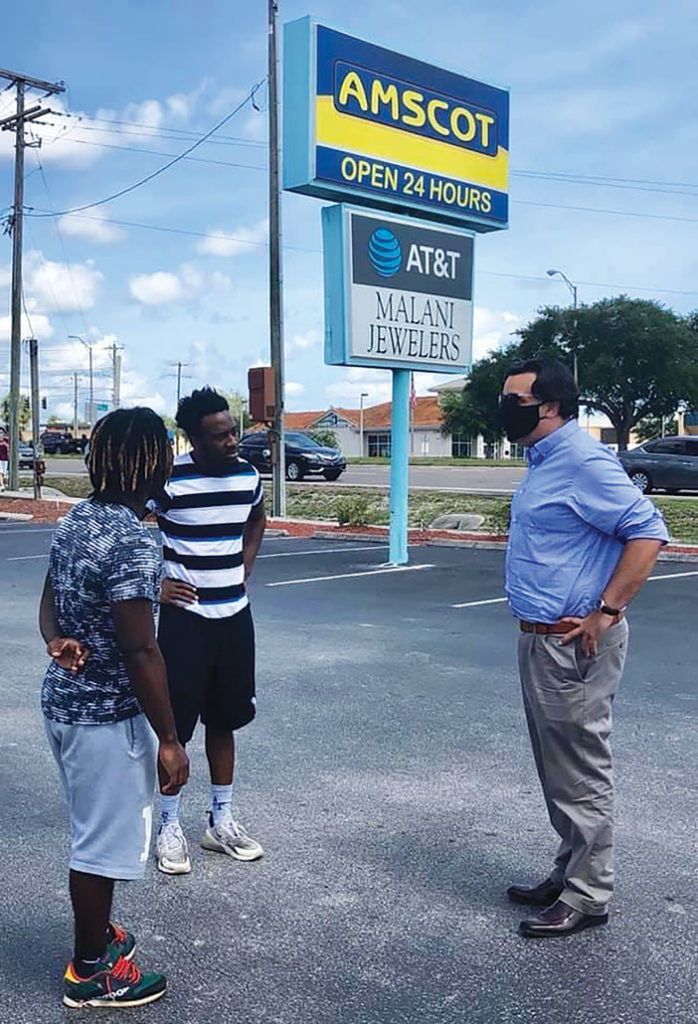
Tampa Mayor Jane Castor talks with members of the community who showed up in the wake of George Floyd’s death to march for peace and racial justice.

I would be lying if I said I understood how people of color in this country feel every day about being black or brown in America.
Gary Nager
Editorial

So while, like most white Americans, I personally don’t care what color the people were who died recently at the hands (and knees) of law enforcement officers were black, brown, green or any color, religion or orientation, I completely understand the outrage being felt again by so many of us who witnessed what amounted to the recent public executions of George Floyd and Rayshard Brooks.

As everyone surely knows by now, Floyd — who was killed about four weeks ago by former Minneapolis Police Office Derek Chauvin as three other now-former officers watched — was being arrested (but not resisting arrest) for passing a counterfeit $20 bill at a store.

Three weeks later, Brooks was shot dead by now-former Atlanta Police Officer Garrett Rolfe after trying to run away from being arrested at a Wendy’s. Although Brooks certainly did resist arrest and tried to run away from the scene, the fact he stole the Taser from one of the officers and fired it at them from a distance makes his situation different from Floyd’s, but still begs the same nagging question:

If either of these men were white, would they still be alive today?

Yes, I believe all four cops (the others let him be killed) shown in a video thankfully released the day after Floyd was killed should go to jail for murder. And no, I don’t understand why Floyd was targeted by these cops to receive this particular abuse of their power, especially in light of something that happened to Jannah and me only a year ago.

When we got married in March of 2019, some of our attendees gave us gifts of cash, including a few people who each gave us a $100 bill as a gift. 

However, when we tried to pay a tab at a local bar with one of those $100 bills, we were informed that the bill was counterfeit. But, rather than have us arrested — at least in part because the bar owner knew us from previous visits and said it was obvious we didn’t know the bill was no good — all he did was ask us to use an alternate method of payment. I then took the bill to my bank, which told me that all they could do was take the bill out of circulation, which meant that we lost that $100 gift. Oh well.

One thing neither of us lost, however, was our life. No one handcuffed us or held us down to our pleas of “I can’t breathe.” Today, it’s hard not to imagine that same situation ending with either of us dead after being suffocated for 8 minutes and 46 seconds.

Likewise, if a white man in Atlanta perhaps had too much to drink and fell asleep in a fast-food drive-through lane, would the white police officers trying to arrest that white man have used deadly force to stop him? It’s horrifying to me that black, brown, Asian and LGBTQ people are targeted for this type of behavior so often in this country. Something has to change. And yes, I understand why peaceful protests can and should be part of that solution.

Unfortunately, looting and setting fire to stores owned by people who literally had nothing to do with those situations should never be the target of those protests. But, they unfortunately too often are — as seen around the country once again in the aftermath of Floyd’s murder, although, thankfully, most of the protests of Floyd’s death after those first few nights have been peaceful. Considering that the shooting of Brooks took place only a couple of days before this issue went to press and the Wendy’s where he was killed was looted and then burnt to the ground the following night, it remains to be seen if violent protests will continue to be an issue.

I have been encouraged, however, by local elected officials like Tampa Mayor Jane Castor (in blue in photo) and New Tampa’s City Council member Luis Viera who have been getting out in the community with the protesters, trying to make a difference.

Taking Action

Before the Rayshard Brooks situation, I wrote about the aftermath of the Floyd killing in our June 9 Wesley Chapel issue and I was very pleased at three emails/letters I received since then from black readers who appreciated my take on the current situation and offered words of advice and encouragement and something much more valuable to me than just the kind words: Two of the readers even offered to help start and/or get involved with a local grassroots movement that might help stem the tide of systemic racism and build better communication here.  

I therefore am looking for people in New Tampa who also want to help. What can we do? I really don’t know. I just know I want to try. Black, white or otherwise, email me at ads@ntneighborhoodnews.com if you do, too. 

Protests Hit Close To Home For Some

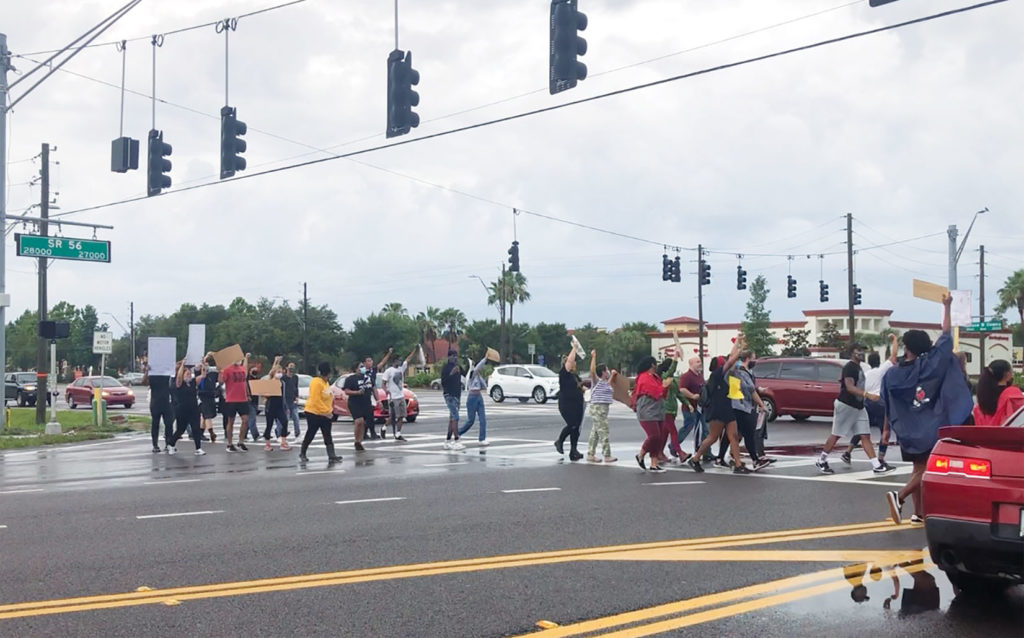
While there weren’t any protests in New Tampa, just a few miles up Bruce B. Downs Blvd. in Wesley Chapel, a hundred or so people gathered to make their voices heard. 
(Photo courtesy of Susan Boyle)

State Representative Fentrice Driskell says she has lived with racism her entire life, but not nearly as long as her parents Joel and Terry did growing up in the segregated south.

As the country continues to boil from the weeks of protests and marches following the death of George Floyd while in police custody on May 25, it is her parents’ optimism that fills Driskell, the State Rep. for District 63, which includes New Tampa, with high expectations for the future.

This time, she says, it feels different. It feels lasting. It feels productive.

“The hope and optimism they feel is wonderful,” Rep. Driskell says of her parents. “They are so excited that in their lifetime, they may actually see the realization of the dream that Martin Luther King was fighting for.”

While none of the local protests and marches took place in New Tampa, there was one a few miles north outside of the Shops at Wiregrass, as well as a few miles to the south, in the University of South Florida area along E. Fowler Ave.

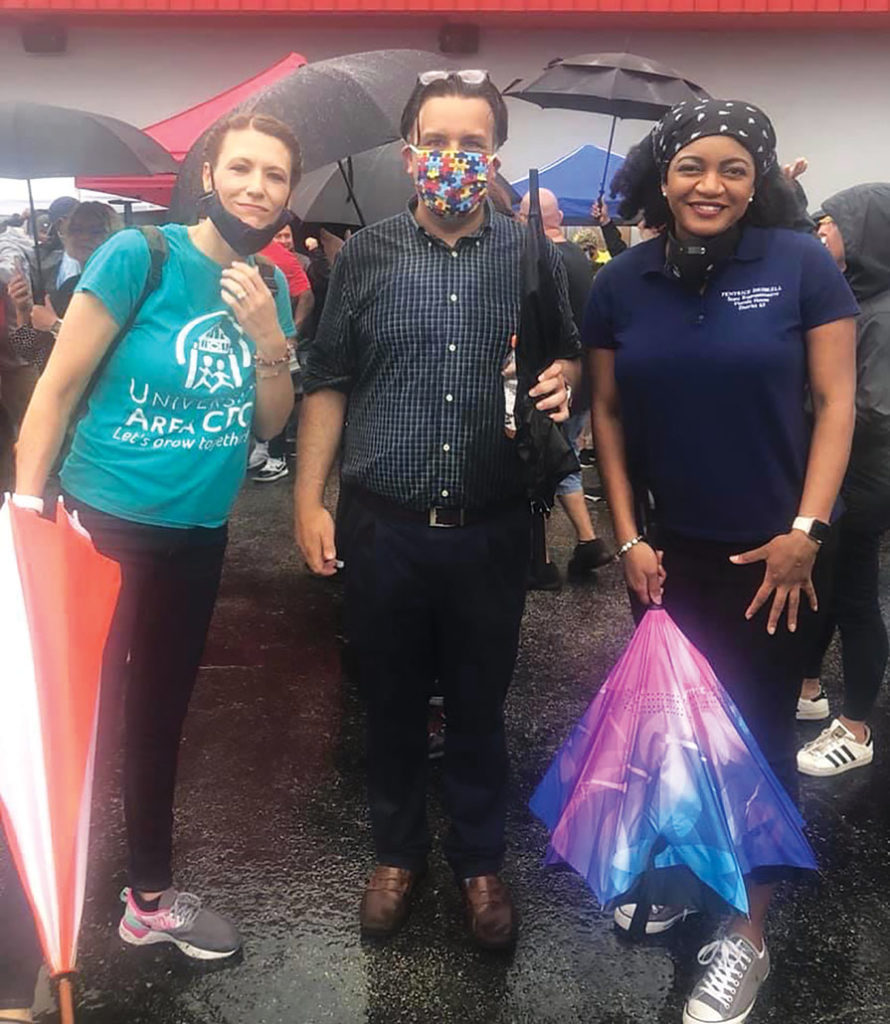
(l.-r.) Richmond Place resident and CEO of the University Area CDC Susan Combs, Tampa City Council member Luis Viera and State Rep. Fentrice Driskell participated in a prayer walk organized by the Crossover Church on Fowler Ave.

What started as a visceral reaction to the death of Floyd beneath the knee of a Minneapolis police officer has grown into a larger conversation on racial injustice in America.

 â€œThis has gotten everyone’s attention,” Driskell says. “I think this is the greatest chance that we’ve had since the civil rights movement (of the 1960s) to make some positive changes.”

* * *

The rain poured down on Susan Boyle and her daughter Emma on June 6, but it did not deter them as they stood at the intersection of S.R. 56 and Bruce B. Downs Blvd. in Wesley Chapel, taking part in their first-ever protest together.

Like many in this country, Susan, a Meadow Pointe resident, was overcome by the images on television — the death of Floyd, the massive crowds that protested his death — and felt like she wanted to do something. 

“It was heartbreaking seeing Mr. Floyd killed on TV while I watched,” Susan said. “I wanted to be part of the group saying ‘Enough is enough.’” 

So, she and Emma, a junior at Wiregrass Ranch High, stood in the rain. They sang songs of protest. They moved from corner to corner at the intersection, along with 100 or so others, many waving homemade signs, others just waving their hands, and with everyone chanting various songs and slogans.

She said the experience was overwhelmingly positive from passers-by. One driver, stopped at a red light, even reached out to hand her an umbrella before speeding off.

The unpleasant weather did little to dampen their enthusiasm.

Susan is like many people in this country – aware there was a problem, but unsure of what if anything, she could do about it. But, she said we would go to another march if one was held nearby, and will get more involved.

While she has seen her fair share of arguments over the merits of going to a protest on social media, she said there is something almost spiritual about being amongst people of all different colors and ages fighting for the same thing, and for the right thing.

She can’t help but feel she is watching what she thinks might be a transformational moment in our nation’s history.

“There is a tipping point when you see that people are starting to get behind an actual movement, instead of just a few days of lip service and then on to the next disaster,” she says. “When it started gaining traction, it was heartening to me, but I’m also prepared to be devastated if nothing changes. If nothing changes, then this country can’t change.”

*** 

Dean Reule, the pastor at Cypress Point Church on Morris Bridge Rd., says the murder of Floyd “both breaks and awakens our soul.”

In a written statement, he urges people, particularly those who are white, to be humble, not defensive, and to be informed.

“Please do not look away,” he writes. “Don’t minimize racial stereotyping, racial bias and justice issues. Research and study and pray with an open mind and heart. Genuinely seek to learn, opening yourself to better understand the experiences of those different than you.”

That is something Tampa City Council member Luis Viera, whose District 7 includes New Tampa, has preached long before protests, marches and riots took over large swaths of the country.

While the protests over Floyd’s death weren’t as acute in Tampa as they were in other bigger cities, Viera says it has still opened many wounds.

Viera (left) was critical of violent protesters and looters who hurt many of the local businesses along E. Fowler Ave. and Busch Blvd. – both areas in his district — on May 30, but praised the efforts the following day, when those who actually live in the community gathered to clean up. Viera was joined by Tampa Mayor Jane Castor in meeting with residents to listen to their concerns.

“I’d say this issue is a challenge to us all,” Viera says. “No matter where we live, we all have a duty to act. We need to build bridges and make historical wrongs right. I think you can feel a sense of urgency on the part of people.”

Viera and Driskell marched together on June 6 with congregants of Crossover Church on Fowler Ave. and community members to the site of some of the burned buildings to pray for racial justice and peace, as well as deliver gift baskets to the business owners hurt by the looting.

The two elected officials are are also working together on efforts to build a memorial for victims of lynching in Hillsborough County.

To find racial harmony, Rep. Driskell says it will require “uncomfortable conversations.”

And, for the first time in her lifetime, she feels both sides are ready to finally have them.

“I hope that everyone would know and feel and believe that they have something to add to the conversation,” Driskell says. “It really is going to take everybody in the community to come to the table and have those tough conversations. But, I am absolutely optimistic it can be done, and I feel activated and energized and proud that so many people are ready for it.”