Organic Safe Lawns Delivers A Safer Approach To Green Lawns

Jim Schanstra says you can get green, healthy lawns with all-natural products, despite conventional thinking that harmful chemicals are more effective. 

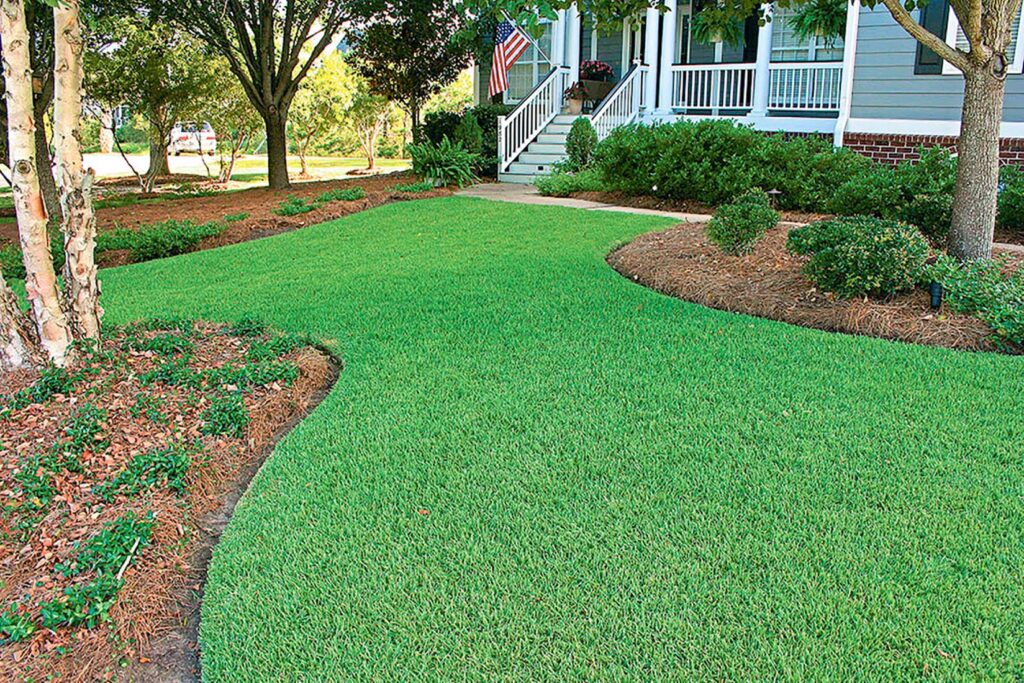
Keeping lawns green, free of pests and healthy is Organic Safe Lawns’ specialty. Whether it’s because your kids play in the grass or your pets like to run around in the yard, making sure they stay danger-free is a big deal for owner Jim Schanstra.

In fact, he says it’s why he started his business in the first place. 

Schanstra suspects that exposure to DDT (Dichlorodiphenyltrichloroethane) as a youngster had something to do with his wife Julie developing non-Hodgkin’s large cell lymphoma cancer. DDT was widely used in the U.S. in agriculture as a pesticide and as a household insecticide in the 1940s and 1950s, only to be banned in 1973.

Julie won her fight against cancer, with help from the Mayo Clinic in Rochester, MN, but it was a constant reminder to Schanstra of the potential effects of chemicals used in the environment.

In 2006, just before a scheduled sales meeting with an organic fertilizer manufacturer, Schanstra says that one of the associates said that he’d read a recent news article that claimed Florida was using more chemical-based fertilizers and pesticides on residential properties than the rest of the U.S. combined.

“That statement hit me like a lightning bolt,” Schanstra says. “It was in that moment that I decided to do something about it. That was the conception of Organic Safe Lawns.”

In January of 2010, Organic Safe Lawns, Inc., became a Florida corporation.

“When I started out, that was my big, hard sell — how do I tell people we can really do it?,” he says. “If we can grow fruits and vegetables organically, why can’t we grow grass that way? That was the concept in my mind.”

Schanstra isn’t alone. The demand for organic fertilizers will grow 5.8% a year through 2024, according to Freedonia Group, an international industrial research company. Organic fertilizers will make up 7% of the $3-billion fertilizer market, thanks to a number of issues — including demand for organic food products and rising awareness of the potential negative effects chemicals can have on your health and the environment.

That also extends to lawns, which are gathering places for millions of families and their pets. 

Schanstra works closely with one of the top organic fertilizer manufacturers and pioneers of the industry. The products — fertilizers, pesticides and herbicides — used by Schanstra and Organic Safe Lawns are certified by the Organic Materials Review Institute or OMRI, an independent testing company that certifies organic products. He says the products use a proven technology that was originally designed for fruits and vegetables, although Organic Safe Lawns deals strictly with lawns and ornamental plants.

Organic Safe Lawns, Inc., has now designed and manufactured more than 30 different organic fertilizer products of its own that are owned and trademarked by the corporation.
While most typical fertilizers are made up of synthesized chemicals, Schanstra says the products he uses are mostly mined from the shale level of the earth, where healthier and more acidic soil exists. There are richer supplies of micronutrients, enzymes and bacteria found in this soil than in other fertilizers.

“There’s no downside with our fertilizers,” Schanstra says.

Other lawn companies also use mined products, but they are converted into a granular form — those little balls you see in your grass after the lawn company has wrapped up — by incorporating binders and fillers to keep their shape. That’s where Schanstra says carcinogens are often entered into the mixture.

“Once those little balls dissolve, those chemicals end up running off into our aquifers, which are sometimes only a foot or two deep below, and can get into our water, streams and ponds and cause algae blooms,” he says.

Typical fertilizers come in two types of encapsulation. The first is water-based, meaning the fertilizer is released by coming into contact with water. The second is a polymer, or plastic encapsulation. Its releasing agent is heat. 

Schanstra says those forms of release may be fine for more moderate northern climates. However, Florida’s famously erratic weather — sometimes too much rain and often too much heat — can sometimes cause the release of a month’s worth of fertilizer in a week or even a day.

Using chemical fertilizers and pesticides may lead to greener lawns — due to their higher concentrations of nitrogen — but they also can lead to the same typical lawn problems so common here in Florida. These problems include fungi and diseases, chinch bugs, webworms and mole crickets, all of which are often found in high-nitrogen soils.

“The cheapest way to get green grass is with high-nitrogen fertilizer,” Schanstra says. “We found that by reducing the nitrogen level (in the products Organic Safe Lawns uses), we almost eliminate fungus and pests.” 

Schanstra also says that high-nitrogen fertilizers push top growth and weaken root structure. Over time, the lawn’s root system can’t sustain the foliage.

“A weakened root structure is like candy to bugs,” Schanstra says. “After using our treatment, you’ll see the bugs moving over into your neighbor’s yard.”

Chemical-based fertilizers are designed to be absorbed through the leaf (called foliar absorption). All of the organic fertilizers that Schanstra uses are absorbed through the roots. And, he adds, they are all water-soluble liquids that are safe for pets, wildlife and humans.

“When we apply organic fertilizers, we’re spraying that into the soil,” he says. “The only way the plant absorbs it is into the root system. My grass will grow a little bit slower, but my roots will be stronger.”

Top-coated lawns treated with synthetic pesticides and herbicides put people and pets in danger. Why do you think people applying pesticides wear rubber boots? Because, Schanstra says, they don’t want to get any of the application on themselves.

In that case, he adds, why would you want you, your children or your pets to track that into your house?

“The dog goes over into the neighbor’s yard to pee, and they’re chewing on their paws when they get back,” Schanstra says. “Kids crawl around and play on the grass and absorb it when they walk in it.”

The chemical herbicide Atrazine is still used widely across the U.S. and Florida to prevent pre- and post-emergence of broadleaf weeds, especially during the summer. It was found by the Agency for Toxic Substances & Diseases (ATSDR) to have adverse effects on the endocrine systems of mammals and that it likely also contributes to some birth defects.

“A lot of lawn companies will blanket your yard with Atrazine,” Schanstra says. “It costs just five dollars for a 600-gallon mix. They use it because it’s cheap.”’

But, Organic Safe Lawns’ technicians offer a safer chemical solution for weed control, which is spot-treated throughout the year. It isn’t as cheap as Atrazine, he says, but generally, the stronger root system his lawns have developed lead to fewer weeds anyway.

“We are about the process and the materials,” Schanstra says, “as opposed to using harmful chemicals with regard to weed control.”

Schanstra says he recommends treatment every 30 days, and that it isn’t any more expensive than hiring the lawn care chains. 

Here are some important ways Jim Schanstra of Organic Safe Lawns says you can help keep your lawn green and healthy:

1. Check you irrigation regularly. Make sure all the heads are working properly. Check that all heads pop up through the lawn and spray fully. If they do not pop up check to see if the turf has overgrown the heads. If so, take a small spade and cut the turf away from the heads, and check spray for clogged nozzles, which may need to be removed and cleaned. Uncontrollable spray could mean a broken head, which would need to be replaced.

2. Follow Florida University Watering guidelines! Apply ½” to ¾” of water at each interval. This translates to approximately 20 minutes on a spray zone, pop up in the turf, spray heads in the bushes; 45 minutes per interval on rotor heads that spray and rotate like on a golf course; 30 minutes on drip irrigation found in the bushes.

3. Never water at night! Set up your irrigation system to complete its cycle by 8 am. This allow the water to go into the soil, and the sun will dry the leaf blades preventing unwanted fungus.

4. Never water midday! The sun will burn the leaf blades like a magnifying glass lens.

5. Proper mowing is very important! Mow every week in the growing season, April 1st through November 1st. Mow every other week in the winter months. Why is this important? Weeds grow much faster than turf. Allowing the turf to grow 10 days to 2 weeks in the growing season will allow the weeds to get to seed head, and then by mowing you will be planting weeds all over your yard. 

6. Sharpen your blades monthly for a clean crisp cut.

7. Never mow wet grass. This will cause the cut to rip and tear the turf blades weakening the plant.

Organic Safe Lawns, Inc., services homes in Tampa, New Tampa, Wesley Chapel and Land O’ Lakes. For additional information, call (813) 393-9665, email organicsafelawns@verizon.net or visit OrganicSafeLawns.com.

Developer Finally Gets Approval For Seven Oaks Project

The third time was apparently the charm for developers seeking to build a 320-unit apartment complex in the Seven Oaks Master Planned Unit Development (MPUD) Master Plan.

After having their efforts rejected by the Pasco County Planning Commission last year and the Board of County Commissioners (BOCC) in January, and appealing the decision and going to mediation in the spring, developer DD/SR 56 LLC finally got the vote it needed to build the apartment project.

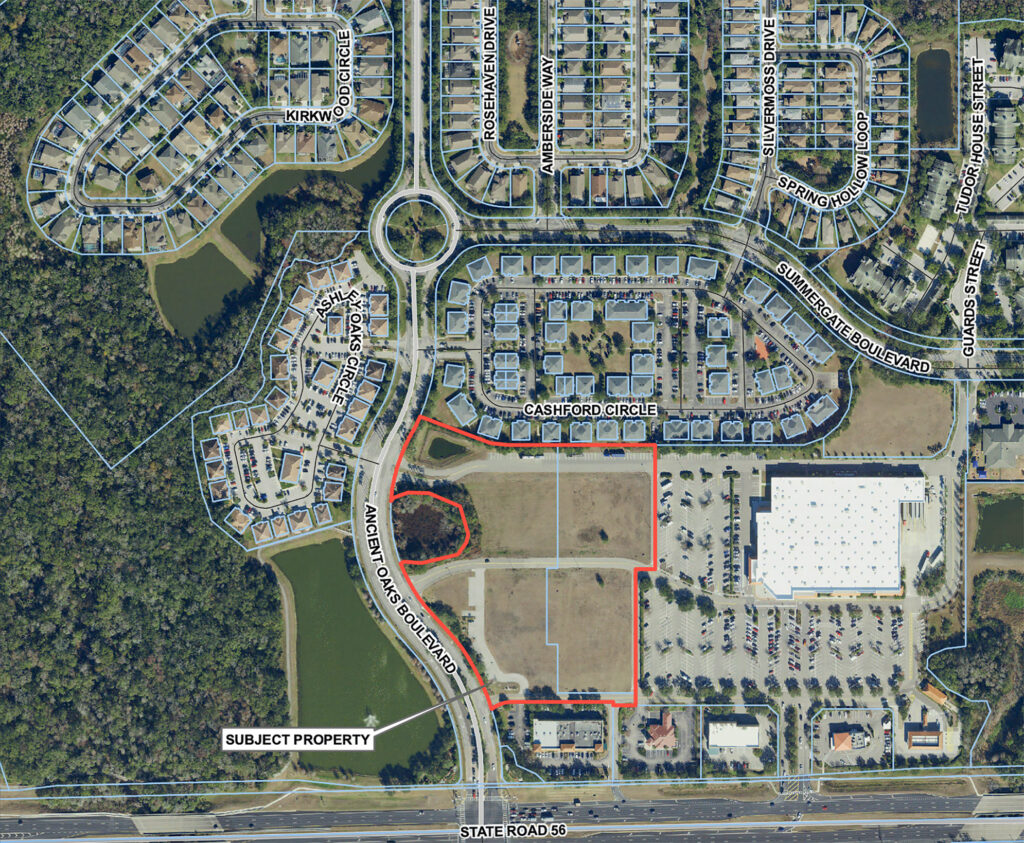
On Oct. 11, commissioners voted 3-2 in favor of modifying the MPUD and clearing the way for the new apartments and 25,000 square feet of commercial and retail space on 10 acres on Ancient Oaks Dr., just off S.R. 56, adjacent to Sam’s Club (see map).

DD/SR 56 LLC only needed to change one mind, and it succeeded. District 1 Commissioner Ron Oakley, who voted against the project in January, joined Dist. 3 Commissioner Kathryn Starkey and Dist. 4 Commissioner Christina Fitzpatrick by voting in favor of the project.

Dist. 2 Commissioner Mike Moore, who lives in Seven Oaks, and Dist. 5 Commissioner Jack Mariano remained opposed. They argued that the commercial designation for the 10 acres should remain because the area needs new jobs more than it needs multi-family housing.

Oakley, whose quote from the January meeting — “I’ve always felt that the size of the project is too large for the site” — was cited on a few occasions by opponents during the four-hour BOCC meeting, said his concerns about parking, traffic and pedestrian safety had been eased by the developer’s changes to the project.

“It’s a better fit on the site than it was prior,” Oakley said.

During the mediation process, the developer made a number of changes to its application, including a new site plan that includes two multi-story buildings. There will be vertical parking, and developers increased the commercial and retail space from 20,000 square feet to 25,000, which will be on the ground levels of the buildings.

There also were pedestrian safety and traffic issues that were resolved, including plans to extend and improve a walkway to Sam’s Club from the complex

Opponents argued that allowing 320 apartments on 10 acres was too dense and would not only create additional traffic and safety issues, but also would set a problematic precedent for the future.

“The 32 units per acre will set a dangerous and irreversible precedent,” said Chelsea Waller of Waller Law, who represents the Seven Oaks Community Development District. “Every developer is going to come into the county demanding the same density, and there goes the unique character of Pasco County.”

A presentation by opponents claimed that the 32 units per acre exceeds that of nearby apartments The Enclave (7.2), Bonterra Parc (10), MAA’s Colonial Grand (15.9) and the Windsor Club (16.3).

More than a dozen Seven Oaks residents spoke in opposition at the Oct. 11 meeting, citing mostly traffic concerns and compatibility with the rest of the MPUD. The location off S.R. 56 and the traffic congestion already in that area were the primary concerns.

One resident warned that such projects would lead to Wesley Chapel becoming like San Francisco (“If you go back there right now you understand what your future may look like if we approve this kind of stuff”), and another warned that the multi-story buildings could cause “sky and sun blocking.”

Waller argued that the changes made by the developers were insufficient to warrant approval. The project belonged in South Tampa or Orlando, she said, and was not compatible with Wesley Chapel’s urban dynamic.

But Joel Tew, the land-use attorney representing DD/SR 56 LLC, said that’s exactly what the developers are seeking.

“This is the poster child for a vertical mixed-use infill project,” Tew said, adding that it is supposed to look like Westchase Park or Hyde Park. “The whole point is to create a walkable look.”

While developers appear to have prevailed in their efforts to proceed with the project, an appeal could still be forthcoming, although it would likely take more than a year to get back to the BOCC.

Your Last-Minute Guide To The November 8 Midterm Election!

Gary Nager Editorial

Considering the contentious state of politics in our state and country these days, it’s clear that one of the most important midterm General Elections in recent memory will be held on Tuesday, November 8. 

On the ballot for those of you who live in Wesley Chapel, in addition to races for U.S. Senator, a new Representative in the U.S. Congress and Governor of Florida, are also-important races for the State Senate and Florida House, as well as State Attorney General, Commissioner of Agriculture and Chief Financial Officer. 

Locally, any chances of hotly contest races have long disappeared, particularly in contests involving the Pasco County Commission.

The District 4 seat was up for grabs between Aug. 23 Republican Primary winner Gary Bradford and his friend and Write-In opponent Cory A Patterson. But Patterson has pulled out, so Bradford is in. Same goes for Dist. 2 Write-In candidate Louie Rodriguez, who gave the Dist. 2 seat to Republican Primary winner Seth Weightman.

One Pasco School Board seat was supposed to be headed to a Nov. 8 runoff, but Primary Election top finisher Al Hernandez was disqualified because he did not move into his District 1 in time to officially qualify for the election (where he was supposed to face a runoff against second-place finisher James Washington because neither earned 50% of the vote), and third-pace finisher Stephen Meisman, who lodged the complaint against Hernandez’s residential status, withdrew when he was not added to the Nov. 8 ballot, apparently handing Washington the seat. But Hernadez, who is endorsed by Gov. Ron DeSantis and has outraised Washington $114,767.62 to $18,805, is still on the ballot — for now — thanks to the 2nd District Court of Appeal pausing the lower court’s order. Oh boy.

Speaking of confusion, also on the Nov. 8 ballot, following the successful passing of the Aug. 23 ballot measure increasing the property tax millage rate by $1 (per each $1,000 of taxable value) to raise the pay for Pasco’s public school teachers, are the State Constitutional Amendment ballot measures and the continuation of the Penny for Pasco one-cent sales surtax beginning in 2025 (when the current Penny referendum ends). Although the School District will receive 45% of the funds from the Penny (as will the county, with 10% going to the incorporated cities in Pasco), those school funds are for capital projects not salaries, so the School District put the property tax increase on the Aug. 23 ballot, in order to avoid confusion about the two taxes. Mission accomplished? Hmmm.

Here are the highlights on the Nov. 8 ballot. While we did not have space for the entire ballot, you should have your official Sample Ballot by now.  

WESLEY CHAPEL’S NOV. 8 GENERAL ELECTION BALLOT (Early voting is available thru Nov. 6)

U.S. Senator
Marco Rubio (REP; Incumbent)
Val Demings (DEM)
Dennis Misigoy (LPF)
Steven B. Grant (NPA)
Tuan TQ Nguyen (NPA)

Representative in U.S. Congress, District 12
Gus Michael Bilirakis (REP)
Kimberly Walker (DEM)

Governor & Lieutenant Governor
Ron DeSantis/Jeanette Nuñez (REP; Incumbt)
Charlie Crist/Karla Hernandez (DEM)
Hector Roos/Jerry “Tub” Rorabaugh (LPF)
Carmen Jackie Gimenez/Kyle “KC” Gibson (NPA)

State Attorney General
Ashley Moody (REP; Incumbent)
Aramis Ayala (DEM)

Chief Financial Officer
Jimmy Patronis (REP; Incumbent)
Adam Hattersley (DEM)

Commissioner of Agriculture
Wilton Simpson (REP)
Naomi Esther Blemur (DEM)

State Senator – District 23
Danny Burgess (REP)
Mike Harvey (DEM)

State Representative – District 54
Randy Maggard (REP)
Brian Staver (DEM)
Ryan S. Otwell (NPA)

Countywide Referendum — 2025 Penny For Pasco
To Fund Job Creation. Public Safety, Environmental Lands, Education and Infrastructure.

Shall a one-cent sales surtax continue to be levied, beginning in 2025 and continuing through 2039, and shared among Pasco County Schools (45%), Pasco County (45%) and Pasco’s cities (10%) for: job creation and economic development projects (pursuant to Section 212.055(2)(d)3, Florida Statutes; public safety infrastructure, acquiring environmentally sensitive lands; infrastructure for new schools, renovations, additions, athletics, instructional technology and security; parks and recreation infrastructure; transportation infrastructure; and public infrastructure within the cities? ____Yes ____No

Publix in Hollybrook Plaza Not Going Anywhere

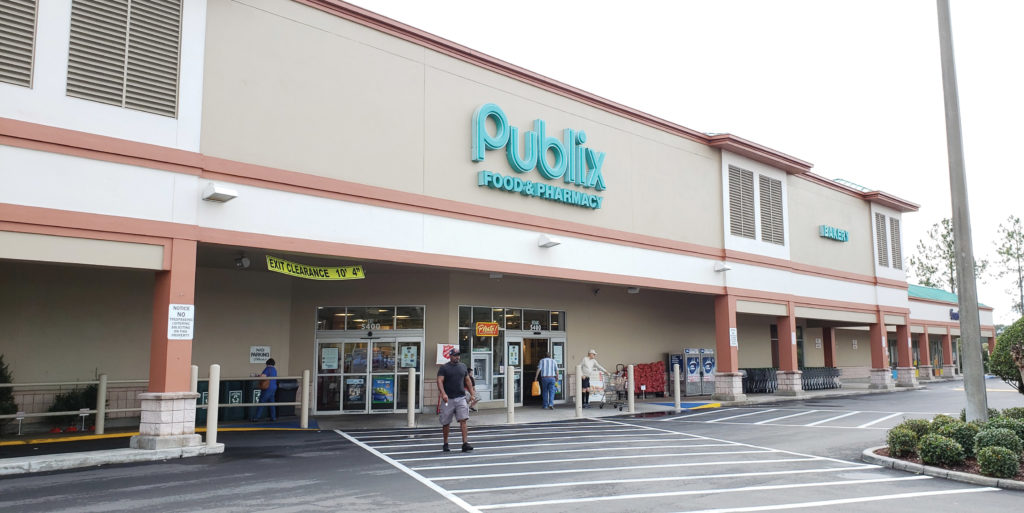
As we’ve reported before, Wesley Chapel is getting a new Publix off S.R. 54, right across Wiregrass Ranch Blvd. from the Wesley Chapel Walmart.

 And, guess where the old Publix, which is just a skip, jump and a hop away in the nearby Hollybrook Plaza on S.R. 54 and Bruce B. Downs Blvd., is headed?

Nowhere.

In fact, starting next year, the Hollybrook Plaza Publix will be beginning renovations.

That will probably be news to you, and a good many others, including us. After years of being told, and dutifully reporting, that the Hollybrook Publix would be “moving” or “relocated,” to make way for the new store, we, well, stand corrected.

 â€śYou (wrote) that the current location was closing,” says Hannah Herring, the marketing manager for Publix Supermarkets Inc., “and that is actually not happening. We’re keeping that one (in Hollybrook) open, and we’re opening another.”

 That is definitely new news. We reported in September that the new Wiregrass Ranch Publix had filed plans with Pasco County for a new 60,548-sq.-ft. center, which would be anchored by a 48,848-sq.-ft. grocery store, which is correct. 

 But, the opening of the new store does not mean the end of the larger (60,632-sq.-ft.) Hollybrook location, which was built in 1997.

 The store closing was something we had reported many times over the years. In 2015, we were told by developers at an old Greater Wesley Chapel Chamber of Commerce (WCCC)’s Economic Development Briefing that the Hollybrook Publix would be “relocating.” It has been repeated and reported a few times since. 

 â€śThat was the story,” says Hope Kennedy, the CEO of the old WCCC and now of the North Tampa Bay Chamber (NTBC). “That was my understanding.”

 Heck, there was even a rumor floating around that the whole plaza might be razed once Publix was gone in an effort to design an intersection at S.R. 54 and BBD that actually works and would decongest traffic.

 Instead, it appears that S.R. 54 in Wesley Chapel will be home to two of the closest Publix grocery stores (to each other) anywhere. According to Google Maps, there’s only about a half mile between the two grocery stores if you take the roads, or a 10-minute walk.

 â€śAs it stands, we’ll have two locations, and one is going to be fairly close to the other one,” Herring says. “I’m not sure if it’s the closest, but we do have some locations that are really close to each in some areas.”

 New Tampa, for example, has three Publix stores of its own. The New Tampa Blvd. location on BBD is less than five miles from both the Morris Bridge Rd. and Tampa Palms locations.

 And, according to the Publix website, there are 15 Publix stores within 12 miles of the 33544 zip code in Wesley Chapel. Considering that Publix has 836 locations in Florida and is known almost as much for its level of saturation as is Starbucks, it does make sense. 

 Jim Hoff, who owns the Sonny’s BBQ just in front of the Hollybrook Plaza (on the BBD side), said he always thought the day would come that the Publix behind his restaurant would be replaced by the newer Publix once it was built.

 He’s glad to hear that is not the case.

 â€śThis is the first I’m hearing that it is staying,” says Hoff. “We’re pretty established where we are, but would it have hurt a little? Yes. Publix is Publix. Having it there can only help us.”