The Latest On The Wiregrass Ranch Sports Campus Of Pasco County!


Above is a 3D rendering of the Wiregrass Ranch Sports Campus of Pasco County, which shows eight basketball courts that can be divided into 16 volleyball courts. Source: RADD Sports. 

After years of staring at renderings and blue prints and imagining what the new sports complex in Wiregrass Ranch will actually look like, general manager and RADD Sports CEO Richard Blalock’s vision is now coming into focus.

The Wiregrass Ranch Sports Campus of Pasco County is no longer just a large patch of cleared land, it has gone vertical, and the current schedule is looking towards a July 10, 2020, completion.

After three failed efforts since 2001 to build an athletic complex on the property located northeast of the Shops at Wiregrass and two miles east of Bruce B. Downs (BBD) Blvd., off S.R. 56, the 98,000-sq.-ft. indoor gymnasium is on its way.

Blalock, however, is not letting his excitement get the best of him. While the $45-million facility — which will share a campus with a full-service, Marriott-branded, 120-room Residence Inn hotel featuring a rooftop bar — is a big part of transforming the Wesley Chapel area — and Pasco County — into even more of a sports tourism hotbed, he intends to proceed slowly out of the gate.

“We’ve got people lined up that want to sign a contract now,” says Blalock. 
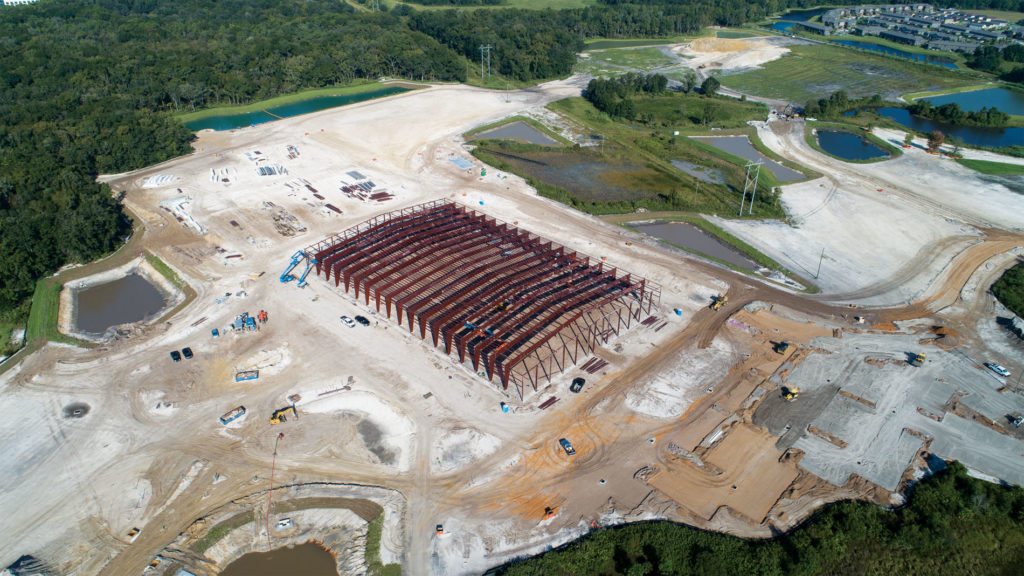

A drone photo of the progress on the Wiregrass Ranch Sports Campus. Photo by Charmaine George.

He is proceeding, though, like a quarterback with plenty of time on the clock. It’s not that he doubts the projection. But, he’s leery of Florida’s cranky wet weather that often slows down construction, most recently during Hurricane Dorian’s trip through the Atlantic.

“We had to take all of the cranes down,” says Jannah Nager, who was recently hired as RADD Sports’ director of marketing after working for more than four years as the marketing and events coordinator at the Pasco Education Foundation. She is the wife of Neighborhood News publisher Gary Nager.

With more bad weather lurking, it may not be the last time the cranes and other equipment have to be removed from the site for safety reasons.

“Everybody is beating us up, ‘When are you going to start booking events?,’” Blalock says. “But, I will not start booking events until after this hurricane season. Once the roof is on, or the side panels, I’ll be more comfortable.”

Blalock says a new facility in North Carolina jumped the gun on its opening and, thanks to Hurricane Dorian, had to postpone that opening.

“That’s the last thing we can afford to have happen here,” he says.

By October of 2020, Blalock says, he hopes to have events ready to go at the new facility, which broke ground in June of 2018. He hopes to book at least 25 events in the first 12 months the sports facility is running. Nager’s job is to help spread the word in the community while marketing the facility to sponsors.

“Jannah knows the community, she knows the people, she knows the ins and out, and she knows the politicians,” said Blalock. “We need somebody that knows community and is popular in the community. That makes our job so much easier.”

The primary sports at the new complex will be basketball and volleyball, and cheerleading is expected to be the third core sport at the facility, which can run eight basketball courts or 16 volleyball courts at any one time.

There also is room for multiple mats for wrestling and judo tournaments, with gymnastics also a possibility. Blalock said he even has been contacted by a youth soccer team in the United Kingdom that is interested in training for a few weeks at the new facility, which will have two outdoor soccer fields and plenty of room to train inside if the weather turns bad.

Local Use During The Week!

Weekend sports tournaments, however, will be just part of the big picture at the new facility.

Blalock says there will be plenty of sports programming for local athletes to participate in, too. He says there will be a three-tier system for each of its three core sports — Academy, Competitive and Development — which will allow opportunities for all level of athletes starting at the age of 9 and going all the way through high school 

Jannah Nager and Richard Blalock are just beginning to market the complex to local sponsors. 

The Academy will be for training elite athletes for travel teams, but will also include an educational component and require participants to maintain a certain grade-point-average. He says the sports will be programmed to not interfere with the local high school seasons.

“The ultimate goal is to change the culture of how these kids are trained,” Blalock says, adding that it is well-documented that youth sports are susceptible to being overrun by overzealous coaches and parents, as well as entitled athletes.

The Competitive program also will be in-house, with three days a week of practices and games — and the chance for advancement to the Academy level, Blalock says.

The Developmental program will be “quasi-recreational,” according to Blalock. Volunteer coaches will run the teams, although those coaches will have plenty of access to paid coaches on the complex’s paid sports staff to help develop more drills and gameplans.

The programming also will be competitively priced with the local market, according to Blalock.

For those who like sports but don’t play for whatever reason, the Wiregrass Ranch Sports Campus will offer a Sports Administration & Hospitality program, where kids can gather data, travel with the teams and serve as managers.

And, now that ground has broken on a nearby 55-over community in Wiregrass Ranch (see story on pg. 8), more programming for older residents also may be in the offing, like pickleball and Rock Steady Boxing for those with Parkinson’s disease. There may even be room for some golf cart parking spots, Blalock says.

In addition to its youth and adult sports programs, the facility is able to provide space for conventions, banquets and other non-sports events.

Blalock and Nager are putting together sponsorship packages now, and also are accepting resumes for positions, although Blalock stresses that the actual hiring process is likely several months away. 

For more information about sponsorships and more, visit RADDSports.com or email Jannah@raddsports.com. 

Browning Hoping For Smoother Rezoning Process This Fall

Chris Williams (standing) looks over maps during a School Boundary Committee meetings in 2016 at Wesley Chapel High. There will be no such committees in 2019; Williams and his staff are in the process of drawing up new boundaries and will answer questions and concerns on Oct. 7 at Wiregrass Ranch High.

With Cypress Creek Middle School scheduled to open separately from the existing high school in August of 2020, Pasco County is about to tackle the difficult job of drawing new school attendance boundaries again. But, Pasco Schools superintendent Kurt Browning has his fingers crossed that things won’t be nearly as tough as they were in 2016.

They couldn’t be worse, right?

In Wesley Chapel, the process was contentious and exhausting, as families argued over various options and how best to alleviate the overcrowding at the area’s existing schools while filling the classrooms at Cypress Creek Middle/High, which was opening the following year.

On the west side of the county, it was even worse, as the boundaries for Mitchell and Anclote high schools ended up in court.

Browning says this time around, things will be different.

In 2016, a School Boundary Committee (SBC) made up of parents, district staff and school administrators was formed to help define the new boundaries. But this fall, the plans will be the sole responsibility of the District staff. “I’ve done away with that committee, and now it’s a District-driven process,” Browning says.

Gone are the community workshops from the last rezoning, which resulted in a packed gymnasium, or two, of angry parents. Instead, Browning says Chapter 120 of the Florida Statutes will be followed. 

“The irony is that under Chapter 120, there are no opportunities early on for community involvement in this process,” Browning says. “We got dinged because we were not following Chapter 120, so what we did is we said ‘Fine, we’ll follow Chapter 120.’”

That process is more “sterile,” Browning says.

District staff, led by planning director Chris Williams, will come up with a new map of boundaries for high schools and middle schools, with data to support those maps.

Chapter 120 does still allow for public comment, however. And, on Monday, October 7, 5 p.m.-8 p.m., in the Wiregrass Ranch High (WRH) gymnasium, area residents will have the opportunity to view the maps and ask questions of District staff. They also will be allowed to offer opinions, either at the meeting or online.

Browning says his staff will read every question and comment. Some could lead to changes or adjustments, and once finalized, there will be a public hearing before the Pasco School Board on Tuesday, November 5.

That will be the last time the public will have an opportunity to voice any opinions or concerns, as on Tuesday, November 19, the School Board will make its final decision.

A Little Contentious History

 In 2016, the SBC’s recommendation of Option 20, which rezoned the bulk of the students living in Seven Oaks to Cypress Creek, was rejected by Browning, setting off a long dispute.

As a result of Seven Oaks being spared back then, however, Browning says it is likely that the new maps, which will soon be revealed, will rezone much of Seven Oaks.

Kurt Browning

“I said last time there will come a day, sooner than later, that Seven Oaks will have to be looked at, and now is that time,” Browning says. “We have to look to get those numbers down at John Long Middle School and Wiregrass Ranch High, and the most logical place to do that is Seven Oaks.”

While the idea of sending their kids to different schools further away ruffled feathers last time, Browning doesn’t see the same discord this time around.

“I don’t think it will be as contentious as (2016),” he says. “You know, they were going into an unknown and even the students who got rezoned were going to a brand new high school that was coming up out of the ground,” Browning said. “There wasn’t any track record. Now we have two years under our belt at Cypress Creek Middle High and they’re doing wonderfully well. It’s a great administration, great kids, great teachers and the academics are solid. I think it will be easier from that perspective.”

Even after redrawing the boundaries to relieve overcrowding, it is likely that some schools will remain at or above capacity. Browning says the county doesn’t have enough money to build schools fast enough to accommodate the growth in Wesley Chapel.

Based on enrollment numbers that average the first 20 days of the current school year, 11 of the 14 Wesley Chapel schools are already over capacity.

“Even when we rezone kids out of Wiregrass Ranch and John Long Middle with this rezoning, those schools are still going to be at, or near, capacity,” he says.

 This year, Wiregrass Ranch High is at 139 percent of capacity, and John Long Middle School is at 119 percent.

Cypress Creek Middle High currently has 2,100 students, but nearly half of those will be moving to the new 1,600-seat middle school. 

The middle school will then be able to absorb roughly 600 additional students without exceeding capacity. And, according to Browning, Cypress Creek High, which has a capacity of 2,090 students, will be able to take 800 new students from other high schools and those graduating from local middle schools and still remain at or under capacity.

More help could be on the way, too. A new magnet high school is on the horizon for 2022 at the corner of Keifer Rd. and Curley Rd. north of WaterGrasss, which Browning says will draw students from Pasco, Zephyrhills, Wesley Chapel and Wiregrass Ranch high schools.

Until then, while the new middle school will provide some relief, overcrowding will continue to be a way of life in this bustling area.

Will A New Craft Brewery Bring New Life To The Grove?

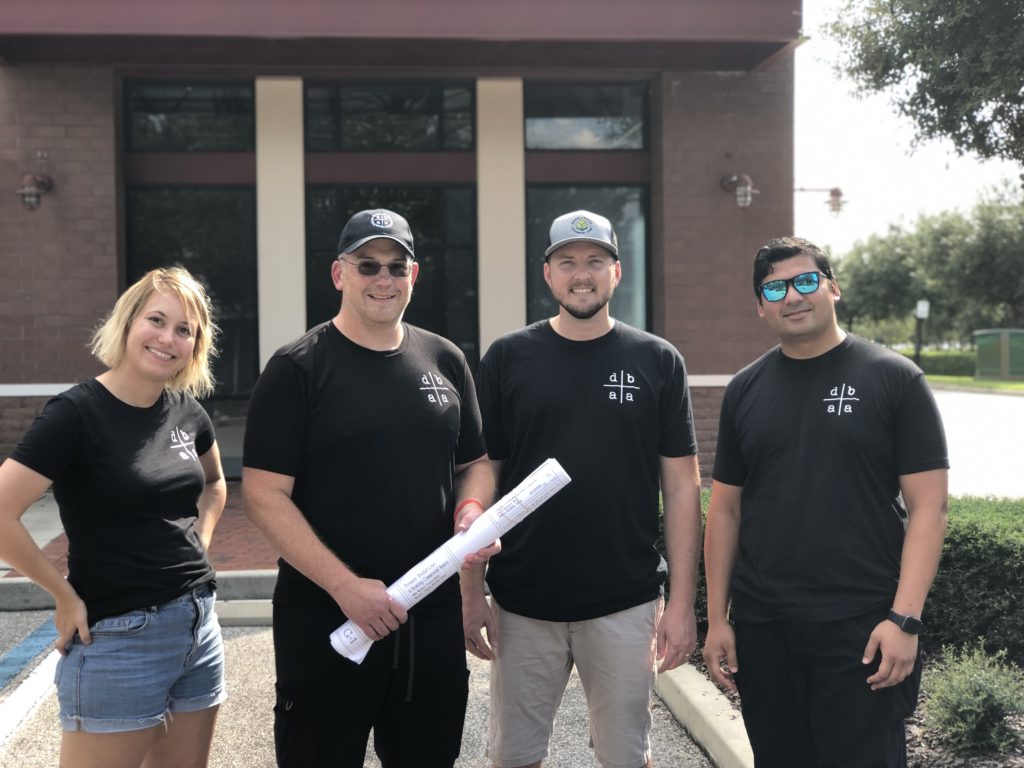
(left to right) Sam Guyer, Ryan Clarke, Cody Guyer and Shashank Mishra hope to open Wesley Chapel’s first craft brewery, Double Branch Artisanal Ales, in December.

Friends and Wesley Chapel residents Ryan Clarke and Shashank Mishra, M.D., had both dabbled in making their own home brews, so it was only natural that when the two would hang out, craft beer was often not only the drink of choice, but also the topic of conversation.

One night, the conversation turned to the obvious – why not start our own brewery?

“We talked about it several times,” said Clarke, “We had the same thoughts and philosophy. Eventually the talks began getting more progressive.”

Those talks progressed to the point where, on June 6, 2018, the two founded Double Branch Artisanal Ales (DBAA), and in December Clarke and Mishra’s first craft brewery is expected to open at The Grove at Wesley Chapel.

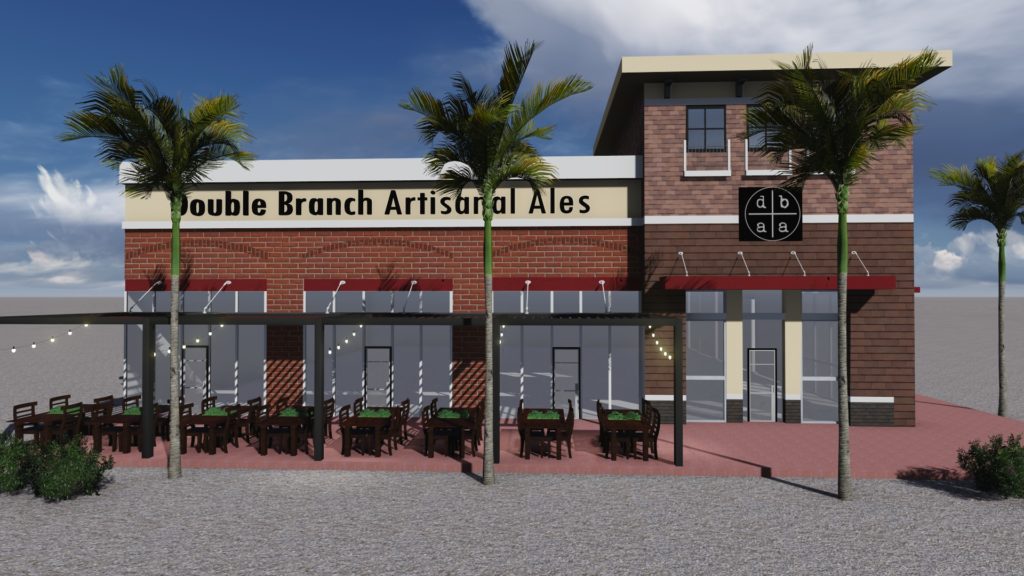
The craft brewery will be Wesley Chapel’s first, and will operate in the “main street” area of The Grove. The 8,400-sq-ft. space will boast a 2,100-sq.-ft. production brewery, a 1,900-sq-ft. tap room, a 550-sq.-ft. outdoor patio and 1,850 sq. ft. of private event space.

It will offer a full spectrum of beers, from lagers to stouts to sours, but it’s first flagship beer will be called Chappie’s Lager.

“This will not only be a craft brewery, but something that offers the local culture of Tampa without having to drive 30 minutes,” says Clarke. “We have a large amount of nationally-syndicated restaurant concepts out here in Wesley Chapel, but not too many locally owned places. Wesley Chapel needs these type of things.”

Brew Bus Brewing, Inc., the company behind Florida Avenue Brewing Co. and Brew Bus Brewing, purchased the old Sports + Field site on S.R. 56 in May, with plans to transform the former sports training facility into a brewery and restaurant before opening in 2020.

Clarke and Mishra also think they could be part of something big, as The Grove at Wesley Chapel — hardly a bustling hotspot in recent years with all the expansion on S.R. 56 — was sold for $62.7 million to developers that they expect will reinvigorate the area by building additional homes and retail/restaurant.

Clarke and Mishra, who met at AdventHealth Wesley Chapel where Clarke is a nurse practitioner and Mishra is a Doctor of Internal Medicine, already had launched their plans. They actually announced DBAA on the brewery’s Facebook page months ago, but had to quickly take it down because The Grove wasn’t ready for the announcement.

Clarke takes pride in DBAA being Wesley Chapel’s first locally owned and operated craft brewery. He looked into the idea back in 2008, but couldn’t find the right situation. After finding the right financial backing, location and availability, he and Mishra were ready.

Because Clarke wanted a place that would become part of the community’s fabric, he chose Double Branch because it “related to the heritage of the area.”

The Wesley Chapel area was often referred to as “Double Branch” for the twin creeks that flowed through the property owned by the Boyettes, one of the area’s founding families. The Double Branch Church (now the First Baptist Church of Wesley Chapel) was the center of the community.

The area also became an area known for its share of moonshine stills and homebrews in the 1920s, which Clarke says the Double Branch brewery pays homage to.  

DBAA, which is still waiting on a permit or two but hopes to begin construction on Monday, could be a major player in the transformation of The Grove, which is rumored to be readying for a number of significant changes.

DBAA will offer beer and wine on tap, a food truck-style kitchen (6-8 items), games and potentially, an outdoor beer garden.

Clarke and Mishra have hired head brewer Cody Guyer and his wife Sam, who will be the tap room manager. The couple just moved here from Iowa last week, and both also will be part owners of the endeavor.

Cody Guyer started his brewing career with a home kit he received from his sister for his 26th birthday, and since has worked as an assistant brewer in Iowa for Millstream Brewing Co. (located in Amana) and Barn Town Brewing in West Des Moines.

Cody says while DBAA will offer a few flagship styles, he is the experimental type and plans of brewing an assortment of revolving “fun-type” beers. “Whatever I feel like brewing at the time,” he says. 

Cody will also pursue collaborations with other breweries, where ideas are exchanged via emails and implemented in a team process. While in Iowa, he worked on “collabs” with Mikerphone Brewing in Chicago, Wren House Brewing in Phoenix, Watermark Brewing in Stevensville, MI, and Pulpit Rock Brewing in Decorah, IA.

“It’s a great way to learn what other breweries around the country are doing,” he says.

As for what DBAA will be doing, Cody says just wait.

“It’s going to exciting,” he says. “I can’t wait to get started.”

Brookron Dr. Gets Resurfaced

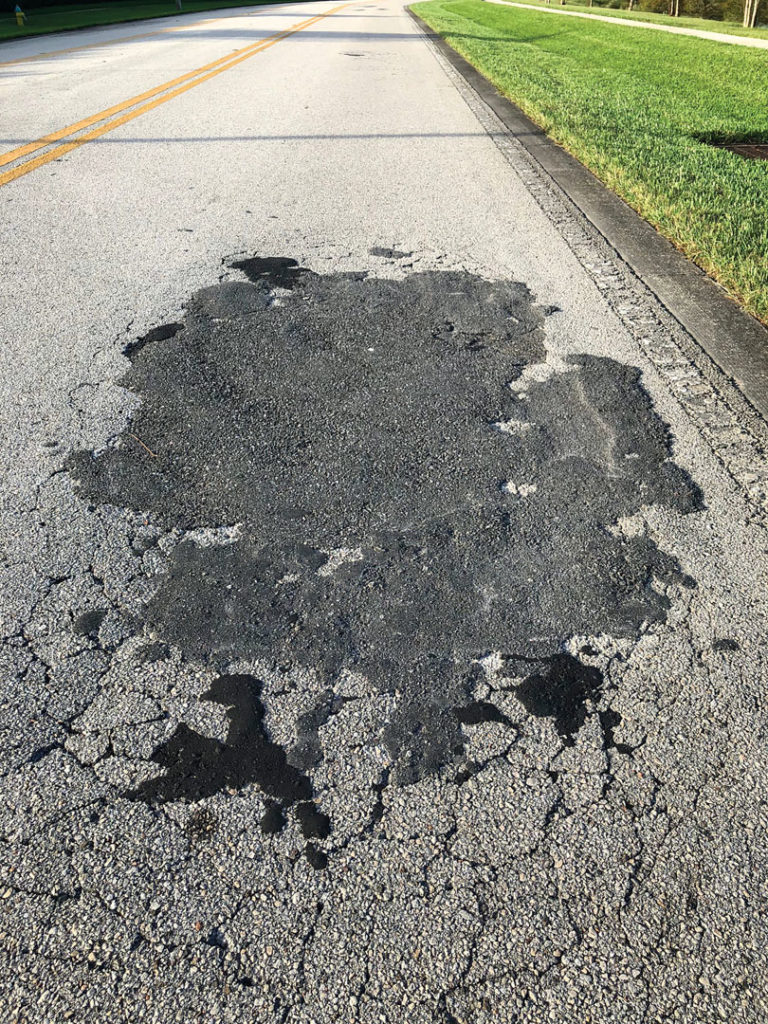
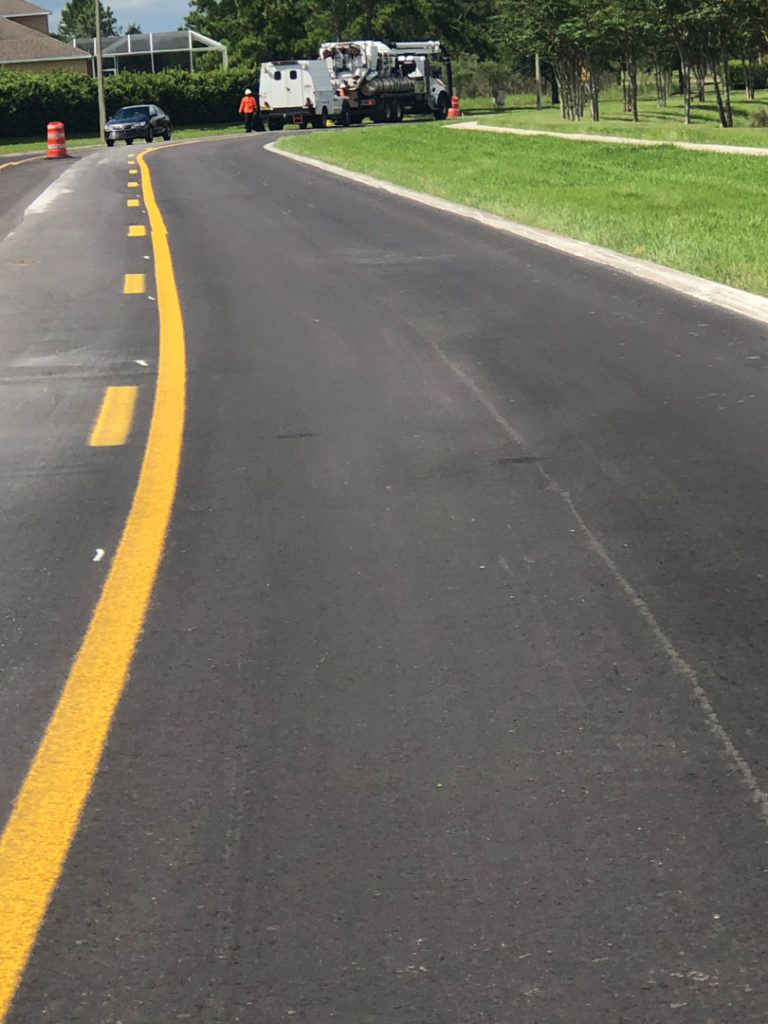
Brookron Dr. in New Tampa, once seemingly held together by a never-ending series of potholes patches, has a new surface.

Hillsborough County had all but completed the $686,841 project at our press time. The one-mile circular local road, located off Cross Creek Blvd. (across from the entrance to Cory Lake Isles) and winding past the communities of Pinehurst, Magnolia Trace, Meadow Creek and Creekwood to Kinnan St. in the Cross Creek development, had fallen into disrepair in recent years.

The project was originally expected to start later this year and finish in 2020.

The 18-year-old road is used by most of the Cross Creek II community’s 1,236 households, as well as by residents of the adjacent Addison Park and Andover Place apartment communities.

“They just showed up to fix it; it was very nice,” says Jo-Ann Pilawski, the head of property management for the Cross Creek II community. 

In 2017, Pinehurst resident Sasenarine Persaud emailed county commissioners and the Neighborhood News to express disappointment that the county had approved $250,000 towards building an unplanned Kinnan St.-Mansfield Blvd. connector, while just a mile south was a busy road Persaud said was in “third-world condition” and “a motley (collection) of patches, ridges and depressions, with a new pothole opening every week.”

Due in part to the complaints of Persaud and Pilawski, as well as a handful of others, the county sent an engineer to do a full inspection of the road. 

County commissioner Ken Hagan, who at the time held a District 5 county-wise seat but now represents New Tampa in District 2, was aware of the problem, as a former resident of Creekwood who had driven the road many times. 

Although Brookron Dr. had been on the unfunded project list — meaning the 50 or so potholes repairs applied over the years would have to hold it together until at least 2021 or ‘22 — Hagan worked to get the road reclassified from a local to a connector road, and got it funded for fiscal year 2019.

Workers spent the month of August repaving the road. Also included in the work were ramp improvements for those with disabilities, and pedestrian improvements at the light at the intersection of Brookron Rd. and Cross Creek Blvd.

Pilawski, who says the county always promptly repaired any potholes she reported, praised Hillsborough’s efforts.

“I am really impressed with the response you get from the county,” she says. “I think they really do a good job. I’ve always found that to be the case. I don’t know if it’s because I complain so much, but they always respond.”

Firm Picked To Design New Tampa Performing Arts Center!

The New Tampa Performing Arts Center (in red) off Bruce B. Downs Blvd. will be part of the Village at Hunter’s Lake mixed-use development. (Photo: Charmaine George)

In one of the more significant steps in the long, sometimes-tortured history of a proposed cultural arts center in New Tampa, the Hillsborough Board of County Commissioners (BOCC) has approved the hiring of a firm to design the facility.

Last month, the BOCC awarded a $598,413 contract to Fleischman Garcia Architects to draw a plan for the long-awaited facility, which is now officially being called the New Tampa Performing Arts Center (NTPAC), after years of being referred to as a “cultural center.”

“It’s an extremely significant and critical step in the process,’’ said District 2 county commissioner Ken Hagan, who represents New Tampa and has been involved in the project in various forms since it first sprouted in 2001. “It’s an important move.”

The design of the center — which will be located directly across Bruce B. Downs (BBD) Blvd. from the main entrance to Hunter’s Green, in the new Village at Hunter’s Lake development — is expected to be completed by the end of the year, with bidding for the construction services tentatively scheduled for May of 2020.

It is hoped that the $6-million construction of the NTPAC will begin sometime by November 1, 2020, and is expected to open by Jan. 1, 2022.

The facility — long-heralded to be the centerpiece of the New Tampa community — will be 20,000 square feet on its first floor, with the capability to have a 10,000-sq.-ft. second floor added later. 

The building will include a 350-400-seat theater/multi-purpose room and stage to be used for community theater performances. It will be the home of the New Tampa Players (NTP) acting troupe, which currently stages its performances at the University Area Cultural Development Center (UACDC) on N. 22nd St., just south of Bearss Ave.

The stage area at the NTPAC will be more than 2,000 square feet, and Hagan said it will include an orchestra pit that he helped add after meeting with the NTP and addressing some of their requests.

The center also will host cultural/arts education classes, as well as meetings, banquets and other events.

There will be 1,040 square feet dedicated to NTPAC operations and education programs employees, including an office for the NTP.

The education wing will feature two studios with ballet and dance floors, mirrors and movable walls.

Hagan made note that the NTPAC also will be sustainable, incorporating solar power and electric vehicle stations.

Plans for the NTPAC date back to 2001, when a Connecticut firm was paid $27,000 by the City of Tampa for a study that determined New Tampa could support a small cultural center of its own.

A nonprofit group, called the New Tampa Cultural Arts Center, was offered the six acres of land it requested for the project, but the city requested the group come up with a $10-million endowment to pay for it, which killed the effort back in 2005.

Doug Wall, who was involved with those initial efforts, revived it again in 2007. But Wall, the New Tampa Players president and founding artistic director, could not secure the funding and he passed away in 2017.

Former county commissioner and Tampa Palms resident Victor Crist helped keep the project alive as he worked on finding funding. In 2014, the larger Village at Hunter’s Lake project, of which the NTPAC is a central part, was approved. 

In a 2016 meeting at Hunter’s Green, Crist told the NTP he had secured partner-ships with the David A. Straz Jr. Center for the Performing Arts, the Patel Conservatory and the Prodigy Cultural Arts Program to bring gravitas to the project and elevate it to a high-level arts center.