Sand Pine Elementary second grade teacher Corinne Staney is retiring after 53 years as an elementary school educator. (Photos: Charmaine George)
Second-grade teacher Corinne Staney has retired once before, in 2005, before moving to Wesley Chapel.
But this time, she says, after 53 years in education — including the last 15 at Sand Pine Elementary — it’s for good.
“I promised my granddaughter this would be the last year,” Staney says. “I’m looking forward to spending time with my family, that’s really important, and now’s the time.”
May 27 will be the last day of school for Staney, 75, who lives in Meadow Pointe with her husband Joseph, a retired educator who spent 36 years as an administrator and coach. She has left a lasting legacy that will be hard to replace.
“It’s going to be a huge loss for us,” says Sand Pine principal Christina Twardosz, “but we are super excited for her to be able to spend some time spoiling herself.”
Twardosz says if anyone deserves it, it is Staney, who is always one of the first to arrive and among the last to leave every day at Sand Pine.
What will Staney do on May 28, her first day as a retiree? She’s going to start off with a book to read just for enjoyment, for the first time in forever. She may work on her cooking and rediscover a few hobbies. Michaels is her favorite store, so maybe a little crafting here and there. And, she has a daughter, Lisa Couture, and a son, Tim, as well as grandkids Dom, Ryan and Maddy, and of course, her husband to keep her days filled.
Her family may want to keep her away from tutoring or volunteering at any schools, however. When she retired the last time, it was a tutoring gig that led to a year of being a preschool teacher that then led to her applying for an opening at Sand Pine.
Teaching, she says, is in her blood. Her grandmother taught in a one-room schoolhouse, and because her parents — her dad managed a meat department in a grocery story and her mom had to turn down a scholarship and became an executive secretary — couldn’t go to college because they had to work during World War II, they emphasized the importance of education to their daughter.
Staney cut her teaching teeth in Worcester, MA, at a number of different schools, always in grades K-5. She was active in the teacher’s union, joined a group of education researchers at nearby Clark University, absorbed herself into the field of teaching and eventually “retired” to Florida.
But, she says she was called back to the classroom, as retirement turned into more of a very short sabbatical.
“I was bored…and I just love what I do,” Stanley says. “I love working with kids, I love learning new things, I love having a job that makes you want to get up in the morning and go. Kids are phenomenal. Every year is a fresh new start, a chance to be better, and a chance to be a part of a group of people that want to teach and learn. It’s fantastic.”
Staney says teaching won’t make you rich, but if you can find joy in it, it can make you happy.
“Her love and joy for children is inspiring,” says Twardosz.
As this issue is reaching your mailbox, there’s still a few days of classes left, and Staney plans to enjoy every minute of what’s left. She has given away many of her books, to a new teacher and another who teaches children with special needs, and her Christmas tree. Her most prized teaching possession — a ceramic apple that she was given by her fellow teachers to mark her 50th year as a teacher — will be displayed at home.
She could, quite honestly, teach forever, and that’s why, some days, as her final year as a teacher winds down, she has to hold back the tears.
“I didn’t cry until I thought about all of the years and all of the kids,” Corinne says. “But every year when school is ending I have a hard time.”
When she closes her eyes, she says she can still see her first class in 1969 at Woodland Street School in Worcester, and most of her classes since.
But, she says her last class may just be her most special one.
“All of them were adorable,” Stanley says. “I just look at their faces and have such high hopes for them. They clap for each other, encourage each other, all for one and one for all. The future looks pretty bright if you just look at the kids’ faces.”
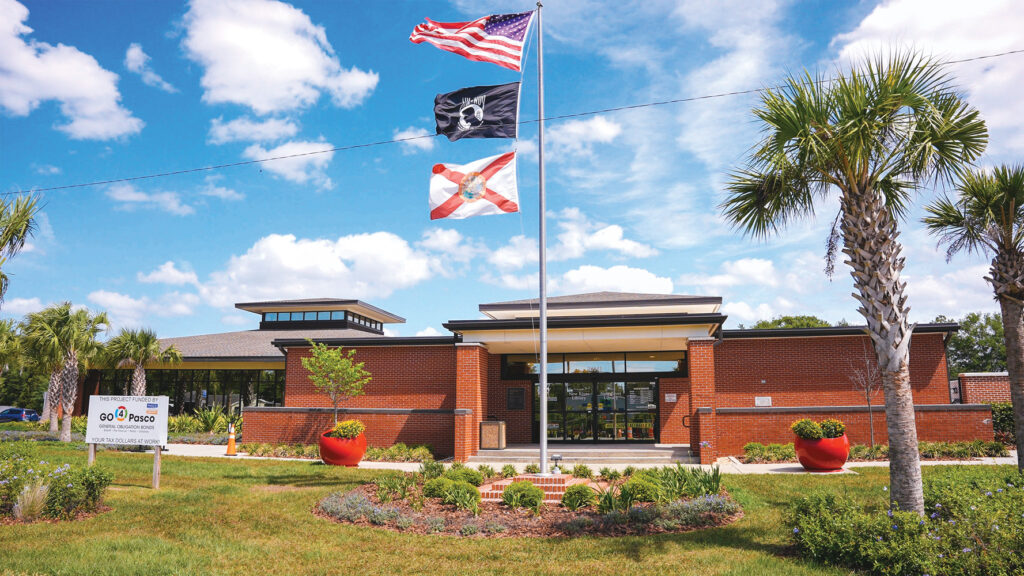
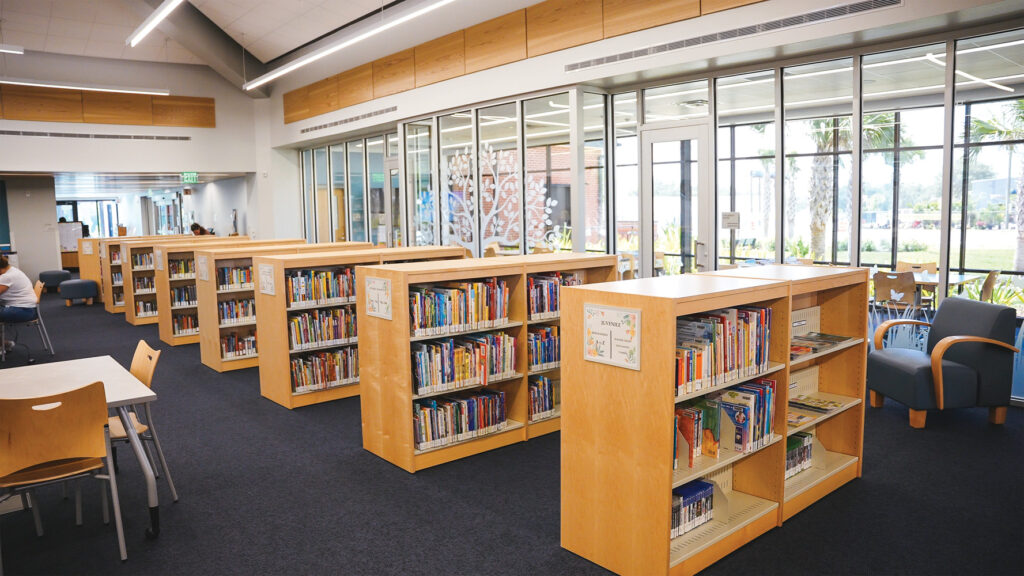
Nearly a year after it unofficially opened following major renovations, the New River Library at 34043 S.R. 54 finally got its official Grand Opening last month.
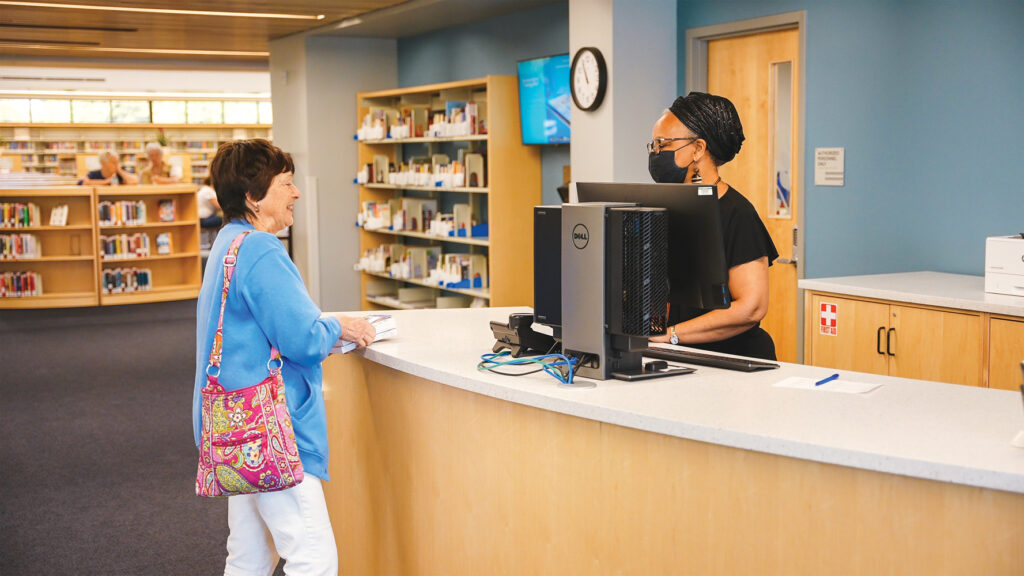
The library was closed from October 2019 through a soft opening in April 2021, receiving a major upgrade that was extended by the Covid-19 pandemic.
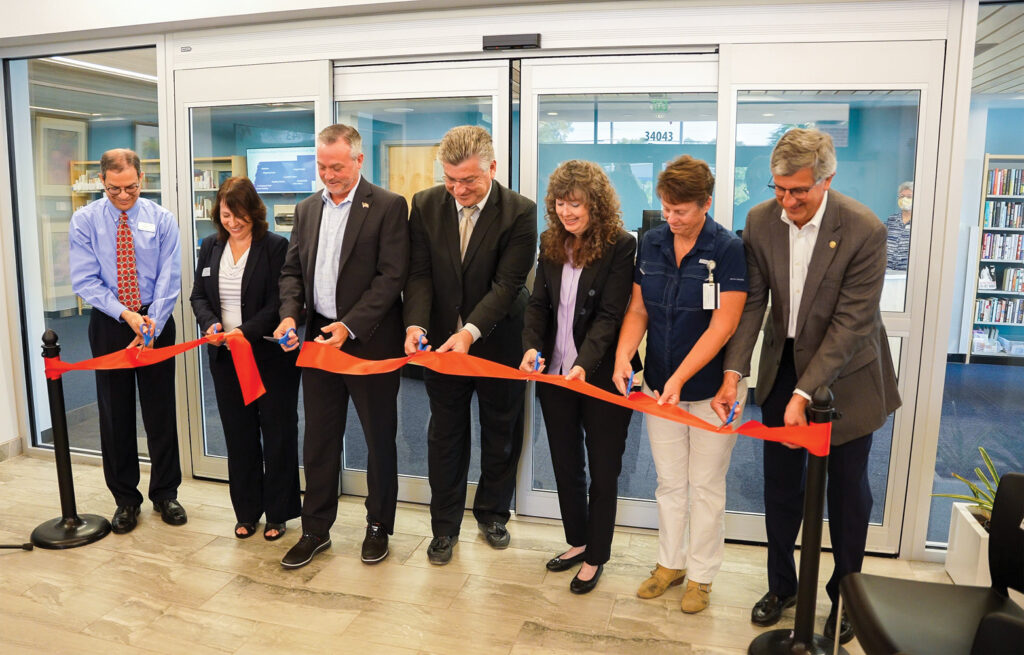
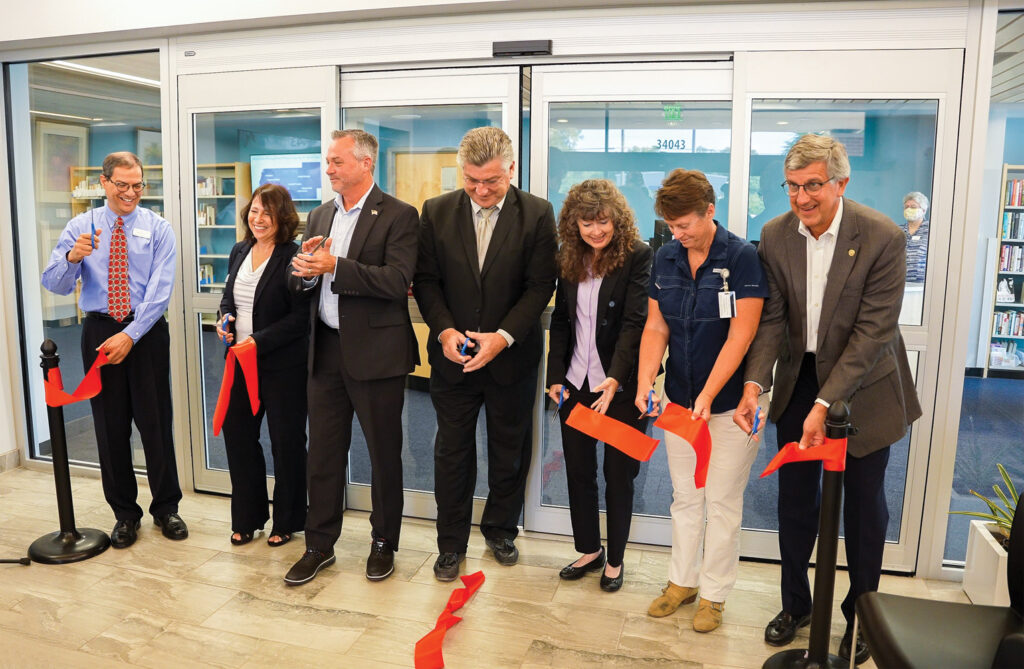
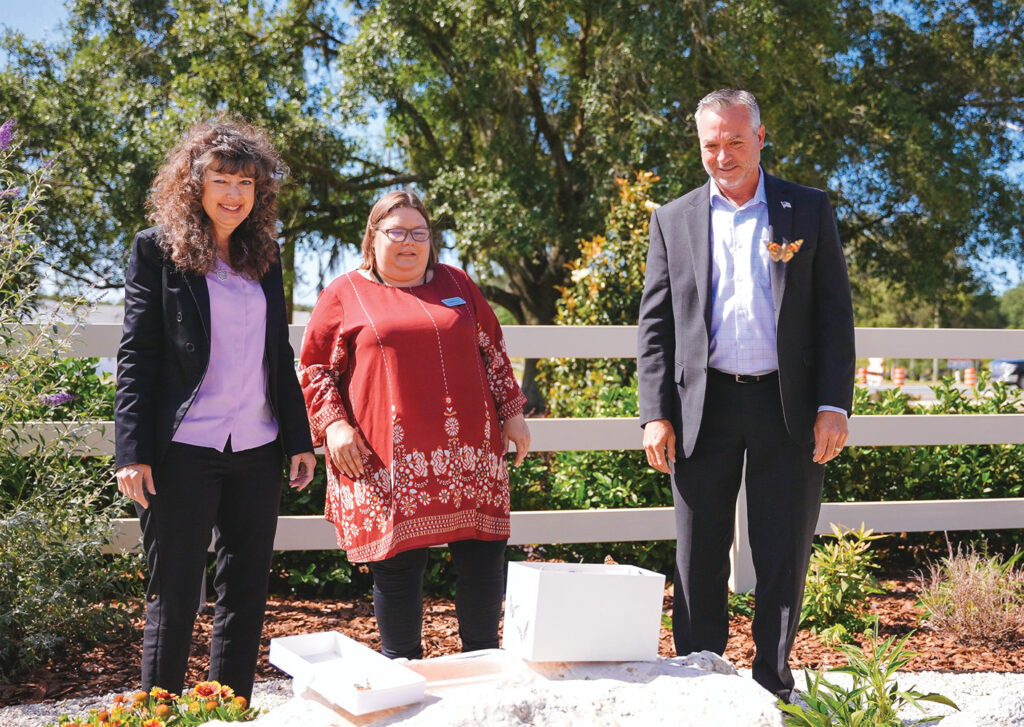
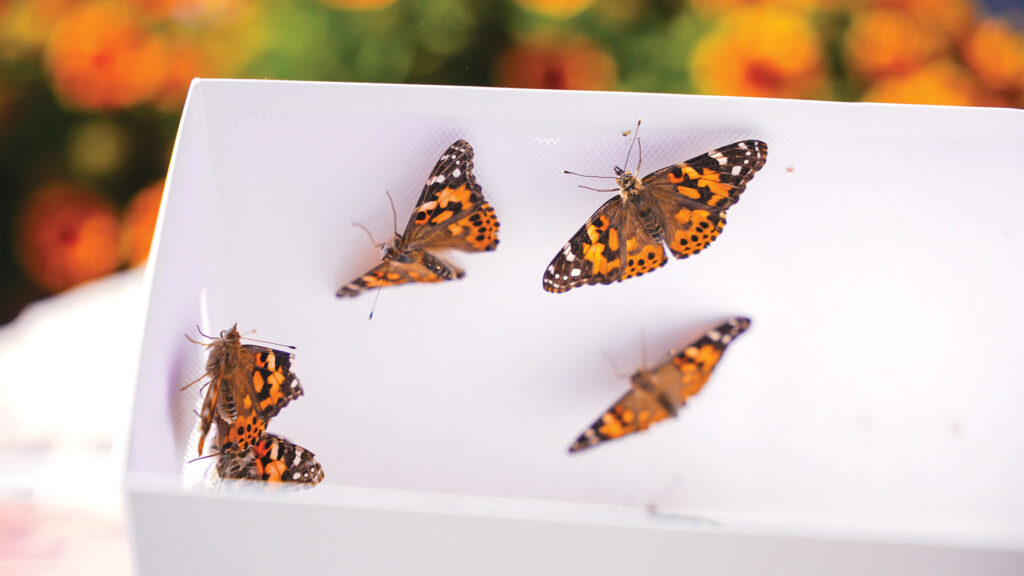
The New River Library was officially rededicated with a ribbon cutting and ceremonial release of butterflies on April 21, attended by Pasco County Commissioner Mike Moore, Pasco Libraries regional manager Angelo Liranzo, other library officials and the architects of the project.
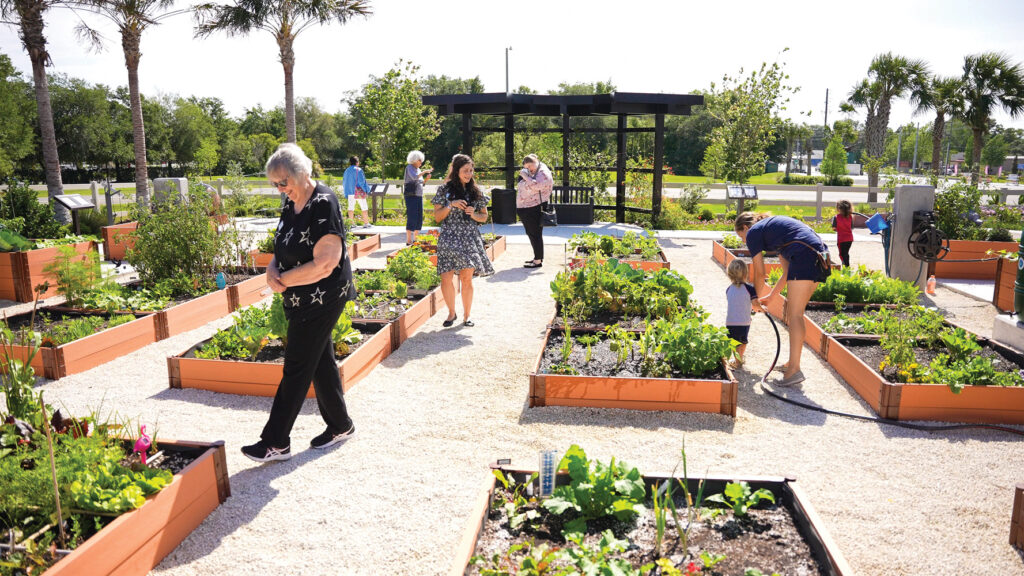
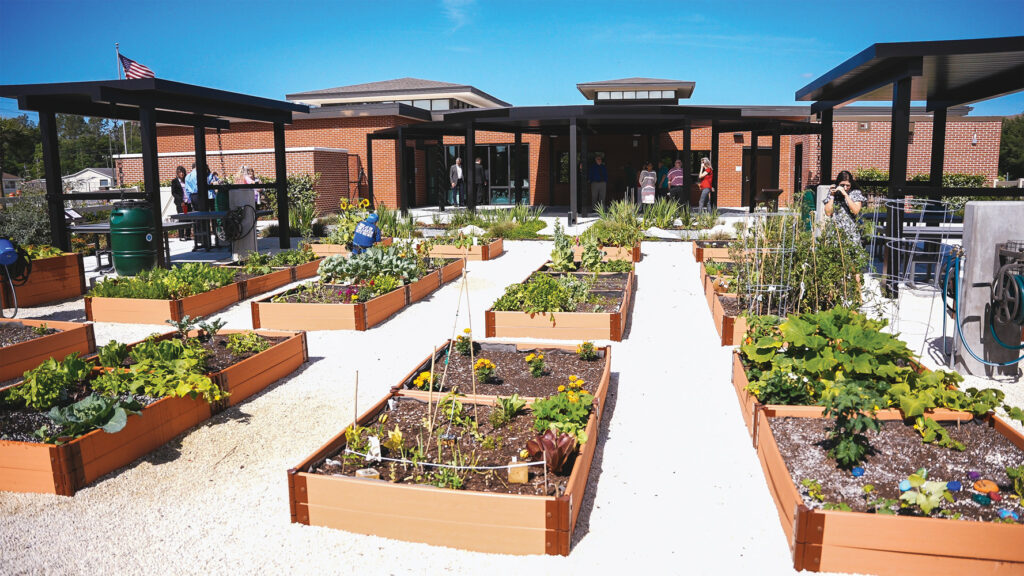
Liranzo praised the efforts of landscape architect Celia Nichols, who transformed the outdoor space at the library.
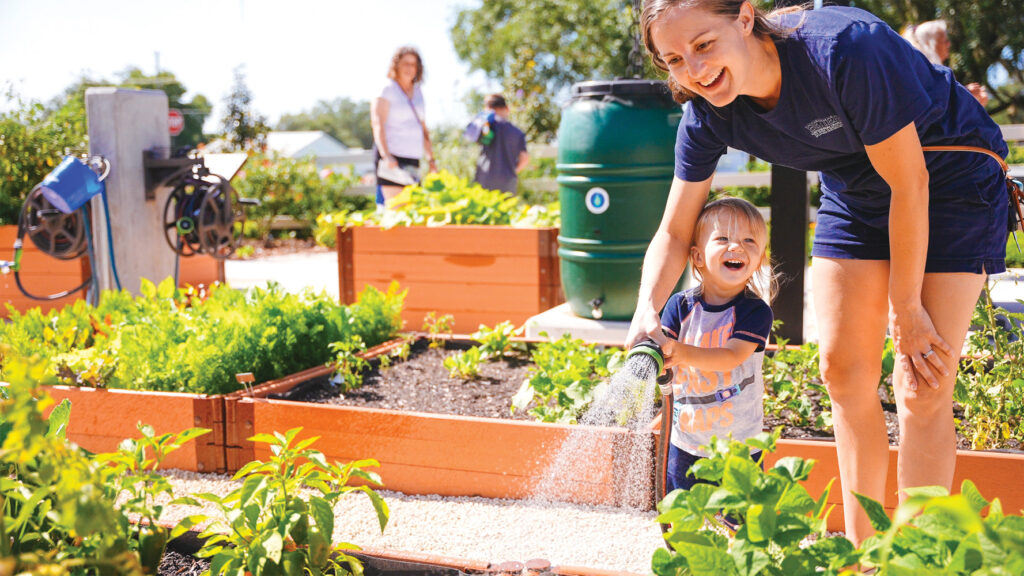
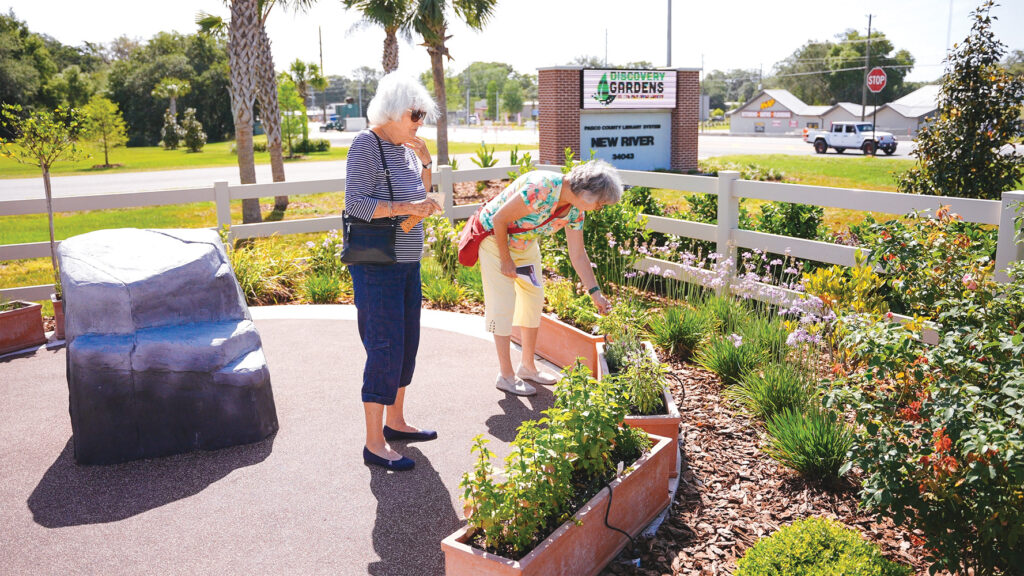
“What we have now is completely different and totally transformed into something so wonderful,” he said. “Instead of just a community garden…we have 28 planter beds that can be reserved for a quarter at a time.
Liranzo added that all of the planter beds already have been checked out and that there is now a waiting list.
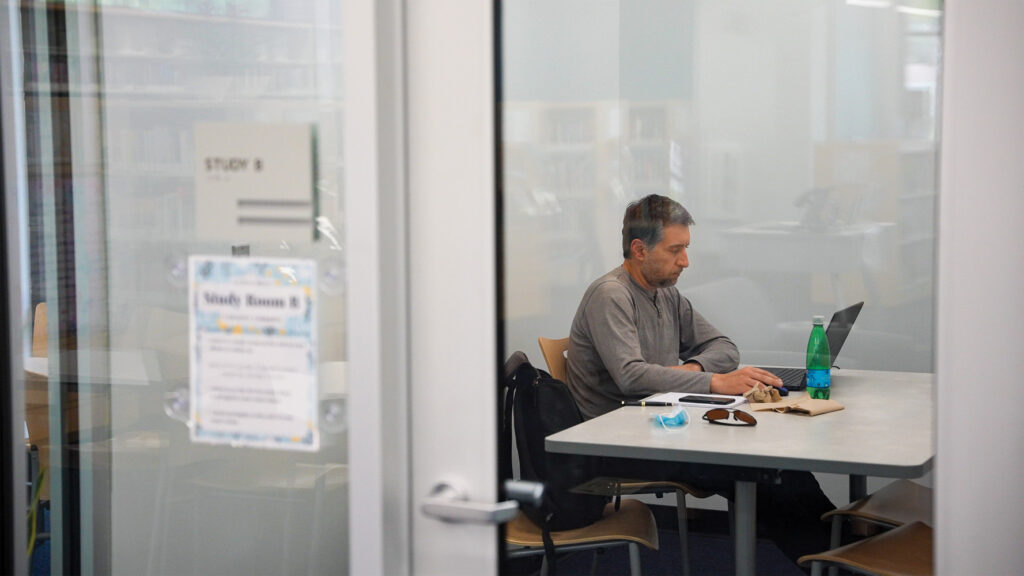
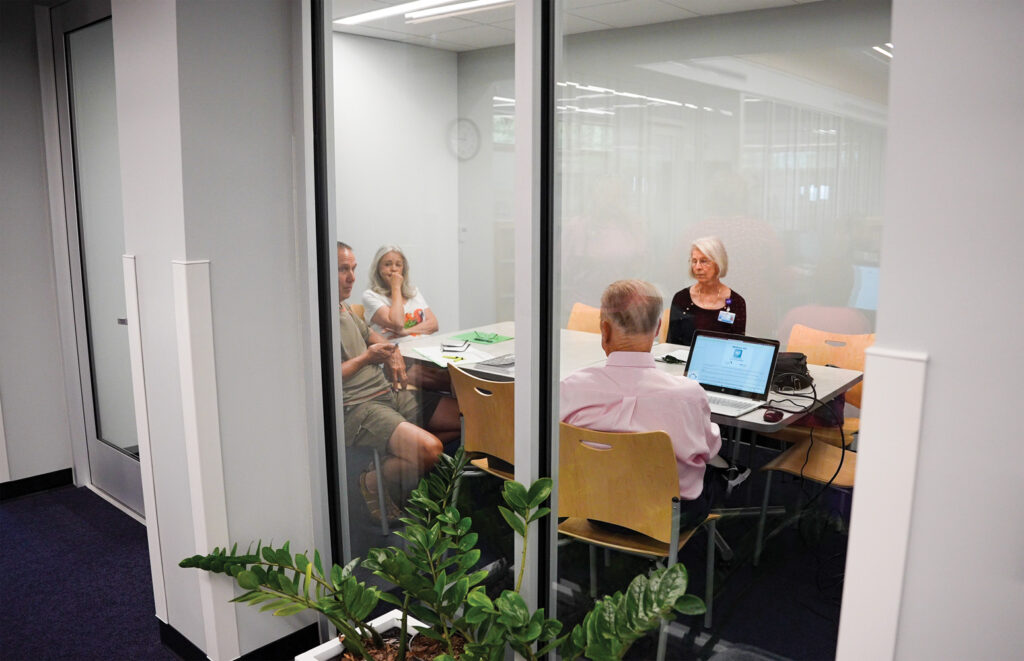
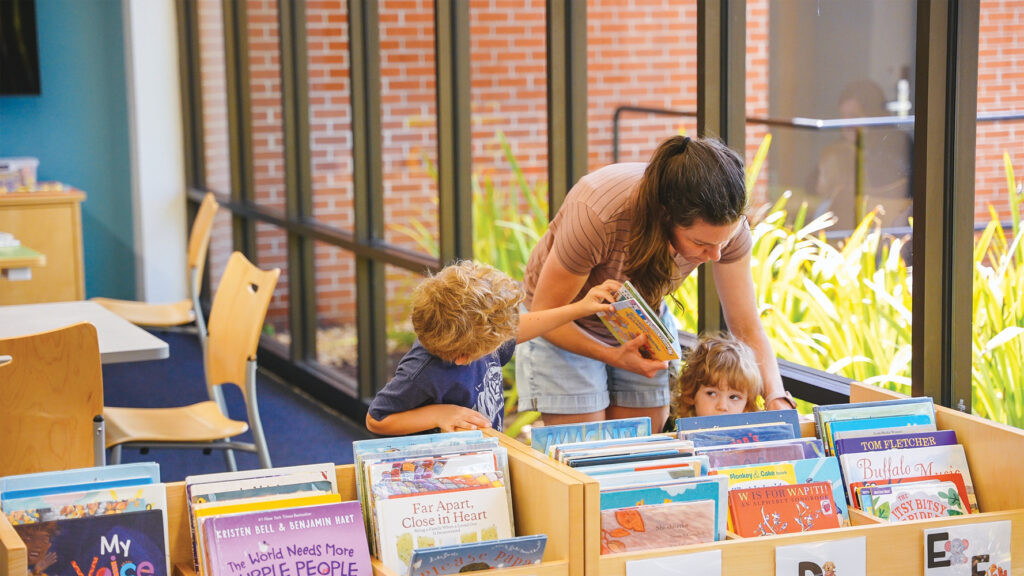
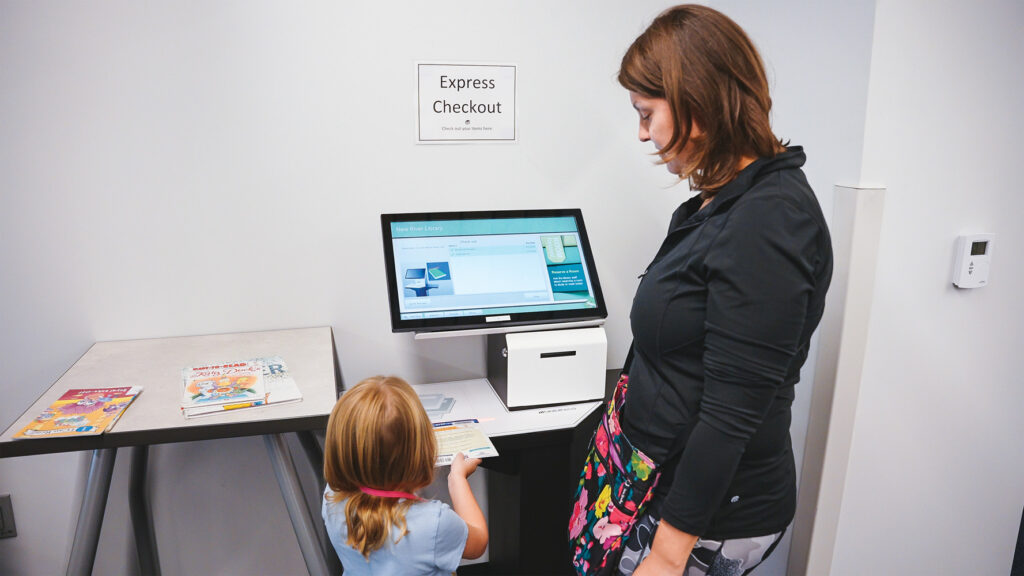
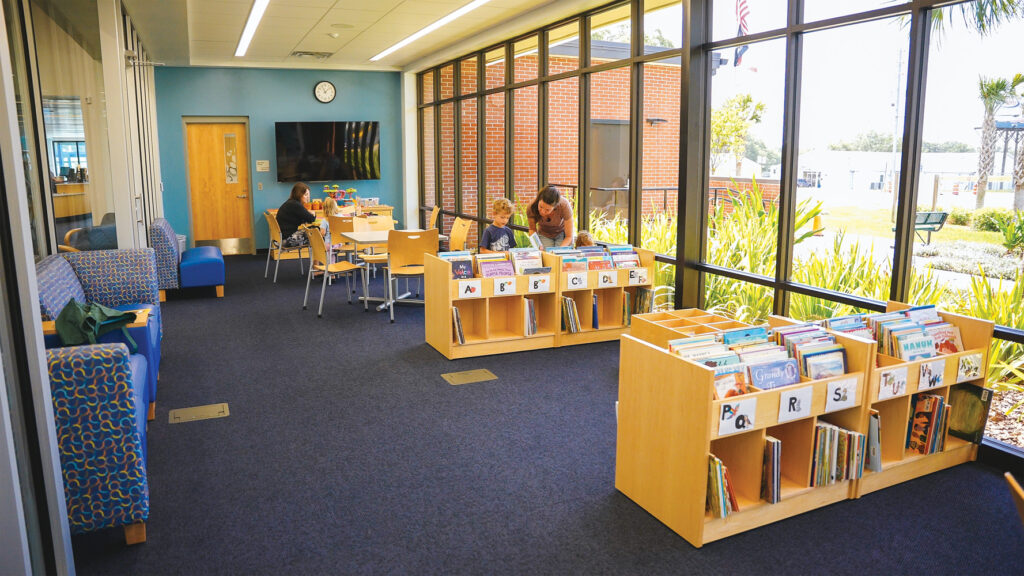
The library also has a larger and brighter lobby, two soundproof study rooms and a larger one for bigger groups, four new family bathrooms, a larger children’s area, a teen room and an upgraded scanning and printing area.
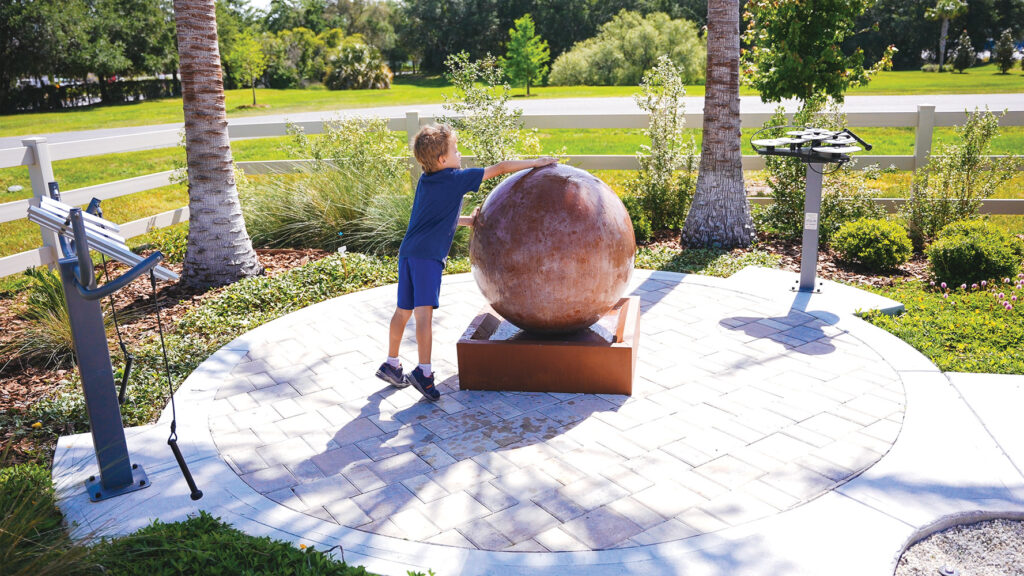
The new outdoor study area and community garden are highlights. The garden has four water barrels, a butterfly garden and sensory items for children who are on the autism spectrum.
After 14 years as principal at Benito Middle School and 38 years in education, John Sanders is ready to retire.
For more than three decades, John Sanders has worked as an educator, starting as a teacher and then becoming one of New Tampa’s most beloved and respected principals. His career was almost everything he loved — helping guide students and teachers alike to set high expectations and meet them, while building relationships to make his school the pride of the community.
However, there are other things Sanders loves, as well. Like spending time with his son Jackson, fishing, playing bridge, tending to his yard and reading.
So, after a 38-year career, including the last 14 as the principal at Benito Middle School, Sanders, 60, is packing up his office and picking up his fishing pole.
“When am I going to enjoy those things?” he asks. “I’m not guaranteed tomorrow, so maybe now I can do some of the things I always thought I might enjoy.”
When the bell rings at the end of the last day of school this year, it will mark the end of an era at Benito. For the students who currently attend the school, and most of their older siblings, he’s the only principal they’ve ever known. Many from his staff, faculty, and even the PTSA say they’re not sure they’re ready to let him go.
They credit Sanders with sustaining a culture that has helped Benito maintain a straight “A” school grade going all the way back to 2002, while some other schools in the area have struggled, such as feeder school Hunter’s Green Elementary and Wharton High, where Benito students are zoned to attend.
But, the reason the school is so successful — with high test scores and low disciplinary problems compared with other schools throughout the District —goes much deeper than its letter grade.
His staff says it’s because of his unique style as a principal. He says it’s because of the people who surround him.
“We have a great student body and a great community, followed up by a fabulous faculty that is, for the most part, stable and successful. They get the best out of the kids,” Sanders says. “You put those together and it just works.”
While he never moved to New Tampa, he brought his only son, Jackson, to spend his middle school years at Benito. He says he tried to treat every child the way he would treat his own.
When his wife, Rhonda, passed away in 2016, Sanders was surrounded by the faculty and staff, who showed up in force at her memorial service, which he says was planned in part by volunteers from the school’s PTSA.
While he can hardly imagine stepping away from his Benito family, he says he thinks now is the time to move on to the next chapter.
But, he says it’s going to be hard, especially leaving the people who have become his family, like the group he brought with him when he was named principal at Benito. In the first 11 years since the school opened in 1997, it had four principals. Sanders has been there longer than those four combined.
He began his career as a math teacher at Plant High in 1983, then taught at Turkey Creek Middle School, where he was promoted to assistant principal. He then went to Young Middle School as an assistant principal before being named principal at Benito in 2008.
Language arts teacher Chris Ellis was hired by Sanders 24 years ago at Young. After 11 years together there, when Sanders moved to Benito, Ellis was one of many who followed and one of several who still teaches at Benito all these years later.
“He has had a very profound effect on my life,” Ellis says.
Ellis drove 24 miles each way to get to Benito, so, three years ago, he took a position teaching at a school closer to his home, only to return.
“I knew the minute I had walked out the door of Benito that I had made a terrible mistake,” Ellis says. His new school was welcoming, but he missed Sanders and his hands-off management style.
Like Ellis, math teacher Kelly Broadbelt — who has been honored multiple times as the school’s Teacher of the Year, including this year — also was hired by Sanders at Young.
She says Sanders, as a former math teacher himself, has influenced her tremendously, and that he still pops into her classroom occasionally to give the students a mini-lesson, which they love.
“For sure, he has made me who I am as a teacher,” she says. “I’ve never taught without him, and because he was a math teacher he could be very influential in my classroom, because he knows exactly what I’m doing and how to fix it.”
Both Ellis and Broadbelt have been under Sanders’ guidance their entire careers. They say that while they’re trying to be optimistic, they’re also nervous about the big transition they expect when he leaves.
“The reason so many people love working for John is that many times in education, they treat the teachers like kids,” Ellis says. “But, he treats you like an adult, and allows you the autonomy to go above and beyond.”
Sanders says that it’s always been important to him to remember what it’s like to be a teacher.
“I have tried to create a family environment and I think we have it,” he says. “I’ve tried to see the good in my teachers and not focus on the imperfections too much, except when sometimes you have to do that as the boss.”
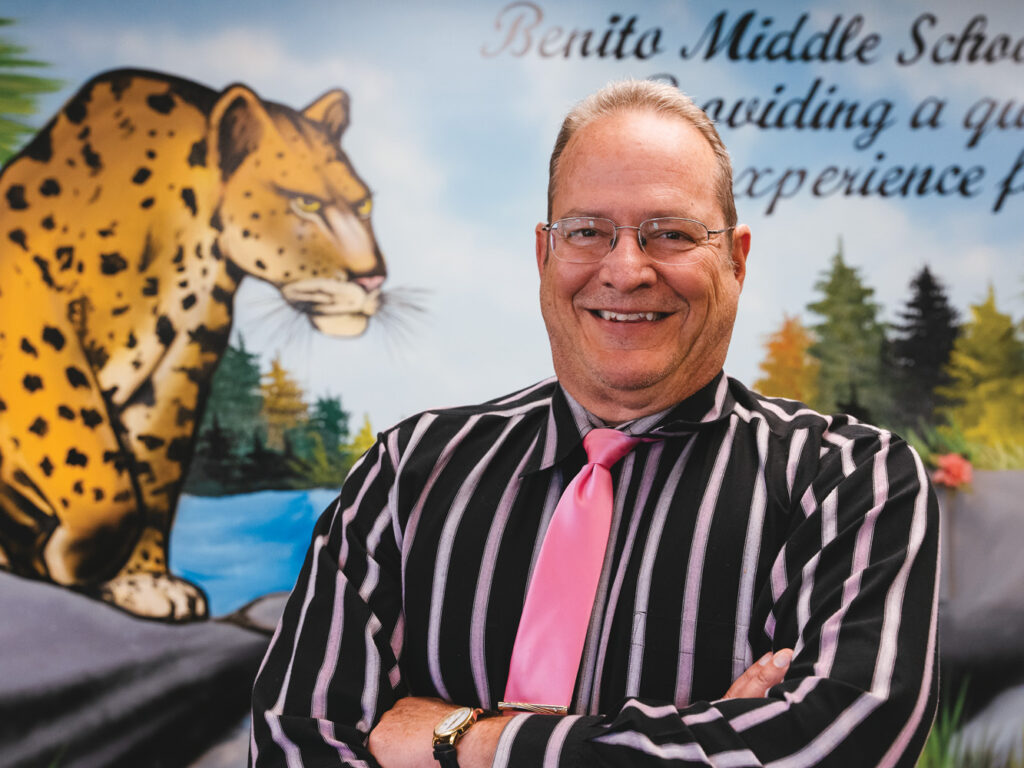
Principal John Sanders has left his mark after 14 years at Benito Middle School. (Photos: Charmaine George)
Sanders half-jokes that the school is successful in spite of him, saying, “all I had to do is let the teachers teach and let the families come here.”
Sharon Hineline was PTSA president at Benito when her kids attended and says she was convinced by Sanders to work at the school — first in the front office and now as his secretary.
“Sharon has single-handedly convinced dozens of families who were on the fence about going somewhere else to come here,” Sanders says.
Creating A Unique Atmosphere
Meanwhile, Hineline says that she does so because of the atmosphere Sanders has created. “If you come to Benito and say you need something, he’s going to help you,” she says. “He has created a culture where it’s a partnership and the staff is empowered to resolve problems.”
Sanders is quick to return phone calls from parents who are upset about something they heard happened at the school, or to direct a teacher to call a parent to resolve a misunderstanding. He has a unique touch that helps calm down heated emotions, whether he’s talking with parents or students.
Hineline says Sanders recently had two girls in his office who hated each other so much that they had gotten into a physical fight. He spent time talking with each individually, then brought them together to discuss their choices, and they not only resolved their issues but are now the best of friends. One of the two went from failing all of her classes to passing them. The care Sanders demonstrated changed the girls’ trajectory at the school.
That same calm demeanor has talked many families out of leaving the school, instead resolving a problem that was accommodated by switching a class or another relatively simple solution, recognizing that at many schools, those resolutions are not always offered because they are more difficult on staff or teachers.
Sanders says has always focused on keeping what he calls “great families” connected to his school.
“That’s the mindset that I think a good administrator has to have,” he says. “You make their kids happy, you make them happy, and everyone wins. If I send you out the door unhappy, I’m asking for trouble. People are looking at alternatives.”
While he knows what it’s like to turn a school around –—Young was an F school when he arrived, and went up to an A — Sanders says Benito never needed that. It was a great school when he arrived. But, he has navigated some significant challenges, such as the population of students receiving free and reduced lunch — an indicator of socioeconomic factors that statistically align with school success — going from 22 percent to 62 percent.
He says Benito makes sure the kids know the expectations and the rules, and the entire staff “gets out and enforces it.”
Broadbelt, Ellis, and Hineline are just a few of the many who have bought into his philosophy.
“He’s just a good person, a good educator, and a good boss,” Broadbelt says. “He’s willing to do anything to help us.”
While Sanders deflects the praise, he says the community, the staff, and the students will continue to be family to him.
“This is my life and my world, and I’m sure I’m going to miss being the principal at Benito.”
Did you know that kids who are involved in music are more likely to score higher on standardized tests? It’s true — papers from respected journals, such as The Journal of Educational Psychology and The British Journal of Psychology have done extensive research on this matter. So, why aren’t our local public school orchestra programs supported by our public school districts?
Mahi Nooka
Unfortunately, not many adults involve themselves with youth orchestra programs, or even bother to learn about them. But, I believe that absolutely needs to change.
My name is Mahi Nooka. I’m 14 years old and I’m an eighth grader at Dr. John Long Middle School. I have been playing the violin for four years and I was invited to give my opinion on this subject by Neighborhood News editor Gary Nager because of a disturbing pattern I’ve noticed: our local youth orchestras are not being supported by the Pasco County School District or the local community.
You see, school orchestra programs in this area aren’t well-known or funded properly. I’m in both my school orchestra at Dr. John Long and in an outside program called the Tampa Metropolitan Youth Orchestra (or TMYO). It’s well known that the arts historically have had a low priority in Florida’s public schools, especially compared to sports and other money-making activities and I don’t think that’s fair or just.
But, even within the arts, there is a hierarchy; specifically, within school music programs. Orchestra programs are almost always given a lower priority than band programs in the amount and quality of resources provided. I’ve seen bands (especially high school marching bands) get larger classrooms, uniforms, and spots on the school’s website, while the orchestra programs are stuck using the same equipment for the past sixteen years or more.
It doesn’t make sense to me, though. I know that music has the ability to change kids’ lives — it has changed mine drastically. I started in orchestra in the 6th grade (although I’ve been taking private lessons since the 4th grade) and came to love it.
In the 7th grade, my private teacher recommended that I join an outside program to supplement my school experiences, and we found TMYO, a youth orchestra program located in Hillsborough County. I auditioned for one of the four groups they had that matched my skill level best, and I loved it so much that I auditioned again this year, for the next higher group. Currently, I’m proud to say that I am sitting fourth chair in the second violin section at TMYO.
One thing I can tell you through my experience is that orchestra is like a family. It teaches teamwork and lets us form incredible bonds. I’m more confident and passionate because of it, and my fellow musicians and I are comparable to siblings. Orchestra gave me that, and I’m hoping that if orchestra programs are better nourished, other kids can have that, too.
However, whether orchestra programs can thrive or not doesn’t depend upon us as musicians. The success of these programs depends heavily upon public participation — on people like you knowing about our programs and taking the initiative to support us.
That brings us to the real question: How can you support us?
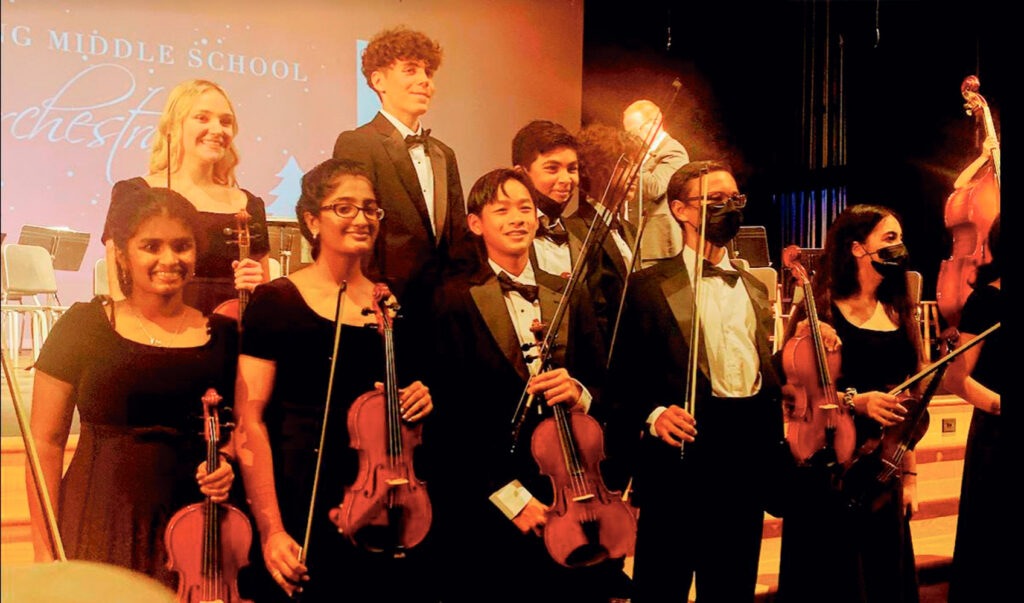
Mahi Nooka (2nd from left in front row) is a violinist in both the Long Middle School orchestra and the Tampa Metropolitan Youth Orchestra who would like to see more public support for youth orchestra programs.
Attending an orchestra concert is a great way to help. By attending, you’re showing that the kids’ hard work is not for nothing, and that someone cares. This is vital to developing confidence and allows us to practice performing in front of an audience (two essential skills for musicians).
Trust me, it doesn’t feel good when your auditorium is half-full and you’re performing for barely fifty people. This may seem like a lot of people to some of you, but think of how many people go to sporting events, especially football games.
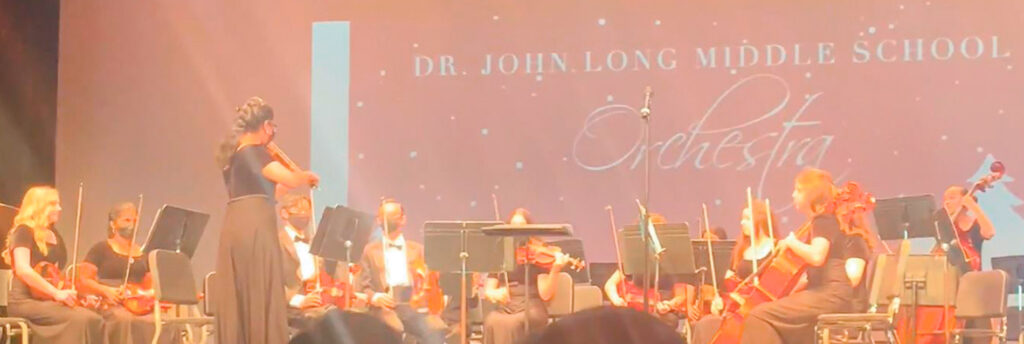
And honestly, if nothing else, concerts are just a great way to spend time and involve yourself with the community. Though I’m not sure about other programs and schools, the concert for Dr. John Long is on Wednesday, May 4, at the Center for the Arts at Wesley Chapel, and the next concert for TMYO is on Saturday, May 14, at the USF School of Music in Tampa. The general public is invited to attend both of these events.
In addition to simply attending an orchestra concert, many local nonprofit programs have options for donations on their website. I know TMYO does (tmyo.org/make-a-donation) and so do many others in the area: the Florida Youth Orchestra (floridayouthorchestra.org/donate), and the Florida Symphony Youth Orchestra (fsyo.org/support-fsyo). Donating lets our orchestras continue to exist and allows young musicians continue to express themselves creatively.
If you’re not interested in donating or attending, you can still help by spreading the word. Discussing the benefits of orchestra programs can help stir up interest in the programs, and some parents might even check out orchestra programs for their own kids. It may seem like a little thing, but it can help a lot.
And so, I’ve made my case. The youth orchestra programs need to be supported, and I’ve done my part to ensure that happens by having this article published in the Neighborhood News. I will keep advocating in the background because of my love for orchestra, but there is only so much I can do. I hope I have inspired you to take action. This is your chance to give back and make an impact — one that will be appreciated by young orchestral musicians in our community.
When Phoebe Taylor put on the drunk goggles and attempted to walk the guided pathway, she thought it would be easy. Instead, the Wiregrass Ranch High freshman was shocked to find herself stumbling throughout and sometimes off the course.
Like Taylor, students at her school are learning the consequences of drinking and driving, the dangers of not wearing their seatbelts and the importance of mental health.
“It’s easy for us to just go and do something dumb and regret it later,” Taylor says. “If that actually happened it could be very dangerous.”
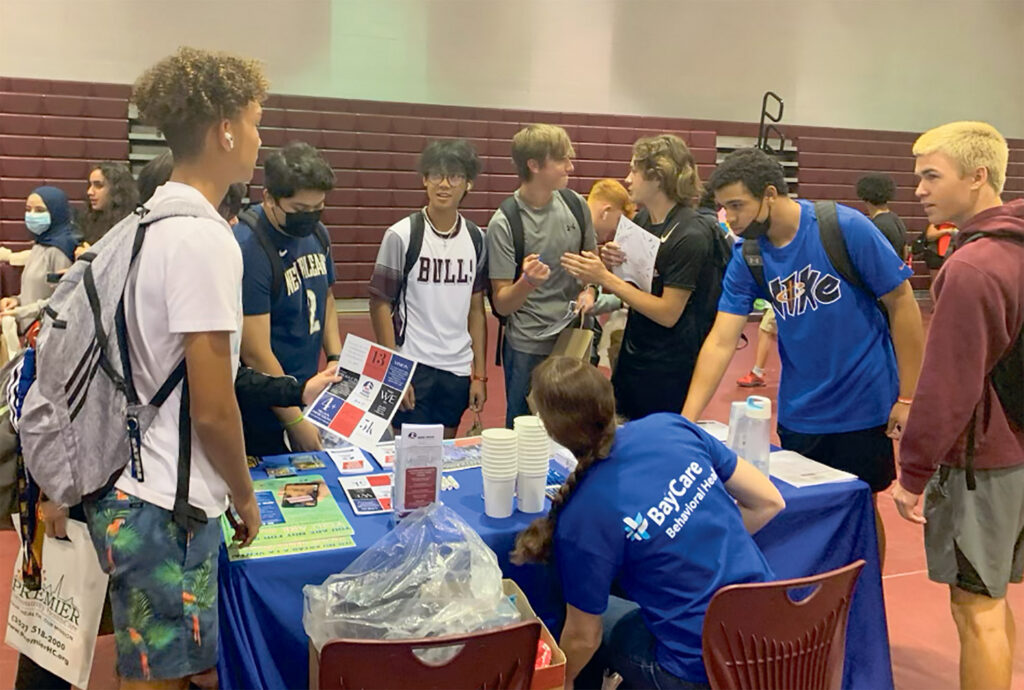
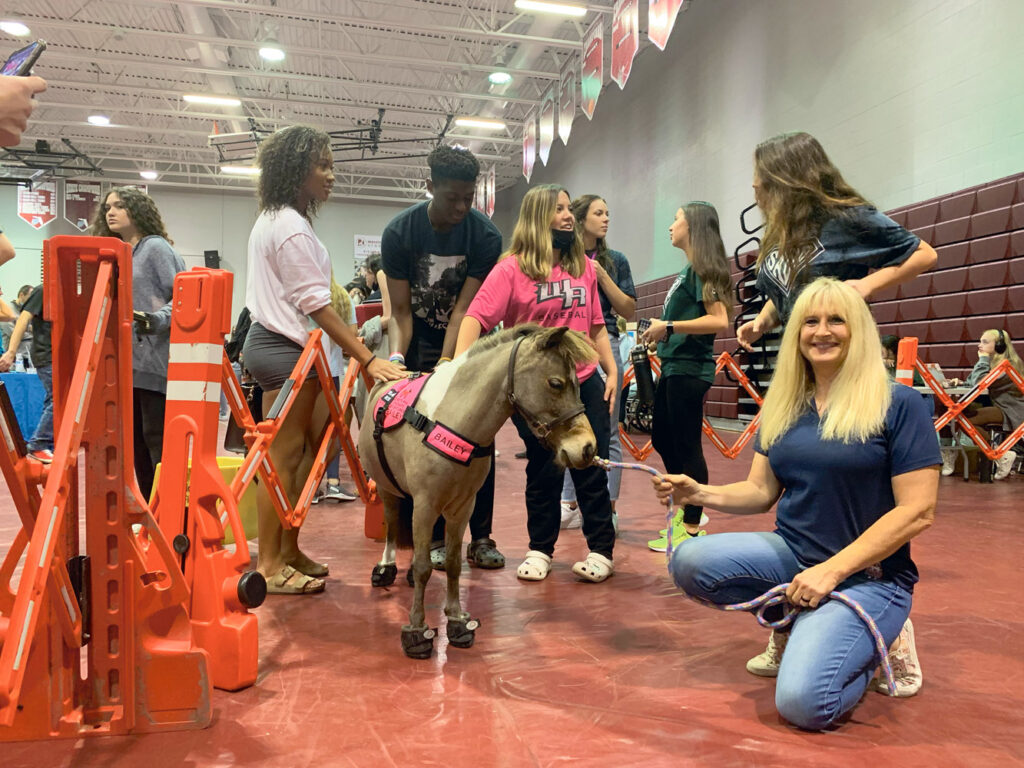
The largest-ever Wiregrass Ranch Wellness & Safety Fair was hosted on March 9 by the school’s Students Against Destructive Decisions (SADD) chapter to bring awareness to mental health and promote a healthier and safer lifestyle.
The event brought about 35 community leaders and the Pasco County Sheriff’s Office (PCSO) to talk to students and demonstrate the dangers of these acts.
Shaina Finkel, the president of the school’s SADD chapter and the national SADD president for the 2021-22 school year, oversaw the event. Her main goal was to have students talk to these organizations and understand the messages they are spreading.
“It’s not just going in and getting education,” Finkel said. “It’s meeting people and finding things that you might be passionate about that you didn’t know you were passionate about. It’s bringing safety and education and health to our school and it’s just allowing the students to learn.”
Finkel says there have been instances where these messages have not been reached by students; she hopes that through these fairs, students will rethink some of their previous and future decisions.
Ashley Boyles, Wiregrass Ranch High’s assistant principal, also oversaw the Wellness & Safety Fair. She says the fair is eye-opening to students and impacts them for a long time. The last time the fair occurred was two years ago, because of the pandemic, but she says students still remember and talk about it to this day.
“We’re again trying to make sure that our students are safe not only at school, but out in the community, out on the roads,” she says. “We always say to be college-, career- and life-ready and I think this is something to be life-ready.”
Students watched as a rolling car simulator demonstrated the dangers of drinking and driving and not wearing a seatbelt in a car crash. As the car spun, dummies inside not wearing a seatbelt flew out. Florida Highway Patrol spokesperson Steve Gaskin said he still gets people coming up to him and saying they remember the visual impact, and it is one of the reasons why they buckle up today.
“If I can make an impact on each one of these kids, then that’s one crash I won’t have to work and it’s one family I won’t have to go talk to and say, ‘Hey, your child’s not coming home tonight,’” he says.
Kelsey Strigler, the vice president of Wiregrass Ranch’s SADD chapter, says the car simulator is likely the most effective demonstration to show students the importance of wearing their seatbelts.
“Looking at it, I would be terrified,” she says. “I already do wear my seatbelt, but If I was a student who didn’t, that would really drive the point across that like you really need to wear that or you’re going to end up like the dummy on the floor.”
Among the booths was the American Foundation of Suicide’s Tampa Bay chapter run by board member Teresa Daniels. She is spreading her son Tristan Daniels’ story in hopes of saving another student’s life.
“There is hope out there,” she said. “They could be lifesavers. They can help anyone in need.”
Gabriella Nieddialek, a SADD member, recognized the importance of this booth and is glad to now be learning about these tools.
“A lot of teens don’t really like to come forward about mental health, and it’s definitely something that I’m glad the school introduces and is comfortable talking about,” Nieddialek said. “Definitely encouraging us to talk to people and get help.”
Wiregrass Ranch’s SADD chapter advisor Gregory Finkel is proud of how the event turned out. He watched how students interacted with community members as they talked to each other about what they learned. He says that is what the event is all about.
“You don’t really get these opportunities too often,” Gregory Finkel said. “If we can hit one of them, just one kid right, make a difference in their lives, the better.”