Lt. Gov. Jay Collins Makes His Pitch For Becoming Governor

“Leadership Has A Cost…Your Own Self Interest. Rise Above It, Lead From The Front & Get Things Done.” 
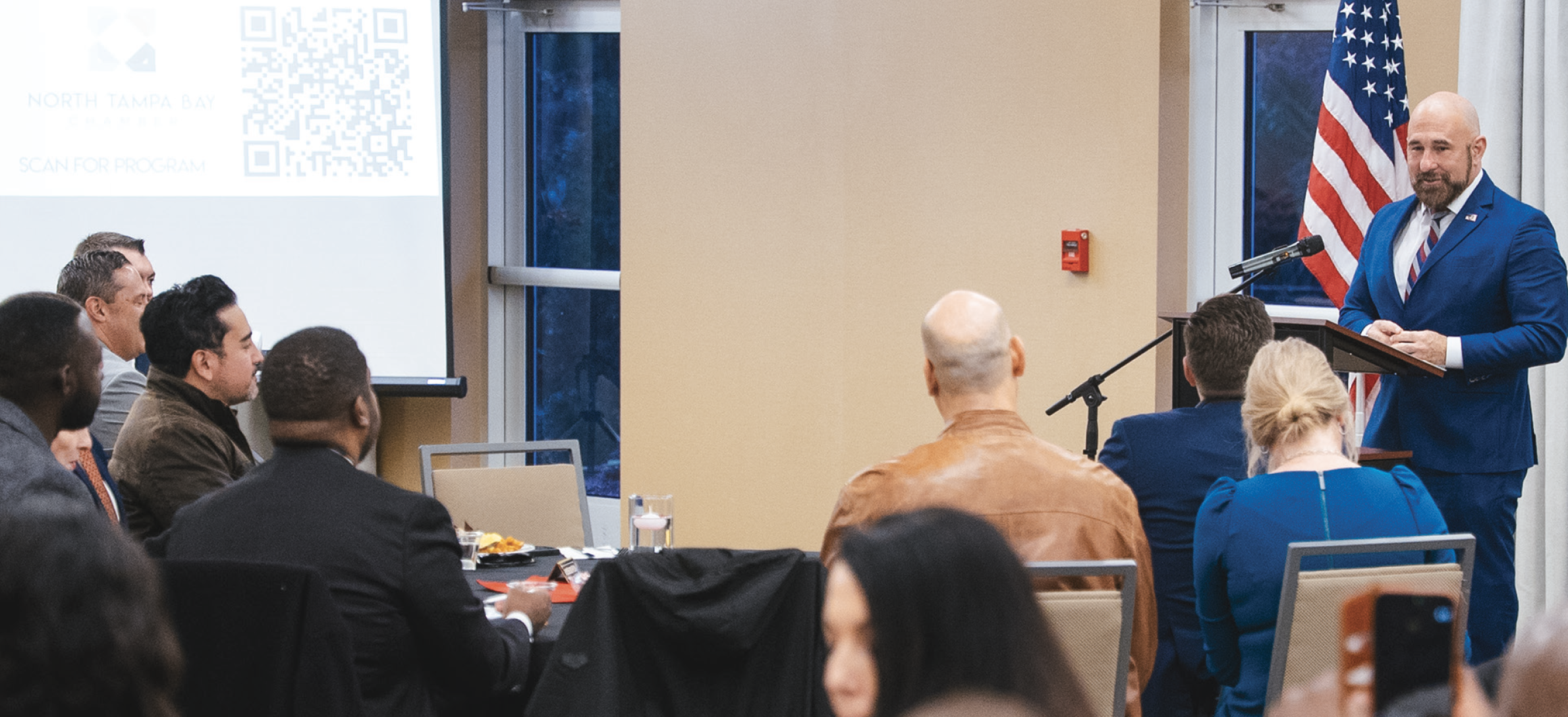
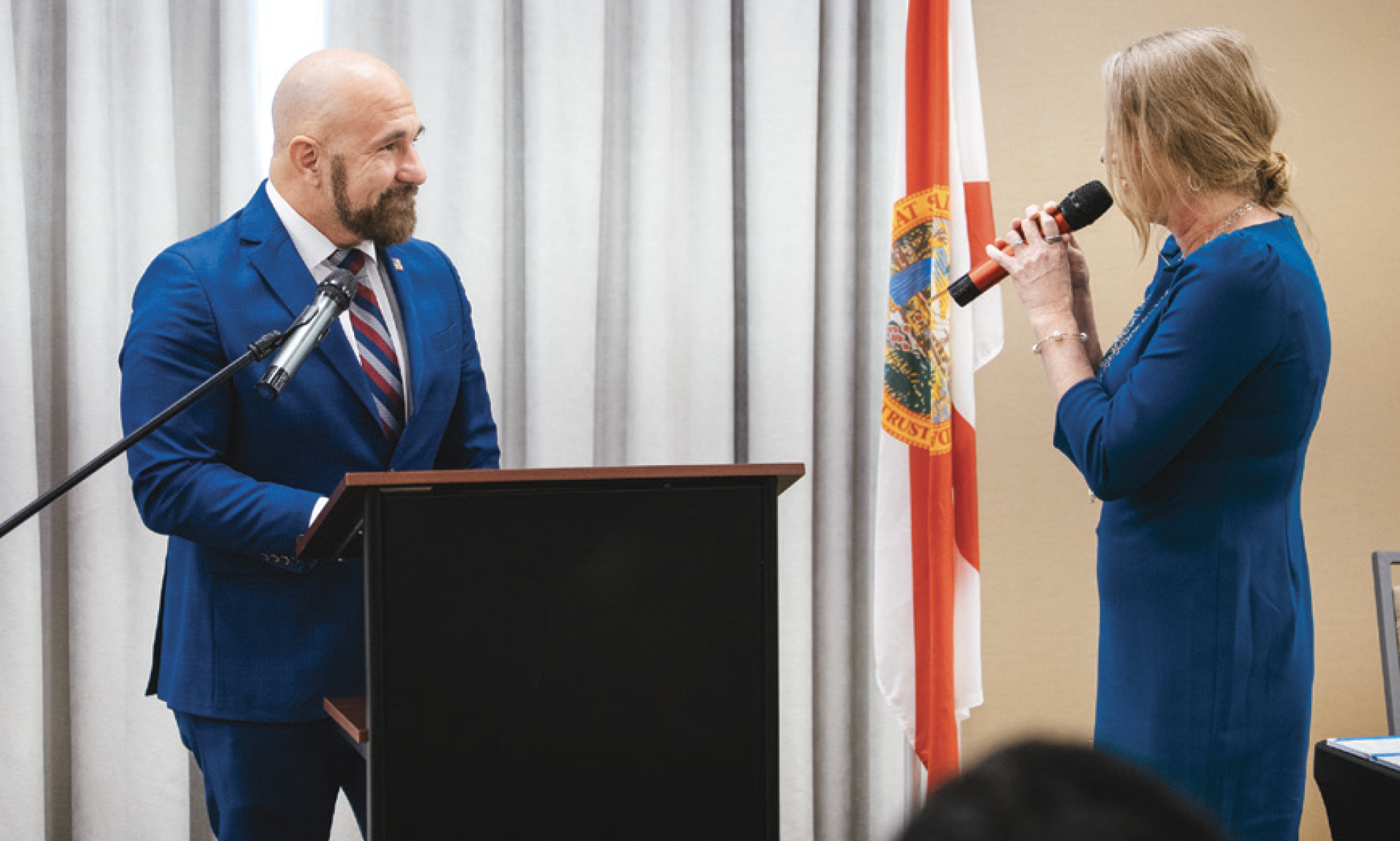
Florida’s Lieutenant Governor Jay Collins spoke about his plans to run for Governor in Nov. 2026 to a packed house of more than 100 people at the North Tampa Bay Chamber’s Business Breakfast on Feb. 3, at the Hilton Garden Inn Tampa-Wesley Chapel. (Photos by Charmaine George) 

No matter which side of the political aisle you may be on, if you sit and listen to Florida’s 49-year-old Lieutenant Governor Jay Collins speak, you can’t help but be impressed with him. He has had a 23-year career in the U.S. Army and has served as a medic and parachutist in the Army’s elite Special Forces Green Berets corps twice — qualifying the second time after having his leg amputated. 

He’s been shot, “which I do not recommend,” performed surgery on himself on the battlefield, has been awarded a Purple Heart, a Bronze Star and numerous other military medals and his story — and his life — could have ended with his military service, during which he met his wife Layla, who had a 20-year military career as a counterintelligence agent. 

Instead, he entered Florida’s political scene four years ago, when he was elected to Florida Senate District 14, defeating the incumbent Democrat Janet Cruz for the seat. 

The father of two boys ages 13 and 10 served for almost three years in the State Senate and passed 55 bills during that time. “I passed more bills in three years than many in the State Legislature do in eight,” he told an enthusiastic crowd of more than 100 North Tampa Bay Chamber (NTBC) members at the NTBC Business Breakfast on Feb. 3, at the Hilton Garden Inn Tampa-Wesley Chapel. 

Then, in August 2025, Governor Ron DeSantis appointed him as Florida’s 21st Lieutenant Governor, replacing Jeanette Nuñez, who had resigned in May. Collins may not be the favorite to win the Republican nomination for Governor of Florida in the upcominh 2026 midterm elections — he currently trails far behind Rep. Byron Donalds (who recently received U.S. President Donald Trump’s endorsement) and Gov. DeSantis’ wife Casey (who has not yet declared she is running) — but with more than a third of registered Republicans still undecided (and more than half undecided if Casey DeSantis ends up choosing not to run), it’s still anyone’s race. But, whether he has a chance to win the nomination or not, Collins definitely captivated that room.

He spoke confidently about his plans to improve upon the record of DeSantis, who he said, “has led the nation. He has put a lot of things together. While other states have raised taxes, over-regulated businesses and chased jobs away, Florida has chosen a different path. He’s focused on freedom, responsibility and opportunity. Florida is now the strongest state economy in the country. We lead the nation in new business formation. Our workforce continues to grow. Families and employers are choosing Florida and that success is especially visible right here in this region. People want to be here because we have opportunity. You’ve got the government out of the way as much as possible.” 

Even so, Collins acknowledged, “That doesn’t mean we’re exactly where we need to be, but we’re on the right path.” 

He said he had recently attended the opening of a health care innovation lab in downtown Bradenton that is doing implants that get rid of metal and use absorbable material, “so it goes right in and grows bone — safe, not causing scabs or abscesses. That’s going to change people’s lives by eliminating the need for at least one surgery. 

“The number one killer of people in health care is sepsis. The less you have to open somebody up, the less susceptible they are to sepsis. If we can stop that, we stop or lower health care costs, and some of the frivolous or excessive lawsuits at the back end, further dropping health care costs.” 

Collins added that he shared that story, “because that was one person who had a dream to build something great, came here to Florida, started a business and will now inject hundreds of millions and, at some point, billions of dollars into our local economy. 

“And that is what each and every one of you do every day. It just takes one moment for something to catch like wildfire and change how we do everything.” 

He then moved on to one of this year’s most discussed proposals being considered by the state legislature — reducing or eliminating property taxes. 

“Show of hands,” he said, “how many of you would like to have your homesteaded property free and clear of property tax?” (Everyone raised their hands.) 

“But now,” he continued, “how many of you have concerns about how that would affect our education, our roads, our firefighters and our law enforcement?” (Again, most hands went up) 

“Well, let me tell you something,” Collins said, “in this state, we are not going to put at risk our law enforcement or our firefighters. I would rather jump in front of a moving car than hurt the people who serve our communities. I would give my last full measure to protect our people. We will stand with our men and women of law enforcement and fire. We will not allow our cities or counties to underfund or cut that. It’s the same with roads and education.” 

He noted that although people usually assume his kids go to private school, “My kids go to public school in Hillsborough County, just down the road from my house. A rising tide floats all boats. 

“We have school choice in Florida because we understand that the money should follow the kids. It’s not the government’s money. It’s the people’s money being utilized to help provide something common to all — and we hold them accountable for those reasons. But, I also know that 85% of people will almost always go to public schools. And the right thing for my kids is that school just down the road, where they have their friends. I want my kids to be successful. I want them to have every opportunity to blow what I’ve done out of the water, to make my name irrelevant. That is what I dream on. So believe me, we’re going to protect those exact things.” 

The thing Collins said that raised the most eyebrows was about just how much of Florida’s property tax revenue comes from homesteaded properties. “Less than 30% of the money that comes from property tax comes from homesteaded properties,” he said. “That’s a shockingly low number. Now, some counties are higher, some are significantly lower — and I’m sure you can probably formulate which ones go that way, but that’s manageable. It’s solvable.” 

He then asked, “How many of you have seen your property value go up every year, from a tax standpoint? Has anybody had theirs go down repeatedly? I’ve never had anyone who said that and I’ve asked it a hundred times. 

“How many of you have had millage rate increases as well?,” Collins added. “You’re getting hit twice. It’s getting wider, because you’re paying more, and it’s getting taller because of the millage increase. 

“Now, ask yourself this simple question. Have you seen that exponential increase over the last ten years positively impact your education, roads, fire or law enforcement? Do they have more time, tools and training? 

“If the answer is decidedly ‘no’ — which it has been everywhere I’ve gone — where did that money go? 

“Friends, I am not here to pay more taxes. Lord knows, I put in time for what I get. I probably get about seven cents an hour as Lieutenant Governor — and I am grateful to do it. Please don’t think I’m whining. I’m just making fun of the system we’re in sometimes. 

“It’s fascinating. We have to solve that — hold people accountable. What we’re doing with DOGE (the Dept. of Government Efficiency) in Florida is significant, but we have to lock that in and make sure the (city and county) governments follow through, that we’re holding them accountable.” 

He also said that, “I’m frustrated that we have allowed the affordability conversation to focus just on saving our way to success. 

“Friends, this is America, this is Florida. I expect us to lead, to dream boldly, to draw in more life-changing industry — to raise our salaries as part of that story. I don’t want my kids to make what I made someday. I want them to have so much more. We have to be dedicated to that. 

“We can talk about property tax, but we have to draw in more businesses and get the government out of the way.” 

Collins was a little surprised that only a couple of people in the audience, including NTBC Board chair Tony Benge (see pg. 3) — who introduced Collins — were in real estate development. 

“How many of you who are in development deal with impact fees? How about permitting? How many of you have bought or built homes and had a permitting crisis you had to deal with? 

“There are two things right now that I believe we can lever and fix when it comes to home affordability. One is impact fees. They seem to just be levied left and right. Some counties are really great at it and some are less than stellar. 

“Either way, it’s going right back to the consumer. We have to reward people and let those fees come back the appropriate way, but there’s got to be a lot of commonality and common sense. 

“When it comes to permitting, I’ve gone through this as a business leader. I’ve gone through this personally when I built my home, but there has to be clarity and accountability in how that’s done. 

“We have a building code that works. I worked in disaster management for many years. I was there everywhere lives were impacted by hurricanes and I would see a slab, a slab and then three homes almost completely unfazed by the same hurricane. [That means] our building code works, if we can get them there. We, as a state, have to do more from a resiliency, a power side, without spending ourselves into oblivion. 

“Your individual amount that you owe to state debt is about $200. But, let’s compare that to the federal government, where it’s $126,000 per person. We have paid down 50% of our debt as a state over the last six years. We are balancing and lowering our budget every single year. Our reserves are maximized and yet, we’re still dropping them down more and more. That is what fiscal leadership and prudency looks like as a state. We have to maintain what we do.” 

Before opening his appearance up to the floor for questions, Collins closed with, “In our state, I don’t believe the past is our best. I think the best lies ahead of us. I’m an optimist. I believe in our people. I believe in getting government out of the way so businesses can thrive and more opportunities can exist.” 

And finally, Collins asked a question of his own: “Tell us what you see, what your problems are. The simple fact is that, as a leader, I can’t solve what I don’t know. I listen to Ronald Reagan a lot. I love how he spoke to the people and he solved problems. I love his approach. 

“To paraphrase him, ‘If the government thinks they have a solution, you should be afraid…very afraid.’ 

“Please work with us. We need business leaders from the Chamber and from the community, to help us understand where the rubber meets the road. How that impacts lives and how we can solve [problems], to really create solutions. 

“And, as a former legislator, I can tell you that, of the 55 bills I passed, probably three quarters of them came from the community in some way, shape or form, because we worked with them. We solved those functional problems on the ground and they improved. That’s good work. That’s good government. That’s how we work together.” 

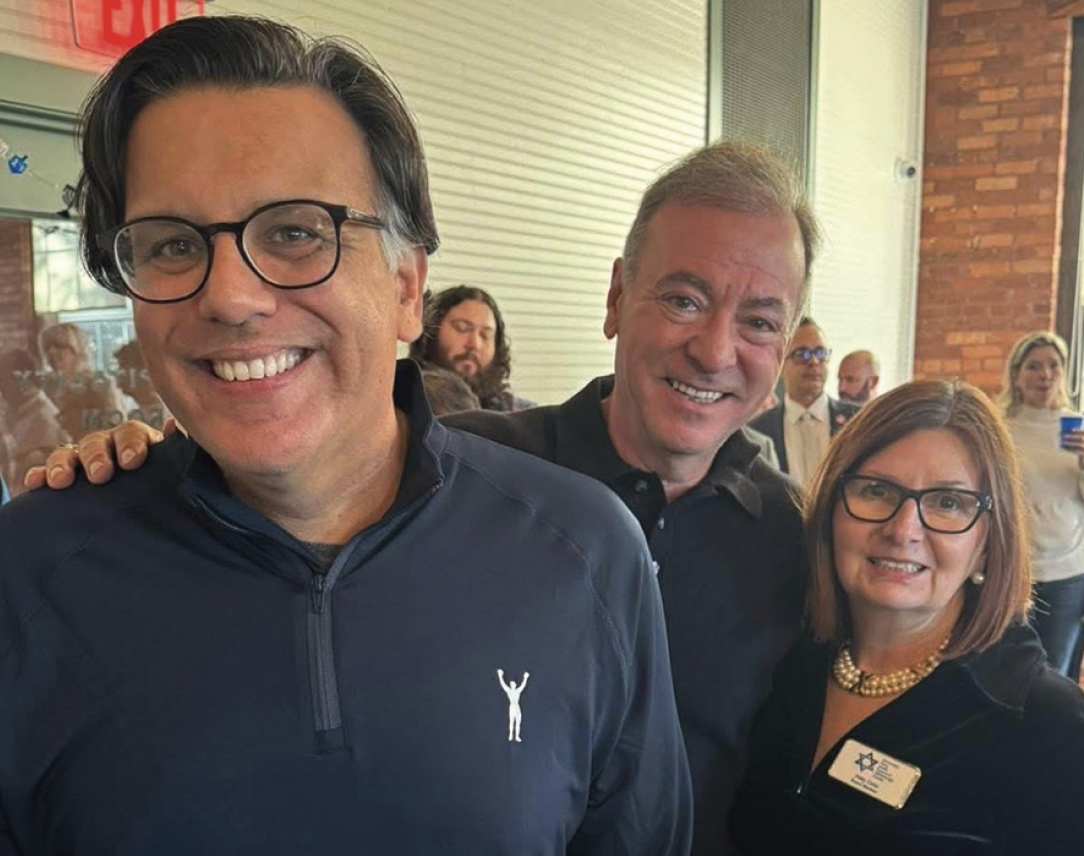
Florida Lt. Gov. Jay Collins & NTBC president & CEO Hope Kennedy.

Collins then took a number of questions, the first from Ryan Quattlebaum, the CEO of AdventHealth Wesley Chapel, who asked, “As we continue to hire, recruit and retain doctors into the state of Florida, what do you see you can do to help us continue to attract and retain physicians to Florida?” 

Collins responded that Florida, “needs more medical schools. I also know that every doctor we talk to says they are hemorrhaging people at the three-to-five-to-seven-year mark because they’re tired of litigation. They’re tired of the games. They’re tired of being told to write their SOAP (Subjective, Objective, Assessment, and Plan) notes in a specific way to fit into an insurance algorithm. Those are systemic issues we have to solve.” 

Next up was NTBC Board member Jamie Hess, the owner of Computer Emergency Room, who told Collins that the Chamber was looking into incorporating Wesley Chapel as its own city, “but we put it on hold because of the property tax issue. What do you think, realistically, is the forecast to get the homestead property tax reduced or eliminated this year?” 

Collins responded, “If I were Governor, I’ll tell you what I would do. I would call a Special Session so you have everybody there. I do think you can get full property tax relief for homestead properties [because] the math plays out. 

“But, for those who may not know how the system works, you’ve got to pass identical bills — within a 98% margin — in both the House and the Senate, and then have the Governor sign it. 

“And, because [incorporation] would have to be a constitutional amendment, it’s then got to go on the ballot and it’s got to get 60% of the people to vote for it. 

“Friends, there are times when it’s hard to get people to agree that we should even have a 60% level. It’s going to cost, at a minimum, $15- $25 million of advertising to understand what its going to look like. 

“But again, on property taxes, if there’s more than one thing on that property tax [bill], it’s 100% going to fail. But, I think it’s pretty likely that we get this, but where it ends up on the spectrum, that variability, I think you’ll know, probably within a month or so. But yes, it’s very doable, very manageable. 

“I know the Governor pretty well and, when he lays out his plan, it will be very detailed. You have to get ahead of the system to make sure people don’t move the money, don’t revenue taxes, and don’t just create another bureaucracy, instead of solving a problem. 

“I know pretty well where the Governor is at on this and I will not be part of anything that’s going to cut services. I will not do it.” 

Collins also answered a question from Primrose School of Wesley Chapel owner Rob Fitzpatrick about Florida’s insurance crisis and one from yours truly about holding private schools that accept school vouchers to the same standards as public schools. He also addressed a question from Benge about the lack of accountability on the part of local governments regarding impact fees (see the Editorial on pg. 3 for more on this topic). 

Very interesting stuff, Mr. Collins! 

Dr. Neil Manimala Is Running For Hillsborough County Commissioner

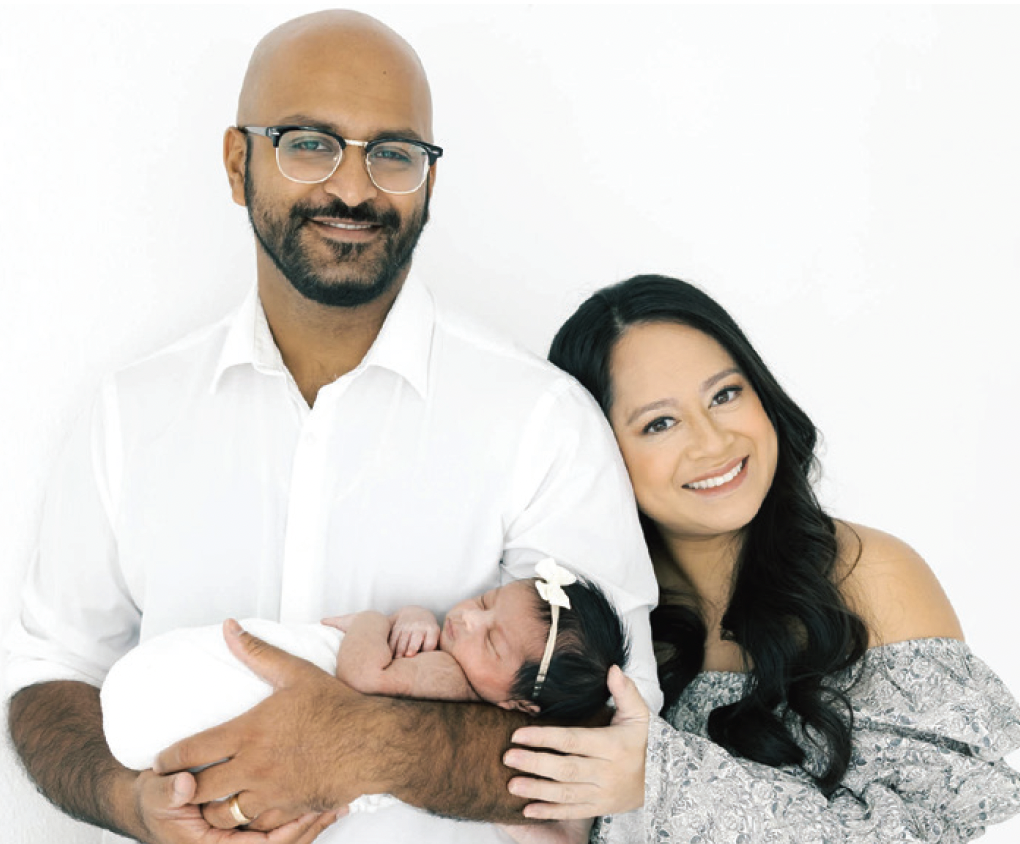
Dr. Neil Manimala, his wife Rachel and baby Mariam. (Photos provided by Dr. Neil Manimala)

Over the past few months, we’ve introduced you to a couple of candidates who hope to replace District 7 Tampa City Council member Luis Viera in 2027. 

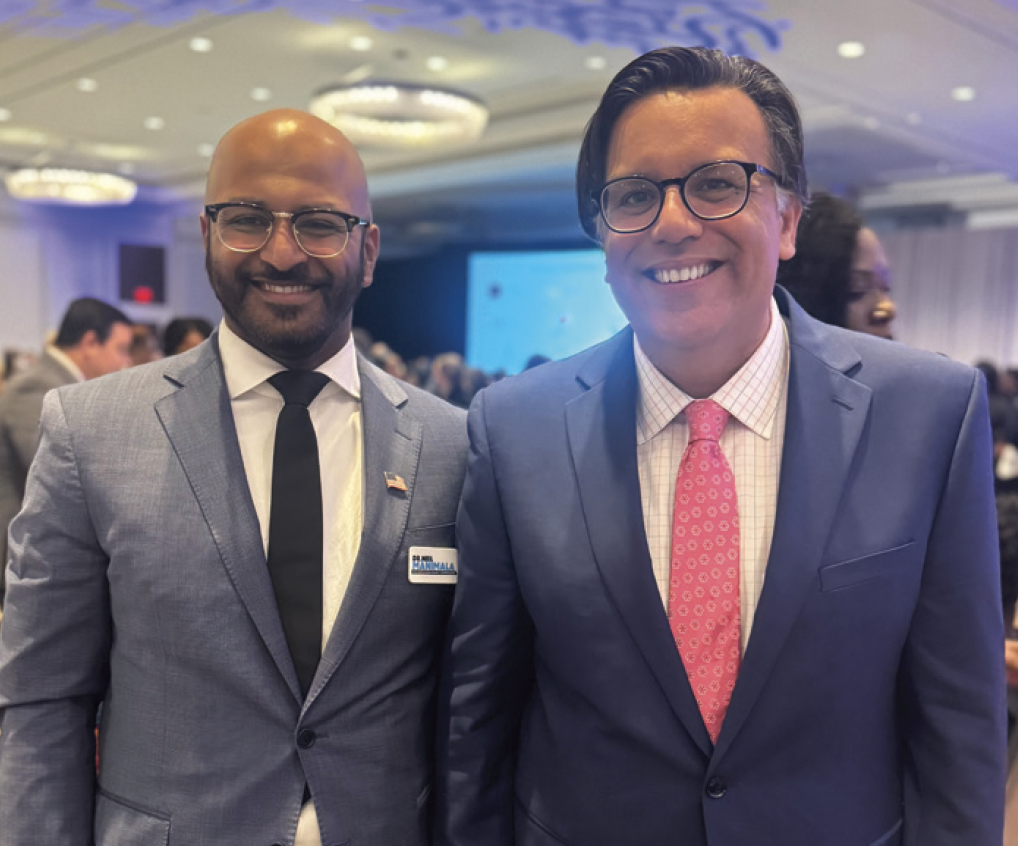
There is an important mid-term election coming up later this year, however, so when Luis introduced me to local urologist Dr. Neil Manimala at a recent event in New Tampa and told me that Neil was running for the countywide District 5 Hillsborough County Commission seat currently occupied by Republican incumbent Donna Cameron Cepeda, I knew I wanted to talk to Neil about what made a successful doctor decide that he wanted to serve the public in a completely different way. 

A lot of politicians will say that they’re running “for the right reasons,” but if you spent 90 minutes with Neil, the way I did a couple of weeks ago, you’d believe the way I do that his heart is 100% in the right place and that he genuinely plans to serve all constituents on both sides of the aisle in Hillsborough County. 

Now 35 years old, Neil was raised in Valrico, even though his parents were both from Kerala in southern India and emigrated to the U.S. in the 1980s. His parents raised Neil and his younger brother Nevin Catholic and he graduated from the King High International Baccalaureate program before attending USF. 

He met his wife Rachel, a traveling registered nurse, online when she had just moved back to the area from Orlando. Rachel’s parents live in Easton Park in New Tampa, so Neil has spent a lot of time in our area and knows it well. The Manimalas recently welcomed their first child, their daughter Mariam, into the world. 

Neil says that when he first went to USF, he was thinking about becoming an engineer. “I have a lot of respect for the computationally gifted folks, like my brother, who lives for statistics,” he told me, “but I realized that just wasn’t for me.” 

He also thought about going into research. “I did a bunch of work at Moffitt and my mentor at the time was an M.D./Ph.D.,” Neil said, “but when I shadowed him seeing patients, the first patient we saw, about 20 years ago, was a guy who had lung cancer and, unfortunately, it was terminal. He had been under treatment by my mentor for about two years and it was during that visit that my mentor told him there was nothing more they could do, that they had exhausted all of the treatment options available at that time. The patient and his wife were in tears, but you could tell during that encounter that, despite the terrible news, they were glad that it was my mentor who delivered it — that even though the chance of a cure was shot, there was still dignity to be had. That’s when I realized that I wasn’t meant to be doing research behind a bench. I wanted to have that human-to-human interaction.” 

He said he realized pretty early on that, “Even though you’re seeing some people during some of the darkest days of their lives — whether being told they have cancer or that their child had passed away — you also get to see people having some of the brightest days of their lives, hearing that their cancer is cured or that they can have kids again. That’s a huge gift.” 

Neil says that his first taste of “politics” was in student government while in medical school in USF. “I was in one of the last cohorts in med school at the main Tampa campus before we moved to Water St. downtown, and my student government group was very instrumental, from the student perspective, in shaping that campus.” 

Neil also did his residency with USF, but he was still in med school when he met Dr. Steven Specter (who isn’t an M.D., but has a Ph.D. in virology), who became another one of Neil’s mentors. 

“I remember student government was advocating for more student parking spots at the med school and I said, ‘Dr. Specter, I’m just sick and tired of politics.’ And, he told me ‘Neil, as long as you have two or three people sitting in a room, you’re going to have politics. You have to find a way to navigate the politics to help the people who matter most to you.” And, for me, that’s the people of Hillsborough County.” 

Neil with District 7 Tampa City Council member Luis Viera 

Neil also told me that one of the things that he plans to continue fighting for, that he first learned about while in residency, is the Hillsborough County Health Care Plan (HCHCP) through USF, which was originally funded by a half-cent ad valorem property tax but is now primarily funded by a sales tax. 

But, with state lawmakers discussing rolling back property taxes this year, there is growing concern about the long-term stability of HCHCP, even though it isn’t still funded by property taxes. 

“There are people ‘on the margins’ in this county who would never have access to top-of-the-line specialty physician care without that plan,” Neil said. “I currently serve on the Board overseeing that plan, which is how I first got into working with the county government. But, [HCHCP] has won awards nationwide for how it’s been taking care of people, and conservative estimates say that, for every dollar put into it, [the plan] brings back a return of $1.50 for all taxpayers. So, one of my priorities, if elected, will be to ensure it continues to be funded.” 

Neil also is a supporter of improving public transportation. He told me that, “HART is the most underfunded public transportation agency in any major city. That’s an embarrassment. I hope to be able to work to build it out, rather than cut more routes, so that we are able to have some sort of regional bus rapid transit system.” He added that he remembers when then-Gov. Rick Scott turned down $2.4 billion in Federal funds for a high-speed rail connection between Tampa and Orlando. 

“But, we need that kind of connection now, Neil said. “Just adding lanes to roadways creates what’s called ‘induced demand’ to build more homes and fill those lanes. Lane expansion should just be one tool in the toolbox, not the only tool.” 

He also believes that if the goal is to get vehicles off our roadways, “Why don’t we use our waterways? There was a plan that would have created a ferry to connect East County with MacDill Air Force Base, which would take 2,000 cars off the road every day. But, it got axed because some people on the County Commission disagreed ideologically with the people who proposed the plan.” 

He also said that, despite the partisan wave dominating state government, he hopes to, “build something sustainable where every citizen of this county sees that there’s something worth paying attention to on a local level. Let’s take care of all of our people and leave the partisan politics to Washington and Tallahassee.” 

Before deciding to run for elected office himself, Neil helped a couple of candidates with their campaigns, including New Tampa resident and 2024 County Commission candidate Patricia Alonzo, who lost her bid to unseat long-time District 2 incumbent Ken Hagan.“Patricia is a good person, but she was running against a local powerhouse and got into the race late,” Neil said. “I have a lot of respect for Ken and, when he first ran, he had a one-year-old at home, so there are some parallels between us.” 

He added, however, “While there are downsides to being in power for two decades, there’s also something to be said about having institutional knowledge about your job.” 

Neil also said that even though the County Commission is currently five Republicans to two Democrats, “there are current Republican commissioners, including Hagan, that I know I can work with to find common ground on important issues.” 

He also said that as a countywide candidate, he knows he has to appeal and answer to all 1.6 million people in the county, and he’s off to a great start — he doesn’t have a primary opponent and he’s secured endorsements from people like Dist. 14 U.S. Rep. Kathy Castor, State House Minority Leader Fentrice Driskell and Viera. 

He’s also dominating the fund-raising side of his race, having raised more than $121,000 so far, compared with just $6,000 raised by Cepeda’s campaign. But, when Cepeda beat Mariella Smith for the Dist. 5 seat in 2022, Smith also out-raised Cepeda by a wide margin. 

“I know money isn’t enough to win,” he said. “I also am getting out there to talk to people. I’m running to serve all of you.” 

To find out more about Neil Manimala or donate to his campaign, visit NeilManimala.com. 

Alan Cohn Throws His Hat Into The Ring To Succeed Viera!

Long-Time Investigative Journalist & Congressional Candidate Says His Qualifications Set Him Apart 

Former investigative journalist and long-time New Tampa resident Alan Cohn is running for Luis Viera’s Dist. 7 Tampa City Council seat. Cohn is the second candidate to announce his intention to run for Viera’s seat in Mar 2027. (Photo by Charmaine George)

Editor’s note — If District 7 Tampa City Councilman Luis Viera is successful in his bid to succeed Florida House Minority Leader Fentrice Driskell in the State House District 67 election next November, Viera will have to resign from his City Council seat before his second — and final — term in Dist. 7 ends in March of 2027. 

That would mean that the remaining Council members would have to vote to appoint someone to fill Viera’s seat for four months. That appointee would clearly have the inside track in Tampa’s Municipal Elections in Mar. 2027 to remain in the seat. 

In other words, with the primary season for the 2026 Midterm Elections coming up in August, it’s not too early to start telling you who may or may not run to replace Viera. We’ve already introduced you to long-time New Tampa resident and Hillsborough County firefighter Morris Lopez, who is expected to file paperwork to run for Viera’s Council seat this month. We’re equally proud to introduce you to another long-time New Tampa resident who also is planning to file his paperwork soon to replace Viera. — GN 

Peabody Award-winning investigative journalist. Local TV news personality. Two-time candidate for the U.S. Congress. Sixteen-year New Tampa resident. Proud husband and father who cares enough about his community to want to serve it in a new way. 

Those are the qualities 16-year Grand Hampton resident Alan Cohn hopes will earn him enough votes to win the District 7 Tampa City Council seat that fellow New Tampa resident Luis Viera has held for the past nine years. 

Originally from Pearl River, NY, Cohn, 63, acknowledges that Viera has done “a terrific job” of not only representing, but also fighting for the needs of New Tampa — and he plans to continue to fight that good fight for the people of his community. Cohn says that no matter who else also runs for Viera’s seat, he believes he is uniquely qualified to achieve results for the people who live and work in District 7. 

“I’ve raised my family in New Tampa,” Cohn says of his wife, Patty (who also is a former journalist) and their son Aaron, 27 (a former Minor League pro baseball player), and daughter Ann, 29, both of whom graduated from Wharton High. “We’ve been ingrained into this community, so not only do people know me as a friend and neighbor, they know that I care deeply about where we live and the obstacles and the issues that we’re facing.” 

He also believes his background in investigative reporting will help make him a successful City Councilman. 

“I was an investigative reporter for 30 years,” Cohn says. “I’ve covered presidents, governors’ races, Senate races and Congressional races. I was confronted in my first TV job in Massachusetts with a corrupt district attorney who was in bed with the mob. I helped break that story and this guy who had been in that office for 30 years ended up having to leave office.” 

He won the 2007 George Foster Peabody Award, one of journalism’s highest honors, for uncovering that Stratford, CT-based Sikorsky Aircraft, which makes Blackhawk helicopters, was allowing defective parts in its aircraft. 

“I had the facts in black and white because Sikorsky employees snuck documents out of the factory to give to me,” Cohn says. “What Sikorsky did, in the name of efficiency, was lay off their quality control inspectors who inspected subcontracted parts. I was given Department of Defense (DOD) documents saying that they were seeing increased cases of major defective parts on aircraft. I credit my (TV station) management that allowed me to stay on that story for three years until I was able to prove that those aircraft were crashing. And, once that happened, I actually had the George W. Bush administration on my side and Sikorsky had to change what they were doing. And, that probably got me the job down here at ABC Action News.” 

Within a couple of months of starting at that new job, Cohn says, “I found out about a guy who was going around the entire area dressed in a full Marine Corps uniform with the Navy Cross and I discovered that he had never served a day in the military. I thought he was living near the VFW hall off I-275, so I went there, gave the bartender my card and said, ‘If you ever see this guy around here, call me.’ And, that Friday night, he called me to say, ‘He’s here.’ I rushed over, interviewed the guy on my phone and he wound up being charged and convicted federally.” 

Cohn worked at WFTS-TV Channel 28 in Tampa until 2012, but took a break for a few years, until WWSB-TV (ABC7) in Sarasota created an interview show for him. He left that job in 2020 for his first U.S. Congressional District 15 run, where he defeated State Rep. Adam Hattersley and Marine Corps vet Jesse Philippe in the Democratic primary, earning 41% of the vote. 

Viera, who appointed Cohn to the city’s Charter Review Commission, poses with Alan and his wife Patty. (Photo provided by Luis Viera)

“That District 15 race was targeted by both sides from the get-go,” Cohn says. “The incumbent, Ross Spano, was a first-term member of Congress. He also was under criminal investigation. So, I saw it as an opportunity. I thought it would be a first-term member of Congress under criminal investigation against an investigative reporter who had sought out corruption. The problem was that Spano was defeated in the Republican primary (by Lakeland City Commissioner Scott Franklin), so that changed the narrative of the race.” Cohn lost to Franklin 55%-45%. 

Then, in the 2022 election, Cohn again won the Democratic primary for the newly redrawn 15th District, finishing first out of a five-candidate field with 33.1% of the vote. He went on to lose the general election for the District to Republican Laurel Lee by 17 percentage points. 

“My aspiration has always been to serve,” he says. “I look at the role of City Council as where the ‘real work’ is done. This is where you can have a profound impact on your community. And, that’s why I’m running.” 

Cohn also believes that this is a critical, important moment for the City of Tampa. 

“We’re at a point in time, which is almost like a tipping point, not only for New Tampa, but for the entire city,” he says. “I want to be a part of that. I want to make sure that hard-working families can afford to live here and can enjoy living here. I believe City Council is where I can have the most impact at this point in time.” 

As for what he hopes to accomplish for New Tampa on City Council, Cohn wants to make sure that the projects Viera has been working on, but may not see through to fruition before he leaves office, don’t go away because someone new is elected to fill his seat. 

He wants to make sure the city finds the funds necessary to build the under-design, but not-yet-funded city park in K-Bar Ranch that Viera has championed, as well as find a way to put either another fire station or at least an emergency rescue vehicle in K-Bar, “because the response times there aren’t acceptable.” 

In fact, Cohn says, public safety is a top priority for him. “We don’t have a police department location in New Tampa, so TPD officers who patrol here have to check in by Busch Blvd. And, when their shifts end, they have to exchange paperwork in parking lots. That has to stop.” 

He also says that although coalition-building is important, “I have been, throughout my journalism and political career, an advocate who knows how to push properly and knows the tactics and the methods to bring about change. I have always been able to shine a spotlight on whatever is needed, and push until it’s done.” 

Cohn adds that it’s still all about communication. “You can have the greatest ideas in the world,” he says, “but you have to be able to communicate them in an effective way. And, that’s the advantage I think I have over anyone else.” 

Although Viera isn’t making any endorsements in the race to replace him (see pg. 10), “at least not until the race is down to only two candidates,” he did recently appoint Cohn to the city’s Charter Review Commission, which meets every seven years to propose changes to the city’s charter, which Cohn says is akin to its “Constitution.” 

“The Commission is difficult and time-consuming work,” Viera says, “and I thank Alan and all of the other Council and Mayoral appointees who will dedicate a great deal of time to this endeavor. I was proud to appoint him to this position. It is important to have people who are responsible and quality on this Commission and Alan fits that bill. He is a good man and I know he will do an amazing job.” 

Cohn says that there is a constant struggle in Tampa about our form of government. 

“We have a strong mayor form of government,” he says. “I know there are people on the City Council who are frustrated that our Mayors can do whatever they want. And I know Mayors who have felt like Council meddles in what they’re doing. I think that we need to bridge the gap here and create a situation where there’s a much better working relationship between the City Council and the Mayor, because it has been incredibly divisive for too long. And, as to how the City Charter could have an impact on [that relationship] is part of what we want to work at, to make sure that it meets the moment. It’s no coincidence that people who have served on the Charter Review often become City Council members afterwards.” 

Cohn also says that he would love to help the Rays Major League Baseball team move to this side of Tampa Bay and that he definitely supports the recent development of downtown Tampa. “I would like to see more of it, but I’d like to see it be affordable to most people. I also want to help bring more family-friendly things and restaurants to right here in New Tampa, so you don’t always have to go downtown.” 

And, although he is Jewish, Cohn says, “I’ve always had strong support in the local Muslim community because it’s been based upon a shared dedication to civil liberties. The last few years have definitely put strains on those relationships, but I will seek to open that dialogue again. As Luis says, New Tampa is a very diverse community of Christians, Jews, Muslims, Sikhs and Hindus, so we all need to start talking to each other.” 

And, speaking of dialogue, he says, “I will be pesky in terms of my invitations to other City Council members to come up here because even though I’d be representing New Tampa on City Council, I’ll still also responsible for making decisions for South Tampa and Seminole Heights. We all have a responsibility to know how our issues impact the other areas of the city. I’m going to use my energies and my voice to do that.” 

In conclusion, Cohn says, “Patty and I love our community. I’m blessed with not only an understanding wife, but with someone who also has her finger on the pulse here. We complement each other that way.” 

New Tampa’s Morris Lopez To Run For City Council!

Photo by Charmaine George

 I first met Morris Lopez 30 years ago, when he opened the original Amigos Spanish CafĂ© (later Las Palmas) restaurant in the same Pebble Creek Collection plaza where I moved the Neighborhood News office in 1995. 

Morris, who was born and raised in Tampa, and his wife Yvette (also in the photo) and their two daughters moved into a 1,600-sq.-ft., $89,900 house in the adjacent Pebble Creek community, “because it was the only place we could afford,” he says. 

At the time, Morris was only eight years into his now-38-year career with the Hillsborough County Fire Department, which did not then (and still does not today) have a location anywhere in New Tampa. 

So, how did the career Hillsborough County firefighter and current shift commander decide that he wants to run for the District 7 Tampa City Council seat being vacated in 2027 (or possibly before) by two-term incumbent Luis Viera? 

Well, first of all, Morris’ childhood home was in District 7 and he moved his family to Tampa Palms after selling Amigos three years after opening it. 

“I’ve been serving the public my entire adult life and I want to continue to serve,” he says. “And honestly, Luis has inspired me.” 

“It kind of came out of nowhere,” Morris said while sitting with Yvette and me in the restaurant at Tampa Palms Golf & Country Club. “Once I got promoted with Hillsborough County, after 38 years and getting promoted into admin, I dealt with a lot of events and the political side of it.” 

He added, “And, I met Luis (Viera) and got to know him a little bit, and became a fan of his, watched what he did out here and I just loved the fact that he was for all of the people and very much into public safety. And, he did a couple of things for us that were unexpected, including the tribute he did — and got City Council to do — for my grandfather, Morris Lopez I — and he’s actually working now on naming a street for him, which I think is very special — and I became a fan.” 

For those who don’t know, or read Luis’ Facebook posts, Tampa Police Patrolman Morris Lopez was gunned down from a passing car while on his patrol in Ybor City on July 9, 1949. He was only 25 years old. The case remains unsolved to this day. 

“I never got to meet my grandfather,” Morris said. “But, it was because of his service that I became a firefighter and I so appreciate Luis recognizing his service and his sacrifice.” 

So, when Viera announced that he was leaving his seat, Morris said, “Believe it or not, that’s the first time that I ever thought about it. For 38 years, I’ve been in public service and now, at an administrative level. The next thing for me, to continue to serve, is to move into some kind of non-partisan position like this — where I can actually have a voice like I have at my job. I think I can transition into [elected office] and do well.” 

Morris started his career with Hillsborough County Fire Rescue in 1987, as a firefighter at the Gibsonton station, but soon moved to his “home” area of District 7 and the University area, “at the two busiest stations in the county. I never thought I’d one day be able to maximize my career, but I’ve done it.” 

When I mentioned that his inspiration for opening his restaurant may have come from him doing a lot of the cooking during his 24-hour firefighter shifts, Morris said, “We don’t even allow the firefighters to cook now until they build their skills, but I’m not in the stations anymore.” 

But now, as a shift commander, he said, “I am responsible for that whole shift [for the entire county], so after 5 p.m. and on weekends and holidays, I’m pretty much running the entire department. It’s a lot different now than it was when I was a firefighter and my only responsibility was to clean toilets (and maybe do some cooking) and I only made $5.87 an hour — which is the reason my wife and I had to have a small business.” 

He started cutting grass out of his truck, “and I would take my crews to that deli that guy had [in the Pebble Creek Collection] and I became the first to bring Cuban food to New Tampa.” 

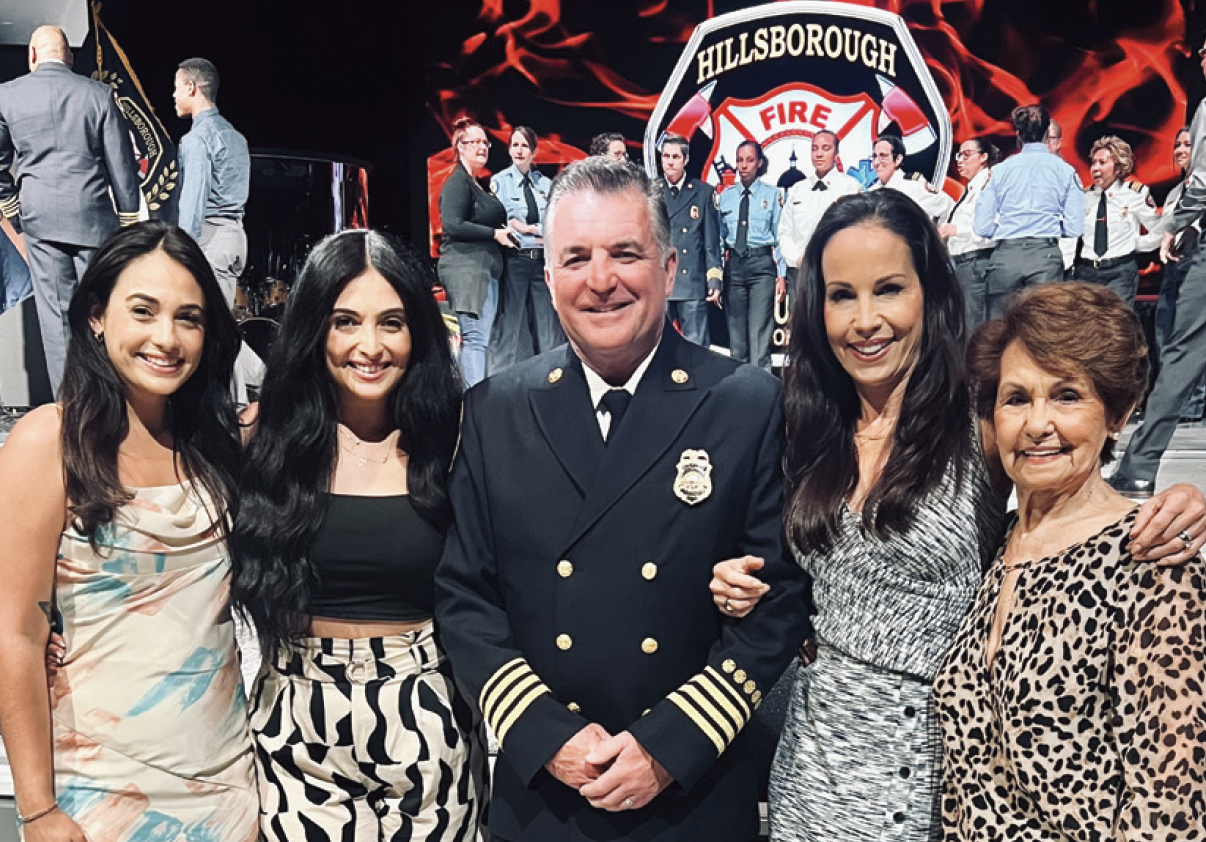
(L.-r.) Courtney, Danielle, Morris & Yvette Lopez & Yvette’s mom Onellia Martinez (Photo provided by Morris Lopez)

Yvette added, “We got married in 1990 and built our first house in Pebble Creek, because it was affordable. I was working at USAA (the giant insurance headquarters building in Tampa Palms) and we decided to raise our family here.” 

Although they are doing some remodeling at their home, Morris says that he still has the story we published in the Neighborhood News about Amigos back in 1995. 

Yvette also acknowledged that she and her husband were among the very few people living in New Tampa at the time, “who were both originally from Tampa. Most everyone else was from someplace else. They’d say, ‘You’re from Tampa and you live out here?’” 

It wasn’t long before Morris and Yvette decided to move to Tampa Palms. “The reason was because we had two young daughters (Danielle and Courtney) and I was — and still am — a very big advocate of the county’s public school system,” Yvette said. “My dad taught at Plant High School for 37 years. And I said, ‘These schools are good. We want to raise our children here.’ And what an experience we had, taking our children from Tampa Palms Elementary to Liberty [Middle School] to Freedom [High] and then to USF!” 

Morris added, “We’ve only owned two residential homes in our entire lives. Pebble Creek was our ‘starter’ and I worked very hard to save enough money to afford a lot in Tampa Palms, when Yvette was pregnant with our second daughter (Courtney) — in 1997, after I sold the restaurant. I was still doing the landscaping and the money from the sale was the only way we could afford to move here. This is our forever home. We’re not going anywhere.” 

Morris said he has heard about some possible opponents for the Dist. 7 seat, but he isn’t concerned about whether or not he will have competition for it. 

“I haven’t really delved into that,” he said. “It’s more about finding out if I had viability [as a candidate] myself. I’ve gone down the list and looked at what kind of support I could get and I feel very comfortable about that. But, the most important thing is my wife and how important she is to me and whether or not she wanted us to take on this challenge.” 

Yvette smiled, “I honestly think it’s more of an opportunity. We’ve just celebrated our 35th wedding anniversary and I always say that the only thing he’s been committed to longer than myself is the Hillsborough County Fire Department. The one thing I will say about him is that he’s a committed, loyal man — as he is to me and as he is to his department, he will be to the people of this District and this city. I’ve watched him grow from being a firefighter to being a Division Chief and he has used that platform to represent where he came from and he can do that now.” 

She also noted, however, that, “We both grew up middle class and I used to think that you can’t really have a voice unless you have money, that money is power. But, you know what? Having a sincere desire to serve and help people and make a difference, I now think that’s what you really need.” 

Morris added, “I maximized my position with the Fire Department and I became a voice and I was able to do things for my people and actually plant seeds and watch them grow. I don’t want that to stop.” 

As an example of his voice, Morris said that, “We’ve made so many changes in Hillsborough County in the Fire Department. We’ve grown so much and to help with that growth — helping with quicker response times, knowing the area and being so involved for so long, and now, we’re going to be one of the best departments in the nation.” 

Morris said that he believes that if elected, he can finally get the additional ambulance unit in K-Bar Ranch that Viera has been fighting for with Tampa Fire Chief Barbara Tripp. “Until I became an admin, I spent 34 years in the union and I have to walk that fine line every day,” he said. “I have to protect my admin family in the Fire Department but also co-mingle with the union. I’ve been that mediator between our union and our admin because I was part of it for so long.” 

He added that, “When we lived in Pebble Creek, if there was a call for a cardiac arrest in our neighborhood, our Ladder Truck [from Hillsborough Station No. 5, north of E. Fletcher Ave.] would drive right past Tampa Station No. 20 on Bruce B. Downs in Tampa Palms. But now, we pay the city to cover [Pebble Creek, Cross Creek and Live Oak] because that’s the best way to get those county residents the best service at this time.” 

“My top priority will be public safety,” he said, “but also infrastructure and transportation and traffic. We’ve grown so much in Tampa, but there are things we can do to improve the services we provide, so those items will be most important going forward. What I’m going to bring to the table is that I’m an information gatherer and although I’m only one decision-maker (out of seven), I will have a voice. I will do what I do for people in my department and carry that over to the residents of the district and the city. I will have the same passion in office as I do now when I serve my people in my department. That’s what my platform is.” 

Yvette added, “Morris is the person you can go to if you have a problem. He will have a very open-door policy and the people need to know that he’s going to listen to every voice and help the city and county to work together.” 

And finally, he said, “The county has been so good to me, but my heart and soul are in the city. I don’t want this to be about my grandfather, but he gave his life for the city. My dad was two years old when that happened. He grew up without a father and I grew up with nothing. That’s my inspiration. I would feel like I was doing him an injustice if I didn’t try this, no matter how it turns out. 

“I looked into the viability, got my wife’s support and I realized this could happen.” 

If and when Viera vacates his seat next year — if he is able to gets elected to replace House Minority Leader Fentrice Driskell in House District 67 the State Legislature, “I will have an interview with the City Council. If that goes well, I could be appointed to the seat, but I still have to be prepared to run for it, too. I will file all of the paperwork by the first of the year. 

“This isn’t a political aspiration,” Yvette said. “He wants to run to make a difference.”

Stephanie Vazquez To Challenge Seth Weightman For Dist. 2 Commission Seat 

District 2 Pasco County Commission candidate Stephanie Vazquez and her family. (All photos for this story were provided by Stephanie Vazquez) 

The next election for the Pasco County Board of County Commissioners (BCC) isn’t until November of 2026, so why is Wesley Chapel resident Stephanie Vazquez already declaring that she is going to run as a Democrat to oppose current Republican District 2 Pasco Commissioner Seth Weightman? Stephanie is the first candidate to throw a hat into the race to unseat Weightman for the Dist. 2 seat. Here’s why: 

If you’re unfamiliar with Pasco County government or new to the area, Pasco is divided up into five districts, with District 2 including a large portion (but not all) of Wesley Chapel, as well as about half of Land O’ Lakes, and small (but important) portions of unincorporated Zephyrhills and Lutz. 

Vazquez, who has been a resident of District 2 since 2013 (there will be more on this later in this story), moved to our area from Pittsburgh, PA. Like many northerners, she primarily wanted to escape the snow. 

With Wesley Chapel being the fastest-growing area of not just Pasco, but also one of the most quickly expanding areas of Florida and the entire nation, Vazquez believes that the time is now for a change in county leadership. 

“I’ve thought about running for several years,” she says, adding that even though she’s new to politics, her background has prepared her for leadership and, “The time is now.” 

Vazquez currently works as a remote marketing manager for Northeastern University in Boston, MA, but she also is enrolled as an online student at the school, as she is working towards her second Master’s degree, this one in Public Administration, and expects to graduate in 2026. She believes that degree is helping to prepare her for the job she’s now seeking. 

She earned her first Master’s degree, for Entrepreneurship in Applied Technologies, in 2016 from the University of South Florida and she previously earned her Bachelor of Science degree in Behavioral Sciences from Bellevue University in Bellevue, NE, in 2010. 

But, Vazquez says, her decision to run is about a lot more than just her educational background. Most of her recent work experience, beginning with her service in the U.S. Air Force as a Senior Airman, working in airfield management, both in the states and overseas in Germany, is about public service. When she left the military, she says she wanted to continue fighting, but on two different kinds of battlefields most people never see. 

Vazquez (second from left) appearing on “10 News” WTSP-TV as a panelist on a discussion about human trafficking. 

The first was her seven-year service as an Advisory Board member for the Post 9/11 Veterans Corp., a 501(c)(3) nonprofit organization that focuses on, “providing a platform, a starting point, and a place of belonging, where veterans are encouraged to integrate into their local communities and inspire through actions.” 

The more recent battle was against Human Trafficking. As a vice president of the U.S. Institute Against Human Trafficking and a Board member of both the Pasco County Commission on Human Trafficking and the NISSI Project (which provides housing for verified adult female victims of human trafficking) for six years, Vazquez says she helped build these national and local programs to tackle exploitation at its roots: opening a safe house, building recovery programs and training thousands to recognize and stop injustice. 

She later honed her public speaking and writing skills while holding a public servant government position as a public information officer for the City of Zephyrhills. 

Vazquez says she hasn’t had it easy, explaining that growing up poor helped build her character, not just once, but twice in her life. Born in Flint, MI, her dad was a young Marine veteran who worked part-time at a local drug store while also going to college part-time to try to earn a basic degree. Meanwhile, her mother was a stay-at-home mom, but both of her parents’ families came from generational poverty, so between her dad’s paycheck and essential government services like food stamps, she said it was barely enough to keep them from going hungry. 

She remembers growing up having to “do without” most of the time, as her family stretched everything they had, often having to eat the same one meal multiple times in row. 

“The most disgusting thing was the powdered milk, mixed with water,” she says, “because real milk was too expensive for us. I can still taste it.” 

Years later, Vazquez found herself in a similar situation, just out of a relationship that wasn’t working. As a single mom of three, she moved to Florida, with kids who were 4, 3, and 3 months old. She was unable to afford child care or find a job that paid enough to put them in daycare, so she found herself below the poverty line, receiving government assistance. 

“I used to take my kids to Walmart so they could play with toys,” she says, “because we couldn’t afford to buy any.” But, these struggles forced her to develop the ability to get by, and evolve, leaning on her experience from the military. She says that when you’re poor and struggling, “you don’t think about politics, you think about how to survive.” That experience makes her want to stand up for working class families. 

“Pasco deserves better than business as usual,” she says. “Our families are paying the price while a handful of insiders cash out. I’m not a politician. I’m a veteran, a mom and a community advocate who believes Pasco should work for the people who live here, not for the powerful few calling all the shots.” 

But, why should people vote for her? 

“The incumbent was hand-picked by insiders, and swept-in through a closed primary,” Vazquez says, adding that the current commissioners, including her opponent, continue to vote to allow more and more growth, “before the county is ready for it. But, I’m not part of the county political machine, I’m part of this community.” 

She says that Weightman was, “a strategically chosen candidate” by the local powers that be. “But, I want clean government, not back-rooms deals, with decisions made in the open, with transparency and accountability.” 

Here are the issues Vazquez says her campaign her campaign will be about: 

‱ Fixing broken roads, drainage and outdated storm systems. 

‱ Preparing for future challenges like flooding and climate change. 

‱ Establishing term limits to break the cycle of insider control. 

‱ Curbing reckless growth that strains neighborhoods and schools. 

She and her husband Yamani Vazquez Martinez have built their life in Pasco, raising a blended family of six children. All of their kids have either graduated from, or currently attend, Pasco’s public schools and Yamani currently is serving as an assistant principal at Cypress Creek Middle School. 

Vazquez believes strongly in the power of education, and personally feels that new large-scale developments should be required to include school sites, so that the children living in those communities can go to schools in or near their own neighborhoods, as well as to keep class sizes appropriate and have fewer portable classrooms throughout the district. Vazquez says that overcrowding of classrooms can be avoided through, “proper, thoughtful planning. If the population is increasing, we need to prioritize schools, and developers need to pay their fair share.” 

But, speaking of paying their fair share, Vazquez says, “In August 2024, Commissioner Weightman was the only Pasco commissioner to vote against raising school impact fees, which are one of the few ways to hold developers accountable and fund schools as costs rise. He chose developers over Pasco‘s kids.“ 

Vazquez also has posted a video to her social media opposing House Bill 5101 — legislation that would reduce public school funding statewide. The video, which breaks down the bill’s potential impact on local classrooms, has garnered more than 40,000 views and hundreds of comments from educators, parents and concerned voters. 

“I’ve spent years fighting for people who have been overlooked or outright ignored — including our teachers,” Vazquez says. “I didn’t expect the video to take off, but I think it hit a nerve. People are tired of watching public education be gutted while our kids and teachers are left behind.” 

She acknowledges that if she was to be elected, there may not be much she can do to directly help increase teacher salaries, which are controlled by the Pasco School Board, but says that helping to fund schools with BCC-controlled development impact fees would be her top priority, with #2 being funding for new and improved roads, and #3 being flood mitigation and drainage projects. 

These school issues hit close to home for Vazquez, because Yamani has been an educator for 15 years. Education, administration and school athletics are important to him, as he previously was the head coach of Wiregrass Ranch High’s softball team for eight years. 

Stephanie Vazquez says it’s time for a change in Pasco County leadership.

Vazquez wants voters to know that she is NOT anti-development. She just wants the BCC to consider three important questions: 

“Do we need it? Does it put the people of Pasco first? Are we ready for it?” 

She feels that these questions would help the county avoid the “Gold Rush Mentality,” where developers just want to make money and then leave, sticking taxpayers with gridlocked roads, overcrowded schools and neighborhoods that flood with every storm. She says that this type of reckless development, which seems to be running rampant in Pasco, “favors insiders over families. But, enough is enough.” 

As for what she envisions District 2 to look like 10 years from now, Vazquez she says that our area already is becoming the hub for health care in Pasco County and should continue to do so, with more new hospitals and medical offices continuing to be added to the local landscape. She sees this medical hub being surrounded by thriving communities, with schools, walkable green spaces and family-centered resources. She also believes that Pasco, and by proxy District 2, as “Florida’s Sports Coast” is a good idea and that she, “would love to see that continue to grow.” 

“That would include more year-round sports people can play, facilities that offer good-paying jobs and more options for youth sports programs,” as some in our area (like the Wesley Chapel Athletic Association’s youth baseball and softball programs) can’t handle all of the kids who want to play. She believes that the Wesley Chapel District Park is at maximum capacity, saying that although it’s a great facility, parking and traffic “can be challenging.” 

“We need more [sports] options in the District. The Wiregrass Ranch Sports Campus has been fantastic,” but its primary function is to provide a location for sports tourism. “What we need are more green spaces and fields throughout the area.” 

She says that if proposed large-scale developments are unwilling to include parks and school sites in their communities, she would, “Vote No!” She believes that the BCC is responsible for the over-development of Pasco County and Wesley Chapel in particular. “Yes, a lot of people have been moving here, and leadership has been swept up in that,” she says, but the commissioners should have tried harder to control Pasco’s growth. 

For Vazquez, this race isn’t really about politics. “It’s personal,” she says. “I’m not backed by big money. I’m not here to make deals behind closed doors. I’m here to fight for every family who feels like their voices have been drowned out. Pasco belongs to all of us, it’s time to take it back.” 

She adds, however, that she knows it won’t be an easy fight to win. 

“Since there is currently a Republican majority, not only in Pasco County, but in Florida and the Federal Government,” she says, “I know it can feel like we’re just little blue dots in a sea of red, but the truth is, there are more of us than we realize. And I’m not just talking about Democrats. Voters with no party affiliation, independents and even longtime Republicans are starting to move away from the noise and division and toward something better: people over party, progress over politics and community over chaos. We all want the same basics — strong schools, safe neighborhoods and honest leadership. And those aren’t red or blue issues. They’re people issues. Win or lose, I’m proud to be fighting for that.” 

When asked about working across the aisle, with an otherwise red majority, Vazquez says that her background proves she’s capable of doing just that. “I worked with (District 1 Commissioner) Ron Oakley successfully for many years when I was with the Pasco County Commission on Human Trafficking. It’s about the work we’re doing and who we’re doing it for.” 

She adds, “I listen to everyone, regardless of who they voted for, and what political leanings they have.” In other words, she says, “Many issues are by-and-large nonpartisan,” she says. “So, if you want different, vote for me!” 

But, considering that the seat Vazquez is eyeing has not seen Democratic representation yet in this millennium, the stage is set for what could be one of Pasco County’s most closely watched commission races — especially in light of the fact, Vazquez says, that Weightman won his first election, even though he may have been living outside the district in which he was elected, which would be a violation of a Florida Constitution mandate. 

“Commissioner Weightman bought a property with a mobile home in District 2 during his campaign, but a lot of people in Pasco say he doesn’t actually live there, and that he still lives at his longtime home in Dade City, which is outside the district. It’s raised real concerns about whether he’s truly representing the community he was elected to serve and that he may be violating residency requirements for holding the seat.” 

If you’d like to meet Vazquez, she will officially launch her campaign at a public kickoff event on Tuesday, May 20, 6 p.m., at Meals on Wheels, 38112 15th Ave., Zephyrhills. The program will begin at 6:30 p.m. and attendees are encouraged (but not required) to bring nonperishable food donations to support Meals on Wheels. 

At the event, Vazquez said she will have what she describes as a “Vision Board” — not something with her vision, but a blank board where attendees can write how they envision a better Pasco County. “I like public feedback,” she says. 

If you’re not able to attend that event but would like to hear Vazquez’s viewpoints and opinions on certain topics, search “Stephanie Vazquez Pasco” on Instagram, where she posts often. Or, scan the QR code (left) to access her campaign kickoff event page.Â