Five Candidates Vie For Cynthia Armstrong’s District 3 Pasco School Board Seat!

By Joshua Gabel, Jordan King & Gary Nager 

After serving on the Pasco County School Board for 16 years, District 3 School Board member Cynthia Armstrong announced earlier this year that she was not seeking reelection, setting the stage for a nonpartisan primary on Tuesday, August 18, to determine who succeeds her. Five candidates have stepped forward in a race that will be closely watched, as concerns around school safety, teacher pay and other hot button issues continue to be raised by parents and teachers alike. 

The field to replace Armstrong includes educator Matt Geiger, Marine Corps veteran and educator Sean O’Flannery, retired military officer and former executive Dr. Kirk Phillips, former communications professional and preschool teacher Erin Stroupe, and businesswoman and Realtor Mollyana Ward. 

District 3 encompasses Holiday, Odessa, Trinity and parts of New Port Richey but registered voters of all parties in all areas of Pasco County are eligible to vote in the nonpartisan race. And, if none of the candidates receives more than 50 percent of the vote on Aug. 18, the top two vote-getters will advance to a runoff at the General Election on Tuesday, November 3. 

The fundraising numbers cited are from the Pasco County Supervisor of Elections website and were accurate as of July 25. 

Geiger has nearly 30 years of experience in education, serving in a variety of roles, including classroom teacher, counselor and administrator. He also served as the school director for the Benfica Residential Academy at St. Leo, a coed soccer development academy for professional Portuguese club S.L. Benfica. He previously ran for this seat in 2022, receiving 42 percent of the vote against Armstrong. Geiger earned a Bachelor’s degree from La Roche University in McCandless, PA, a Master of Education degree from Slippery Rock University in Slippery Rock, PA, and a Master’s in Educational Leadership from the California University of Pennsylvania (now PennWest California) in California, PA. He has raised $7,520 for his campaign. 

O’Flannery served in the United States Marine Corps Reserve before becoming an officer in the Florida Army National Guard. He is a Hall of Fame high school volleyball coach with more than three decades of classroom experience across four school districts, where he taught civics, social studies and personal finance. 

O’Flannery says his greatest accomplishment is his family. He and his wife, Erica, have four children, all of whom either attend or have graduated from the public school system. He previously ran for a seat on the Pinellas County School Board in the early 2000s. He earned a Bachelor’s degree in history from the University of South Florida. He has raised $4,450 for his campaign. 

Dr. Kirk “Captain” Phillips is a combat veteran and former executive with leadership experience across the U.S. military, Fortune 500 companies and government. He is recognized nationally for his contributions to innovation, organizational leadership, and public service, and is a published author. He ran for the District 56 seat in the Florida House of Representatives in 2024. 

Dr. Phillips received his Bachelor’s degree from the University of Maryland in College Park and a Doctor of Education (Ed.D.) in Educational Leadership & Organizational Innovation from Marymount University in Arlington, VA. 

He specializes in Artificial Intelligence (AI) adoption in education. He has raised $50,600 for his campaign, although $45,000 of that total are contributions from Phillips himself. 

Erin Stroupe is a preschool teacher at St. Thomas Aquinas Early Childhood Center in New Port Richey and was a long-time communications professional before transitioning into the education field. Her communications stints include time with Yahoo, engineering firm BRPH and as a communications manager in the Executive Office of the Governor under former Florida Gov. Rick Scott. Stroupe is a double Seminole, having received her Bachelor’s degree in Communications and her Master’s degree in Integrated Marketing Communication and management from Florida State University in Tallahassee. Her campaign has raised $11,406.31. 

Ward was a long-time Wesley Chapel resident who now lives in New Port Richey. She is a business leader who is the chief operating officer and co-founder of Icemann Development with her husband and Icemann chief executive officer Gordie Zimmermann. She is a mom and grandmother who homeschooled one of her three sons for several years, and each of them graduated from one of the three high schools in Wesley Chapel. She also served as the president of the Central Florida Association for Family Child Care for three years and is a licensed Realtor and real estate Broker. Her campaign has raised $28,015, and of the five District 3 candidates, Ward is the one who was endorsed by Pasco Superintendent of Schools Dr. John Legg. 

Questions for All Candidates: 

Note – Joshua Gabel interviewed four of the five candidates. I interviewed Mollyana Ward. I asked her most, but not all, of the same questions, so I have included her answers to the same questions below and will then include her answers to my other questions at the end of this article. 

I also want to thank Neighborhood News freelancer and local teacher Jordan King for contributing the following questions for the candidates. 

And finally, I apologize for the smaller-than usual font size and spacing for this Q-&-A session, but we wanted to make sure that all of the candidates’ answers to these questions were included in this issue. — GN 

Neighborhood News (NN): What do you believe is the purpose of your role as a School Board member? What makes the difference between an effective and ineffective School Board member? 

MG: My role is to ensure every child in Pasco County receives a high-quality, safe education that prepares them for success while serving as a strong advocate for parents, students and educators. The School Board sets policy, oversees the budget, hires the superintendent and holds the District accountable to deliver results — not to push agendas or expand bureaucracy. 

An effective school board member prioritizes transparency, data-driven decisions, parental involvement, fiscal responsibility and measurable student outcomes (academic achievement, safety, attendance). An ineffective one rubber-stamps administration proposals, avoids tough conversations and focuses more on adult interests or national trends than on local families and classrooms. 

SO: The role of a School Board member is to serve on a civilian board that helps direct policy and acts as a watchdog over the public budget. As a lifelong educator, I have seen well-intentioned School Board members struggle to understand this distinction, which can make them ineffective when they try to micromanage day-to-day matters that properly fall under the Superintendent’s purview. 

My goal is to arrive prepared for meetings, maintain an open mind when citizens share their perspectives and work to reach consensus while strictly adhering to Florida’s open records laws. 

KP: As a School Board member, my purpose is to represent our community’s values while setting clear policy, vision and budget priorities that keep students safe and learning at high levels. An effective Board member knows the difference between governing and managing: our job is to set goals, adopt policy, steward taxpayer dollars wisely and regularly evaluate the Superintendent’s performance against those goals. 

I believe ineffective Board members get distracted by personalities, social media drama, or micromanaging day-to-day school operations, instead of focusing on student outcomes and system-level results. I will stay student-centered, data-driven and fiscally responsible, using clear measures of academic achievement, safety and stewardship to guide my decisions. Finally, I will work collaboratively with my fellow Board members. Hence, the Board speaks with one voice, even when we disagree, because stability and accountability at the table are essential for strong schools and a strong Pasco County. 

ES: A School Board member’s job is to create and set policy, approve the budget and provide oversight and accountability to the District. An effective School Board member engages with and listens to the concerns and needs of the families, teachers and the community, and uses those insights to help inform decisions. In addition, a good Board member takes the time to understand all facets of every issue that crosses their desk, before making a decision that best serves the students of Pasco County. 

MW: I’ve been on boards where I’ve walked away feeling like, did I accomplish anything? What did we really get to solve here? But, I hope to be effective. I think budget transparency is a big conversation; retaining teachers is another huge one. I have not seen the budget in a deep dive kind of way, but I hope to be able to go through it and find out where money is being spent and how we can shift things. We have to be able to find the money to pay the teachers without an additional tax. Maybe I’m being naive, but I have to believe that there’s a way. 

As someone who was a stay-at-home mom while raising my kids, with my late husband Rick as the only income source, we had to learn what to cut, what we didn’t need. You do it because you have to in order to survive. I have a vested interest in making sure that this is a sustainable budget. 

NN: Do you plan to inform the community of the benefits of the tax referendum that helps to supplement teacher and staff salaries? If yes, how will you plan to do so? 

MG: Yes. I will actively inform the community through town halls, District-wide communications, social media and targeted outreach in both eastern and western Pasco. I’ll emphasize how funds directly support competitive salaries to attract and retain quality teachers and staff, while insisting on accountability measures — such as tying increases to performance metrics, reducing administrative overhead, and ensuring transparency in spending — to guarantee taxpayers see real improvements in the classroom, not just higher costs. 

SO: I support the referendum, but I also believe we must examine potential budget cuts to demonstrate to taxpayers that the Board is committed to fiscal responsibility. Currently, Pasco County is losing veteran teachers to neighboring districts. I know this firsthand because I am one of them; I reluctantly left Pasco County Schools to teach in Hillsborough County for a $20,000 salary increase. Addressing the loss of our experienced, veteran teachers will be a priority for me. 

KP: When I talk about the referendum, I’ll be honest about both sides. I’ll show people, using simple charts and one-page handouts, how the money has improved pay for teachers and staff and helped us stay competitive with nearby districts. I’ll also explain what happens to classrooms and services if that funding suddenly goes away. 

I’ll use town halls, civic groups, school events and social media to walk through the numbers, compare public-school pay and benefits with those of similar civilian jobs and answer questions directly rather than relying on slogans. I’ll keep reminding folks that my priority is to use our existing dollars more effectively through innovation, efficiency and smarter HR practices, so that any decision about renewing a tax is made with clear facts about both the pros and the cons, not out of fear or pressure. 

ES: Yes, I have been doing this frequently by answering questions regarding the referendum, explaining the difference between the referendum and Pennies for Pasco and ensuring the community understands that the teachers are at the receiving end of this vote. I have repeatedly added my comments to public forums: 

“At the end of the day, the teachers are at the receiving end of this referendum. It is a line item on their pay stubs. Regardless of how one thinks the budget should be managed, voting ‘no’ is a vote to decrease their pay, and I cannot in good conscience take that risk. Agreed, we need more state funding to adequately pay our teachers, and we need School Board members with the integrity and willingness to continue to fight for this in Tallahassee.” 

MW: Right now, I’m just sharing other people’s social media about it. All the teachers want it, the School Board wants it, so it’s just getting the messaging out. It’s already an existing tax. It really comes down to, if they take it away, the teachers, the janitors, bus drivers, they’re the ones who are going to suffer. 

NN: How do you plan to remain active and visible to the individuals in the District, as many staff and students rarely interact with the individuals that make decisions for them? 

MG: I will commit to regular, accessible engagement: monthly District listening sessions (rotating between east and west Pasco), school visits during different times of day, regular community forums and an open-door policy for staff, parents and students. I’ll use simple tools like a dedicated email, newsletter updates, and social media to report back on board actions. Decisions impact people directly. I refuse to be an invisible bureaucrat and will prioritize face-to-face interaction over remote administration. 

SO: I am already deeply involved in our local community. I am active in my church, serve as a youth ice hockey coach at AdventHealth Center Ice, and currently serve as my community’s HOA President. As a Board member, my goal is to remain highly accessible and to help direct parents to the appropriate personnel whenever they need assistance. 

KP: I plan to be a highly visible, hands-on Board member, not someone you see only at meetings or on a ballot every four years. I’m fully retired from the Air Force and now focus on civic life in Pasco and across the state, as well as educational research on generations and global innovations in education, so I have the time and flexibility to be regularly present in schools, neighborhoods, and community spaces. 

I will stay active in local civic and nonprofit groups and continue advocating for excess school properties to become learning, heritage and cultural spaces rather than more traffic and dense development, as I’ve done with the 1922 Gulf High School/ Schwettman Center project in New Port Richey. 

A powerful way to connect is through Rotary Interact initiatives; for example, my Seven Springs Rotary Club and Mitchell High School have a mentoring, service and scholarship relationship that provides a natural way to engage with students. My goal is for students and staff not only to know my name but to see me in their community, working alongside them on the places and issues that matter most. 

ES: I firmly believe that “you don’t know what you don’t know.” I plan on making this role my full-time position, visiting schools often and holding open office hours at our local library for families to come ask questions and engage. I am a current parent of school-aged children and have spent the last year as a preschool teacher. I take community engagement very seriously, as it is the only way to truly understand the needs and successes of the district. 

MW: I know there’s an open dialogue for email and I believe that parents interact through emails with School Board members, so that’s obviously one way. I also know that most School Board members visit schools in their District often, and my job allows me that flexibility. I’m going to love doing that; I look forward to it. I will do as much of that as I’m allowed. 

NN: How should our funding be allocated to best serve the needs of students and educators? 

MG: Funding should prioritize the classroom: teacher salaries, instructional materials, and student support first. I support auditing current spending to eliminate waste and administrative bloat, addressing east-west capacity imbalances (e.g., overcrowding in Wesley Chapel/Wiregrass vs. underutilized schools in western Pasco Gulf/Anclote), and directing resources toward proven needs like reading/math proficiency, vocational programs and special education. Every dollar must demonstrably serve students and educators rather than non-essential programs. 

SO: My priority is directing resources to the classroom to support student learning and competitive educator compensation. 

KP: Our funding should be allocated in a clear hierarchy: student safety first, then strong teacher compensation packages, followed by innovative transportation and learning models, just-in-time curriculum and lesson design, and efficient, optimized support functions. Research shows that how dollars are spent matters as much as how many dollars there are, and the highest returns come when funds are tied directly to high-quality instruction and student outcomes. I see teachers like soldiers on the battlefield. Every dollar we spend should deliver a measurable “return-on-learning” clearly linked to their work in the classroom and the results students achieve. That means building budget tools that track the impact of programs and positions on student growth and redirecting money away from low-impact activities and bureaucracy into what most improves teaching, learning time and support for educators. 

ES: First and foremost, student success is directly related to teacher success. We must do everything we can locally and at the state level to increase funding for teacher and staff pay. With that being said, district leadership and school board members must approach budgetary decisions with student success as the primary focus. If an expense does not directly support student achievement or the classroom experience (with data to support), only then should it be considered for reduction. 

MW: One of the things I have looked into is the health insurance in the District, in part because [School Board members] get health insurance through the District, like teachers do. But, the cost of that insurance for just the [employees] is very low, but when you add a spouse and children, like a family plan, the amount it goes up is just crazy. How much money do our teachers have left after that if they insure their families through the District? That’s one thing I will definitely be looking into. 

NN: What measures do you plan to take toward student and staff safety in schools? 

MG: I will push for strong discipline policies, including clear codes of conduct with consistent enforcement, expanded mental health resources and collaboration with law enforcement. This includes reviewing security infrastructure (cameras, access controls), active shooter protocols and anti-bullying measures that protect all students. Staff safety is equally important — zero tolerance for violence against teachers or personnel, with swift consequences and support systems in place. 

SO: I would support bringing in a qualified third-party operator to conduct an objective, honest security audit that highlights areas where we need to strengthen school security. Additionally, I would prioritize raising salaries in our IT and technology departments to recruit the talent needed to secure our network infrastructure and prevent cyber threats, such as ransomware attacks. 

KP: My goal is for every student and staff member to feel physically secure, emotionally supported and confident that leadership at all levels will act quickly, fairly and consistently when safety is at stake. 

Student and staff safety comes first, and I see it as much bigger than locking doors. Our current Board has taken school safety seriously and addressed many key risks. However, there are still multiple layers we must continually monitor: building security, screen time, food processes, transportation and logistics, injuries on sports fields and issues such as bullying, fighting and chronic misbehavior. 

I will support strong physical security and emergency planning while emphasizing emotional safety, consistent discipline and evidence-based threat assessment practices that catch problems early and respect students’ rights. I will push for clear standards and regular training in every school on how we handle bullying and fights, supervise high-risk areas like cafeterias and sports fields and monitor food, transportation and other daily operations so that safety is built into every process, not left to chance. 

ES: School safety must always remain a top priority, and I believe it’s important for voters to understand the role a School Board member plays in keeping our schools secure. The Board’s responsibility is to ensure our schools have the policies, resources and accountability necessary to protect students and staff. That includes supporting investments in trained safety professionals, mental health services, secure facilities and emergency preparedness, while holding district leadership accountable for implementing and evaluating safety plans. 

As a School Board member, I would take the time to fully understand the security measures, protocols and challenges that the general public is not privy to. My responsibility would be to ensure we are doing everything within state and federal guidelines to provide the safest learning environment possible. 

We must also communicate openly and transparently with families to build trust. Having experienced campus lockdowns with my own children, I have seen firsthand where communication and follow-through can fall short. Families deserve timely, accurate information before, during and after an incident or drill so they can feel confident that their children are safe. 

MW: As a Realtor, I always look for the things sellers can do to get top dollar for their house for the lowest cost. In that case, it’s a deep cleaning. I believe the least expensive thing the School Board can do for safety is establish a culture of communication within the schools. Kids are usually the first ones to see something, so we need to make sure first that kids feel like their voices matter and they can go to the administrators, their teachers and parents and say something. That’s number one — and it doesn’t cost anything. 

The second thing is single-point entry. Some of our schools will have to be retrofitted to have a single point of entry, The newer ones all have it that you have to go through the admin door to get into the rest of the school. So, I did the Pasco County Schools Citizens Academy, where we got to meet all of the leaders in every department and they explained every aspect of the schools — and that’s something they’re already doing. 

The other things all cost money and sure, let’s do all of it, but where’s the money going to come from? Maybe with some community partnerships? 

And, there’s AI technology [for safety], too. Even for Gordie’s business, with the sports arenas, this technology can detect if you have a gun or some kind of whatever on your body, so maybe that and cameras, although not everyone likes them. But, if you drop your pet off at Pet Paradise, you can tune in on your phone any time of day, but you can’t do that with your own kids at school? 

NN: What are your views on school choice, specifically when considering public, charter and private schools? 

MG: I strongly support school choice, including public, charter and private options, because parents know their children best. Healthy competition drives improvement across all schools. 

In Pasco, we should expand access to charters where traditional schools are underperforming or overcrowded, protect voucher/ESA programs that empower families (especially in western Pasco where enrollment has declined) and ensure public schools remain excellent by focusing on core academics rather than losing students to alternatives. No child should be trapped in a failing school. 

SO: I believe Pasco County Schools can perform at a higher level, but I fully support a parent’s right to choose the educational path that best suits their child’s needs and goals. To enhance our public offerings, I would like to implement the Fundamental Magnet program, which has been highly successful in nine Pinellas County schools. 

The Fundamental model is essentially a contract: parents commit to attending monthly PTA meetings and all requested parent-teacher conferences, while students understand that failing to adhere to behavioral standards may result in reassignment. Demand for this model is incredibly high; last year, 1,000 students listed Osceola Fundamental as their top choice, even though only 400 seats were available. Additionally, I would like to explore offering a four-day school week option for certain high schools, a model that has proven successful in Texas. 

KP: Our nation’s future is only as bright as its students, and that’s the lens I use to evaluate school choice. I wholeheartedly support a wide range of options for families, including public, charter, private and homeschool. Still, my first responsibility as a School Board member is to make our public schools so strong that they are the best choice for most families. I believe homeschool families are important partners in our community, and I support providing optional, well-designed on-site and remote supports, such as access to certain classes, labs, extracurriculars and student services, as an extension of the public system. Whatever the setting, whether public, charter, private, or homeschool with District support, I will view school choice through one lens: does it improve student outcomes, use taxpayer dollars responsibly and keep parents clearly informed about both the opportunities and the tradeoffs? 

ES: I fully support school choice to keep our schools competitive. My responsibility as a Board member would be to ensure each family has access to an excellent public school in their community by investing in strong academics, safe learning environments, exceptional teachers, and meaningful opportunities for students. 

School choice can also present challenges when it comes to enrollment, staffing, budgeting and long-term planning. As a School Board member, I would work to ensure we are making data-driven decisions that responsibly manage taxpayer dollars while adapting to changing enrollment patterns. 

MW: Our job title is the Pasco County School Board, not just Pasco County Public School Board. That means that every kid in our county deserves to have an education that fits them. So, I am a big proponent of school choice. If we want kids to go only to public school as the choice, let’s keep on working to make them better. I don’t fear school choice. I think it brings excellence and competition. And, I think a quality education should be accessible for every kid. I just want parents to always have a choice, but we have to figure out a way to make it competitive across the board to provide parents with that choice. 

And, speaking of parents, they’re the first teachers for their children, and schools and teachers are their partners, but they don’t replace good parents. It’s not the schools’ job to discipline the kids. It’s the parents’ job. Like, Superintendent Legg came out about the potty training issue. If kids aren’t potty trained by kindergarten or even first grade, that’s not a school problem — it’s a parenting problem. 

NN: What do you see as the most pressing challenges facing our District and how will you address them? Who will you consult to advise and inform your decisions? 

MG: Key challenges include teacher/staff shortages, enrollment imbalances (east overcrowding vs. west decline/closures), chronic absenteeism, learning gaps post-pandemic and rising behavioral/ mental health issues. I will address them through competitive pay with accountability, transparent budgeting, data-driven redistricting or facility planning and partnerships with local businesses for career pathways. I will consult parents (via PTA/ parent groups), teachers (directly, not just unions), principals, business leaders and education experts, always prioritizing evidence over ideology. 

SO: An over-reliance on computer-based technology in the classroom is a major challenge. From my firsthand experience as an educator, I have seen the academic and social setbacks caused by excessive technology use, including lower reading comprehension levels. I advocate for a “Back-to- Basics” approach to education, where technology is utilized as a targeted tool to enhance learning, not as a replacement for foundational teaching methods or face-to-face instruction. 

KP: I see three major challenges: keeping learning relevant to today’s world, shifting decision-making closer to the local level rather than adding mandates and addressing traffic and logistics that drain time and energy. Curriculum has to be relevant to today and tomorrow, not 1994, and connect directly to real jobs, technology and community needs while giving teachers room to adapt lessons rather than simply ticking compliance boxes. We also need to push back on unnecessary state and legislative mandates so districts have more flexibility to solve local problems while remaining transparent and accountable. 

Finally, the major challenge is traffic. Parents, teachers, bus drivers and students all tell me congestion around schools is a daily source of stress, lost learning time and behavior issues. I want to work with transportation staff, law enforcement and local planners to map the worst choke points, improve traffic flow and treat “time lost to traffic” as a real performance issue, not background noise. 

ES: I believe the top challenges facing Pasco County Schools are issues that require long-term strategic planning and thoughtful consideration: declining enrollment and budgetary constraints. 

We need to tackle declining enrollment head-on by uncovering and addressing the real reasons students and families are choosing to leave our public schools. That starts with having honest conversations with families, teachers and school staff to better understand their experiences and identify meaningful solutions. This issue is directly tied to our budget, as every student who leaves the district represents approximately $9,000 in lost operating revenue. Pasco County Schools is projected to lose approximately 2,000 students this year, equating to an estimated $18 million in funding lost to private schools, homeschooling and charter schools. We will also face additional budget challenges if the referendum is not renewed. 

Transparency and engagement with families, the community and all district stakeholders is imperative. Keeping them informed and actively involving them in these conversations will build trust and create greater opportunities for long-term success. 

NN: Can you describe specific strengths and reasons for pride in your district? 

MG: Pasco has dedicated educators, beautiful community schools, growing vocational and career-tech programs and a commitment to Florida’s educational reforms (e.g., parental rights, reading initiatives). We have strong arts, athletics and emerging opportunities in areas like technology and trades. 

Pride comes from resilient families and the potential to become a model district through better resource equity between east and west, higher academic standards and community partnerships. 

SO: Our county has experienced rapid population growth, and our district staff has done an incredible job planning and adapting to meet the needs of families as new subdivisions are built. While other districts across the state are losing enrollment, Pasco is seeing remarkable growth. The professionals managing our facilities and planning departments deserve great credit for navigating this ever-changing landscape. 

KP: Our District has real strengths to be proud of, starting with the civic and nonprofit organizations that consistently step up for our students & schools. When a need arises — whether it’s mentoring, supplies, scholarships, or targeted support for a specific campus — one of these remarkable groups finds a way to fill the gap. 

Pasco also has a distinctive culture, rich in heritage, family, faith and community, that genuinely values education and long-term student success, not just earning a diploma and moving on. My wife and I are both retired Air Force members and could live anywhere in the world, but we chose Pasco because this community has, since 1999, embraced what matters most to us: service, responsibility and giving back. That spirit reflects President John F. Kennedy’s call to ask what we can do for our country, and it’s exactly the mindset we want to pass on to the next generation of Pasco students. 

ES: District 3 is very diverse, as we are home to some of the highest-performing schools in the county, as well as several Title 1 schools. Though they differ in many ways, each school embodies their own sense of pride, excitement and enthusiasm for the future. 

Additionally, as I was born and raised in District 3, I have witnessed the growth we have experienced over the last few decades and am proud of our community’s ability to adapt to this growth and the changes that have come with it. 

NN: How do you plan to ensure that students & staff of all backgrounds feel welcomed in the school environment & set up for success? 

MG: Focus on a safe, orderly, academically rigorous environment where every student is treated as an individual — not divided by identity. Policies should emphasize respect, anti-bullying, clear behavioral expectations and support for English language learners, students with disabilities and all families. 

Success comes from high standards, targeted interventions and celebrating American values and individual achievement rather than divisive frameworks. Parental input will guide inclusive practices. 

SO: Creating a welcoming environment ultimately succeeds at the school building level. I favor empowering our school principals rather than enforcing a rigid, top-down mandate. We must trust these local leaders to develop and execute a tailored vision for their specific school’s success. Furthermore, I believe principals should remain at their schools for longer tenures — ideally 5-10 years — so they can build deep roots, understand their local community and effectively serve their student body. 

KP: I plan to make sure every student and staff member feels welcomed and set up for success by living out a very simple, lifelong principle: treat everyone equally and with trust. 

In my own family, this goes back generations. Abraham Lincoln was assassinated just three years before my great-great-grandfather was born — and Lincoln’s belief in human dignity and equality was omnipresent in his youth and adult life. He passed down a core principle that I still try to embody today: treat everyone equally, without exception. My military service reinforced that. In the Air Force, the mission comes first and everyone, regardless of race, background, or belief, stands shoulder to shoulder to get the job done. That experience breaks down a lot of barriers and bias, and it shaped how I see people. 

In our schools, that means I don’t fixate on labels or backgrounds, even as I respect and value different cultures and traditions. As Board member, I will support policies, training and expectations that focus on fairness, clear standards and respect for every person. I will look hard at data on discipline, opportunity and achievement to make sure no group is being left behind, and I will back leaders and teachers who model the same “everyone is equal” standard in how they treat students and staff every day. 

ES: It’s important that School Board members visit the schools in their District to build relationships and gain valuable insights into the strengths and opportunities that exist within those schools. That includes ensuring all families are welcomed, their concerns are heard and their children are met with the appropriate resources to ensure their success. This applies to teachers and staff as well — they must know their voices are heard and that they are valued members of their school family. 

NN: How do you plan to address student attendance and truancy? 

MG: Implement proactive early intervention — mentorship, family engagement and addressing root causes like transportation or home challenges — combined with firm enforcement of attendance policies. Partner with community organizations for support services and use data to identify patterns. 

Chronic absenteeism harms achievement; clear expectations and consequences, paired with help for families, are essential. 

SO: I use a term called “The Hook Method.” This is when you find that item that “hooks” a student and makes them want to come to school. I believe in refocusing resources to extracurricular activities as a hook to keep students engaged. Whether it is athletics, vocational shop classes, fine arts, or Advanced Placement/AICE courses, we need to give students a compelling reason to be at school. As a Hall of Fame volleyball coach, I used my time with student-athletes to motivate them to attend class on time, follow school rules and maintain their academic standing. I recommend placing renewed emphasis on the use of extracurricular programs and coaches as mentors and motivators for our students. 

KP: I would build on and strongly support the attendance and truancy approach that Superintendent [Dr. John] Legg has been advancing, as it aligns with my recommendations. While I do not have his full policy text in front of me right now, from everything I’ve seen and heard, the direction is right: clear expectations, early intervention and real partnerships with families, not just punishment. 

ES: The District already has systems in place to identify attendance concerns early and work with families to address them, and I support that approach. Chronic absenteeism is often caused by a larger issue, whether it’s academic struggles, mental health challenges, transportation or circumstances at home. 

As a School Board member, I want to ensure we’re using data to identify trends, learning from schools that are seeing success and giving our educators and support staff the resources they need to help students stay engaged and in the classroom. 

Ultimately, our goal should be to partner with families, remove barriers whenever possible and create school environments where students want to be [in school] every day, while also upholding Florida’s attendance laws and maintaining high expectations for our students. 

NN: What are your opinions about [School District] policies toward using technology in education, and specifically, phone and tablet usage by students in the classroom? 

MG: I support restrictions on personal phone and non-instructional tablet use during class to minimize distractions and improve focus/academic outcomes. Policies should allow educational tools while limiting social media/gaming during instructional time. Evidence shows reduced screen time in class correlates with better engagement; I’ll back age-appropriate guidelines, parental notification tools and data privacy protections for students. Technology is a tool, not a replacement for teaching or human interaction. At each of the schools I have been a principal or administrator, I have had strict policies around cell phone use, from turning them in prior to school to turning them in prior to each class. 

SO: As noted in my response regarding our District’s primary challenges, I believe we must move toward a “Back-to-Basics” model. Classroom technology should support learning, not replace it. We should set clear policies to minimize distractions from personal devices during instructional time so students stay focused on academic growth. I would support a total ban on any [“smart”] glasses that can record video in school settings, bathrooms, or locker rooms. These areas are not public and I can envision a serious violation of privacy for our students and staff. 

KP: We live in a digital world, and I’ve built my career on using technology and innovation to improve services and reduce administrative burdens for the people on the front lines. My doctorate in Educational Leadership & Organizational Innovation focused on how schools adopt innovations like AI from the perspectives of students, teachers, support staff and administrators, so I understand both the promise and the pitfalls. 

At a recent St. Leo [University]event with Agriculture Commissioner Wilton Simpson and a national Chamber of Commerce leader, we heard that the number-one skill employers are looking for now is the ability to work with AI and to innovate to solve real organizational problems. This means our students must learn to use these tools well, not just avoid them. 

In the classroom, I support firm, consistent limits on phones and tablets during instruction to prevent disruptions to attention or behavior, while still allowing purposeful use of technology when it clearly serves a learning goal. My goal is simple: teach students to treat technology, including AI, as a disciplined tool for learning and problem-solving, and ensure our policies protect focus, safety, and teacher authority in every classroom. 

ES: I firmly believe that elementary education should focus on basic principles that support on-grade-level reading by third grade. Phonological awareness, fine motor skills and critical thinking are best developed with traditional, hands-on learning, not technology. As children progress in their education, we need to ensure technology and screens are used by both students and teachers as a tool to enhance learning, not as a default or crutch. Students’ personal devices should be kept out of the classroom setting, only to be used in an emergency. 

##### 

NN: Here are the additional questions I asked Mollyana Ward during our interview: 

NN: How did Superintendent Dr. John Legg end up endorsing you in this race? 

MW: I was one of, like, 25 people of all aspects of life who served on his transition committee when he first took office. I honestly don’t really know why he selected me for that committee. But, that was when I first met him. He told me why he picked me — because I’m a businesswoman and he feels we need business-minded people on the School Board. Not that the other people aren’t capable, but they’re more on the teacher side and he wanted it to be more balanced, so he was looking for business-minded people. 

NN: Do you think receiving Dr. Legg’s endorsement makes you the front-runner? 

MW: I don’t know. I don’t worry about things like that. With five candidates in the race, it’s obviously hard to get to 50%, but some people told me that if you are the front-runner, you’re more likely to make it to the top two if there is a runoff. I’m still just learning this whole process. 

NN: Even though you would be the School Board member from District 3, you have to run countywide. How much harder does that make campaigning for you? 

MW: Well, it’s not easy to be all over the place. But I do feel like one of my benefits of running over the other candidates is that I established myself on this [the east] side of the county first and now, I live on the west side. 

NN: You said that you homeschooled your oldest son Ricky for several years, but did all of your kids attend school in Wesley Chapel? 

MW: Yes. Ricky actually graduated from Wesley Chapel High, Nick graduated from Wiregrass Ranch and Jack was in the first graduating class at Cypress Creek Middle/High School. 

NN: If you are elected, whether on August 18 or in a runoff, what is your plan for your first year in that office? 

MW: I would like to see us increase our career education path and expand our partnerships with community organizations. We have such a shortage of MROs (Maintenance, Repair & Overhaul), like engine repairs, elevator repairs, diesel mechanics, welders and plumbers. There’s just so many shortages across the board. 

My youngest, Jack, decided to become a plumber. He started as an apprentice and now, he’s only 25, but he was able to buy a house two years ago. I’ve seen it in real estate that there is a major shortage of quality trades people. 

NN: Do you think you can find money in the District’s budget for those types of programs? 

MW: Well, that’s why we need community partners. If these companies need to be hiring these kids, then they should be contributing to their education, too, right? So, I do believe there is a way to partner with them and I’ve already talked to Dr. Legg about it. I said, ‘You have enrollment down and schools closing on the west side [of the county], but it’s up on the east side. Sometimes, you have to pivot. The world changes, so why not take some of those schools that are empty, or have declining enrollment, and turn them into a Junior Achievement-type of facility where kids can get certifications and apprenticeships, so they can start making money right away, so that even if they end up going to college, they don’t have to graduate with a ton of student debt?’ 

NN: What do you think about AI? I know your opponent Dr. Kirk Phillips is all for it. 

MW: I find that AI is right only about 60% of the time. One of the things I am running on is putting paper back in the classroom, like handwriting is actually important, because there’s a proven connection between the brain and the hand. 

When you’re writing down ideas and thoughts — you own those ideas and thoughts. It’s an experiential process. The physical act of writing things down creates memories. You get the information — and you don’t get that from a keyboard. I just think that nothing can replace teacher interaction. It isn’t just the information they teach, it’s the relationship, the eye contact, the struggle of learning. I’m not saying screens and AI have no place in school, I just think kids still need teachers. 

Michael Pultorak Challenges Randy Maggard For District 54 State House Seat

Michael Pultorak 

On Tuesday, August 18, local firefighter, Realtor and community activist Michael Pultorak will try to accomplish something few recent political candidates in Pasco County have been able to do — unseat a Republican incumbent. 

Pultorak is running for the Republican nomination against Florida House District 54 Representative Randy Maggard. 

He says he entered the race believing that his attempt to unseat Maggard would be an Open Primary, meaning that all voters in the District — regardless of party affiliation — would be eligible to cast a ballot to choose between the two Republican candidates because there was no Democrat or third-party candidate registered to run for the seat. 

But, on June 12, the last day to qualify to run, Paul Bybee, who also is a registered Republican and who does not live in Dist. 54, qualified as a write-in candidate for the November 3 General Election ballot. Bybee’s name will not appear on that ballot — there will only be a space to write in his name — but his last-minute qualifying as a write-in closed the August 18 Primary Election, so that only registered Republicans in Dist. 54 will be eligible to choose between the two-term incumbent Maggard and Pultorak, the political newcomer. 

And, with there being a very likely possibility (based on his history) that Bybee will drop out of the race once the results of the primary are known, that means that only Republicans will have ended up choosing the next Dist. 54 Rep. 

According to the Florida Division of Elections, as of July 10, Maggard’s campaign had raised $145,000, while Pultorak’s campaign had raised only $3,900 and Bybee has not reported raising any campaign funds for his write-in campaign for House Dist. 54 this year 

Bybee also ran as a write-in candidate for Pasco County Commission’s Dist. 4 in 2024 — but withdrew following the closed Republican primary that saw appointed incumbent Lisa Yeager elected to fill the last two years of the late Gary Bradford’s four-year term. 

The Neighborhood News sent both Pultorak and Maggard a series of questions and both responded by email for this story. We did not reach Bybee at the phone number listed on the Florida Division of Elections website, which did not list an email address for him. Bybee’s Facebook page makes no mention of his candidacy and only shows him campaigning for Republican Sheriff Chris Nocco’s campaign to replace retiring State Senator Ed Hooper and Republican candidate for State House Dist. 53 John Carroll. 

Pultorak has been endorsed by Defending Rural Florida, the Florida League of Republican Voters and the Florida Republican Liberty Caucus. 

Neighborhood News (NN): Tell me about your background — where you grew up, went to school, your work experience and your family. 

Michael Pultorak (MP): We get to pick where we make and call home, but we don’t get to pick where we were born. I was born and raised in Michigan, spending almost every day playing sports or in the outdoors, and learning to be a steward of the land. I moved to Florida to attend USF in 1996, fell in love with Wesley Chapel and decided to make this home. Most of your readers probably know me from real estate or coaching youth athletics. But, I became a firefighter well before graduating USF. This is my 30th year in the fire service and I am starting my 27th year with Hillsborough County Fire Rescue and my 14th year as a Captain. With my wife Aimee being a St Leo alumna, we fell in love with the Wesley Chapel and San Antonio areas and decided this was the right place to raise our children. We have cattle, chickens, and pigs on our ranch. Our children Grace and Joshua have really connected us as coaches and mentors to the local community. 

NN: How did you become — whether intentionally or not — a community activist? 

MP: I appreciate that, but honestly, I don’t consider myself an activist. I am a USF alumnus from the Muma College of Business (GO BULLS!), a successful business owner and have been blessed investing in real estate. I have graduate degrees from Liberty University and the University of Phoenix. Activist? No. Problem solver? Yes. I just cannot accept the status quo that is not working, or merely hope things are going to get better. If we can make things better, let’s do it! Strong leaders fix big problems. That won’t always settle well with everyone, but it is the right thing to do. I took a pledge decades ago to build the bridge others behind you will travel. Sometimes to my own [detriment], I stand up to what is wrong or isn’t working. So many of the problems around us can be solved, it just takes good people willing to sacrifice to make things better for those that travel behind us. In turn, that means we are building a better place for our children to raise their children. 

NN: What made you decide to run for public office? 

MP: I never intended to run for office. But I have seen how Tallahassee is giving our tax dollars to developers to pave over Pasco pastures and turn them into parking lots. I realized that the new developments are not helping our current residents. The new developments and 4-story apartments are not utilized by our residents; they just keep moving more people into our community. The businesses that promise high-paying employment keep moving their own workforce in with them, so our residents keep getting overlooked, while the allure of additional tax revenue keeps getting them approved. The additional pressure has overwhelmed our infrastructure, and it is driving up the cost of living for all of our families. 

So, I started any way possible to hold developers accountable for the roads, parks and promises they made to the community. Looking around, we need a lot of change with our elected officials. The decisions being made at the local and state levels are not benefiting our current residents. So, if we have a problem, it is time to solve it. That means it is time to engage at the next level. These issues are mainly caused by state legislation, so that is where we must focus to create change and protect Pasco. 

NN: What made you choose the State House District 54 race? 

MP: Our incumbent has voted repeatedly to give tax incentives to the data centers we are working to prevent. That is not OK. He protected NDAs (non-disclosure agreements) between government officials and data center developers in this current session. That also is not OK. Since he has taken office, 31 pieces of pro-developer state legislation have been enacted, and he voted YES every time. That is not OK. 

He has been in office for 7 years, and all I see is Pasco County getting paved over and our cost of living skyrocketing. Our kids can’t afford to live and raise their children in our communities. That is a problem! If you see a problem, try to solve it and I am trying to solve the problem. That means it is time for a new voice to represent Pasco residents in Tallahassee. 

NN: What do you feel Rep. Maggard has or hasn’t been doing enough to help the people living in the district? 

MP: He has both done far too much and far too little. He has done far too much to incentivize developers to bring in data centers, apartments and new communities our residents cannot afford. At the same time, he has done far too little listening to his constituents who don’t want these things to happen to their community. 

NN: What do you think about Paul Bybee entering the race as a write-in candidate? Do you believe that his entry into the race was orchestrated by the Republican Executive Committee (REC) of Pasco? And if it was, if you’re also running as a Republican, why would the REC attempt to not allow anyone other than Republicans to vote in this primary? 

MP: Paul who? Oh, that guy. Well, there are a lot of games played in politics to keep power, and I would be speculating as to any details about his candidacy. But, when he is out campaigning, maybe he should start promoting himself for his race if he is a serious candidate. 

NN: If elected, what are your goals as far as what you would like to accomplish in your first term in the State Legislature? 

MP: First, I will prevent ANY legislation that looks anything like my opponent’s bill he tried to pass twice (2023, 2026) that would have removed local protections for our water and conservation areas. It is so crazy I can’t even make this stuff up. Second, data centers need to be up north in cooler climates that do not have a sensitive aquifer. We need a full state moratorium. Third, Senate Bill 102 that allows high-density apartments to be constructed on ANY property zoned commercial needs to be repealed so that we can grow employment instead of the population. Finally, House Bill 1080 from this 2026 session allowing developers to use outside consultants for rezoning must be repealed. The tax funding for home ownership programs needs to be reestablished because it is now being used for low-interest loans for developers to build apartments. That is all tied up currently in these bills I’ve identified. 

NN: What do you feel are the biggest needs for the people of District 54? 

MP: 1) Address the over-development of Pasco, which includes new residential, new commercial and data centers developments. 

2) Address the flood risks we have in Dade City and Zephyrhills from that development 

3) WE MUST TACKLE AFFORDABILITY. Our cost of living is driven by the cost of housing. Supply & demand says you keep moving in labor forces and they will add to the demand of available homes in the area. 

4) We need transparency out of Tallahassee! I am tired of finding out what new laws will be thrust on us on July 1 of each year. It is time we got someone up there that will provide accountability to the residents of Florida. 

5) STOP wasting our tax dollars! If the state and county would stop wasting our tax dollars, maybe our county budget and cost of living would stop going up every year. 

NN: Since you’ll also have to vote about many things that have little or nothing to do with District 54, what State House committees would you like to serve on and what do think are the biggest needs for the State of Florida? 

MP: The committees that interest me the most are the Budget Committee, Select Committee on Property Taxes and Health & Human Services. The biggest needs for Florida residents are to rein in spending, make sure property tax reform does not turn into a series of loopholes that punish the working class and create transparency so that we can all hold our representatives accountable for whom they are truly representing in Tallahassee. 

NN: Why should the people of District 54 vote for you? 

MP: We have some big problems locally that are going to need a leader with bigger solutions. I understand how the problems were legislatively created and I know how we can start solving them, but it must happen in Tallahassee. 

The interests of Pasco County residents drive my political aspirations and decision making. I have no interest in representing special interests. While my opponent has received 277 PAC (Political Action Committees) donations during his time as a State Rep., I have received none. While your utility bills were going up, he was taking donations from all of the providers. 

I will never accept campaign donations that are from public services dependent on politicians voting to raise your rates. State legislation prevented oversight of developers in our area and, not surprisingly, many residents feel they did not get the communities they were promised. 

It is time to get to work fixing these issues, but we need a change in the voice we are sending to represent us. Let’s send a message by changing the messenger in this Primary Election! 

Randy Maggard

State House District 54 incumbent Randy Maggard is a lifetime Pasco County native who has been married to his wife Colleen for 41 years. The couple has three children and five grandchildren. 

Maggard is a member of San Antonio Community Church and also is the co-owner and vice president of Sonny’s Discount Appliances in Dade City. He is a past chair of the Pasco County Republican Party and serves in Republican leadership in the Florida House, including as Deputy Majority Leader since 2024. 

According to his website and campaign ad materials, Rep. Maggard has been endorsed by Florida Commissioner of Agriculture Wilton Simpson, Pasco Sheriff Chris Nocco, U.S. Congressman Gus Bilirakis, State Senator Danny Burgess, Pasco tax collector Mike Fasano, Pasco property appraiser Mike Wells and by the Florida Professional Firefighters, the Florida State Fraternal Order of Police and the Florida Chamber of Commerce. 

Although he didn’t elaborate on any of these items in our question-&-answer exchange below, his website says that he “passed major insurance reform that eliminated frivolous lawsuits that raise rates” and “sweeping property tax reform with Gov. DeSantis to bring relief to Pasco families, retirees and residents.” 

On illegal immigration, Rep. Maggard says he “stood with Pres. Trump and Gov. DeSantis to pass sweeping immigration reform. He will keep illegals off our streets and stand by the rule of law!” He opposes “woke ideologies” and “strongly supports law enforcement, the rule of law and increased penalties on individuals who harm law enforcement officers.” 

NN: What do you believe are your biggest accomplishments since first being elected to the Florida House? 

Randy Maggard (RM): I am really so proud of so many things we have done to promote conservative governance in Florida. We are proudly called the Free State of Florida for a reason! We have made Florida more business-friendly for entrepreneurs. We are cutting property taxes. We defended life and our constitutional rights. I am particularly proud of the work we achieved with autism reform to help support the families with autistic family members. 

NN: What are your main objectives, if re-elected, for the next four years? Is there any particular legislation that you’re sponsoring or that you support? 

RM: Should I be reelected, my priorities will be to ensure individual rights and free market affordability, safety, education and the protection of our natural resources. 

NN: What is your opinion of the Property Tax legislation headed to this year’s November ballot? What, in your opinion, can and should Pasco County do to guarantee that things like the Sheriff ’s Office, Fire Rescue/EMS and the School District don’t have to cut essential services and jobs if the legislation passes? 

RM: I supported the property tax amendment measure in the Legislature. Should it be adopted by the voters, the Legislature will need to pass an implementing bill where additional details will be worked [out]. I am confident that local municipalities will do the right thing and adjust their budgets to relieve the burden of taxes on our citizens. Government needs to set priorities and eliminate waste, fraud and abuse. 

NN: What are the biggest needs, as you see them, of your District? How do you plan to help the people of District 54 over your next four years in office? 

RM: If reelected, I will be serving my last two-year term. Cost of living for expenses such as property insurance, health care and autism support will be my main focus. 

NN: What is your opinion of hyperscale, large-scale and SMR (Small Modular Reactor) data centers? Should Florida allow any of them to come into our state? Can (and/or should) the State government implement a permanent ban on them? 

RM: I oppose AI data centers. Earlier this year, in conjunction with Governor DeSantis, the Legislature passed a bill to empower local governments and to protect consumers and our natural resources when it comes to AI data centers. I am proud of our bill, which is tough. Frankly, it is so tough that I doubt data centers will even want to come to Florida. 

NN: Have you publicly come out in support of any of the candidates for Florida’s next Governor? Do you plan to after the Primary Election? 

RM: I have personally and publicly endorsed Congressman Byron Donalds [for Governor]. I believe he has the best vision for our state, but I know and respect several other Republicans running. I urge all Republican voters to research the candidates and make their own decision, but agree that we must unite after the primary is over on August 18th to defeat the Democrat nominee. 

NN: What do you think of the Republican Executive Committee of Pasco County continuing to add registered Republican Write-In candidates to the ballot — including in your race — when the Write-In candidates 1) do not live in the districts in which they are running, 2) have literally no chance of being elected and 3) have no intention of still running once the “closed” Primary election ends? 

I know it’s technically not “illegal” for such candidates to be added to the Primary Election ballot , but is it ethical? And, can the State Legislature enact a new law preventing such candidates from being added to the Primary Ballot in the future and would you support such a measure? 

RM: I’m not aware of what the local parties may be doing regarding so called “Write-In” candidates. I personally believe in a primary system whereby only registered Republicans are choosing the Republican nominee. If the Democrats want to be a viable party outside of the big cities, they need to recruit and train candidates. 

NN: Is there anything else you would want me to include for your constituents in this story? 

RM: I’ve lived my entire life here in East Pasco County. I am a husband, father, grandfather and small businessman who knows what a special place it is that we call home. I am proud to say it’s a place where faith, family and freedom flourish. I do not take public service lightly and I would be honored to once again earn the trust and support of the voters in East Pasco County (District 54). 

Fresh Market-Anchored Development Moves Forward At Wiregrass Ranch

One Of The Largest Undeveloped Corners Along S.R. 56 Is Moving Towards Finalizing Its Design 

The site map above was submitted to Pasco County for Parcel M13 of the Wiregrass Ranch Master Planned Unit Development. The three parcels with development plans mentioned in this article are Parcel D (with the dark parking area at the center of the map), Parcel A (smaller rectangular lot to the north & west of Parcel D) & Parcel B (to the east of Parcel A). (Map source: Regency Centers of Tampa) 

A 59-acre cow-field located between Pasco-Hernando State College and S.R. 56, on the southwest corner of the signal with Mansfield Blvd., is set to become Wiregrass Ranch’s next major commercial development. 

Plans were officially submitted to Pasco County starting on June 19, confirming that development activity is preparing to begin on land that has remained largely untouched for years. 

For many longtime Wesley Chapel residents, the project is hardly a surprise. The property has long been designated for future development within the Wiregrass Ranch Master Planned Unit Development (MPUD). 

Still, there is a sense of nostalgia among some residents, as yet another stretch of open pasture land and cattle fields gradually gives way to additional growth. 

The development was first publicly discussed during a community presentation in April, when longtime Locust Branch, LLC (the development wing of the Wiregrass Ranch MPUD) chief operating officer Scott Sheridan shared several upcoming projects planned throughout Wiregrass Ranch — as reported in detail in our Apr. 14 issue. 

While the project was mentioned at that meeting, Sheridan declined to discuss additional details for this article beyond acknowledging that plans had recently been submitted to the county. 

That lack of comment initially raised questions about whether the project had changed at all since the April presentation. County permits do not specifically identify The Fresh Market by name, and the grocery chain has not yet made any public announcement regarding a Wesley Chapel location. 

However, several pieces of evidence strongly suggest that The Fresh Market remains the new development’s planned anchor tenant: 

The applicant and developer listed on the permit documents is Seth Lane, VP of Regency Centers, a Tampa company that has extensive experience developing shopping centers anchored by The Fresh Market. Additionally, the proposed grocery space — Parcel D in the center of the site map above — shown on the site plans measures 26,187 square feet, which is almost exactly the size of a typical Fresh Market store. 

Combined with the company’s recent expansion efforts across Florida, there is strong reason to believe that The Fresh Market is still moving forward as the centerpiece of the project. 

For residents unfamiliar with the brand, The Fresh Market is an upscale, European-style “green” grocery chain known for its boutique shopping experience, premium meats, high-quality prepared foods, fresh produce (much of it organic), wine selections and specialty grocery items. 

Unlike traditional supermarkets, The Fresh Market operates smaller-format stores designed to create an old-world market atmosphere. Stores typically average around 25,000 square feet— roughly half the size of a standard Publix. 

Online reviewers frequently praise the chain’s USDA Prime steaks, seafood selection, freshly prepared hot foods and salads and made-daily sushi offerings. Many customers also use the store as an alternative to cooking at home, thanks to its extensive selection of ready-to-heat meals. 

The chain is already established in the Tampa Bay region with four stores — with the closest existing location to New Tampa or Wesley Chapel situated near the intersection of N. Dale Mabry Hwy. and W. Fletcher Ave. in the Carrollwood area. 

The Fresh Market: 26,187 sq. ft. (Boutique/Small-Box Grocery) 

Under-Construction Wesley Chapel Whole Foods (Aronwood Blvd. at Bruce B. Downs Blvd. in Meadow Pointe): 35,518 sq. ft. (Mid-Sized Organic Grocery) 

Typical Publix: Approximately 50,000 sq. ft. (Traditional Full-Service Grocery) 

The total scale of this development may surprise some residents. 

The overall property is roughly comparable in size to The Shops at Wiregrass and will ultimately be divided into 10 separate parcels and outparcels. So far, plans have only been submitted for three of those parcels (see map above for reference), meaning much of the project’s future remains unknown. 

Parcel D – 7.65 Acres: 

This will serve as the development’s primary retail center and is planned to include: 

• The Fresh Market grocery store (proposed as the parcel’s anchor tenant — 26,187 sq. ft.) 

• 28 separate retail & restaurant plaza suites 

• Spaces ranging from 1,220-4,230 sq. ft. 

• The plans for Parcel D currently show 54,985 total sq. ft. of retail space & 17,390 sq. ft. of restaurant space

Parcel B – 4.10 Acres 

The plans for this outparcel include: 

• One 5,750-sq. ft. sit-down restaurant 

• One 8,000-sq. ft. sit-down restaurant 

• One 3,075-sq. ft. fast-food restaurant with drive-through 

Parcel A – 2.88 Acres 

The plans for this outparcel include: 

• One 3,000-sq.-ft. restaurant or 

office building 

• One 8,000-sq.-ft. sit-down restaurant 

At this stage, no additional tenants have been publicly identified for any of these parcels. 

While the currently submitted plans are significant, they represent only a fraction of this overall project. 

Site plans indicate that seven additional outparcels remain undeveloped, representing approximately 27.28 additional buildable acres. As those parcels move through the approval process in the coming years, residents can expect additional retail, restaurant, office, commercial, and residential uses to be announced. 

In other words, what has been submitted so far is likely only the first phase of what could become one of Wesley Chapel’s largest upcoming commercial — and restaurant — destinations. 

As with nearly every major project along the S.R. 56 corridor, the traffic implications of this new project already represent the biggest concern being discussed by local residents. 

Current transportation standards limit where median openings can be located along S.R. 56. Under existing conditions, a full median opening is shown at Yaupon Lane, while a future full-access signalized intersection is anticipated at Lajuana Blvd. — the same median opening currently serving Cooper’s Hawk Winery & Restaurant and Audi Wesley Chapel across S.R. 56. 

Plans also call for a future reverse-frontage road that would connect this development to that signalized intersection. 

One question that remains unanswered is whether transportation officials will eventually require modifications to Wiregrass Ranch’s existing full median opening configuration. 

If changes are required, some drivers traveling eastbound could find themselves needing to make U-turns at the existing signalized intersection until that reverse frontage road is extended west to the future signal (which is expected to be added to that Lajuana Blvd. intersection soon) in front of Cooper’s Hawk. 

Those details will likely become clearer as the project moves through the county and state review process. 

For years, residents driving along S.R. 56 have looked across open fields and wondered what would eventually be built there. Now, many of those answers are emerging. 

While some will miss the remaining cattle pastures that once defined Wesley Chapel’s landscape, others will welcome the additional dining, shopping and grocery options in one of the community’s fastest-growing corridors. 

Either way, the latest plans confirm that another major chapter in the ongoing development of Wiregrass Ranch is officially under way.

1916 Irish Pub Opens In Former Beef O’Brady’s Location On WC Blvd.

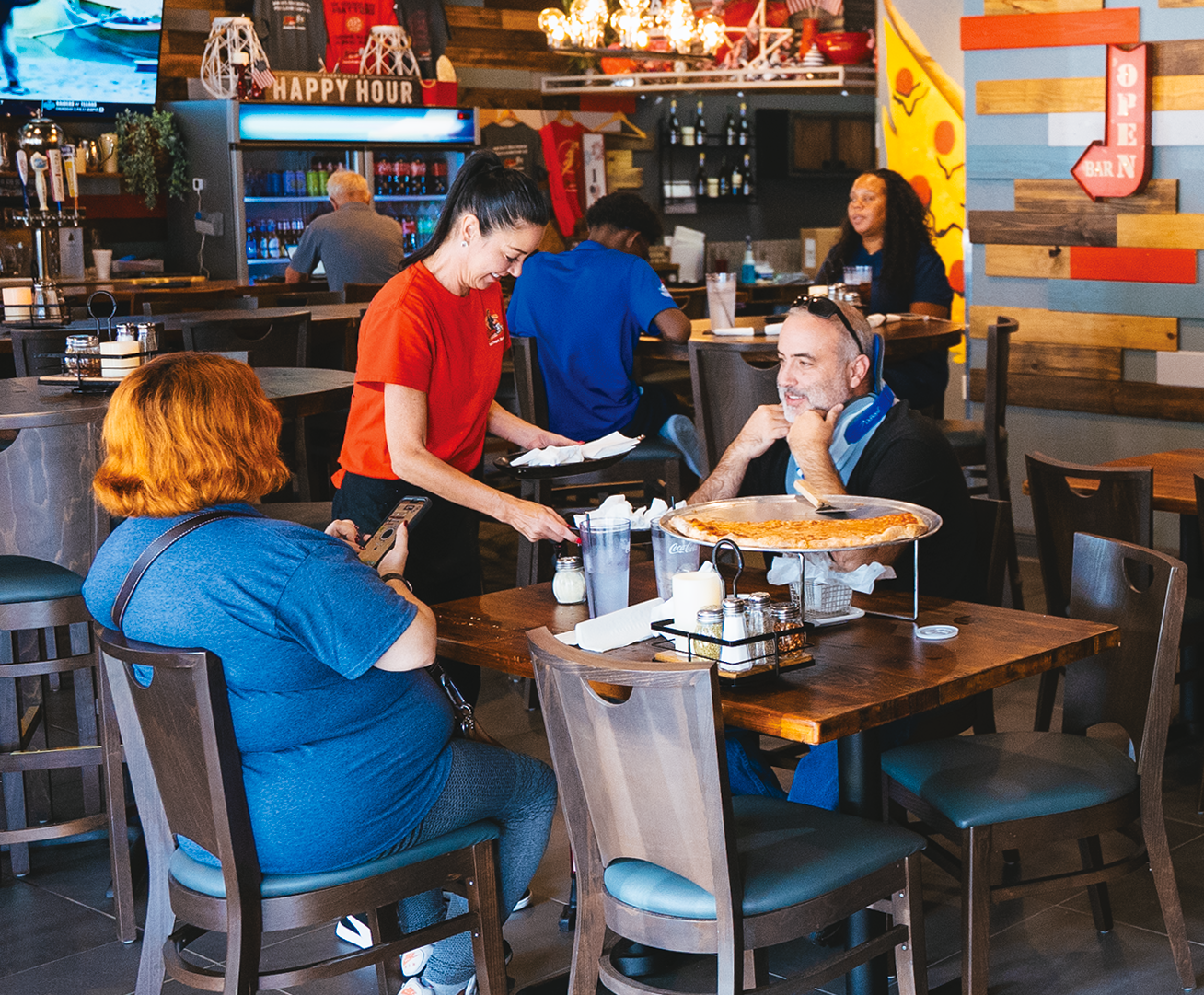
Although it doesn’t look that different inside (above photo) from the Beef O’Brady’s that it has now replaced, the new 1916 Irish Pub we first told you about last issue is now open at 27315 Wesley Chapel Blvd. (at Old Pasco Rd.), in the Towne Centre at Wesley Chapel plaza that had long been home to Winn-Dixie. 

And yes, 1916 is an upgrade over Beef’s menu-wise, at least in one editor’s opinion. 

Owner Chuck Jamieson, who also owns 1916 Irish Pub locations in Brandon, Plant City and Lakeland, says that his goal was always to create an Irish pub with an upgraded menu — he also owns Second Plate Catering — and Jannah, photographer Charmaine George and I agree that he is already achieving that goal. 

To date, we’ve sampled three of 1916’s Irish favorites and we all gave them thumbs-up — the haddock fish & chips (right), the Rebel’s Reuben (tasty corned beef, sauerkraut, melted Swiss cheese and house-made Thousand Island dressing; below left) and my favorite of the three, the Irish stew in a garlicky sourdough bread bowl (bottom right). The stew has marinated braised beef, slow-cooked in red wine, Guinness and house brand demi-glace, with celery, carrots and onions and topped with creamy mashed potatoes. And, the regular and parmesan fries and tater tots were all extra-crispy and were definitely addictive. 

But, perhaps our favorite dishes so far have been the bruschetta appetizer (below left, the melted mozzarella was a unique touch), the Irish Lamb Jam (a tasty take on a traditional gyro sandwich, bottom left) and the crisp-crusted meat lover’s flatbread (below right). 

1916 has a full-liquor bar and lots of beers on tap, plus different specials every day — from $6.99 burgers on Monday to Trivia and $6.99 wings on Wed. and $3 mimosas for Sat. & Sun. brunch — and Chuck says that, in addition to a Grand Opening celebration on Friday, June 24, 6 p.m., there will soon be live music and more. “We want to be your neighborhood hangout,” he says. “Come give us a try!” 

For more information, call (813) 991- 4747 or visit 1916IrishPub.com

Check Out The Wesley Chapel Theater Group’s 2nd Annual ‘One-Act Festival!’

Submitted to the Neighborhood News 

A scene from “Zoe’s Party” by Lois Findlay. (Photos provided by Wesley Chapel Theater Group)

What do an elephant in a train station, a Beanie Baby, an unexpected visitor, a Florida hurricane and a grown man who believes in Santa Claus all have in common? They’re all integral parts of the Wesley Chapel Theater Group (WCTG)’s second annual One-Act Festival — Seven plays. Seven stories. One unforgettable afternoon of theater. 

This year’s One-Act Festival features seven original short plays by talented Florida playwrights. Directed and performed by local artists, this unique collection showcases some of the most creative original storytelling that can be found throughout our state. 

Audiences will enjoy an eclectic mix of both comedy and drama, with each 10-minute play offering a one-of-a-kind story. With everything from laugh-out-loud moments to heartfelt, thought-provoking scenes, this year’s One-Act Festival is sure to have something for everyone. It is a celebration of new works, local voices and the power of live theater to entertain, inspire and connect communities. 

A scene from “On the Likelihood of Elephants” by Brian S. Brijbag, Esq.

This year, WCTG took in more than 50 play submissions. 

“Narrowing it down to seven shows was not easy,” says WCTG spokesperson Samantha Grahn. “We feel that we have an exceptional lineup. We are especially excited to welcome back playwrights Jessica Burchfield and Keith Whalen, whose works were featured in last year’s production. This collection of shows explores themes of family, enduring friendship and the moments that remind us not to take ourselves too seriously. It is truly a festival you won’t want to miss!” 

This year’s Featured One-Act Plays include: 

• “Twelve Books” by Philip Middleton Williams 

• “Finding Help” by Marj O’Neill-Butler 

• “Zoe’s Party” by Lois Findlay 

• “On the Likelihood of Elephants” by Brian S. Brijbag, Esq. 

• “Priceless” by Samara Siskind 

• “Non-Weight Bearing” by Jessica Burchfield 

• “Coming to Town” by Keith Whalen 

Both performances of the 2026 “One Act Festival” will be held at the Starkey Ranch Theatre Library Cultural Center, located at 12118 Lake Blanche Dr., Odessa — on Saturday, July 18 & Sunday, July 19, both at 2 p.m. Tickets, which cost $15 for students and seniors and $20 for general admission, may be purchased at WesleyChapelTheaterGroup.org. 

For additional information, scan the QR code in the advertisement below or visit WesleyChapelTheaterGroup.org.Â