Local Spelling Whiz Aims For Prestigious National Title

Bruhat Soma isn’t exactly sure what ā€œpneumonoultramicroscopicsilicovolcanoconiosisā€ means (it’s a synonym for the disease known as silicosis), but the 45-letter word, the longest in the English language, gives him no trouble when it comes to spelling it, or pronouncing it for that matter.

That shouldn’t come as any surprise, considering that Bruhat, a 5th grader at Turner Bartels K-8 School, is something of a world-class word speller.

This week, the 10-year-old whiz kid will compete at the prestigious Scripps National Spelling Bee in Washington, D.C.

Bruhat (who will be wearing No. 38 at the competition) will be one of 234 kids vying for the title. The Bee begins May 31; the Semifinals (June 1) and Finals (June 2) will be hosted by former ā€œRootsā€ and ā€œStar Trek: The Next Generationā€ star LeVar Burton will air on the Ion TV network at 8 p.m. each night.

Bruhat will be one of the youngest competitors, but not the youngest — that honor will go to Matthew G. Yi, a 7-year-old 4th grader from New Orleans. But, Bruhat is already battle-tested. 

Last year, he finished second at the Regional qualifier, stumbling on the word ā€œcaryatidā€ (a sculpted female figure serving as an architectural support taking the place of a column), which he incorrectly spelled ā€œcarotid.ā€ 

Ever since, he has had just one goal:

Being the champ.

ā€œI just like competitions. I really want to get that trophy,ā€ Bruhat says, his eyes widening and a large grin filling his face. ā€œIt’s so big!ā€

The winner also receives $50,000.

Bruhat has only been competing in spelling bees for three years. His dad, Srinivas Soma, signed him up when he was in the second grade for a spelling and math bee put on by the North South Foundation (aka North South), which organizes educational contests like spelling, math and geography bees, as well as others.

(l.-r.) Turner-Bartels principal LaMarr Buggs and gifted teacher Laurie Gonzalez, with Scripps National Spelling Bee contestant Bruhat Soma and his father Srinivas. (Photo: Charmaine George)

Although he didn’t have time to prepare, Bruhat finished first in the math bee, and sheepishly says he was eighth in spelling.

ā€œThere was no pressure,ā€ dad Srinivas says. ā€œHe liked it. He started to show interest in it.ā€

Srinivas says Bruhat now has even more interest in reading and spelling, devouring everything in sight. He will read just about any piece of paper or book he can get his hands on, and works at least an hour a day on his spelling online at SpellPundit.com.

ā€œI like unusual words,ā€ Bruhat says. ā€œIf I see a word with an unusual spelling, I try to find out more information about it.ā€

Like ā€œcwmā€ (pronounced ā€œkoomā€), an ancient Celtic instrument similar to a violin. And yes, cwm is in the Official Scrabble Players Dictionary.

ā€œI like eccentric words like that,ā€ Bruhat says.

For his end-of-the-year gifted class project at Turner Bartels, Bruhat created his own alphabet (with uppercase and lowercase letters) and wrote a poem about soccer in his new language.

ā€œHe excels in mathematics, but his real love is words,ā€ says his gifted class teacher Laurie Gonzalez, 

His classmates, and the entire school, will be pulling hard for Bruhat.

ā€œHe is an amazing kid,ā€ Gonzalez says. ā€œHe is gentle, kind and wicked smart. The other kids are very supportive of his achievements and they are kind of in awe of his level of intelligence.ā€

His buddy, Tejas Gattu, is sure to be watching as well.

ā€œHe (Tejas) always, like, tells me, ā€˜Wow, you’re the champion,ā€™ā€ Bruhat says. ā€œOne time, at a North South Regional, he said out loud so everyone could hear, ā€˜Bruhat, are you the state spelling bee champion?’ I was like, I already told you. I think he’s excited, he thinks it’s a big deal. He’s my best friend.ā€

Srinivas, who is originally from Nalgonda is southern India, says the cheering section at home — his mother Jyothi and sisters Reshma (6) and Laasya (8) — and in the Live Oak Preserve community are ready to root for Bruhat.

ā€œThere will be a lot of people cheering for him,ā€ Srinivas says.

Bruhat will need the good vibes in what is sure to be a pressure-packed week.

While he hopes to see the White House, the Washington Monument and as many other memorials as he has time for, the Spelling Bee competition will be fierce. Since there were eight co-champions in 2019, the Scripps organizers have made the event more difficult. It now includes definitions in some rounds and, yes, the words are even tougher.

ā€œI watched the 2019 spelling bee and I knew all the words, or like 98 percent of them,ā€ Bruhat says. ā€œIn 2021, it was more like 50 percent.ā€

But, he is ready. He will be trying to become the second New Tampa student to win the national bee, joining Benito Middle’s Nupur Lala, who won the title on her second try in 1999 as a 14-year-old by spelling ā€œlogorrhea.ā€

ā€œI’m very excited to compete, but when the competition day comes closer, I’ll probably feel kind of nervous,ā€ Bruhat says. ā€œFor now, I’m excited. My goal is to become the Scripps Spelling Bee national champion. I have prepared for that.ā€

It’s Been All About The Experience For Freedom Valedictorian


The pressure for many high school valedictorians can be stifling. While mostly grateful for finishing at the top of their respective classes, the journey is usually one that provides them with a sense of relief when they graduate.

But, Freedom High Class of 2022 valedictorian Pascale Carvalho says that, for her, there never was any pressure. She loved the journey. And, she has made putting in a ton of hours to earn her Associate of Arts (A.A.) degree from Hillsborough Community College and compiling an 8.5 high school grade point average actually sound, well, fun.

ā€œI was never aiming for a certain spot,ā€ Pascale says. ā€œIt was never motivation to do better in school. It was just a perk.ā€

From the very start of high school, which officially ends with graduation Thursday morning at 8 a.m. at the Florida State Fairgrounds, Pascale made sure to take classes she would enjoy, not just classes that would beef up her GPA.Ā 

Her freshman year, she took music theory because despite already playing the guitar (jazz fusion and rock) and cello — and cymbals in the high school band — she wanted to learn how to read music, too. And now, she writes her own music as well.

ā€œIt was an irreplaceable experience,ā€ she says.

As a sophomore, Pascale took a heavy load of dual enrollment classes, because one of her major goals was to earn her A.A. degree prior to actually starting college. Her junior year, she took Japanese at the University of South Florida, because she had an interest in that culture and language.

Her senior year, Pascale took a pair of 4000-level health science classes at USF, another strong area of interest for her. She wasn’t sure what she wanted to do in college prior to her senior year, but her wide range of interests and classes has helped clarify that vision. 

While undecided on which college she will attend, she is mulling over acceptance letters from the University of Southern California at Los Angeles, for its outstanding music composition programs, or Brown University in Providence, RI, or Washington University in St. Louis, for health sciences.

ā€œMy goal was just to give myself the best possible education I could, and provide myself with the best college opportunities, and that’s what I did,ā€ she says.

The groundwork for a successful high school experience was laid by her family. Her parents Chantal and Daniel stressed education — Pascale laughs at the math books and essays Chantal assigned during the summer — and older brother Antoine, a Freedom grad, is at Boston University, while older sister Dominique recently graduated from USF after studying biological health science. 

ā€œThey definitely emphasized being good at what you do,ā€ Pascale says. ā€œIf you do anything, try to be the best at it.ā€

Pascale also strove to be her best, but was never consumed with her academic standing. ā€œBeing No. 1 is just one of those hoops you go through,ā€ she says. ā€œOnce you reach it, (you should) look back, and see if your experience equates to that number. Because it should.ā€

Pascale’s high school experience also included athletics. While she couldn’t compete her sophomore and junior years due to an undiagnosed neurological problem, she still managed to play two seasons of soccer and, as a senior, was on the swimming and cross country teams.

While she ponders college, Pascale spends her spare time with friends, watching anime and playing her guitar.

But if you ask her to play a tune, don’t expect a rendition of ā€œSweet Home Alabama.ā€ She didn’t take music theory and Japanese for nothing.

ā€œWell, I like a lot of Japanese music,ā€ she says, laughing, ā€œso it’s probably going to be a random Japanese heavy metal song that nobody’s ever heard.ā€

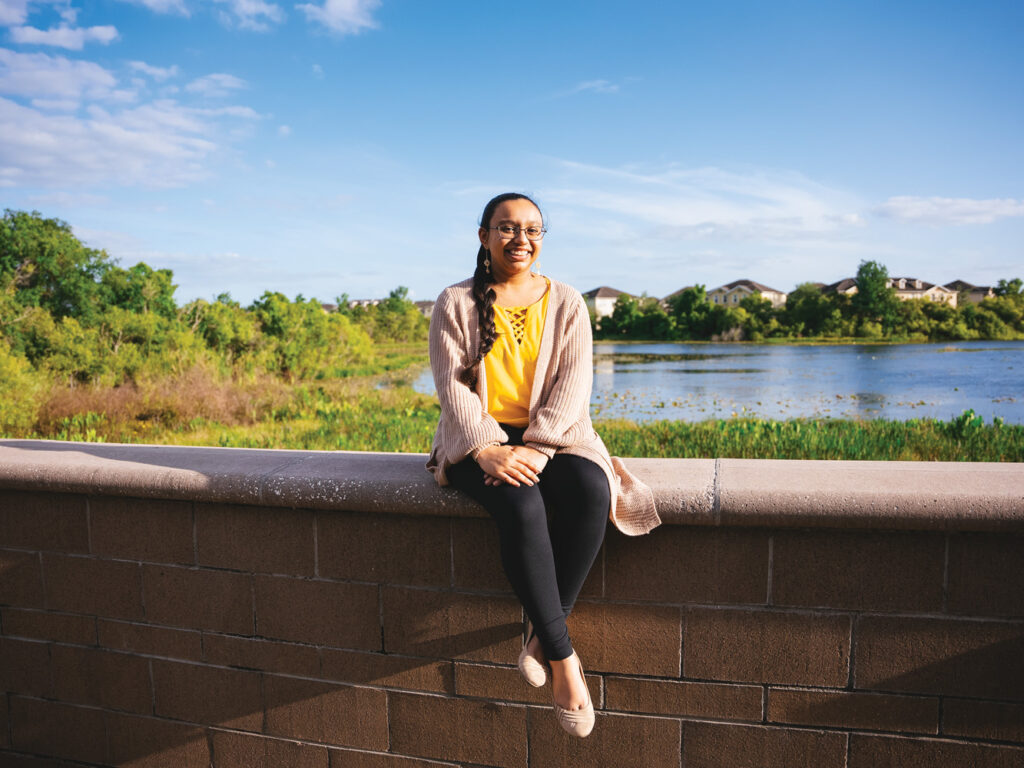
Wharton’s 2022 Valedictorian Will Stay Local For CollegeĀ 

When Sonya Patel walks across the stage as Wharton High’s Class of 2022 valedictorian during the school’s graduation ceremony on May 25, she will do so with its highest-ever GPA — 9.40.

Sonya didn’t set out to break any records. In fact, being valedictorian wasn’t even her goal. 

ā€œBut,ā€ she says, ā€œI did want to push myself to do my very best.ā€

She wanted to learn as much as she could and take advantage of every opportunity placed in front of her. Her incredible work ethic led her to set that new high mark for future Wharton students to aspire to beat.

Sonya spent all of her school years in New Tampa, starting at Pride Elementary and going to Benito Middle School before attending Wharton.

When she graduates, she’ll stay close to home. She plans to attend the University of South Florida in Tampa and major in biomedical sciences on her way to a career as a doctor.

ā€œI plan to apply to medical school in the future,ā€ Sonya says. ā€œI currently have fields that interest me but I’m keeping an open mind about what I actually want to do in the medical field.ā€

When she started high school, Sonya wasn’t sure she wanted to be a doctor. She signed up for dual enrollment (DE) classes at Hillsborough Community College that sounded interesting, and the more classes she took in the medical field, the more she became sure she wanted to one day help people in that way.

While those dual enrollment classes helped her solidify her future plans, along with a lot of Advanced Placement (AP) classes, they also helped her earn that sky-high GPA.

ā€œI counted at least 15 science classes that she’s taken, and it blew me away,ā€ says Christi Atkinson, who is Sonya’s Marine Science teacher this year. ā€œShe takes on so many activities and is capable of managing her time and getting everything done. It’s amazing.ā€

Knowing it’s a long journey through med school and residency, Sonya’s AP and DE classes will help her get her undergraduate requirements out of the way, and because she’s a high school student, the classes have been free.

ā€œIt seemed a great way to work on my future goals,ā€ she says, earning credits toward her undergraduate degree while learning about what she calls ā€œcool subjects.ā€

While she’s worked hard in school, she enjoys spending her free time painting, doing henna body art and cooking. She says her most fun class has been orchestra, where she plays the cello.

Her orchestra teacher, Elise Prather, says, ā€œShe has been a dream student. She is respectful, kind, communicates effectively, is a great team player, gives 110% on everything, and is very helpful to me and other students.ā€

While Sonya was accepted to several schools, she decided USF was the most convenient and least expensive choice. 

ā€œAnd it has great opportunities, so I’m not missing out,ā€ she says.

When she graduates from high school, Sonya will have earned 62 credit hours from Hillsborough Community College, plus many hours from her AP classes, which will help her fulfill her college general education credits. She hopes to finish her Bachelor of Science degree at USF within two years.

She says she loves volunteering, especially at the local Bay Chapel food pantry, because she appreciates that her community has a local food pantry to help those who need some help.

In addition to her difficult academics, orchestra and volunteering, she also serves as co-president of Wharton’s Mu Alpha Theta National Math Honor Society club, secretary of the Science National Honor Society and orchestra clubs, and is a member of the school’s National Beta Club and National Honor Society.

ā€œShe’s just a really good kid,ā€ Atkinson says. ā€œShe’s someone you can rely on and depend on.ā€ 

And while Sonya and her peers dealt with a lot of adversity due to Covid-19, Atkinson adds, ā€œshe adapted very well and rose above the challenges.ā€

That’s what Sonya intends to do in the future, too. She’ll keep setting goals, working hard, making practical decisions, and taking the next step forward.

As she moves from one chapter of her life to the next, she says, ā€œI’m looking forward to new experiences, whatever they may be.ā€

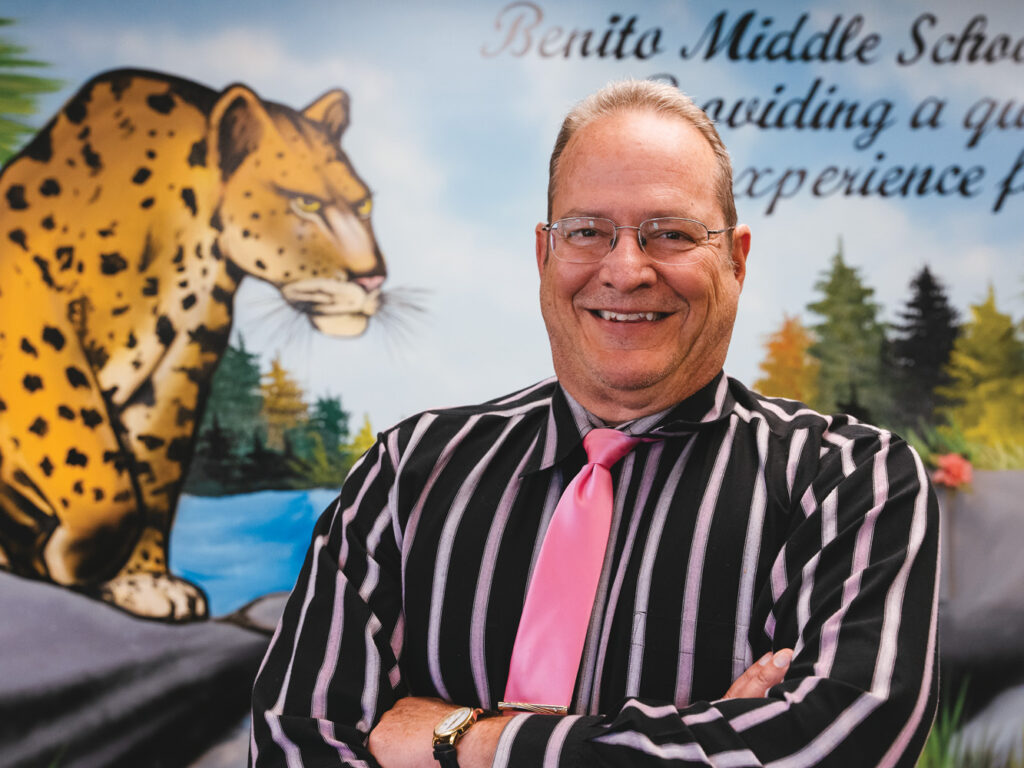
Sanders’ Retirement Is The End Of An Era At Benito

After 14 years as principal at Benito Middle School and 38 years in education,Ā  John Sanders is ready to retire.

For more than three decades, John Sanders has worked as an educator, starting as a teacher and then becoming one of New Tampa’s most beloved and respected principals. His career was almost everything he loved — helping guide students and teachers alike to set high expectations and meet them, while building relationships to make his school the pride of the community.

However, there are other things Sanders loves, as well. Like spending time with his son Jackson, fishing, playing bridge, tending to his yard and reading.

So, after a 38-year career, including the last 14 as the principal at Benito Middle School, Sanders, 60, is packing up his office and picking up his fishing pole. 

ā€œWhen am I going to enjoy those things?ā€ he asks. ā€œI’m not guaranteed tomorrow, so maybe now I can do some of the things I always thought I might enjoy.ā€

When the bell rings at the end of the last day of school this year, it will mark the end of an era at Benito. For the students who currently attend the school, and most of their older siblings, he’s the only principal they’ve ever known. Many from his staff, faculty, and even the PTSA say they’re not sure they’re ready to let him go.

They credit Sanders with sustaining a culture that has helped Benito maintain a straight ā€œAā€ school grade going all the way back to 2002, while some other schools in the area have struggled, such as feeder school Hunter’s Green Elementary and Wharton High, where Benito students are zoned to attend.

But, the reason the school is so successful — with high test scores and low disciplinary problems compared with other schools throughout the District —goes much deeper than its letter grade.

His staff says it’s because of his unique style as a principal. He says it’s because of the people who surround him.

ā€œWe have a great student body and a great community, followed up by a fabulous faculty that is, for the most part, stable and successful. They get the best out of the kids,ā€ Sanders says. ā€œYou put those together and it just works.ā€

While he never moved to New Tampa, he brought his only son, Jackson, to spend his middle school years at Benito. He says he tried to treat every child the way he would treat his own. 

When his wife, Rhonda, passed away in 2016, Sanders was surrounded by the faculty and staff, who showed up in force at her memorial service, which he says was planned in part by volunteers from the school’s PTSA.

While he can hardly imagine stepping away from his Benito family, he says he thinks now is the time to move on to the next chapter.

But, he says it’s going to be hard, especially leaving the people who have become his family, like the group he brought with him when he was named principal at Benito. In the first 11 years since the school opened in 1997, it had four principals. Sanders has been there longer than those four combined.

He began his career as a math teacher at Plant High in 1983, then taught at Turkey Creek Middle School,  where he was promoted to assistant principal. He then went to Young Middle School as an assistant principal before being named principal at Benito in 2008.

Language arts teacher Chris Ellis was hired by Sanders 24 years ago at Young. After 11 years together there, when Sanders moved to Benito, Ellis was one of many who followed and one of several who still teaches at Benito all these years later.

ā€œHe has had a very profound effect on my life,ā€ Ellis says.

Ellis drove 24 miles each way to get to Benito, so, three years ago, he took a position teaching at a school closer to his home, only to return. 

ā€œI knew the minute I had walked out the door of Benito that I had made a terrible mistake,ā€ Ellis says. His new school was welcoming, but he missed Sanders and his hands-off management style.

Like Ellis, math teacher Kelly Broadbelt — who has been honored multiple times as the school’s Teacher of the Year, including this year — also was hired by Sanders at Young.

She says Sanders, as a former math teacher himself, has influenced her tremendously, and that he still pops into her classroom occasionally to give the students a mini-lesson, which they love.

ā€œFor sure, he has made me who I am as a teacher,ā€ she says. ā€œI’ve never taught without him, and because he was a math teacher he could be very influential in my classroom, because he knows exactly what I’m doing and how to fix it.ā€

Both Ellis and Broadbelt have been under Sanders’ guidance their entire careers. They say that while they’re trying to be optimistic, they’re also nervous about the big transition they expect when he leaves.

ā€œThe reason so many people love working for John is that many times in education, they treat the teachers like kids,ā€ Ellis says. ā€œBut, he treats you like an adult, and allows you the autonomy to go above and beyond.ā€

Sanders says that it’s always been important to him to remember what it’s like to be a teacher.

ā€œI have tried to create a family environment and I think we have it,ā€ he says. ā€œI’ve tried to see the good in my teachers and not focus on the imperfections too much, except when sometimes you have to do that as the boss.ā€

Principal John Sanders has left his mark after 14 years at Benito Middle School. (Photos: Charmaine George)

Sanders half-jokes that the school is successful in spite of him, saying, ā€œall I had to do is let the teachers teach and let the families come here.ā€

Sharon Hineline was PTSA president at Benito when her kids attended and says she was convinced by Sanders to work at the school — first in the front office and now as his secretary.

ā€œSharon has single-handedly convinced dozens of families who were on the fence about going somewhere else to come here,ā€ Sanders says.

Creating A Unique Atmosphere

Meanwhile, Hineline says that she does so because of the atmosphere Sanders has created. ā€œIf you come to Benito and say you need something, he’s going to help you,ā€ she says. ā€œHe has created a culture where it’s a partnership and the staff is empowered to resolve problems.ā€

Sanders is quick to return phone calls from parents who are upset about something they heard happened at the school, or to direct a teacher to call a parent to resolve a misunderstanding. He has a unique touch that helps calm down heated emotions, whether he’s talking with parents or students. 

Hineline says Sanders recently had two girls in his office who hated each other so much that they had gotten into a physical fight. He spent time talking with each individually, then brought them together to discuss their choices, and they not only resolved their issues but are now the best of friends. One of the two went from failing all of her classes to passing them. The care Sanders demonstrated changed the girls’ trajectory at the school.

That same calm demeanor has talked many families out of leaving the school, instead resolving a problem that was accommodated by switching a class or another relatively simple solution, recognizing that at many schools, those resolutions are not always offered because they are more difficult on staff or teachers.

Sanders says has always focused on keeping what he calls ā€œgreat familiesā€ connected to his school.

ā€œThat’s the mindset that I think a good administrator has to have,ā€ he says. ā€œYou make their kids happy, you make them happy, and everyone wins. If I send you out the door unhappy, I’m asking for trouble. People are looking at alternatives.ā€

While he knows what it’s like to turn a school around –—Young was an F school when he arrived, and went up to an A — Sanders says Benito never needed that. It was a great school when he arrived. But, he has navigated some significant challenges, such as the population of students receiving free and reduced lunch — an indicator of socioeconomic factors that statistically align with school success — going from 22 percent to 62 percent.

He says Benito makes sure the kids know the expectations and the rules, and the entire staff ā€œgets out and enforces it.ā€

Broadbelt, Ellis, and Hineline are just a few of the many who have bought into his philosophy.

ā€œHe’s just a good person, a good educator, and a good boss,ā€ Broadbelt says. ā€œHe’s willing to do anything to help us.ā€

While Sanders deflects the praise, he says the community, the staff, and the students will continue to be family to him.

ā€œThis is my life and my world, and I’m sure I’m going to miss being the principal at Benito.ā€

Middle School Violinist: Please Support Our Orchestra Programs

Did you know that kids who are involved in music are more likely to score higher on standardized tests? It’s true — papers from respected journals, such as The Journal of Educational Psychology and The British Journal of Psychology have done extensive research on this matter. So, why aren’t our local public school orchestra programs supported by our public school districts?

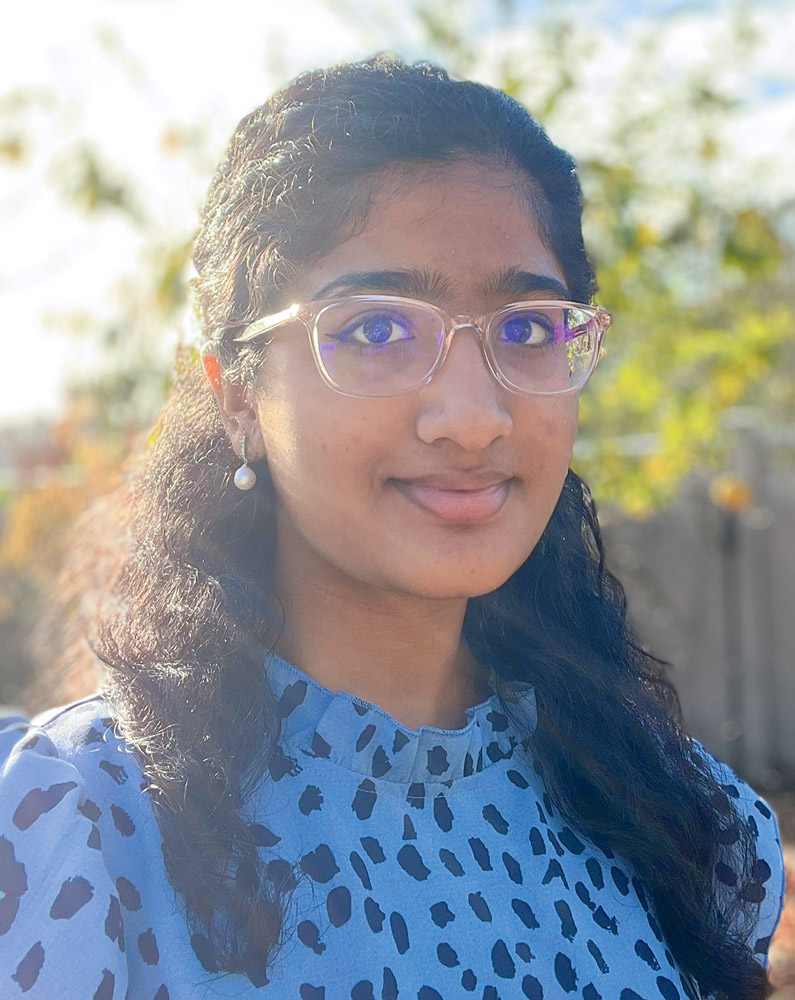
Mahi Nooka

Unfortunately, not many adults involve themselves with youth orchestra programs, or even bother to learn about them. But, I believe that absolutely needs to change.

My name is Mahi Nooka. I’m 14 years old and I’m an eighth grader at Dr. John Long Middle School. I have been playing the violin for four years and I was invited to give my opinion on this subject by Neighborhood News editor Gary Nager because of a disturbing pattern I’ve noticed: our local youth orchestras are not being supported by the Pasco County School District or the local community.

You see, school orchestra programs in this area aren’t well-known or funded properly. I’m in both my school orchestra at Dr. John Long and in an outside program called the Tampa Metropolitan Youth Orchestra (or TMYO). It’s well known that the arts historically have had a low priority in Florida’s public schools, especially compared to sports and other money-making activities and I don’t think that’s fair or just.

But, even within the arts, there is a hierarchy; specifically, within school music programs. Orchestra programs are almost always given a lower priority than band programs in the amount and quality of resources provided. I’ve seen bands (especially high school marching bands) get larger classrooms, uniforms, and spots on the school’s website, while the orchestra programs are stuck using the same equipment for the past sixteen years or more. 

It doesn’t make sense to me, though. I know that music has the ability to change kids’ lives — it has changed mine drastically. I started in orchestra in the 6th grade (although I’ve been taking private lessons since the 4th grade) and came to love it.

In the 7th grade, my private teacher recommended that I join an outside program to supplement my school experiences, and we found TMYO, a youth orchestra program located in Hillsborough County. I auditioned for one of the four groups they had that matched my skill level best, and I loved it so much that I auditioned again this year, for the next higher group. Currently, I’m proud to say that I am sitting fourth chair in the second violin section at TMYO. 

One thing I can tell you through my experience is that orchestra is like a family. It teaches teamwork and lets us form incredible bonds. I’m more confident and passionate because of it, and my fellow musicians and I are comparable to siblings. Orchestra gave me that, and I’m hoping that if orchestra programs are better nourished, other kids can have that, too. 

However, whether orchestra programs can thrive or not doesn’t depend upon us as musicians. The success of these programs depends heavily upon public participation — on people like you knowing about our programs and taking the initiative to support us. 

That brings us to the real question: How can you support us? 

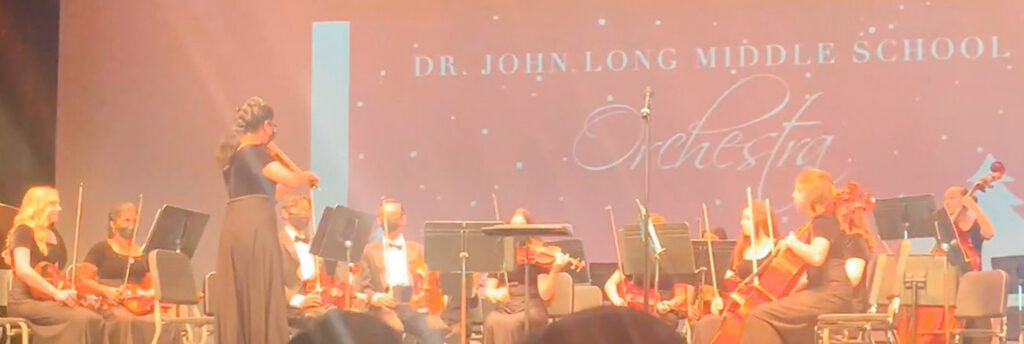
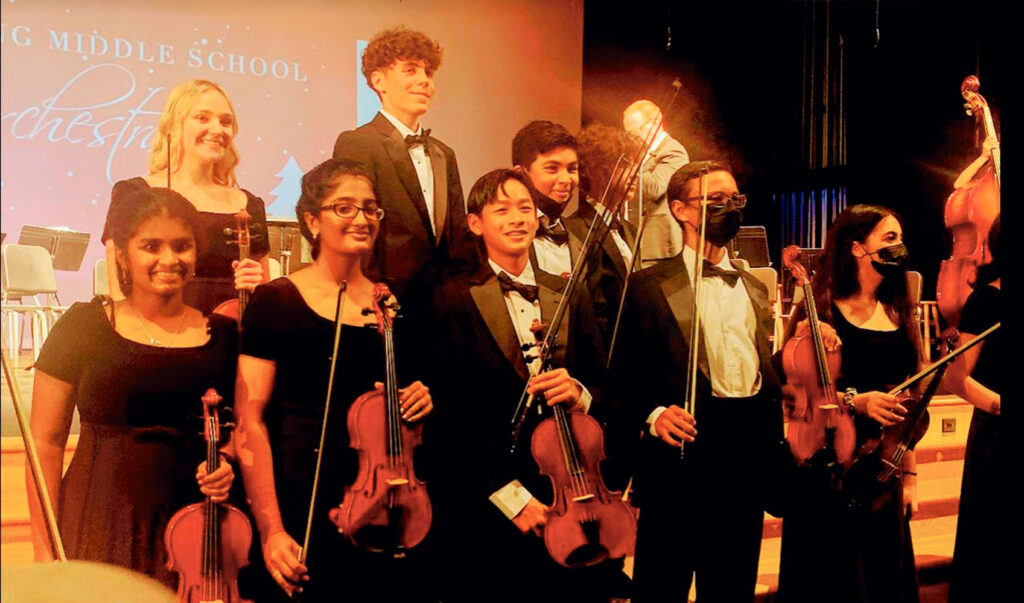
Mahi Nooka (2nd from left in front row) is a violinist in both the Long Middle School orchestra and the Tampa Metropolitan Youth Orchestra who would like to see more public support for youth orchestra programs.

Attending an orchestra concert is a great way to help. By attending, you’re showing that the kids’ hard work is not for nothing, and that someone cares. This is vital to developing confidence and allows us to practice performing in front of an audience (two essential skills for musicians). 

Trust me, it doesn’t feel good when your auditorium is half-full and you’re performing for barely fifty people. This may seem like a lot of people to some of you, but think of how many people go to sporting events, especially football games. 

And honestly, if nothing else, concerts are just a great way to spend time and involve yourself with the community. Though I’m not sure about other programs and schools, the concert for Dr. John Long is on Wednesday, May 4, at the Center for the Arts at Wesley Chapel, and the next concert for TMYO is on Saturday, May 14, at the USF School of Music in Tampa. The general public is invited to attend both of these events. 

In addition to simply attending an orchestra concert, many local nonprofit programs have options for donations on their website. I know TMYO does (tmyo.org/make-a-donation) and so do many others in the area: the Florida Youth Orchestra (floridayouthorchestra.org/donate), and the Florida Symphony Youth Orchestra (fsyo.org/support-fsyo). Donating lets our orchestras continue to exist and allows young musicians continue to express themselves creatively. 

If you’re not interested in donating or attending, you can still help by spreading the word. Discussing the benefits of orchestra programs can help stir up interest in the programs, and some parents might even check out orchestra programs for their own kids. It may seem like a little thing, but it can help a lot. 

And so, I’ve made my case. The youth orchestra programs need to be supported, and I’ve done my part to ensure that happens by having this article published in the Neighborhood News. I will keep advocating in the background because of my love for orchestra, but there is only so much I can do. I hope I have inspired you to take action. This is your chance to give back and make an impact — one that will be appreciated by young orchestral musicians in our community.