Zooming Through An Awesome Community Meeting On Racism

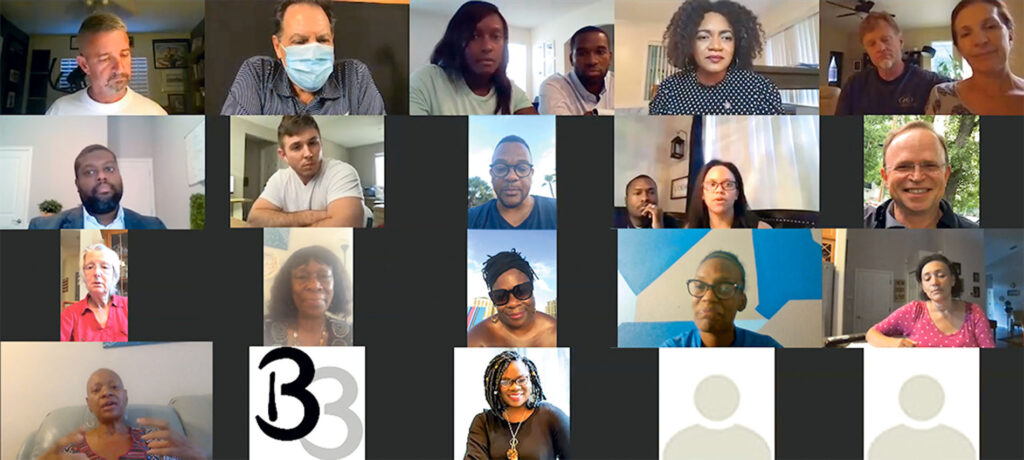
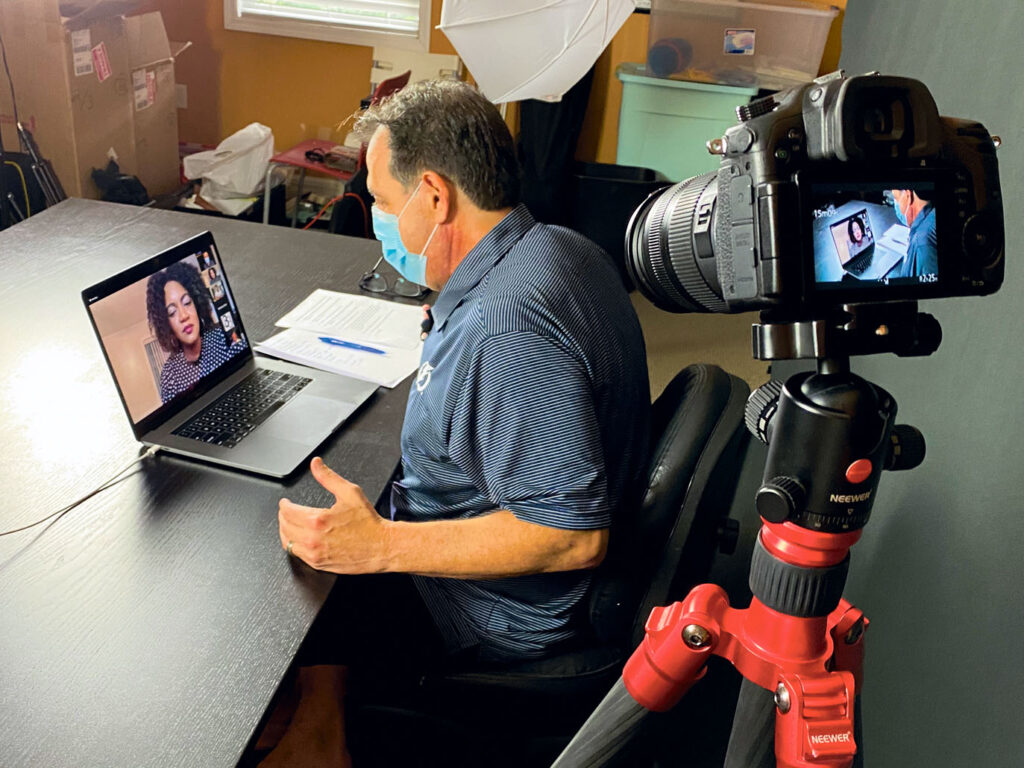
So, I certainly didn’t know what to expect when 21 people got together for the first-ever New Tampa and Wesley Chapel Zoom community meeting on racism on August 25, but I have to say that it was shocking, eye-opening, disheartening and heartwarming all at the same time.

How could it possibly have been all of those things at once? 

It was shocking because, from my meeting co-host — District 63 State Rep. Fentrice Driskell — to military veteran April Lewis to my friend Nikii Lewis (all shown on this page), some of the stories told by the black and white people alike who participated in that meeting showed just how prevalent dealing with racism in our area and this country truly is and seemingly always has been.

It was shocking for me to hear that Rep. Driskell, a Harvard University and Georgetown Law-educated Tampa-based attorney originally from Polk County, has been assumed to be either the court reporter or the client/defendant as often as she has been assumed to be the lawyer.

It was eye-opening to hear Nikii, who lives in a mostly white neighborhood in Wesley Chapel, tell the story about her six-year-old daughter, who told her — at age 3 — that she’s afraid of white people, and that when her daughter was drawing pictures of people, she wouldn’t use a brown crayon because, she said,  she wanted the people “to look normal.”

And, it was disheartening to hear that April Lewis, a recent transplant to New Tampa who is suffering from PTSD after six years in the Army with two deployments, who also is a Gold Star wife whose husband was killed in Iraq, doesn’t feel safe when she walks into a store and doesn’t feel the same equality as I do.
But, the Zoom meeting also was heartwarming because several of the attendees who were white said that they were participating because they felt the need to do something in the wake of the recent shootings of black people like George Floyd, Breonna Taylor, Jacob Blake and others by law enforcement officials and the civil unrest that has followed those incidents across this country.

When I organized the event I didn’t know what my goal was — and I still don’t — but I do know that I truly do not want it to stop there.    
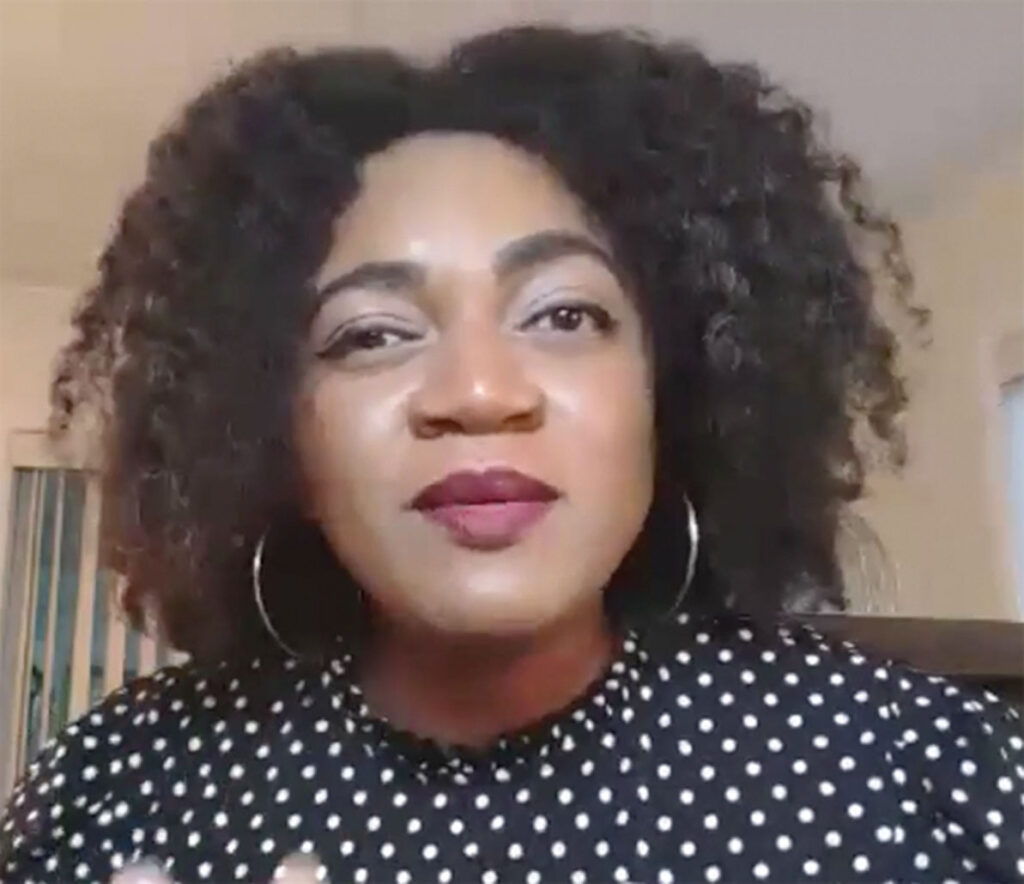
“I can’t even tell you how many times, as an attorney in court, that people have assumed that I was the court reporter or the defendant.” — State Representative Fentrice Driskell
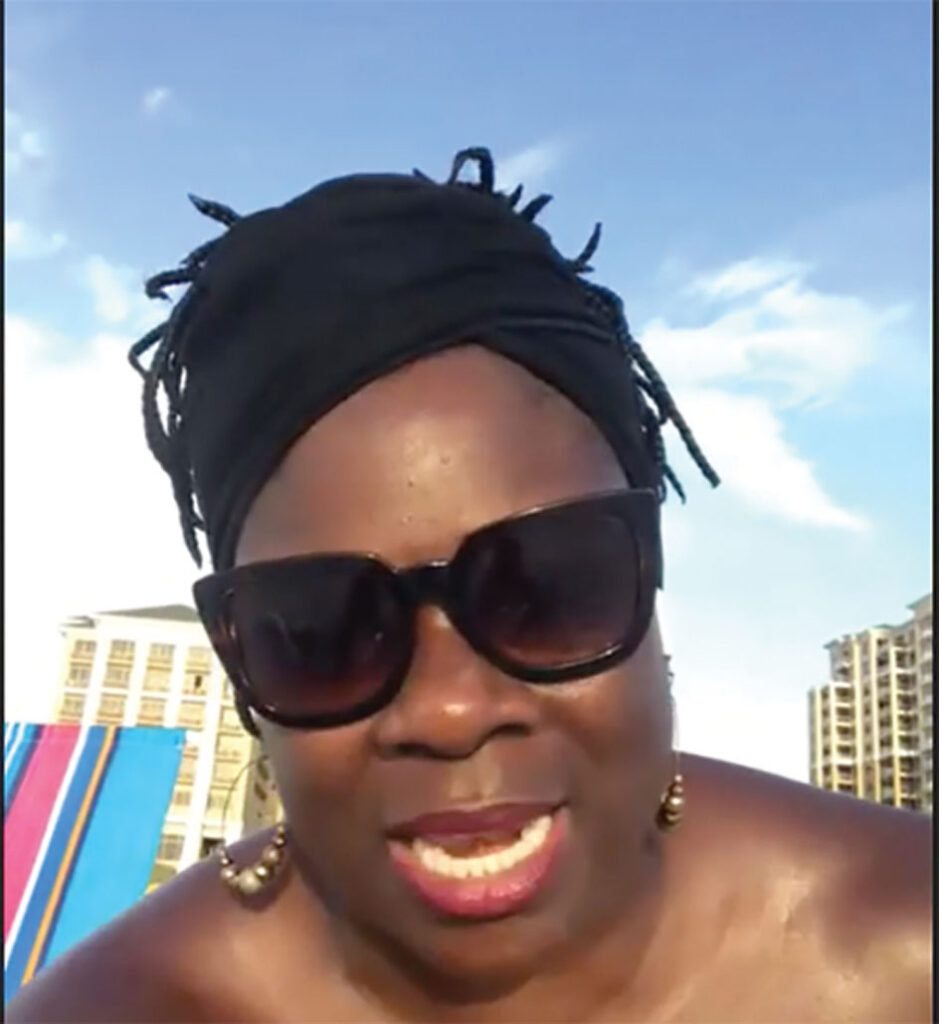

“If my black skin is good enough to fight for this country, I can’t understand why my blackness isn’t good enough to receive the same equality as everyone else.” — New Tampa resident & Gold Star wife April Lewis.


“In one of the neighborhoods where Ronnell grew up in Tampa, there was an elementary school called Robert E. Lee Elementary, and that was just considered a normal thing. And, for too long, it was considered taboo to even talk about racism, so meetings like this are definitely a step in the right direction.” — Live Oak residents Ronnell & Brittaney Curtis
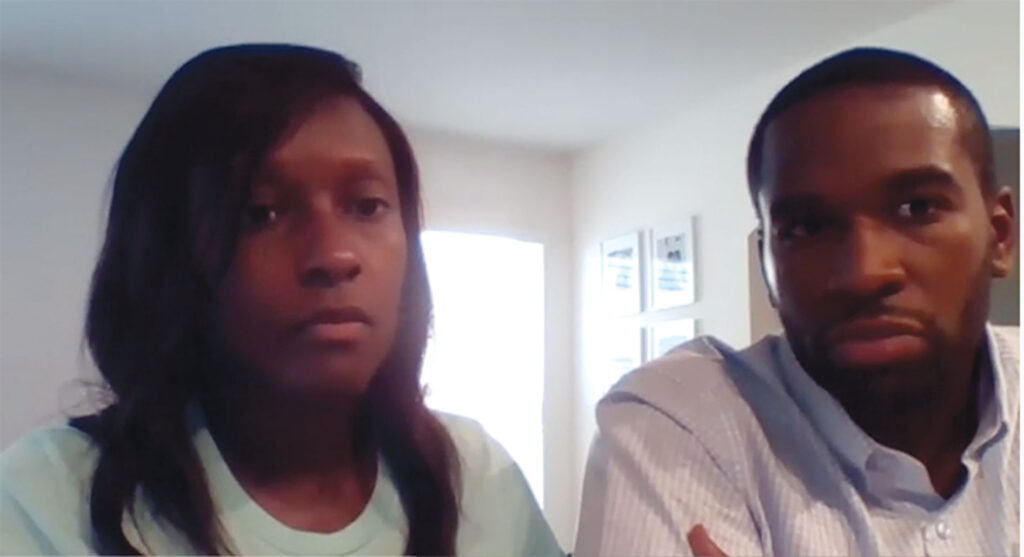

“When the George Floyd incident originally started, there were people in our own neighborhood patrolling in golf carts and (carrying) guns, which was kind of concerning to us.” — Wesley Chapel residents Sara & Kyle Hill


“My son is half Hispanic and it was only recently he told us he was discriminated against in school. When I asked why he never told us, he said he didn’t think my wife and I would believe him.” — New Tampa hotel owner David Larson


“I was working as a prosecutor in Pasco County and got pulled over by a cop because prosecutors have their plates blocked out. He didn’t believe I was a prosecutor until he called one of my associates he knew who told him I was.” — Attorney & Wesley Chapel resident Cornelius Demps


“I grew up in a small town in southeastern Pennsylvania and we had no black people in our town. I remember we had a community pool and we were going to have a swim meet at the pool , but people in the town were concerned that something bad would happen if black people from other communities would be swimming in the pool. I wasn’t raised that way and I remember being shocked that anyone would think something like that.” — New Tampa resident Donna Harwood


“I worked as a speech language pathologist in the Pasco elementary schools and I am learning a lot about racial injustice in this country. I would like to do something about helping to change that situation, but I realize that (as a white person) I can’t lead that but I am here to learn and follow..” — New Tampa resident Naomi Lang-Unnasch.

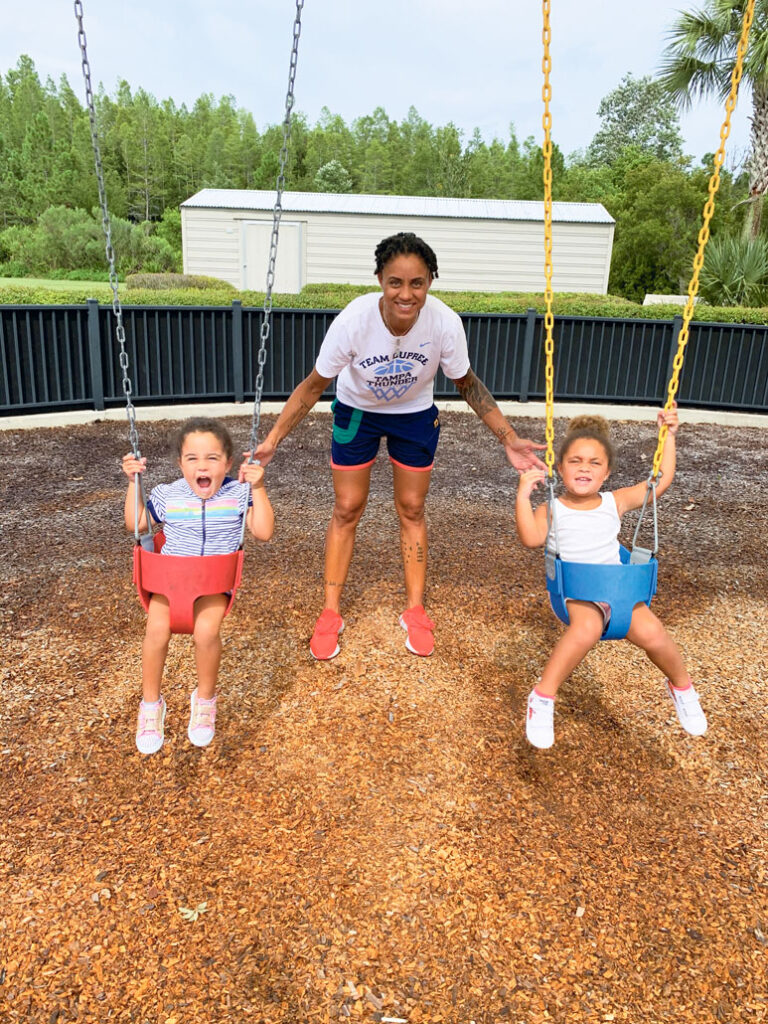
LIFE IN THE BUBBLE

Candice Dupree pushes her 3-year-old twins Cali and Demi on swings near their home in The Ridge at Wiregrass Ranch.

Her 15th WNBA season is over for former Wharton High star Candice Dupree, and while she wishes her summer also included the WNBA playoffs, she says she couldn’t be happier. 

It was time to head home to be reunited with her three-year-old twins, Cali and Demi.

“I told my mom, whenever that last game is, I need you here the next morning to get me out of here,” Dupree said from Bradenton, where she wrapped up the season with her Indiana Fever teammates in the WNBA bubble at the IMG Academy on Sept. 12. “I want to get home.”

Home is Wesley Chapel, just up the road from Wharton, where Dupree remains the school’s all-time leading scorer.

Today, she says, her greatest accomplishments are raising the twins with wife DeWanna Bonner, a job she is eager to resume full time.

Photo by Ned Dishman/NBAE via Getty Images

Because Dupree and Bonner are both WNBA players, it is often no easy task. They play for different teams, have different schedules and because most women’s basketball players make more money playing overseas — before coronavirus and this summer’s WNBA season, Dupree was playing in Hungary, DeWanna in China — they have a hectic travel schedule and few days off.

While some WNBA players brought their children into the bubble — basically an isolation zone to keep the players coronavirus-free so the season could be played — Dupree was able to rely on mom Patty and Dupree’s twin sister Crystal, who she jokes enlisted as the nanny the day Bonner gave birth to the twins.

“We didn’t really know what we’d be getting ourselves into inside the bubble,” Dupree says. “At home, they have school, they play outside and in the pool. They wouldn’t have been able to do that (in Bradenton).”

The bubble was an experience Dupree says she won’t forget. She was playing in Hungary when President Donald Trump enacted a travel ban from Europe because of coronavirus, and, the very next day, she was hustling to get back to Florida. 

Photo by Ned Dishman/NBAE via Getty Images

When she entered the bubble in June for the WNBA’s 22-game schedule, the league was at the forefront of the social justice movement (photo on next page) in the wake of the death of George Floyd and nationwide protests. 

Dupree was active in the league’s initiatives and personally met with the League of Women Voters in hopes of becoming more involved with the voting community.

With the season over, Dupree is eager to spend time with the girls. 

“My girls are to the point where, when we talk, they are like, “Momma, come home, when are you coming home?,” Dupree says. “Initially, they were not like that. But, they are starting to miss their parents.”

Dupree is not looking to return to Europe to play hoops anytime soon and, at the age of 36, her WNBA career is finally winding down.

She will be a free agent. Her stats this year were in line with her career numbers of 14.4 points and 6.6 rebounds a game, and she is in great shape physically. She could play another two years, she says.

“But if a different job opportunity comes my way, I wouldn’t hesitate to take it,” she added. Opportunities she is interested in exploring include coaching at the professional level.

Do You Remember When…

Dupree was a silky smooth forward for the Wildcats, becoming the school’s all-time leading scorer and winning the Dottie McGahagin Award as Hillsborough County’s best girls player in 2001-02 (to go with a 4.8 GPA). She went on to be an All-American at Temple University, playing for three-time Olympic gold medalist Dawn Staley, and was the No. 6 pick by Chicago in the WNBA draft in 2006.

One thing she never imagined while making buckets at Wharton is that she would one day be where she is today — a 15-year WNBA veteran, a seven-time All-Star, a 2014 WNBA champion and one of the best players the women’s league has ever seen. 

“I never wanted to play in WNBA,” Dupree says. “I’m not going to lie. I didn’t even know what it was. I was so busy competing in so many different sports I never even watched pro sports on TV. I was just excited to be recruited and get a full ride somewhere.”

While it has been her consistency and steadiness that has defined her — she has never averaged less than double figures in points — Dupree is fifth all-time in WNBA career scoring, having put up more points than women’s basketball legends like Lisa Leslie, Sue Bird and Tina Charles.

In fact, for someone who never imagined playing professionally, Dupree is all over the WNBA career record book: second behind all-time leading scorer Diana Taurasi in field goals made, fourth in minutes played, and seventh in rebounding and games played.

In 2010, she put together one of the best WNBA seasons ever, averaging 15.7 points, 7.6 rebounds, shooting a blistering (and league-leading) 66.4 percent from the floor, and was second from the free throw line at 93.6 percent.

“I put together a pretty good resume,” Dupree says. “I’m on some lists with some very elite company. At some point, when I have I have time to sit back and reflect, I’ll say that was one helluva career. But, right now, I’m still wrapped up in it, playing and trying to win games, so I don’t pay it too much attention.”

Now that she’s home, Dupree plans to relax. She may check out the new Wiregrass Sports Campus of Pasco County near her home in The Ridge at Wiregrass, which recently hosted the seventh annual Candice Dupree Invitational, a girls basketball tournament for college hoops hopefuls. Dupree has sponsored teams for the tournament organizers, the East Tampa Youth Basketball Association, for years by buying them shoes and uniforms.

“It sounds great, we’ve needed something like that in that area for years,” Dupree says. She says one of her daughters may be interesting in the Sports Campus’ cheerleading program; the other, she laughs, leans more towards playing football.

And while she takes her kids on walks and plays with them in the pool, she’ll contemplate her next move.

“I’m not really in a rush,” Dupree admits. “I usually leave for Europe after Christmas but who knows if that will be happening. I just want to spend time with the girls and hang out for the time being. Then, we’ll see what happens.”

High School Fall Sports Season To Be ‘Challenging’

At our press time, Freedom High was expected to open its 2020 football season on Sept. 11, hosting its New Tampa neighbor and archrival Wharton High, but the toughest opponent for both teams to combat that night likely wasn’t each other.

It was Covid-19.

And, that doesn’t just go for football. Avoiding the virus is arguably the biggest challenge facing teams across Hillsborough County (and the country), as high school athletes, their coaches and administrators try their best to remain socially distant and safe in what is certain to be the strangest prep sports season ever.

“It’s going to be very…what’s the word I’m looking for? Intensive,” says Wharton athletic director Eddie Henderson “It’s going to be a lot of work.”

The county is following all CDC guidelines for sports and also has issued its own 18-page guide, which covers everything from daily cleaning and sanitizing to quarantining and tracing those who become infected. The rules, which include the difficult-to-enforce ban on handshakes and high fives, seek to prevent a major outbreak of the virus.

Social distancing will be the key to keeping crowds at athletic events from spreading the virus.

One of the rules that will make football feel very different is that the bands and cheerleaders will not be permitted to travel to away games. That means that when the Wharton Social Distancers traveled to take on the Freedom Social Distancers, they had to leave behind some of their loudest and most ardent supporters, not to mention a group that is woven into the very fabric of the Friday night football experience.

The crowds will be smaller. A limited number of fans will be allowed into sporting events like football and volleyball this fall — players (and band members) are allowed to choose only four spectators, but they have to be registered on a list at least a day before each game, so they can be issued electronic tickets. Each player’s foursome will be a “spectator pod” and will be required to sit together.

Fans, who must wear masks in the stands, will find seats clearly marked off in groups of four, socially distant from other pods.

The biggest hurdle, however, will be keeping the athletes healthy. If an athlete tests positive, he/she and anyone in close contact with them will be quarantined for 14 days. That can wipe out any team’s roster in a hurry.

Football will be a huge challenge, due to the unavoidable closer quarters presented by bus transportation and the sheer number of players (often ranging anywhere from 50 to 80 or so) cramming into small locker rooms.

The football teams at Hillsborough and Jefferson high schools have already had infected players and, as a result, may not be able to play the first two weeks of the season.

“I’m holding my breath, and the reason is that, when we’re putting this many people together, you just don’t know,” Henderson says.

While football is the biggest concern, every sport will present its own set of issues. 

For example, cross country will have to stagger its starts to avoid large gatherings of runners from multiple schools. Volleyball players will be expected to avoid the traditional high-five after every point, and swim meets with multiple teams may be hard to find. In fact, Wharton’s usual “home” pool at the New Tampa YMCA is not permitting the Wildcats to host any meets there.

Provided that high school sports can make it all work under such unique and demanding circumstances, middle school sports will not begin until the second quarter, with track starting first on Oct. 12, followed by flag football and volleyball on Oct. 19.

“Everything is so uncertain,” Henderson says. “Are we gonna be able to push through or will there be a setback? I hope we can push through — I want to see the kids play. They have suffered enough the last six months with (the 2019-20 school year) getting cut short, and the makeshift way of doing school. I hope we push through.”

New Tampa Students, Teachers Get Back To School

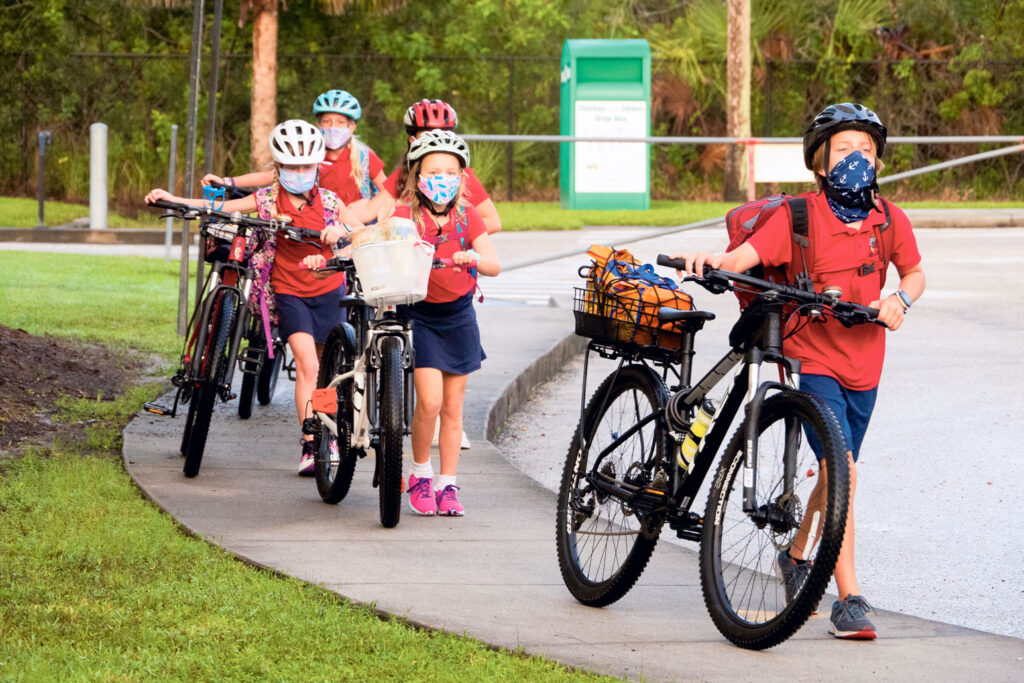
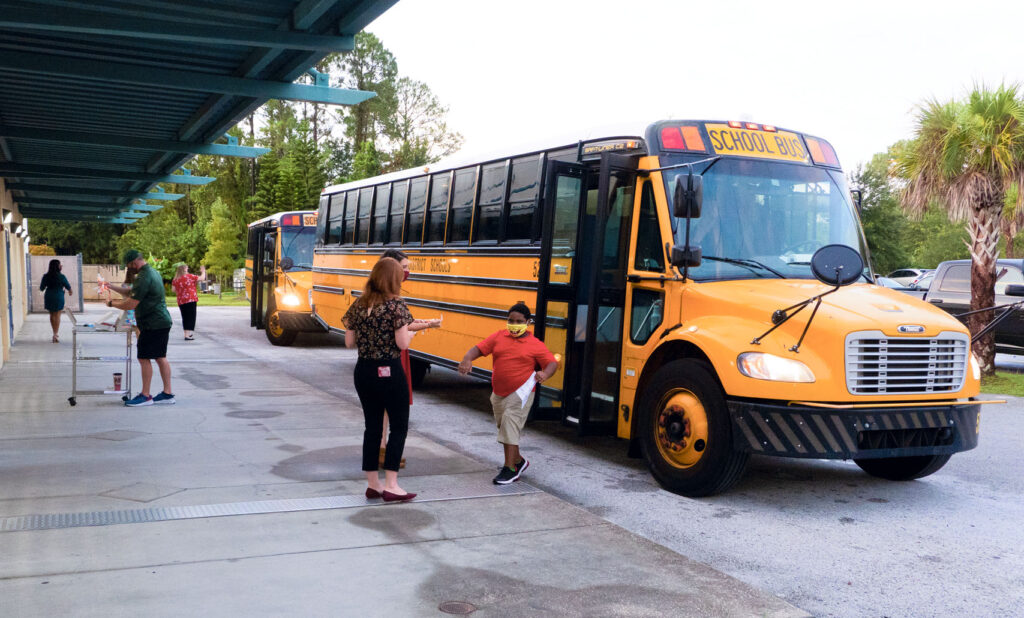
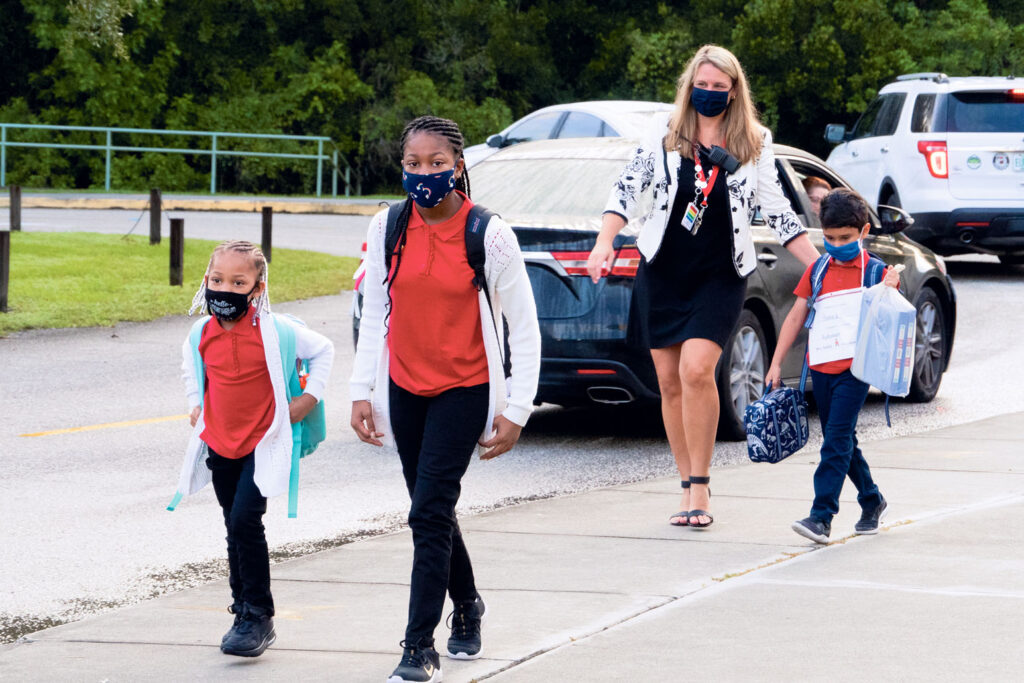
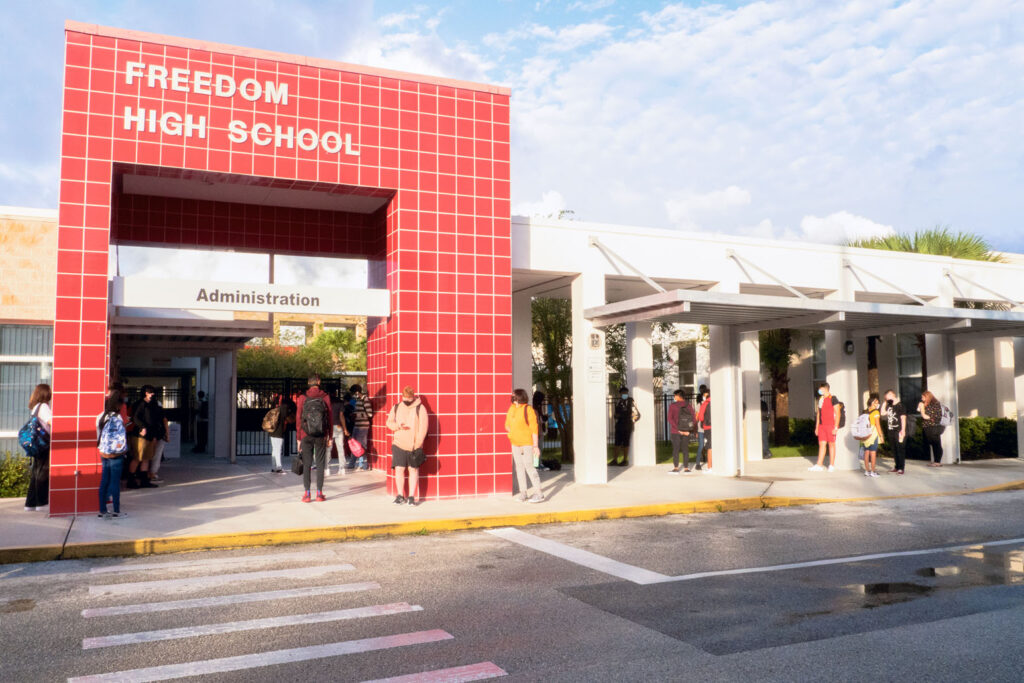
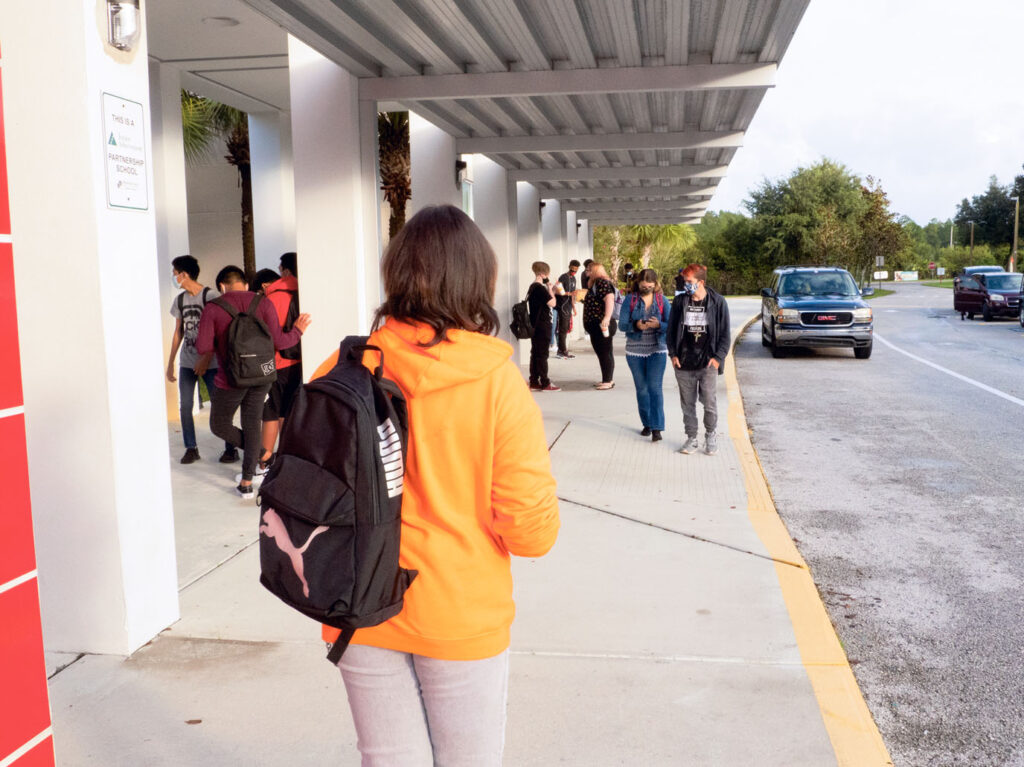
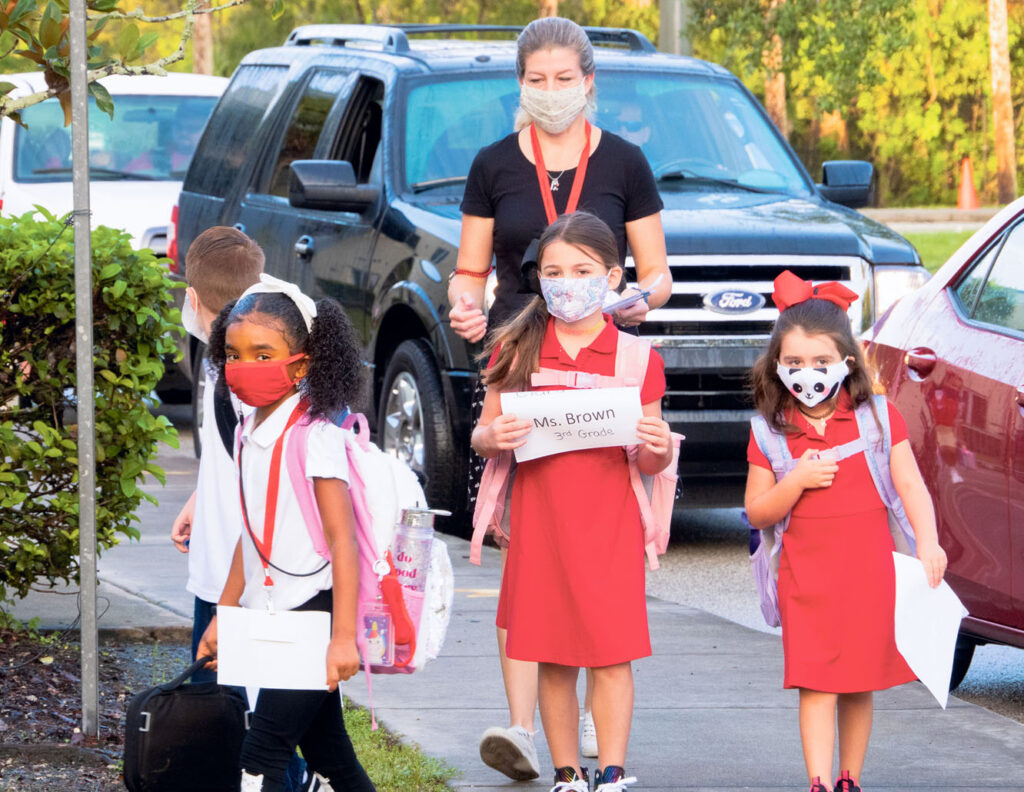
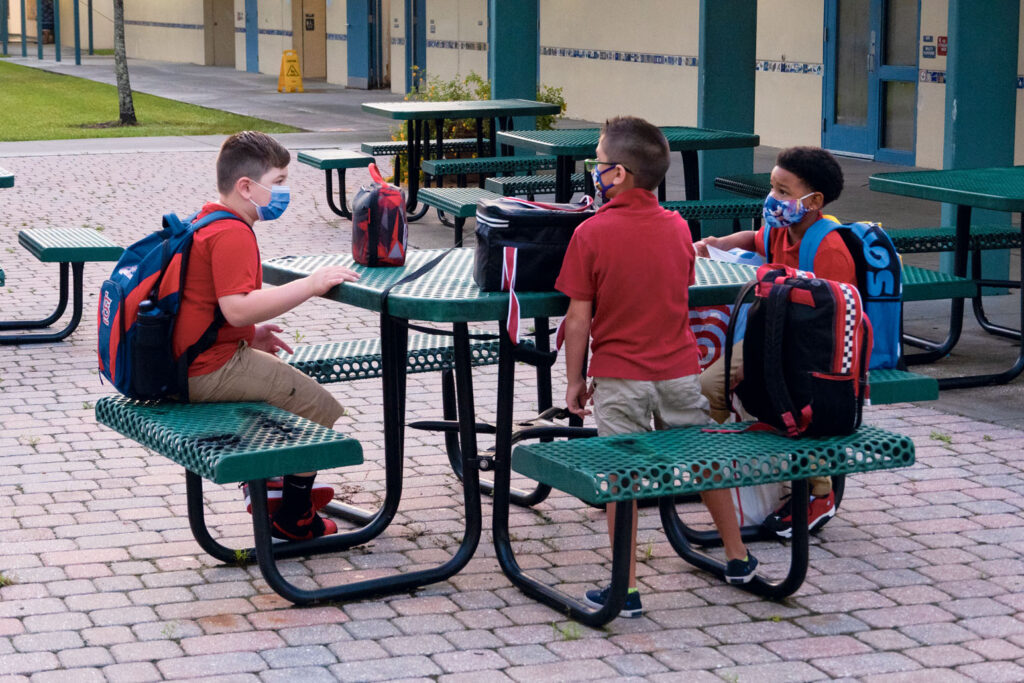
Following a summer of indecision and fear of the unknown, New Tampa’s schools finally opened their doors to students for in-person learning for the first time since they closed in March due to Covid-19.

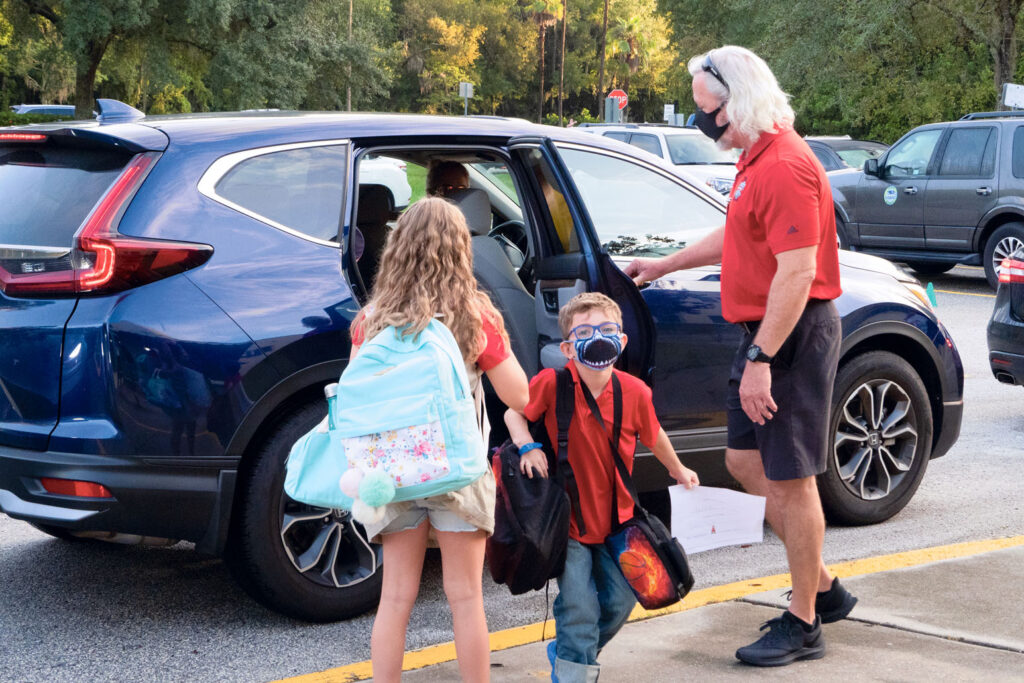
“Woo hoo!,” shouted one parent, as she drove off smiling after dropping her two kids off at Benito Middle School.

Students spent the first week of the 2020-21 school year eLearning only, as the fight over whether or not to open brick-and-mortar classrooms for students and teachers raged on. 

The Hillsborough School Board initially leaned towards doing eLearning only for the first nine weeks, before settling for four weeks after consulting a panel of medical experts. However, that decision was then overturned by Superintendent Addison Davis, after Florida Education Commissioner Richard Corcoran threatened to withhold millions of dollars in funding to schools that did not offer a brick-and-mortar option for parents.

Busy at work cleaning and prepping their classrooms for a socially-distant learning experience, teachers finally opened the doors to their students on August 31.

After the first week, Chiles principal Teresa Evans said things went “remarkably well.” At Chiles, roughly 450 students were home learning online, while 400 or so learned in classrooms. Evans said none of her teachers were forced back into the classrooms, and praised their efforts in the opening week.

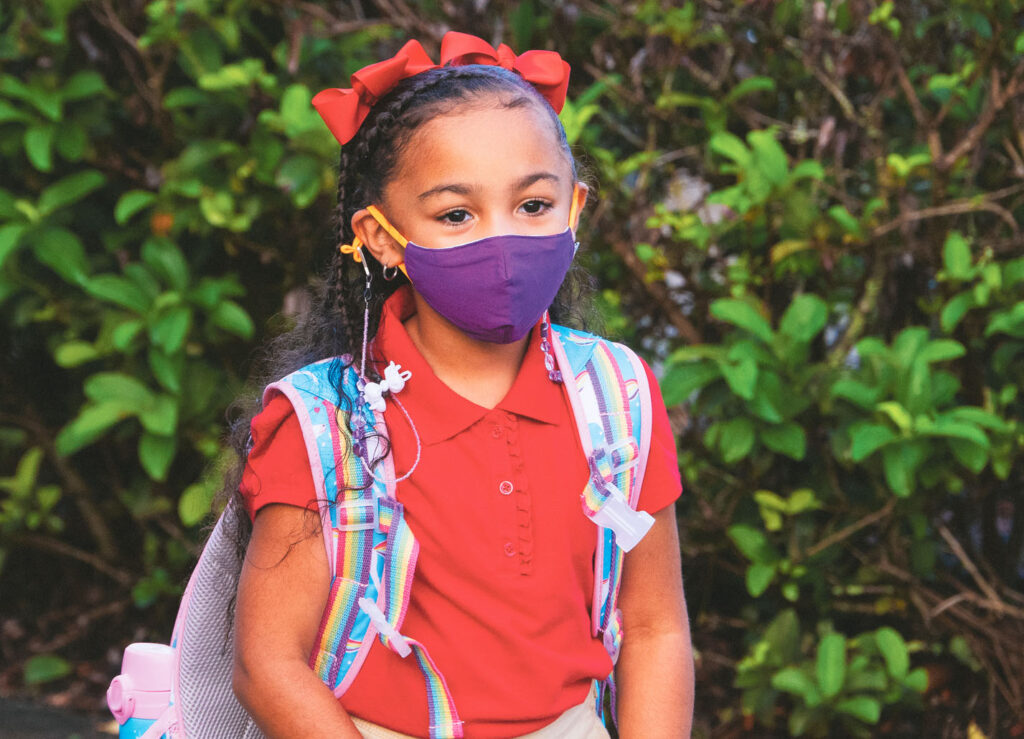
“I think we planned and planned and planned and what we planned has worked out so far,” Evans said. “The kids aren’t struggling with masks the way people thought. They have been very compliant, and the parents have been incredibly compliant and helpful in following the new rules.”

Those new rules include keeping desks as far apart from each other as possible, eating lunches outside under the school’s covered courts keeping everything as clean and sanitized as possible.

“We were nervous, but never terribly worried,” Evans says. “We were very careful and will continue to be, and we are tweaking things as we go.”

While the Covid-19 numbers were slightly rising in Hillsborough County during the first week, schools hadn’t reported any large outbreaks.

According to the school district’s Covid-19 dashboard, the first four days produced only 21 positive cases among students, and another nine from school staff.

The district is not reporting if any classrooms have been quarantined.

From March through July, the district reported 284 confirmed cases of Covid-19. 

In New Tampa, the only schools to report any cases were Freedom High and Tampa Palms Elementary, with each reporting one student positive from the first day of school.