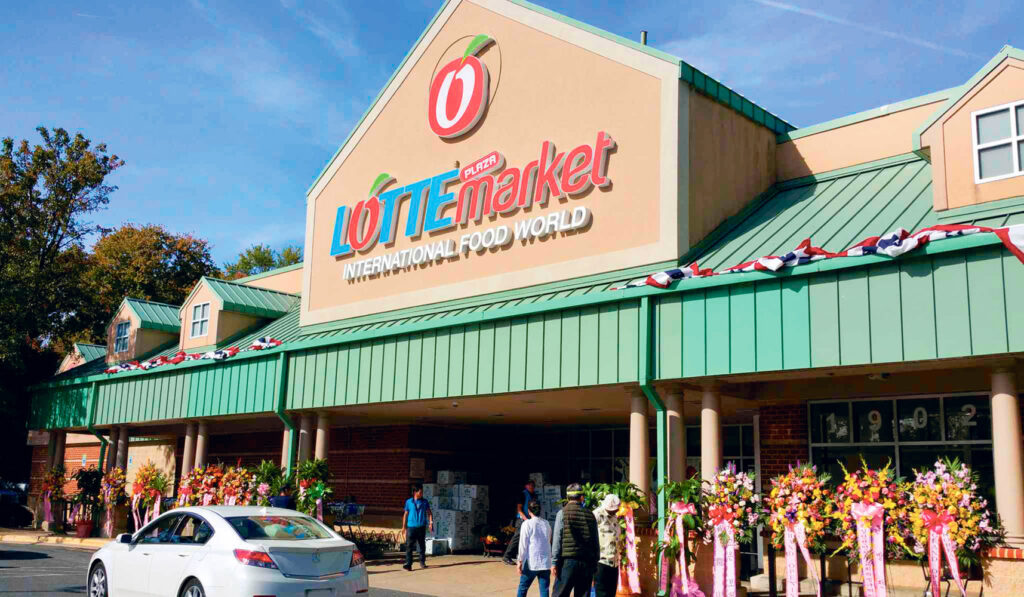
The first Lotte Plaza Market in Rockville, MD. The upcoming location at the old Sweetbay Supermarket will look similar.
Lotte Plaza Market has filed plans with the City of Tampa to renovate the former Sweetbay Supermarket off Bruce B. Downs (BBD) Blvd., next to the Home Depot, as it prepares to open what will be New Tampa’s largest Asian marketplace.
The renovation project on the 49,432-sq.ft. building, roughly 11,000 square feet of which will be storage and cooler space, will transform the inside of the former grocery store into a marketplace that sells Korean, Chinese, Japanese and Vietnamese food items and ingredients, a wide selection of meats and fresh fish and seafood and a huge variety of fruits and vegetables not found at American grocery stores.
The Lotte Plaza Market also will include at least three restaurants in its food court, as well as a bakery and a tea stand.
The renovations will cost roughly $4.5 million, according to the plans. The owners of the small Maryland-based ethnic grocery store chain focusing on Asian groceries and goods purchased the old Sweetbay Market for $7 million in January of 2021.
The Sweetbay building closed in 2013 and has been unoccupied since. KNK Tampa, Ltd. bought it in 2001 and leased it to Kash n’ Karry for a 20-year term beginning in November of that year. Kash n’ Karry operated under the lease until June 14, 2006, when its Belgian parent company Delhaize America, Inc., converted it into a Sweetbay. But, despite its rebranding, Sweetbay never gained the popularity of nearby Publix or Walmart stores.
In October of 2013, Jacksonville-based Bi-Lo Holdings bought 72 Sweetbay stores, plus the leases to 10 other underperforming Sweetbay locations that had already been closed. One of those leases belonged to the New Tampa location, which had six years remaining on it, but Bi-Lo Holdings declined to do anything with the property other than pay the rent until the deal expired in 2020.
Founded in 1976, Lotte Plaza Market is considered to be one of the premier Asian and international groceries in Maryland and Virginia, where it has 12 locations. The mini-chain also has one location in New Jersey, and opened the only other Florida location in Orlando on W. Colonial Dr. in February 2019.
Lotte Plaza Market is hoping to open 50 new locations by 2030. — JCC
Tucked away in Angus Valley, one of the few remaining places in Wesley Chapel that business and residential development haven’t touched, Jeff Hajari gets back to nature.
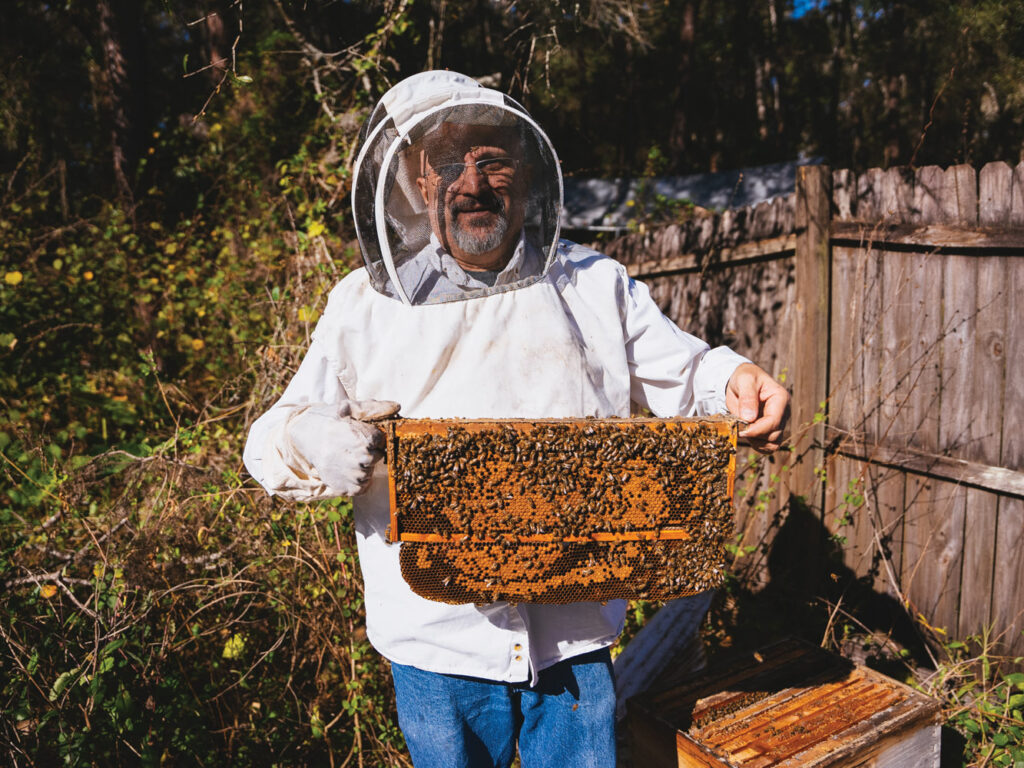
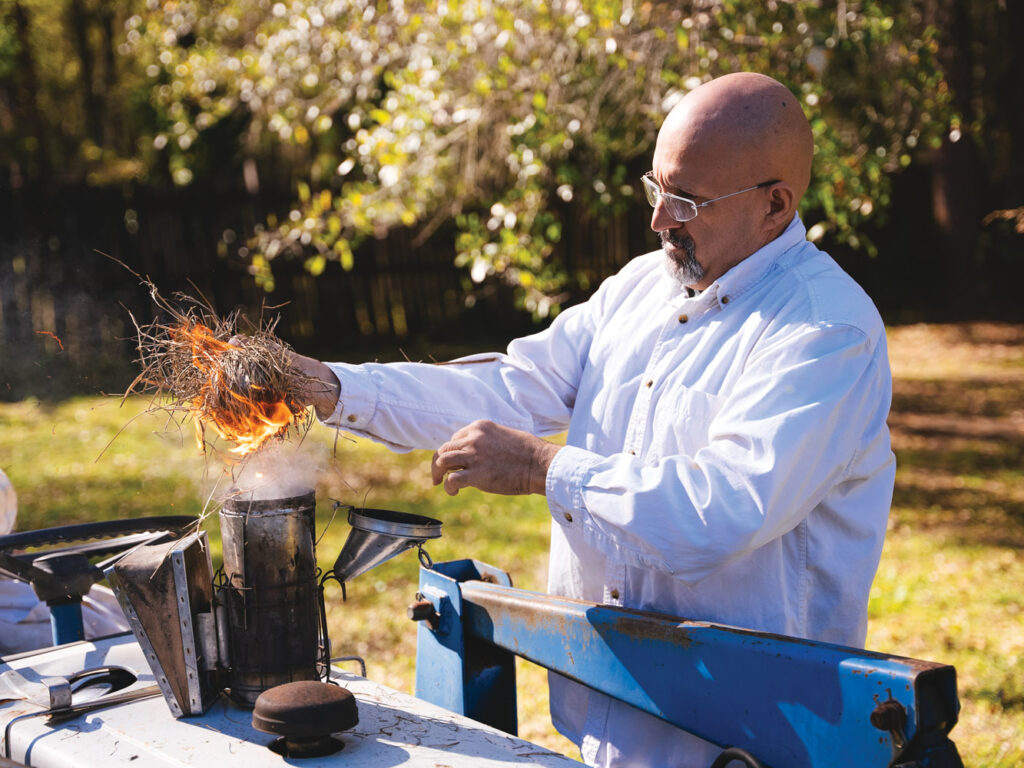
On this day, he is tending to his bees, all eight hives of them. It doesn’t take a lot of work, really, now that he has been doing this for two years, but he works to keep his hive small and strong.
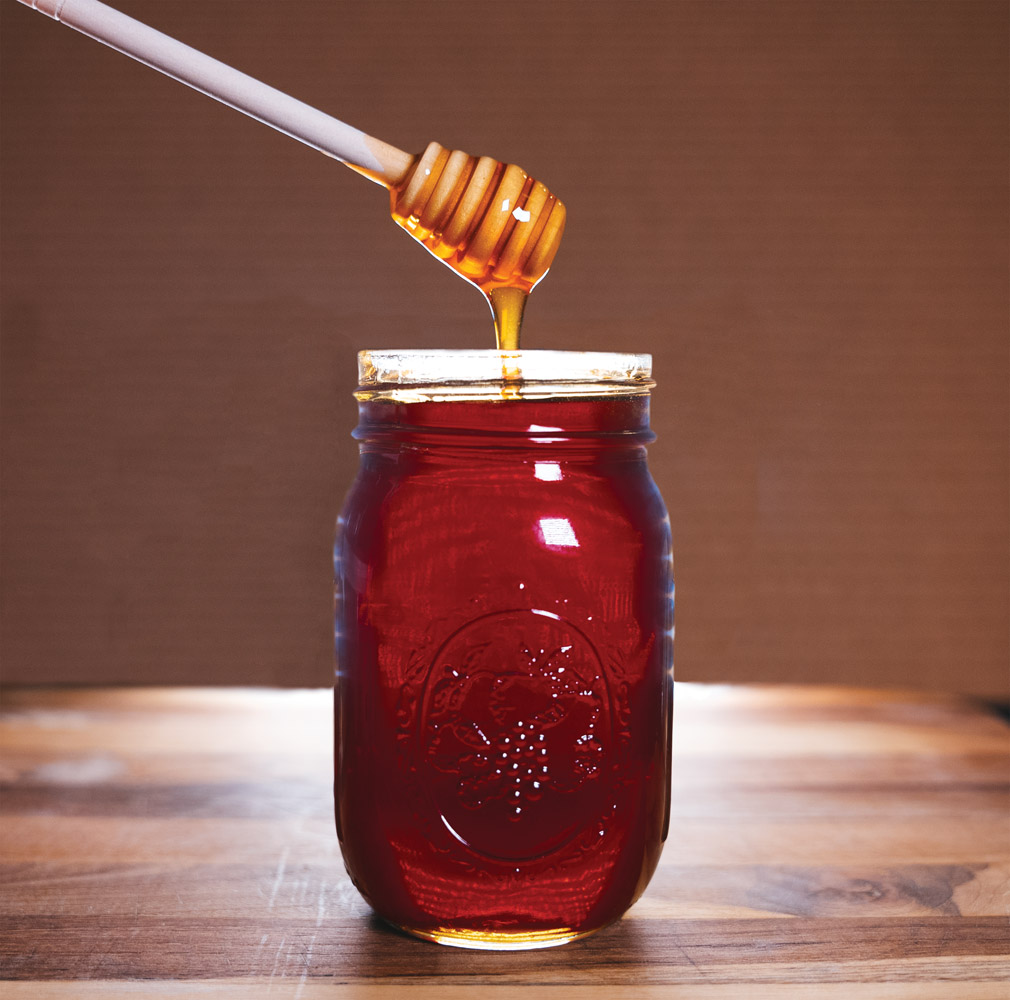
In his kitchen, his countertops are filled with 16 oz. mason jars of the sweet elixir his troops have produced, roughly 400 pounds in all during his most recent harvest.
A large wedge of beeswax sits nearby on the floor, below a counter of vials filled with propolis (“bee glue”), a byproduct of the hive used by people with diabetes to heal wounds, combat allergies and even soothe toothaches.
“Bees are amazing,” Hajari says. “There are so many benefits to everything they produce.”
Which is part of the reason why Hajari is so fascinated by them. Truth is, we couldn’t live without bees, as they, along with butterflies, pollinate approximately 75 percent of the world’s flowering plants and 35 percent of the world’s food crops, according to the U.S. Department of Agriculture.
Hajari, 59, was born in Kerman, Iran, and came to the US in 1987 to start a new life. He settled in New York and began a career as a home improvement contractor, but then relocated to Florida and eventually bought a home in Angus Valley.
With an affinity for nature and being self-sustaining, Hajari started with chickens and goats in his backyard, and while his attempts to make goat’s milk failed, he did successfully manage to make some soap.
But, he really wanted his own honey. Because he returns to Iran every year to help take care of his mother, barnyard animals required too much care. So, three years ago, he bought his first beehive from a woman in Dade City for $250. He transferred the hive in his truck, and says that setting it up was, well, a bit painful.
“I got stung like crazy,” Jeff says. “Probably 20-25 times. But, it was okay.”
Hajari continued to add more hives — at one point he had 12-15. But, they were weaker hives, and he has found by limiting the hives to eight or so, he has a stronger, healthier group able to resist attackers like ants and other pests. Two years ago, he designed a new entrance for the beehive to fight against varroa mites, who were capable of wiping out an entire colony.
Hajari says he learned how to keep bees like you would learn about anything — the internet and trial and error. He watched documentaries and YouTube videos, read articles and purchased a beekeeping suit. Handy with wood working, he constructed frames for the bees to expand their honeycombs. He has made mistakes, losing bees and entire hives. “Like anything, there is a science to it,” he says.
Every few months, his kitchen becomes a laboratory, where he extracts the honey from the combs and bottles it.
“It takes two days to get it all done and jarred and ready,” Jeff says. “It’s a labor of love. As long as I have enough for my coffee and tea, and my friends.”
He says that the taste each time is different, and that it all depends on what flowers were pollinated. One of his recent batches was particularly dark and bitter.
“I don’t know why, but my honey looks almost like coffee,” he says. “I’ve been to stores but I have never seen anything that looks that dark. It’s extremely dark. But, I read where the darker the better, as it has more antioxidants and antibodies. So I’m like, ‘Okay, I’m good with it.’”
He sells his honey and propolis on Facebook marketplace, which you can find by searching “Local Honey Wesley Chapel.”
Hajari will even come remove a colony of bees from your yard, if need be.
“It’s a hobby, and it’s fun,” he says.
But, there’s always something new to learn, and Hajari has now added mushroom hunting — “Not the crazy ones, the edible ones” — to his nature quest. He joined a group that goes hunting in places like Ocala National Forest, the Croom Wildlife Management Area in Brooksville and even Hillsborough River State Park. One trip yielded a basket of Chanterelle mushrooms, which he cooked up. “I’m addicted to them, they were so good,” Jeff said.
Because he has so many trees and logs in his backyard, he ordered a mushroom growing kit and is hoping to produce Shitaki, Golden Oyster and Lion’s Mane mushrooms in his own backyard. He said it takes a year.
And,before he left for Iran recently, he planted a banana tree, avocados, blueberries and blackberries.
“I just like to be self sufficient,” he says, “especially when it comes to nutrition. I want everything organic, and I like to produce it myself.” What’s next for Jeff? He’s not sure, but he seems to be just beginning. “I always like to try something new,” he says.
When I saw on the news and the uproar on Facebook that transgendered swimmer Lia Thomas had won the NCAA Women’s 500-yard championship, beating out Sarasota native Emma Weyant by 1.75 seconds, I couldn’t help but think about my own mediocre career as a distance freestyle and butterfly swimmer.
I didn’t want to be a swimmer as a kid, but all of my closest friends joined the Hewlett (Long Island) High swim team in 9th grade. At that age, I wasn’t big/tall or good enough to play high school football or basketball, so I accepted that swimming was it for me.
All of my friends were better than I was as a swimmer, especially in sprint events. But, I did enjoy being part of a really good team (we always had guys advance to the State Championship meets and some of them even won their events at the County level and at least made it to the finals in their respective events at States). Two of my closest friends were even good enough to swim for the Ivy League University of Pennsylvania.
Meanwhile, I worked to the best of my ability for four years, doing well enough to earn a varsity letter my junior and senior years, based on my results in dual meets during those seasons. I even made it to the County meet my senior year in the 100-yard fly and 500 free, but did not crack the top-20 in either event, despite swimming PRs (personal records) in both. I believe my 500-free time at the County meet was 5:18, but that was nowhere near my goal of breaking 5 minutes.
Even so, I was in the best shape of my life, so I continued swimming to stay in shape in my two years at SUNY Albany, and I even decided to join Albany State’s team my sophomore year. I was relegated to the events none of the other swimmers wanted to compete in — the 200 fly, 500-, 1,000- and 1,650-yard freestyle — but I only qualified for the Division III State Championship meet in the 1,650. I had put on at least 10-15 lbs. of muscle since high school and swam my P.R. in the 1,650 at State — somewhere over 18 minutes — and also recorded my fastest-ever times in the 200, 500 (5:07) and 1,000 en route to finishing 18th at that meet.
Three months or so later, I transferred to the University of Florida, a long-time swimming powerhouse, and decided to see if I could walk on the men’s team. After the first 200 yards of warmups, I realized I was completely outclassed and got out of the water cursing at myself. The famous then-Gators coach, Randy Reese, put his arm around me and said he could tell I was a competitive swimmer, and that I could stay with the team as the equipment manager and possibly even a meet-day fill-in if I could handle the thousands and thousands of yards per day and still get the kickboards and hand paddles put away at the end of each session.
Not only did I decline, I joked that I clearly wasn’t even good enough to make the school’s women’s team — and he agreed.
Little did I know, 40+ years later, that anyone would actually attempt such a switch. The former William “Will” Thomas, who says she began feeling transgendered while still in high school, joined the University of Pennsylvania’s men’s team as a freshman in 2017 and finished in the top-seven in the same events I swam (500-, 1,000- and 1,650-yard free) at the 2018 Ivy League Championships (for the same Penn team my friends swam for), although Will Thomas did not make the finals in any of those events at the NCAA Championships that year or in 2019, the Texas native’s last year competing as a man.
At the end of 2019, Will Thomas told his coaches that he was transgendered and began undergoing hormone replacement therapy to transition to female that year.
Between Covid and transitioning to female, Lia Thomas (right in picture) didn’t swim as a woman at the 2020 or 2021 NCAA Championships, but resurfaced as one of the favorites in multiple events at this year’s NCAA Women’s meet. Lia not only won the 500-yard final (in a time 13+ second slower than Will Thomas’ PR of 4:20.5), she also finished 5th in the 200 free and 8th in the 100 free.
Now, after previously having met and written stories for the former Bruce (now Caitlyn) Jenner and his Better Health & Living magazine in the 1980s, I do believe it’s possible for adults to realize that the gender they were born into was somehow a mistake, and I wish Lia Thomas the best of luck in life.
What I don’t believe is that someone who was born a man should be allowed to compete as a woman at any level of competitive sports. I’m no doctor or geneticist, but I don’t believe suppressing a male’s natural hormones is enough to not give that genetic man an unfair strength and endurance advantage when competing against genetic women.
Like Florida Gov. Ron DeSantis, I believe that Weyant should have won the 500-free title, although I blame the NCAA for allowing Thomas — or anyone born a man — to compete as a woman at all.
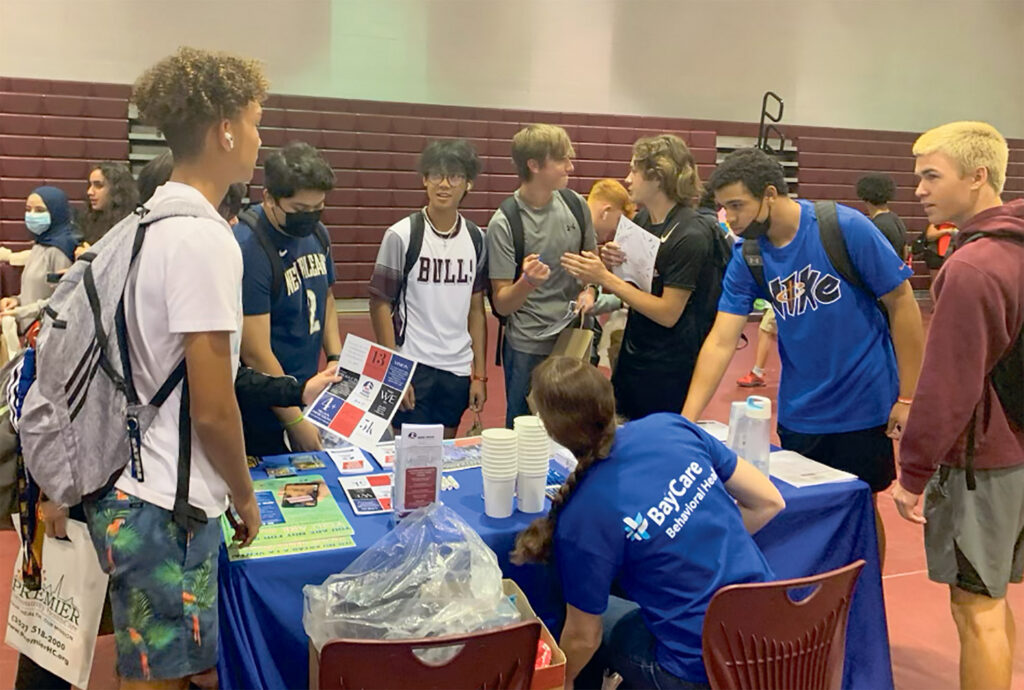
When Phoebe Taylor put on the drunk goggles and attempted to walk the guided pathway, she thought it would be easy. Instead, the Wiregrass Ranch High freshman was shocked to find herself stumbling throughout and sometimes off the course.
Like Taylor, students at her school are learning the consequences of drinking and driving, the dangers of not wearing their seatbelts and the importance of mental health.
“It’s easy for us to just go and do something dumb and regret it later,” Taylor says. “If that actually happened it could be very dangerous.”
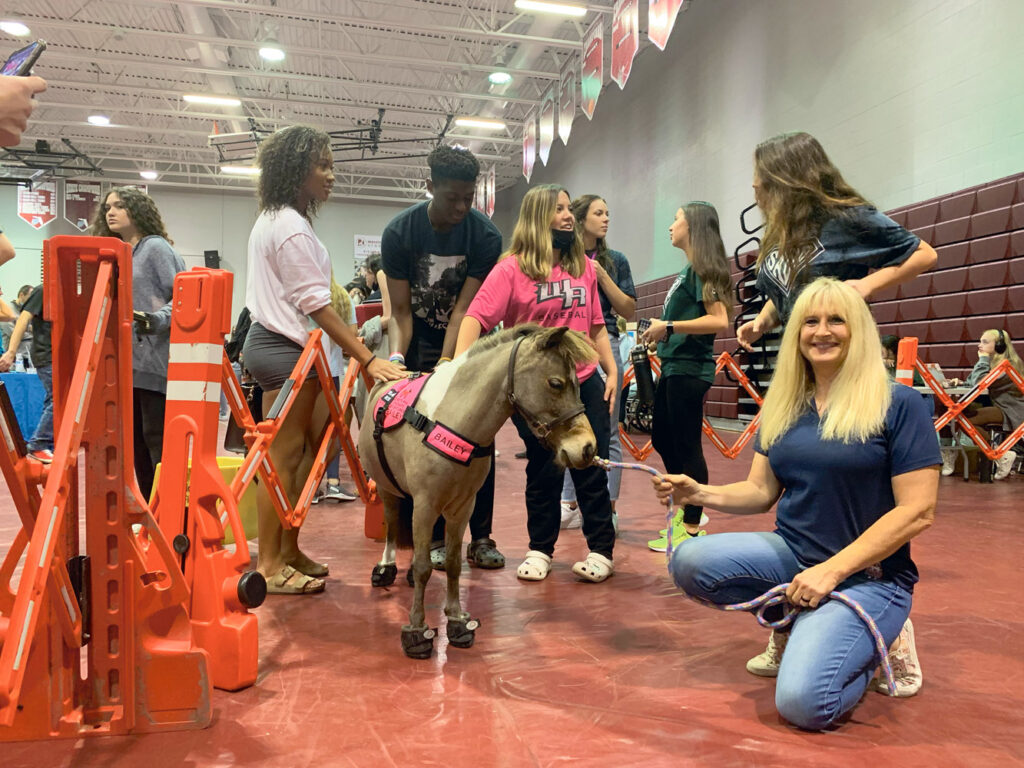
The largest-ever Wiregrass Ranch Wellness & Safety Fair was hosted on March 9 by the school’s Students Against Destructive Decisions (SADD) chapter to bring awareness to mental health and promote a healthier and safer lifestyle.
The event brought about 35 community leaders and the Pasco County Sheriff’s Office (PCSO) to talk to students and demonstrate the dangers of these acts.
Shaina Finkel, the president of the school’s SADD chapter and the national SADD president for the 2021-22 school year, oversaw the event. Her main goal was to have students talk to these organizations and understand the messages they are spreading.
“It’s not just going in and getting education,” Finkel said. “It’s meeting people and finding things that you might be passionate about that you didn’t know you were passionate about. It’s bringing safety and education and health to our school and it’s just allowing the students to learn.”
Finkel says there have been instances where these messages have not been reached by students; she hopes that through these fairs, students will rethink some of their previous and future decisions.
Ashley Boyles, Wiregrass Ranch High’s assistant principal, also oversaw the Wellness & Safety Fair. She says the fair is eye-opening to students and impacts them for a long time. The last time the fair occurred was two years ago, because of the pandemic, but she says students still remember and talk about it to this day.
“We’re again trying to make sure that our students are safe not only at school, but out in the community, out on the roads,” she says. “We always say to be college-, career- and life-ready and I think this is something to be life-ready.”
Students watched as a rolling car simulator demonstrated the dangers of drinking and driving and not wearing a seatbelt in a car crash. As the car spun, dummies inside not wearing a seatbelt flew out. Florida Highway Patrol spokesperson Steve Gaskin said he still gets people coming up to him and saying they remember the visual impact, and it is one of the reasons why they buckle up today.
“If I can make an impact on each one of these kids, then that’s one crash I won’t have to work and it’s one family I won’t have to go talk to and say, ‘Hey, your child’s not coming home tonight,’” he says.
Kelsey Strigler, the vice president of Wiregrass Ranch’s SADD chapter, says the car simulator is likely the most effective demonstration to show students the importance of wearing their seatbelts.
“Looking at it, I would be terrified,” she says. “I already do wear my seatbelt, but If I was a student who didn’t, that would really drive the point across that like you really need to wear that or you’re going to end up like the dummy on the floor.”
Among the booths was the American Foundation of Suicide’s Tampa Bay chapter run by board member Teresa Daniels. She is spreading her son Tristan Daniels’ story in hopes of saving another student’s life.
“There is hope out there,” she said. “They could be lifesavers. They can help anyone in need.”
Gabriella Nieddialek, a SADD member, recognized the importance of this booth and is glad to now be learning about these tools.
“A lot of teens don’t really like to come forward about mental health, and it’s definitely something that I’m glad the school introduces and is comfortable talking about,” Nieddialek said. “Definitely encouraging us to talk to people and get help.”
Wiregrass Ranch’s SADD chapter advisor Gregory Finkel is proud of how the event turned out. He watched how students interacted with community members as they talked to each other about what they learned. He says that is what the event is all about.
“You don’t really get these opportunities too often,” Gregory Finkel said. “If we can hit one of them, just one kid right, make a difference in their lives, the better.”
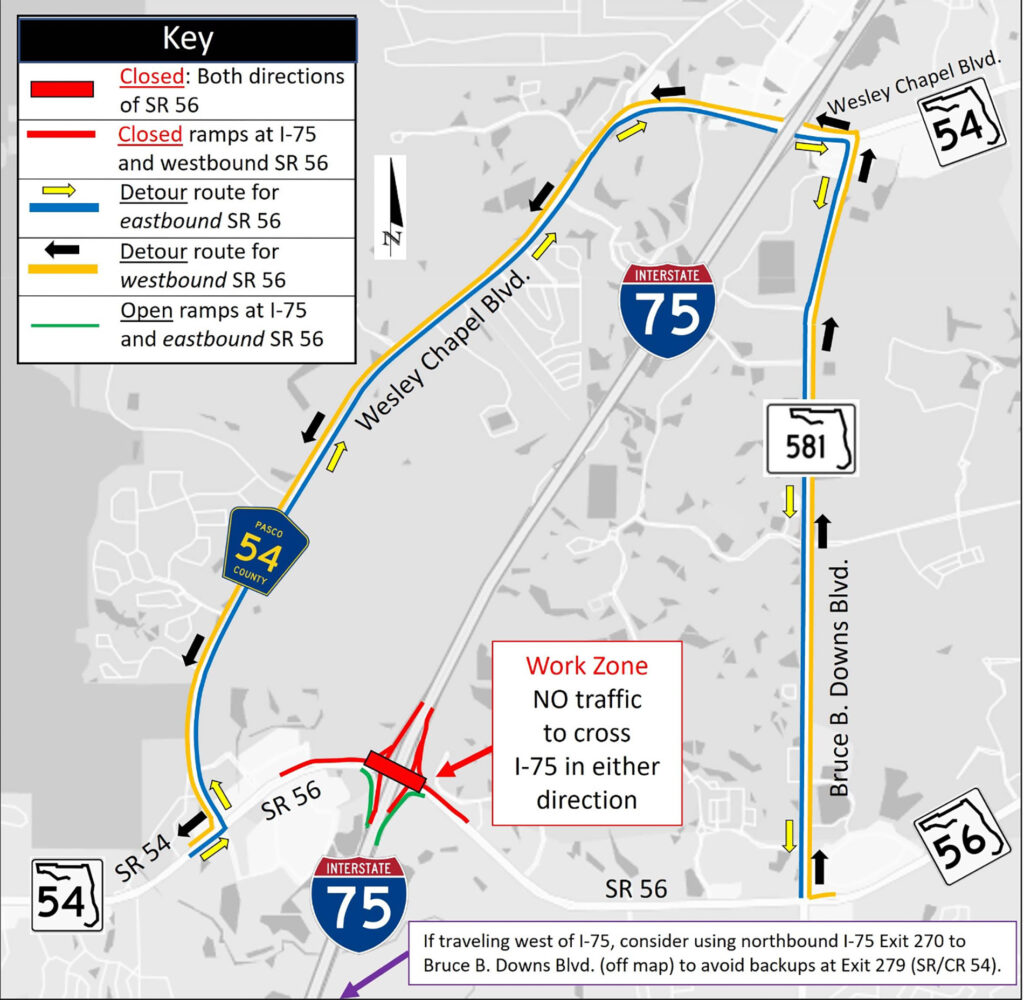
The Diverging Diamond Interchange (DDI) is nearing completion and, as a result, S.R. 56 will be closed to all traffic at I-75 from approximately 11 p.m. on Friday, April 1, to sometime during the day on Sunday, April 3.
No traffic will be permitted to travel through the work zone across I-75, according to the Florida Department of Transportation (FDOT). S.R. 56 is being closed to switch the roadway to the DDI traffic pattern.
S.R. 56 traffic will be detoured using S.R. 56, Bruce B. Downs (BBD) Blvd. (S.R. 581) and S.R. 54/C.R. 54 (Wesley Chapel Blvd.) as shown on the map above.
FODT says the DDI will not be at full capacity until closer to the expected project completion this summer. The contractor, Superior Construction Company Southeast, LLC, has more work to do to open an additional lane on both eastbound and westbound S.R. 56, and another turn lane from the northbound I-275/I-75 exit ramp onto westbound S.R. 56.
While S.R. 56 is closed, two ramps will be available to use at the I-75/SR 56 interchange — the eastbound S.R. 56 entrance ramp onto southbound I-75, and the northbound I-275/I-75 exit ramps onto eastbound S.R. 56. All other traffic will be directed via detour signs to use the I-75 interchange at S.R. 54/C.R. 54.