

When Connor Lyons realized that his dream of playing professional hockey had reached an end, he decided to do the next best thing:
He wanted to help others try to realize their own dreams.
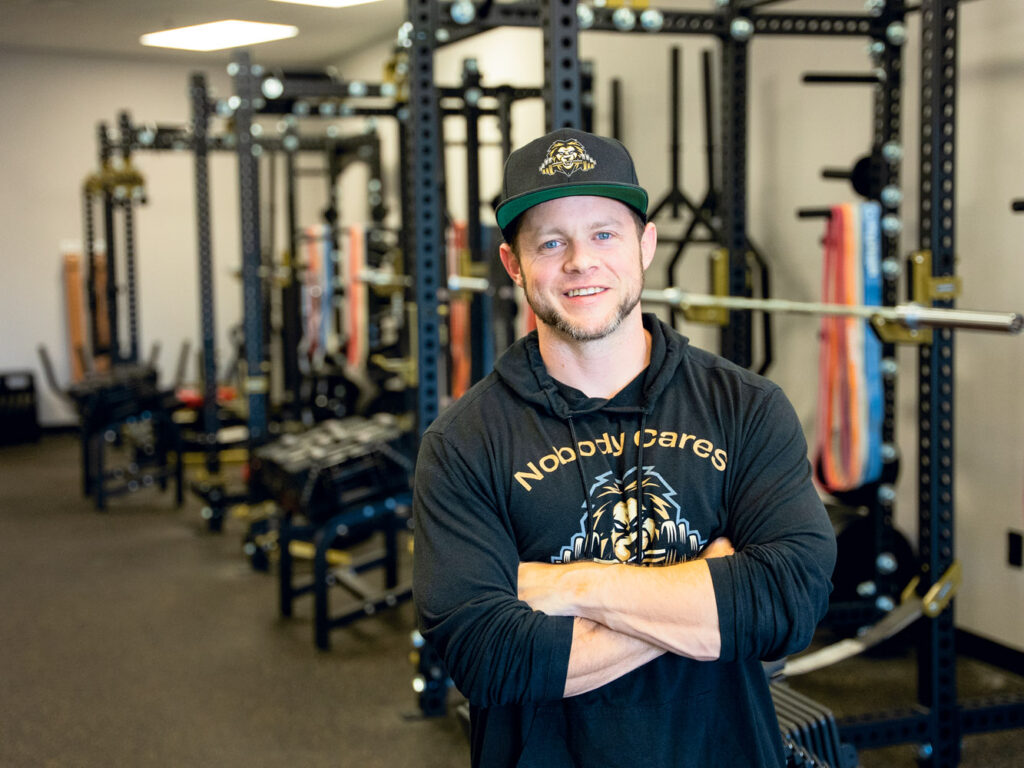
After nearly a decade of helping train athletes young and old for a number of different businesses, Connor recently opened his own training facility, called Lyons Den Sports Performance, on S.R. 56, between Capital Tacos and Lüfka (see story on pgs. 22-23).
Connor’s latest venture will focus on something he wishes had been around when he was a young athlete — a specialized training facility for middle and high school athletes.
“These didn’t even really exist when I was playing in high school,” says Connor, a 2003 Wharton High graduate and the star of the school’s ice hockey club team. “My goal is to give kids the opportunity I didn’t have growing up.”
In today’s world of sports, and with college scholarships at a premium, top-level high school athletes are always looking for that edge — looking to get faster, stronger and better.
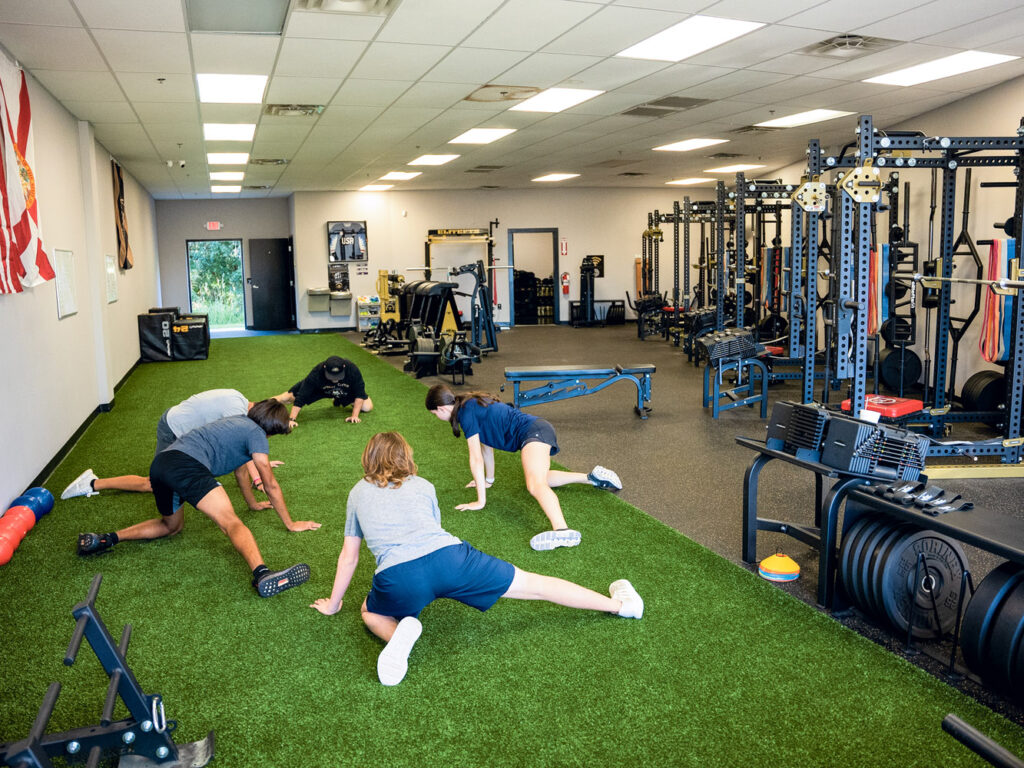
Lyons Den offers personal and group training that can help with things not typically taught by youth, middle or high school coaches. In a traditional high school setting, there isn’t time to take most athletes aside and show them how to run faster, jump higher or hit harder; but that’s what Lyons Den is here to provide.
Towards that end, Lyons Den is hosting a Peak Performance group training for high school-aged athletes (Mon., Tues., Thur. & Fri., 4 p.m.-5 p.m.), and a Next Level group training for middle school-aged athletes (Mon., Tues. & Thur., 3 p.m.-4 p.m.).
“I want to give kids the opportunity to get to the next level,” Connor says. “Sometimes they are just lacking the physical side of things. You can have skills, but if you’re not strong enough, resilient enough, powerful enough or fast enough, you won’t get there.”
While undersized when he played high school hockey, Connor turned himself into a physical player good enough to play one season as a third-line center at Division III Nichols College in Dudley, MA.
But, once he realized that hockey wasn’t going to be a career for him, Connor transferred to the University of South Florida and played for the Bulls’ hockey club program while earning a Bachelor of Science degree in Athletic Training from the USF College of Medicine’s Department of Orthopaedics and Sports Medicine.
While he attended USF, graduating in 2011, he worked as a strength trainer with the school’s football team, and has since worked at the former Athletes Compound at Saddlebrook Resort, where he later became the associate director of sports performance, and at the Athletic Edge in Lakewood Ranch and the Applied Sports Performance Institute in South Tampa, where he was director of combine prep.
At each stop, Connor says he was able to work with dozens of Major League Baseball and NFL hopefuls looking to impress at their combines or their pro days. Many, he says, ended up making it to the pros.
In 2017, he returned to his hockey roots as the director of sports performance at AdventHealth Center Ice. At Center Ice, Connor also worked with USA Hockey for two years, and served as the strength and conditioning coach for the women’s national team that won the gold medal in the 2018 Winter Olympics and various other medals during his time there.
In March of 2020, he decided to open his own training business, which Covid-19 delayed until this past August.
“I sat on it for a while,” Connor says. “It was a scary time.”
Now open, Connor says 90 percent of what his gym does will be focused on middle and high school athletes.
Training To Prevent Injuries
Connor says that much of the training at Lyons Den revolves around injury prevention for athletes. He says there has been a positive correlation in soft tissue injuries and the rise of specialized athletic training facilities.
And, he says, he believes that gaining strength and learning things like landing or changing directions correctly helps prevent injuries. In other words, teaching athletes things like proper positioning allows them to give and take force in a way that helps decrease the likelihood of being injured.
Using the proper techniques, he says, when it comes to things like squatting, and properly rotating your hips and teaching the body to decelerate when running (or skating) also helps prevent the kinds of injuries that have become so common.
“Our No. 1 goal with our clientele is injury prevention, and everything else is a byproduct of that,” Connor says. “If I can get you stronger, you’re going to be more resilient on the field. If I can get you faster to help you get in better position, you’re (less likely to) be getting injured on the field and losing time.”

Connor also organizes speed camps and flight “schools,” where athletes can shave seconds from their times and add inches to their vertical jumps.
He also hopes to offer his knowledge to local coaches by hosting clinics showing them how advanced athletic training can be incorporated into practices and offseason workouts.
One of Connor’s students is Nate Hargest, a Tampa hockey prospect.
Nate was recommended to Connor by Tampa Bay Lightning team chiropractic physician Tim Bain, D.C., and has been training with Dr. Bain for six years.
Now 16, Nate gives much of the credit for his success to Connor, who he says helped transform him into a stronger hockey player.
“It’s been incredible in regards to what I’ve been able to do on the ice,” says Nate. “I was definitely not one of the better kids when I started, but over time I’ve become one of them. I’m one of the strongest and fastest players. I don’t weigh that much, I’m not as big, but I’m winning battles and playing as well as the other guys.”
Nate was drafted earlier this year both by the Sioux City Musketeers of the United States Hockey League, and the Mississauga Steelheads of the Ontario Hockey League, two leagues that serve as a minor league system to prepare players for college.
“The results on and off the ice make me want to keep coming back and training harder,” Nate says.
The Lyons Den is located in the Cypress View Square plaza at 27217 S.R. 56. For more information about how to join or register for training, call (813) 361-2966 or visit theldsp.com.