Capstone Communities celebrated the official ribbon cutting & Grand Opening of The Cottages at Cypress Cay on Apr. 17. (Photos provided by Carrie Wildes Photography)
Congratulations go out to Capstone Communities, which celebrated the official Grand Opening and ribbon cutting ceremony for The Cottages at Cypress Cay with the Tampa Bay Chamber of Commerce (TBCC) on Apr. 17.
As we first reported in our July 2023 issue, The Cottages at Cypress Cay is a cottage-style rental community located off Bruce B Downs (BBD) Blvd.
“With 1,400 member companies and more joining every day, Tampa’s economy is growing rapidly,” said Patie Powers, the TBCC’s director of membership. “Innovative housing concepts like The Cottages at Cypress Cay are crucial for companies to recruit new talent and offer unique housing options to the growing workforce.”
For rental units that look & feel more like a home, you should definitely check out The Cottages.
With neighborhood amenities including a 24-hour clubhouse, a state-of-the-art fitness center, a resort-style pool, pavilions and grill stations, sidewalks, a dog park and other pedestrian-friendly amenities, The Cottages at Cypress Cay creates a true sense of place for its residents. The Cottages themselves definitely feel more “home-like” than your usual rental communities, with kitchens and even front entrances that are a cut above most apartment units.
“Our team is excited to bring this unique housing option to Tampa renters that builds community you don’t typically find in a traditional apartment setting,” said Amanda Wallis, executive VP of development for Capstone Communities. “Build-for-rent communities are perfect for young professionals, new residents and empty-nesters who may be looking to downsize because they provide the space and privacy of a home with the amenities and convenience of a traditional apartment.”
The community offers a mix of one-, two- and three-bedroom cottages, each with its own private fenced yard, as well as one-bedroom lofts and carriage house units. Homes range from 650 to 1,350 square feet, with wood-grain flooring, in-unit washers and dryers, a “smart home” technology package, 24/7 on-call maintenance and optional enclosed garage parking.
CBI Construction Services (Capstone’s in-house construction entity) is the general contractor for The Cottages at Cypress Cay, and Capstone Properties (Capstone’s in-house management division) is the leasing and property management team.
Capstone Communities is an Alabama-based real estate firm specializing in development, management and construction of student and multifamily housing. In 2017, Capstone expanded to the multifamily sector at the forefront of the build-for-rent movement with the introduction of its conventional cottage-style development program.
Today, with a mission to be an innovative company dedicated to serving people, building community and delivering exceptional experiences that stand the test of time, Capstone’s growing project footprint now stretches across the Southeast with 11 build-for-rent communities open or under construction in Alabama, Georgia, Florida, North Carolina and South Carolina.
The real estate industry in the U.S. has weathered many permanent changes since it first began. These changes typically have translated to greater protections and transparency for buyers and sellers, and has kept the industry innovating and moving forward.
There are more major changes proposed for the national real estate market this summer, and they could end up affecting everyone. These likely changes are the outcome of a pending settlement in a national class action lawsuit, brought against the National Association of Realtors (NAR) organization by the plaintiffs, a group of home sellers from the Midwest who listed their homes for sale on the MLS (Multiple Listing Service) using real estate Brokers.
In order to try to better understand what’s happening, let’s first break everything down to the basics.
What Is A Real Estate Brokerage?
In order to legally practice real estate in Florida, a real estate agent must have an “active” license, working under a Broker or be the Broker (an experienced agent who’s gone through additional licensing requirements and runs a brokerage) themselves. The Broker and his or her agents all work under the brokerage (real estate company). Among the many well-known national brokerages are RE/MAX, Keller Williams and HomeServices of America, all of which were named in the suits.
Exceptions for those who are able to engage in real estate transactions but who are not under a brokerage are the following — real estate attorneys, agents who are employed by home builders in community sales offices, agents in leasing offices and buyers or sellers who represent themselves in their own real estate transactions.
What Is The NAR?
As real estate records began being tracked in the U.S. around the end of the 1800s, there was inconsistency and dubious practices among some in the profession. To curb the problems, 19 various city real estate boards and the California State Realty Federation organized and created the National Association of Real Estate Exchanges in 1908. That name was later changed to the National Association of Realtors (NAR).
In 1913, the Association adopted its ‘Code of Ethics’ with the “Golden Rule” as its guiding principle. Shortly after, in 1916, the term “REALTOR” was created for those who were members of the National Association and who went through extended training to learn and pledge to uphold its strict code of ethics.
Now, NAR is the largest trade organization in the U.S., with nearly 1.5 million members.
What Is The MLS?
NAR also controls and regulates most of the 800 local and regional Multiple Listing Services (MLS) throughout the country. These MLSs serve as the primary databases where information (including photos) about current local real estate for sale or rent is uploaded, listed and then shared with potential buyers. Popular websites like Zillow.com and Homes.com (photo above) pull most of their information from MLS.
From very early on, in order to list on an MLS, NAR required a written listing agreement, which meant that the seller would specify who (which Broker or agent) could list his or her property and the specific commissions that would be paid, and to whom, in order to avoid later disputes and build trust among those in the early profession.
This early requirement stuck. The commissions are currently either specified in the listing agreement as a percentage of the total sale price, or as a flat dollar amount.
What Happened With The Case?
Previously, NAR’s “Participation Rule” required that for a property to be listed on MLS at all, some compensation (even as little as $1) must be offered to the buyer’s agent. The plaintiffs in the case claimed that some of the nation’s largest real estate brokerage firms used this rule to collude with NAR to fix prices and artificially raise the amount of home sale commissions, even though commissions had always been negotiable.
The jury sided with the plaintiffs at the end of last October (2023), and awarded them approximately $1.8 billion in damages. After the ruling, NAR immediately changed its Participation Rule so that seller listings could offer as little as $0 commission to a buyer’s agent, and in November, Stellar MLS (the local MLS that covers the entire Tampa Bay area) updated its rules and regulations so the local system could accept $0 in that commission input field.
When Was The Settlement Reached?
On March 15, 2024, a smaller settlement in the amount of $418 million was reached between the parties. According to Katie Johnson, the chief legal officer of NAR, “This settlement would resolve the claims brought against NAR.” This settlement is the document all parties agreed to, but this isn’t the end. Johnson stated that, “Like all settlements of class action litigation, it is subject to court approval.”
What this means is that the proposed settlement terms and changes to real estate policies might not take effect until July of this year, at the earliest.
The settlement also came with a cap, meaning only large brokerages with residential transaction volumes of $2 billion or more in 2022 were liable to pay into the settlement fund, and ones with volumes below $2 billion were released from liability. The brokerage HomeServices of America, however, chose to not participate in the settlement, and has now become the lone defendant, wanting to fight it out and take its chances, potentially pushing the case to the U.S. Supreme Court.
What Are The Proposed Changes?
There are two primary changes that will affect the entire real estate landscape:
From the Stellar MLS public website:
1. “Compensation offers moved off the MLS: NAR has agreed to put in place a new rule prohibiting offers of compensation (to be listed) on the MLS.” As was mentioned before, NAR had already changed its policy to allow for offers of $0 compensation to the buyer’s agent on the MLS, but currently, most sellers are still opting to include some type of commission in that field. But, this change would strictly prohibit ANY commission being offered in the MLS listing at all.
The intent was to level the playing field to make sure there was no steering, so buyers’ agents would show them every potential house, regardless of the commission, because they wouldn’t know what it might be up front, as they historically have been able to know.
This doesn’t prohibit the agents from negotiating concessions behind the scenes, but the hope and goal of the settlement was that increasing negotiations at this step, and at the initial written representation agreements (see below), would overall reduce total commissions paid nationwide, saving consumers money.
Also from Stellar MLS public website:
2. “Written agreements for MLS participants acting for buyers: MLS participants [agents/Brokers] working with buyers will be required to enter into written representation agreements with their buyers.”
These written and signed agreements are typically known as Buyer Agency Agreements and specifically might be referred to as Exclusive Buyer Broker Agreements (EBBA), which are already required in more than a dozen states, but are optional in the rest. These are meant to ensure that home buyers know in advance what their agent will charge for their services, if the seller doesn’t offer concessions to compensate them.
Also, the seller may still offer concessions, but instead of a commission being paid directly to the buyer’s broker from the seller (like it had been traditionally done in the past), a concession might go to the buyer, and then the buyer would pay their agent the rate listed in the agreement. So, if the seller were offering 2% concessions, but the agreement between the buyer and their agent was 3%, then the buyer may have to come up with the remaining 1% themselves.
This, of course, could cause the buyer to reconsider that particular property or take concessions more into consideration, now that they might have to participate in paying for their real estate agent’s services.
What Are The Concerns?
This settlement has caused concern for certain categories of home buyers who may be at a disadvantage, given current restrictions and budgets. For example, a first-time home buyer with less buying power might be more swayed by certain properties based solely on the concessions they are offering in order to pay their agent, and sellers may not even entertain the buyer’s offers if they ask for too much in concessions.
Other buyers who might be affected more than others are those who may use Veterans Administration (VA) loans, which are reserved for U.S. Armed Forces active duty service members, veterans, reservists, or their surviving spouses (under certain circumstances) that meet the minimum active-duty service requirements set forth by the U.S. Department of Veteran Affairs. Many buyers who qualify might choose to use a VA loan over other types of loans because the terms are typically much better.
However for VA loans, current restrictions on certain fees would not be compatible with the proposed national change. On March 27, NAR president Kevin Sears wrote a letter to the VA and shared his concern about this, stating, “In this exceedingly competitive market, we are concerned that the VA’s current policies place veterans at a significant disadvantage compared to traditional buyers. Under VA policies, buyers using their home loan benefit are prohibited from compensating their professional representative directly. In situations where no offer of compensation is offered from a seller, VA buyers are immediately at a disadvantage, potentially forcing them to forego professional representation, lose a property in an already limited inventory, choose a different loan product, or exit the market entirely.”
No one knows exactly what this all will look like moving forward, or what things will have to change in order to make it all work, but there is a timid yet optimistic outlook from real estate professionals that things will work out for the best, as they have many times in the past.
Paula Nuñez, the artistic director of the Tampa City Ballet, which is based at her Tampa City Dance Center in Tampa Palms, says she was “thrilled” with the two performances (May 4-5) of her contemporary ballet “If I Cry” at the Jaeb Theater at the Straz Center for the Performing Arts in downtown Tampa.
Nuñez originally co-created (with Elsa Valbuena) and had her then-new professional Tampa City Ballet dance troupe perform “If I Cry” back in 2019, but she says the performances at the 312-seat Jaeb Theater the weekend of Cinco de Mayo added many new elements to her original “floor work” dance piece about the life of renowned Mexican artist Frida Kahlo.
“The show keeps evolving,” Nuñez says. “For example, Frida was of course a famous painter, so we added scenes where the dancer playing adult Frida is actually painting and I think the audiences really enjoyed seeing that. Plus, all of the dancers are professionals who each brought their own ideas about how to make the show better. It all came together and I’m so happy with the results!”
I will say that Jannah and I thoroughly enjoyed everything about “If I Cry,” which began with a recorded video introduction by Visit Tampa Bay president and CEO (and New Tampa resident) Santiago Corrada congratulating Paula and everyone involved with “If I Cry,” which he called “spectacular.”
That video was followed by Tampa City Ballet chief curator Sharmila Seth reading information about Kahlo’s tragic life, from her contracting polio at the age of six, to the bus crash twelve years later that left her with more than a dozen fractures and her abdomen and uterus being impaled on a large rail, to her on-again, off-again marriage to Mexican muralist Diego Rivera (which ended in divorce the first time because she had an affair with fellow female artist Georgia O’Keeffe), to her three miscarriages to her affair with Russian communist leader Leon Trotsky to her tragic passing in 1954, at the age of 47.
All of these events and more are depicted in “If I Cry,” with four different outstanding dancers portraying Kahlo at different ages, including one portraying Frida’s soul. All of the music — hand-curated by Nuñez, included everything from heavy classical pieces (some with violinist Nick Ewing on stage) to jazz pieces by Benny Goodman and Jelly Roll Morton — fit perfectly with what the audience experienced in the intimate Jaeb Theater. Also part of the musical experience was a live mariachi performance by Mariachi Guadalupe, which performed basically in the audience, along with the Wattaka Choir.
“Frida is such an important figure,” Nuñez, who is originally from Venezuela. “So we wanted to re-tell the tragic story of her life from beginning to end in a unique way.” Mission accomplished, Paula!
The cast was made up not only of amazing dancers, they also were incredible actors who actually made you feel Frida’s pain with their facial expressions and perfectly executed floor work. I intentionally didn’t name any of the dancers who “stood out,” because it honestly wouldn’t be fair of me to leave any of them out, so below is the full cast list (in alphabetical order) of the Tampa City Ballet’s “If I Cry.”
If you missed it, you truly missed a special event that should not be missed the next time Nuñez decides to share this masterwork with the Tampa Bay community. Bravo!
Nicole Assad (Young Frida)
Humberto Rivera Blanco (guest artist, Leon Trotsky)
Jayron Perez Cabrera (artist in residence, The Death)
District 67 State Rep. Fentrice Driskell (photo) is in an unenviable position — but it’s a position she handles with class and dignity.
As the Minority Leader in the Florida House of Representatives — where her Democratic party faces a Republican super-majority of 84 Republican to 36 Democratic seats held — Rep. Driskell says she is still encouraged by the most recent State Legislative session, which ended in March.
She also is gearing up for her fourth (and she says final, at least for her current position) legislative campaign — since first winning election to State House District 63 over then-incumbent Shawn Harrison by more than 4,500 votes in 2018. Rep. Driskell was reelected to the Dist. 63 seat in 2020 (when she was unopposed and did not have to appear on the ballot) and, in 2022, she defeated Lisette Bonano (R-New Tampa) by just under 3,700 votes to win the re-drawn Dist. 67 seat. Bonano is again on the ballot against Rep. Driskell for the Dist. 67 seat in November. At our press time, neither candidate was set to face a Primary Election opponent in August.
Rep. Driskell, who earned her Bachelor of Arts degree in Government from Harvard University in 2001 and her Juris Doctor (law) degree from Georgetown University in 2004, was elected by her Democratic colleagues to serve as the State House Minority Leader and was named by new House Speaker Paul Renner to be the Democratic Ranking Member of the House Appropriations Committee in 2023, so she serves an important role in the House’s state budget process.
“It is a thankless job, but it’s an important one,” she says of being the Minority Leader against a Republican super majority. “We face a lot of pressure from the other side of the aisle. But, I have tried to lead my caucus in such a way that we put forward policies that any family in Florida would appreciate. Every Floridian deserves the chance to be healthy, prosperous and safe. What I have found is that my constituents are tired of the culture wars — they don’t want book bans and attacks on history.”
When asked whether or not the culture wars have been fought by both sides, Rep. Driskell responded, “We have to remember that the Republicans have been in charge in the legislature and the governor’s mansion for years and they pushed the culture wars. The legislature has been pushed by Governor (Ron) DeSantis to ban Critical Race Theory, which is not taught in our schools. I view it as my job to say, ‘What’s going on here? What’s O.K. and what’s not?’ I don’t care about the parties, I care about the people. I can work with anybody. But, you have to pick your battles carefully because the other side, in most cases, doesn’t need our votes.”
She added that there were very few of what she calls “Jump Balls” in this year’s session. “They only need us when their caucus is split on an issue, like the bill to regulate short-term rentals, like Airbnbs (Senate Bill 280 passed both houses and is waiting for Gov. DeSantis’ signature). There were legislators pushing in both caucuses on both sides of that issue.”
Despite her party’s disadvantage in the State House, Rep. Driskell is still proud of the bills she either sponsored, co-sponsored or supported.
“I was able to secure $10 million for sickle cell disease (House Bill 7085, which creates a Sickle Cell Disease Research & Treatment Grant Program within the Department of Health),” she says. “It’s the first such program in the U.S., as Florida has close to 8,000 people afflicted with sickle cell disease, one of the biggest populations in the country.”
Other successes she points to in this year’s legislative session include:
• A $250,000 grant to study infant health and mortality. “There’s a consortium of universities studying that together,” she says. “It could save some lives.”
•$1 million for a historic cemeteries program in the Dept. of State. “The grants are open now,” she says. “I designed the bill so the state works with USF and its black cemetery network…so it helps USF, too.”
• She also advocated for (but didn’t sponsor) $1.7 million in USF funding, including USF’s Florida Mental Health Institute’s autism program.
• $14,000 for the New Tampa Players, as part of the cultural & museum grants program. “There are institutions across the state who get money from that program,” she says.
• Helped get $1 million for the Ronald McDonald House, here in Tampa Bay. “There is a need for a new house,” she says. “The current one is on Columbia Dr. on Davis Islands, but this will help them put one a new house in a more central location.”
• $1 million for SOF (Special Operations Forces) Missions, which helps veterans with PTSD. “I helped them get their first state appropriation a few years ago,” she says. “I am honored to have helped support that, too.”
Rep. Driskell also is proud to have advocated “for reducing the waiting list for the Agency for Persons with Disabilities. We have 22,000 people in Florida waiting for their benefits. But, Senate Bill 58 provides funding to move some people off that wait list.”
No Help On Transportation Tax $
As for some results she wasn’t happy with this year, Rep. Driskell mentioned the $570 million raised by the most recently passed (and overturned) Hillsborough Transportation Tax.
“Unfortunately, it’s not coming back to the community in the form of funding for transportation projects that we voted for,” she says. “About $256 million is coming back in the form of road resurfacing and about $162 million will go towards a Sales Tax Holiday that we haven’t fully flushed out as to what that’s going to look like. I pushed for it come back for transportation projects, but at least we got the resurfacing.” She added that the remainder of the money — close to $170 million — will be used to pay for legal fees associated with the case and to pay expenses and for valid tax refund claims.
“It’s outrageous that it’s going for something other than what we voted for,” she says. “I worked with my committee’s Republican vice chair Lawrence McClure to come up with a plan for it. But, it’s a done deal; it’s just waiting for the Governor’s signature on the entire budget.”
She adds, “We’re sent to Tallahassee to do serious work and I take it very seriously. We have to put aside partisan differences to get work done. We don’t abandon our values but you have to be willing to work in a collaborative way.”
As for what’s coming up in November, she says, “We are working hard on elections. My job as leader is to lead the strategy and raise the resources necessary to win the five seats we need to get out of the super minority. It’s a tall order — five is a lot to win. But, my team and I think we have a strategy to do it. In January, I led the effort to win a special election in Central Florida — 70% of voters voted for our candidate — by focusing on things like property insurance rates and abortion access.”
On Abortion Access & More
Speaking of abortion access, Rep. Driskell says, “I never thought we would live in a time where the U.S. Supreme Court would take rights away…their job is to protect them. Florida’s six-week ban takes effect at the end of next month. We have the ability to vote on Amendment 4 in November and the legislature also can overturn it — seven Republicans voted against it. We need people to get out and vote, however they feel about it.”
Other bills that passed that she wasn’t happy about include House Bill 49, which weakens protections on child labor.
“My caucus and I at least got it watered down. The bill would have allowed kids under age 18 to work overnight shifts — treating them like adults. Now, they will have breaks and no overnight shifts.”
She also had a problem with House Bill 433, which preempts local governments from passing heat stress ordinances. “There were workers in South Florida who died from heat stress,” she says, “so Miami put a new ordinance into effect. But this law, which the Gov. already signed, overturns any local laws.”
And finally, she says she is trying to find new ways to stay in touch. “So, every Tuesday at 8 p.m., I do a live stream, where I talk about what’s happening in Tallahassee, politics and more.” For more info, visit FentriceforFlorida.com or @FentriceForFL on Instagram, Facebook, YouTube or X.
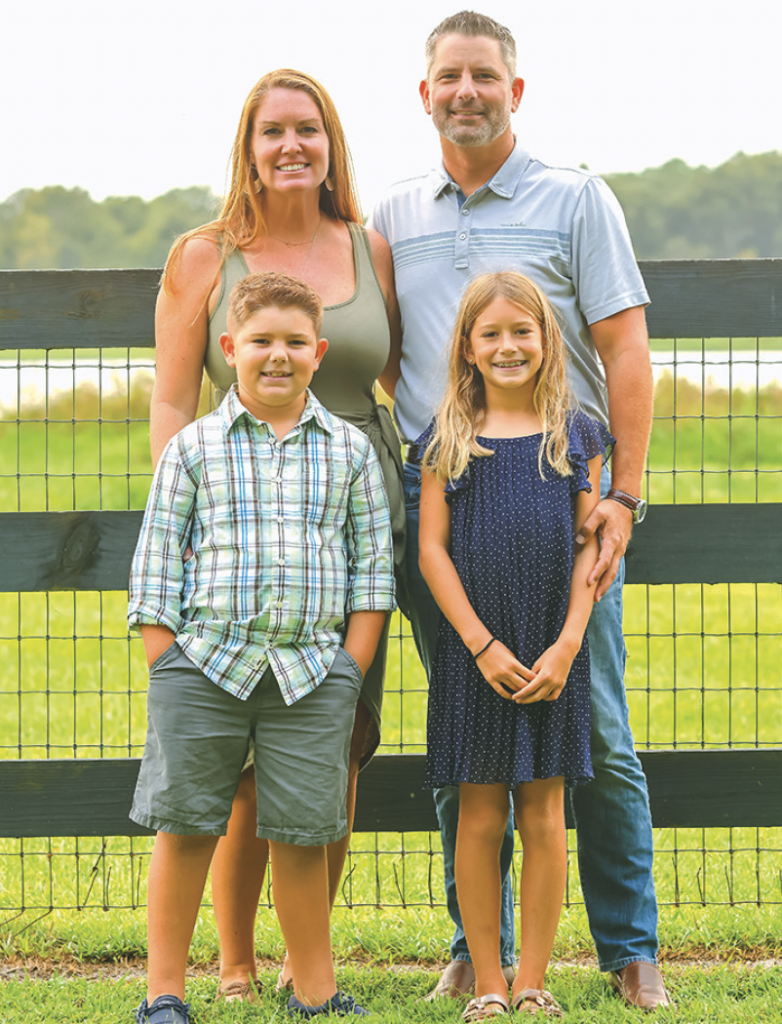
Lindsay, Shawn, Luke & Kasey Thompson. (Photos provided by Shawn Thompson)
Wesley Chapel resident Shawn Thompson says that, in general, most people don’t know that people like him even exist.
Shawn is a licensed public adjuster and the owner of Compass Claim Solutions.
As a public adjuster, he says his job is to advocate for home and business owners who have suffered a loss that is covered by the insurance company.
When disaster strikes — whether it’s a fire, water damage, or even a storm or other natural disaster — most people pick up the phone and call the insurance company directly. On the other end of the line is someone who represents what’s in that insurance company’s best interest, not theirs.
Since the insurance company wants to settle the claim for as little as possible, it makes sense that a homeowner or business owner would want to have someone looking out for their best interest, too.
That’s why Shawn recommends you pick up the phone and call him first.
“Hopefully, this is the first and only time you’re ever going to suffer a loss like this,” Shawn explains. “But, I’ve been through this process thousands of times with my clients.”
Shawn has been a licensed public adjuster since 2015. He started the process of becoming licensed in 2012, by passing a course and working as an apprentice for a year. Prior to that, he spent 10 years in management at CVS pharmacies after his graduation from St. Leo University near Dade City in 2003 with a Bachelor of Science (B.S.) degree in Business Management.
At that time, he says he was ready to make a change to leave CVS, and he had already learned a lot about his brother-in-law’s job as a licensed public adjuster in southeast Florida. Shawn found out that being a public adjuster was something he would be good at and would enjoy. He ended up working for his brother-in-law for several years before starting his own business in 2022.
In his extensive experience, Shawn says he’s never once looked at a valuation and told the insured party that their insurance company paid them everything they deserved.
“There’s always something left on the table,” he says. “But, is it $500, $5,000 or even $50,000?”
That’s what Compass Claim Solutions can figure out for you so you can be confident you’re not missing out.
Shawn says the best time to call him is as soon as you have to make a claim. In that best-case scenario, he can ensure the entire process is managed properly from start to finish.
But many times, the way people find out about his services is after the insurance company has considered their claim to be closed and they haven’t received the funds they need to make all of the necessary repairs. He says that’s when they go to the internet to search, “What can I do?”
Even at that point, Shawn says he is able to step in and make sure the insurance company pays what the homeowner or business owner is entitled to, based on their policy.
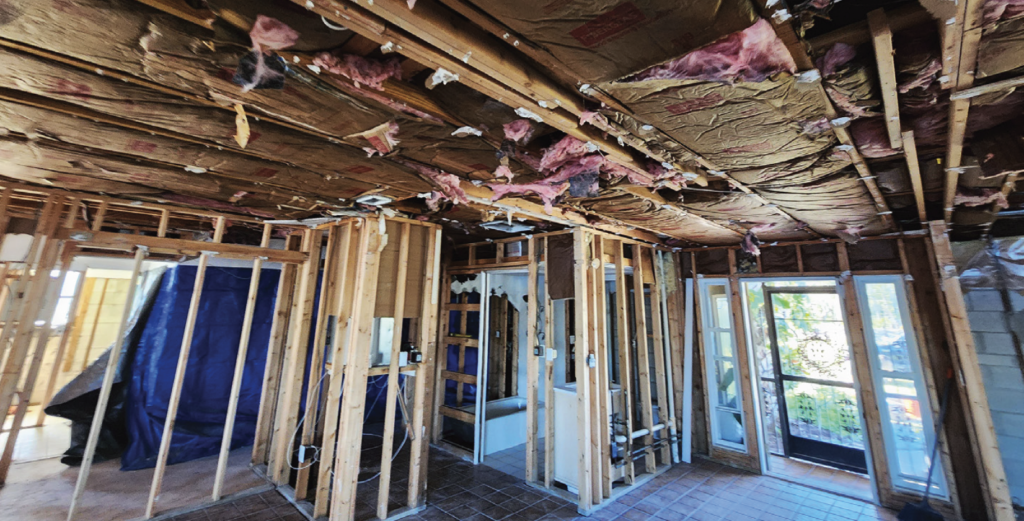
Whether your home has been damaged by flood (above) or fire (below), Compass Claim Solutions can help you get the most money from your insurance company & help if you’ve been told that your loss isn’t covered.
He says that, just recently, he met with a homeowner who suffered a loss during Hurricane Ian in Sept. 2022 to give them a final payment from their insurance company. Originally, they had only been paid $11,800, but Shawn was able to get the homeowner an additional $128,000.
In another case, Shawn says one of his happiest customers was a woman whose insurance company valued her roof damage claim at $1,012. After her $1,000 deductible, the check she received was for $12. Shawn was able to get her $13,000, which paid for an entire new roof.
“Stories like that are the norm in my business,” he says. “My normal recovery if someone calls me supplementally is somewhere between five and 20 times what the insurance company originally paid.”
He explains that public adjusters in Florida are paid on contingency, meaning they get paid based on what they recover for clients as a percentage of the settlement. While that charge is capped at 20 percent of the payments to the insured, Shawn emphasized that it’s a negotiable fee.
In fact, he says, if someone finds out about him from the Neighborhood News, he’s happy to provide a discount. He also offers discounts to those who are referred to him by their family and friends.
His fee is negotiated at the time he is first called out for a completely free, no-obligation consultation. He provides his expert opinion on what he feels the claim is worth, and then the homeowner or business owner can decide whether or not to hire him.
Compass Claim Solutions client Peggy D’Alessandro experienced flooding from water leaks in both her home and a rental property she owns. Both times, she called Shawn to help her through the process.
“He was able to identify things that I didn’t know would be a problem,” she says, “like the potential for mold. He was able to look at it from a structural standpoint and tell me that, realistically, if I want this to be back to its original condition, I have to be concerned about drywall, molding, paint and a lot of other things besides just the floors.”
She says she was worried about whether or not the insurance company would pay all that she needed to make her home whole, so it was a relief to work with a professional who could relate to the insurance company on their terms. “He made the process painless and smooth,” Peggy says, “and I felt like I had someone who had my best interest at heart.”
Peggy adds that making a claim also is a very time-consuming process. As a busy person, she says knowing Shawn was communicating with the insurance company, filling out the paperwork and handling the negotiation took all of the anxiety out of the situation.
“Most people who go through something like that have never been through it before,” she says, “plus they’re dealing with the anxiety of their home being in disarray and not knowing when or how they will get paid and if it that payment will cover all of the damage. I would absolutely recommend anyone who has a disaster in their home to work with Shawn. It’s the best decision I could have made.”
Shawn adds, “No matter how long I work for people, whether it’s two weeks or two years, if I don’t put money in their pocket, I don’t get paid.”
Shawn and his wife Lindsay have lived in Wesley Chapel since 2010. They have two children, Kasey and Luke, and a dog named Wrigley.
While he’s local to our area, Shawn is licensed for the entire state of Florida and handles claims as far away as the panhandle. When a storm hits, he often travels to where the damage is so that he can most effectively help the people who need him the most.
For the past year, Shawn’s brother Travis has been working as an apprentice under him. Travis recently became fully licensed and is now able to handle clients on his own.
Now that Travis is fully licensed, Shawn is bringing on a new apprentice, Frank Markim.
Shawn says that if you hire his company, you won’t see any contractors or have any part of the process outsourced. If he starts your claim, he’ll see it through to the end.
“We have a standard of how we do business and it’s important for us to handle claims from start to finish,” Shawn says. “There’s too much to lose to skip any steps. If you miss one picture, you could miss tens of thousands of dollars.”
Contact Shawn Thompson at Compass Claim Solutions by calling or texting his cell phone at (352) 502-5928. For more information, visit CompassClaimSolutions.com.