Pebble Creek Development Battle Is Headed To  Court 

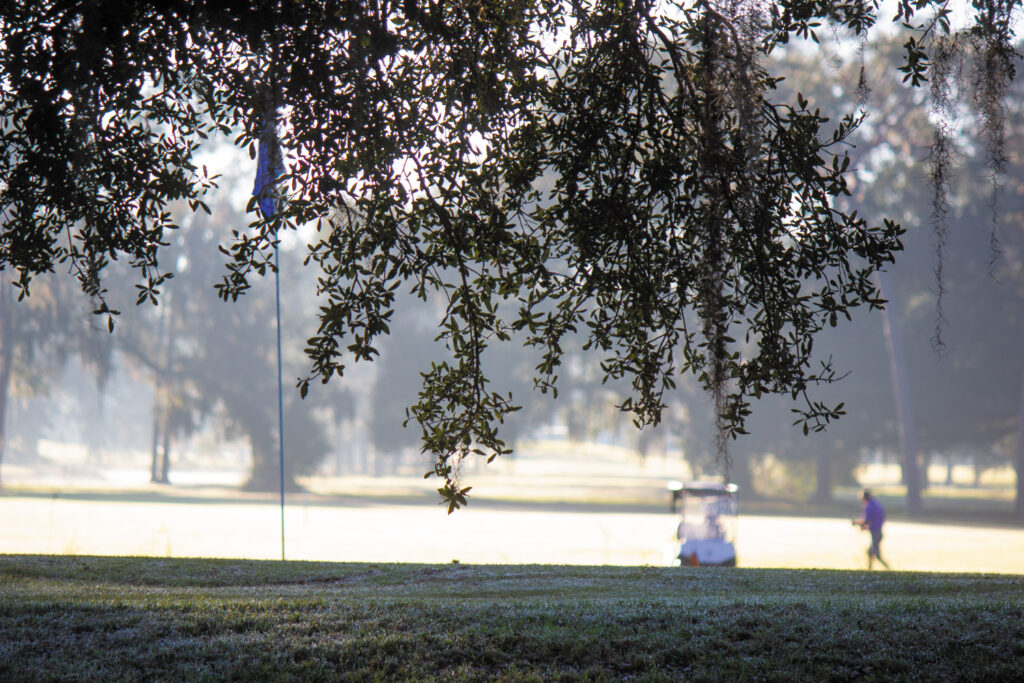
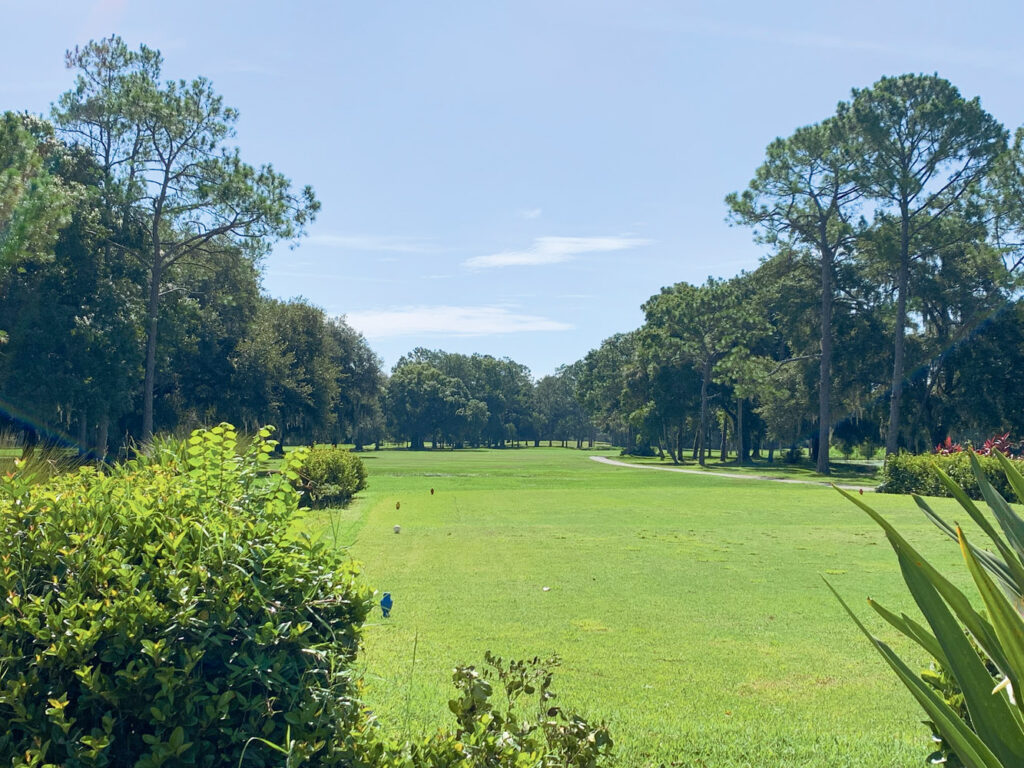
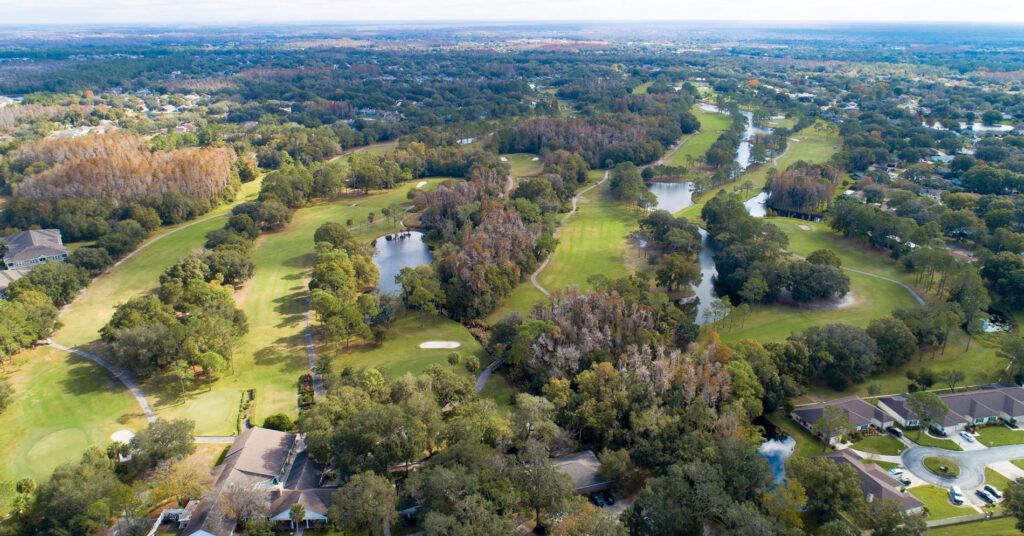
The former Pebble Creek Golf Club.

From greens to Green, the battle over what to do with the former Pebble Creek Golf Club (PCGC) is now headed to the courts.

PCGC owner Bill Place and his company Ace Golf are suing Pebble Creek resident Leslie Green, seeking more than $30,000 in damages for defamation and tortious interference (or interfering with a contractual relationship) as well as attorney’s fees, after Green chased off potential developers, says the suit filed March 28 in Hillsborough Circuit Court.

Green, who has lived along the 10th hole at PCGC for nearly 30 years, has been a vocal critic of Place’s efforts to sell the 54-year-old golf club, which was shuttered back on July 31, 2021.

She started the “Save Pebble Creek” Facebook page in March 2019, leading the opposition against Place’s efforts to secure a so-called brownfield designation to offset the costs of removing pesticides and other chemicals from the property, a requirement before he could sell the 150-acre property for development.

The application was denied after residents banded together to fight it, leaving Place to shoulder costs that he said would be more than $1 million.

Green has posted more than 600 times on the Facebook page, according to the lawsuit.

Place declined to comment on the suit itself.

Green, in a statement released through her lawyers at Stanton I.P. Law, P.A., said, “This is not about who lives on what side of the street, this is about protecting our neighborhood’s quality of life. In my opinion, the proposals that have been presented will drastically change our neighborhood. My neighbors and I have the right to voice our concerns and advocate for the type of neighborhood we can all be proud to live in. This lawsuit does not change my resolve and will not be used to silence my disapproval with the proposed changes.”

No court date has been set, but Green has filed for an extension to respond to the suit until May 10.

The lawsuit alleges that Green’s fight against efforts to develop homes on the course were “personal and selfish motivations on the part of Green and an animosity against Ace Golf and Place,” and she also conducted a mail campaign to reach out to developers, city, county and state officials and others, established a GoFundMe page to pay legal fees for her “personal endeavors,” communicated with the press, engaged in mass mailing letter writing campaigns and contacted developers and officials through multiple phone calls.

All of these efforts are categorized in the lawsuit as the “Green Method.” According to the lawsuit, she “made things personal and pervasive through a campaign of harassment and dissemination of blatant falsehoods through multiple channels.”

Place also says Green made false statements in an effort to publicly shame him by saying he engaged in a “golf course flopping scheme” and intentionally sabotaged the course so he could sell it.
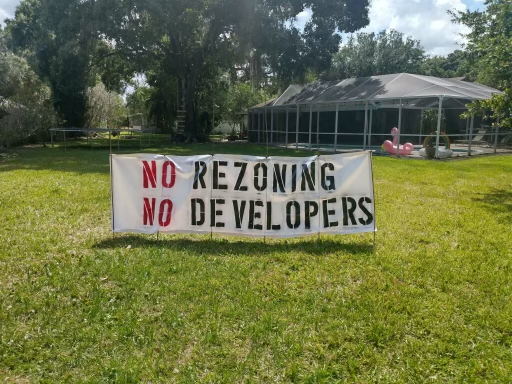
This Pebble Creek resident is opposed to development on the former golf course.

The results, says the lawsuit, were that two developers ended up withdrawing their interest.

In July of 2020, KB Homes, Pulte Homes and several other builders provided bids to redevelop Pebble Creek, and, in June 2021, Place came to terms with Pulte. Place alleges that Green used the “Green Method” to directly contact Pulte Homes and deliver “blatant falsehoods” that led to the builder pulling out in August 2021.

When a bid by KB Homes was then accepted, Green again sent “targeted communications,” according to the suit.

“It worked again,” the lawsuit alleges, as KB Homes also withdrew its bid.

Place told the Neighborhood News last week that he is currently working with another builder, and hopes the rezoning process can begin by the end of the year.

He said the builder, which he did not name, has already presented a preliminary development plan and has met with small focus groups in an effort to convince residents that the project would be a benefit to the area. There are roughly 1,400 homes in Pebble Creek, and 130 of them are on the golf course.

“I completely understand why the people who live on the course are upset,” Place says. “But, for the people that don’t live on the course, most of them are not part of this Leslie Green movement. They are just people out there living their lives who probably never play golf and don’t care about golf. That’s most of the people out there. They are not the ones trying to cause issues. In the long run, those are really the people who will decide things, whether or not we’re allowed to do any development or not.”

Place says he already has the zoning credits for 600 homes, but the plans have always been to build only 260 or so. 

“I have to find a use for the property,” he says. “I pay $30,000 a year in property taxes, I pay a guy $50,000 a year just to maintain the property the best we can. I’m not looking for a fight, I’m looking for a solution, and I’m absolutely wanting to work with residents.”

Place Says Cart Path Removal Designed To Stop Trespassers

Pebble Creek Golf Club (PCGC) owner Bill Place says it’s a matter of safety.

Pebble Creek resident Paul Manobianco says it feels more like retribution.

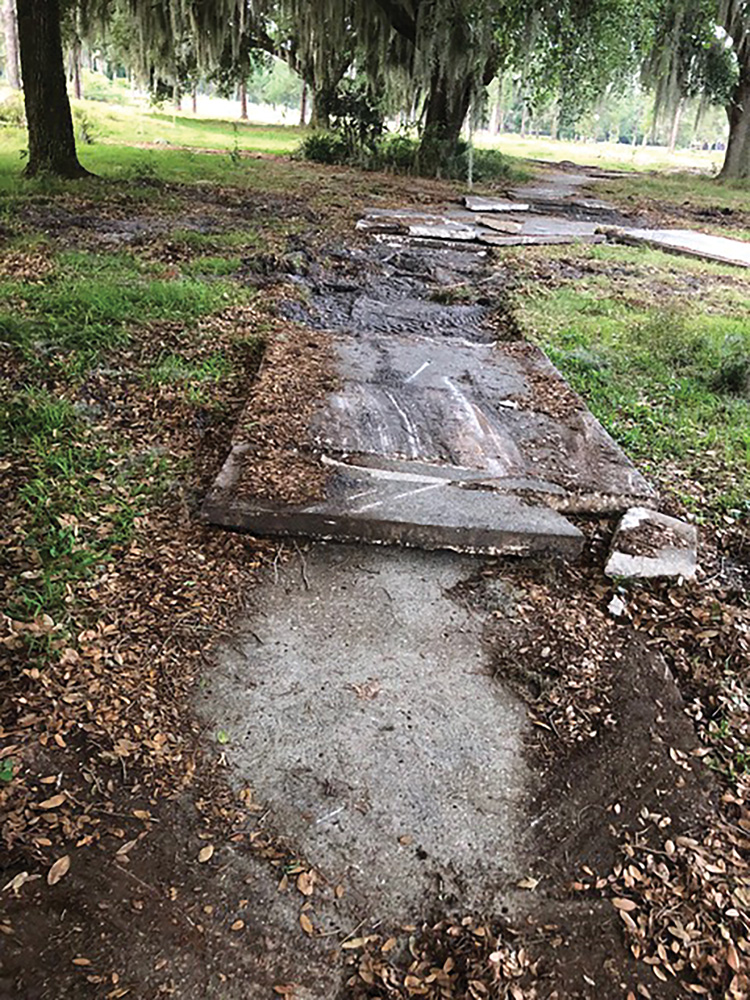
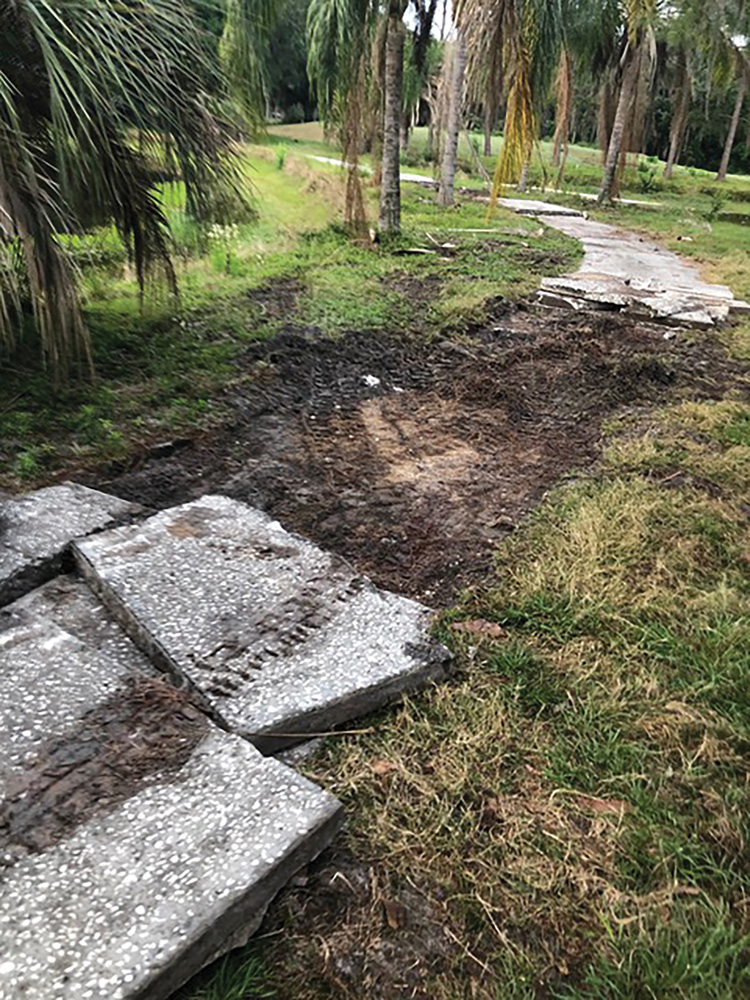
A number of cart path areas on the sprawling golf course, which has been closed since July 31, 2021, as Place has been seeking a developer to convert the fairways and greens into homes, have been fork-lifted off the ground and piled onto the remaining path. Bright orange spray paint directs people away from the mess.

Several Pebble Creek residents are complaining that Place is purposely tearing up the golf course so they will stop walking and biking on it. And, they’re not necessarily wrong.

“I received calls from residents, saying they are constantly seeing ATVs running around the property, motorcycles, bikes, people walking around the property,” Place says. “It’s a huge issue because I remain liable for that.”

So, Place says he set out to stop it. PCGC is private property, not a public park, he says. He alerted both of Pebble Creek’s Homeowners Associations in a March 26 email that he had contacted the Hillsborough County Sheriff’s Office about beefing up their presence at the shuttered course to keep trespassers off and was looking into “removing portions of the cart paths to discourage their use.”

On April 2, in another email, he announced that the cart path removals would begin April 5.

“Slabs of the cart paths were lifted and placed on the existing cart paths every 100-300 feet,” Place says. “We did it in such a way that if, down the road, a solution to keep the golf course or if the county wants to buy it as a park, the sections can be lifted back up and put back in place.”

But, residents like Manobianco aren’t happy. Considering the difficulty Place has had securing a brownfield designation and developers in the face of resident resistance, as well as the recent lawsuit filed against Pebble Creek resident and activist Leslie Green (see story on pg. 4), this has all the makings of a payback.

“He wants Pebble Creek residents to pay for the denial of the brownfield, for fighting the rezoning, for Leslie for speaking up and for developers walking away,” says Manobianco, who lives in one of the 130 homes located on the golf course.

Mary Lou Tucker says that even when the golf course was open, residents would enjoy leisurely walks and bike rides on the course in the early morning or after the golfers had finished for the day. For those who lived on or near the course but didn’t play, it was a nice community amenity.

“I fail to see the logic behind the recent actions undertaken on our course,” Tucker says. “I cannot understand the reasoning behind spending money to destroy one’s own property needlessly… and antagonize the residents in the process.”

Tucker says walks on the golf course have been a way of life for Pebble Creek residents for decades.

“I have lived here on the course for 20 years and cannot remember ever being prohibited from taking advantage of a safe, and silent path for walking or riding a bike,” she says. “It’s very disappointing to see this.”

Place says other than the ATVs and motorcycles, trespassers could face other hazards. The course is only being maintained to the most basic of county standards, meaning to within 200 yards of each home. The interior of the course is overgrown in many areas, meaning snakes and other wildlife could be lurking.

Manobianco says Place’s efforts could prevent the course from ever being sold as a golf course again, which some think might be the idea. “You’d have to put 2-3 million back into it just to play golf again,” he adds.

Place insists the measures taken are for the safety of the residents, and not retribution for opposition to his plans to sell the course to developers.

“I don’t like doing this,” Place says. “It’s just not safe to walk through. I’d like it to be this nice park, available to everybody, but I can’t afford to make it a park, nor have the liability for doing so.”

PCGC Closes, But Fight Over Its Development Goes On

All is quiet at the Pebble Creek Golf Club (PCGC), which closed for good on July 31. So, what’s next?

Homes…probably. Maybe?

PCGC owner Bill Place had all but finalized a deal to sell the roughly 150 acres of land the course sits on to Pulte Homes, which had plans to build 230-240 homes on the property, but told the Neighborhood News last week that the company had changed its mind.

“I think they are a bit scared of the publicity that will come with this,” Place said.

Another builder, KB Home, also appears to have removed itself from consideration to redevelop PCGC.

Place is still talking to other builders.

Place is also still awaiting the results of environmental testing on the course, which was found to have high levels of arsenic and dieldrin from insecticide applications (from before he owned the property, Place says). He says the results have been sent to the Environmental Protection Commission and directions on how to remediate the soil so the land can be developed is forthcoming. 

Darlene Young, Bob Young and Ray Walker get in one last round at Pebble Creek Golf Club. (Photos: Charmaine George)

The cost is expected to be somewhere between $1 million-$3 million, but Place says a $3-million price tag would be out of the question.

And, that’s where the fight begins.

Leslie Green has lived on the 10th hole at PCGC for nearly 30 years, in one of roughly 130 (of the 1,400 total in Pebble Creek) homes physically located on the golf course.

She created the “Save Pebble Creek” Facebook page in March 2019, and is leading the charge to convince the Hillsborough County Board of Commissioners to deny any developer the rezoning it will require to build over the golf course..

Green is against building additional homes on the golf course site for a number of reasons — including the environmental impacts, flooding issues, the loss of green space and how new homes would affect an area she says is already densely populated.

She also is skeptical of many of Place’s claims. She thinks a rezoning could lead to far more than just 240 homes, doesn’t feel Place was losing as much money on the golf course as he claimed (while sabotaging it with negative portrayals) and did little in the way of improvements the past few years.

“When you’re constantly threatening to close the course, people are going to stop coming,” she says.

Green, who live-streamed on Facebook on July 31, the final day the golf club was open, also was a vocal critic when Place tried to get a brownfield designation for the course, which would have provided him with a tax credit that could have covered three-fourths of the remediation costs.

She was emboldened by the successful efforts of the community to defeat the brownfield designation. And, she thinks it can happen again.

“We didn’t just start Save Pebble Creek, we’ve been working together on this for two years,” Green says. “We have a strong community.”

Mike Jacobson, the homeowners association president for more than 1,000 of the 1,400 homes in Pebble Creek, is taking a more measured approach. Like most residents in Pebble Creek, he prefers a golf course over homes. But, he says that the choice isn’t between a golf course or new homes, but rather between an abandoned golf course and new homes.

Jacobson is mostly concerned with the worst-case scenario, and has to look no further than Plant City. In 2013, Walden Lake homeowners recommended denying rezoning of its struggling golf course for development.

Instead, the course shut down, the owner went into foreclosure and the formerly lush green fairways became overgrown with weeds and foliage. The two-story clubhouse became a haven for trespassers. Home values in Walden Lake took a big hit.

“That is my biggest fear,” Jacobson says.

There are now, seven wasted years later, plans to build homes and a “city center” on the long-dormant Walden Lakes course.

While making it clear that he is opposed to development on the golf course site, Jacobson had met with Pulte representatives before their retreat about the benefits of redevelopment.

At the end of the day, he says, it comes down to what is best for Pebble Creek’s homeowners, and the value of their properties.

“We are trying to find what is strategically the best outcome for all of Pebble Creek and, quite frankly, there’s no great outcome,” he says. “The best outcome is to find a buyer who wants to operate it as a golf course. If there’s anybody out there that wants to operate it as a golf course, I’d love for them to reach out to me….we would fight to the end with the commissioners to say we have somebody who wants to operate it the way it’s been zoned and keep it as a golf course.”

He says, however, that to date, no one has done so.

While engineers for a new developer could soon begin forging plans, the fight picks up when the rezoning request reaches the Hillsborough County Commission, possibly in 4-6 months.

“Any full rezoning boils down to the vote of the County Commission,” Place says. “And you can’t predict that with full accuracy. I expect there to be opposition, and I understand that it will be contentious.”

Here’s some photos from the last day of the golf club.

Pebble Creek Golf Club Nears Finale

Chuck Leisek has spent many of his mornings the past 15 years hitting golf balls at the Pebble Creek Golf Club (PCGC), where he lives just off the 12th hole.

The 86-year-old never broke 70, but shot his age plenty of times, has just missed a hole-in-one on the No. 2 and No. 6 holes, and loved every day he was out on the course.

When he found out that the golf course was shutting down for \good on July 31, he and his wife Janice, also an avid golfer, were crestfallen.

“We never thought in our wildest dreams this golf course would ever be closed,” says Leisek. “It’s deeply disappointing. And that’s an understatement.”

The writing, however, had been on the wall for the past few years, as owner Bill Place, who bought the club in 2005, has been actively trying to sell the property the past five or so years.

The first weekend in June, letters were sent out informing residents that the 6,436-yard golf course, the oldest in New Tampa, was shutting down for good.

Place said there is no special event or farewell scheduled for the club. The last one out on the 31st will turn off the lights, lock the door and that will be it.

Bill Place

Place is currently negotiating with Pulte Homes on building 230-240 single-family homes on the golf course.

“Never once when I bought the course was I even thinking it would be a development site,” Place says. “We took what was then a failing golf course that was horribly maintained, and we put in probably $2 million over the first five years. We put in new greens, built a new banquet room, and really got the club making money initially.”

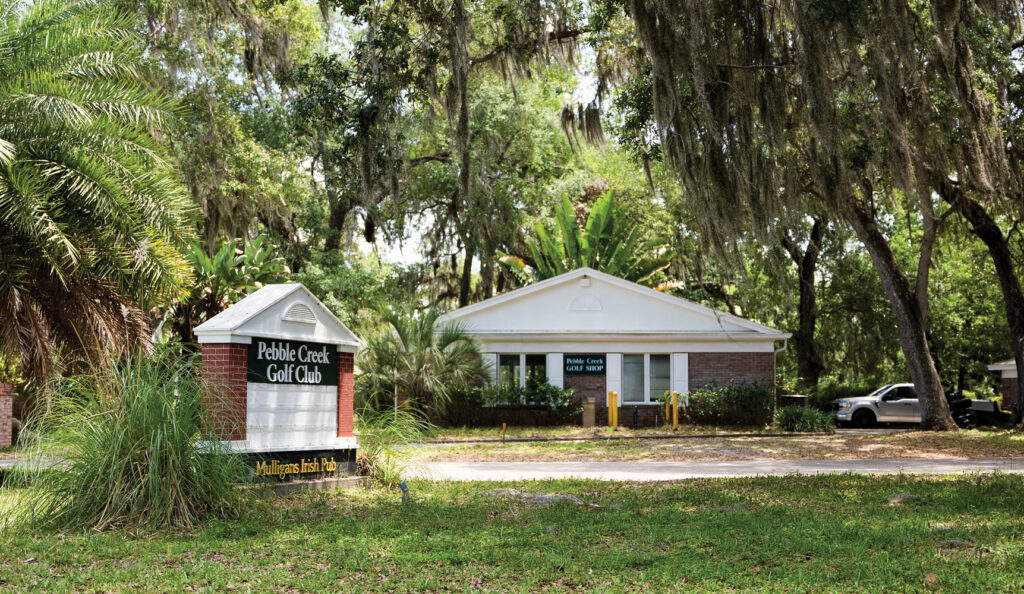
Included in the improvements was Mulligans, the popular Irish pub that opened in 2007, but also will close July 31.

Place says the 2008 recession stopped the club’s momentum, and it has been on and off ever since.

Leisek says he remembers when Place bought PCGC and restored the course to its previous glory, but says he is one of many who questions how much money Place actually has been losing.

And, although he says he had heard rumors of Place “skulking around trying to sell it,” it was still a surprise to everyone he knew when they received notice that PCGC was officially closing.

Place says club members like Leisek, however, were far and few between at Pebble Creek.

Although there are roughly 1,400 homes in the community, only 13 residents are among the club’s 70 current members. He describes the support from the community as non-existent.

“I don’t mean that negatively, like people despised the golf club,” Place says. “There’s just not that many golfers (living) in Pebble Creek.”

The view from hole 1 could soon be replaced by homes, if Bill Place has his way.

He says that when he approached the HOAs about having all homeowners pay for a social membership to keep the club alive, it was rejected.

“We do get a fair amount of public play,” Place says. “That’s essentially what kept us going as long as we did.”

Golf courses have struggled in recent years, especially as amenities in large communities, but the number of rounds played in 2020 actually were up nationally  13.9 percent from 2019, according to Golf Datatech, primarily because of people looking for relatively safe recreation activities during the pandemic.

It is the largest increase in rounds played since Golf Datatech, which specializes in golf market research, started tracking stats in 1998. Place says that surge was short-lived at Pebble Creek.

“Even though we had a little bit of a bump from Covid-19, I’ve already started to see it back off as people go back to work,” Place says. “We’re on a path to repeat 2018 and 2019, when we lost money those years.”

Place also says that merely maintaining the course had become financially untenable. He says that PCGC still has its original irrigation system and that “it failed miserably during this recent drought.”

He adds, “It was time.”

A 1968 coupon.

Pebble Creek was built by a group of nine investors and opened in 1967, at a price tag of $500,000, 20 years before Arnold Palmer visited to help dedicate the opening of Tampa Palms Golf and Country Club by playing the first round.

PCGC was once dubbed the “grandaddy of New Tampa golf courses.”

At its outset, the semi-private Pebble Creek Golf and Country Club was a hit. It quickly reached 300 members in 1967 and stopped accepting any additional members so there was room for the occasional non-member golfer. Over the years, improvements were made (the course actually opened with no bunkers) so it could host bigger tournaments, and membership ebbed and flowed.

*******

Mulligan’s Irish bar was a popular spot for golfers and Pebble Creek residents.

When it comes to selling the 149-acre course to a developer, which appears to be Pulte Homes, Place knows he will have a fight on his hands. Efforts to rezone the property and getting Pebble Creek’s two homeowners associations (HOAs) on board will be an uphill battle.

“Everyone is devastated,” says Wayne Rich, the president of the Pebble Creek Village HOA, which represents about 300 homes. “Nobody is excited about it.”

Rich says roughly 100 homes between the two HOAs are located on the golf course, and could have their backyards replaced by new neighbors. He has seen what Pulte is proposing, and says he’s “not crazy about it.”

A group on Facebook, as well as another group of residents, have already mobilized to oppose any development, emboldened by last year’s success at stopping Place from getting a brownfield designation for the course.

DR Horton, one of the original interested buyers of PCGC, had done preliminary testing two years ago and discovered that there were contaminants on the golf course before withdrawing its interest. 

A brownfield site is a property that is contaminated, which hinders efforts to expand or redevelop it. But, there are significant tax credits offered to help clean up brownfield properties. Hillsborough County commissioners voted against the request.

Without those tax credits, Place will likely foot the bill. A preliminary estimate, he says, indicated it would take 6-9 months to decontaminate the soil. That alone could cost Place $1 million.

But, he still has potential developers like Pulte lined up.

Leisek will get in a few more rounds before then, and he says his golf membership is being transferred to Plantation Palms in Land O’Lakes, roughly 20 minutes away and also owned by Place. 

He says it won’t be the same, and will miss member dinners in the clubhouse and even visits to Mulligan’s.

But, what he’ll miss most is a golf course he shared 2-3 times a week with his friends and neighbors.

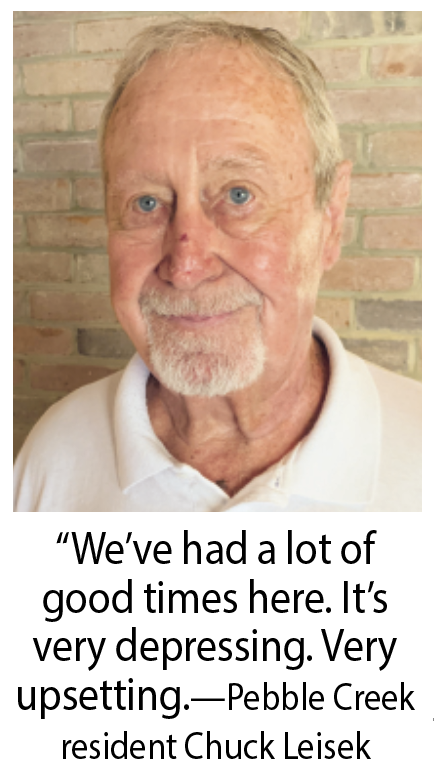
“We had a lot of good times here,” Leisek says. “It’s very depressing. Very upsetting.”

For Rich, who remembers the many Mother’s Day banquets he attended at the club, July 31 will mark the end of an era.

 â€śThe golf course is part of the heritage of this community,” he says. “It’s sad to see it go.”

Pebble Creek Golf Course To Shut Down July 31

Pebble Creek Golf Club opened in 1967, long before New Tampa as we know it was developed.

The letters went out last weekend, but were probably not a surprise to anyone living in Pebble Creek.

The golf course, the oldest one in the area, is shutting down for good on July 31.

Pebble Creek Golf Club (PCGC) owner Bill Place, who has been trying for years to sell the 6,436-yard golf course he bought in 2005, says he can’t continue losing money on something with no future. After a few failed attempts to finalize a deal with developers the past few years, as well as unsuccessfully trying late last year to get a brownfield designation from the county that would have helped cover almost 3/4 of the cost to decontaminate the soil, Place says he was out of options.

The club, heading into what is usually its slowest time of the year from August through October, currently has only 13 full-time members. 

“Even though we had a little bit of a bump from Covid-19, I’ve already started to see it back off as people go back to work,” Place said. “We’re on a path to to repeat 2018 and 2019, when we lost money those years.”

Place also said merely maintaining the course had become financially untenable. Built in 1967, he says the course still has its original irrigation system and “it failed miserably during this recent drought.

“It was time.”

Place says he has quietly told brokers in the last six years he was looking to sell the golf course. After having his brownfield designation rejected in December 2020, Place has continued entertaining suitors.

DR Horton, one of the original interested buyers of the PCGC, had done preliminary testing two years ago and discovered contaminants on the golf course before withdrawing its interest. A brownfield site is a property that is contaminated, which hinders efforts to expand or redevelop it. But there are significant tax credits offered to help clean the property up. 

Without those tax credits, Place will likely foot the bill. He has paid $150,000 to have the site tested by an environmental testing firm, and expects results this week. A preliminary estimate, he says, indicated it would then take 6-9 months to decontaminate the soil. That could cost Place $1 million.

But he has potential developers lined up — he will choose one in the next two months — and says he is including the two Pebble Creek homeowners associations, who serve roughly 1,300 homeowners, in the process. Regardless, he expects a significant number of residents to protest when rezoning the 149-acre property gets underway.

“No matter what, we are trying every which way we can to work with the HOAs,” Place says. “I know they would rather have the golf course, but we are looking for the best possible solution.”