Get Cash For Clothes & Buy Great Brands At Uptown Cheapskate

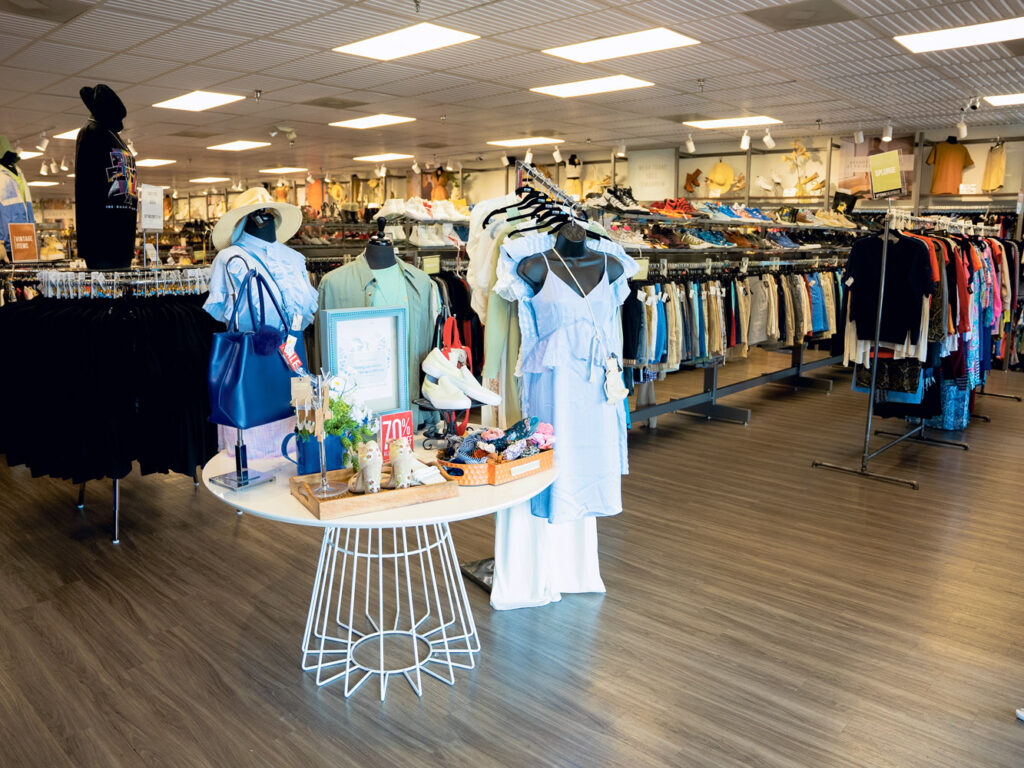
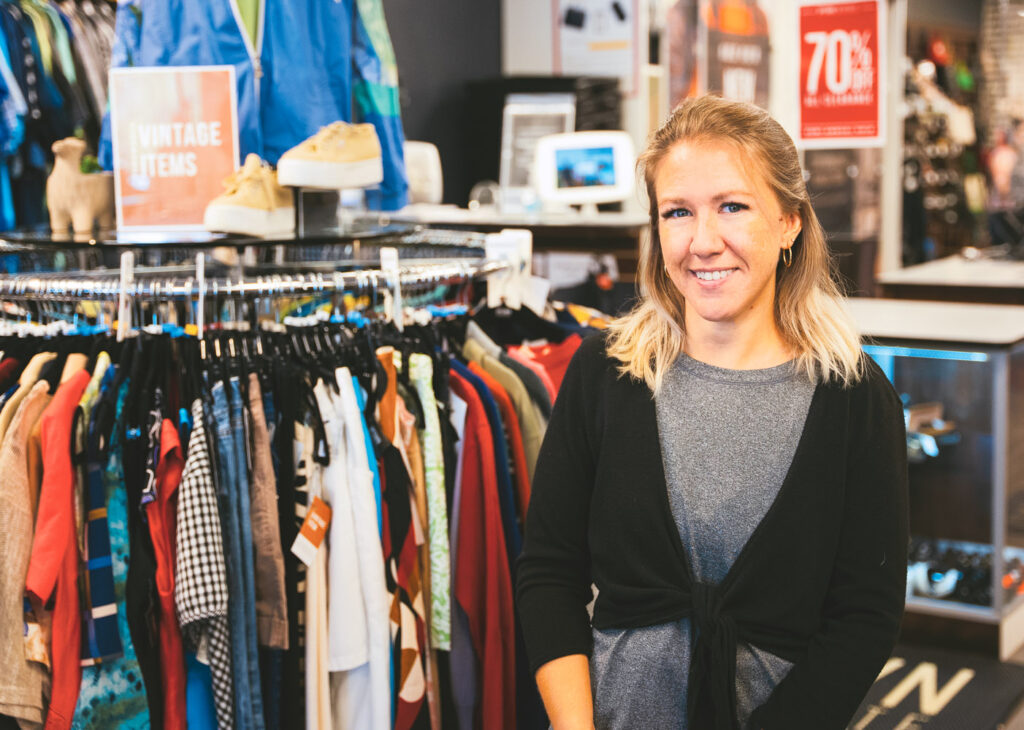
Owner Amber Watt says business at Uptown Cheapskate in the City Plaza at Tampa Palms shopping center is better than ever, but if you have clothes you’d like to sell, come on in! (Photos: Charmaine George)

After the Covid-19 pandemic shut retailers down last spring, Uptown Cheapskate reopened in May 2020 with owner Amber Watt feeling cautiously optimistic that the store would be able to recover from the devastating hit it took during its closure in late-March and all of April.

What a difference a year makes.

The trendy resale clothing store in the Publix-anchored City Plaza at Tampa Palms shopping center is thriving — and continues to grow.

“We’ve been doing really great,” Amber says. “Every month is better than the last.”

In fact, the store’s sales are above where they were pre-Covid and it seems that, every month, there are even more customers looking for great deals on brand name items and wanting to sell their unwanted clothes. Amber thinks that’s because Uptown Cheapskate is a win-win for the community. 

First, the store pays cash for clothing, shoes and handbags that are just taking up space in your home.

Those items that you no longer want can put cash in your pocket and keep the clothes from hitting a landfill.

And that’s not the only environmental impact.

According to Uptown Cheapskate’s website at UptownCheapskate.com, buying used instead of new clothing can reduce your carbon footprint by at least 60 percent, more than if you were to quit using your car.

It’s also a lot easier on your wallet, with prices on “upcycled” clothing at Uptown Cheapskate selling for a mere fraction of what the on-trend, designer pieces sell for new at retail stores. The savings can be 70 to 90 percent.

Some popular brands the store currently sells — and is looking to buy — include American Eagle, Vans, adidas, lululemon, Levi’s, Free People, Nike, Coach, Calvin Klein, Ralph Lauren, H&M and more.

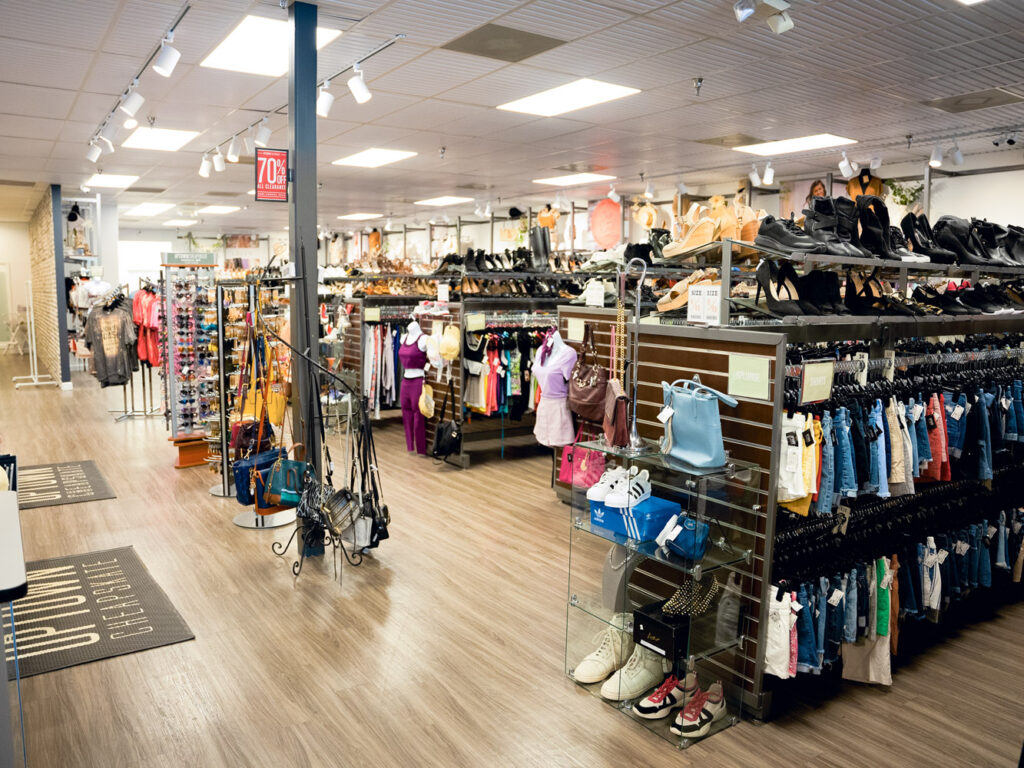
Uptown Cheapskate is part of a national franchise that started in Salt Lake City in 2009, and now has 80 locations across the U.S., including three in Florida. At 4,800 square feet, the Tampa Palms location is larger than most Uptown Cheapskate stores, which are typically closer to around 3,000 square feet.

The large store means lots of inventory for shoppers, and it’s all kept organized and neat, to feel more like an upscale boutique than a thrift store.

While Covid had its impact, the store is pretty much back to pre-pandemic protocols. Employees are wearing masks, but vaccinated customers are not required to wear masks in the store. And, all dressing rooms are open.
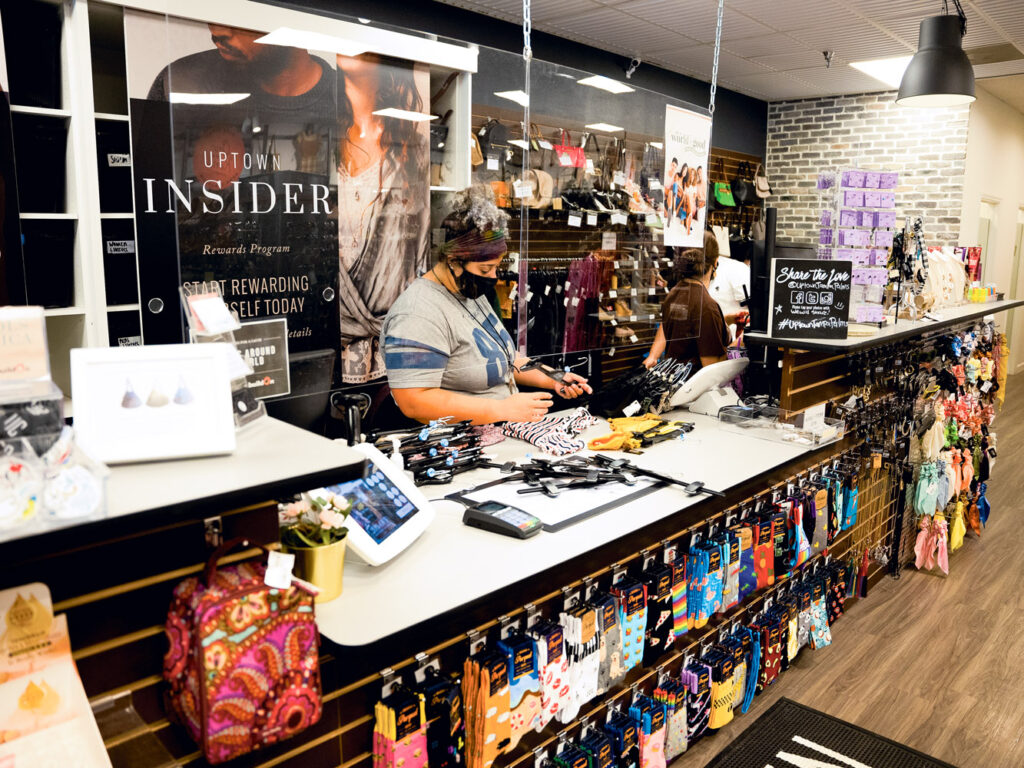

Amber says customers love when the store offers additional deals, such as the recent Dollar Days, which ended July 18. During this sale, clearance items were sold for as little as a $1. Also, the state of Florida’s sales tax holiday for back-to-school is being held now through August 9, which will save customers the 7.5% sales tax typically charged at the store.

While sales at Uptown Cheapskate are brisk, Amber says that means there’s a constant need for new items to sell.

“We still need more stuff,” she says. “Especially spring and summer items — we cannot get enough of those here in Florida.”

While Uptown Cheapskate buys all seasons all year ‘round, Amber says Florida is essentially a one-season state and items for warm weather are always in the greatest demand.

“We never have enough shorts, tank tops, short sleeves and dresses,” she says, adding that the local Uptown Cheapskate store just added a vintage corner for the first time.

“It’s so fun,” says Amber of her new vintage department, “and very popular right now.”

Amber says windbreakers are flying off the shelves, along with oversized sweatshirts and graphic tees from the 1980s and ‘90s. 

While she says a lot of the store’s customers are USF students, there also are a lot of customers from both New Tampa and Wesley Chapel.

If you want to sell clothing and other items to the store, just stop in anytime it’s open, but always bring in your items at least one hour before closing. 
Sellers receive a cash offer for any items the store wants to buy, or 25 percent more if they choose store credit instead of cash. If any items are not purchased by the store, the seller has the option to leave them to be donated to the Salvation Army, which picks up from the Tampa Palms location two or three times a week. You can always choose to keep them if you prefer.

With customer service and a boutique atmosphere the priorities of the store, shopping at Uptown Cheapskate won’t feel like thrift store shopping. Even as shoppers rave about how neat and tidy the store is, and the great customer service, Amber strives to keep improving.

“We’ve been trying to step up our game in terms of organization,” she says. “We are making things more consistent, and becoming even more detail-oriented.”

Amber says she pushes her team every day towards her goal of “making sure the experience is perfect every time.”

Uptown Cheapskate is located at 16031 Tampa Palms Blvd. W. Store hours are Monday–Thursday, 10 a.m.-8 p.m.; 10 a.m.-9 p.m. on Friday and Saturday; and noon-6 p.m. on Sunday. For more information, call (813) 287-8696 or visit UptownCheapskate.com.

Chip In For Education To Benefit New Tampa Schools

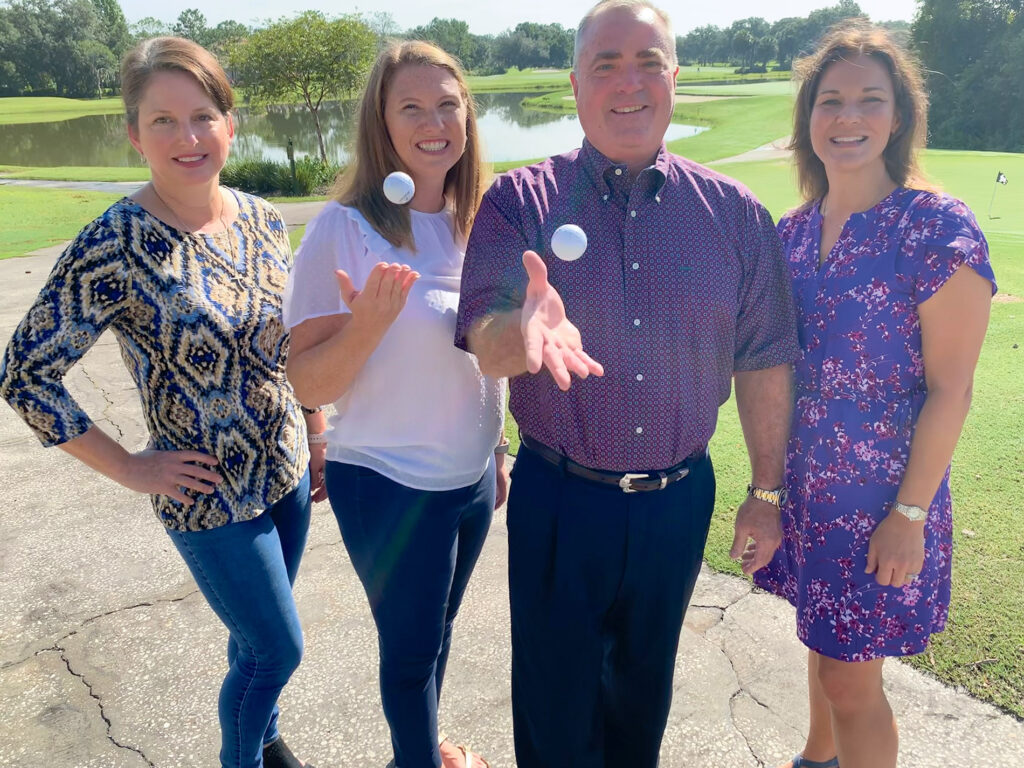
(L.-r.) Wharton PTSA president Jenny Giraldo, Hunter’s Green Elementary PTA president Rebecca Towner, Hunter’s Green Community Association president Rob Larsen and Benito/Wharton PTSA treasurer Jamie Priest are helping to organize the Chip In For Education golf tournament fund raiser for Labor Day (Mon., Sept. 6). (Photo: Charmaine George)

Emerging from a pandemic and a year when most Parent Teacher Associations (PTSAs) had a hard time organizing and hosting fund raisers and, in most cases, weren’t even allowed on campus, the Hunter’s Green Community Association came up with an idea to give a boost to the three schools where the community’s kids are zoned to attend.

For the past 25 years, residents of Hunter’s Green have sent their kids to Hunter’s Green Elementary, Benito Middle School and Wharton High.

This Labor Day, on Monday, September 6, those three schools will benefit from the “Chip In For Education” golf tournament at Hunter’s Green Country Club.

“There are a lot more students at these schools than just Hunter’s Green residents,” says Rob Larsen, the president of the Hunter’s Green Community Association, who has been a resident of Hunter’s Green since 1992 and whose three kids attended the local public schools. “So, this is an opportunity to build community. We have good schools and teachers and this is something we can do to promote that and get people together.”

In fact, the three schools combined serve nearly 4,000 students.

Volunteers from the elementary school PTA and the middle and high school PTSAs (Parent Teacher Student Associations) are helping to make the tournament a reality.

AdventHealth, which is planning to open its Care Pavilion (se ad on pg. 2) outside the Hunter’s Green neighborhood (in the former LifePoint Church building) in September, has signed on as the title sponsor of the event.

The tournament will be open to 144 golfers, with proceeds from registration, sponsorships, and a silent auction going to the PTA/PTSAs at each school.

Rebecca Towner, the president of the Hunter’s Green Elementary PTA and a Hunter’s Green resident, says the funds will be allocated according to the number of students at each school, and it will be up to each PTA how to spend the money.

“This is a way for schools to work together instead of being segmented and thinking only about where you are now,” says Rebecca. “Right now, I only have kids at the elementary school, but what’s going on at Benito and Wharton matters to me, too, because one day that’s where we’re going to be.”

Rob, Rebecca, and the team of volunteers helping to make this tournament happen hope that members of the community will sign up to play, donate auction items, and consider becoming sponsors to make the event a success for the local schools.

The day’s events will include a family-friendly luncheon with activities for kids. Non-golfers are invited to participate in the luncheon and silent auction.

The Chip In For Education Golf Tournament will be held at Hunter’s Green Country Club (18101 Longwater Run Dr.). The four-person team scramble tournament will have a 9 a.m. shotgun start and will be followed by family-friendly festivities with a silent and live auction and luncheon.

For more info, visit HuntersGreen.com and click on “Chip In For Education Golf Tournament” under the “Resident Life” tab of the menu.

Trust The Law Office Of Elizabeth Devolder For Estate Planning

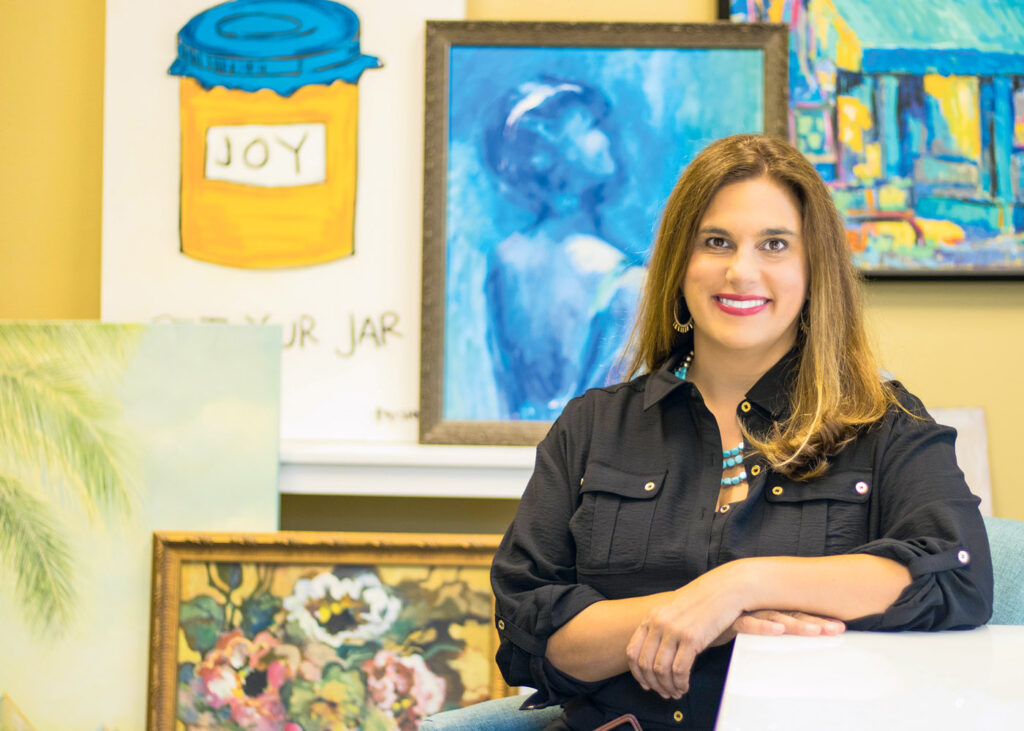
Attorney Elizabeth Devolder of the Law Firm of Elizabeth Devolder in Tampa Palms poses with art created by her client Mishou Sanchez and other pieces from her personal collection.  “Joy – Get Your Jar” appears prominently in the background, and was a recent acquisition from Mishou. (Photos: Susanna Martinez Photography)

It’s been six months since Elizabeth Devolder launched the Law Office of Elizabeth Devolder, a boutique firm located in the Tampa Palms Professional Center off the Bruce B. Downs (BBD) Blvd. exit of I-75 in New Tampa.

Her divorce from attorney Bryan Devolder, with whom she launched the Devolder Law Firm in 2016, was finalized in December, and Elizabeth began a new journey in her new solo practice in January 2021.

Elizabeth’s new firm handles estate planning and probate matters, the same areas of law she handled as a partner at the previous practice.

“Ultimately, we’re doing the same things,” she explains. “We’re just doing them separately.”

Elizabeth says her new practice has started strong. “I have been very well supported through referrals over the last six months from people in the community.”

Elizabeth earned her law degree at the Tampa campus of the Thomas M. Cooley Law School in Riverview in 2016 after a successful career in advertising and sales management. She had previously earned a Bachelor of Arts (B.A.) degree in Corporate Communications from the College of Charleston, in South Carolina, in 1997.

The Law Office of Elizabeth Devolder’s case manager is Rachael Alexander, who has worked with Elizabeth for the last four years and helped found the new firm. Rachael recently graduated from law school herself and passed the Florida bar exam.

“The firm is already growing,” Elizabeth explains. “With Rachael, you’ll get a very experienced case manager, and we’re currently expanding to also have a legal assistant.”

Elizabeth specializes in helping people get their affairs in order, whether they have recently moved to the state, have a child who just turned 18, need legal advice for long-term care, and many other situations.

She says her services are valuable for everyone.

“Everyone needs a Power of Attorney document to manage (their) financial and practical affairs if they’re ever incapacitated,” she says.

This even applies to young adults, who often think they don’t need estate planning because they don’t yet have an “estate” of their own.

“Even if you have nothing,” says Elizabeth, “you still want to make sure someone has the authority to care for you if something happens (to you).”

If a young adult becomes incapacitated, they need someone to be able to tell companies to stop withdrawing money from their account or stop billing them for services, for example. Companies have a responsibility to protect their customer’s privacy, so Power of Attorney documents are required. Records and decisions about medical care don’t automatically go to a parent once a child turns 18.

“It’s so much more expensive if you don’t have these documents in place,” says Elizabeth.

She also says she has loved living in Florida, since a corporate relocation brought her here in 2006. Her experience and eye for detail means she understands what families need to do to update their estate planning documents to respond to and take advantage of Florida laws.

Elizabeth also is developing a specialty helping artists to protect their legacies and collectors to protect their collections.

Elizabeth Devolder (left) opened her private firm in Tampa Palms this January.  

For example, she says, what happens if an artist puts art in a gallery and the gallery closes? Can the creditor take the artwork? Or, what happens if you collect art and antiques and leave them to someone who doesn’t recognize the value of these keepsakes? How do you protect the art from “walking off” during a period of incapacity? How do you maximize the value of it and make it more valuable?

“There are a lot of issues with art,” says Elizabeth, “but not a lot of art lawyers.”

Her thoughtful questions have led one of her clients, local artist Mishou Sanchez, to think about things she’s never considered and take actions to protect her body of work.

“I’ve been working with Elizabeth for years now,” says Mishou, “and she’s fantastic, charming, and knowledgeable about navigating this almost uncharted territory of art law.”

Mishou says her art is now included in her estate plan and Elizabeth has helped her to consider new and interesting ideas, especially related to ownership, copyright and social media.

“She’s really smart,” says Mishou, “It’s kind of fantastic to deal with an educated and knowledgeable woman in the industry.”

Elizabeth also helps artists and others understand their digital assets.

“I got interested in that because I have a client who is making a lot of money off of online instructional videos,” Elizabeth says. “The terms of service for the website say his account is cancelled at his death, but a new law was enacted in 2016 that would allow someone to override the terms, if those are written into his (or her) estate planning documents.”

She says this also could include online photos or statements that come to email.

“If you need to get into the iPhone of someone who has passed away, for example, you need special language in your power of attorney and in your will to give very specific authority for that,” she says. “The process has only been in existence since 2016, so if your will is from before 2016, you need to update it to include that language.”

Elizabeth wants the families she helps to be sure their heirs know what they have and how to get it. For electronic content, she says the family needs access to the catalog (or list) of emails, the content of those emails, and to their loved one’s device so they can get information during incapacity or after death.

She also helps clients with asset protection when they’re facing long-term care costs, and serves clients who have assets in bitcoin, cryptocurrencies, and non-fundable tokens (NFTs).

“There’s a whole new way to make money that we haven’t considered before,” she says, “and it’s important to consider those things in your estate.”

The Law Office of Elizabeth Devolder is located at 5383 Primrose Lake Circle, Suite C, in the Tampa Palms Professional Center. It’s open Mon.-Fri., 8:30 a.m.–6 p.m. For more information or to make an appointment, call (813) 319-4550 or visit ElizabethDevolderLaw.com.

Excellence In Eye Care Expands Focus On Kiddie Eye Care

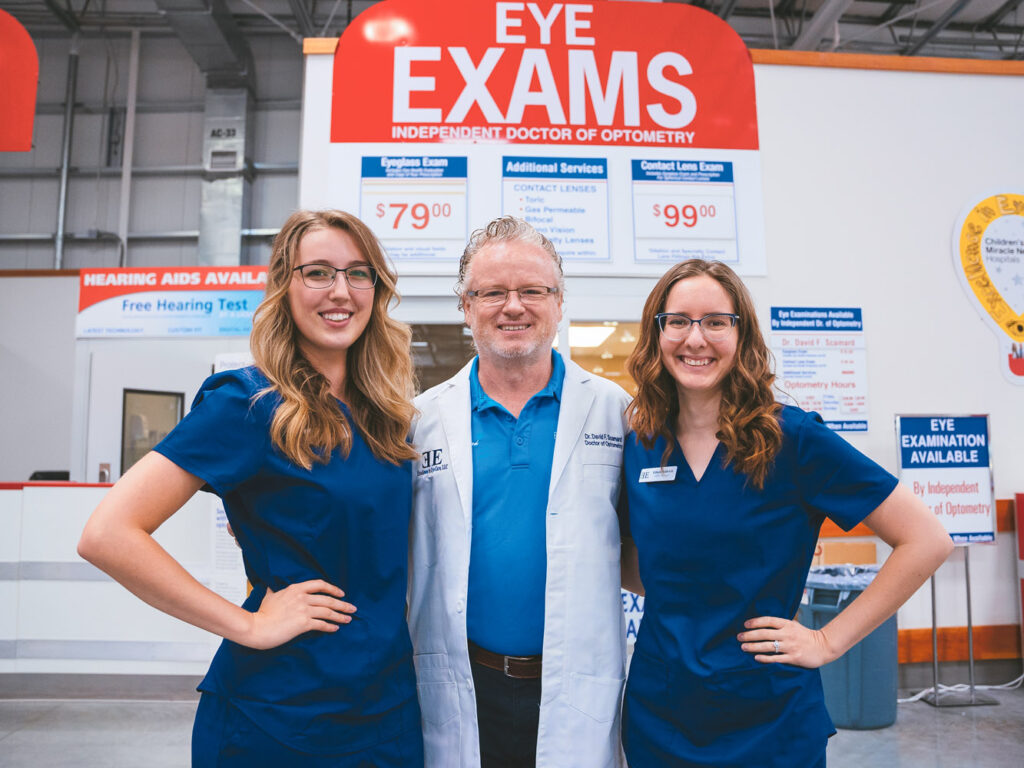
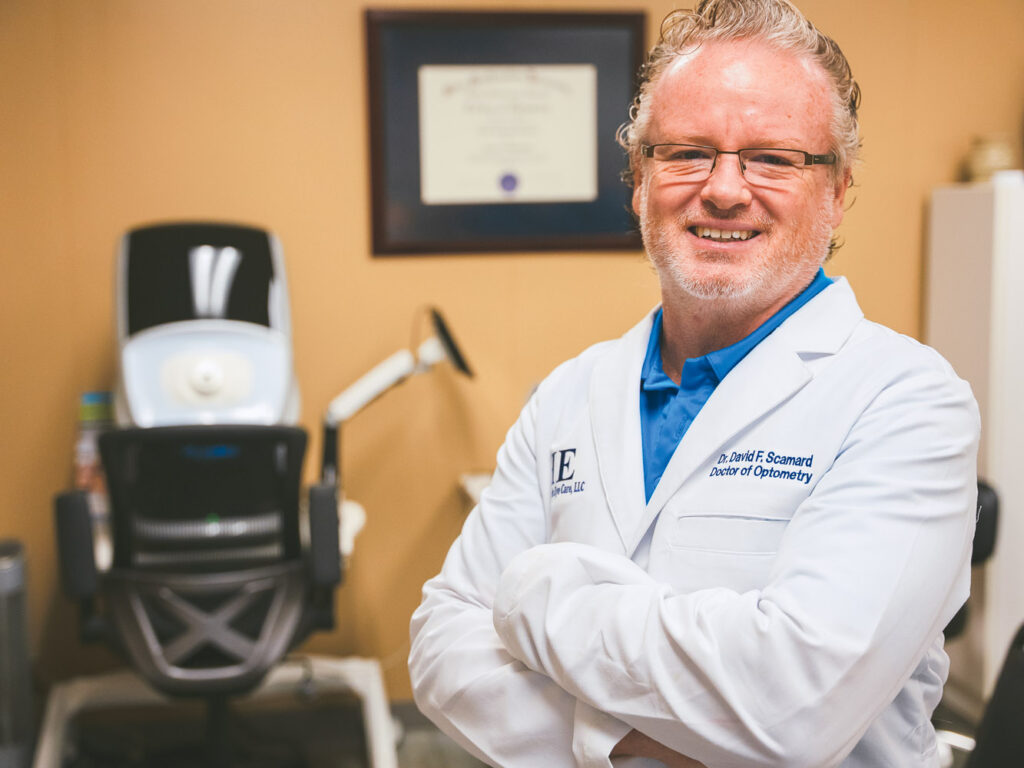
The staff at Excellence In Eye Care, located inside the Costco on S.R. 56, includes (l.-r.) optometric technician Jill Wagner, Dr. David Scamard and office manager and optometric technician Eileen Aldrich. (Photos: Charmaine George)

For nearly 20 years, independent optometrist David Scamard, O.D., has taken care of patients’ eyes in New Tampa and Wesley Chapel. Even before his practice was called “Excellence In Eye Care,” that’s exactly what he always strived to deliver.

Since 2017, Dr. Scamard’s Excellence In Eye Care, LLC, has been located inside the Costco next to the Tampa Premium Outlets on S.R. 56. Prior to that, it was located off of S.R. 54 in Lutz.

He has been practicing much longer than that, however, since he opened his first private practice in New Tampa way back in 2002. 

He had previously earned his undergraduate degree at the University of South Florida in Tampa and earned his Doctor of Optometry (O.D.) degree from Nova Southeastern University in Fort Lauderdale.

Some people who see Dr. Scamard inside Costco have been his patients over the last two decades and originally found him at one of his previous locations.

For example, patient Jill Bonnville and her husband Frank Filippone saw Dr. Scamard for about 10 years when he was located on S.R. 54, but then lost touch. They saw several doctors closer to their home in Town ‘N Country, but every year, when it was time for their exams, Jill would again try to find Dr. Scamard.

Of all the doctors who have tried to help her with her admittedly difficult eyes, Jill says, “He’s the only doctor who nails it the first time, every time.”

And, while it takes her nearly an hour to get to his office, she says it’s worth it.

Jill says she went back to another doctor for several months in a row to get a prescription that would allow her to see better, but that doctor kept getting it wrong.

When she finally found Dr. Scamard again, “I couldn’t believe it,” Jill says. “It was very similar to when I first had to get glasses as a kid. When I put them on, I went, ‘Wow. This is what everything is supposed to look like.’ I didn’t even realize it was that bad until he fixed it.”

Wee Care Eye Care Coming Soon

Coming this fall, Excellence In Eye Care will introduce Wee Care Eye Care, offering a new experience that is focused (no pun intended) on children’s eye care.

While Dr. Scamard has always seen babies and children, the new program will expand the practice’s focus on kids, with a specially-designed, kid-friendly exam room and education targeted at parents.

Dr. Scamard uses state-of-the-art equipment to elevate his practice beyond just a place to get glasses.

“A lot of times, parents are under the false impression that their kids’ eyes are being checked thoroughly at school or they can address problems once a child starts having them, but problems are missed in school screenings,” explains Dr. Scamard. “Children think that’s just the way the world looks. They don’t realize they should be able to see better. They could even end up with visual problems, such as a lazy eye, that may never be fully corrected because the visual pathways haven’t formed properly.”

He says that parents should bring their children in for an eye exam once a year and that children’s eyes often change even more quickly than that.

Dr. Scamard also is a charter member of a program called Infant-See. For babies who are at least six months old but not yet one year, Dr. Scamard will do their first eye exam for free. “It takes less than 10 minutes and allows us to check everything out from an optometrist’s point of view.”

New Technology For Sports

Also this fall, Dr. Scamard and his team will introduce a sports vision therapy program for people of all ages to improve their sports performance.

Using a specialized machine called the Sanet Vision Integrator (bottom photo on next page), patients can improve their hand-to-eye coordination and reaction time. Dr. Scamard says it will help athletes in many sports, including baseball, hockey and others.

Eileen Aldrich, the practice’s office manager, who also is an optometric technician, explains, “It will give them better visual perception, such as when to use a racket to hit the ball, and gets them more focused on using vision to reach their training or sports goals.”

The machine hooks up to a large, touch-screen television, which provides exercises for the person being trained to respond to, while they work on balance using a Wii Fit board.

“There’s no one else in the area who has this instrument,” Dr. Scamard says, “so we’re very unique in that regard.”

He says many patients are impressed with all of the latest technology available at Excellence In Eye Care.

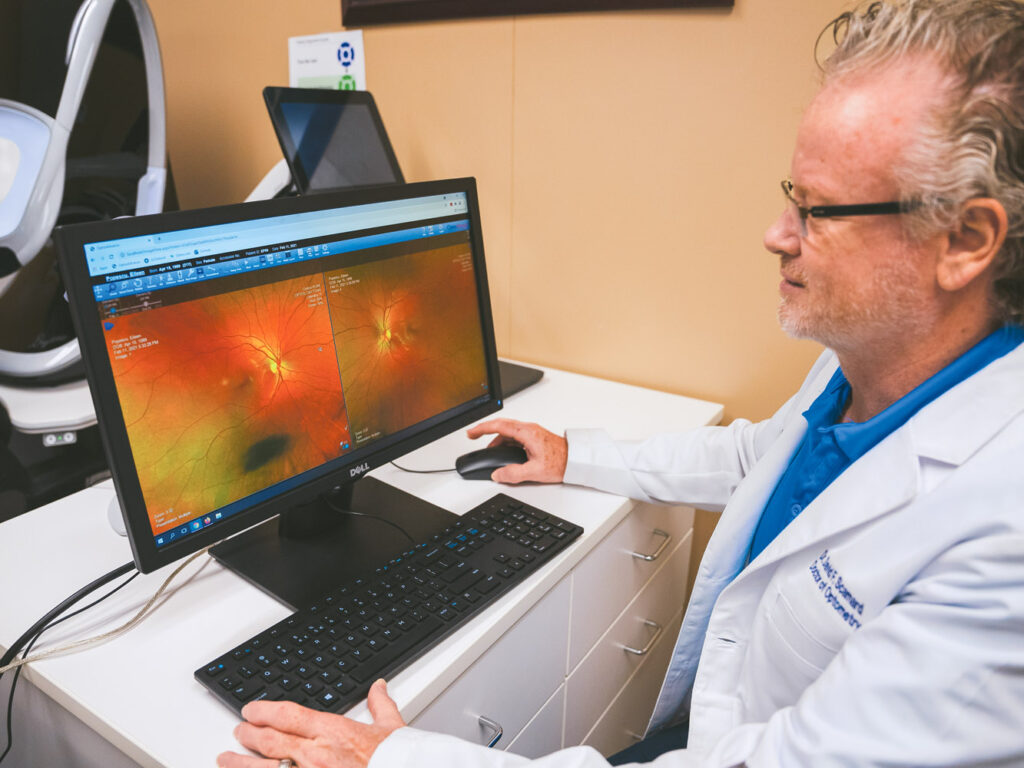
For example, Dr. Scamard uses a high-tech retinal imager to view the internal structures of the eyes. He also uses a digital refractor, which he says is faster, more accurate and more efficient than the old-style analog devices, and patients like that they don’t have to have their eyes dilated. 

“We’re state of the art,” he says.

The entire process from eye exam to putting the glasses on your face or the contacts in your eyes can be completed right there in Costco. However, while you do not need to be a member of the wholesale club to visit Excellence in Eyecare and have an exam, you do need to be a Costco member to get your glasses and contact lenses from the wholesale giant’s eyewear department right next to the office. 

Excellence In Eye Care does not accept vision insurance plans. However, Eileen says, “We do offer a detailed, itemized bill once a patient is seen. The patient can then send that bill to their insurance company for reimbursement.”

Dr. Scamard, Eileen and optometric technician Jill Wagner will do whatever it takes to help you with your eye care needs.

“We want our patients to feel comfortable,” says Dr. Scamard. “We listen to our patients, address their needs, and we take our time with them. We really pride ourselves on making sure our patients are happy — that’s always our goal.”

Jill Bonnville says she is one of those very happy patients.

“He’s very kind, he’s extremely patient,” says Jill. “I ask a lot of questions and he explains both the scientific stuff and what it means. It’s always a nice experience.”

Excellence In Eye Care is located inside the Costco Wesley Chapel Warehouse at 2225 Grand Cypress Dr. (on the south side of S.R. 56) in Lutz. The office is open Tuesday and Thursday, 1 p.m.-7 p.m.; 10 a.m.-5 p.m. on Wednesday and Friday; and 10 a.m.-2 p.m. on Saturday. For more information, call (813) 279-7038 or visit ExcellenceInEyecare.net.

Ken Moser Leaving His Mark At Florida Aquarium

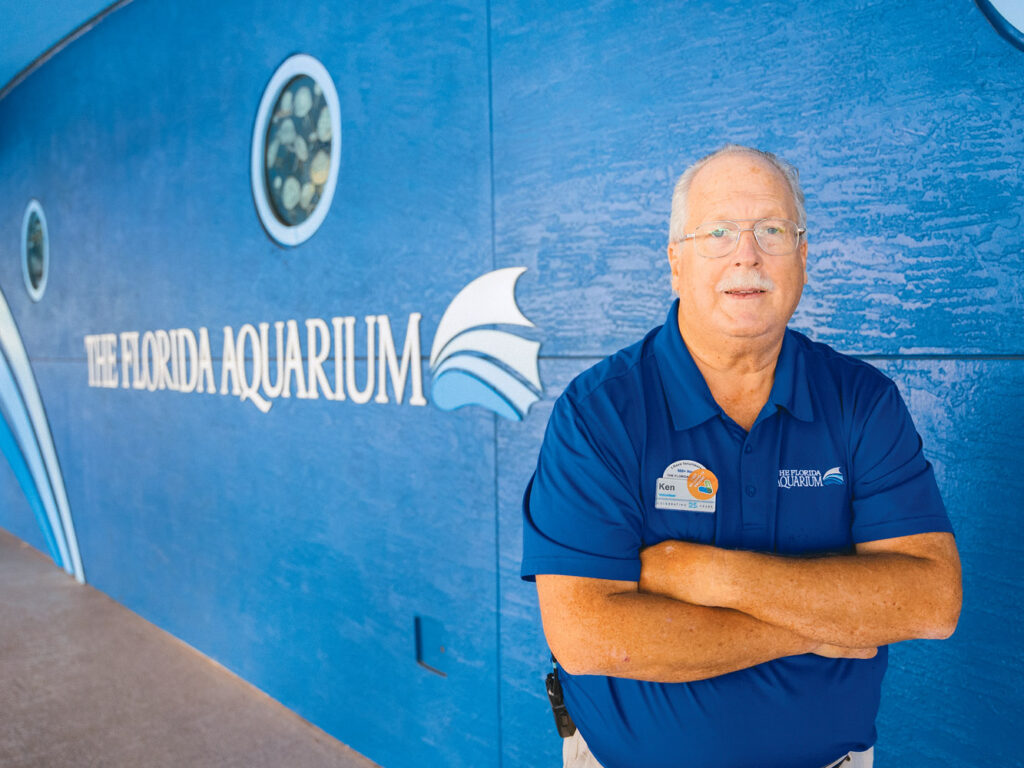
Wesley Chapel resident Ken Moser poses with one of his stained glass pieces near the Florida Aquarium entrance. (Photos: Charmaine George)

When Ken Moser moved to Wesley Chapel from Maryland in 2017, he and his wife Becky were retired and looking for a place to volunteer.

“We went to the (Tampa) zoo (at Lowry Park) in July and it was 95 degrees,” he says, adding that they immediately decided that the zoo was most definitely not the place for them.

Ken joined a fly fishing club, and says one of the members was always talking about the Florida Aquarium, so he eventually decided to give that a try.

In March 2019, Ken and Becky began training to volunteer together.

Over the last two years, and despite the Covid-19 pandemic, their efforts have made quite an impact.

So much so, that in April, Ken was named the Florida Aquarium’s Volunteer of the Year. This title earns him an honorary spot on the Aquarium’s Board of Directors for the year.

While he was chosen for his dedication — nearly 600 volunteer hours over the past two years (similar to Outstanding Service winner Edwin Rodriguez, whom we featured last issue) — and his infectious good attitude, he also was recognized for how another of his hobbies has enhanced the aquarium itself.

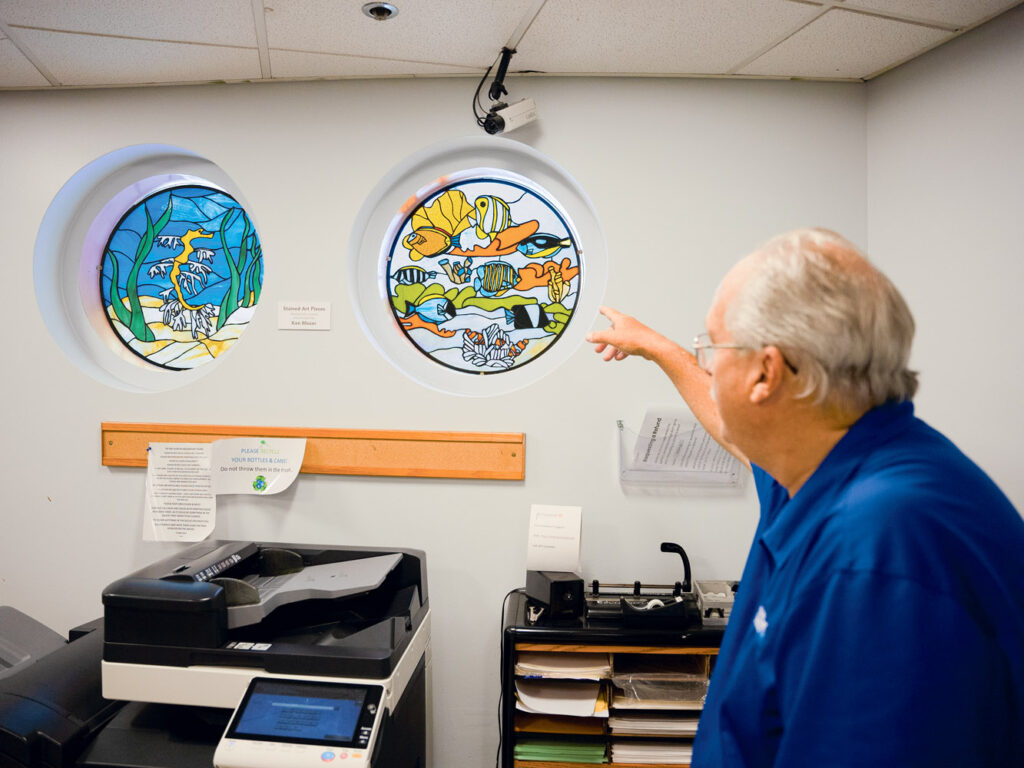
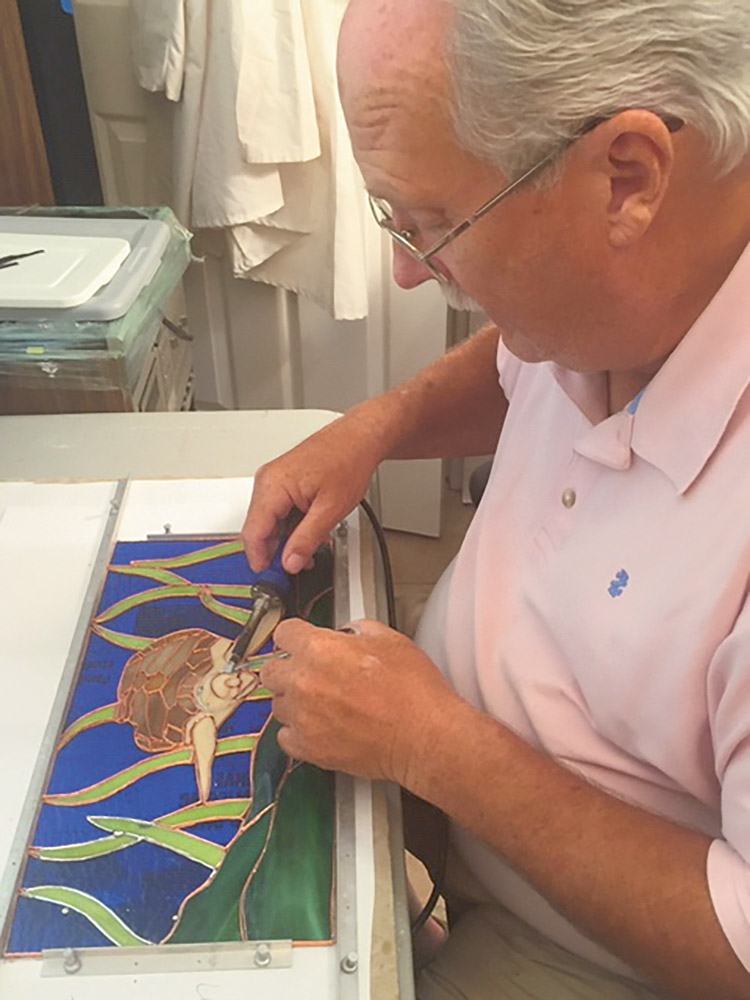
Ken created eight different stained glass windows that are now located throughout the aquarium. He says creating stained glass is one of many hobbies he’s taken up to keep busy during retirement.

“About eight years ago, my wife and I took a stained glass class at the community college,” Ken says. “I’ve been self-taught from there.”

The eight windows he’s created for the aquarium started when he noticed a two-foot window in the Madagascar section of the aquarium, where he thought he could mirror the bright colors of the exhibit with a brightly colored window.

After that, he says he was inspired to make a window of leafy sea dragons for the volunteer lunch room. Ken says they were so well-received that he was asked to make windows for the front of the aquarium and the CEO’s office.

“Each one is specific to the aquarium,” he says. “The pelicans are Josh and Theo, the penguins are waddling through the wetlands exhibit, there are sea turtles, spoonbills and moon jellies (jellyfish). I tried to keep it to what people can see at the aquarium.”

Josh and Theo

Josh and Theo are brown pelicans who have been popular on the Florida Aquarium’s social media accounts, and moon jellies are jellyfish that can not only be seen, but also touched in the aquarium’s touch tank.

Ken says the more time he spends there, the more he gets to know the animals.

“If you take the time to watch each individual animal,” he says, “you’ll start to see their individual behaviors.”

When asked if he has a favorite marine animal, Ken doesn’t seem to be able to narrow it down.

“Every week seems to be a different one,” he says. “The jawfish is one of the most comical characters, and I like listening to the wood ducks talking back and forth to each other in the wetlands. And, the stingray tank has a little baby who is worth the price of admission just to see her.”

Ken and Becky both work in education, teaching guests about the aquarium’s many animals. They initially agreed to volunteer at least eight hours a month, but soon determined they had more time than that to spare.

“Once I got in the commissary,” Ken says, “I would go three times a week. It’s just a fun place to go.”

The commissary is where food is prepared for the aquarium’s 8,000 animals.

 â€œWe have menus for the various animals,” Ken explains. “Some require different fishes that have to be cut up different ways, for example, and birds have seeds and pellets.”

Ken hasn’t worked in the commissary since March 2020, before Covid-19 shut down the aquarium and no volunteers were allowed in.

When the aquarium reopened in May, a few volunteers helped in guest services and as “roaming disinfectors,” to make sure guests stayed on the pathways and wore masks.

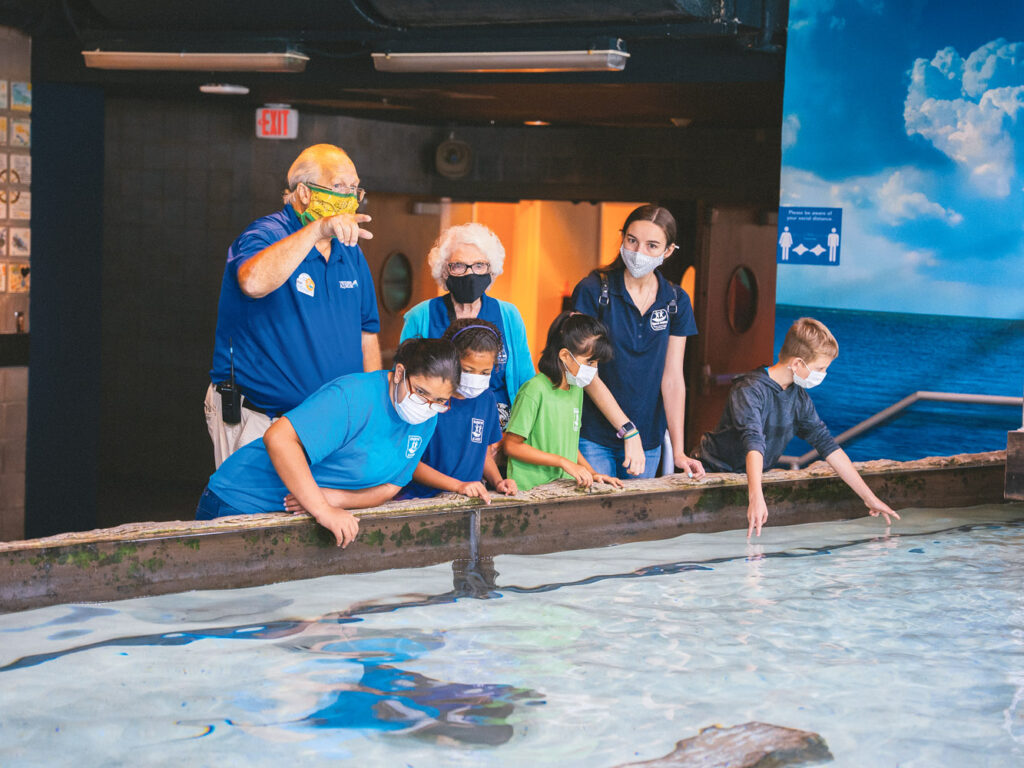
Now, Ken says, a limited number of volunteers are back in the education department manning the touch tanks during the day.

“As soon as volunteers were allowed,” he says, “I felt responsibility to come back and keep the program alive. At one time, they had 300 volunteers, but they were down to zero. If no one comes back, there’s no program.”

He says the aquarium is always staffed to provide necessary care to the animals, but although the aquarium functions without volunteers, he says, “everyone is happier with us there.”

Ken adds that the staff treats the volunteers like family, and that he and other volunteers feel enormously appreciated and grateful to be able to be part of the aquarium. 

He is impressed with how the aquarium has navigated its way through the pandemic, too.

Ken working at the stingray station.

In fact, Ken and Becky donated their first Covid stimulus checks to the aquarium.

“Being retired, we didn’t plan on that money, so we thought, ‘Who needs it more?,’” says Ken. “The aquarium lost all of its guests and still needed to feed the animals every day, so we thought the money was better used that way.”

Ken says he and Becky intend to continue volunteering at the aquarium as long as they possibly can.

“When they announced the award, there were several people who had reached the 25-year mark as volunteers at the aquarium,” Ken says. “There are some really dedicated people there. I might not get 25 years — I started a little late — but at least I left my mark there with the windows. They should be there long after I’m gone, so I will leave that behind.”