
Pebble Creek Golf Course Not Designated A ‘Brownfield’ Site

Pebble Creek Golf Club is on its final legs, according to owner Bill Place.

The plan to have the Pebble Creek Golf Club (PCGC) designated as a “brownfield” site has failed, saving the property value of many of the homes that surround the golf course.

Bill Place, whose Ace Golf Inc. owns the PCGC and has been trying to sell it for years now, said he will still go ahead with plans to decontaminate and sell the golf course to developers.

Place had been seeking the brownfield site designation for the golf course, which carries with it a state tax credit equal to roughly 75% of the cleanup costs.

A brownfield site is a property that is contaminated, thus hindering efforts to expand or redevelop it. In 1995, the U.S. Environmental Protection Agency created a tax-credit program to help clean such properties up, so it could be reinvested in, helping the local economy as well as the local environment. The EPA estimates there are more than 450,000 brownfield sites in the U.S.

However, the word “brownfield” carries with it a negative connotation, especially in regards to a “green” golf course, causing Pebble Creek residents to rally together to fight against the course receiving the designation. There were petitions signed, a meeting on Nov. 30, and there were public hearings on Dec. 9 Dec. 16, prior to the vote. 

The message from the residents was clear — the brownfield site designation wasn’t deserved, carried with it a stigma and that they wanted the golf course to remain a golf course.

While at least one Pebble Creek resident registered support to doing what was necessary to get the course cleaned up — “the cat is out of the bag,” said Pamela Jo Hatley — the overwhelming majority were opposed to using the brownfield site designation to do so.
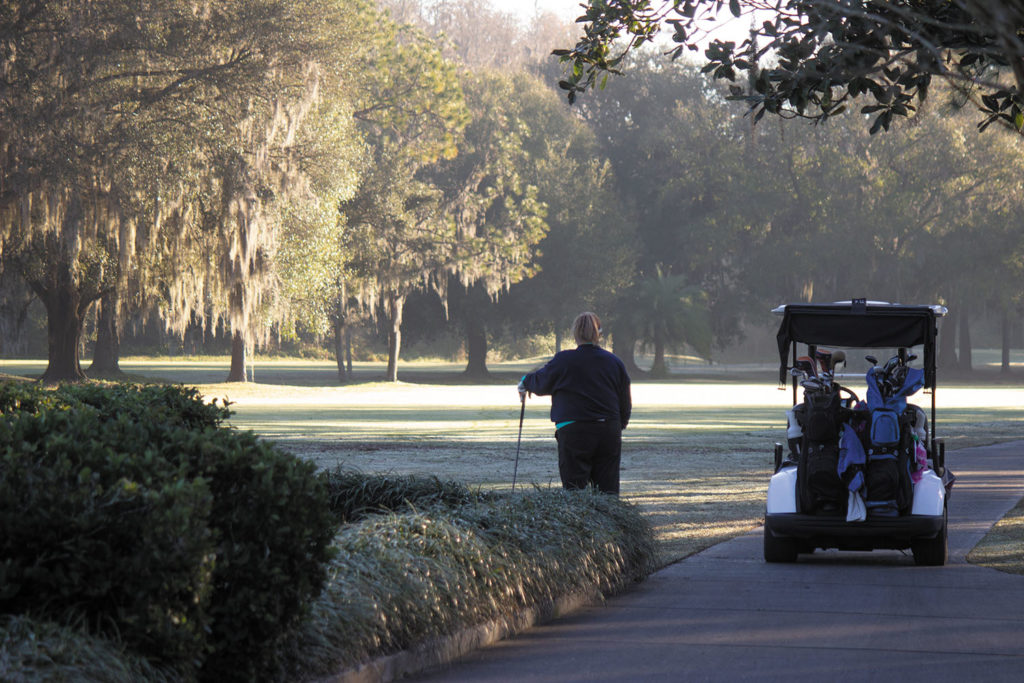
Michael Jacobson, the president of the Pebble Creek Homeowners Association, said that the contamination was mostly concentrated around the tee boxes and greens, and that the brownfield designation would suggest that the entire 150 acres was contaminated, having as much as a $62-million impact on property values in Pebble Creek.

Jacobson was one of 14 speakers registered on Dec. 16 to voice their disapproval of the designation. 

Following 30 minutes of public comments, the county commissioners voted unanimously against the 150-acre property being declared a brownfield.

“I’ve represented North Hillsborough for a long time and, candidly, I do not believe I’ve ever seen a neighborhood more engaged and unified in opposition to an issue,” said County Commissioner Ken Hagan, who District 2 includes Pebble Creek. “This is evidenced by the over 300 emails, 150 letters and 450 residents who signed an online petition and — with the exception of (one) — 100 percent being in opposition to the brownfield designation request for the Pebble Creek Golf Course. I want to deny that request today.”

While admitting that the future of the PCGC was “uncertain,” Hagan cited a number of concerns. First, the loss of 30 jobs that would result if the designation was granted and not meeting the economic productivity threshold that is required. 

Also, the county has never before designated an active golf course as a brownfield site, and that all recent brownfield approvals have been zoned for their intended uses in advance of the brownfield request, which did not happen in this case. “Not only is this request putting the cart in front of the horse,” Hagan said, “but it would potentially be precedent setting.” 
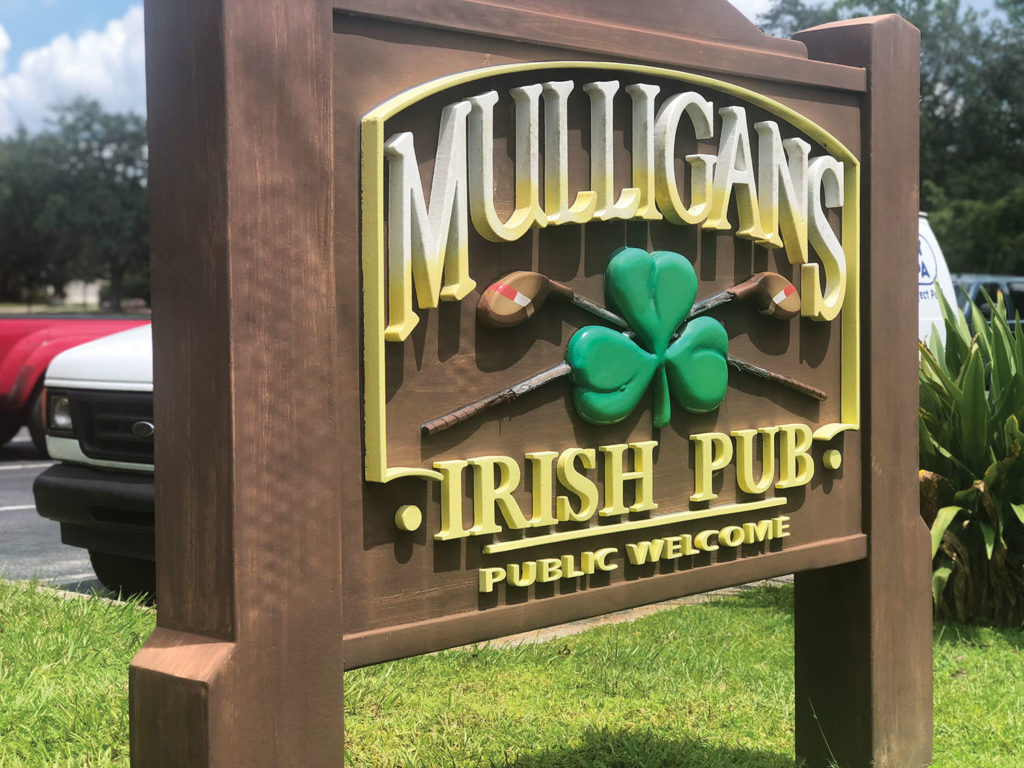
Place was disappointed in the decision, but said that he understood. He had even offered to pull his request for the designation, but it was too late.

“I didn’t expect the pushback when I started this,” Place said afterwards. “I realized as we got into it that it is a poorly named program. It conjures up images of the superfund industrial sites (which are designated as polluted locations that require a long-term response to clean up hazardous material contaminations). The reality is, brownfield is used across the country in a number of locations, including golf courses. But, I get it. I understand. If I lived there, and someone told me it was gonna be a brownfield, I’d be concerned, too.”

So what now? Place says he will pay for the testing, which will take place over the next few months.

DR Horton, one of the original interested buyers of the PCGC, had done preliminary testing two years ago and discovered contaminants on the golf course before withdrawing its interest. South Florida developer 13th Floor, however, remains interested.

Place said that after DR Horton did its “very preliminary” testing of the golf course, he paid $50,000 to a company that did more extensive testing. High levels of arsenic and dieldrin were discovered, from insecticide applications before he owned the property, Place says. He added that those chemicals were banned prior to 2000, and he bought the course in 2005.

“The company told me this is not unlike what they have seen on golf courses this age,” Place says. “It’s not as excessive as some they have seen, but yes, it’s contaminated beyond state levels and we’ll have to clean it up before anything else can be done with the property.”

Place estimates the potential cleanup could cost $1 million, though 13th Floor has told him it could cost as much as $2 million. Without the tax credit from the brownfield designation, which would have covered three-fourths of that cost, Place will have to foot the bill.

Place said while the remediation of the contamination begins, 13th Floor will concurrently start a rezoning effort. While it is likely to meet some resistance, 13th Floor has already held a number of meetings with the HOA as well as residents.

While the property could accommodate as many as 600 homes on it, 13th Floor has already agreed to build fewer than 300. Place says that number is now projected to be between 220-250.

Place also said 13th Floor has agreed to other concessions requested by residents as well.“I certainly expect there will be people opposed to this being anything but a golf course,” Place says. “But there’s also people that realize that if it’s a certainty that the golf course is going away, why don’t we try and get as much as we possibly can from the developers to make this as good a situation as we possibly can?”

There are only 20 golf club members among the residents in the 1,400 or so homes in Pebble Creek. Place says he spends $500,000 every year on labor and fertilizers. The 53-year-old course, which opened in 1967, still has its original irrigation system.

“We’ve just been band-aiding it and band-aiding it,” Place,says. “It would cost a half-a-million dollars to put a new one in. The golf course is not viable going forward. It’s just not paying the bills. We don’t see another away. You can only operate a losing operation for so long before you’re like, ‘Okay, why am I doing this?’”


Baycare Breaks Ground On Second WC Hospital

The new BayCare Hospital Wesley Chapel (rendering above) should be completed by 2023, which means Wesley Chapel will have two hospitals within two miles of each other on BBD Blvd.

Wesley Chapel may be known for its growth and burgeoning housing and restaurant markets, but by 2023, it also will be home to two major hospitals.

On Dec. 2, BayCare held a cere-monial groundbreaking event — construction had already previously begun — before a small crowd of BayCare executives, local politicians and invited community members.

The 86-bed, state-of-the-art hospital is scheduled to be completed in early 2023. According to the Tampa Bay Business Journal, planned are 30 medical/surgical inpatient beds, 12 critical care inpatient beds and 10 emergency department beds. 

“While 2020 has been an unprecedented year for health care that has called for tough decisions and creative solutions, we are grateful to celebrate the long-term goals that brought us to this moment,” said BayCare Chairman of the Board Eric Obeck at the ribbon cutting. “I’m proud to be part of an organization that keeps setting the pace, even as we react to the coronavirus’ impact on our daily business.”

The new hospital will be located at the northwest corner of Bruce B. Downs (BBD) Boulevard and Eagleston Blvd. in Seven Oaks, which is just two miles north of AdventHealth Wesley Chapel, which opened as Florida Hospital Wesley Chapel in 2012.

BayCare Hospital Wesley Chapel will offer comprehensive medical services and health care resources, including an emergency department, an intensive care unit with virtual-monitoring beds, diagnostic services such as an imaging department and lab, as well as physical rehabilitation.

BayCare also touts the jobs the new facility will bring to Pasco County. Roughly 500 combined employees will work on constructing the 318,000-square-foot hospital, and then staffing it. According to BayCare, it is investing $246 million in Pasco County.

“Across our system, it is the nearly 30,000 people who work here that make BayCare a great place to work,” said BayCare executive vice president and chief operating officer Glenn Waters. “At the same time, we are proud our patient outcomes are among the best as well.”  

BayCare purchased 34.6 acres of the planned new site for $15 million in 2006, and then paid $6.67 million for an adjoining 19.9-acre parcel in 2007, for a combined $21.67 million.

Also in 2007, BayCare purchased an 18.25-acres parcel of land across Eagleston and west of BBD in Wiregrass Ranch for $9.4 million, opening the door for possible expansion.

The company originally met with county planners in 2018, looking to build a 60-bed acute care hospital on an 111-acre site it had planned to acquire in the northeast quadrant of the future I-75 exit at Overpass Rd. — construction of which has not yet begun.

“To the leaders here planning new construction in the midst of a pandemic, I thank you,” Waters said. “To the elected officials who have joined us today and who are balancing so many unforeseen challenges this year, I thank you. And, to the local community members who have endured a year like no other, I thank you. We look forward to getting to know each other as BayCare grows along with Pasco County.”

FDOT Making Tweaks To Help Ease Logjam at I-75/56

The work around the junction of S.R. 56 and I-75 is beginning to show some progress, as efforts pick up to finish the Diverging Diamond Interchange by the end of 2021.(Photo: FDOT).

If you’ve been by the construction site of the Diverging Diamond Interchange (DDI) at the junction of I-75 and S.R. 56, you may have noticed a difference from past trips.

More machines. More workers. More dirt being moved.

Just over a month after Pasco County commissioners, particularly District 2 Commissioner Mike Moore (whose district includes much of Wesley Chapel), criticized the efforts of D.A.B. Constructors, Inc. — and expressed disappointment that the project would not finish on time — the work has clearly picked up in the area.

“There has been significant improvement,” Moore says. “I want to thank D.A.B. and the Florida Department of Transportation (FDOT) for getting this back on schedule.”

Moore said he met with both D.A.B. and FDOT, and as a result, he is feeling more confident that the project will finish closer to its original finishing date of sometime in the fall of 2021, as opposed to fears construction would stretch well into 2022.

“I feel good about what I heard,” Moore said.

The $33-million project also had drawn the ire of more than 20 local businesses, who signed a letter to Moore and District 3 Commissioner Kathryn Starkey expressing concern about the progress.

Community outreach manager John McShaffrey says FDOT has continued to look for opportunities to move the project forward, “including working with the contractor on alternate materials, construction phasing, and other ways to shorten the construction duration.”

With traffic thicker than usual due to the holidays, there aren’t too many things FDOT can do to ease congestion right now, although it is suggesting alternate routes to get in and out of the Tampa Premium Outlets and Cypress Creek Town Center areas. FDOT also has made efforts to assist in traffic flow since before Thanksgiving by:

 * Adding message boards on S.R. 56 westbound advising drivers to use the next two signals (the entrance off S.R. 56 and the entrance off the Wesley Chapel Blvd. extension) to enter the outlet mall.

* Adding message boards on S.R. 54 eastbound advising that drivers can turn right where Wesley Chapel Blvd. meets S.R. 56 to enter the outlet mall.

* Setting traffic signals to “holiday timing” (a common practice near mall areas) to maximize traffic flow.

* Adding message boards on southbound I-75, north of the S.R. 54 Exit 279, to encourage traffic to use the S.R. 54 exit to avoid backups on the Exit 275 ramp to S.R. 56.

* Adjusting the setup of the barrier wall on the southbound I-75 exit ramp to give a little more space for drivers turning right (westbound) onto SR 56.

* Installing additional cameras for FDOT’s traffic management staff to better monitor traffic at all of the signalized intersections.

Movie Theater, KRATE making progress!

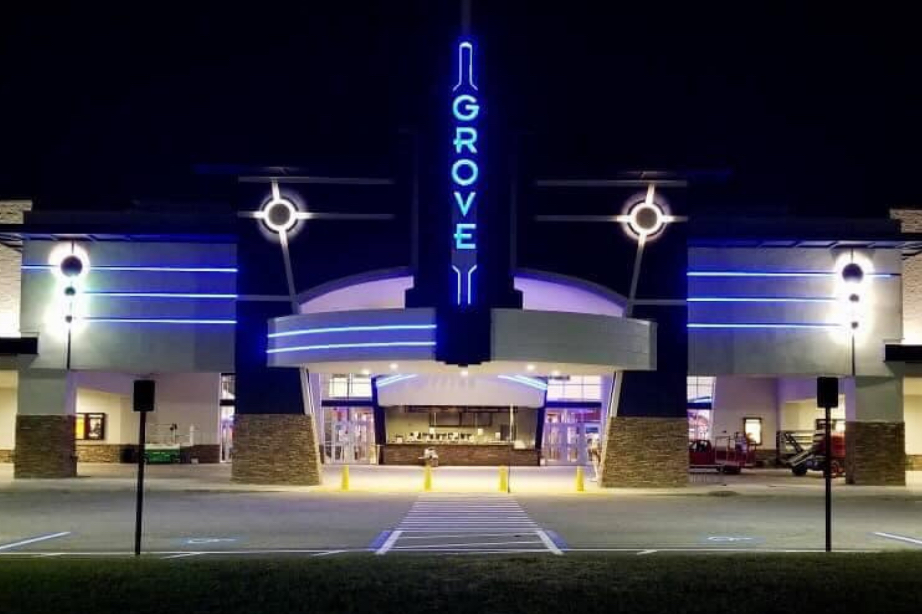
Developer Mark Gold’s vision of a one-of-a-kind hip, trendy and photogenic new outdoor shopping experience off Wesley Chapel Blvd. at I-75 has begun taking shape.

There will there be a sneak preview of the newly-revamped but not yet open movie theater on Dec. 31 at The Grove’s New Year’s Eve Countdown Extravaganza. The event will feature a 4-course meal with complimentary wine pairings for each course, as well as a private open bar cocktail reception with musical entertainment by Cal Morris Music.

Tickets are limited, and for more information click here.

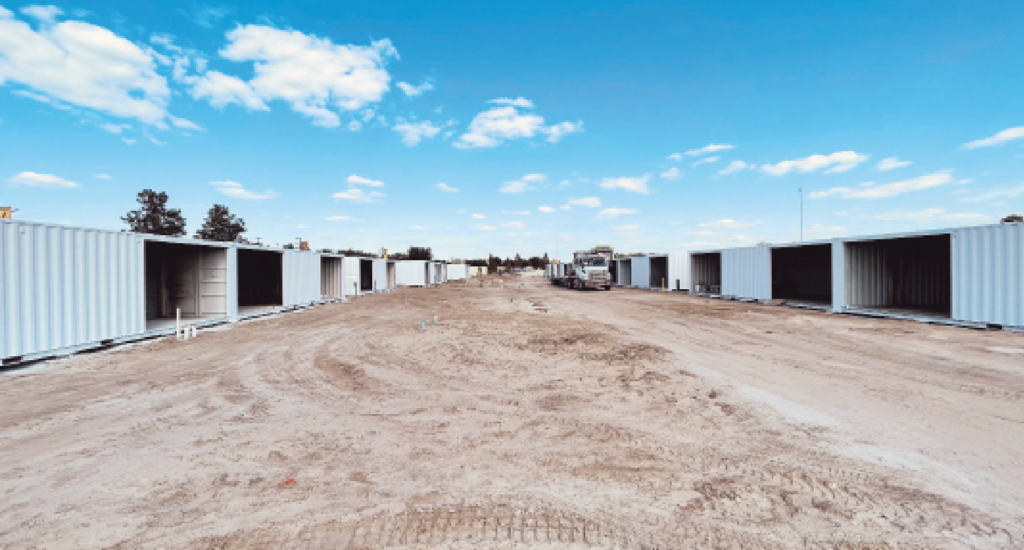
The movie theater party comes on the heels of the first soon-to-be converted shipping container being officially placed on November 20 at KRATE, the outdoor “container park.”

More than a dozen more containers also are now in place, as Gold hopes to open many of the new businesses in the first quarter of 2021.

Seventeen modified containers, which will be home to nine businesses, make up the initial phase of what will one day be one of the largest container parks in the world. 

Though Gold’s vision began with a sun-beaten, unsightly faded yellow steel container being lowered onto a sandy patch of land, the shipping containers will be unrecognizable from their original forms after being transformed with air-conditioning, glass windows and doors, countertops, cabinets and wood and tile flooring and a few coats of brightly colored paint designed to create a festive look.

The first set of containers will be occupied by restaurants offering diverse dishes and items like Asian noodles, Puerto Rican cuisine, desserts and charcuterie boards.

Empty shipping containers like these, amongst the first to be put in place at KRATE, are being transformed into a trendy new food and retail “container park” experience at The Grove, which is expected to begin opening in early 2021. (Photo: John C. Cotey)

KRATE is expected to be the biggest of all the container parks. Once complete, it will feature 94 containers and 55 units comprised of 70% restaurants and 30% retail stores. Other restaurants will feature cuisine from around the world like Colombia, Peru and Germany. 

Some of the most recently announced tenants include The Cake Girl, Yummy Tablas and ATO, a burrito bowl concept by the owners of Zukku-San Sushi (which we featured last issue). The planned retail shops include a music store and a Lego® brand product superstore.

KRATE also will feature a stage with daily live entertainment, a dog park, a playground and plenty of outdoor seating.

“There is nothing like this in the world,” says Gold, a partner in Mishorim Gold Properties, which purchased the Grove for $62.7 million in September 2019. “KRATE is receiving attention across the globe for its unique concept and offerings. We will become the ultimate shopping and entertainment destination, not just for Wesley Chapel, but for the region and around the world.”

When it is complete, KRATE (rendering above) will feature 94 shipping containers making up 55 units, including more than 30 new restaurants.

While the container park concept is still relatively new, it has proven to be popular. Downtown Tampa’s Sparkman Wharf has re-purposed shipping containers housing roughly a dozen takeout restaurants, and places like Kansas City and Philadelphia have opened container parks of varying sizes the past two years.

 Meanwhile, in Las Vegas, a popular container park — actually named Container Park — has 34 outlets with an emphasis on hip and quirky local businesses, as well as a stage and a playground.

Since purchasing The Grove, Gold has signed on 75 new tenants, including some businesses that are already open in what Gold calls The Village area — like F45 Fitness, the dueling piano bar restaurant Treble Makers (see pg. 21)and the Double Branch Artisanal Ales brewery (see pages 32-33). 

Gold says he has invested more than $110 million into the renovation of The Grove property which, in addition to KRATE, will include a reimagined movie theater and restaurant, a miniature golf course expected to break ground in January and, potentially, a water park. 

With pandemic safety at the forefront, Gold says all of the businesses in The Village and in the KRATE complex will include “medical grade” sanitation technology, like fogging machines, automated thermal temperature scan swing gates at the entrance and UV lights.

Those safety steps are expected to encourage people to feel comfortable both inside and outside while shopping and dining, including inside The Grove Movie Theater, which is expected to fully open sometime in January, not too long after the planned VIP sneak preview event on New Year’s Eve. 

The Trials & Tribulations Of Being A 2020 U.S. Census Worker

By MIEKE CARIS

2020 U.S. Census Enumerator

You probably have noticed census takers in your community this year, since they helped conduct the 2020 U.S. Census. I was one of them. “Enumerator” was the official title given to us by the U.S. Census Bureau.

I check my government phone. Yep, this is the address. I knock, since I see no doorbell. It’s a nice glass door, with a solid layer of varnish on the wooden frame. I hear some sort of clamor coming from inside the house but can’t differentiate whether it’s voices or some music. Wait, do I hear voices and music? I call out my name to introduce myself and to let the voices know I am no solicitor or intruder.

“Hello, I am here for a Census interview”!

The lawn is well maintained. A few flower pots decorate the entrance. No one comes to the door. Through the glass door, I see people. What should I do? I decide to be brave, so I knock again and call out the purpose of my visit. Finally, I hear a voice that seems directed at me:

“Go away or I call the police.”

This response made it seem pretty evident that the owner is in no mood to talk to me, so I do as instructed through my training and leave a notice of visit with a personalized code to give the demographics by mail or phone. I fold the paper and squeeze it through the rigid door frame and go on to the next address.

I feel bad that I failed in adding that address to the 2020 Census. In our training, however, we are told “safety first.”

That incident made me recall a visit from a few days ago, and reminded me that I was secretly happy the person was not home. The notes on my phone, from an enumerator who had visited this address before me, said, “The person who lives here calls himself Adolf Hitler…and he wants to be left alone.”

Standing outside in Florida’s heat and humidity for a few minutes, my hands and face get wet from perspiration. Operating the phone with a thin layer of moisture on my fingers costs time, which this interviewee has generously granted. “It is important to get all of the demographics,” I tell myself, as more moisture drips from my face. I feel embarrassed. On a few such occasions, I am offered water or a cooler spot. I even added a towel to my bag next to my supply of hand sanitizer and masks.

The smells in this apartment complex transport me into another culture. Searching for the correct number, I see many doors with colorful decorations and scribbles on the floor. I carefully step around them as I knock on the door. With my mask on, I explain my visit. I am pleased many families have heard of the Census and are willing to give me the information.

At one house, a young man actually asked me what the Census is — what was I talking about? The mother appears in the background and tells him, “The lady just needs to know how many people live here, the age and race….no worries, she can get the demographics.”

At the mobile home park, a few children were interested in what I was doing. I like to explain to youngsters that the Census is a recurrent activity. I hook it to the times of “Hamilton.” Nowadays, everybody has heard of this historical figure, thanks to Lin Miranda and his hit Broadway show.

Since 1780, the USA has counted its people every ten years. This year is unique, with the Covid-19 pandemic and the presidential election. On one out of four visits, I hear, “I am not interested in government, take me off your list.” My response is that “You exist, so please be counted. You have a young child. You want to have resources from the government.” 

One person responded, “I do not care. We are renting and will move again.” 

At other doors, I ring or knock but people do not even come to the door, maybe because they’re afraid of the Coronavirus. 

A few times, I have to conduct the interview without actually seeing the people because I have to talk to them through the door. I hear their voices and create a picture of them in my head. 

I appreciate it when a household lets me wait, while they go to get their masks, although most don’t bother. Others get annoyed with me. “I am sending the dog out if you do not leave,” one person said. 

Others say, “Ma’am, you are on private property, you need to leave.” 

Doing the census allows me to interact with a large variety of people, some who are very willing and pleasant, while others are suspicious, angry, and unpleasant: 

“I am no snitch,” I have been told. “If you can’t get an interview that is your problem.”

At another apartment complex, I knock and hear a voice behind the door, “No, we are  not interested.” I see a young African-American man sitting on the steps of a house, opposite, so I ask him, “Sir, do you know how many people live in that house?”

“Hey, you heard the lady. She doesn’t want to talk. I am not going to talk. You don’t live here. I recommend you leave, NOW!”

I always explain that am not soliciting and that Article 1, Section 2 of the U.S. Constitution mandates that the country conduct a count of its population every 10 years. Our counting for the 2020 Census started April 1, 2020, but drags on. We count who lives where and with how many people. I feel my work is worthwhile.

It seems that many apartment complexes have a high turnover rate. But I also have found that house owners have given way to real estate investors. Houses are rented out to people with no interest in joining the community. Many people don’t even know their next-door neighbors. Only at a few student housings complexes do I feel an ease of talking between neighbors, or with them talking with me. Nowadays, so many of us are more eager to be involved with online communities. 

On a few occasions, people are grateful that we do this work and impressed that we dare to talk with strangers. “We are all people,” I say. I recently heard on the radio that Florida is the 8th lowest state for responding to the Census. We hope to get the remaining 20% of the people who have not responded by March or April, adding their information to the count. 

I drive along the street, zig-zagging around potholes screaming for repairs. I climb up the stairs. The steps could use some paint. I knock on the door, go over the address again and prepare myself for a visit/interview. 

In this case, a woman calls out that she is coming. A little girl sneaks out and stands smiling before me. I introduce myself and show my badge. The girl takes the badge and tells me the picture of me is pretty. I try to engage her in my story that everyone is going to be counted in this big country. I ask how far she can count. She makes it up to 10. 

The lady of the house tells me she has already responded to it. I ask her if she is willing to go over the missing information with me again. Often people tell me they have already responded to the Census, as way to wave me away. I tell her the Census will have no duplicate information, so I end up getting the interview.

On Oct. 14, the U.S. Supreme Court granted President Donald Trump’s request to stop counting. On Oct. 15 at 11 p.m., the Census count is stopped. At that time, New Tampa was 99.8% finished. The results will be collected and presented to the president on Dec. 31. 

Being a Census enumerator has been quite a ‘ride.’ I honestly was tempted to quit after the first two days, but I stuck it out. The 2020 Census will determine representation in the U.S. Congress, will help determine the allocation of hundreds of billions of dollars in federal funding and provide data that will affect communities for the next decade.

For example, from 2000 to 2010, Florida gained two U.S. House seats, going from 25 to 27 U.S. Representatives. 

I am eager to see the results from 2020.