Sanders’ Retirement Is The End Of An Era At Benito

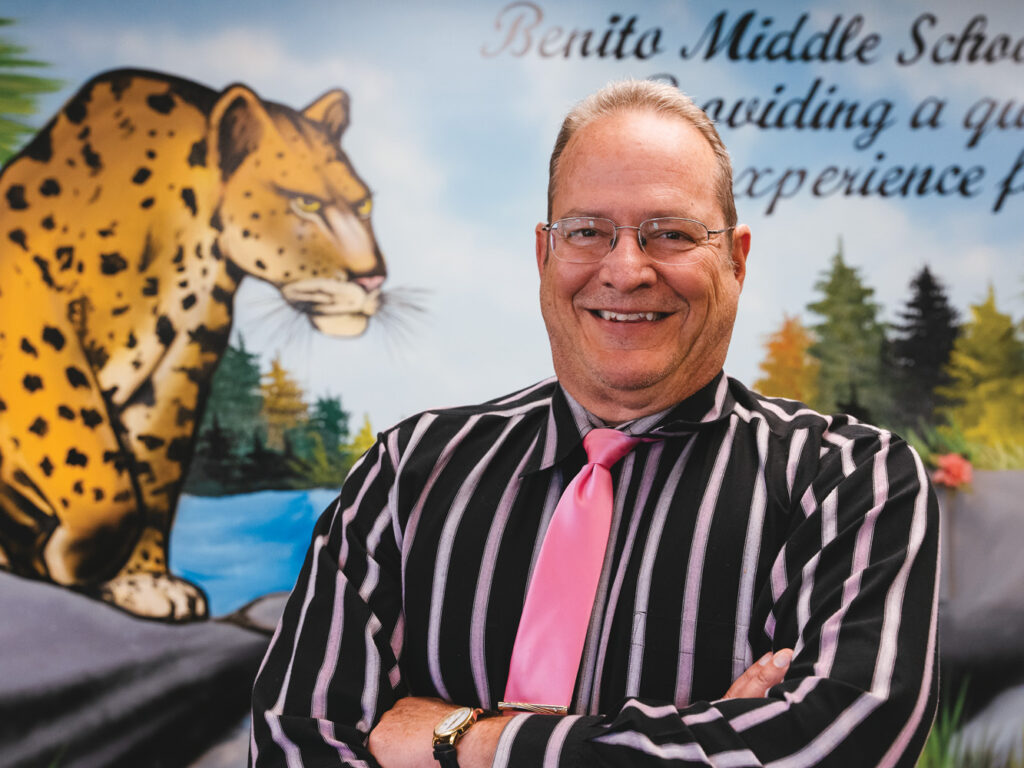
After 14 years as principal at Benito Middle School and 38 years in education,  John Sanders is ready to retire.

For more than three decades, John Sanders has worked as an educator, starting as a teacher and then becoming one of New Tampa’s most beloved and respected principals. His career was almost everything he loved — helping guide students and teachers alike to set high expectations and meet them, while building relationships to make his school the pride of the community.

However, there are other things Sanders loves, as well. Like spending time with his son Jackson, fishing, playing bridge, tending to his yard and reading.

So, after a 38-year career, including the last 14 as the principal at Benito Middle School, Sanders, 60, is packing up his office and picking up his fishing pole. 

“When am I going to enjoy those things?” he asks. “I’m not guaranteed tomorrow, so maybe now I can do some of the things I always thought I might enjoy.”

When the bell rings at the end of the last day of school this year, it will mark the end of an era at Benito. For the students who currently attend the school, and most of their older siblings, he’s the only principal they’ve ever known. Many from his staff, faculty, and even the PTSA say they’re not sure they’re ready to let him go.

They credit Sanders with sustaining a culture that has helped Benito maintain a straight “A” school grade going all the way back to 2002, while some other schools in the area have struggled, such as feeder school Hunter’s Green Elementary and Wharton High, where Benito students are zoned to attend.

But, the reason the school is so successful — with high test scores and low disciplinary problems compared with other schools throughout the District —goes much deeper than its letter grade.
His staff says it’s because of his unique style as a principal. He says it’s because of the people who surround him.

“We have a great student body and a great community, followed up by a fabulous faculty that is, for the most part, stable and successful. They get the best out of the kids,” Sanders says. “You put those together and it just works.”

While he never moved to New Tampa, he brought his only son, Jackson, to spend his middle school years at Benito. He says he tried to treat every child the way he would treat his own. 

When his wife, Rhonda, passed away in 2016, Sanders was surrounded by the faculty and staff, who showed up in force at her memorial service, which he says was planned in part by volunteers from the school’s PTSA.

While he can hardly imagine stepping away from his Benito family, he says he thinks now is the time to move on to the next chapter.

But, he says it’s going to be hard, especially leaving the people who have become his family, like the group he brought with him when he was named principal at Benito. In the first 11 years since the school opened in 1997, it had four principals. Sanders has been there longer than those four combined.

He began his career as a math teacher at Plant High in 1983, then taught at Turkey Creek Middle School,  where he was promoted to assistant principal. He then went to Young Middle School as an assistant principal before being named principal at Benito in 2008.

Language arts teacher Chris Ellis was hired by Sanders 24 years ago at Young. After 11 years together there, when Sanders moved to Benito, Ellis was one of many who followed and one of several who still teaches at Benito all these years later.

“He has had a very profound effect on my life,” Ellis says.

Ellis drove 24 miles each way to get to Benito, so, three years ago, he took a position teaching at a school closer to his home, only to return. 

“I knew the minute I had walked out the door of Benito that I had made a terrible mistake,” Ellis says. His new school was welcoming, but he missed Sanders and his hands-off management style.

Like Ellis, math teacher Kelly Broadbelt — who has been honored multiple times as the school’s Teacher of the Year, including this year — also was hired by Sanders at Young.

She says Sanders, as a former math teacher himself, has influenced her tremendously, and that he still pops into her classroom occasionally to give the students a mini-lesson, which they love.

“For sure, he has made me who I am as a teacher,” she says. “I’ve never taught without him, and because he was a math teacher he could be very influential in my classroom, because he knows exactly what I’m doing and how to fix it.”

Both Ellis and Broadbelt have been under Sanders’ guidance their entire careers. They say that while they’re trying to be optimistic, they’re also nervous about the big transition they expect when he leaves.

“The reason so many people love working for John is that many times in education, they treat the teachers like kids,” Ellis says. “But, he treats you like an adult, and allows you the autonomy to go above and beyond.”

Sanders says that it’s always been important to him to remember what it’s like to be a teacher.

“I have tried to create a family environment and I think we have it,” he says. “I’ve tried to see the good in my teachers and not focus on the imperfections too much, except when sometimes you have to do that as the boss.”

Principal John Sanders has left his mark after 14 years at Benito Middle School. (Photos: Charmaine George)

Sanders half-jokes that the school is successful in spite of him, saying, “all I had to do is let the teachers teach and let the families come here.”

Sharon Hineline was PTSA president at Benito when her kids attended and says she was convinced by Sanders to work at the school — first in the front office and now as his secretary.

“Sharon has single-handedly convinced dozens of families who were on the fence about going somewhere else to come here,” Sanders says.

Creating A Unique Atmosphere

Meanwhile, Hineline says that she does so because of the atmosphere Sanders has created. “If you come to Benito and say you need something, he’s going to help you,” she says. “He has created a culture where it’s a partnership and the staff is empowered to resolve problems.”

Sanders is quick to return phone calls from parents who are upset about something they heard happened at the school, or to direct a teacher to call a parent to resolve a misunderstanding. He has a unique touch that helps calm down heated emotions, whether he’s talking with parents or students. 

Hineline says Sanders recently had two girls in his office who hated each other so much that they had gotten into a physical fight. He spent time talking with each individually, then brought them together to discuss their choices, and they not only resolved their issues but are now the best of friends. One of the two went from failing all of her classes to passing them. The care Sanders demonstrated changed the girls’ trajectory at the school.

That same calm demeanor has talked many families out of leaving the school, instead resolving a problem that was accommodated by switching a class or another relatively simple solution, recognizing that at many schools, those resolutions are not always offered because they are more difficult on staff or teachers.

Sanders says has always focused on keeping what he calls “great families” connected to his school.

“That’s the mindset that I think a good administrator has to have,” he says. “You make their kids happy, you make them happy, and everyone wins. If I send you out the door unhappy, I’m asking for trouble. People are looking at alternatives.”

While he knows what it’s like to turn a school around –—Young was an F school when he arrived, and went up to an A — Sanders says Benito never needed that. It was a great school when he arrived. But, he has navigated some significant challenges, such as the population of students receiving free and reduced lunch — an indicator of socioeconomic factors that statistically align with school success — going from 22 percent to 62 percent.

He says Benito makes sure the kids know the expectations and the rules, and the entire staff “gets out and enforces it.”

Broadbelt, Ellis, and Hineline are just a few of the many who have bought into his philosophy.

“He’s just a good person, a good educator, and a good boss,” Broadbelt says. “He’s willing to do anything to help us.”

While Sanders deflects the praise, he says the community, the staff, and the students will continue to be family to him.

“This is my life and my world, and I’m sure I’m going to miss being the principal at Benito.”

Troy Stevenson Kicks Off His County Commission Campaign

Troy Stevenson is running to replace Mike Moore as Pasco County Commissioner for District 2, which represents much of Wesley Chapel. (Photo; Charmaine George).

A harrowing experience involving his wife Iris’ health led Troy Stevenson to explore response times and the needs of Pasco’s Fire Rescue and Sheriff’s Office (PCSO), which led him to think about their needs in relation to the massive growth in Wesley Chapel, which led him to think about traffic and roads and development.

And where did all of that lead him? Right into the Pasco County District 2 Commissioner’s race to replace the Mike Moore who has announced he is not seeking re-election.

“It all got me thinking,” says Stevenson, “about how I could help.”

Stevenson, a registered Republican and Land O’Lakes resident for the last 20 years, entered the race in February and held his kickoff event April 6 at Design & Construction Innovators, the office of North Tampa Bay Chamber Board member Roberto Suarez. Roughly 75 supporters showed up.

“I know I’m the underdog,” he says of what is now a three-candidate race, “but I’ve received so much support that I’m starting to feel like I’m not the underdog anymore.”

You may not know Stevenson’s face, but you’ve almost certainly seen his ACME On The Go trucks — which are those high-definition LED mobile billboards — driving around the county.

In fact, Stevenson, an active, involved  member of both the Wesley Chapel Rotary Club and the North Tampa Bay Chamber,  has used those trucks to support a number of causes, raising tens of thousands of dollars over the years for a variety of projects and businesses. The trucks operate as a billboard, but have also shown movies at some local charity events, whether for kids with cancer or Pasco Sheriff Chris Nocco’s K-9 Officer program. He also has helped build homes for Habitat for Humanity. 

That’s one of the things he says separates him from the other Dist. 2 candidates, race favorite Troy Weightman and Cynthia Zimmer. While both have political experience, Stevenson says he has been more of a boots-on-the-ground guy, literally getting his hands dirty behind the scenes with community involvement — he has been an active part of FEMA’s National Disaster Medical System group for 16 years, and has been among the first people on the scene following many major hurricanes, including Hurricanes Katrina (2005) and Maria (2017). 

“Katrina changed my life,” Troy says about having being deployed to New Orleans for two weeks. “It’s when I became a Christian and made me more thankful for my family and for people who help others.”

Troy is complimentary of the current Pasco Board of Commissioners (BOC) and says they have done a “phenomenal” job. If elected, he would like to continue along much the same path that Moore has paved.

But, he also says he would like to see the BOC become more proactive when it comes to infrastructure. And, while he is a believer in development, he also thinks the Board has to provide for the police, first responders and local residents who have to get around on heavily-populated roads.

“It feels like they (the BOC) are always playing catch up,” Stevenson says. “I’m not political. I’m analytical. I see things that need to be done and I am always ready to jump in and help.”

Weightman has collected a number of big endorsements, including Moore’s, as the Republican Party has coalesced behind him.

Stevenson says he has been endorsed by former Pasco County Clerk of Court Paula O’Neill, who spoke on his behalf at the kickoff event, but adds that he doesn’t place much emphasis on endorsements.

He has already put $50,000 of his own money into his campaign coffers, and hopes that those who know him and have benefitted from his community efforts will turn out at the polls for the August 23 primary.

“I don’t need the money, I don’t need the popularity,” Stevenson says. “I just feel deep in my heart that I want to help the county, and help the people in the place I live and love.”

For more info, visit TroyforPasco.com.

Business Owner Helps Local Resident Survive Electric Bike Accident

Pete Veloz

Anne Oliver was riding her electric bike to her dentist’s office for an 8 a.m. appointment when she decided to cross S.R. 54 during a lapse in the traffic.

With plenty of time, she proceeded across the road.

“I looked and there were no cars, just one truck,” Anne says.

Anne thought she could drive right up on the median, and assumed it had an angled curb, which many do. Unfortunately, this median had a steep curb, which Anne remembers looking down and not seeing until the last second. 

It was the last thing she remembers before a violent crash.

Fortunately for her, Pete Veloz was driving that truck.

Veloz, who owns Paver World of Wesley Chapel a little east on S.R. 54 and is known as “Paver Pete,” was cruising along in his Ford F-350 work truck when he saw a woman crossing the road on her bike. He could tell she was heading to the median, but then everything happened in slow motion, he says.

“She went flying through the air, she went one way and her bike went the other way,” Pete says. “She landed face first on the grass. If that was a concrete median, it could have been really bad.”

The bike landed in the lane closest to the median. Pete swerved around it, looked in his driver’s sideview mirror, and saw Anne laying motionless, her leg sprawled out into the road. He thought she might have broken her neck, or even worse.

Anne, left, and her husband John.

“You know how sometimes someone will wreck their bike, but the adrenaline is going and they pop back up and keep going?,” Pete says. “She was knocked out.”

He backed up his truck, jumped out and dragged her all the way onto the median. He helped take off her helmet. He pulled the bike off the road. Cars were driving by, but Pete’s truck was serving as a caution and slowing them down.

Pete called 9-1-1. A woman from the Brookside Professional Park across the street ran over and called 9-1-1 as well. The police were there in moments, Pete says. Anne came to, moaning in pain, but was discombobulated and didn’t remember anything from the accident.

“I remember Pete’s voice and him trying to help me,” Anne says. “It was sunny. My face was bleeding, so he got me a rag. I still have never even seen his face.”

Anne’s husband, John, was driving back from Riverview when he got a call from the woman who had also come over to help. He doesn’t remember her name, just that she was calling from a New York area code. 

“Your wife’s been in an accident,” she told him, “but she’s okay and wants to talk to you.”

Anne tried to explain what happened, but was still struggling to sort things out. She doesn’t remember talking to John. She was loaded into an ambulance, and the woman with the New York area code called John back to tell him his wife was being transported to St. Joseph’s hospital.

John, a nurse, knew that wasn’t great because there were a number of closer options (like AdventHealth Wesley Chapel) but that St. Joseph’s has the nearest trauma center. 

As he headed in that direction, Pete called him with more details, and offered to take the bike so it wasn’t impounded.

Anne was in the hospital for nearly two weeks. The crash had been fierce. She fractured her nasal cavity, her face was scraped and bloody, she suffered tissue damage on her right hand and wrist, and worst of all, she suffered a tibia plateau fracture, which is a break of the larger lower leg bone below the knee that breaks into the knee joint itself.

Anne had Open Reduction and Internal Fixation, or ORIF, which is used to repair broken bones with hardware. In Anne’s case, it was synthetic putty, brackets and screws.

Because it is such a vital load-bearing area, it will take months for her leg to heal. Anne says she is facing three months of a non-weight-bearing existence.

But, she is alive.

If Pete wasn’t driving that truck, she’s not sure she would be.

“I am very grateful that things were not worse,” Anne says. “It could have been a lot worse. With all the cars that drive by, anything could have happened.”

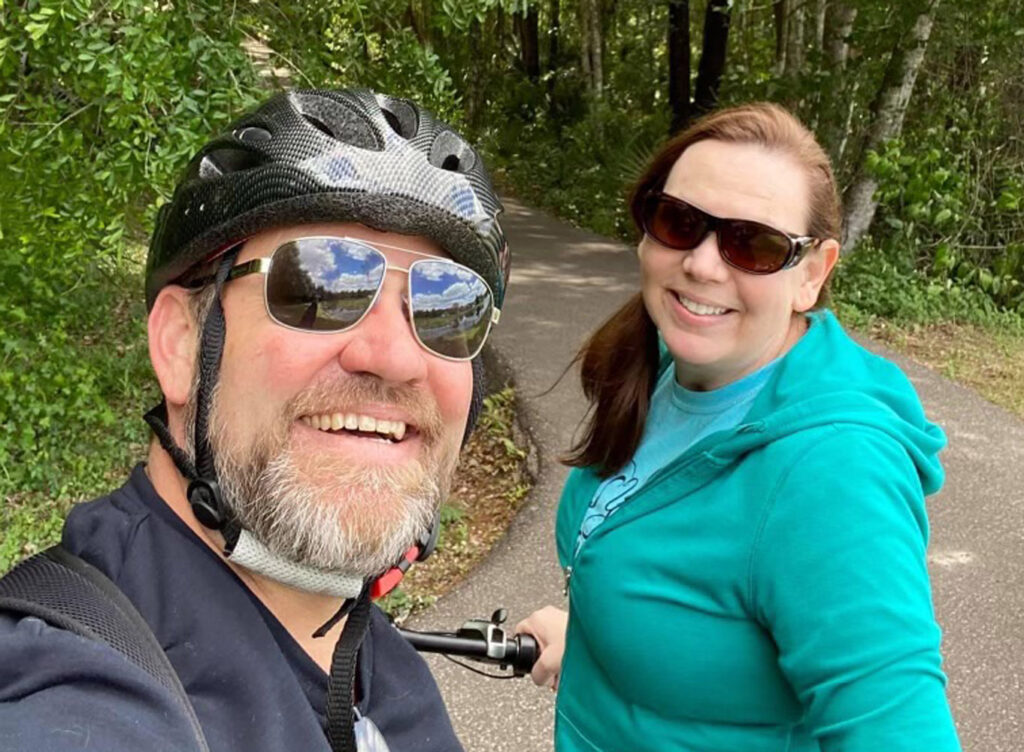
Anne and John actually bought their electric bikes because John suffers from multiple sclerosis and cannot walk, so the bike offers pedaling assistance. The Seven Oaks residents typically ride their bikes around the nature trails where they live.

On the day of her dentist appointment, Anne had to take John’s heavier bike because hers was having its brakes fixed.

A Growing Trend

Electric bikes generally don’t have great suspension or shocks, and Anne thinks that — as well as the weight of the bike — contributed to the forceful accident, as the tires did not absorb the contact with the curb.

Anne and John say the doctors and nurses at St. Joseph’s said they were just one of many they had seen come in following an accident on an electric bike. 

According to a CBS News report, the U.S. Consumer Product Safety Commission determined that injuries from electric scooters, bikes, hoverboards and other “mirco-mobility” products are up 70 percent the past four years, with 200,000 ER visits and at least 71 deaths from 2017-20.”

But, Anne and John say they hope to go back to riding their bikes — albeit in less crowded areas — when she heals.

As Anne fills in the blanks, she finds the possibilities of what could have happened to be terrifying. That’s why she wants everyone to know about Pete.

“That’s nice,” says Pete, “but I’m just glad she’s alright. It was pretty scary.”

Years ago, Pete says his youngest daughter was in a car accident, and no one stopped to help her. 

“That really broke my heart,” he says. 

So when he saw Anne collide with the curb and was laying there motionless, it was never even a decision.

“That’s what you do, right?,” Pete says. “That’s the type of guy I am. You see someone in need, you stop to help. That’s how it should be.”

Lotte Plaza Market Files Renovation Plans

The first Lotte Plaza Market in Rockville, MD. The upcoming location at the old Sweetbay Supermarket will look similar.

Lotte Plaza Market has filed plans with the City of Tampa to renovate the former Sweetbay Supermarket off Bruce B. Downs (BBD) Blvd., next to the Home Depot, as it prepares to open what will be New Tampa’s largest Asian marketplace.

The renovation project on the 49,432-sq.ft. building, roughly 11,000 square feet of which will be storage and cooler space, will transform the inside of the former grocery store into a marketplace that sells Korean, Chinese, Japanese and Vietnamese food items and ingredients, a wide selection of meats and fresh fish and seafood and a huge variety of fruits and vegetables not found at American grocery stores. 

The Lotte Plaza Market also will include at least three restaurants in its food court, as well as a bakery and a tea stand.

The renovations will cost roughly $4.5 million, according to the plans. The owners of the small Maryland-based ethnic grocery store chain focusing on Asian groceries and goods purchased the old Sweetbay Market for $7 million in January of 2021.

The Sweetbay building closed in 2013 and has been unoccupied since. KNK Tampa, Ltd. bought it in 2001 and leased it to Kash n’ Karry for a 20-year term beginning in November of that year. Kash n’ Karry operated under the lease until June 14, 2006, when its Belgian parent company Delhaize America, Inc., converted it into a Sweetbay. But, despite its rebranding, Sweetbay never gained the popularity of nearby Publix or Walmart stores. 

In October of 2013, Jacksonville-based Bi-Lo Holdings bought 72 Sweetbay stores, plus the leases to 10 other underperforming Sweetbay locations that had already been closed. One of those leases belonged to the New Tampa location, which had six years remaining on it, but Bi-Lo Holdings declined to do anything with the property other than pay the rent until the deal expired in 2020.

Founded in 1976, Lotte Plaza Market is considered to be one of the premier Asian and international groceries in Maryland and Virginia, where it has 12 locations. The mini-chain also has one location in New Jersey, and opened the only other Florida location in Orlando on W. Colonial Dr. in February 2019.

Lotte Plaza Market is hoping to open 50 new locations by 2030. — JCC

Wesley Chapel Man’s Beekeeping Hobby Is As Sweet As Honey

Tucked away in Angus Valley, one of the few remaining places in Wesley Chapel that business and residential development haven’t touched, Jeff Hajari gets back to nature.

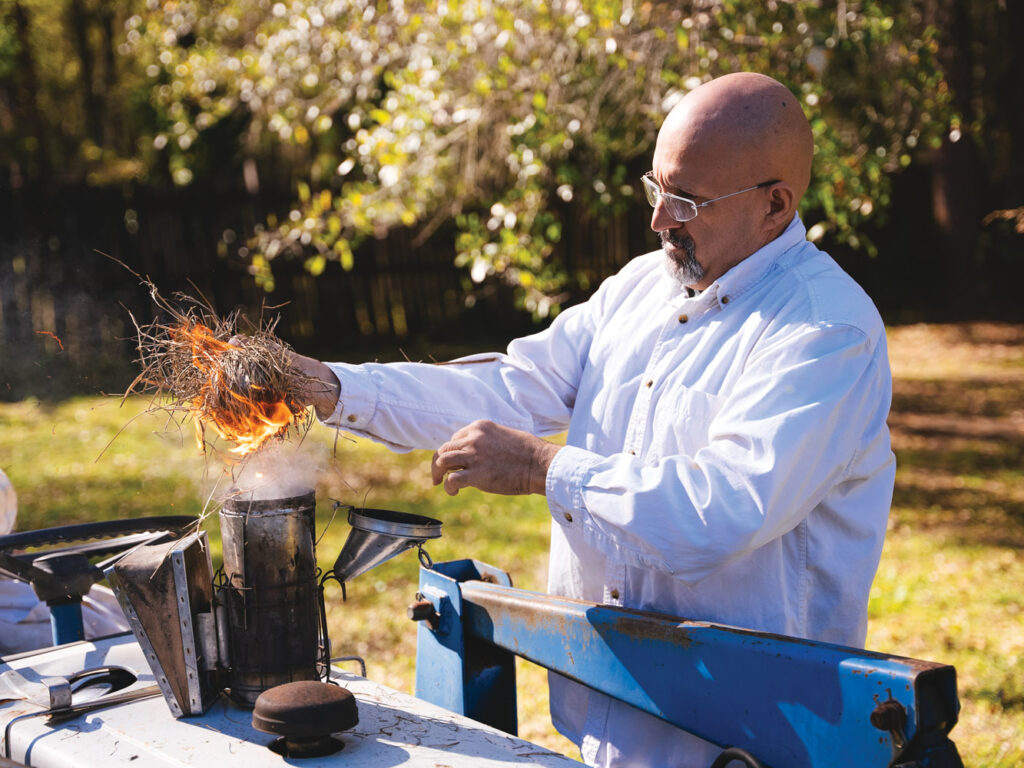
On this day, he is tending to his bees, all eight hives of them. It doesn’t take a lot of work, really, now that he has been doing this for two years, but he works to keep his hive small and strong.

In his kitchen, his countertops are filled with 16 oz. mason jars of the sweet elixir his troops have produced, roughly 400 pounds in all during his most recent harvest.

A large wedge of beeswax sits nearby on the floor, below a counter of vials filled with propolis (“bee glue”), a byproduct of the hive used by people with diabetes to heal wounds, combat allergies and even soothe toothaches.

“Bees are amazing,” Hajari says. “There are so many benefits to everything they produce.”

Which is part of the reason why Hajari is so fascinated by them. Truth is, we couldn’t live without bees, as they, along with butterflies, pollinate approximately 75 percent of the world’s flowering plants and 35 percent of the world’s food crops, according to the U.S. Department of Agriculture.

Hajari, 59, was born in Kerman, Iran, and came to the US in 1987 to start a new life. He settled in New York and began a career as a home improvement contractor, but then relocated to Florida and eventually bought a home in Angus Valley.

With an affinity for nature and being self-sustaining, Hajari started with chickens and goats in his backyard, and while his attempts to make goat’s milk failed, he did successfully manage to make some soap. 

But, he really wanted his own honey. Because he returns to Iran every year to help take care of his mother, barnyard animals required too much care. So, three years ago, he bought his first beehive from a woman in Dade City for $250. He transferred the hive in his truck, and says that setting it up was, well, a bit painful.

“I got stung like crazy,” Jeff says. “Probably 20-25 times. But, it was okay.”

Hajari continued to add more hives — at one point he had 12-15. But, they were weaker hives, and he has found by limiting the hives to eight or so, he has a stronger, healthier group able to resist attackers like ants and other pests. Two years ago, he designed a new entrance for the beehive to fight against varroa mites, who were capable of wiping out an entire colony.

Hajari says he learned how to keep bees like you would learn about anything — the internet and trial and error. He watched documentaries and YouTube videos, read articles and purchased a beekeeping suit. Handy with wood working, he constructed frames for the bees to expand their honeycombs. He has made mistakes, losing bees and entire hives. “Like anything, there is a science to it,” he says.

Every few months, his kitchen becomes a laboratory, where he extracts the honey from the combs and bottles it.

“It takes two days to get it all done and jarred and ready,” Jeff says. “It’s a labor of love. As long as I have enough for my coffee and tea, and my friends.”

He says that the taste each time is different, and that it all depends on what flowers were pollinated. One of his recent batches was particularly dark and bitter.

“I don’t know why, but my honey looks almost like coffee,” he says. “I’ve been to stores but I have never seen anything that looks that dark. It’s extremely dark. But, I read where the darker the better, as it has more antioxidants and antibodies. So I’m like, ‘Okay, I’m good with it.’”

He sells his honey and propolis on Facebook marketplace, which you can find by searching “Local Honey Wesley Chapel.”

Hajari will even come remove a colony of bees from your yard, if need be.

“It’s a hobby, and it’s fun,” he says.

But, there’s always something new to learn, and Hajari has now added mushroom hunting — “Not the crazy ones, the edible ones” — to his nature quest. He joined a group that goes hunting in places like Ocala National Forest, the Croom Wildlife Management Area in Brooksville and even Hillsborough River State Park. One trip yielded a basket of Chanterelle mushrooms, which he cooked up. “I’m addicted to them, they were so good,” Jeff said.

Because he has so many trees and logs in his backyard, he ordered a mushroom growing kit and is hoping to produce Shitaki, Golden Oyster and Lion’s Mane mushrooms in his own backyard. He said it takes a year.

And,before he left for Iran recently, he planted a banana tree, avocados, blueberries and blackberries.

“I just like to be self sufficient,” he says, “especially when it comes to nutrition. I want everything organic, and I like to produce it myself.” What’s next for Jeff? He’s not sure, but he seems to be just beginning. “I always like to try something new,” he says.