County To Begin Upgrading Branchton Park In 2022

Branchton Park is currently an obscure park located south of Cross Creek Blvd. on Morris Bridge Rd., with plenty of open space, but will be transformed when it gets a $5-million makeover from Hillsborough County, including the addition of all-purpose courts, a playground and a pond.

Tucked away off Morris Bridge Rd. a little south of Cross Creek Blvd., Branchton Park is a quiet, underpopulated spot in New Tampa that few local residents have ever visited.

However, those who do know about it will probably agree — it is a park with limited amenities that is showing its age and is in desperate need of a facelift.

And now, Hillsborough County has plans to do just that. Branchton Park as you know it will cease to exist, and will be “relocated” immediately south of its current location at 15701 Morris Bridge Rd.

The new Branchton Park will be more modern, with a lot more amenities, and will serve a lot more people’s needs, at a cost of around $5.5 million.

District 2 Hillsborough County Commissioner Ken Hagan said he secured the funding for the improvements in previous county budgets.

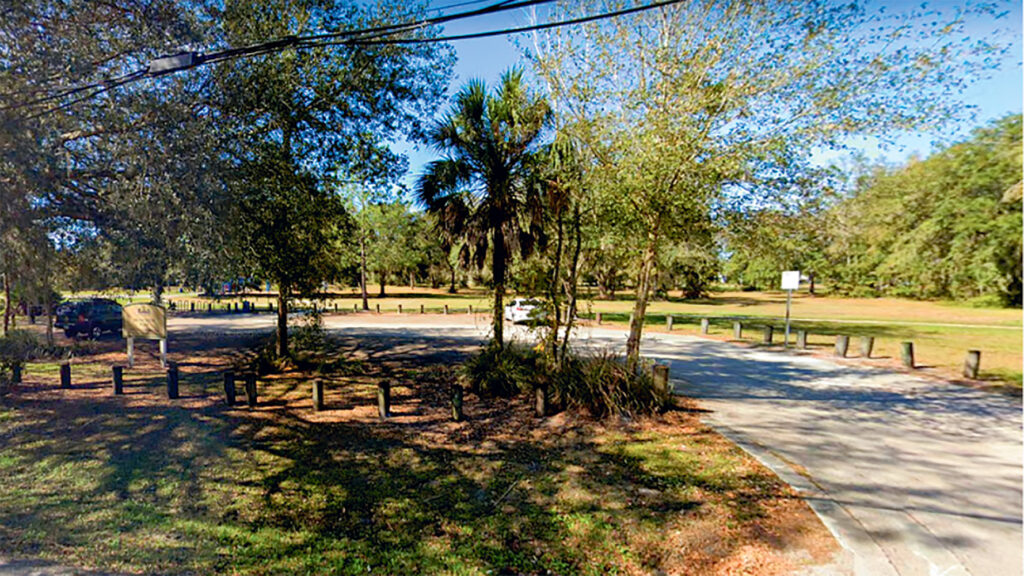
The park currently has a small shelter and playground, a basketball court in need of a refresh and parking for a few cars.

It also has a paved trail and plenty of open space, but no bathrooms (other than Porta Potties) or water fountains. Once the new park is completed, the site of the current park will be home to future development, which could include a restaurant, sports bar or even new homes, Hagan says, adding that he can envision something like The Village at Hunter’s Lake development on Bruce B. Downs Blvd. 

The nearly 500 responses to a county survey about what to make the new park look like were exactly what you would expect. Residents would like to see a dog park, a covered pavilion and play area, pickleball and tennis courts, roller hockey, more basketball courts, soccer fields and cricket pitches, a disc golf course, a splash pad, a skate park, walking and running trails, bathrooms, an amphitheater and more activities for the area’s senior population.

Or, in other words, everything.
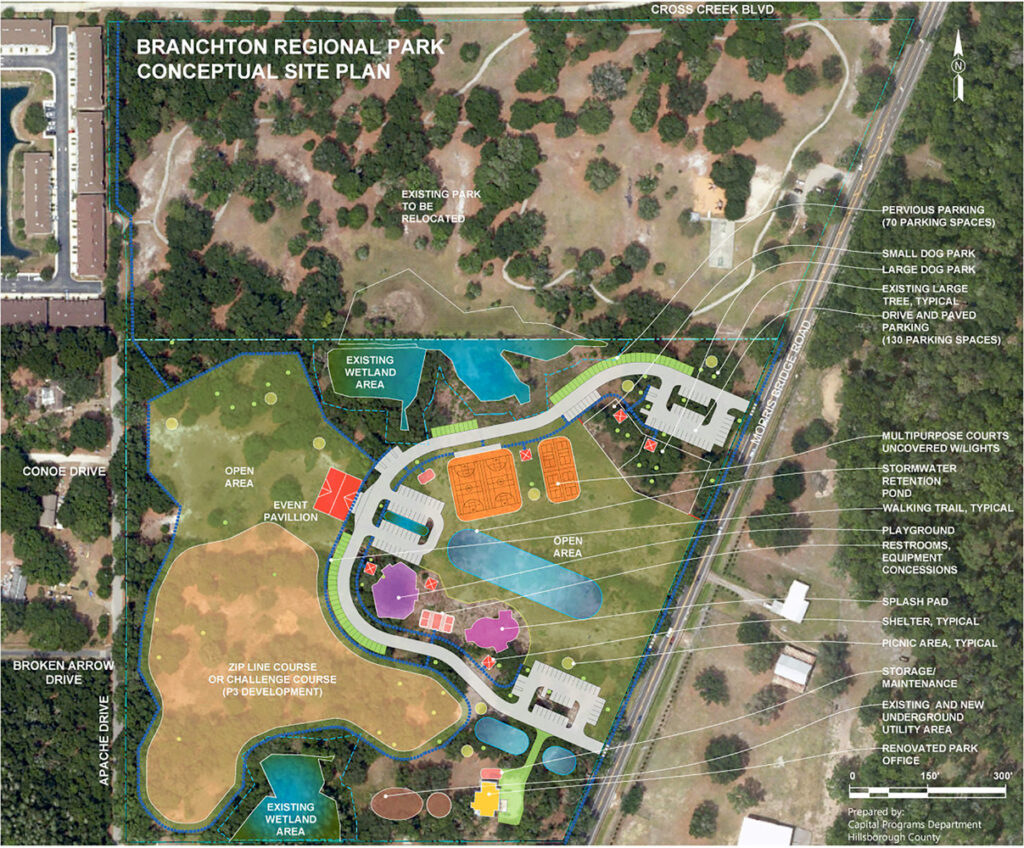
Many of the resident requests are included in the plans, according to the county’s website. 

The project will be funded in phases and, in the first phase, there will be additional parking, walking trails, dog parks, restrooms, shelters and multipurpose courts, though the county notes that likely means four pickleball courts and two basketball courts, which also can be used for volleyball, according to the conceptual site plan.

The separate dog parks for small and large dogs will include shelters, benches, dog agility equipment and water and even wash stations.

Subsequent phases will include other things on the resident wish list, like a more robust playground and a splash pad. There is a possibility, according to the survey, that the splash pad could make its way into Phase 1.

Hagan says count on it.

“There will be a splash pad, I can promise you,” Hagan says. “And it will be in Phase 1. I’m not going to let that (not) happen.”

Final decisions on what may be added in subsequent phases will be made after Phase 1 has been completed.

According to the conceptual site plan, the new park also will include a park office, concessions, event pavilion, open area and 70 parking spaces. There also are plans further down the road for a public-private partnership (PPP) on a zip line or “challenge” course for the park.

Hagan says he may also push for a Hillsborough Sheriff’s substation in the Branchton area as well. 

In 2017, the county acquired four parcels of land totaling 10 acres just south of the current Branchton Park. The newly acquired land will be home to the new park. 

Hagan hopes to get the process moving in the next few months, with the start of construction sometime in early 2022.

“I’m pretty excited about it,” Hagan says. “I think this is a great opportunity to build a really nice community asset.”

Wharton Grad Earns A Trip To The Tokyo Olympics!

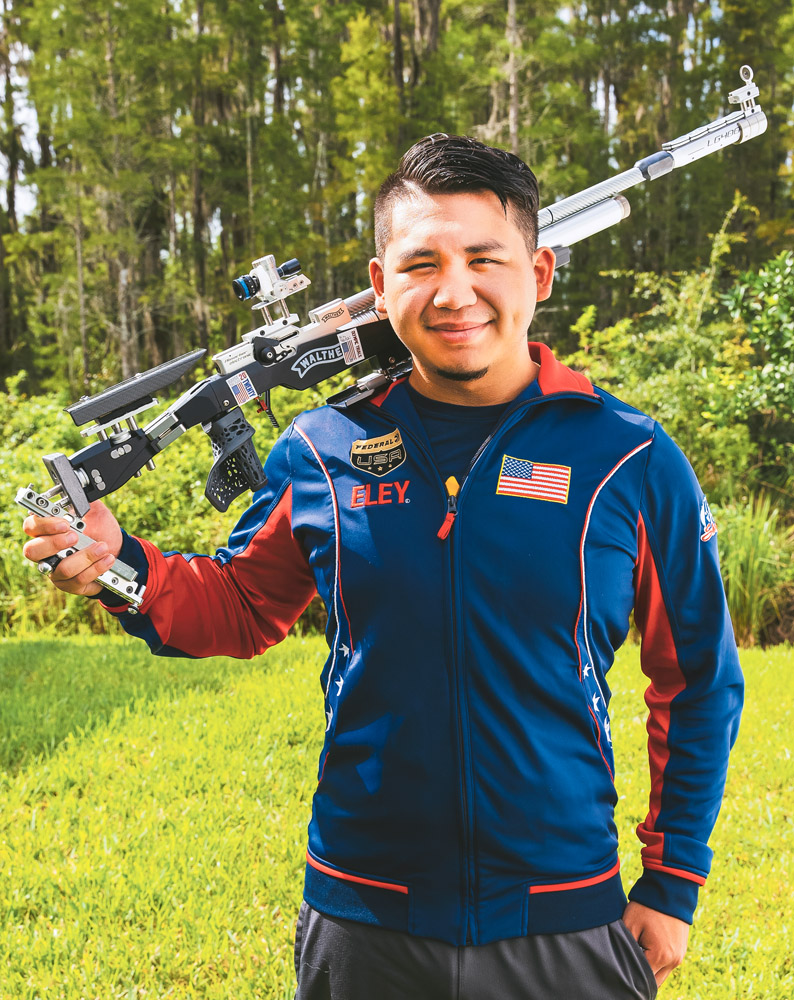
The Covid pandemic made competing more difficult, but did not throw Matt Sanchez off his goal of competing at the 2024 Olympic Games in Paris.

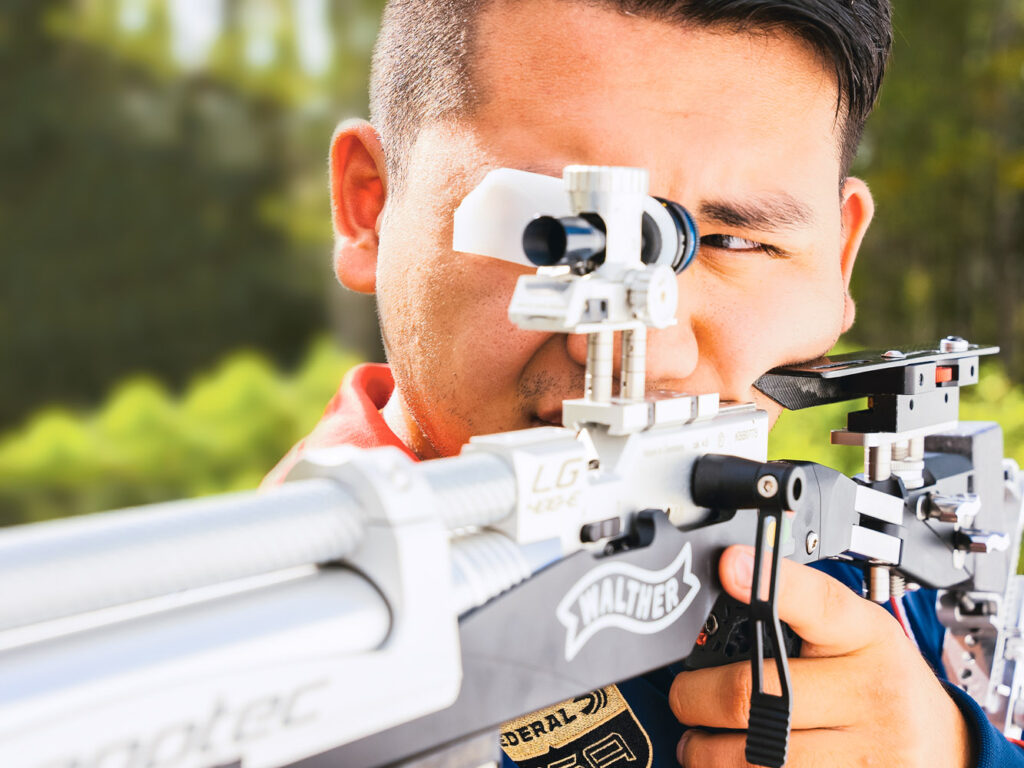
New Tampa’s Matt Sanchez, a 2020 Wharton High graduate and Heritage Isles resident, found out last month that even though he finished third at the U.S. Olympic Trials to qualify as an alternate, he would join the U.S. Air Rifle Olympic team at this year’s games and has been in Japan since July 16.

Sanchez, 18, was at a shooting competition in Georgia eating dinner with his father, Freddy, when his dad left the room to take a phone call. When he returned, he told his son the good news.

“He was very proud,” says Sanchez. “I was really surprised. I didn’t think I would be going.”

Sanchez finished third at the Olympic Air Rifle Trials in February 2020 at Colorado Springs, CO, out of 16 of the sharpest shooters in the country. Only the top two finishers — 2016 Olympian Lucas Kozeniesky and University of Kentucky junior Will Shaner  — were selected to compete for the U.S. team, and at the time, alternates typically wouldn’t get to make the trip to the Olympics, which ended up being delayed for a year by Covid-19, with the team.

At that time, Sanchez turned his attention to the 2024 Games in Paris. But then, the call came.

“It was well over a year of thinking I was not going,” says Sanchez, who thinks that with Covid still prevalent and the chances of someone getting sick always a possibility, it made having the alternate available essential this year.

Sanchez spent the last month poring over online modules and general policy training for the Olympics, getting his Covid vaccination info and gun serial numbers together and preparing for two weeks in Japan. 

Because shooting is traditionally among the first events held at the Olympics — this year, the competitions are from July 24-August 2 — Sanchez won’t be staying for the entire Games.

Because he is still unlikely to compete, Sanchez, who started shooting when he was 9 years old, is somewhat muted in his excitement. His reaction will be different in 2024 if he finishes in the top two at the trials.

“When I made the team as an alternate in 2020, it didn’t really set me off too much,” Sanchez says. “I was happy with my placement. But, it gave me the drive to make the team for the next Olympics. I missed out this time by four points; that’s not too big a margin.”

Sanchez is emboldened by the advanced training he will receive between now and then as a member of the U.S. National team, as well as being a team member at 19-time NCAA champion West Virginia University (WVU) in Morgantown, where he just finished his freshman year. 

Former Wharton Navy Junior Reserve Officer Training Corps rifle teammate Ben Salas, who signed with North Carolina State, and Sanchez are believed to be the first Hillsborough County athletes to sign full shooting scholarships at Division I universities.

After the year Sanchez has had, the Japan trip is a welcome consolation prize.

Because of Covid, his performance at the Olympic Trials turned out to be his last serious competition for roughly 15 months.

The last half of Sanchez’s senior year at Wharton was wiped out by the pandemic, and he had nowhere to train or compete during the summer, except in his makeshift home set up. 

Because the Air Rifle target — the size of a 12-point font period — is 10 meters (or nearly 33 feet) away, Matt sets targets on one wall in the garage and, because the garage isn’t quite long enough, he shoots at it from inside his home’s foyer.

In college, Sanchez’s training hasn’t been different than any other scholarship sport — it takes a good portion of his time.

Prior to college, Sanchez would practice shooting a few times a week, ramping up for competitions. In college it’s been more like 5-6 days a week, 5-6 hours a day.

Preventing burnout, as well as balancing schoolwork, and not having an outlet to compete because everything was locked down, was definitely a challenge, although Sanchez was one of three rifle team members recently named to the 2020-21 Academic All-Big 12 Rookie Team.

In his second semester at WVU, the Mountaineers were able to compete in some modified matches, and advanced to the NCAA Championships, where they finished fourth, but Sanchez was unable to participate because he was contact-traced for Covid a few weeks before the event.

Finally, in May, he was able to return to top-flight competition, competing at the National Rifle Junior Olympic Shooting Championships at Hillsdale College in Michigan, where he finished third in men’s smallbore competition, which is shooting a .22 caliber rifle in three positions — standing, kneeling and prone.

Air Rifle is basically firing 60 shots in a 75-minute time limit from a standing position only.

“Everyone was pretty rusty,” Sanchez says.

When he returns from Japan, the Wharton grad will be back at college training with one of the country’s best programs, planning for more international competitions with the U.S. National Team and with Paris always in his sights.

“That’s what I’m shooting for,” Sanchez says. “That’s the ultimate goal.”

Pebble Creek Golf Club Nears Finale

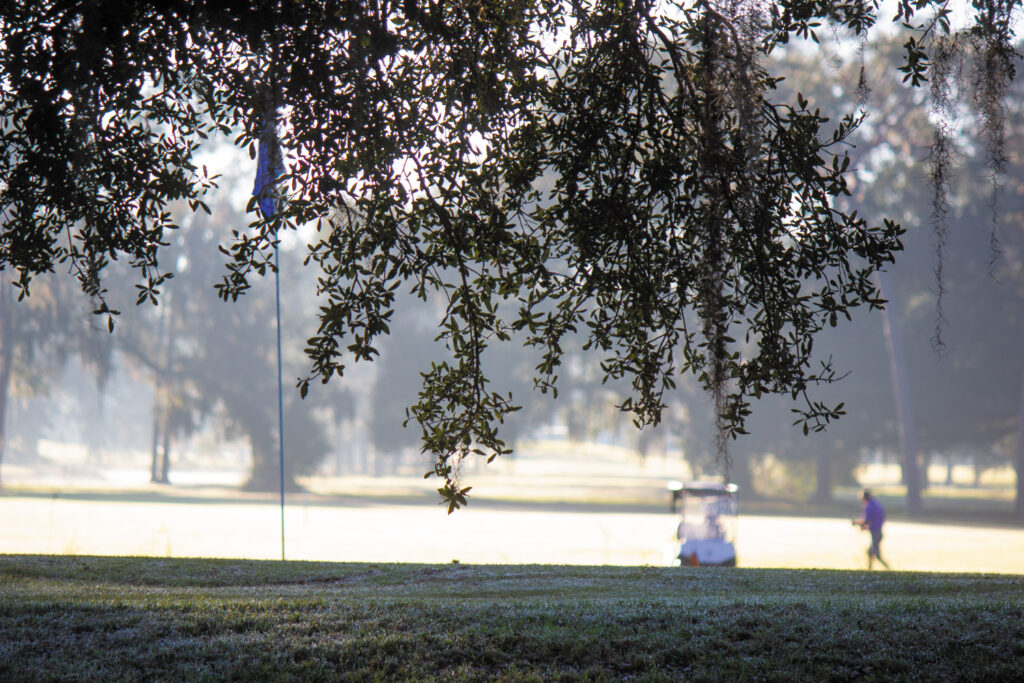
Chuck Leisek has spent many of his mornings the past 15 years hitting golf balls at the Pebble Creek Golf Club (PCGC), where he lives just off the 12th hole.

The 86-year-old never broke 70, but shot his age plenty of times, has just missed a hole-in-one on the No. 2 and No. 6 holes, and loved every day he was out on the course.

When he found out that the golf course was shutting down for \good on July 31, he and his wife Janice, also an avid golfer, were crestfallen.

“We never thought in our wildest dreams this golf course would ever be closed,” says Leisek. “It’s deeply disappointing. And that’s an understatement.”

The writing, however, had been on the wall for the past few years, as owner Bill Place, who bought the club in 2005, has been actively trying to sell the property the past five or so years.

The first weekend in June, letters were sent out informing residents that the 6,436-yard golf course, the oldest in New Tampa, was shutting down for good.

Place said there is no special event or farewell scheduled for the club. The last one out on the 31st will turn off the lights, lock the door and that will be it.

Bill Place

Place is currently negotiating with Pulte Homes on building 230-240 single-family homes on the golf course.

“Never once when I bought the course was I even thinking it would be a development site,” Place says. “We took what was then a failing golf course that was horribly maintained, and we put in probably $2 million over the first five years. We put in new greens, built a new banquet room, and really got the club making money initially.”

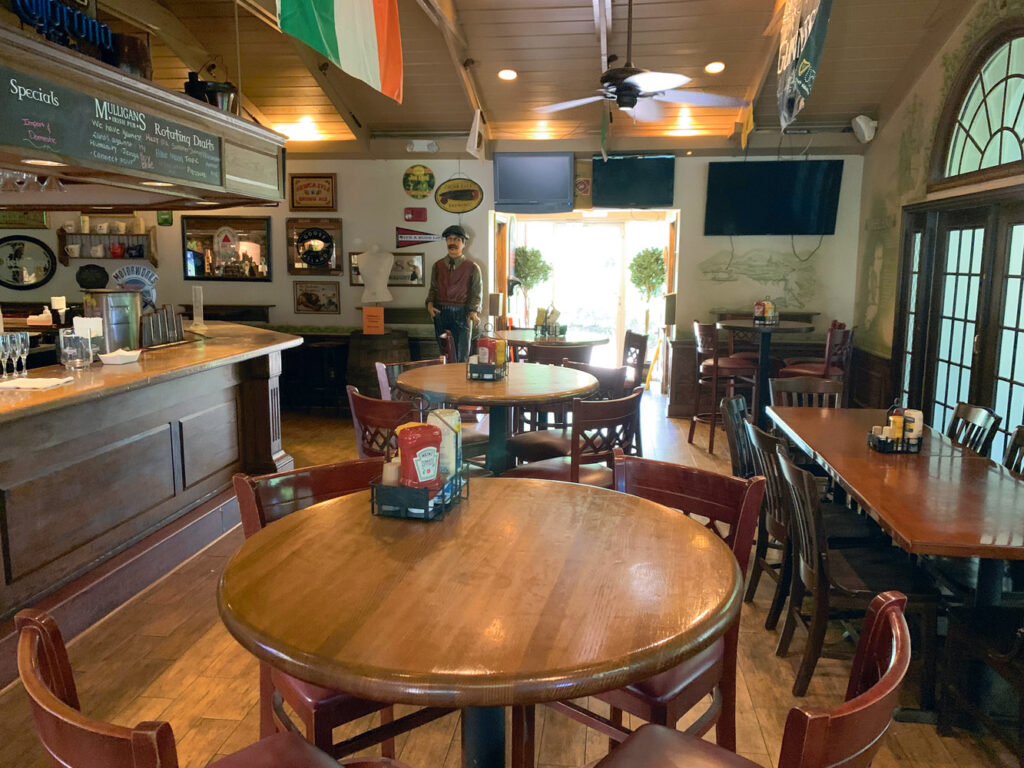
Included in the improvements was Mulligans, the popular Irish pub that opened in 2007, but also will close July 31.

Place says the 2008 recession stopped the club’s momentum, and it has been on and off ever since.

Leisek says he remembers when Place bought PCGC and restored the course to its previous glory, but says he is one of many who questions how much money Place actually has been losing.

And, although he says he had heard rumors of Place “skulking around trying to sell it,” it was still a surprise to everyone he knew when they received notice that PCGC was officially closing.

Place says club members like Leisek, however, were far and few between at Pebble Creek.

Although there are roughly 1,400 homes in the community, only 13 residents are among the club’s 70 current members. He describes the support from the community as non-existent.

“I don’t mean that negatively, like people despised the golf club,” Place says. “There’s just not that many golfers (living) in Pebble Creek.”

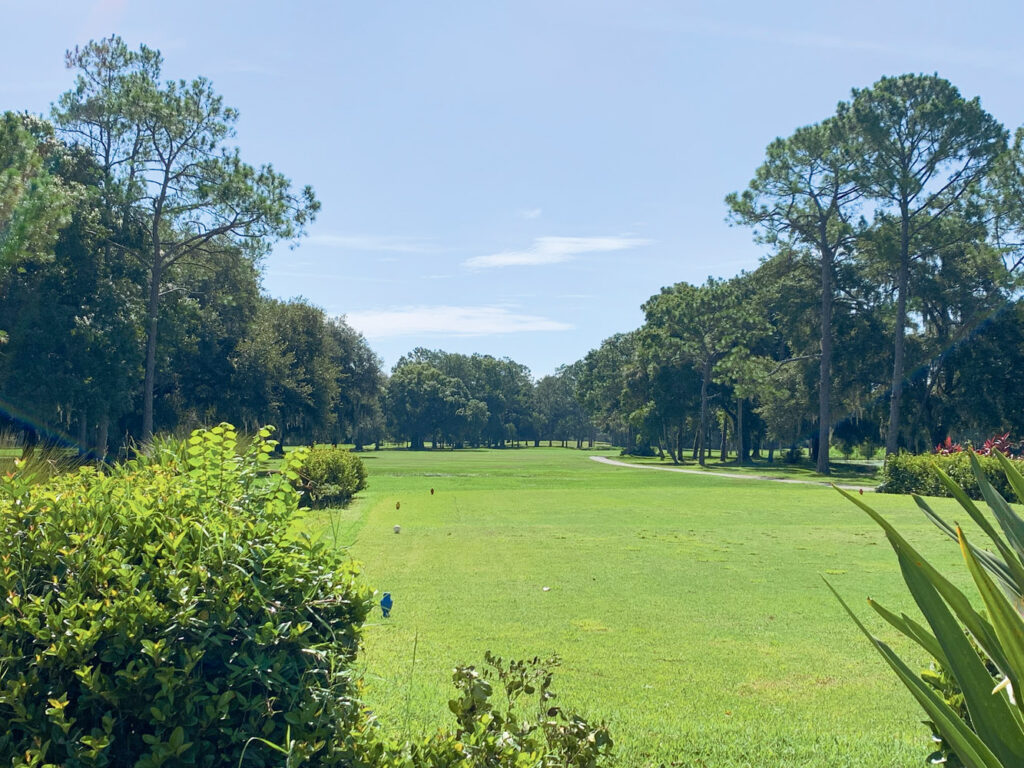
The view from hole 1 could soon be replaced by homes, if Bill Place has his way.

He says that when he approached the HOAs about having all homeowners pay for a social membership to keep the club alive, it was rejected.

“We do get a fair amount of public play,” Place says. “That’s essentially what kept us going as long as we did.”

Golf courses have struggled in recent years, especially as amenities in large communities, but the number of rounds played in 2020 actually were up nationally  13.9 percent from 2019, according to Golf Datatech, primarily because of people looking for relatively safe recreation activities during the pandemic.

It is the largest increase in rounds played since Golf Datatech, which specializes in golf market research, started tracking stats in 1998. Place says that surge was short-lived at Pebble Creek.

“Even though we had a little bit of a bump from Covid-19, I’ve already started to see it back off as people go back to work,” Place says. “We’re on a path to repeat 2018 and 2019, when we lost money those years.”

Place also says that merely maintaining the course had become financially untenable. He says that PCGC still has its original irrigation system and that “it failed miserably during this recent drought.”

He adds, “It was time.”

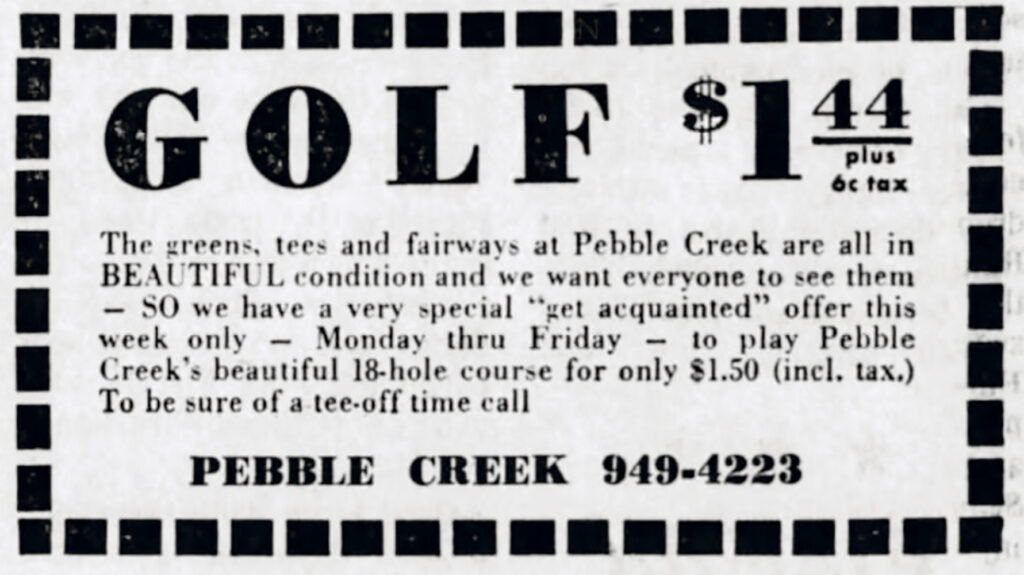
A 1968 coupon.

Pebble Creek was built by a group of nine investors and opened in 1967, at a price tag of $500,000, 20 years before Arnold Palmer visited to help dedicate the opening of Tampa Palms Golf and Country Club by playing the first round.

PCGC was once dubbed the “grandaddy of New Tampa golf courses.”

At its outset, the semi-private Pebble Creek Golf and Country Club was a hit. It quickly reached 300 members in 1967 and stopped accepting any additional members so there was room for the occasional non-member golfer. Over the years, improvements were made (the course actually opened with no bunkers) so it could host bigger tournaments, and membership ebbed and flowed.

*******

Mulligan’s Irish bar was a popular spot for golfers and Pebble Creek residents.

When it comes to selling the 149-acre course to a developer, which appears to be Pulte Homes, Place knows he will have a fight on his hands. Efforts to rezone the property and getting Pebble Creek’s two homeowners associations (HOAs) on board will be an uphill battle.

“Everyone is devastated,” says Wayne Rich, the president of the Pebble Creek Village HOA, which represents about 300 homes. “Nobody is excited about it.”

Rich says roughly 100 homes between the two HOAs are located on the golf course, and could have their backyards replaced by new neighbors. He has seen what Pulte is proposing, and says he’s “not crazy about it.”

A group on Facebook, as well as another group of residents, have already mobilized to oppose any development, emboldened by last year’s success at stopping Place from getting a brownfield designation for the course.

DR Horton, one of the original interested buyers of PCGC, had done preliminary testing two years ago and discovered that there were contaminants on the golf course before withdrawing its interest. 

A brownfield site is a property that is contaminated, which hinders efforts to expand or redevelop it. But, there are significant tax credits offered to help clean up brownfield properties. Hillsborough County commissioners voted against the request.

Without those tax credits, Place will likely foot the bill. A preliminary estimate, he says, indicated it would take 6-9 months to decontaminate the soil. That alone could cost Place $1 million.

But, he still has potential developers like Pulte lined up.

Leisek will get in a few more rounds before then, and he says his golf membership is being transferred to Plantation Palms in Land O’Lakes, roughly 20 minutes away and also owned by Place. 

He says it won’t be the same, and will miss member dinners in the clubhouse and even visits to Mulligan’s.

But, what he’ll miss most is a golf course he shared 2-3 times a week with his friends and neighbors.

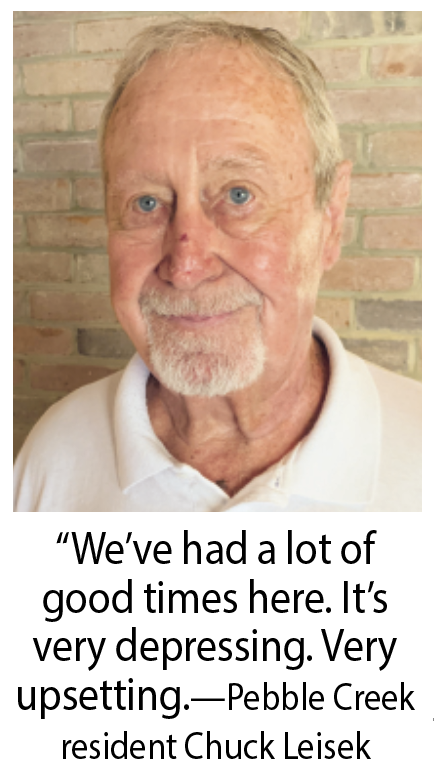
“We had a lot of good times here,” Leisek says. “It’s very depressing. Very upsetting.”

For Rich, who remembers the many Mother’s Day banquets he attended at the club, July 31 will mark the end of an era.

 â€œThe golf course is part of the heritage of this community,” he says. “It’s sad to see it go.”

Teen’s Passion Is Making Old Typewriters New Again

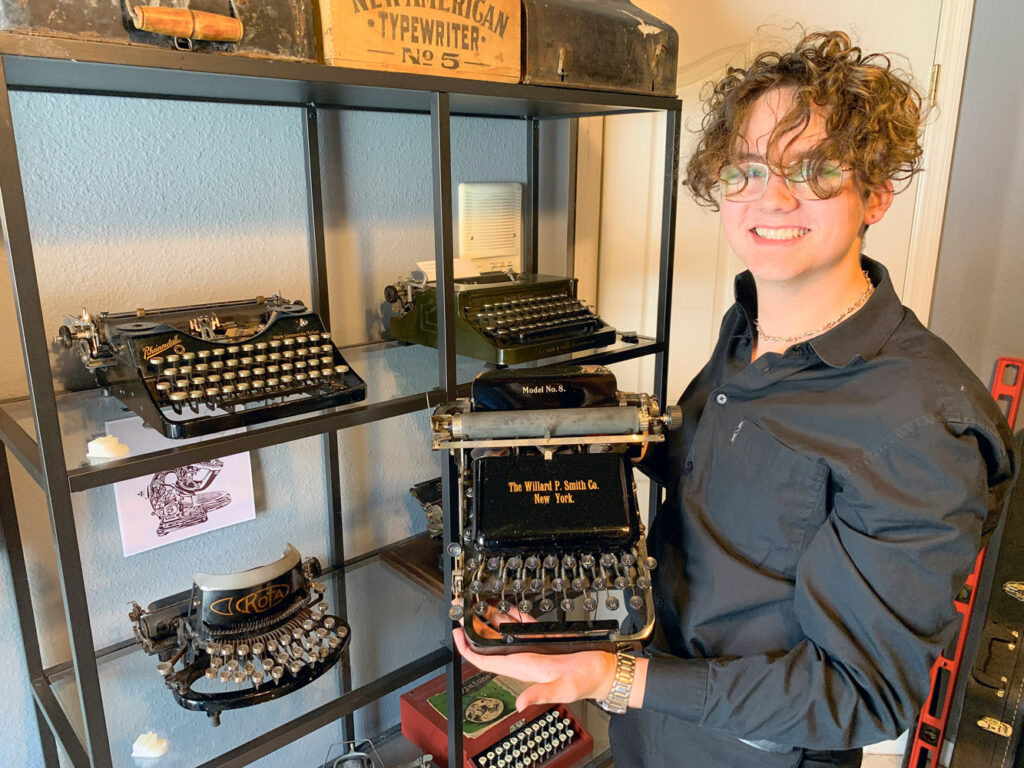
This 1914 Willard P. Smith Co. typewriter may only be worth $2,000, but Armstrong says it would take 500 times more than that for him to give it up, as it means the most to him. (Photo: John C. Cotey)

Like most kids his age, 16-year-old Jack Armstrong can sit in front of a keyboard for hours on end, expertly manipulating the keys with his fingers to get the desired result.

There is one major difference, however. Instead of doing so in front of a computer, Armstrong is sitting in front of an actual typewriter, which are sometimes 100 years older than he is.

Whether it’s an 1880s Caligraph 2, a 1907 Handler or a 1914 Annell, Armstrong takes great delight in dissecting these machines from another time and restoring them to their original working condition, which he then sells, trades or displays on a shelf in his bedroom.

“It’s a passion,” he says of his craftsmanship. “I just love it.”

Armstrong is a rarity in the world of typewriter collectors and repairs, due to his age, but he is far from alone. He estimates that there are roughly 5,000-6,000 typewriter enthusiasts across the country who gather at small conventions and actively collect, trade and sell machines that may be outdated, but still stoke a deep love and appreciation from their admirers.

Armstrong has loved typewriters since he was a young kid, when his mother Rebecca would drag him with her on her Saturday afternoon antiquing expeditions.

Always a mechanical sort with a knack for taking things apart to see how they work, Armstrong was always drawn to the old typewriters he would see, with so many gears and type bars. 

He was 12 when he asked for one for Christmas, and his parents bought him a 1949 Royal. It needed repairs, so he found some tips on YouTube and, an hour later, the Royal was back in service.

“I was able to take this old antique that didn’t work and make it like new,” Armstrong says. “I got addicted to that, and it’s been snowballing ever since.”

An online high school student who is practically on the computer 24/7, Armstrong says he finds the tactile experience and ability to disconnect while he types refreshing and necessary. He types and mails 3-4 letters a week to friends and other collectors.

And Armstrong has turned his passion into a business— the Tampa Typewriter Co. People from around the world now send him their typewriters, paying — and praying — for a miracle restoration.

He says he made $20 on his first repair job, though that same job would cost $100 now. His slogan: “I can repair any typewriter from 1880 to 1980.”

“It just clicked at that moment that I’ve tapped into a niche,” Armstrong says. “I can turn this into a genuine business.” 

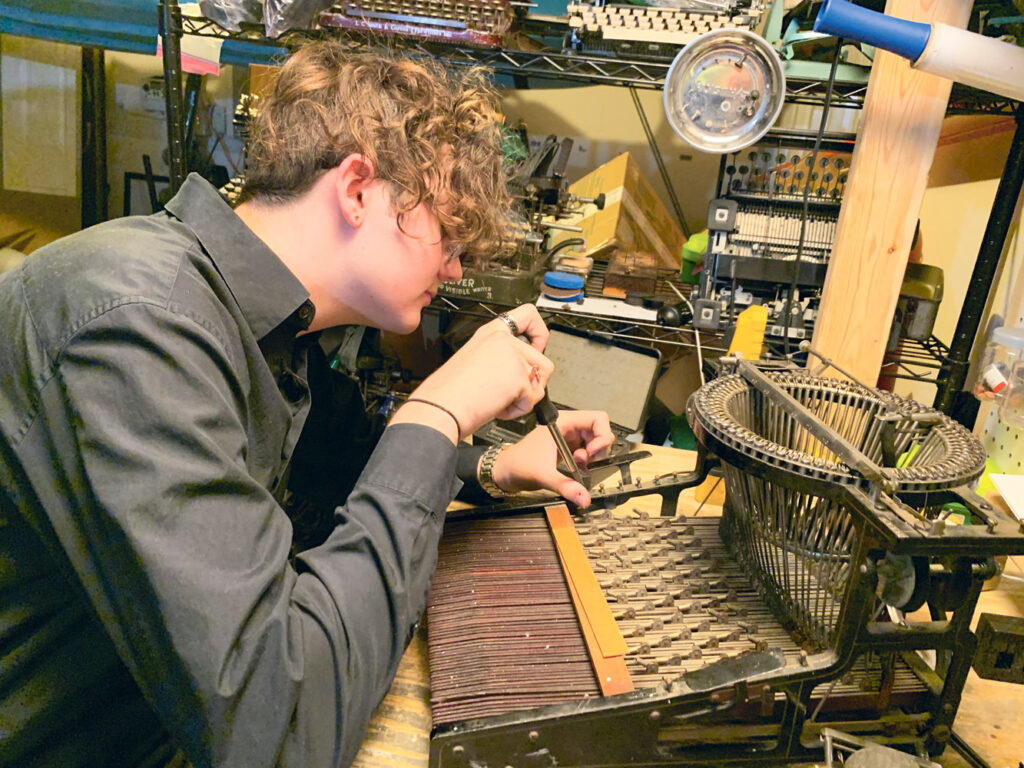
Jack Armstrong works on a typewriter in his garage workshop.

While others may just paint or spruce up older typewriters for customers who want a display piece, Armstrong says he tries to keep the original finish, even if that means a good helping of elbow grease. He will source the parts and replace things like the felt soundproofing, the rubber feet and everything in between.

“What I focus on is making them work,” he says. “I make them as nice as possible, and as new as possible.”

That means zero short cuts, which might include polishing a part of the typewriter that you will never see again. “I shine it up to a mirror finish, even though you won’t see it unless you take the machine apart.”

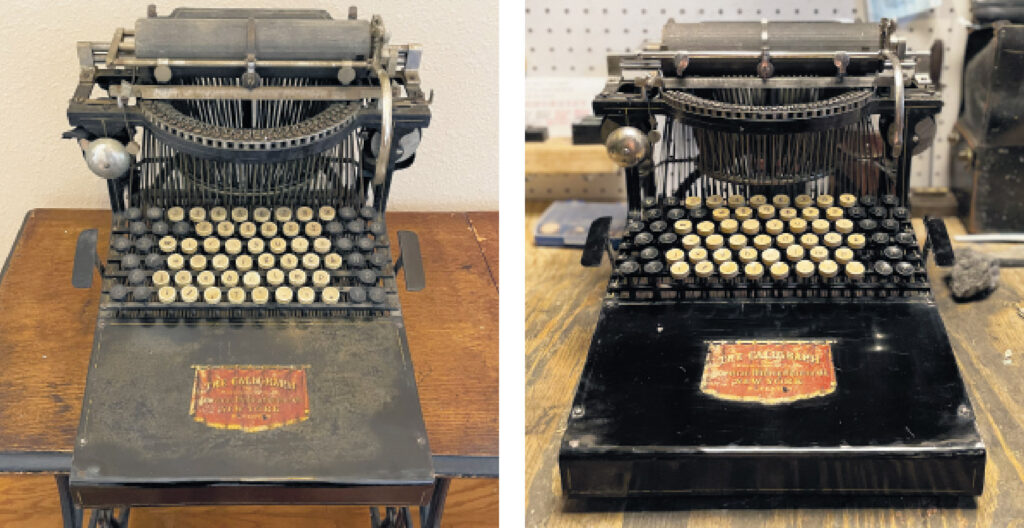
Armstrong’s latest effort was restoring an 1890 Caligraph No. 2  with a matching table. He put in more than 25 hours on the project, and has it listed for $2,000 on tampatypewriter.com. He wouldn’t hate keeping it as his own, either.

So Many Stories…

In his Wesley Chapel home, which includes a workshop in his garage, Armstrong has roughly 100 typewriters — 80 are his, and the other 20 he is repairing.

Typewriters that still work are rare. Of the 100 or so he says he has purchased via eBay over the years, only three arrived without needing anything more than a new ribbon.

For Jack Armstrong (top) restoring typewriters like the 1890 Caligraph No. 2 (above) is a passion that he has turned into a successful business.

He’s always looking. The one typewriter he would like to own? A Commercial Visible 6, a sleek silver machine with a gold decal that uses a type wheel that can be switched with another to change the font. 

It originally sold for $50 in 1898. Armstrong says only 35 are known to still exist.

“It’s one of the most beautiful typewriters ever produced,” Armstrong says. 

His most valuable typewriter is a Willard P. Smith Co. Armstrong says everything he has can be had for a price, but the Willard P. Smith would require a hefty bounty.

He won the typewriter in an auction on eBay, bribing other bidders to bow out. It cost him $800 total.

“No typewriter has ever sold for over a million dollars. But, I would need over a million dollars (to sell the Willard P. Smith),” Armstrong says. “It’s just too special to me.”

Armstrong’s prized possession, however, is an Armstrong typewriter, which he wanted because of the shared name. There are only 14 in existence, and he owns two of them. 

“They are my obsession,” he says, and they share a shelf with the Willard P. Smith in his room, which he refers to as his own personal typewriter museum.

When it comes to actual museums, Armstrong will soon have some of his own handiwork on display in one. A few typewriters that he restored for collectors Mark and Christina Albrecht of Bradenton were bought as part of a larger collection for a soon-to-be-built museum in Dubai, “which is pretty cool,” Armstrong says.

Every typewriter in his room has a story, and Armstrong revels in telling them. There’s the Type-a-Tune, a 1949 machine used to teach typing that also plays music, and he was offered $800 just for the instructional book alone.

A Simplex typewriter has attracted offers of more than $5,000, and a Vogue Royal with a sans serif typeface will sell for roughly $3,500. A rusty Annell is one of only 11 known to exist and has a pharmaceutical keyboard, as well as a sans serif typeface, making it even rarer, while his Mignon Model 2B has a Blackletter typeface called Fraktur. The typewriter was produced during a time when the Fraktur typeface was obsolete and not used, he says.

Thanks to some recent media exposure, Tampa Typewriter Co. is growing. Armstrong has restored nearly 250 typewriters, and as word of his dedication and prowess spreads, more business keeps coming his way. He has made more than $50,000 in sales to date, and says he would one day like to open a physical location.

Typewriters themselves may be obsolete, but this Wesley Chapel teenager is working hard to keep them alive.

“I’m 16, and I think people like the idea of this young gun working on these old machines,” Armstrong says. “It’s an unmatched level of work, and I just have this insane passion for it that most people don’t.”

For typewriter repairs, refurbs and resales, or just to check out some of the many collectibles Armstrong has repaired, visit TampaTypewriter.com, send an email to Tampatypewriter@gmail.com or call (813) 992-9799.

Meadow Pointe Blvd. Connection To New Tampa On The Way

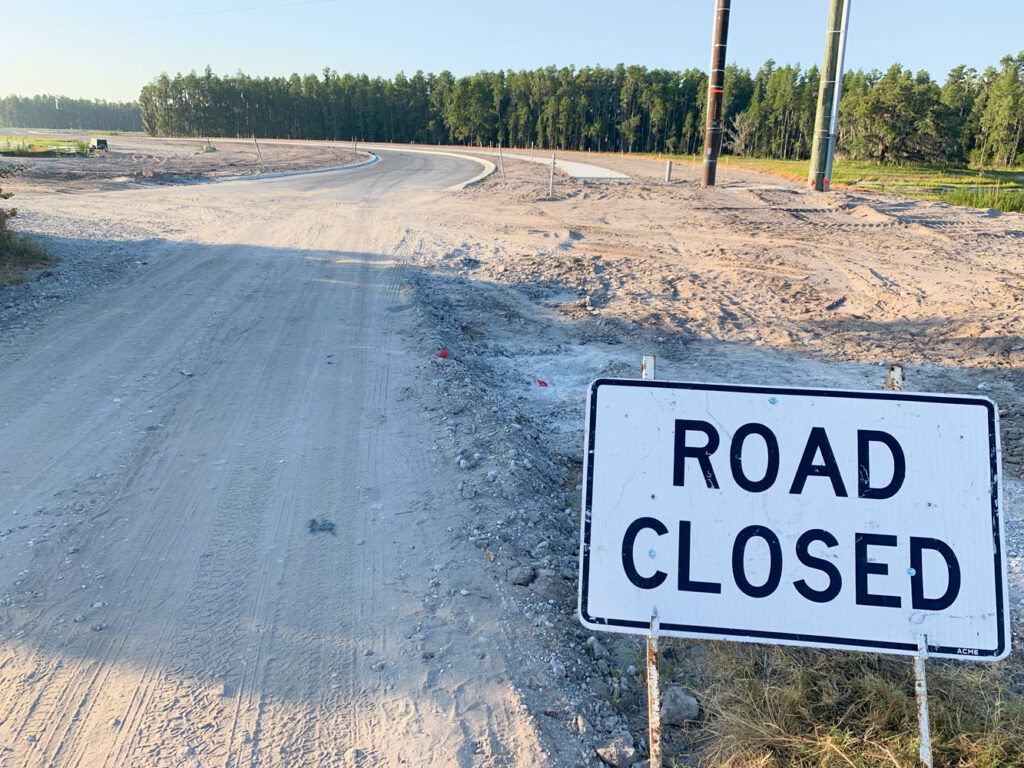
The connection between Meadow Pointe Blvd. and K-Bar Ranch Pkwy. is currently under construction and could be completed by the end of 2021. (Photo: John C. Cotey)

After years of debate over connecting Mansfield Blvd. in Wesley Chapel to Kinnan St. in New Tampa for through traffic, the consolation prize (for those who unsuccessfully fought for that connection) could be completed by the end of this year.

MI Homes, which is developing New Tampa’s K-Bar Ranch community, located directly to the south of Meadow Pointe, has targeted Dec. 31 as a completion date for the K-Bar Ranch Pkwy. connection to Meadow Pointe Blvd., opening up traffic in both directions.

Although the Pasco County side of the connection is completed, there are still some permitting issues to resolve that could stretch that completion date into 2022, but the goal is sometime this year. 

The Meadow Pointe Blvd. connection will be the only northbound way out of K-Bar Ranch or southbound way into K-Bar Ranch (other than Morris Bridge Rd.) when K-Bar Ranch Pkwy. is completed.

The roadway is currently under construction. About 100 feet of dirt road separate the southern end of Meadow Pointe Blvd. and the connector, which will lead to K-Bar Ranch Pkwy.

After the debate over Kinnan-Mansfield intensified in 2018, and after years of negotiating with Hillsborough County, Pasco County commissioned a study that recommended connecting those two roads for emergency use only. A gate that can only be accessed by emergency response vehicles is supposed to be keeping motorists from crossing the Pasco and Hillsborough county lines (although we reported in a previous issue vehicles have been bypassing the gate).

However, the study did recommend instead making a connection at the unfinished Meadow Pointe Blvd., as well as at Wyndfields Blvd. further to the east.

The Pasco County Metropolitan Planning Organization (MPO) also conducted a Connections Survey, and 67 percent of approximately 1,200 residents who voted made the connection to Meadow Pointe Blvd. the No. 1 choice.

One of the primary arguments against Kinnan-Mansfield, but for Meadow Pointe Blvd, made by District 2 Pasco County Commissioner Mike Moore and others, was the ability of each road to handle the additional traffic — the Roadways Report suggested it could add as many as 4,000 vehicles — from Hillsborough County.

Mansfield Blvd. is a two-lane road as is Meadow Pointe Blvd. (though in our last print edition we said it was four lanes, our apologies) and connecting to New Tampa via Meadow Pointe Blvd. instead of Mansfield Blvd. was the “most sensible choice,” according to District 5 commissioner Jack Mariano.

K-Bar Ranch Pkwy. is being constructed in segments and, once each road segment is completed, it will permit the developers to build more homes in that area. 

Segment C, starting at the Kinnan St. entrance, is currently completed. Segment D, which is partially completed, will connect to the Meadow Pointe Blvd. extension, which also is under construction.