Tampa Palms Blvd. Repaving In Line For A Budget Boost

When City of Tampa Mayor Jane Castor presented her $1.8-billion fiscal year 2022 budget to the Tampa City Council on August 5, it did not include any money for one of Council member Luis Viera’s sought-after projects — the repaving of Tampa Palms Blvd.

Viera, who represents District 7 (which includes most of North Tampa and all of incorporated New Tampa), was crestfallen. But, while he understood some of the budget constraints, he didn’t give up hope.

With the urging of community activists and Tampa Palms residents — many of them the same folks who fought for the funding for the New Tampa Recreation Center (NTRC) a few years ago — as well as plenty of Viera’s own door pounding, Mayor Castor announced on August 24 that an additional $3.3 million would be added to the budget to repave and rejuvenate Tampa Palms Blvd.’s south loop.

“That is a really, really, really big thing,” Viera says. “It’s a big win for our area.”

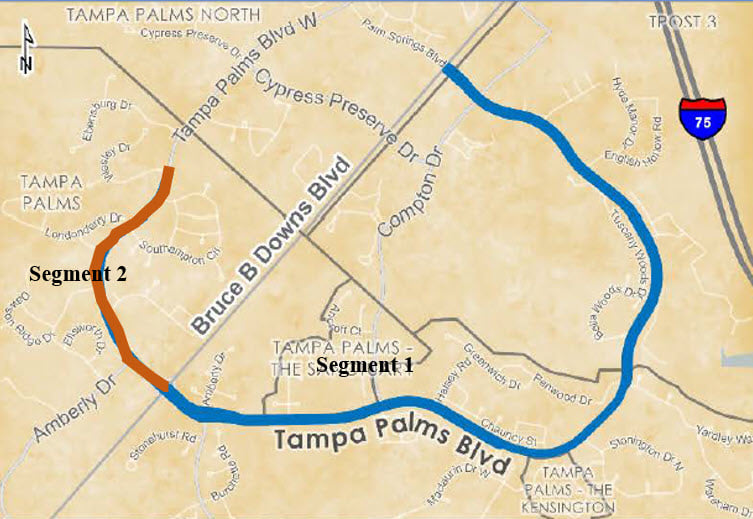
For the south loop, or segment 1, the price tag is $2.3 million. The north loop, which runs from Bruce B. Downs (BBD) Blvd. to Ebensburg Dr., will cost is $1 million.

The final public meeting on the budget is scheduled for Tuesday, September 28.
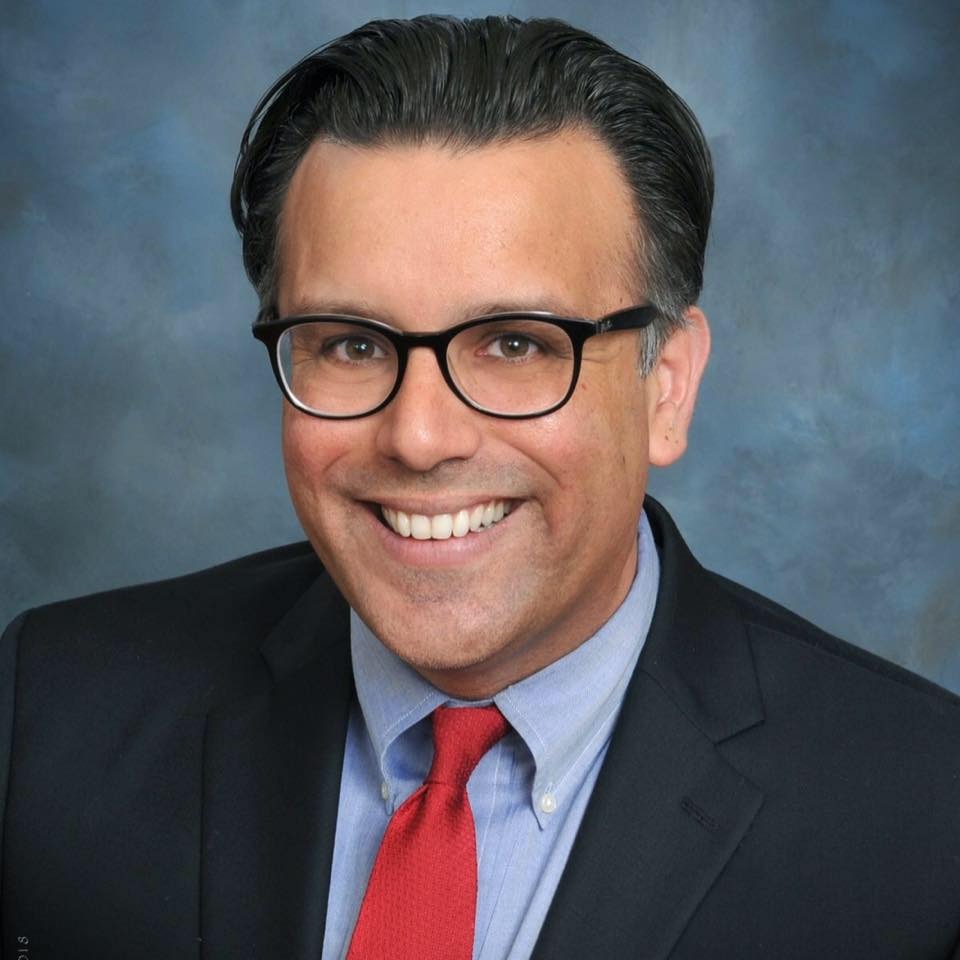
Luis Viera

Money for the Tampa Palms Blvd. repaving was originally expected to come from the $500 million raised via the All for Transportation one-cent surtax. However, the penny surtax was struck down by the Florida Supreme Court in February, ironically a day after Viera met with Tampa Palms residents at a town hall.

“I promised the residents that night that if the penny sales tax failed that I would fight really hard for it in this year’s budget,” Viera said. “Flipping it into the budget when it wasn’t originally there was a big ask.”

 Viera pushed for the money, with an assist from local activists — who made phone calls and sent emails to Mayor Castor.

One Tampa Palms resident, Mike Marlowe, wrote to Castor on Aug. 21 that his community had been promised repaving of the road “which now looks like a quilt instead of a roadway” — last year. He added that in 22 years of living in New Tampa, he has “never seen the road this bad.”

A week later, Brandie Miklus, the city’s infrastructure and mobility program coordinator, responded to Marlowe with the good news — that the city’s mobility department was moving forward with resurfacing plans.

In her address to the City Council, Castor seemed determined not to let the Florida Supreme Court decision freeze her efforts to improve the city’s infrastructure needs.

“I won’t sugar coat how big a blow it was to lose the All for Transportation money that was so overwhelmingly supported by our constituents,” Mayor Castor said. “I will provide a path to forge ahead on our own, one that includes a citywide mobility plan.”

Castor’s budget includes $22 million for road safety and maintenance. “We’ve all heard the calls from our community to make our streets, sidewalks and trails safe and to improve our road maintenance,” she said.

A refreshed Tampa Palms Blvd., which Viera says is presently “a failed road,” is currently in the design phase (the money for which was in last year’s budget), with actual construction occurring in two phases and expected to begin within the next year. 

According to Miklus, it will include resurfacing, multimodal and safety improvements, traffic calming, enhanced crosswalks with Rectangular Rapid Flashing Beacons (RRFBs) and separated bicycle lanes.

After years of complaints about being ignored by the City of Tampa, this could be a year in which New Tampa’s cup runneth over, as a number of New Tampa projects are in the city’s plans to receive money. In fact, after the first public hearing on Sept. 13, Viera was pleased enough to say this year’s budget could be the best for New Tampa in recent memory, if not ever.

The budget has $1.67 million scheduled for the long-awaitd inclusive playground, which will have play elements, wheelchair access and autism-friendly features, to be built near the New Tampa Recreation Center (NTRC).

The FY 2022 budget also includes $650,000 to begin the planning and design of  Tampa Fire Rescue Station No. 24, which will be located in the K-Bar Ranch area. Another $11.5 million is expected to be allocated in the FY 2023 budget for construction of what would be New Tampa’s fifth fire station.

Until then, Viera says he also is working on the construction of a possible road off Morris Bridge Rd. that would allow for quicker access into K-Bar Ranch to help reduce some of the response times of the two fire stations on Cross Creek Blvd., both of which rank among the slowest in the entire Tampa Bay area.

Viera also said the budget includes $50,000 to design New Tampa Blvd.’s future renovation ($50,000), hopefully leading to its repaving in the next year or two. Like Tampa Palms Blvd., New Tampa Blvd. was initially slated for improvements using All For Transportation money. 

As backers of the NTRC know, just because the money is in the budget for a project doesn’t mean it can’t be moved or taken out. 

The budget has to be approved by Friday, October 1.

Planet Fitness Heading To The Grove

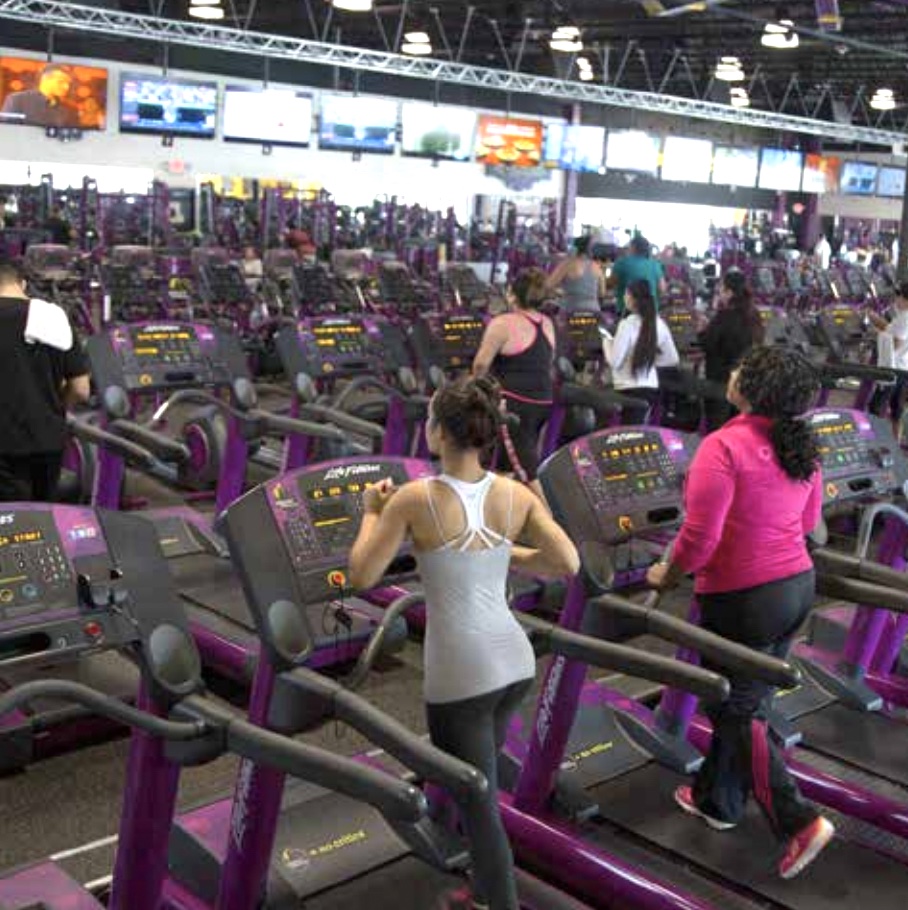
Planet Fitness, which has more than 2,000 locations across the U.S., is adding another at The Grove at Wesley Chapel.

Planet Fitness will take over the 25,000-sq.-ft. space formerly occupied by Babies “R” Us. Back in May, Grove developer Mark Gold announced that the other half of the space, which was formerly occupied by Toys “R” Us, was being leased to a combined Bealls Outlet/Home Centric store.

Billing itself as a “Judgment Free Zone,” Planet Fitness offers free fitness training, a variety of different memberships, and an array of fitness machines for members to use. Some memberships alloow you to use any Planet Fitness location in the country.  

The fitness chain currently has eight locations in Hillsborough County, including the nearest ones on E. Bearss Ave. and another on E. Fowler Ave., as well as a handful of locations in Pinellas County. Its Pasco locations are in Zephyrhills, New Port Richey and Holiday.

Organic Safe Lawns Takes Healthier Approach To Green and Healthy Lawns!

Organic Safe Lawns will keep your grass and plants looking green and healthy using only products that are safe for you and your family.

Nick Pipitone has used other lawn service companies, and even tried to keep his yard green and healthy himself, but he says he was looking for a safer, more environmentally sound option to keep his lawn, as well as his beloved English bulldog, chemical-free.

That’s why, about five years ago, Pipitone decided to hire Jim Schanstra and his Organic Safe Lawns to take care of his lawn.

“I gotta tell you, there is stuff out there, the stuff they (Organic Safe Lawns) uses, that greens up the grass real good,” says Pipitone, a Wesley Chapel resident. “You don’t need all the chemicals. That’s what I was looking for…and they have done a great job.”

Keeping lawns green, free of pests and healthy is Organic Safe Lawns’ specialty. Whether it’s because your kids play in the grass or your pets like to run around in the yard, making sure they stay danger-free is a big deal for Schanstra.

In fact, he says it’s why he started his business in the first place. 

Schanstra suspects that exposure to DDT (Dichlorodiphenyltrichloroethane) as a youngster had something to do with his wife Julie developing non-Hodgkin’s large cell lymphoma cancer. DDT was used in the U.S. in agriculture as a pesticide and as a household insecticide in the 1940s and 1950s, only to be banned in 1973.

Julie won her fight against cancer, with help from the Mayo Clinic in Rochester, MN, but it was a constant reminder to Schanstra of the potential effects of chemicals used in the environment.

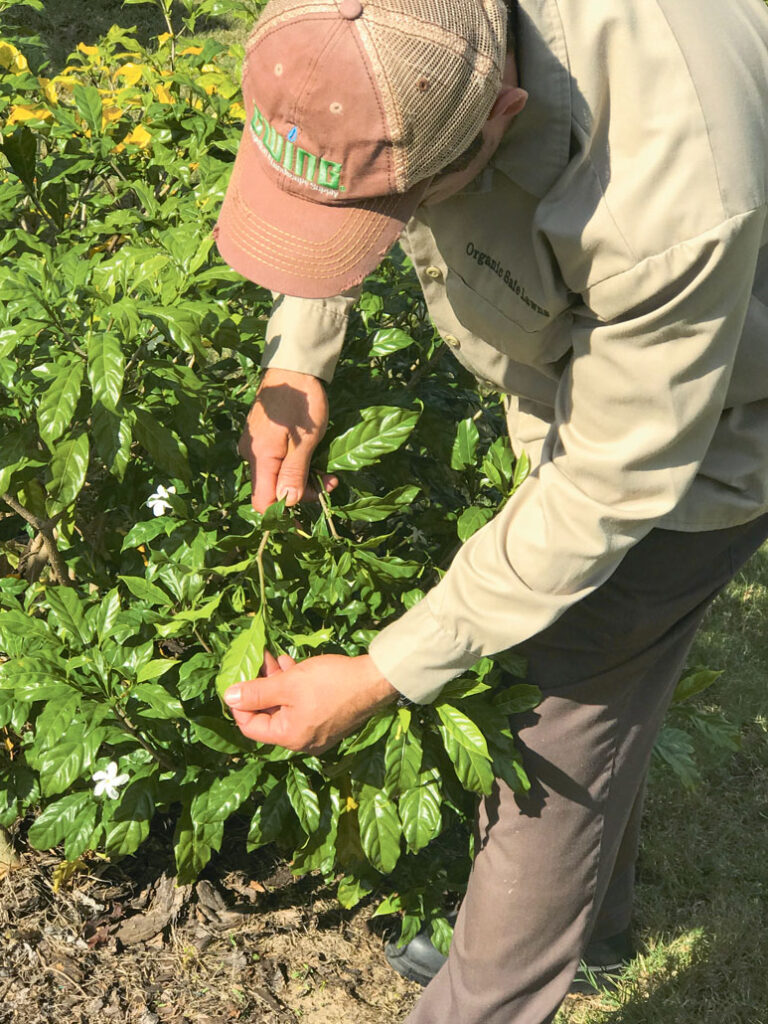
Jim Schanstra says his Organic Safe Lawns technicians go beyond just fertilizing grass — they will check your plants for health and your irrigation system to make sure it’s properly functioning.

In 2006, just before a scheduled sales meeting with an organic fertilizer manufacturer, Schanstra says that one of the associates said that he’d read a recent news article that claimed Florida was using more chemical-based fertilizers and pesticides on residential properties than the rest of the United States combined.

“That statement hit me like a lightning bolt,” Schanstra says. “It was in that moment that I decided to do something about it. That was the conception of Organic Safe Lawns.”

In January of 2010, Organic Safe Lawns, Inc., became a Florida corporation.

“When I started out, that was my big, hard sell: how do I tell people we can really do it?,” he says. “If we can grow fruits and vegetables organically, why can’t we grow grass that way? That was the concept in my mind.”

Schanstra works closely with one of the top organic fertilizer manufacturers and pioneers of the industry. The products — fertilizers, pesticides and herbicides — used by Schanstra and Organic Safe Lawns are certified by the Organic Materials Review Institute or OMRI, an independent testing company that certifies organic products. He says the products use a proven technology that was originally designed for fruits and vegetables, although Organic Safe Lawns deals strictly with lawns and ornamental plants.

Trademarked Products 

Organic Safe Lawns, Inc., has now designed and manufactured more than 30 different organic fertilizer products of its own that are owned and trademarked by the corporation.

While most typical fertilizers are made up of synthesized chemicals, Schanstra says the products he uses are mostly mined from the shale level of the earth, where healthier and more acidic soil exists. There are richer supplies of micronutrients, enzymes and bacteria found in this soil than in other fertilizers.

“There’s no downside with our fertilizers,” Schanstra says.

Other lawn companies also use mined products, but they are converted into a granular form — those little balls you see in your grass after the lawn company has stopped by — by incorporating binders and fillers to keep their shape. That’s where Schanstra says carcinogens are often entered into the mixture.

“Once those little balls dissolve, those chemicals end up running off into our aquifers, which are sometimes only a foot or two deep below, and can get into our water, streams and ponds and cause algae blooms,” Schanstra says.

Typical fertilizers come in two types of encapsulation. The first is water-based, meaning the fertilizer is released by coming into contact with water. The second is a polymer, or plastic encapsulation. Its releasing agent is heat. 

Schanstra says those forms of release may be fine for more moderate northern climates. However, Florida’s famously erratic weather — sometimes too much rain and often too much heat — can sometimes cause the release of a month’s worth of fertilizer in a week or even a day.

Using chemical fertilizers and pesticides may lead to greener lawns — due to their higher concentrations of nitrogen — but they also can lead to the same typical lawn problems so common here in Florida. These problems include fungus and disease, chinch bugs, webworms and mole crickets, all of which are often found in high-nitrogen soils.

“We found that by reducing the nitrogen level (in the products Organic Safe Lawns uses), we almost eliminate fungus and pests,” Schanstra says. “The cheapest way to get green grass is with high-nitrogen fertilizer.”

Schanstra also says that high-nitrogen fertilizers push top growth and weaken root structure. Over time, the lawn’s root system can’t sustain the foliage.

“A weakened root structure is like candy to bugs,” Schanstra says. “After using our treatment, you’ll see the bugs moving over into the neighbor’s yard.”

Chemical-based fertilizers are designed to be absorbed through the leaf (called foliar absorption). All of the organic fertilizers that Schanstra uses are absorbed through the roots. And, he adds, they are all water-soluble liquids that are safe for pets, wildlife and humans.

“When we apply organic fertilizers, we’re spraying that into the soil,” he says. “The only way the plant absorbs it is into the root system. My grass will grow a little bit slower, but my roots will be stronger.”

Top-coated lawns treated with synthetic pesticides and herbicides puts people and pets in danger. Why do you think people applying pesticides wear rubber boots? Because, Schanstra says, they don’t want to get any of the application on them.

In that case, he adds, why would you want you, your children or your pets to track that into your house?

“The dog goes over into the neighbor’s yard to pee, and they’re chewing on their paws when they get back,” Schanstra says. “Kids crawl around and play on the grass and absorb it when they walk in it.”

The chemical herbicide Atrazine is still used widely across the U.S. and Florida to prevent pre- and post-emergence of broadleaf weeds, especially during the summer. It was found by the Agency for Toxic Substances and Diseases (ATSDR) to have adverse effects on the endocrine systems of mammals and that it likely also contributes to some birth defects.

“A lot of lawn companies will blanket your yard with Atrazine,” Schanstra says. “It costs just five dollars for a 600-gallon mix. They use it because it’s cheap.”’

But, Organic Safe Lawns’ technicians offer a safer chemical solution for weed control, which is spot-treated throughout the year. It isn’t as cheap as Atrazine, he says, but generally, the stronger root system his lawns have developed lead to fewer weeds anyway.

“We are about the process and the materials,” Schanstra says, “as opposed to using harmful chemicals with regard to weed control.”

Schanstra says he recommends treatment every 30 days, and that it isn’t any more expensive than hiring the lawn care chains. He said he also works with his customers to ensure they are watering and mowing their lawns correctly — two extremely important ways to keep your lawn in tip-top shape that are often overlooked and under-appreciated.

Organic Safe Lawns, Inc., services homes in Tampa, New Tampa, Wesley Chapel and Land O’ Lakes. For additional information, call (813) 393-9665, email organicsafelawns@verizon.net or visit OrganicSafeLawns.com.

AHCI Introduces New Global Prospects Academy Hockey Director


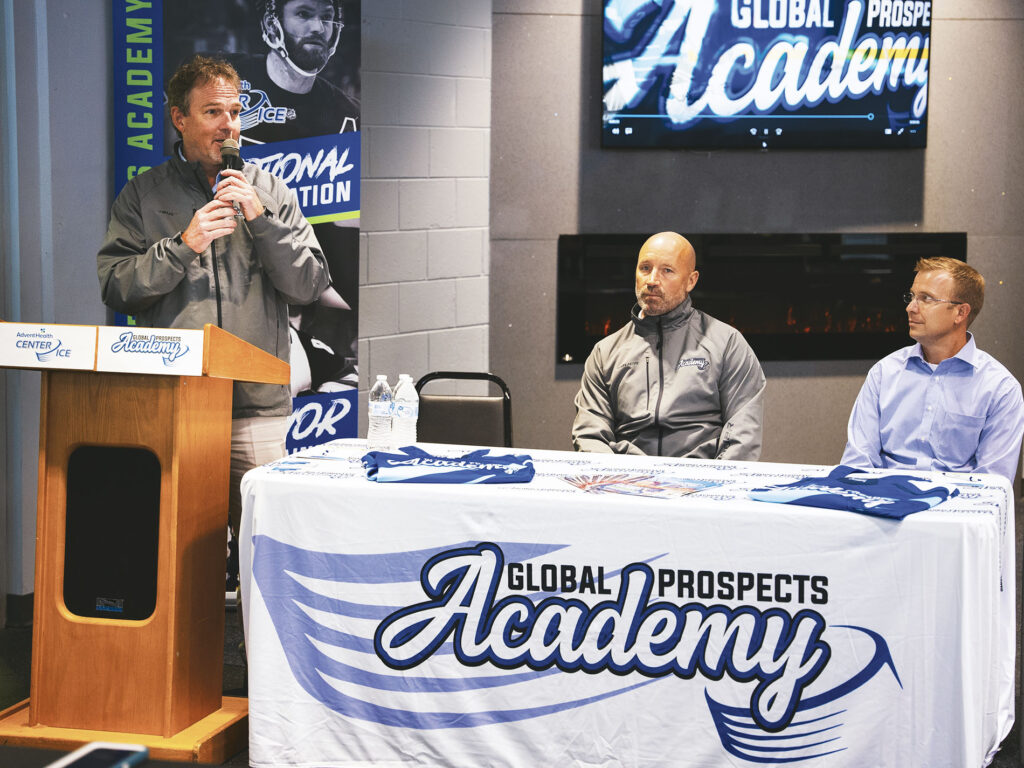
(L.-r.) Gordie Zimmermann of AdventHealth Center Ice, AHCI’s Global Prospects Academy Director of Hockey Glenn Metropolit & Stephen Herr of North Tampa Christian Academy.

If both of your kids played high school ice hockey, as mine did, more than a decade ago, there was no way (or place) locally for kids who were good enough to play travel hockey to play youth or high school hockey at the highest level while also receiving a great education. 

My kids both decided to play hockey, instead of the competitive sports they grew up with, after the Tampa Bay Lightning won their first Stanley Cup championship back in 2004. They weren’t alone, as many outstanding young athletes at that time also either first took up or decided to focus on hockey because of being bananas for the Bolts.

Thirteen years later, the same developers who built the Brandon Ice Sports Forum — where kids from high schools in and near Tampa had been practicing and playing — finally opened Florida Hospital (now AdventHealth) Center Ice (aka AHCI), right here in Wesley Chapel.

The new place was (and still is) a palace for both hockey players and figure skaters, especially when compared with any other ice skating facility in the entire Tampa Bay area — with three NHL-sized rinks, one (larger) international-sized rink and a mini-rink, plus a great pro shop and an actual restaurant. AHCI, the largest skating facility south of New York, even offers curling, a cult favorite Winter Olympics sport.

In 2019, the Lightning were again favored to win the team’s second Stanley Cup at the start of the 2019-20 season, despite a disappointing first-round sweep at the sticks of the Columbus Blue Jackets to close out their 2018-19 campaign, which saw them win the President’s Cup for having the NHL’s best regular-season record. 

Of course, the Covid-19 pandemic shortened that 2019-20 season and caused the entire Cup playoffs to be played in two “bubbles” in Canada, but somehow, the Bolts did prevail and brought Lord Stanley’s chalice home to Tampa. And of course, the Lightning then repeated as Cup champs to end of the 2020-21 season.

It just so happens that 2020-21 also was the first year that AHCI offered its Global Prospects Academy (GPA), combining top-notch hockey training and lots of ice time for 15 young players, as well as a full-fledged private school experience affiliated with North Tampa Christian Academy (NTCA), which is located just three miles from AHCI on County Line Rd. in New Tampa.

AHCI co-owner Gordie Zimmermann hosted a press conference on August 12 to announce the intended expansion of the rink’s GPA program and the hiring of new Academy Director of Hockey, former NHL player Glen Metropolit, whose career included 400 games with six NHL teams (including two games with the Lightning), followed by six years of international experience with top-level European clubs.

 â€œOur goal is to establish an elite hockey program,” Zimmermann said at the media event, “in order to keep them here in Florida before they turn 16 and move up north to Boston or Michigan to play. There haven’t been any programs here with academics and hockey training.” 

Zimmermann also introduced former Lightning star Brian Bradley (who still works for the team) at the event, and admitted that AHCI’s success, “also has to do with the Lightning’s success.” He also said that he expects the rink’s GPA program to double in size this school year (to 30 or more students) and ultimately, to 300 or more — and promised to expand the GPA to include figure skating in the future.

Stephen Herr, the Head of School at NTCA, also spoke at the press conference and said that the school will offer GPA students in-person classes at both NTCA and at the rink (with on-site teaching staff), plus Zoom classes. 

“Our primary goal is the same as Advent Health Center Ice’s goal,” Herr said, “helping students to become people of character and leaders.” For additional information, visit AHCenterIce.com/global-prospects-academy.   

Provisions Coffee & Kitchen Is The First To Open At The KRATE Container Park!

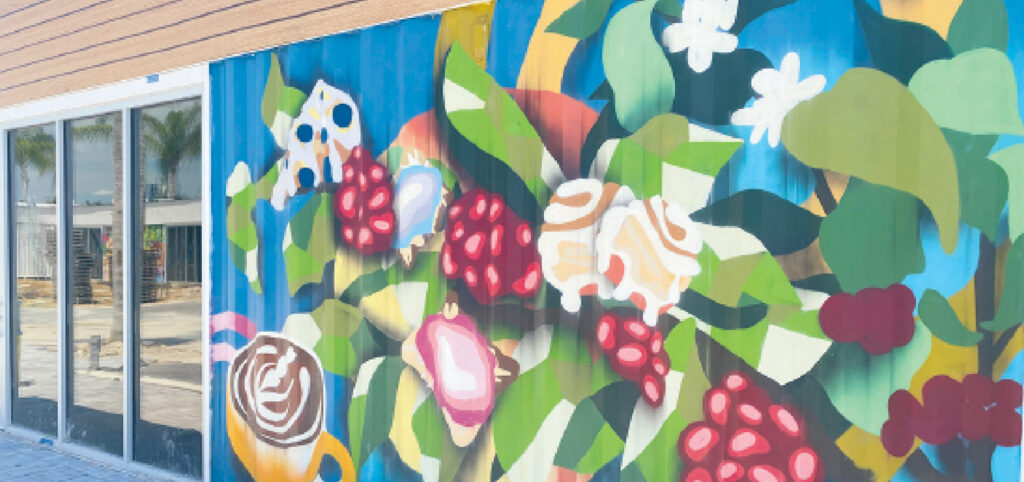
A couple of weeks before we went to press with our Aug. 31 Wesley Chapel issue, the new location of Provisions Coffee & Kitchen (previously Buttermilk Provisions) became the first repurposed shipping container to open in the KRATE container park (at 5862 Goldview Pkwy., #s 102 & 104) at The Grove in Wesley Chapel.

Provisions Coffee & Kitchen opened with a larger menu for breakfast and lunch, a new coffee supplier (MADE Coffee, which is based in St. Petersburg) and tasty regular donuts to replace the gluten-free ones that were so popular at the old location on Bruce B. Downs Blvd. in Wesley Chapel (although there are still some gluten-free goodies, like pumpkin bread).

Owner Dana Morris said that although it’s taken about two years since she signed the lease to get open at KRATE, “Our customers seem to believe it’s been worth the wait.”

Morris also is getting ready to open another Provisions location in the former Seasons Fresh spot in the Palms Connection plaza on E. Bearss Ave. (just west of BBD) and she says the new location also will feature her much-improved, expanded menu.

Sadly, neither she nor a spokesperson for developer Mark Gold knew when the other KRATE containers were likely to open. — GN