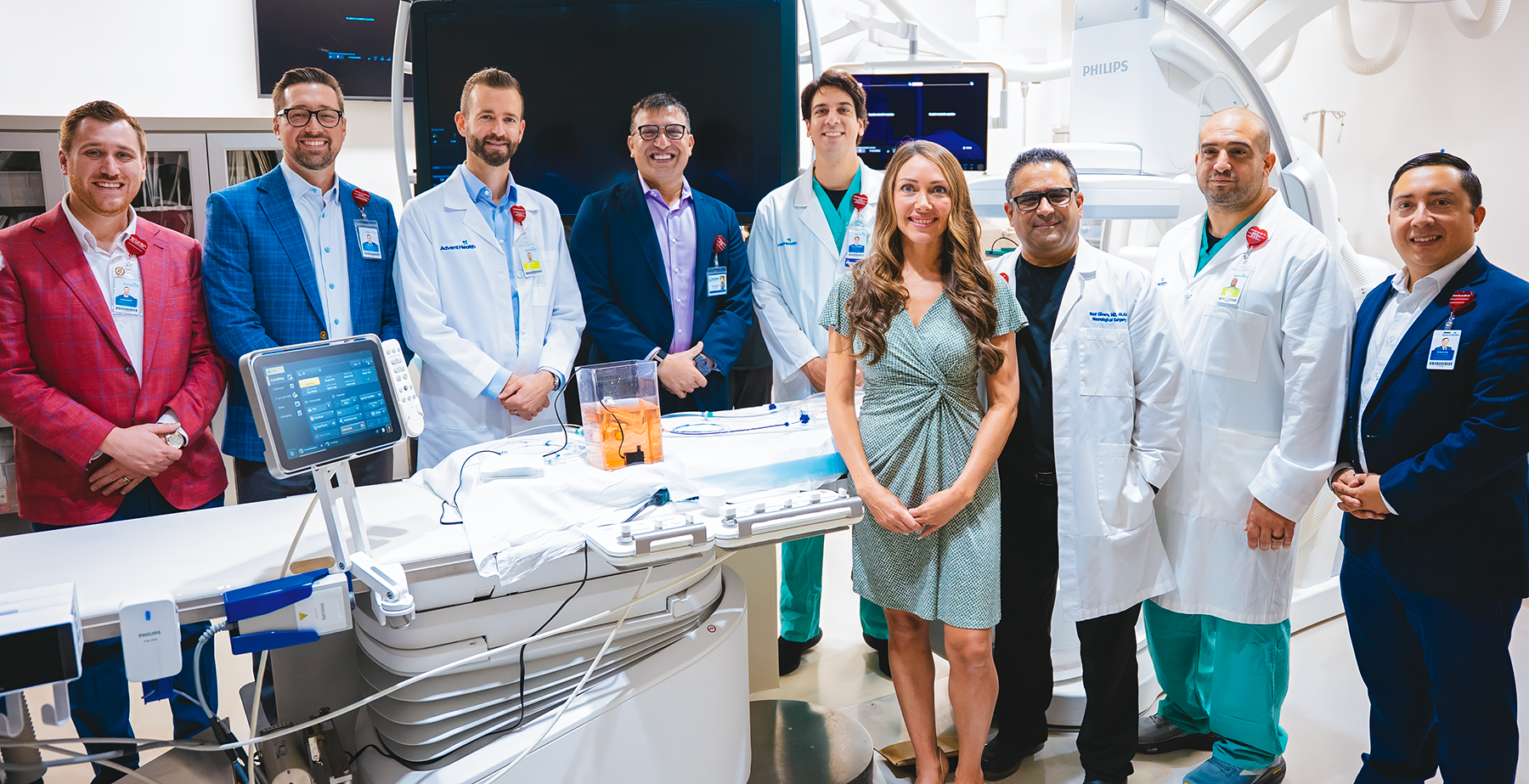

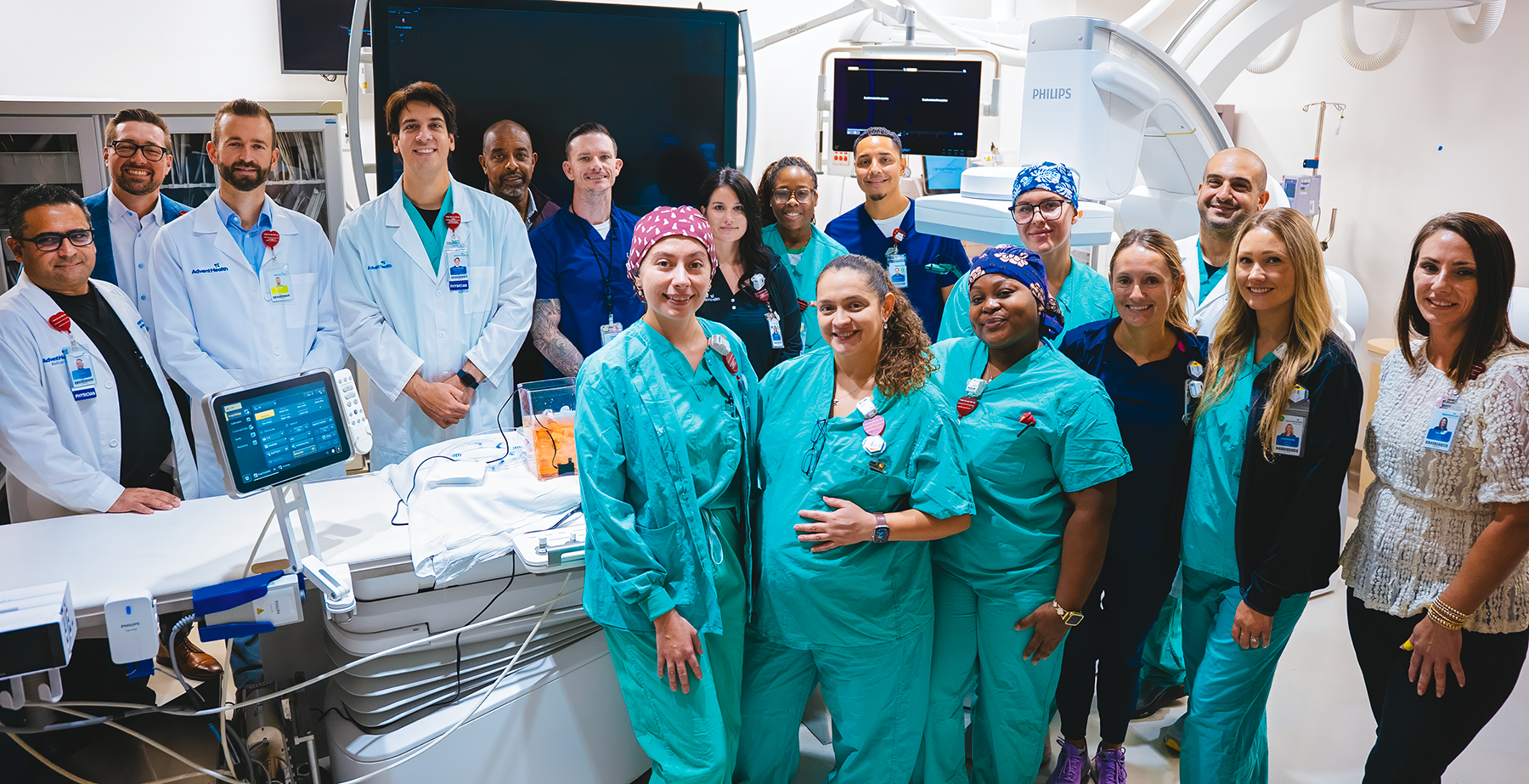
“When strokes happen, minutes matter,” said AdventHealth Wesley Chapel (AHWC) president & CEO Ryan Quattlebaum during the hospital’s packed “Advanced Stroke Intervention Suite” demonstration on Aug. 17. “We know that time equals tissue, brain tissue. That means it’s incredibly important for people to have access to care quickly — and not just any care, but world-class equipment in the hands of world-class, trained physicians and specialists.”
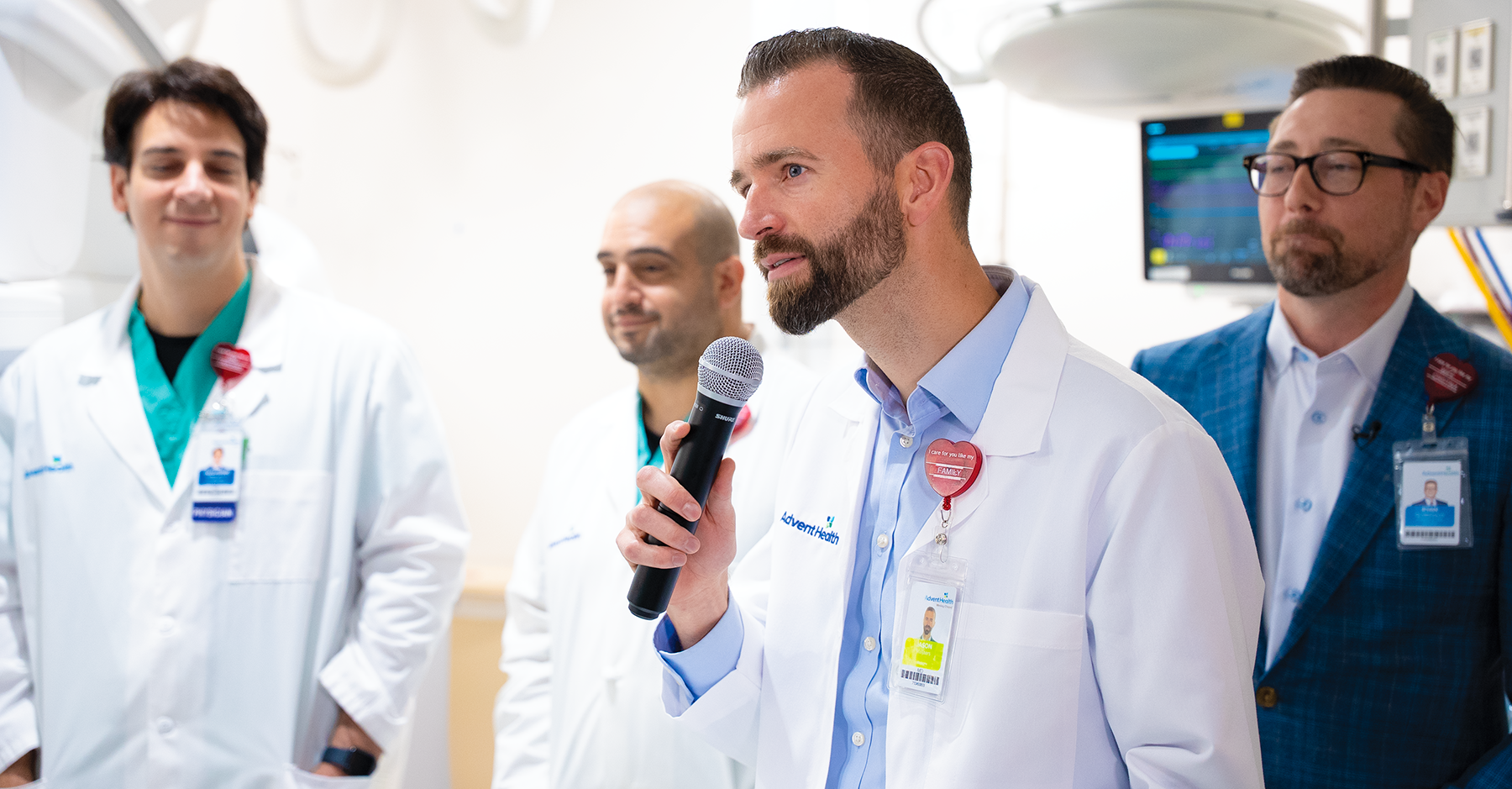
He added, “So today, we’re excited to showcase an advanced look at what stroke care capabilities are available right here in Pasco County. Stroke remains one of the leading causes of both death and disabilities in the United States. Having access to that quality care close to home means that people don’t have to leave [our area] to get that care, so you don’t have to transfer to another hospital to get this specialized stroke care.”
Quattlebaum was joined by three AHWC neurologists — Dr. Jason Maljaar, the medical director of neurology at the hospital, plus Dr. Guilherme Agnoletto and Dr. Nure Khoury, who demonstrated the hospital’s new biplane neurointerventional suite.
AHWC is the first hospital anywhere in Pasco County to be home to this purpose-built machine designed to perform a range of minimally invasive procedures, including mechanical thrombectomies (a procedure that allows physicians to actually remove blood clots from the brain and restore blood flow for patients experiencing the most severe types of ischemic strokes). When this procedure is done quickly, it can improve recovery and reduce the risk of long-term disability, versus relying on clot-busting medications alone.
“That means you can come to AdventHealth Wesley Chapel, and we’ll be able to take care of you,” Quattlebaum said. “Our commitment to excellence was recently recognized by U.S. News & World Report, which named [AHWC] a high-performing hospital for stroke care. This designation reflects the dedication of our physicians, nurses, clinical teams and support staff who work tirelessly every day to fulfill our mission of extending the healing ministry of Christ.”
He added, “As a primary stroke center, [AHWC] continues to strengthen its stroke program through investments in advanced technology, specialized, world-class physicians and evidence-based care.”
Dr. Maljaars said, “This is an exciting day for us here. It’s my privilege to be the stroke medical director here at this hospital. It takes a lot of people to have a program like this and to be able to provide the care that we have and plan to continue to do so.”
He added, “This machine can do a lot of things. One of the things that’s most impactful is reducing the amount of time it takes to treat a patient with a large stroke blood clot stuck in a big area of the brain. If we determine that this is a good case to attempt to pull the blood clot out with catheters, normally that patient would have to transfer to another hospital somewhere that has this technology and staff and everything in place to make that happen.
“But now that we can do that here, we can take these types of patients and take care of them right here, rather than having to transfer them, which cuts down on time — which is the biggest thing in any stroke situation.
“If you take another 30-60 minutes or longer to transfer that patient to another hospital to get that procedure, that can be the difference, quite honestly, between someone who goes home two days later or someone who ends up in a nursing home for the rest of their life.”
Dr. Maljaars also mentioned that the new machine, “also can perform diagnostics and look at arteries in the neck and the brain. We can put stents in, we can fix aneurysms…so, there are a lot of things we can do with this machine.”
He then turned it over to Dr. Khoury and Dr. Agnoletto, the hospital’s neurointerventionalists, to demonstrate how the biplane interventional suite works.
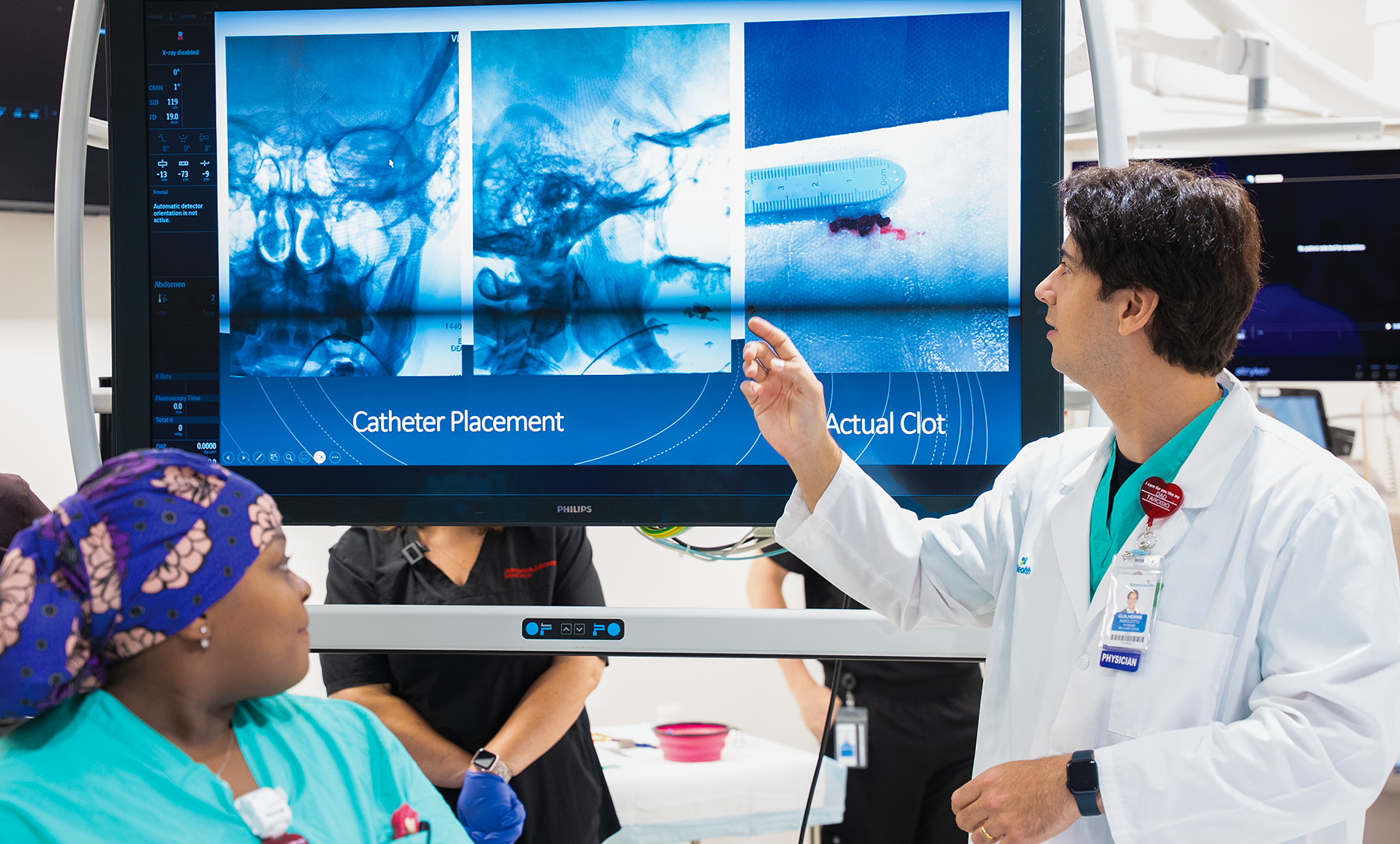
Dr. Khoury, who described himself as a vascular neurologist, said, “I don’t think we can emphasize enough how impactful this procedure is and how it’s changed lives across the globe. We’re lucky to have access to this kind of procedure, to this treatment here, because large strokes in the past were such a large cause of death and disability and now, we really have the opportunity to make those changes and impact more lives.”
Then, Dr. Agnoletto, who also described himself as a vascular neurologist, said, “We think this is a very big day for Pasco County and the families here because we can now offer this top-tier stroke care without them having to leave the community at all.”
He added, “I also wanted to mention that this type of procedure is truly a team effort. More than anything else, I would say it really takes a village — the nurses, techs, anesthesia physicians, technicians, therapists, the institution and the community that support us — today is a celebration of all of you and all of them, just as much as the technology we’re demonstrating here today.”
The Demonstration Itself
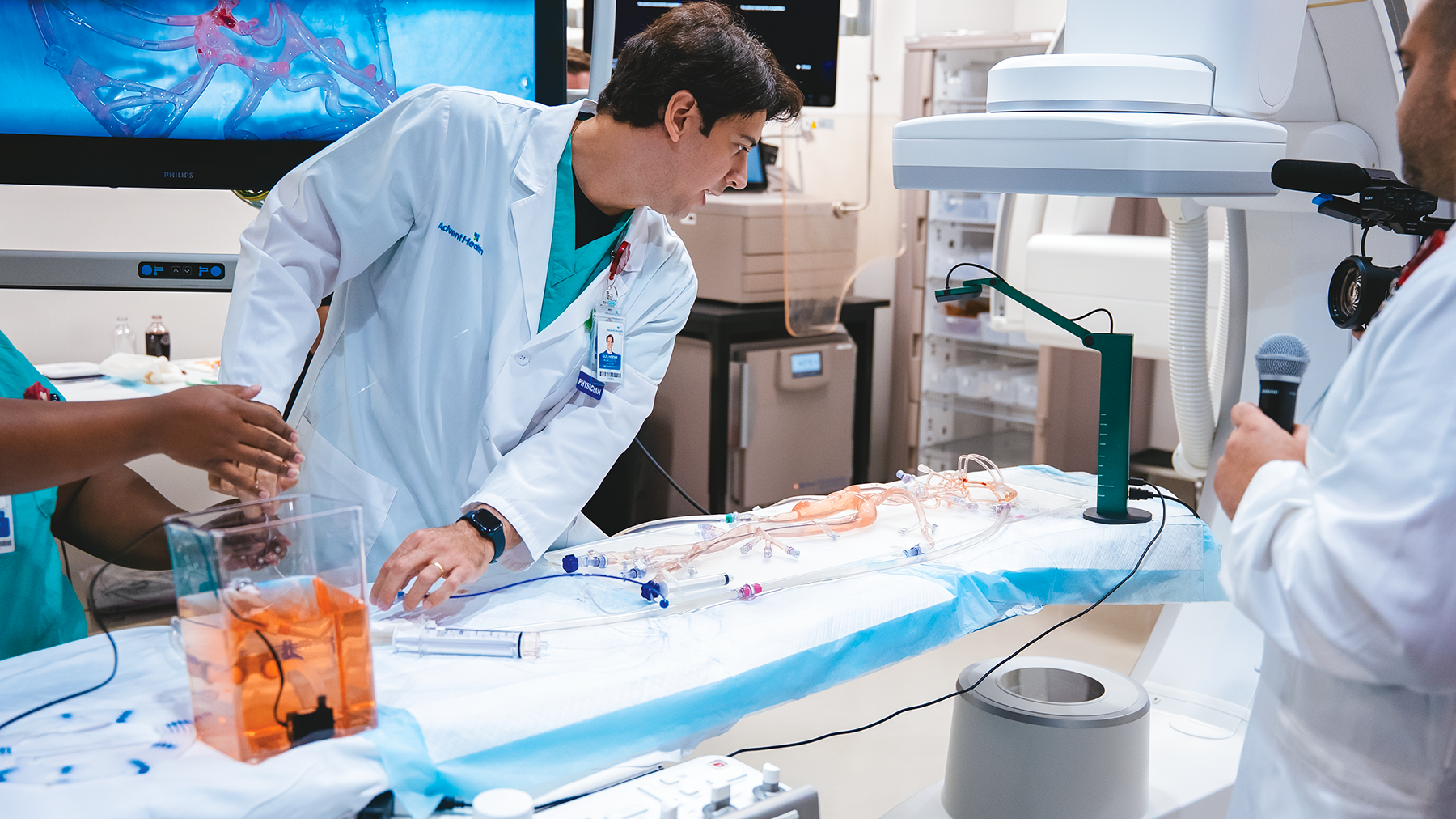
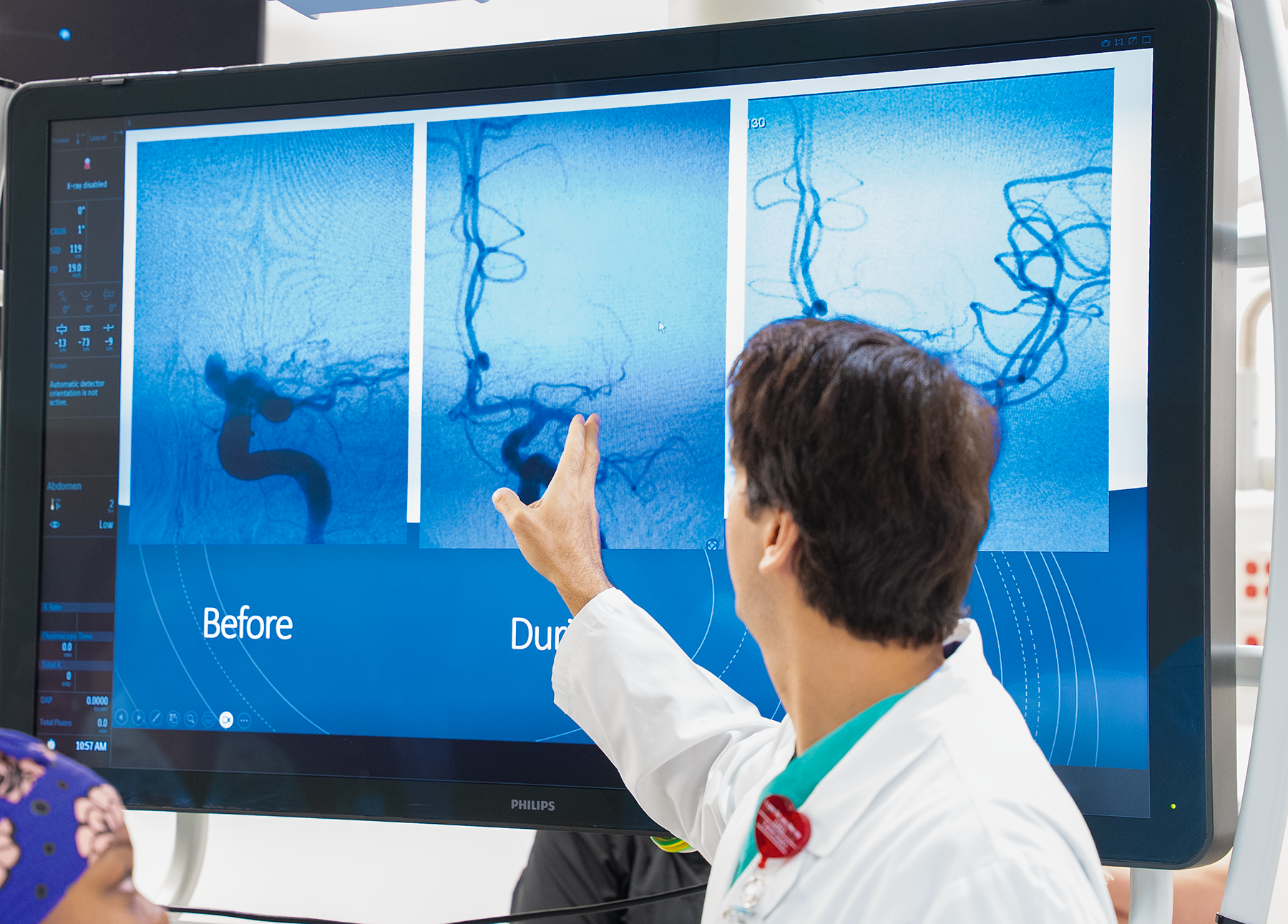
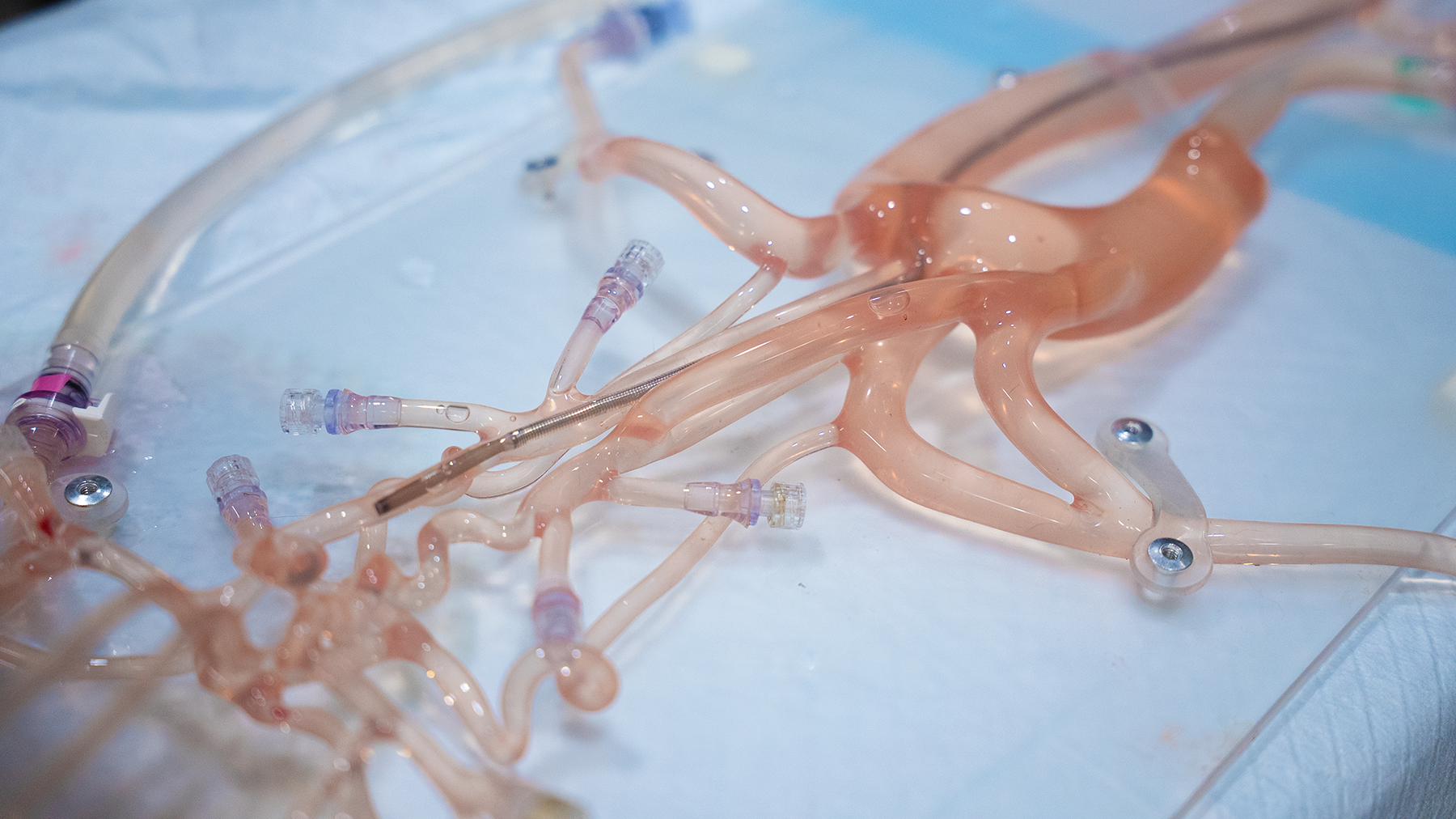
Dr. Agnoletto (photo), noted that “Obviously, we aren’t showing you a real patient, but it is a life-size model of the vessels inside the human body. It’s a large construct of different types of catheters, smaller and larger, and wires that we use to access the brain (through the femoral artery).”
Thanks to the large monitor in this photo, we could all see the large blood clot and watch Dr. Agnoletto guide the catheter to the point of the clot and pull the clot out.
“It looks like a straw,” he said, “but a lot of time, research and technology has gone into these catheters, so we don’t have any issues — they don’t collapse on themselves.”
It was obvious that the demonstration was completely successful, so the hope here is that this is just the first of many successful procedures to clear large blood clot strokes right here in our Wesley Chapel community.
For more information about AdventHealth Wesley Chapel (2600 Bruce B. Downs Blvd.), visit AdventHealth.com, or call (813) 929-5000.