Talking Impact Fees With New North Tampa Bay Chamber Chair Tony Benge

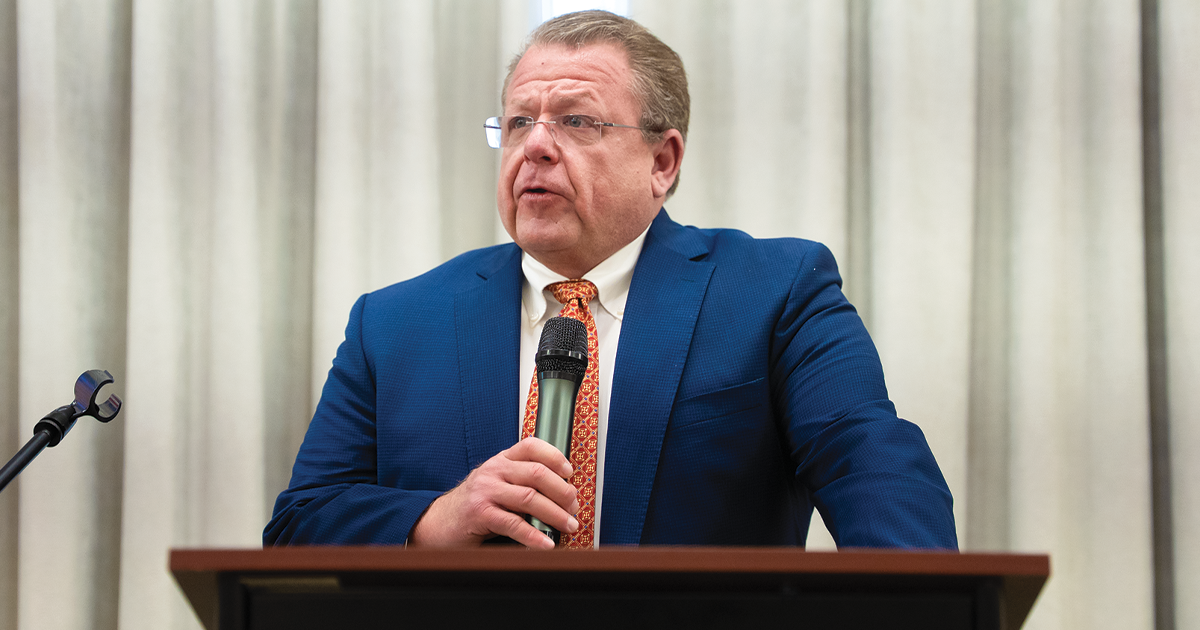
NTBC Board chair Tony Benge

The first time I ever met new North Tampa Bay Chamber (NTBC) Board chair Tony Benge was at the NTBC’s annual meeting back in December, when he was sworn in with the rest of the NTBC’s 2026 Board of Directors and we were introduced to each other by NTBC president and CEO Hope Kennedy. 

At that time, Mr. Benge and I agreed that we should sit down to discuss his vision for his tenure as the new Chamber Board chair, as well as his primary role as the president of Benge Development Corp., which has been based in Orlando since 1994, but also has one current development project in Pasco County and recently had its original Pasco development plan denied by the Board of County Commissioners. 

Although neither of those projects is located in Wesley Chapel, the denied “Fletcher Project” (more on that below) was located at the intersection of S.R. 52 and U.S. Hwy. 41 in Land O’Lakes, immediately adjacent to the Moffitt Speros campus we told you about last issue. 

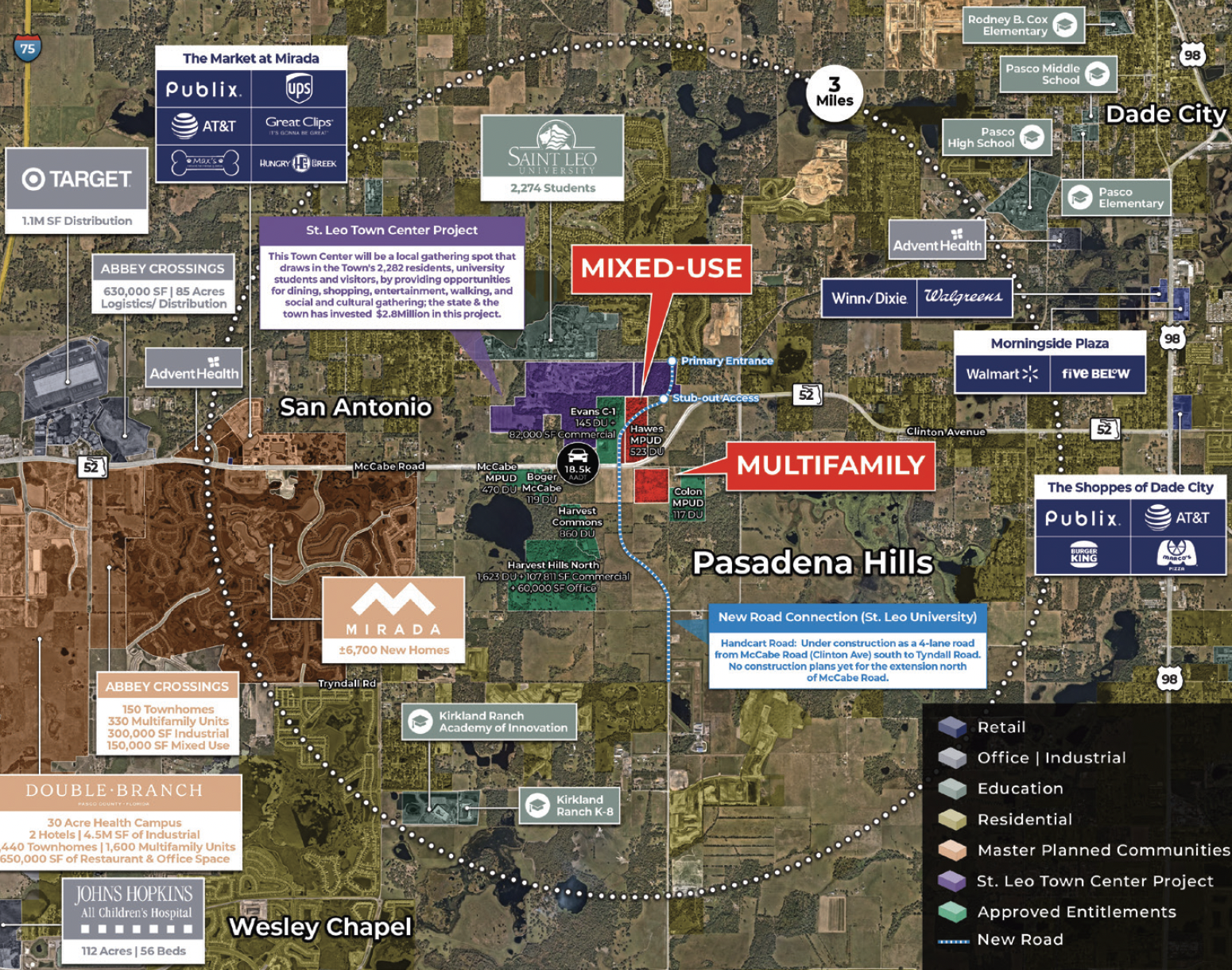
The other project, called the Hawes MPUD, which is moving forward, sits north of Wesley Chapel and east of the Mirada development. both north and south of S.R. 52, east of Handcart Rd. in San Antonio, and is approved for up to 523 multi-family units (see map below). 

His Benge Development Corp. has developed more than 30 large-scale projects, mainly in Orlando and Apopka, FL. 

Benge, who introduced Florida’s Lieutenant Governor Jay Collins at the NTBC Business Breakfast on Feb. 3 (see story on page 8), also asked Lt. Gov. Collins about mobility and school impact fees, subjects Benge knows a lot about because his company has to pay them every time he develops a new project. 
“Impact fees have started to cripple a lot of the [development] industry,” he said to Collins. “For a typical residential unit, as an average, $30,000 per unit is now being levied. When they were originally passed, [these fees] were specifically to be limited to incremental new capacity for things like schools, roads, sewer and water treatment plants. But, we’ve paid into this now for a decade and there’s been no accountability. You can’t get any information from these counties, which seize the money, in essence. And yet, they have no new schools or anything else to point to. How do we get accountability for this?” 

Collins responded, “It’s got to be statewide legislation. It can’t be executive action. It has to go through the legislature and it’s got to be codified into law. There has to be some form of accountability in that system.” 

He added, however, “But, valid impact fees? I think we all agree that valid is a good word. We can do that, but the accountability has to be there. I don’t think DOGE ( (the Dept. of Government Efficiency) is something we should just do once and walk away from. I think sustained accountability and predictability for our people matters. We’re going to have to implement that.” 

State Senator Danny Burgess, of course, presented a different solution when he was the guest speaker at an NTBC “Coffee & Connections” event two years ago, before DOGE even existed, saying that he wanted to see an audit of every county regarding impact fees. 

Benge agreed that an audit showing how much impact fee money has been collected and what that money was spent on would be a good way to hold counties accountable for the impact fees they collect. 

He says that although Pasco’s impact fees are among the highest in the state, “Osceola County’s are actually the highest. They’ve really become insane, literally. The night [Osceola] did the most recent increase, there were probably 20 developers in the audience, representing hundreds of millions of dollars in projects. I told them, ‘If you pass this, just throw our application in the trash.” 

He added that for a typical 300-unit apartment complex, the developer has to pay $9 million in impact fees to get a building permit. 

“I mean, we’re already building all of the roads, improvements… we’re having to do turn lanes, traffic signals, water, sewer, bus stops, all of that. And we still have to pay regular taxes and everything else.” 

Benge also told me that impact fees first started back in 2000, with something called the “Martinez Doctrine,” which was named after former Orange County Chair and U.S. Sen. Mel Martinez, who served as Secretary of Housing & Urban Development under U.S. President George W. Bush. The Martinez Doctrine attempted to limit school overcrowding by requiring local developers to address school capacity issues before breaking ground. 

“The idea was that growth should have to pay for itself, which makes sense,” Benge said, “But the trade-off was supposed to be that we will always have utilities and roads and services available to go along with this. 

“So when these impact fees first started, I don’t know who came up with the numbers, but they’re so abominably disproportionate. We’ve actually tracked some of the apartment communities, which might have kids in only 20% of the complex’s units. So, on 300 units, I’d have maybe 60 units that have kids, I paid $6 million in impact fees for the construction of new schools, which is basically 1/3 of a whole [700-student) schoolhouse for 60 kids. And, I’m still paying taxes every year, too. These fees were supposed to only be used for new school construction, but they never gave me any data.” 

Benge also said he decided to go about it a different way. “Let’s just track how many homes and apartments were built from, let’s say, 2015 through 2025. So, I made up a number, let’s say 100,000 units were built. Each one paid $14,000 per unit. Where’s that $1.4 billion? Or, list me out the new schools that’ve been built with that money, with the budget you spent on each one. 

“A K-8 school right now costs $18-$20 million, a high school is upwards of $50 million, and that would house, in Orange County, up to 5,000 students. By our estimation, there should have been around 84 new schools built during that time — and they only have three. 

“So, where’s all that money? [Counties aren’t] allowed to use it for [their] general funds. You can’t use it to pay more administrators. This money should be segregated out and if it’s not, this is a big issue.” 

He added that many of the assumptions used by counties to set their school impact fees, “are horribly flawed. If I build a 300-unit apartment complex and a third of those units are one-bedroom units, how many kids live in one-bedroom apartments? Historical precedence says that only unless someone is building a house that isn’t ready yet, one-bedroom units don’t generate any kids, yet I still have to pay the same school impact fees for those units. It’s crazy.” 

Speaking of crazy, Benge said that his Fletcher Project — named for the family that owned the 100-acre property — was originally planned in Aug. 2024 for 350 multi-family units, about 160 townhomes and 25,000 sq. ft. of commercial uses and had been through more than a year of meetings and plans when Pasco’s commissioners voted last year to deny it. 

“The big pushback was the private, never-permitted airstrip from the 1950s next door, which would have prevented us from building anything on 1/3 of the property. We agreed to not build on that portion, but we asked to have the same density on the rest of the property. So, we wouldn’t build as [many total units], and they turned us down. We started with Plan A and were up to Plan Q, and they still turned us down.” 

Despite that setback in Pasco, Benge Development is moving forward with its plan for the Hawes MPUD (marked in red on map below). The project will extend Handcart Rd. to the north, with 396 multi-family units on the south side and 127 townhomes on the north side and some neighborhood commercial (grocery store, etc.) entitlements. The Hawes project was approved in 2023, but Benge has not yet begun building at that site. 

Benge also is building Jonathan’s Landing, the first adult autistic facility in the U.S., in Lake Nona, FL. “It will have 5,000 beds and bring 5,000 jobs to that area,” Benge said. “My friend, Jason Eichenholz, has a son named Jonathan who is an adult with autism. This will help so many adults because state support for [developmentally disabled] people ends at age 18.” 

Look for more info about Tony Benge and his vision for the NTBC in our next issue. 

North Tampa Bay Chamber Helps The Performance Lab Host A Truly Grand Opening!

It’s not every day that we cover the Grand Opening of a business located on N. Dale Mabry Hwy. in Tampa. But, when North Tampa Bay Chamber (NTBC) president & CEO Hope Kennedy tells me “This is one you shouldn’t miss,” I generally take her at her word. 

And, oh boy! The Grand Opening and NTBC ribbon-cutting event for The Performance Lab (TPL) not only included Tampa Bay Lightning coach Jon Cooper, (as the Lightning have a partnership with TPL), it also unveiled a state-of-the-art, 25,000-sq.-ft. facility “uniting world-class medical care, advanced diagnostics, and progressive rehabilitation under one roof.” 

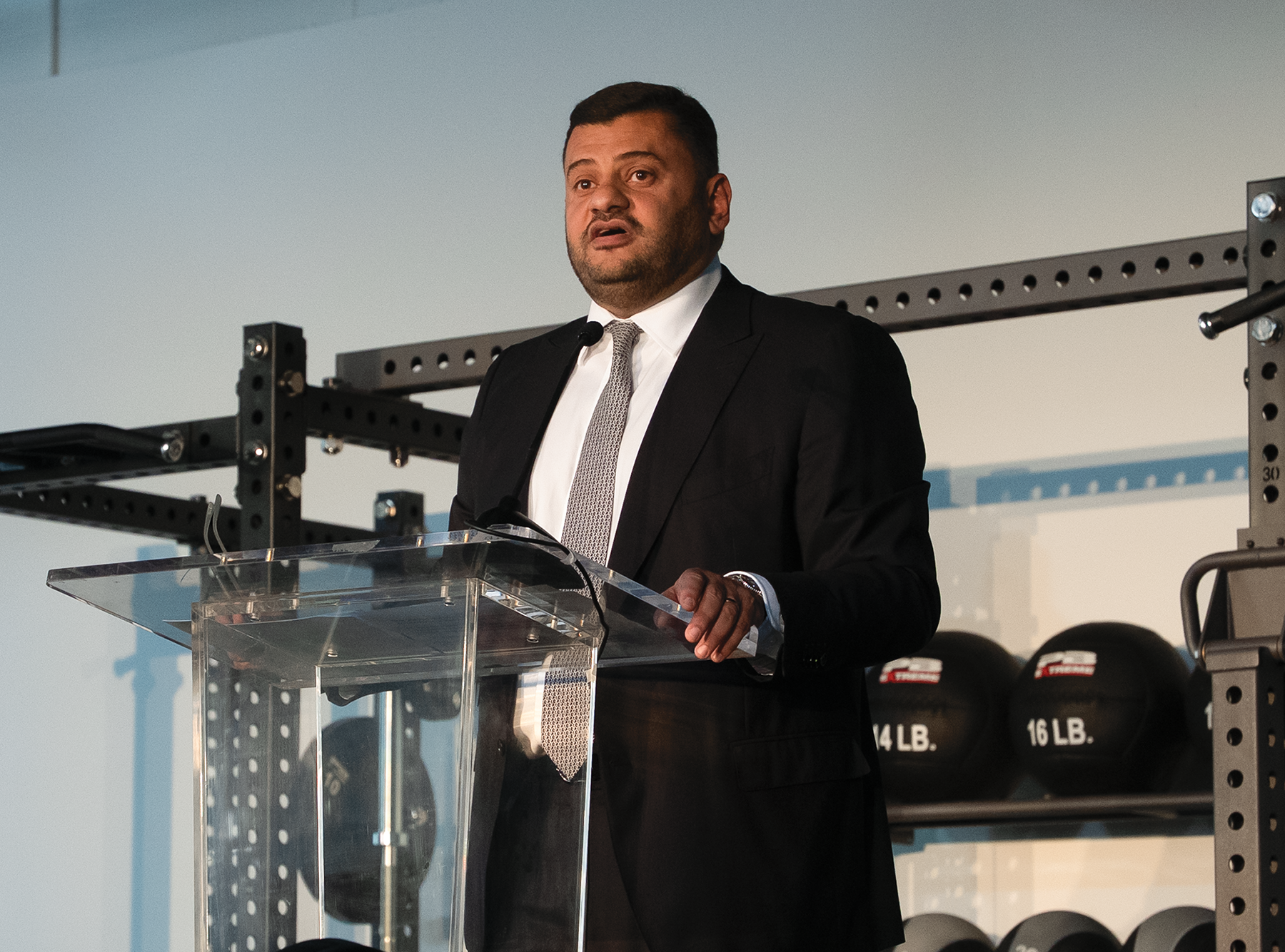
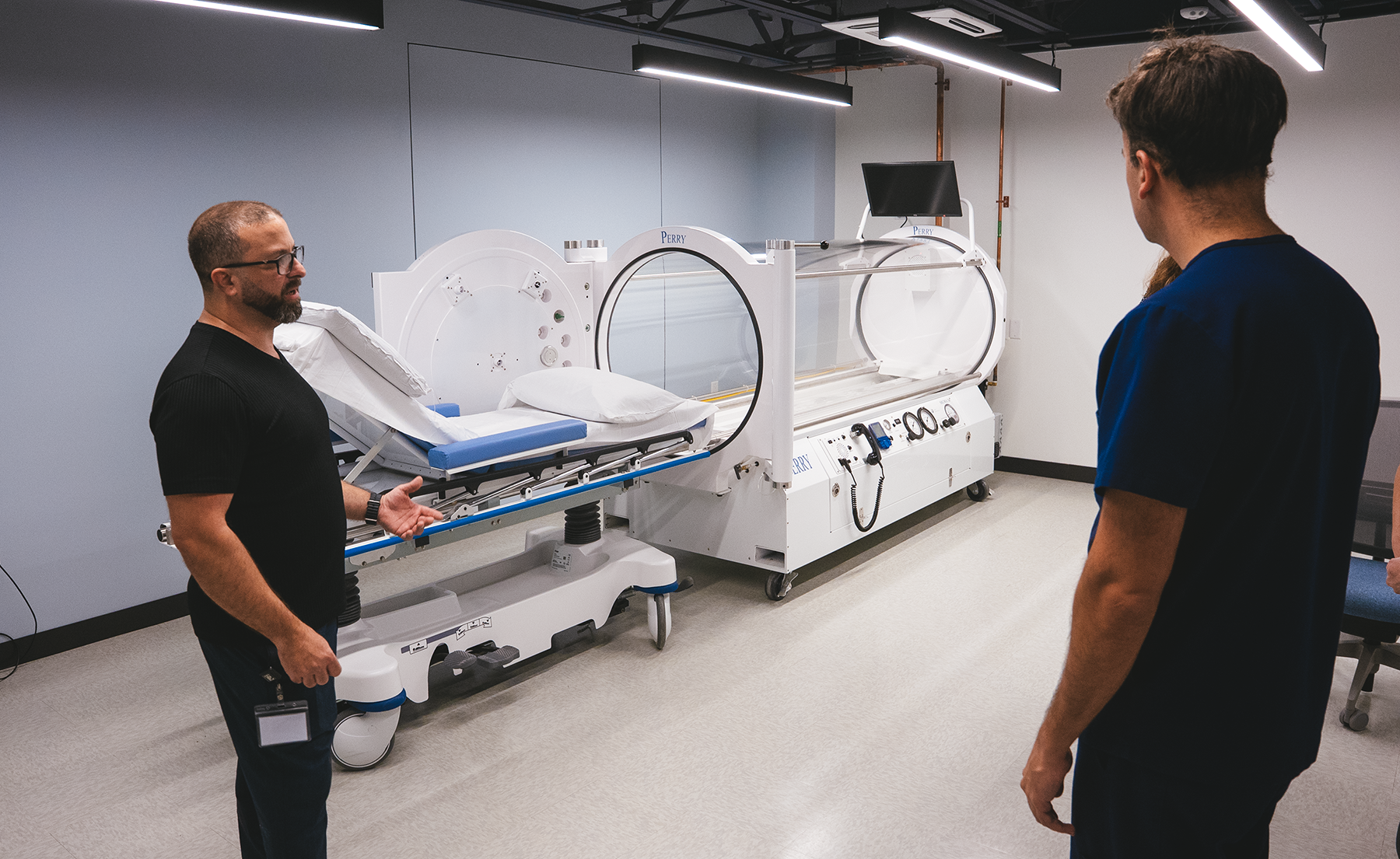
As described by founder Bahir Manios during the Grand Opening event attended by more than 200 people, TPL features top-of-the-line imaging (MRI, X-ray, ultrasound & C-arms) technology, including wide-bore MRIs, more than 25 exam/treatment rooms (including handicapped-friendly rooms and exam tables), multiple procedure rooms for interventional pain management, a dedicated brain health suite equipped with multiple modalities to assess and treat patients, including hyperbaric oxygen therapy (bottom photo), a rehabilitation suite equipped to allow patients of all abilities to progress to complete recovery in a comfortable environment and a unique performance center. 

“In other words,” said Manios, “TPL is much more than a medical center. It’s a destination for recovery, performance and total wellness. Whether you’re a first responder, an athlete, a veteran, or just an ordinary person simply seeking strength, clarity and recovery from an ailment, TPL was built for you, and it’s all under one roof. We’ve put together physical medicine and rehabilitation, interventional pain management, brain health and neuro recovery, advanced imaging and diagnostics, sports performance and recovery, and life care planning for long term support.” 

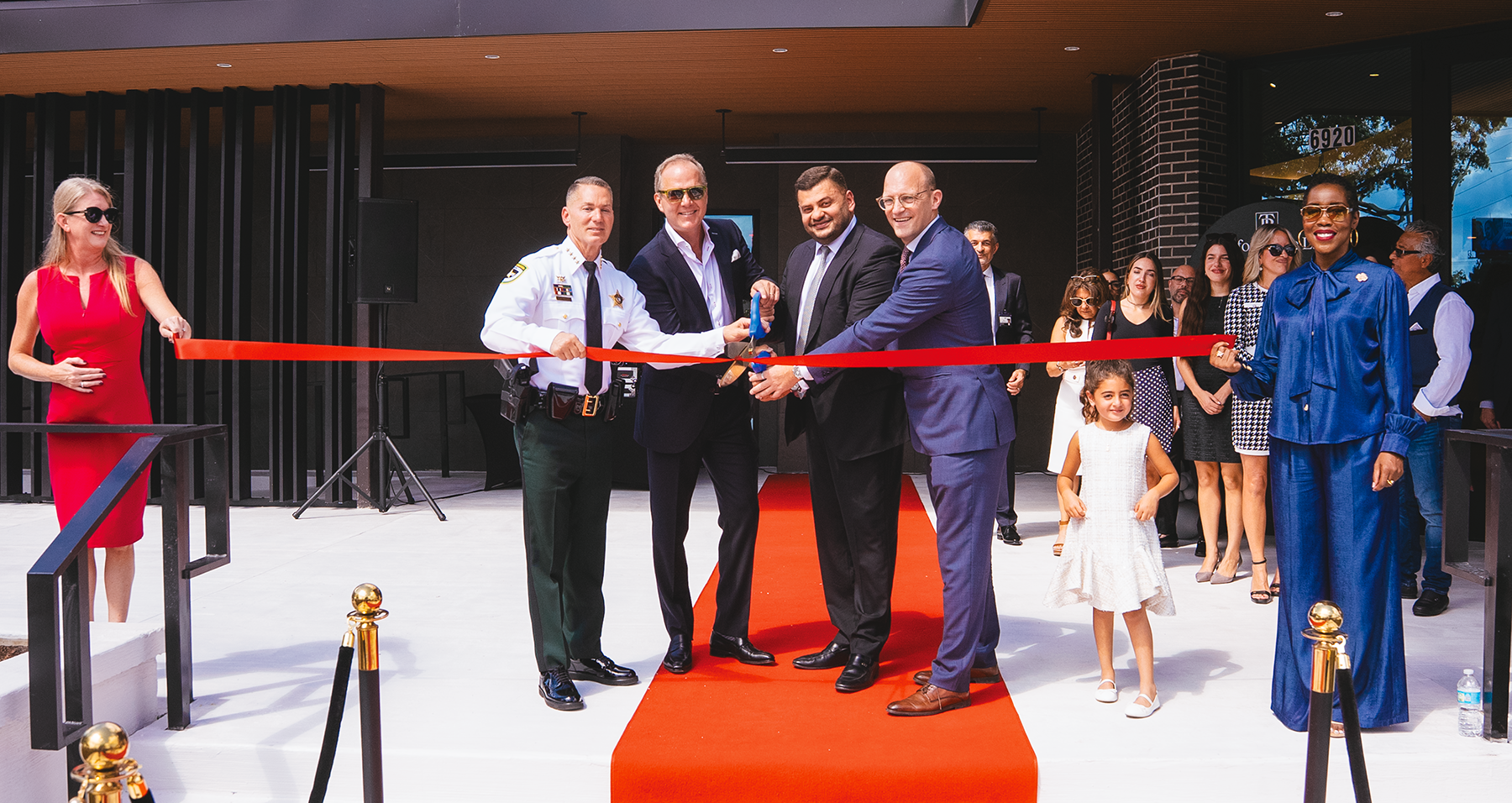
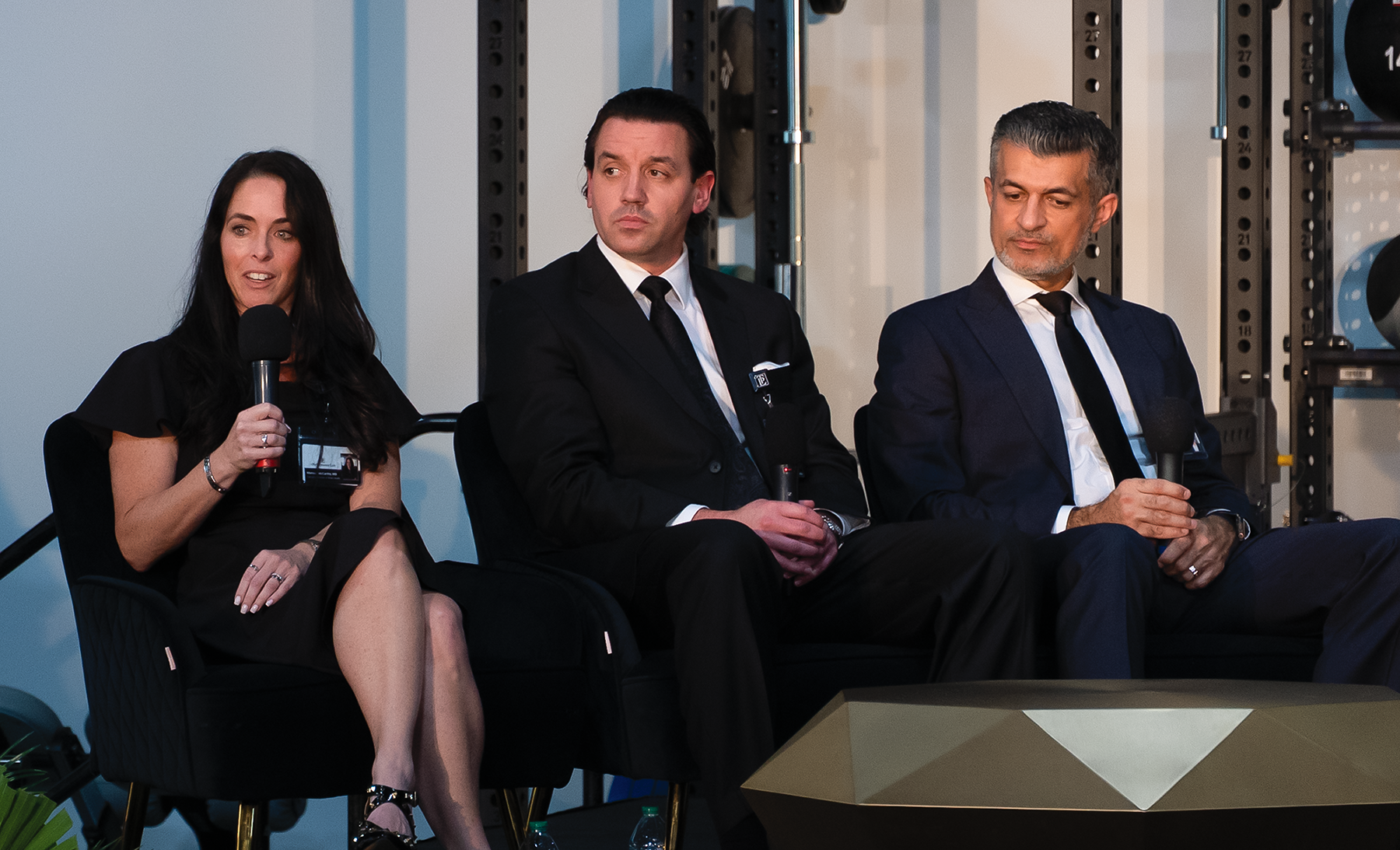
The event was as spectacular as the place itself, with a catered lunch outside, the ribbon cutting with (l.-r., top photo) Hillsborough County Sheriff Chad Chronister, Coach Cooper, Manios and TPL chief revenue & legal officer Shant Melkonian. Once inside, Manios played a short video showing the remarkable technology patients can expect to be treated with, and there was an informative panel discussion featuring (right, l.-r.) executive director of brain & strategic partnerships Marissa McCarthy, MD, executive medical director Michael Lorenz, MD, and chief medical officer Hadi Shah, MD, plus tours of the former (but completely gutted and recreated) Harley-Davidson dealership. 

In other words, if you missed it, you really did miss something special. 

For more info about TPL (6920 N. Dale Mabry Hwy.), visit TPLTampa.com or call (844) TPL-TAMPA. — GN, photos by Charmaine George 

Johns Hopkins All Children’s Hospital Provides Updates At Chamber Event!

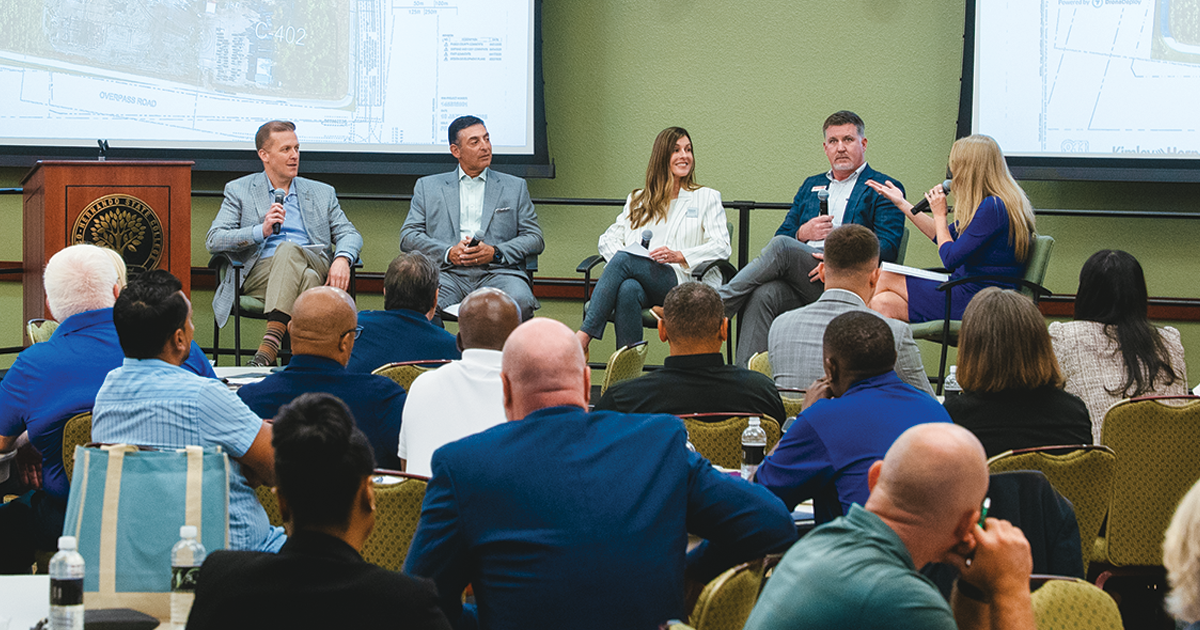
(L.-r.) Justin Olsen & Dr. Joseph Perno of Johns Hopkins All Children’s Hospital, Teresa Campbell of HKS Architects & Bryan Durkin of Robins & Morton, with NTBC president & CEO Hope Kennedy, discuss the process of building Wesley Chapel’s pediatric hospital at the NW corner of Overpass Rd. & McKendree Rd.

The North Tampa Bay Chamber’s quarterly Economic Development Briefing on Sept. 24 brought four of the principals involved in the design, construction and staffing of the Johns Hopkins All Children’s Hospital of Wesley Chapel, which is being built just off the Overpass Rd. exit of I-75. The event was held at Pasco Hernando State College’s Porter Campus at Wiregrass Ranch. 

NTBC president and CEO Hope Kennedy led the panel discussion that included Justin Olsen, the chief operating officer and Dr. Joseph Perno, the VP of Medical Affairs of Johns Hopkins All Children’s Hospital, as well as HKS Architects partner Teresa Campbell, and Bryan Durkin, the operations manager from Robins & Morton, which is building the 230,000-sq.- ft., 56-bed hospital at the northwest corner of Overpass Rd. and McKendree Rd. 

Wesley Chapel’s first and only pediatric hospital is expected to be completed in late 2027, but this was the first real opportunity for the local business community to get an update on the progress of the hospital since the groundbreaking ceremony for it back in April of this year. 

“The overall land purchase was about 112 total acres, and the hospital will be on about 30 acres, which is actually the same size as our St. Petersburg campus,” Olsen said. “The facility itself will have a full-service pediatric ED (Emergency Department) and will offer perioperative and surgical services and also will have our first inpatient rehab program for physical rehab. I will tell you that in St. Pete, we have a need for that service, so this project is going to become a center of excellence for us, to be able to provide rehab following traumatic injury. It’ll have med-surg beds, or general admission beds, and it’ll also be ready for a pediatric intensive care unit. We may not launch with that, but the facility will be designed so that, if we need to turn that on right away, we can. Lastly, it will have a really extensive outpatient footprint, with approximately 30,000 sq. ft. for kids coming in for ambulatory visits. And, we’ve already started recruiting a host of subspecialists to join the staff and live in Wesley Chapel to provide that care.” 

Dr. Perno added, “It’s more than just a building. It’s moving our culture and our attitude about how we care for children, and replicating that from what we do in St. Pete to provide that same high-quality care. I’m really excited about finding the physicians that want to be part of this community and provide that care to our local pediatric patients.” 

He added, “I’m probably not telling anybody in this room something they don’t already know, but this is a growing area. There’s a lot of young people here and there’s a dearth of pediatric care in this area. I’ve seen a lot of patients from this area coming to the emergency department in St. Pete and I know they’re commuting all the way down there to see our caregivers. And, I knew that we could bring the care we deliver in St. Pete closer to home for our patients in Pasco County, so we feel we’re fulfilling a big need for the community and really helping children, which is what we’re all about.” 

Campbell said, “We love designing pediatric facilities. Just because a patient is having a stressful health situation doesn’t mean they shouldn’t be in an environment that’s elevating and inspiring and playful. We also think about the patient’s family, and we need to be really thoughtful about the design We work with the Patient Family Advisory Council, to really ask them, ‘What do they need? What do they want? What do they like? What do they dislike?’ We work with real patients with real parents, who provide feedback and input that really helped influence the design aspect of this project.” 

As for the construction process, Durkin said, “As important as the doctors and nurses are to a hospital, subconratctors and trade partners are the folks who get the job done on the construction side. We’re getting our door knocked on consistently by high-quality contractors who want to work in a health care facility and understand the unique challenges of building health care and hospitals.” 

He added, “And, what’s unique about this arrangement is that Johns Hopkins hired the construction manager at the same time as they hired the architect design team, so there was a collaboration right from the get-go of budget, design and purpose. I’m happy to continue to extend our invitation out to additional trade partners throughout the area, but our outreach started almost two years ago, when we were awarded the project . We’ll have 400-500 people on the site on any given day and 1,200-1,300 different folks come in throughout the course of the overall project. It’s important that we engage folks in Pasco County, specifically — it’s one of our contractual requirements.” 

And, speaking of that workforce, Olsen said, “Yes, we’re bringing 500 jobs to the community, which is good news, but it’s also anxiety-provoking. We all know health care team members are in short supply, so making sure we can find people is going to be a challenge. We will hire a myriad of different types of roles, from administrators through nursing, and all those areas that go into a hospital and make it work. So we’re gonna have a lot of hiring to do here, and it is gonna be certainly a challenge as we look at some of our in-demand specialty areas.” 

He added, “I didn’t appreciate how many of our current team members actually drive to St. Pete from this community. So, a lot of them have already started sending emails almost every week. ‘When do I get to apply for it?’ I love that people who are currently part of that culture and our team are going to join the facility here, and they will help make it the exact same in terms of always putting the kid first. It is going to be a big lift, to bring 500 new, really well-paying jobs to this community.” 

Dr. Perno also noted that, “We’re looking for physicians who want to care for kids and be embedded in this community. And I’m already hearing interest on that. And, you know, we, already have people asking, ‘When is it opening? When can I start working there?’ I’m like, well, we’ve just got dirt right now, but we’re working on it.” 

He added, “We have a clinic in this area now that’s bursting at the seams (on Allegra Way, off Wesley Chapel Blvd.) with physicians and practitioners working there, seeing patients. So, we’re looking at more opportunities up in this area and the physicians are fighting to go there and be part of it.” 

Campbell also talked about how the building itself is being designed to be as hurricane-proof as possible, with multiple backup systems for power and water, high-wind-rated windows and more. And, Durkin talked about the challenges of dealing with two more hurricane seasons while the hospital is being constructed. 

Olsen noted that this $300-million project, “is not Johns Hopkins All Children’s Hospital of St. Pete coming to Wesley Chapel. We are building Wesley Chapel’s children’s hospital. We will provide the departments and services this community asks for. This is a partnership. We’ve already been accepted amazingly by this community and will do what the community asks to improve kids’ health.” 

Ivybrook Academy & Mindful Elevation Cut North Tampa Bay Chamber Ribbons!

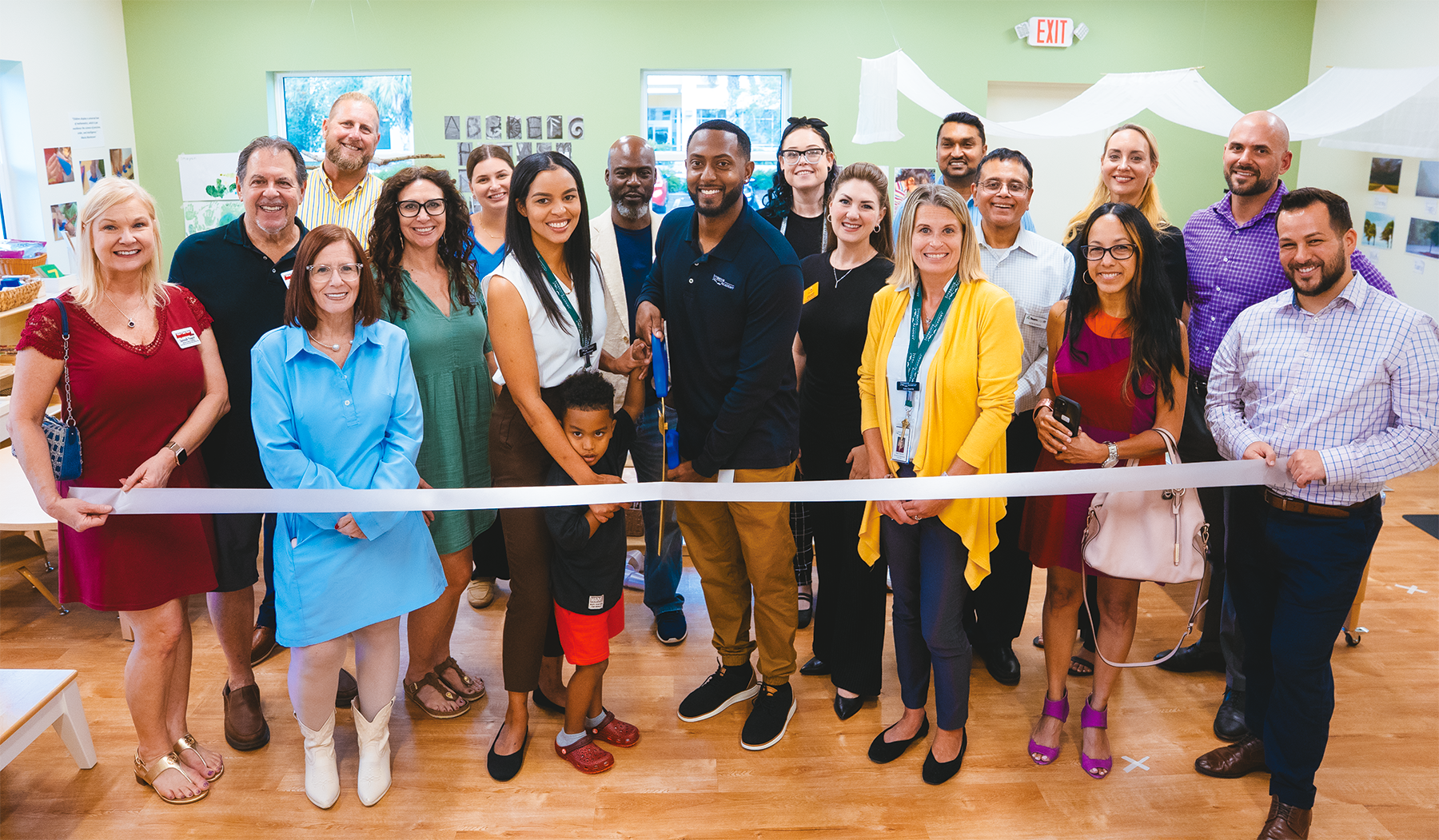
Congratulations go out to Jade and Duran Thompson (with scissors in photo above), the owners of the new Ivybrook Academy in the Tampa Palms Professional Center at 5392 Primrose Lake Cir., who hosted a North Tampa Bay Chamber (NTBC) ribbon-cutting event on Sept. 10. 

Neither Jade, who is a Doctor of Pharmacy, nor Duran, an Army veteran who has a Master’s degree in Finance, had any experience in education when they started their journey “about two years ago,” Jade said at the ribbon-cutting event, “with our son Jaden After looking at every preschool from Wesley Chapel to Lutz for him, we finally found one we liked, but there was a rift between the ownership and the local administration and the entire administration left overnight. I remember I said to Duran, ‘I think I can do this better.’” 

So, Jade went back to school to earn her teaching credentials and they started looking to buy an existing school that was already profitable. “But, we just couldn’t find the right school to renovate or location, until this school, which was owned by another family, but got taken over by the Ivybrook franchise, which was looking for local ownership and listed it for sale — nine months before it had ever opened. 

“So, even after our bad experience with that other franchised school, this was so similar to what I had in my business plan I said, ‘Let’s do it!,’ even though it was just dirt at the time.” 

Jade also liked that Ivybrook combines two popular curricula — Montessori and Reggio Emilia. “We have Montessori, which stresses individualized, independent learning groups, for our reading and math curricula, and Reggio Emilia, which promotes collaborative, project-based learning, for a more creative aspect.

Not a lot of pre-schools combine them.” 

There are about 50 Ivybrook Academies currently open in six states. Tampa Palms is number five in Florida, with the closest other Ivybrook being in Sarasota. “but there are about 150 more in development,” Jade said. 

She added, “It’s been really heartwarming to open the doors for the first time two weeks ago and actually see families that had agreed to trust me with their child when I didn’t even have a building for their child to attend. It’s been really exciting.” 

For more info about Ivybrook Academy, visit IvybrookAcademy.com/tampa-palms or call (813) 603-1609. 

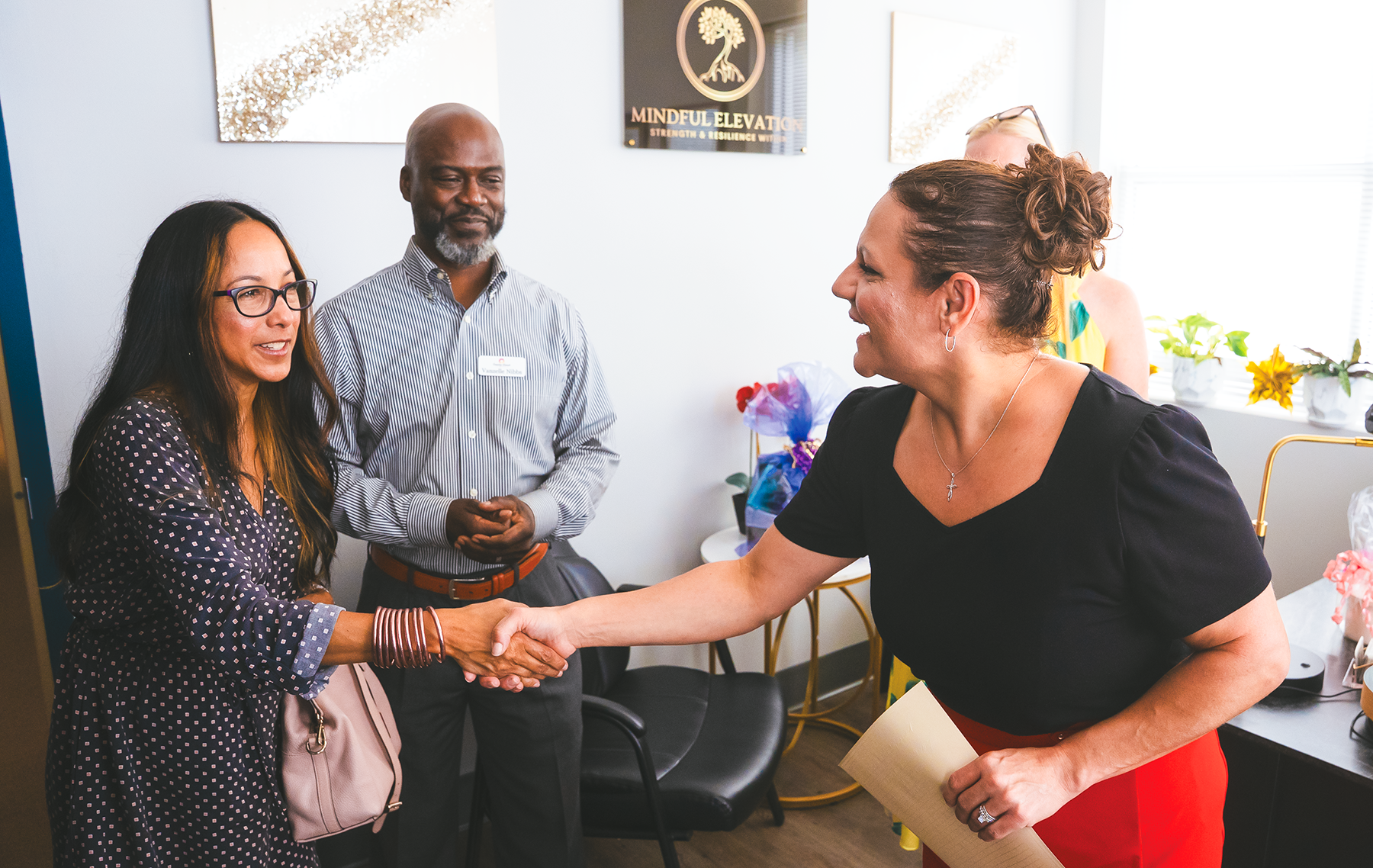
We also congratulate business coach Jacqueline Nelms (at far right in left photo) of Mindful Elevation, which is located in the former location of this publication, at 2604 Cypress Ridge Blvd., Suite 102D. Jacqueline, who hosted her NTBC ribbon-cutting event on Sept. 11, has had a 25-year professional career in the health care field, but has been an executive for the past 12 years, “where I’ve led large teams, built operational strategies, and focused on organizational growth and resilience. She has a Doctorate in Health Sciences with a concentration in Leadership & Organizational Behavior, as well as a Master’s degree in Strategic Leadership. She also is a certified professional life coach and mental health first aider. 

“This combination informs my coaching of academic research, practical leadership experience and a deep commitment to helping individuals and organizations grow in purposeful, ethical and sustainable ways,” she said. 

During her ribbon-cutting event, Jacqueline thanked her husband Ross, “who has been absolutely amazing and supported me through every crazy idea I’ve had over the years,” as well as her kids, Dominick and Nicholas, and all of the Chamber members on hand to support her. 

For more info about how Jacqueline and Mindful Elevation can help you, call (813) 943-4560 or visit MindfulElevate.com. — GN 

Get Updated About Wesley Chapel’s Only Pediatric Hospital Tomorrow!

Wednesday, September 24, 11:30 a.m.-1 p.m. – North Tampa Bay Chamber Economic Development Briefing. At Pasco Hernando State College, Porter Campus (2727 Mansfield Blvd., Conference Center, 3rd Floor). Tampa’s Johns Hopkins All Children’s Hospital has been providing care to the children of the greater Tampa Bay area for almost 100 years. In order to bring expert care closer to home for many children, for the first time, a brand new pediatric acute care hospital will open in Wesley Chapel. Join the Chamber for an intriguing discussion about a myriad of topics with our panel members: Justin Olsen, COO & Joseph Perno, M.D., VP of Medical Affairs – at Johns Hopkins All Children’s Hospital; Teresa Campbell, architect & principal in charge, HKS Architects; and Bryan Durkin, operations manager, Robins & Morton. The cost to attend this event is $25. 

For more info or to pre-register, call (813) 994-8534 or visit Business.NorthTampaBayChamber.com.events.Â