One of the goals of the New Tampa Players (NTP) performance troupe has always been to introduce people to the theatre, and make it accessible for everyone.
The Penguin Project will help NTP meet its vision.
The project, a national effort to involve special needs actors in stage productions, is coming to Tampa, as NTP will adopt the Penguin Project for a production of a “Junior” version of “Aladdin” which is scheduled to run April 4-6, 2019.
Informational meetings about the production will be held on Monday, November 5, 7 p.m., and on Sunday, November 11, 5:30 p.m., at Family of Christ Lutheran Church on Bruce B. Downs (BBD) Blvd. in Tampa Palms.
As a parent of special needs children, NTP president Nora Paine says she can’t wait to get started, adding that the response already has been greater than she expected, with interest from Bradenton to Brandon to Town N Country.
“We are well on our way,” says Paine.
The Penguin Project was founded by Dr. Andrew Morgan in Peoria, IL, in 2004. Dr. Morgan not only had a passion for helping disabled children, which he did as a pediatrician, but also for local community theatre. He saw no reason why he couldn’t combine the two, starting the Penguin Project, which pairs disabled children and adults ages 8-21 with mentors who aren’t disabled.
Dr. Morgan has described the experience of Penguin Project productions as life-changing for the special needs actors who take part.
Paine had been brainstorming ways to incorporate special needs actors into productions, but it was at a theater management conference in Venice, FL, earlier this summer that convinced her to reach out to Dr. Morgan.
“There were several theaters all around the country there (at the conference) talking about it,” Paine says. “After I heard everyone talk about it, I thought it would be a perfect fit for the New Tampa Players. There’s nothing like this in New Tampa.”
In Penguin Project productions, actors are paired with a same-age peer mentor, who will help the special needs participant learn his or her role.
The mentor, who also has to learn all of the lines and choreography, will perform on the stage with their special needs counterpart, usually in the background of a scene, offering encouragement and whispering lines that may be forgotten. The mentors also help with stage footwork.
“But, the special needs kids still get to be the stars of the show,” Paine says, “and they get to have that great theatre experience.”
The special needs of Penguin Project participants range from Down syndrome and cerebral palsy to learning and intellectual disabilities and other neurological disorders.
“I know there are organizations devoted to specific disabilities that do great things,” Paine says. “(With the) Penguin Project, however, it doesn’t matter what the disability is. They take the child where they are and supply the support that they need.”
The NTP troupe has already done productions with children involved that have some learning disabilities, but Paine thinks expanding that effort will be a good thing for the entire Tampa Bay area.
“I know the need for something like this is great,” she says.
During the four months of preparation for “Aladdin,” Paine says Dr. Morgan and his team will visit Tampa six times — including at the informational meetings at Family of Christ — to provide assistance with the production.
Already, Paine says she has more than 30 interested performers and production workers, and almost as many peer volunteers.
It will be a rewarding experience for both, she says. “It’s a two-way street,” Paine says. “Mentors are going to get a lot out of it. They can teach a lot of skills to the kids with special needs, and also get the reward of being able to help a child.”
For more information about the New Tampa Players and the troupe’s upcoming productions, visit NewTampaPlayers.org.
Now that the “Restaurant Row” on the north side of S.R. 56 has been completed, developers have moved into the retail phase in Cypress Creek.
When Dilip Kanji, the president of Impact Development and developer of the new Hyatt Place Hotel on S.R. 56, told a crowd of local business leaders back in February about a dozen or more retail and restaurant offerings coming to the area known as Cypress Creek Town Center North, there were audible gasps.
Nowadays, those gasps have been replaced by leering eyes, as those stores and eateries begin going vertical.
Located across S.R. 56 from the Tampa Premium Outlets and to the west of the north side of 56’s “Restaurant Row,” trendy eateries like the Walk-On’s Bar & Bistreaux and Blaze Pizza, hip green grocers like EarthFare and mega-stores like Burlington and Home Goods are now taking shape.
“What is going there” is now being replaced by “What is that building going to be.”
More than a decade ago, this advanced transformation of the State Rd. 56 corridor hardly seemed possible, as Sierra Properties’ development of the Cypress Creek Town Center Development of Regional Impact was mired in delays, most caused by environmental concerns, that caused some of the plans — including, at one time, a 1.4-million-sq.-ft. regional mall and movie theater — to be scrapped and modified. When that happened, the Shops at Wiregrass was almost immediately developed a few miles to the east on S.R. 56.
But once the hurdles were cleared, the transformation of S.R. 56 west of I-75 began, with the Tampa Premium Outlets and restaurants like Ford’s Garage and Chuy’s lining the road that has become the what some might call the main artery running through Wesley Chapel, which definitely has a strong pulse.
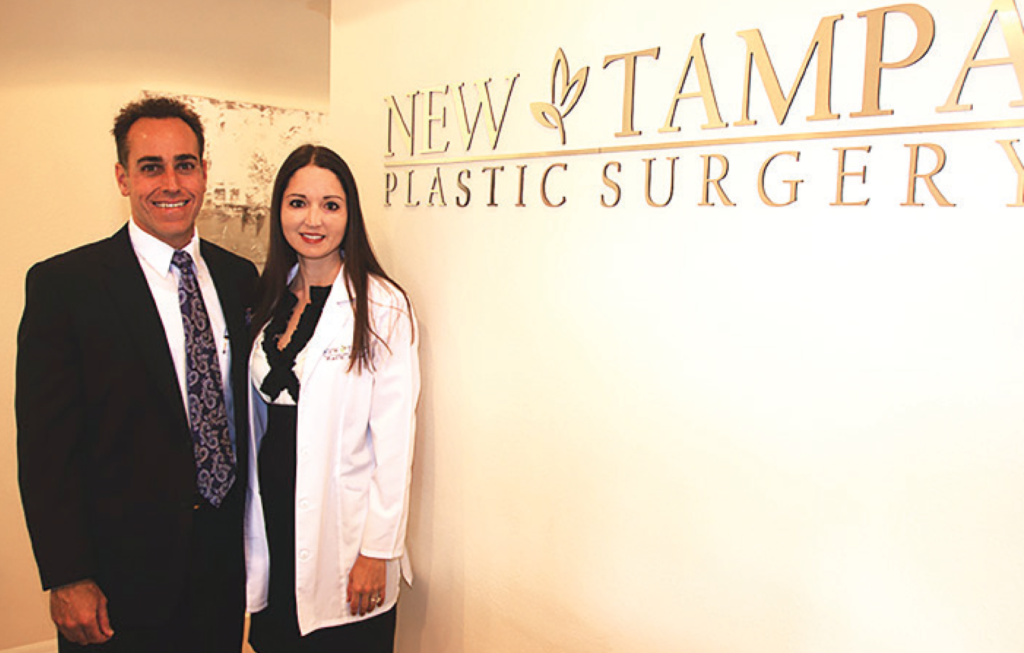
New Tampa Plastic Surgery, a premier cosmetic surgery “boutique,” has been helping New Tampa and Wesley Chapel residents look and feel their best since 2011.
Specializing in the aesthetic plastic surgery of the face, breasts and body, Board-certified plastic surgeon Peter Fakhre, M.D., rejuvenates and enhances the natural beauty of his patients with the latest cutting-edge surgical and non-surgical procedures.
Dr. Fakhre also has been named one of the top doctors in the country by Vitals.com (a medical review forum for consumers). According to the website, Dr. Fakhre was named a “Vitals Top 10 Doctor.” Of more than 870,000 doctors nationwide, Dr. Fakhre has been recognized as being in the top one percent, of all physicians, as determined by patient ratings.
Located in the Windfair Professional Park off Bruce B. Downs (BBD) Blvd., across from Florida Hospital Wesley Chapel (FHWC), New Tampa Plastic Surgery sees patients from all across Pasco and Hillsborough counties.
And soon, you’ll be able to check out Dr. Fakhre’s new office at 2525 Cypress Ridge Blvd, behind the Mercedes dealership off S.R. 56. It is set to open in early 2019.
Dr. Fakhre and his staff help everyone who walks through their doors feel welcome; their primary goal is to make the patient feel comfortable while exploring his or her best options for plastic or reconstructive surgery (as well as non-surgical alternatives, in some cases) in a professional and confidential environment.
You can see the results of Dr. Fakhre’s work when you visit NewTampaPlasticSurgery.com. Although his work definitely speaks for itself, he also is highly recommended by his patients.
In a physician review on Vitals.com, Dr. Fakhre’s patient Jane Gibbons said, “Plastic surgery? More accurately — Surgical Artistry! Dr. Fakhre is a master of his craft. He not only is an accomplished surgeon, (he also) is a man of integrity who listens, counsels and guides his patients toward the goals they are seeking. (He) then satisfies those goals with skill and precision!”
She continues, “Dr. Fakhre works with his patients to determine the best surgical and non-surgical options that will achieve the desired outcome. As a bonus, his office staff is compassionate, efficient and shares his philosophy that everyone deserves to look their best. Unquestionably, Dr. Fakhre is the best that Tampa Bay has to offer!”
Dr. Fakhre, who is one of the few plastic surgeons in the Tampa Bay area to be double-Board-certified by both the American Board of Plastic Surgery and by the American Board of Surgery, explains, “There are many things that are important in achieving successful outcomes in plastic surgery: an understanding of the patient’s desires, their physical examination, realistic goals, sound surgical technique, attention to detail and outstanding postoperative care, all of which contribute to success in cosmetic plastic surgery.”
He earned his Bachelor of Science (B.S.) degree in Biology from the University of South Florida in Tampa, graduating summa cum laude. He then elected to attend the University of Florida College of Medicine in Gainesville. It was while he was at U-F that Dr. Fakhre’s surgical talent, aesthetic eye and love for plastic surgery were realized.
Dr. Fakhre then completed a general surgery residency at the world-renowned Mayo Clinic, where he scored in the 98th percentile in the American Board of Surgery in Training Exam, the highest among all of the residents in his program.
He was involved with numerous publications and research projects, which have been presented at a number of scientific meetings, including the distinguished American Society of Plastic Surgeons. During his surgical training, Dr. Fakhre was awarded the Excellence in Teaching Award by the Mayo Clinic Medical School and served as Chief Resident in Surgery in his final year of surgical training.
Dr. Fakhre was then privileged to match at his first choice of Plastic Surgery fellowship programs at the prestigious Methodist Hospital, where he again excelled, scoring the highest in-service exam score among all plastic surgery residents in his program and serving as Chief Resident during his final year of plastic surgery training.
“I had the wonderful opportunity to train with members of the original group of plastic surgeons that invented the breast implant, as well as facial and body plastic surgeons whose surgeries have been featured on The Discovery Channel,” Dr. Fakhre says. “Working in such an environment provided great exposure to a large volume of both primary and revision cosmetic surgery cases. This experience was priceless and I’m happy to bring this type of training to the New Tampa/Wesley Chapel area.”
This training and his own expertise helped Dr. Fakhre earn the highest score possible, in the 99th percentile among Plastic Surgeons in plastic surgery of the breast, on the American Board of Plastic Surgery written examination.
In addition to refining his surgical skill and technique during his plastic surgery training, Dr. Fakhre also volunteered his time with Operation San José and traveled to Guatemala on a cleft lip and palate surgical mission. There, he helped deliver surgical care to many cleft lip and palate patients who otherwise may never have received the treatment they needed.
Dr. Fakhre says that he was happy to return to the Tampa Bay area after his training and currently lives in Seven Oaks with his wife of 15 years and three sons, who keep them busy and entertained.
So Many Surgical Options So many of us have things we would like to change about our bodies. Time, age and weight changes all take a toll on the body and these factors can affect your appearance and self-image. Dr. Fakhre says that cosmetic plastic surgery is a way to help you look and feel better. “When we are happy with our appearance, we feel more confident,” he says.
New Tampa Plastic Surgery offers a plethora of cosmetic surgery procedures for women and men, including breast enhancement (augmentations, lifts and reductions), tummy tucks, face and neck lifts, eyelid surgery, liposuction and more. Known for his technical skill, eye for beauty and superior aesthetic practice, Dr. Fakhre will work with you to develop a personalized treatment plan to achieve your desired outcome and to make the “new you” a reality.
“Cosmetic plastic surgery allows the surgeon to combine artistry with sound surgical techniques to produce superior results,” says Dr. Fakhre.
Breasts, for instance, are often at the core of a woman’s femininity and self-confidence. Dr. Fakhre explains that breast surgery is one of the most personal decisions a woman can make. “Breast augmentation surgery can increase your self-confidence and satisfaction with your body,” says Dr. Fakhre. “By increasing or restoring breast volume, we can help our patients achieve a better-proportioned body.”
Dr. Fakhre’s breast augmentation patients are first educated about implant size and types, so they can make informed decisions about which would best satisfy their personal goals. He says that the two main implant types available are still silicone and saline and that the implant selected depends upon a variety of factors.
Currently, the most common implants that Dr. Fakhre uses are silicone implants, which he says look and feel more natural than their saline counterparts.
Breast lift surgery removes excess tissue and repositions the breast and/or nipple to a more youthful position. This procedure is often chosen by women desiring to restore form to their breasts or reclaim their “before-baby” appearance. And, although breasts are intertwined with the feminine profile, women are not the only ones who have breast surgery. In fact, Dr. Fakhre says that he has helped many men feel better about their appearance with reduction surgery for men with female-looking breasts (also known as gynecomastia).
Liposuction, ‘Mommy Makeovers’ & More Another popular cosmetic surgical procedure at New Tampa Plastic Surgery is liposuction, which can improve the body’s contour by removing fat deposits that are resistant to diet and exercise. Liposuction restores proportionality and minimizes problem areas. Dr. Fakhre says that if you find yourself shopping for clothes to hold your tummy in or help slim your thighs, liposuction may be your answer. He adds that liposuction offers significant results with minimal downtime.
“In fact, many (liposuction) patients recover over a weekend and return to work on Monday,” he says. A full “Mommy Makeover” also is a popular procedure sought by women who want to get back to the body they had before they had children. Dr. Fakhre says that the most common “Mommy Makeover” combines a breast lift (with or without breast augmentation for reshaping), a tummy tuck to tighten the midsection that was stretched during pregnancy and liposuction to remove unwanted fat deposits.
Dr. Fakhre, who also has surgical privileges at Florida Hospital Tampa and Florida Hospital Wesley Chapel, says that he performs most of his surgeries at Tampa Bay Surgery Center, located at the corner of Dale Mabry and Fletcher Avenue, although he adds that he does perform minor procedures in his office as well. Wherever he performs his artistry, however, his satisfied patients are a testament to his experience and training.
“From the moment I walked through the door in his office I was always greeted on a first-name basis, which made me feel like I wasn’t just another patient to get in and out,” Christina Vargas wrote in her patient testimonial about her experience with New Tampa Plastic Surgery. “The whole process — from scheduling my appointments to the day of the procedure, even my recovery — went so smoothly. I highly recommend Dr. Fakhre. I give him 10 stars!”
Non-Surgical Options, Too New Tampa Plastic Surgery also is a true cosmetic boutique, offering skin care and other non-surgical cosmetic procedures, in addition to plastic surgery. Many of these non-surgical procedures — such as Botox and dermal fillers, Latisse eyelash lengthening and thickening and chemical peels that rejuvenate and energize the skin to beautify your natural state and more — often provide the results a patient is looking for, and are less “invasive” than surgical options.
Board-certified nurse practitioner Christina Ahrens (in photo on previous page, with Dr. Fakhre) has more than 12 years of experience in dermatology and plastic surgery and performs all of the non-surgical procedures at New Tampa Plastic Surgery.
“We are fortunate to have Christina as part of our team,” says Dr. Fakhre. “She does an outstanding job in the treatment of our patients.”
For your free cosmetic surgery consultation with Dr. Peter Fakhre, call New Tampa Plastic Surgery at (813) PLASTIC (752-7842). The office is located at 2541 Windguard Cir. For a full menu of services, visit NewTampaPlasticSurgery.com. And, be sure to check out the ad on page 13 of this issue and ‘Like’ New Tampa Plastic Surgery’s Facebook.com page so that you can be notified of the office’s monthly promotions on various services.
The bike and pedestrian path along New Tampa Blvd. in West Meadows is showing its age.
If bike and pedestrian paths are supposed to offer safety and comfort to those riding or walking on them, then the one running along the north side of New Tampa Blvd. in West Meadows has failed, say many of those who frequent it.
That may, however, be changing.
Jean Duncan, the City of Tampa’s director of transportation and stormwater services, says that after years of urging from local residents, plans to resurface the aged pathway are now under way.
While there is no schedule or cost yet for the project, Duncan says the city will begin looking at the pavement condition, the drainage issues that leave much of the path puddled hours after rainstorms and any issues with the American Disabilities Act (ADA) in regards to things like wheelchair ramps.
“Once we identify all of that, we will lay out a schedule for a design, which will require us to go out and do some survey work,” Duncan says. “Once that is complete, we will go to construction.”
Duncan says the city is targeting spring of 2019 to begin the project.
That may not satisfy all of Brad Van Rooyen’s wishes for New Tampa Blvd. and its battered pathway, but it is better than nothing, the West Meadows Home Owners Association president says.
Van Rooyen says he has been in discussions with the city about the condition of the road and pathway for more than a decade.
“Walk that path from Publix to the (New Tampa Blvd. Gateway) Bridge and if you don’t twist an ankle, trip over a root or wear out your sneakers, I’d be surprised,” he says.
Van Rooyen may be using a touch of hyperbole to make his point, but he says he has seen people trip on the path, and one bicyclist who hit a bad patch on the pathway crashed to the ground and had to be transported via ambulance to a hospital.
The pathway, critics says, has worn through its original surface, is jagged, cracked and uncomfortable.
That was evident on June 28, when 100 or so bicyclists came out for a memorial ride in honor of Pedro Aguerreberry, the West Meadows resident who was struck by a car and killed while out riding his bike with his two young children.
The bike path was so bad, says Hunter’s Green resident Peter Mirones, that police officers directed the bicyclists to ride in the road.
“After the extremely tragic accident, the memorial ride definitely drew some more attention to it,” Duncan says.
Mirones took District 7 Tampa City Council member Luis Viera out to the path on July 2 to show him the cracked, uneven surface and to take pictures. Viera then asked the city staff to look into it, which it will be doing.
Van Rooyen said that, at one point, West Meadows was going to pave the bike path itself, but then-District 7 City Council member Lisa Montelione, who represented New Tampa from 2011-16, told him it was the city’s responsibility.
Van Rooyen met with city officials, showed them pictures of the deterioration, which was so bad the city’s attorney, “actually made us leave the room, and within 48 hours, some of the really serious potholes and dropoffs were fixed,” he says.
But, they were not enough, as the popular pathway continues to lose its form. Van Rooyen says that almost the entire length of the path — roughly 1.5 miles — needs to be re-finished.
“I get it, the city has budget constraints, and every community has got issues,” Van Rooyen says. “I’m not ungrateful. It’s a step in the right direction. But, the way to solve the problem is to spend the money and get it fixed the right way, so we don’t have to worry about it for the next 15 years. Anything short of a complete repaving is like putting on a Band-Aid. Eventually, it has to all be done.”
Van Rooyen adds that he thinks the city needs to not only take a look at the bike path, but should examine New Tampa Blvd. itself as well, which has weeds and roots growing up through sections of it.
Van Rooyen says that the road was built to handle West Meadows traffic, but once the bridge linked the road to Tampa Palms, there has been a dramatic increase in traffic and it has taken its toll on New Tampa Blvd.
“The road has never been paved, never been seal coated,” he says. “The markings on the road have become so worn down you can’t see the turn lanes. And, you see more and more potholes.”
He adds that the city was under the impression West Meadows was handling its own roads, and anytime someone called the city they were passed along to the HOA or Community Development District (CDD). “Then it just fell off everybody’s radar,” he says.
At least for now, it appears to be back on the city’s radar.
Grandma Claire’s Early Learning Hive, a space handcrafted to combine youth recreation & education into a single experience, has been unveiled at the New Tampa Regional Library (NTRL) on Cross Creek Blvd. About 50 people, including the family of the longtime educator and librarian the room was named for, attended the ceremony at NTRL on Sept. 22.
Claire Unnasch, whose plaque is proudly displayed in The Hive, was a special education teacher, school librarian and middle school math teacher at South End School in Cedar Grove, NJ. However, the nickname “Grandma Claire” wasn’t coined until her later career as a volunteer at local libraries, where she discovered her immense affection for preschool-age children. Grandma Claire passed away in 2016.
Thomas Unnasch, Grandma Claire’s son, spoke at the unveiling, as children raced around playing and grabbing books.
“She would be beyond herself if she could see what we’ve created here,” Thomas said.
District 7 Tampa City Council member Luis Viera and Hillsborough County’s director of library services Andrew Breidenbaugh also spoke at the podium, sharing their vision of recreating Grandma Claire’s Early Learning Hive for libraries across the District in the years to come, to spread Claire’s love for children & education even further.
The New Tampa Regional Library (10001 Cross Creek Blvd.) is open every day.


 One of the goals of the New Tampa Players (NTP) performance troupe has always been to introduce people to the theatre, and make it accessible for everyone.