Pasco Commissioners Unanimously Approve Stronger Tree Ordinance Rules

Zephyrhills, Pasco County Florida

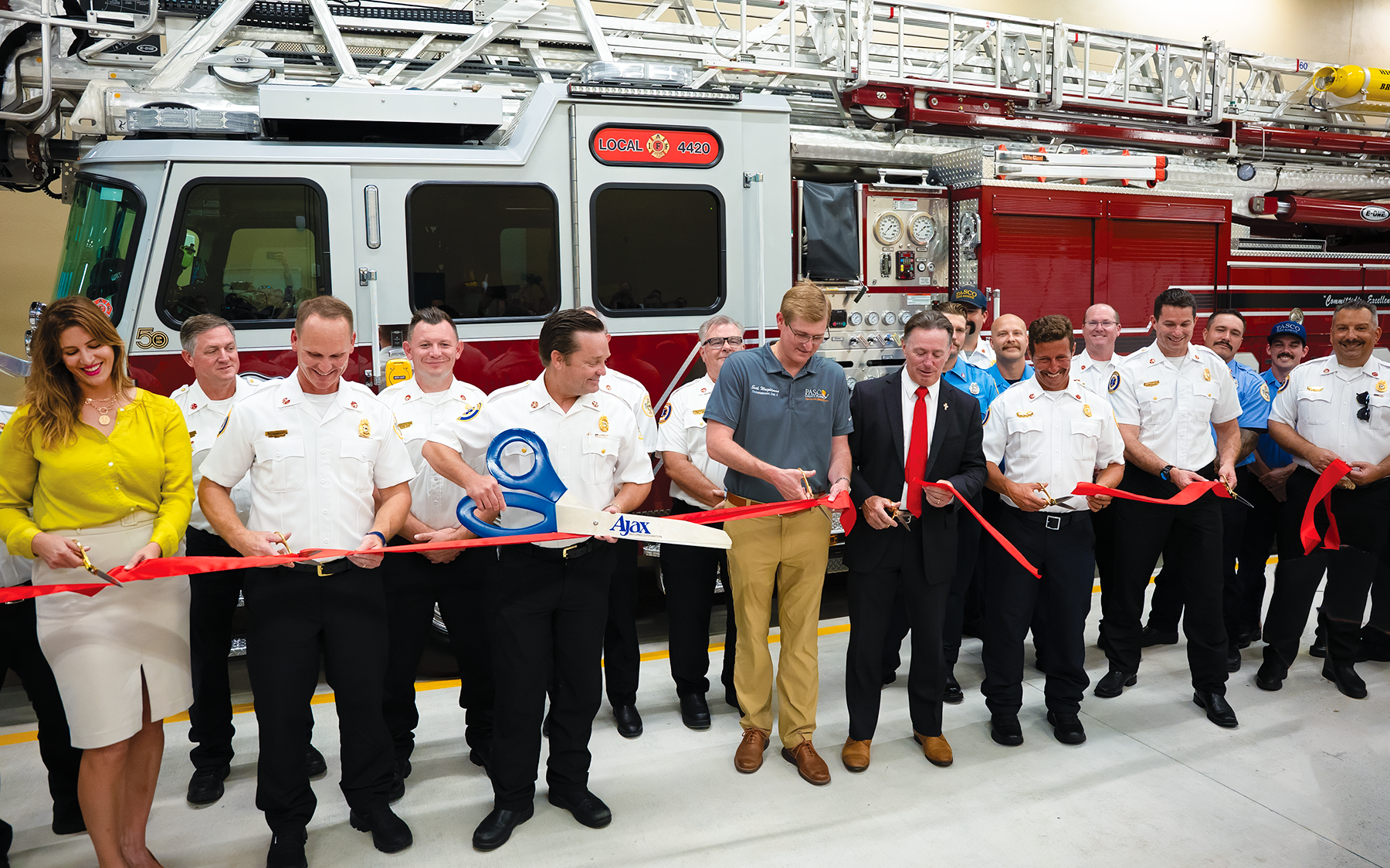
The Pasco County Board of County Commissioners (BOC) is casting some “shade” on developers’ ability to remove trees from their respective properties, after approving changes to the county’s tree ordinance at the BOC’s Mar. 24 meeting. 

By a vote of 5-0, commissioners agreed to update the ordinance to shore up protections for Pasco’s “Heritage” trees — defined as live oaks 34 inches or larger in diameter or Southern magnolias 24 inches or larger — introducing new standards for tree canopy preservation and increasing both the fees for removal, as well as the credits for protection, of these trees. 

Under these new standards, developers would be required to preserve 20 percent of the existing tree canopy of their developments, or the uppermost layer of trees whose branches and leaves cover the ground when viewed from above. For upland trees, these are measured by the total number of inches of upland trees that measure 10 inches in diameter at breast height (known as DBH). 

DBH is a standard measurement to determine the diameter of a tree trunk, typically taken at an average adult’s chest height, which is roughly about 4.5 feet. Wetland trees are protected separately under state and local laws and require different levels of permits and regulatory consideration. 

The new ordinance also requires that tree removal be submitted as part of a developer’s overall development plan. 

When developers build out a new subdivision or apartment complex, they must pay a fee and either replace the trees or the fee goes into the Tree Mitigation Fund (TMF), which is funded by developers to allow the county to pay for a variety of tree canopy projects and is maintained separate from the county’s general revenue. 

Under this new ordinance, for each tree removed, developers will pay $75 per inch DBH (up from $50) for most trees, while the cost goes up to $150 per inch DBH for Heritage trees. When a developer preserves trees, it can receive a credit of $150 per inch for every non-Heritage tree 10 inches in diameter or larger they preserve, while they will receive a credit of $300 per inch for every Heritage tree preserved. 

A cap also was established for the maximum contribution to the tree mitigation fund equal to $10,000 per upland developable acre, along with a cap exemption for Heritage trees — and exemption that was advocated by District 2 Commissioner and Board vice chair Seth Weightman in order to incentivize their protection. 

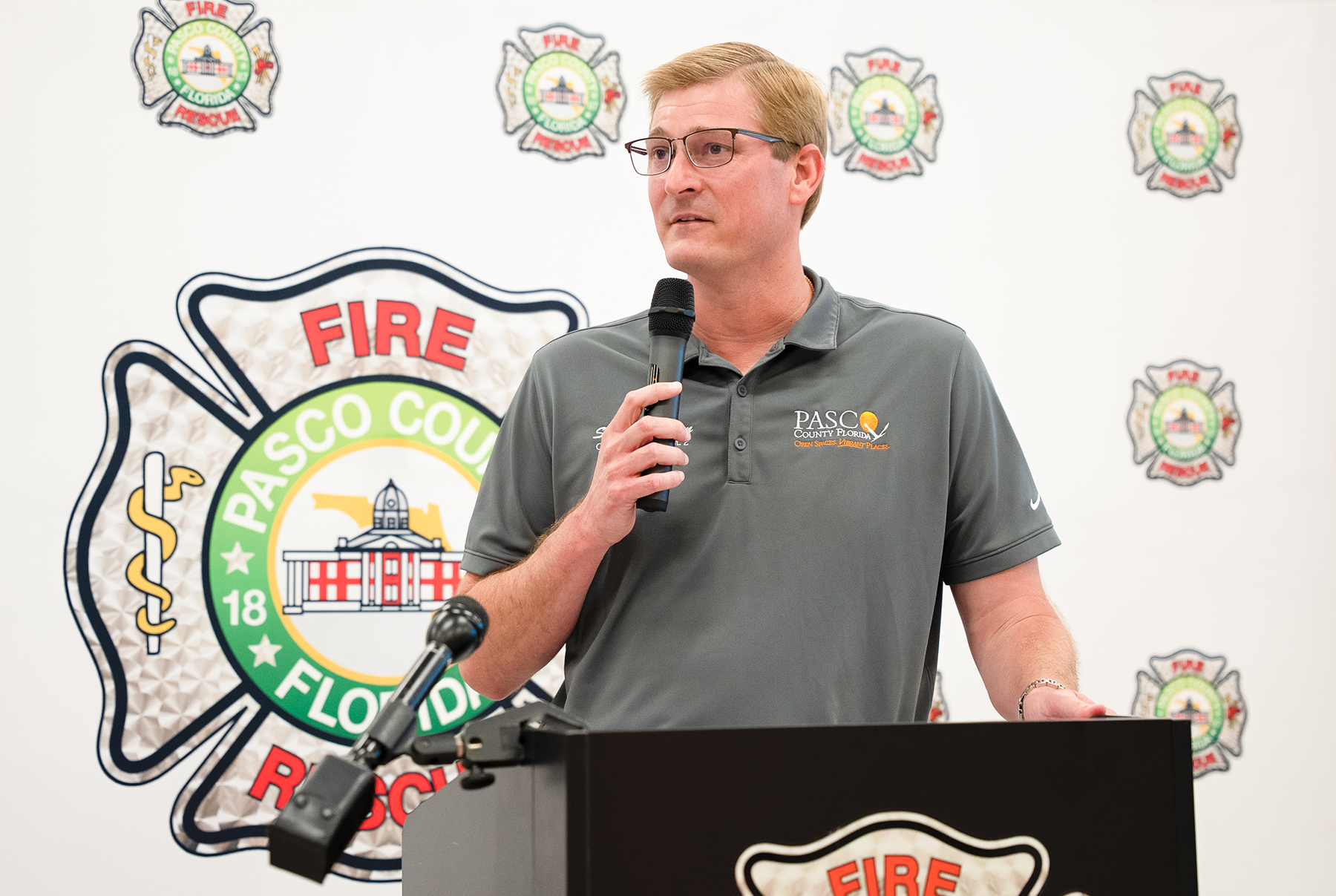
During the meeting, Commissioner Weightman said that this was a “consequential vote.” And, in a statement since that meeting to Neighborhood News, he said that the proposed ordinance will keep forward momentum for the preservation of Pasco’s Heritage trees for future generations while improving the overall tree canopy throughout the county. 

“You can’t mitigate the destruction of Heritage trees,” Comm. Weightman said. “With this vote, we’re truly looking out for the health of our environment, our communities and future generations. I’m hopeful this will inspire developers to incorporate our Heritage trees into the design of our [Pasco’s] communities.” 

According to the county staff, there currently is roughly $12.7 million in Pasco’s TMF. Funds can be pulled by the county from the TMF to pay for approved projects that increase Pasco’s tree canopy on county-owned properties, along with redevelopment of designated areas of the county through the Economic Growth Landscaping Program, which helps both homeowners and those affordable housing projects serving residents earning 80% of area median income or below, as well as any School Board beautification projects on campuses across the county. 

Although the commission was supportive of the ordinance changes, some raised concerns that agricultural land owners looking to sell might be incentivized to clear cut their land before transferring the property to a developer, in order for the developer to avoid paying into the TMF once they acquire the property. 

“If you have a heavily wooded site and you want to sell it, the developer who wants to buy it is going to say ‘clear it first and then I’ll buy it,’” stated Dist. 3 Comm. Kathryn Starkey, “I am happy to protect ag all day long. I’m not happy to take ag and let them (developers) skirt around this tree protection ordinance.” 

Comm. Weightman also raised numerous concerns about House Bill 399 (which was passed during the 2026 State Legislative session and recently signed into law by Florida Governor Ron DeSantis) during the BOC meeting and echoed those concerns to the Neighborhood News about its impact for county planning, but also said that the county’s new tree ordinance can serve as a buffer to development. 

“What the tree ordinance does,” says Comm. Weightman, “is that it’s a quality control mechanism for the environment, for neighbors and for projects So [developers] are gonna have to run a pro forma to see, based on $10,000 per upland developable acre plus the additional cost for Heritage trees, if them just coming in and blitzkrieging a site under the new House Bill 399 rules pencils out for them.” 

House Bill 399 (see text of the bill below) immediately went into effect. Supporters of the new law say it will help with the housing and affordability crisis impacting the state but opponents say it’s another attempt to erode home rule and could make it harder for local governments to deny projects they deem incompatible. 

The law requires local governments to tie development fees to the actual cost of project review, while also adopting more objective standards for compatibility within the existing neighborhoods and the surrounding area. It also requires cities and counties to provide reasoning for why a project is denied. 

“It erodes the ability for local planning commissioners to have a say,” Comm. Weightman adds. “It’s another golden ticket for development. The fact that local governments can’t choose incompatibility to deny a project is absurd.” 

Some Pasco County residents appearing at the Mar. 24 BOC meeting also raised some concerns about the impact that so-called state preemption laws might have on the tree ordinance and others wanted to see the canopy preservation percentage further increased. 

“Due to the fact that the state preemption exemptions weaken the 20% canopy preservation standards, we need to increase that to 30 percent,” said Julia Bartunek of New Port Richey during public comment. 

However, many residents were supportive of the changes and were thankful that the county was at least attempting to tackle this issue. “I just want to thank you all for even the idea of a tree ordinance, I really praise you all for that,” said Linda Blake, also of New Port Richey. 

Two Rivers Planning To Add A Third Brewery To The Wesley Chapel Area?

Growth in and around Wesley Chapel can feel a little scary/unwanted at times, as new roads, new rooftops and new developments seem to continue to pop up in the local landscape almost overnight. 

But, alongside that rapid change comes something exciting — a glimpse of what our community might look like in the future. 

One of the latest ideas quietly floating around in development plans could bring something many local residents already enjoy — a new brewery. If the concept comes to life, it would mark what would effectively become the third brewery serving Wesley Chapel and the nearby surrounding area. 

Local craft beer fans already know the two that helped put our area on the map: Florida Avenue Brewing Co. on S.R. 56 and Double Branch Artisanal Ales at The Grove. 

Now, plans emerging from the massive Two Rivers development — located just east of Morris Bridge Rd. in Zephyrhills, but looking very much like an extension of Wesley Chapel — hint that another brewery could eventually join the local lineup. 

The potential site of the new brewery is inside the Two Rivers community, specifically in the Two Rivers West section (see map). 

According to conceptual plans (see rendering above), the brewery would be located roughly a quarter of a mile behind a proposed Publix on S.R. 56, and just off the roundabout that leads residents to an upcoming resort-style private club known as “The Landing.” 

But, the brewery itself might only be part of the story. The concept appears within a planned village-style retail district called Hawthorn Village (labeled “SITE” on the map), which is being developed by Two Rivers developer the Eisenhower Property Group. 

Leasing materials from Colliers describe the village center as a 42,000-square-foot hub for specialty restaurants and boutique retail. 

At the heart of the project would be an outdoor event lawn designed to host community gatherings, holiday celebrations and al fresco dining. The hypothetical brewery concept even suggests it could share space with a coffee shop and restaurant on the same property, creating more of a social hub than just another place to grab a pint. 

In many ways, that’s the bigger story. 

Village-style centers like this are becoming a defining feature of many modern master-planned communities. Instead of long commercial strips, these smaller walkable hubs are designed to bring neighbors together for food, entertainment, and local events. 

Two Rivers itself is being planned with 13 distinct villages and a long list of lifestyle amenities, including the aforementioned The Landing private social club, a Pasco K-8 school, the Peak Surf Park, a proposed golf course on the Hillsborough side of Two Rivers, plus miles of scenic nature trails, kids’ play areas and resort-style pools. 

If Hawthorn Village does eventually land a brewery, it would certainly be a welcome addition for many residents. 

But, more important is that it signals the continued evolution of our area — from a quiet suburban crossroads into a place building its own identity, gathering spaces and community traditions. While many long-time local residents aren’t happy about this transformation, it is happening. 

And, if that new identity happens to include a few good local beers along the way, many neighbors probably won’t complain. 

Homes For Our Troops Celebrates Two More Homes Under Construction In Our Area

(Above, l.-r.) Gen. Tom Landwermeyer & Cpls. Eddie Ward and Roberto Cruz-Arocho. 

Even though their homes are being built in San Antonio (near St. Leo University), the Neighborhood News was proud to again be on hand for the introduction ceremony for the next two recipients of mortgage-free homes provided by Homes For Our Troops (HFOT) — retired Army Cpls. Eddie Ward and Roberto Cruz-Arocho, both of whom were seriously combat-wounded (Ward in Afghanistan and Cruz-Arocho in Iraq). 

Cpl. Ward and his father Elijah Petty. (seated) 

On hand for HFOT — a top-rated military nonprofit organization that has provided more than 420 of these specially-adapted homes for U.S. military vets injured since 9/11 — was the organization’s president & CEO, retired Army Brigadier General Tom Landwermeyer, who again reiterated that HFOT receives no government funding and that nearly 90 cents of every dollar raised by the nonprofit directly benefits the wounded veterans. 

The custom-designed homes — which will each include as many as 40 special adaptations for these two wounded vets — are being built by Elizabeth Evans Custom Homes, which previously also provided two HFOT homes in Wesley Chapel. 

Cpl. Ward and Cpl. Cruz-Arocho both expressed their appreciation for HFOT and for the 100 or so local people in attendance. For more info about HFOT, visit HFOTUSA.org. — GN 

Big Brother Or Better Traffic Safety? The Truth About Roadside Devices

If You Want To Know What All Those Roadside Cameras & More Are & What They Actually Do & Don’t Do, Read On! 

If you drive around Wesley Chapel and New Tampa long enough, you’ll notice all kinds of devices mounted on poles, arms and cabinets along our roadways. 

We’re sure you’ve seen those cameras, sensors, flashing signs, small towers — and may have been wondering what they all actually do. 

Before I began writing for this publication, I spent 22 years in civil and transportation engineering and planning, including 19 years specializing in traffic operations engineering, including for the Florida Dept. of Transportation (FDOT). 

I’ve worked on everything from single-family homes and bridges to diverging diamond interchanges and large-scale community developments. Most importantly, I designed and implemented Intelligent Transportation Systems (ITS) throughout the Tampa Bay area. 

In that time, I’ve heard nearly every guess imaginable about what tall of these roadside devices are capable of. Let’s clear up some of the most common misconceptions and explain what you’re actually seeing out there — and whether actual speed cameras may be on the horizon. 

These are probably the most misidentified roadside devices — and they have nothing to do with traffic control. 

Because they’re allowed in the public right-of-ways, many people assume they’re traffic-related. In reality, these short roadside poles (above) are 5G “small cells” or microcells. They’re compact antennas, usually 10–30 feet tall, mounted on utility poles, streetlights, or even traffic signal structures. 

They provide high-speed cellular and internet service in a limited radius. Since 5G signals have shorter range and are easily blocked by buildings and trees, these units must be installed more densely in urban and suburban areas like ours. Bottom line: They’re for your phone — not for monitoring your driving. 

When people see cameras at intersections, many immediately assume they’re red light cameras. Most of the time, they are not. PTZ CCTV cameras (both photos, left & right) are commonly used for roadway monitoring. You’ll see them mounted on poles, on mast arms near signal heads, or on tall “high mast” structures. 

They allow city, county, and state staff inside traffic management centers to actively monitor traffic conditions — crashes, congestion, disabled vehicles, or signal timing issues. 

Here’s the key point: These cameras typically do not record. They are live-view tools. You can identify them by the large rotating base that allows 360-degree movement and zoom capability. 

Important: These cameras do not record video. They function strictly as detection devices.

If you see a camera at a signal without that large rotating base, it’s likely not for surveillance — it’s probably a traffic detection camera (see below). 

These cameras (right) are becoming increasingly common as older loop systems (below) are phased out. Unlike older directional cameras, these units look down over an entire intersection with a wide field of view. 

Typically, two are installed at opposite corners, mounted high for maximum accuracy. 

They create “virtual detection zones.” When your vehicle enters one of those zones, it tells the traffic control device that a car is waiting and may trigger a signal change. 

What about those rectangular or oval cuts (left) in the pavement near stop bars? Those are “inductive loops” — the oldest and still very reliable method of detecting vehicles at signals. 

They are not weight sensors. They function like large metal detectors. A coiled wire embedded in the pavement creates an electromagnetic field. When a vehicle moves over the loops, it disrupts the field, signaling the control device that a vehicle is present. 

Note-If loops are present, your vehicle MUST be positioned over them to receive a green light. 

If you see similar small loops as those above further back from a high-speed intersection, those may be dilemma zone detectors. These detect vehicles approaching during the critical moment when the light is about to change from green to yellow. 

If a vehicle is detected in that “decision zone,” the system may extend the green phase to prevent abrupt braking or red-light violations. 

If loops are located away from signals or just downstream of an intersection, they are likely permanent traffic count stations (photo right). These record vehicle totals to help engineers determine roadway usage and future expansion needs. 

These pole-mounted MVDS radar units (left) are part of modern Intelligent Transportation System (ITS) deployments. Often called “side-fire radar,” they use low-power microwave signals to measure vehicle speed, lane presence, volume and even detect backups. 

MVDS are non-invasive — meaning no pavement cuts are required — and provide valuable real-time data to improve operations and detect incidents. 

These small black vertical devices mounted near signal heads (right) are extremely important. Opticom systems allow emergency vehicles — fire trucks, ambulances, and law enforcement — to request a green light as they approach an intersection. 

Using infrared, radio, or GPS-based communication, they signal the traffic control device to provide priority. This reduces response times and improves safety for both emergency responders and the public. 

You may have seen poles with large solar panels near their bases (left) set up along busy roads. These are video traffic counters used for planning studies and monitoring. 

They use high-mounted, low-resolution cameras and AI software to count vehicles, classify them (cars, trucks, bikes, pedestrians), and track turning movements. 

Note-These traffic counters do not read license plates, nor do they record faces. 

Their sole purpose is for traffic analysis — often in preparation for development reviews or roadway improvements. If you see a unit with a much smaller solar panel mounted directly on top of a camera, that’s likely something different. 

Those black cameras (right), with smaller top-mounted solar panels, are typically Flock Safety License Plate Readers, used by law enforcement agencies such as the Pasco County and Hillsborough County Sheriff’s Offices, as well as some HOAs and CDDs. 

These systems scan license plates and vehicle characteristics in real time and compare them to databases for stolen vehicles, wanted suspects, or AMBER alerts. 

They are not used for traffic signal timing or speed enforcement. Their primary role is crime prevention and investigation. 

Despite popular belief, not every camera near an intersection is a red light camera. 

In Florida, red light cameras (left photo) must be clearly identified by a roadside sign stating “Photo Enforced” (right photo below) in advance of the intersection. 

Only a limited number of intersections in our area have them, including locations like Bruce B. Downs Blvd. at E. Fletcher Ave. 

It’s also important to understand that traffic signals include what engineers call “All- Red Time” — a brief interval, typically 1 to 6 seconds, where all approaches display red after the yellow phase. This provides time for vehicles to clear the intersection before opposing traffic receives a green. 

Unfortunately, I’ve seen drivers slam on their brakes at yellow lights out of fear of these red light cameras, which can create rear-end crash risks. The safest action is always controlled, predictable driving. 

Those large stainless-steel boxes near intersections (left) house the brains of the traffic control system. They are typically bare, but might be painted or wrapped. Inside are controllers, power supplies, communications equipment and detection processors. The signal controller manages everything — signal heads, pedestrian indications, detection inputs, and coordination with adjacent intersections. 

You’ll often see a power meter beside the cabinet, just like on a home. Smaller attached (or standalone) cabinets typically house battery backup systems (UPS units), which can place signals into flash mode during power outages. 

After major storms or hurricanes, you may also see generators plugged in to keep intersections operational during extended outages. 

Wrong-way driving prevention used to rely solely on static “Wrong Way” and “Do Not Enter” signs. Today, it’s some of the most advanced roadway technology in use. Modern systems use radar, video, or both (photo right) to detect vehicles entering exit ramps in the wrong direction. When activated, the sign perimeter flashes red lights, and alerts are automatically sent to law enforcement — including the Florida Highway Patrol. 

In many cases, nearby CCTV cameras automatically turn toward the ramp so traffic operators can monitor the wrong-way vehicle’s movement. 

These systems can record short video clips upon activation — one of the only permanent roadside technologies that does record, but only when triggered by a wrong-way event. 

These clips are sent to the control centers (along with an automated alert) to see if the vehicle turned around on the ramp to go back in the correct direction. 

These radar-based warning signs detect the speed of approaching vehicles and display it back to the driver. If you exceed the desired speed, the sign may flash your speed. At higher thresholds, it may flash “Slow Down” more aggressively (left). 

These devices can record speed data — but not video — to help engineers evaluate driver behavior and determine whether the sign is improving safety. 

They are commonly used on curves, in school zones, and on corridors where speed-related issues are a concern. 

As of this writing, there are no traditional roadside speed enforcement cameras operating in Wesley Chapel or New Tampa. However, school zone speed enforcement is a developing topic. Under Florida House Bill 657, municipalities and counties are now authorized to implement school zone speed detection systems. 

The Tampa City Council voted 6-1 on Feb. 19 to partner with the same vendor used by the Hillsborough Sheriff’s Office for a school zone speed camera program. If approved, Tampa could begin installing and using cameras that issue citations for speeding in school zones. 

The City of New Port Richey is the only Pasco municipality using school speed zone cameras. 

The Beautiful, New Wesley Chapel Seven Oaks Library Is Finally Open!

Photos by Charmaine George

The Pasco County Libraries’ newest addition — the Wesley Chapel (WC) Library at Seven Oaks — is finally open (after nearly two full years of construction) and pretty much everyone we spoke with since the library opened on Feb. 23 has been thrilled with the cozy new 14,000-sq.-ft. (with a 13,000-sq.-ft. interior; the other 1,000 sq. ft. is a covered outdoor “reading porch”), $11-million library. 

“It’s a little smaller than I expected,” said one young mom, “but this children’s reading area (photo, above and below left picture) is amazing!” 

Although branch manager Julie Shepherd (at right in right photo) couldn’t tell me on opening day exactly how large that children’s area is, but, by my estimate, it is somewhere in the neighborhood of 5,000-sq.- ft. If accurate, that would mean it takes up more than a third of the library’s inside space, with shelves full of cool kids books and interesting spaces for parents to read to their kids. 

But, the library’s overall size is a little small, especially when compared with the Land O’Lakes Library (18,000+ sq. ft.) or the New Tampa Regional Library (25,000-sq. ft.). 

“But, I think it’s a wonderful space,” said Roz Fenton (below right photo), the president of the countywide Friends of the Library, who was on hand for the opening. “Did you see the art on the entrance walls? That was all done by Pasco County Library staff members. Fabulous, right?” 

In addition to books, magazines and the “Library of Things” — a collection of non-traditional, check-outable items, including adaptive toys, Wi-Fi hotspots, ukuleles, bird-watching kits and board games designed for enrichment and exploration — the library also features public computers, printers, collaborative spaces, a gallery wall in the lobby, an outdoor event lawn and a multi-purpose room for makerspace and other activities. 

Pasco Library Friends president Roz Fenton 

There’s also a sizable meeting room, and a number of study rooms, including a specially-designed teen study room. Drive-up services also are available at this location, which has its entrance on Mystic Oak Blvd., next to Seven Oaks Elementary. 

There’s no doubt that the opening day was a soft opening, attended by only a few dozen people — many of whom (including Jannah and yours truly) were signing up for library cards — and that all of the new library’s programming wasn’t yet in place. 

Here are the activities scheduled for the rest of March & April at the WC Library: 

Thursday, March 19, 4 p.m. — Wesley Chapel Book Club: The Anthropocene Reviewed by John Green 

Every Tuesday, 10:30 a.m. — Preschool Story Time 

Every Friday, 10:30 a.m. — Toddler Story Time 

Monday, March 23, 4 p.m. — Teen Advisory Board & Volunteer Info Session 

Wednesday, March 25, 6 p.m. — Adult Volunteer Info Session 

Wednesday, April 15, 4:30 p.m. — Adult Literacy New Tutor Training 

Thursday, April 16, 4 p.m. — Wesley Chapel Book Club: The Ministry of Time by Kaliane Bradley 

Wednesdays, April 22 & 29, 6 p.m. — English Conversation Corner 

Wednesday, April 29, 5 p.m. — Adult Volunteer Orientation 

“We’re going to be hosting our ‘Mobile Makerspace’ at the Wesley Chapel branch,” Shepherd told me the day the WC Library opened. “The idea is to bring the best of all of our other makerspaces to Wesley Chapel and offer a variety of different services.” 

Among those makerspaces, each of which will be making appearances at the WC Library in the future, are the following: 

“The Loft” studio arts, painting, photo digitalization and arts & crafts, from the Centennial Park Library 

“The Ingenuity Lab” STEAM area, with KEVA planks & LEGO® bricks, from the Hugh Embry Library 

“Studio H” multimedia studio for record demos & podcasts and to practice instruments, from the Hudson Library 

Part of the Pasco Library staff Art Show 

“The Foundry” complete wood shop, plus fabric arts & crafts center, from the Land O’Lakes Library 

“Discovery Gardens” community garden, butterfly garden & gardening demonstrations, from the New River Library 

“Regency Fresh” full test kitchen with cooking demonstrations and the chance to try new recipes, from the Regency Park Library 

“Clayworks” ceramics studio, from the Starkey Ranch Theatre Library Cultural Center 

Shepherd also said that the large lawn outside of the library will be able to host a variety of cultural events, including concerts, movie nights and more. “And, we definitely will have a great relationship with the [Seven Oaks] elementary school next door,” Shepherd said. “The children’s reading area will be open anytime the library is and we will be able to host story times and even kids’ performances in that room.” 

The Wesley Chapel Library at Seven Oaks is located at 27531 Mystic Oak Blvd. It is open Mon. & Wed. 10 a.m.-8 p.m., 10 a.m.- 6 p.m. on Tues. & Thur. & 10 a.m.-5 p.m. on Fri. & Sat. It is closed on Sun. For more info, visit PascoLibraries.org