
The Pasco County Board of County Commissioners (BOC) is casting some “shade” on developers’ ability to remove trees from their respective properties, after approving changes to the county’s tree ordinance at the BOC’s Mar. 24 meeting.
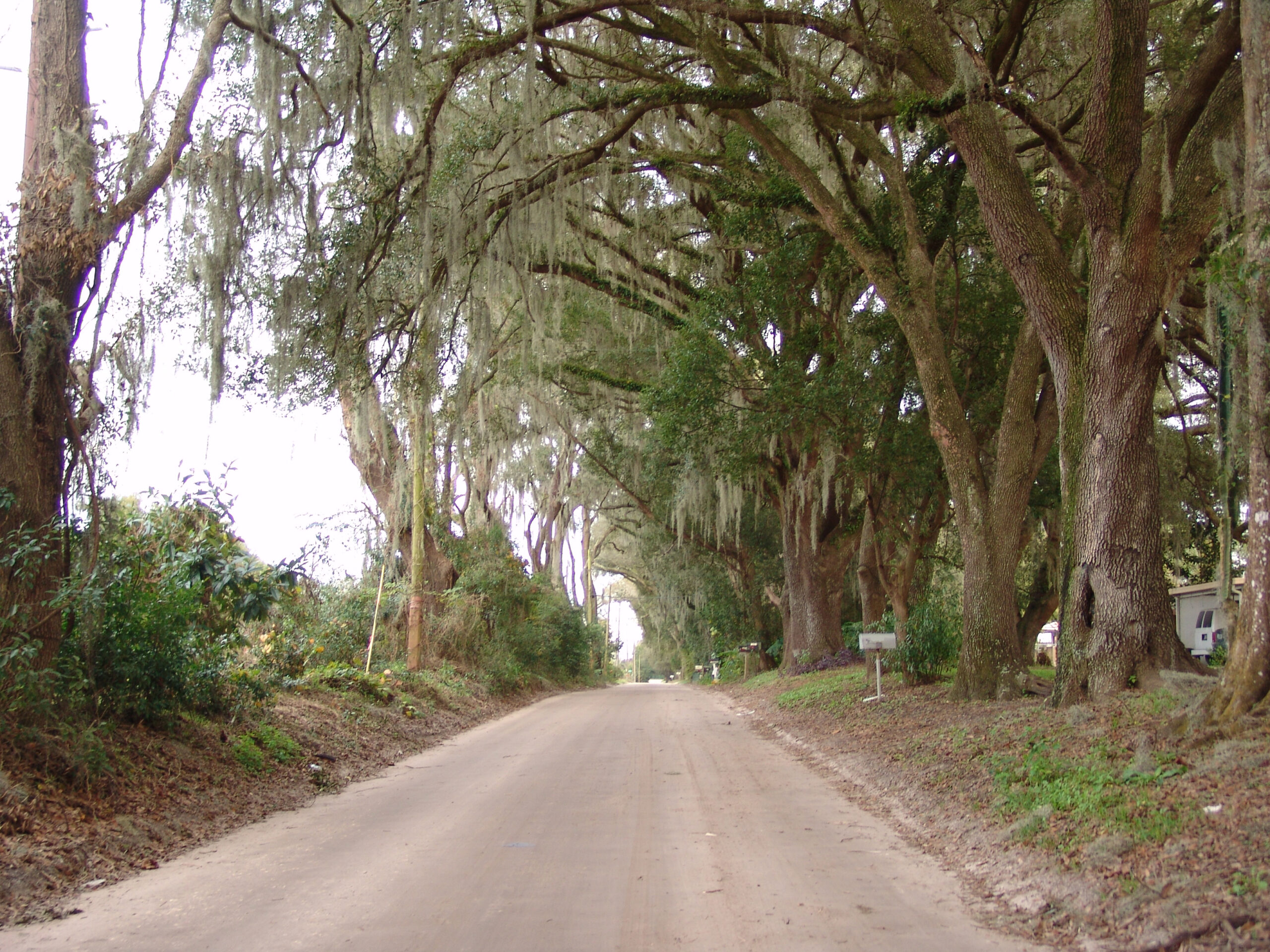
By a vote of 5-0, commissioners agreed to update the ordinance to shore up protections for Pasco’s “Heritage” trees — defined as live oaks 34 inches or larger in diameter or Southern magnolias 24 inches or larger — introducing new standards for tree canopy preservation and increasing both the fees for removal, as well as the credits for protection, of these trees.
Under these new standards, developers would be required to preserve 20 percent of the existing tree canopy of their developments, or the uppermost layer of trees whose branches and leaves cover the ground when viewed from above. For upland trees, these are measured by the total number of inches of upland trees that measure 10 inches in diameter at breast height (known as DBH).
DBH is a standard measurement to determine the diameter of a tree trunk, typically taken at an average adult’s chest height, which is roughly about 4.5 feet. Wetland trees are protected separately under state and local laws and require different levels of permits and regulatory consideration.
The new ordinance also requires that tree removal be submitted as part of a developer’s overall development plan.
When developers build out a new subdivision or apartment complex, they must pay a fee and either replace the trees or the fee goes into the Tree Mitigation Fund (TMF), which is funded by developers to allow the county to pay for a variety of tree canopy projects and is maintained separate from the county’s general revenue.
Under this new ordinance, for each tree removed, developers will pay $75 per inch DBH (up from $50) for most trees, while the cost goes up to $150 per inch DBH for Heritage trees. When a developer preserves trees, it can receive a credit of $150 per inch for every non-Heritage tree 10 inches in diameter or larger they preserve, while they will receive a credit of $300 per inch for every Heritage tree preserved.
A cap also was established for the maximum contribution to the tree mitigation fund equal to $10,000 per upland developable acre, along with a cap exemption for Heritage trees — and exemption that was advocated by District 2 Commissioner and Board vice chair Seth Weightman in order to incentivize their protection.
During the meeting, Commissioner Weightman said that this was a “consequential vote.” And, in a statement since that meeting to Neighborhood News, he said that the proposed ordinance will keep forward momentum for the preservation of Pasco’s Heritage trees for future generations while improving the overall tree canopy throughout the county.
“You can’t mitigate the destruction of Heritage trees,” Comm. Weightman said. “With this vote, we’re truly looking out for the health of our environment, our communities and future generations. I’m hopeful this will inspire developers to incorporate our Heritage trees into the design of our [Pasco’s] communities.”
According to the county staff, there currently is roughly $12.7 million in Pasco’s TMF. Funds can be pulled by the county from the TMF to pay for approved projects that increase Pasco’s tree canopy on county-owned properties, along with redevelopment of designated areas of the county through the Economic Growth Landscaping Program, which helps both homeowners and those affordable housing projects serving residents earning 80% of area median income or below, as well as any School Board beautification projects on campuses across the county.
Although the commission was supportive of the ordinance changes, some raised concerns that agricultural land owners looking to sell might be incentivized to clear cut their land before transferring the property to a developer, in order for the developer to avoid paying into the TMF once they acquire the property.
“If you have a heavily wooded site and you want to sell it, the developer who wants to buy it is going to say ‘clear it first and then I’ll buy it,’” stated Dist. 3 Comm. Kathryn Starkey, “I am happy to protect ag all day long. I’m not happy to take ag and let them (developers) skirt around this tree protection ordinance.”
Concerns About HB 399
Comm. Weightman also raised numerous concerns about House Bill 399 (which was passed during the 2026 State Legislative session and recently signed into law by Florida Governor Ron DeSantis) during the BOC meeting and echoed those concerns to the Neighborhood News about its impact for county planning, but also said that the county’s new tree ordinance can serve as a buffer to development.
“What the tree ordinance does,” says Comm. Weightman, “is that it’s a quality control mechanism for the environment, for neighbors and for projects So [developers] are gonna have to run a pro forma to see, based on $10,000 per upland developable acre plus the additional cost for Heritage trees, if them just coming in and blitzkrieging a site under the new House Bill 399 rules pencils out for them.”
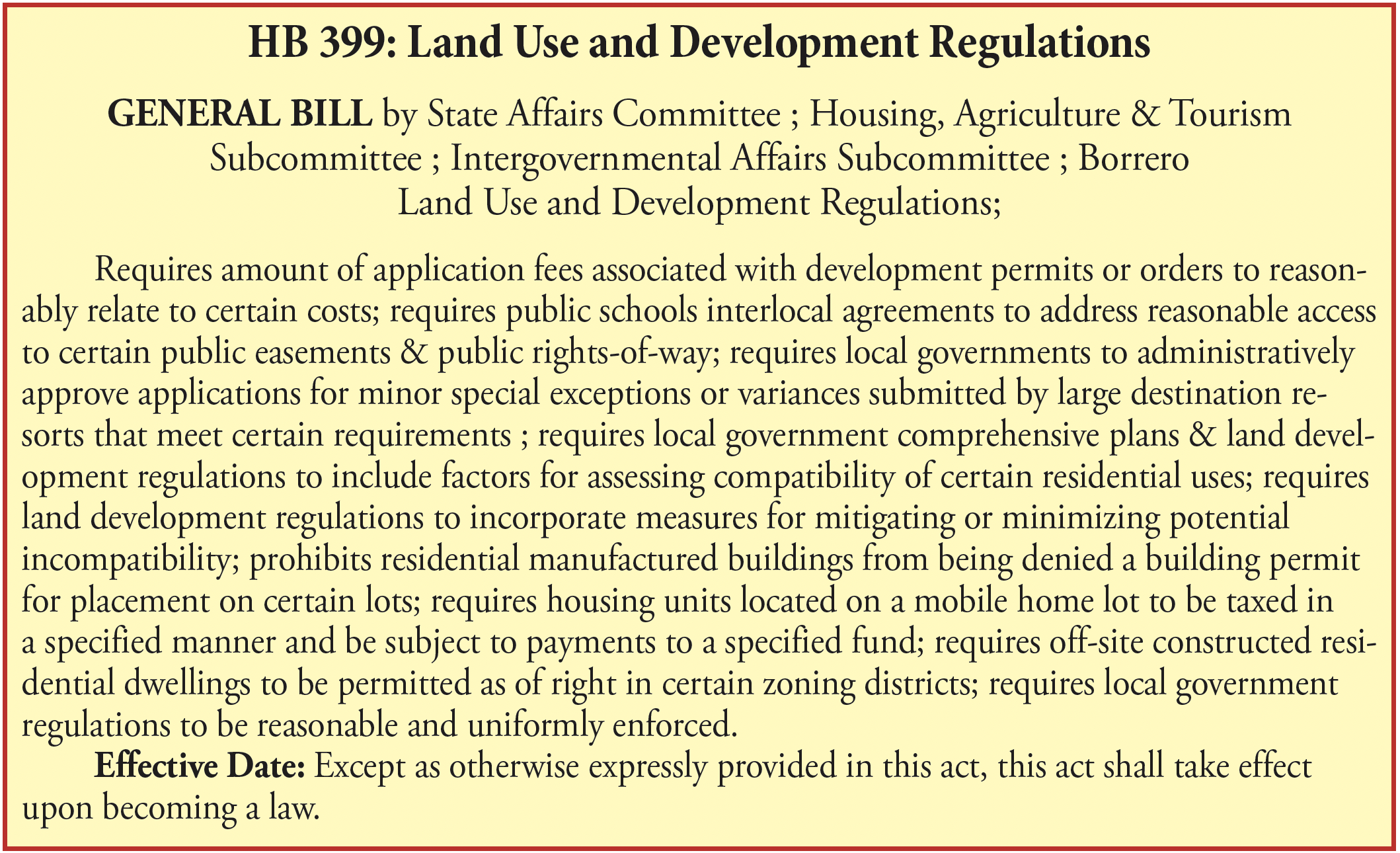
House Bill 399 (see text of the bill below) immediately went into effect. Supporters of the new law say it will help with the housing and affordability crisis impacting the state but opponents say it’s another attempt to erode home rule and could make it harder for local governments to deny projects they deem incompatible.
The law requires local governments to tie development fees to the actual cost of project review, while also adopting more objective standards for compatibility within the existing neighborhoods and the surrounding area. It also requires cities and counties to provide reasoning for why a project is denied.
“It erodes the ability for local planning commissioners to have a say,” Comm. Weightman adds. “It’s another golden ticket for development. The fact that local governments can’t choose incompatibility to deny a project is absurd.”
Some Pasco County residents appearing at the Mar. 24 BOC meeting also raised some concerns about the impact that so-called state preemption laws might have on the tree ordinance and others wanted to see the canopy preservation percentage further increased.
“Due to the fact that the state preemption exemptions weaken the 20% canopy preservation standards, we need to increase that to 30 percent,” said Julia Bartunek of New Port Richey during public comment.
However, many residents were supportive of the changes and were thankful that the county was at least attempting to tackle this issue. “I just want to thank you all for even the idea of a tree ordinance, I really praise you all for that,” said Linda Blake, also of New Port Richey.