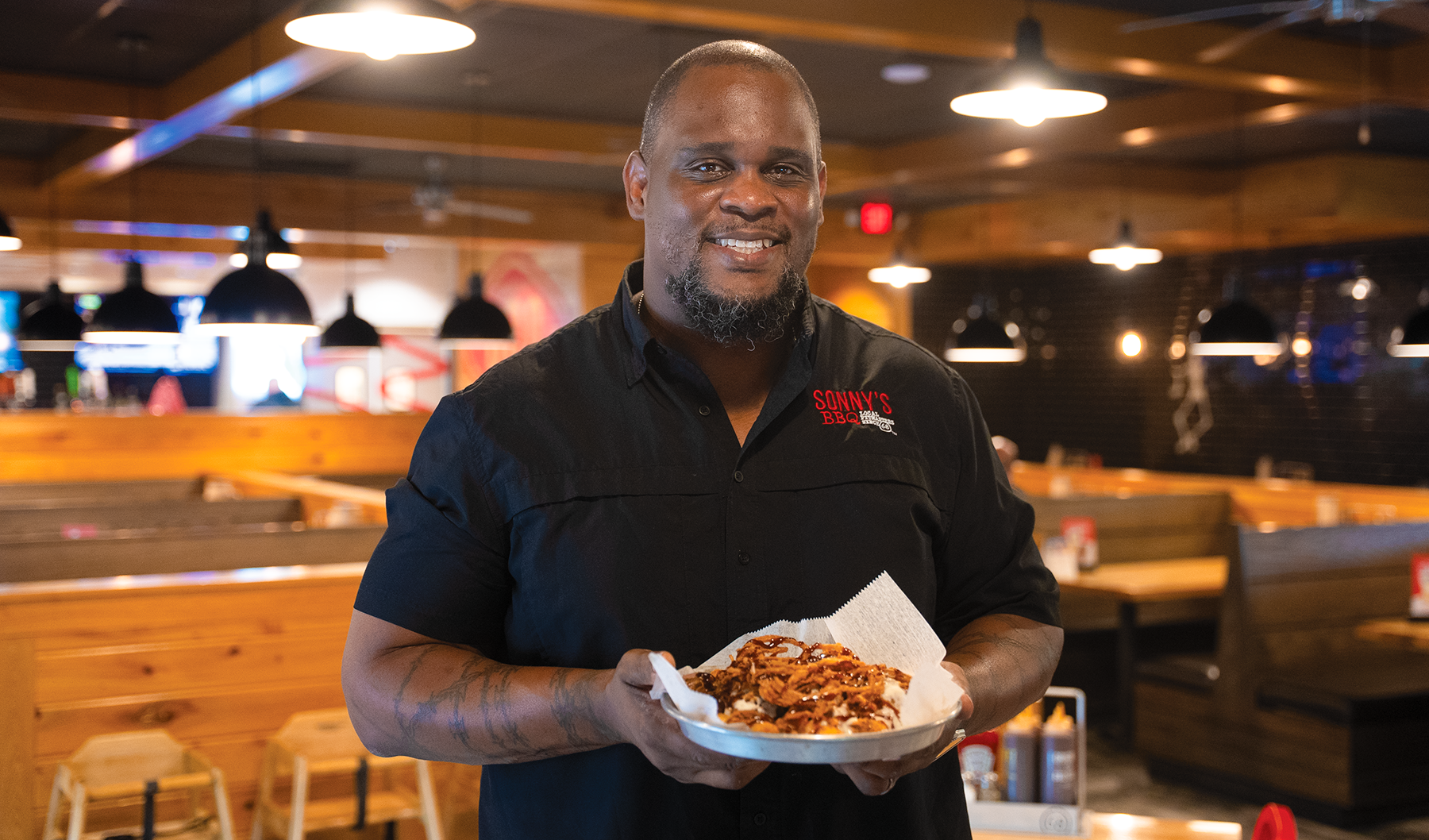
As a former Gator, I remember when former University of Florida guard Shannon Snell — who recently became the franchise owner of the Sonny’s BBQ (Note-Snell took over for previous franchisees and New Tampa residents Jim and Cristina Hoff, who ran the local Sonny’s since it opened in 1998) on Bruce B. Downs Blvd. in Wesley Chapel — was a first-team All-American back in 2003.
What I didn’t know was that Snell lived in Tampa Palms, but attended Hillsborough High instead of Wharton (where he was zoned to attend), and he was a three-year starter for the Terriers and a USA Today High School All-American.
But, Snell told me that he injured his shoulder during his junior season at Florida and somehow went undrafted by the NFL because he never had the shoulder repaired and couldn’t pass a physical. “It just kept getting worse,” he said. “But, I just wanted to rehab it and not have surgery.”
Between 2004-06, he had brief stints with the Denver Broncos, Minnesota Vikings and Dallas Cowboys, but told me, “I loved football, but I knew I didn’t have the passion to play that some guys did. My dad said that when you find your passion in work, it’s more fun, more like a hobby.”
So, when he was still living in Gainesville, Snell says he, “started at the bottom with Sonny’s. But, it had everything I wanted — a chance to move up, with a corporate structure.”
He adds that today, all Sonny’s franchisees have to also become barbecue pitmasters.
“Every location has a real person who really knows how to do barbecue,” he says. “And, since every pitmaster does barbecue a little different, you’re allowed to have your individuality, but within our corporate standards. We go to Florida BBQ Association competitions and even have corporate competitions, so we’re always learning how to do barbecue better.”
Today, Sonny’s has almost 100 locations throughout the Southeastern U.S., owned by CEO Jamie Yarmuth, and Snell says that even though Yarmuth is young himself, he has been “a mentor to me. After I was the GM of a Gainesville location for ten years, he came to me and said, ‘Wesley Chapel is coming available and we’d like you to become the new franchisee.’”
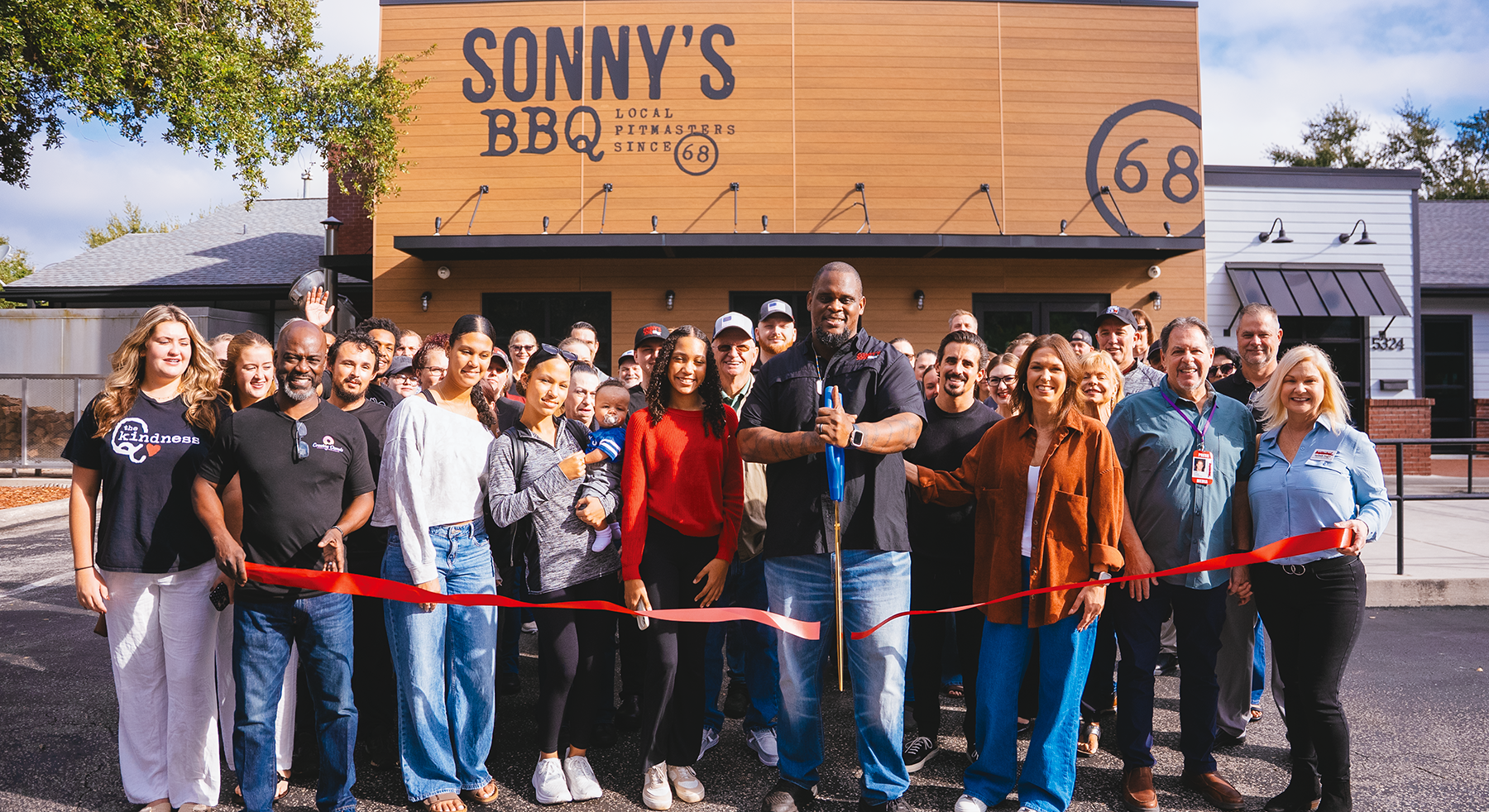
So, after a couple of months with Sonny’s “back home,” Snell held a North Tampa Bay Chamber ribbon-cutting (top photo) on Oct. 29, that Yarmuth and other Sonny’s execs also attended.
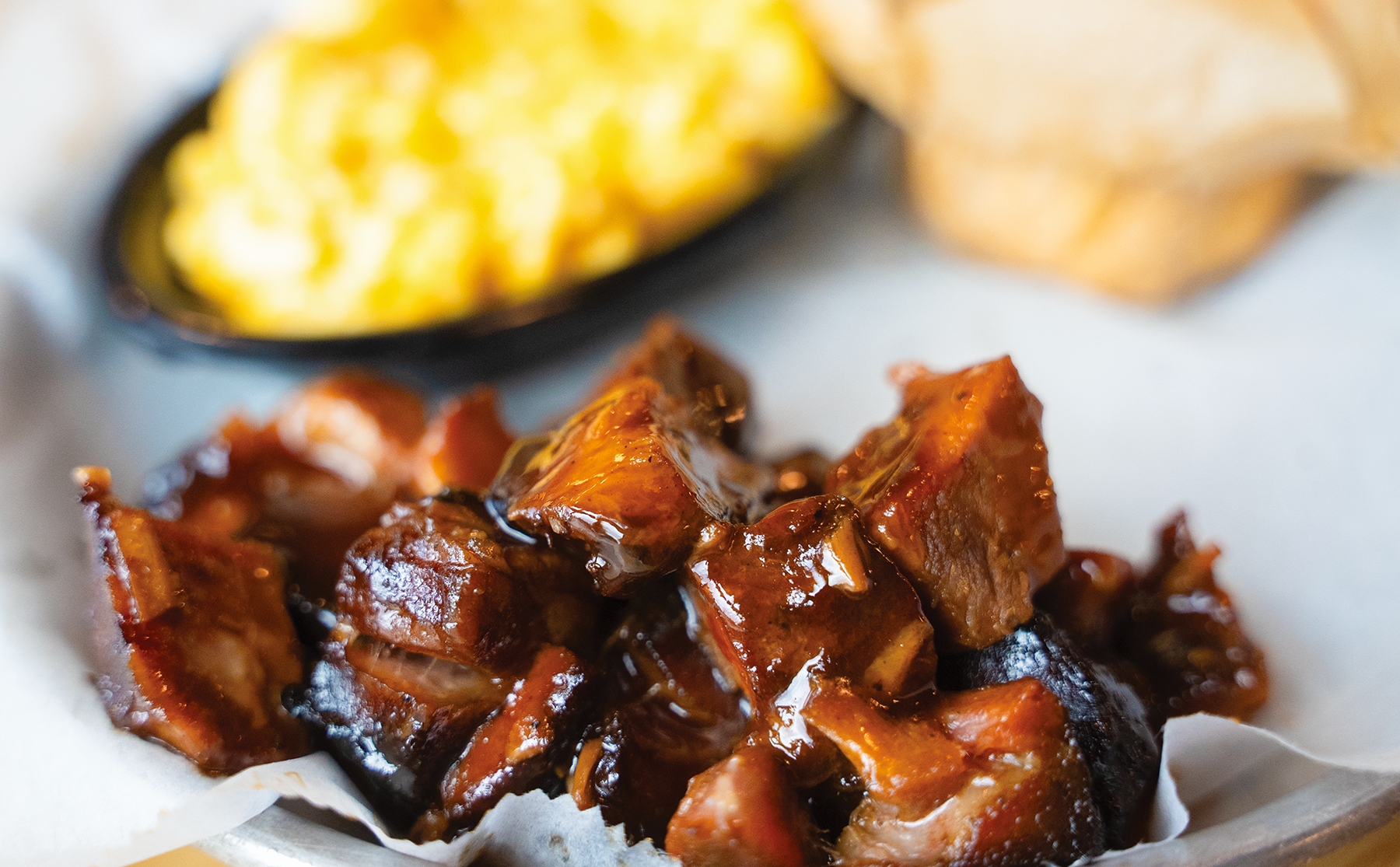
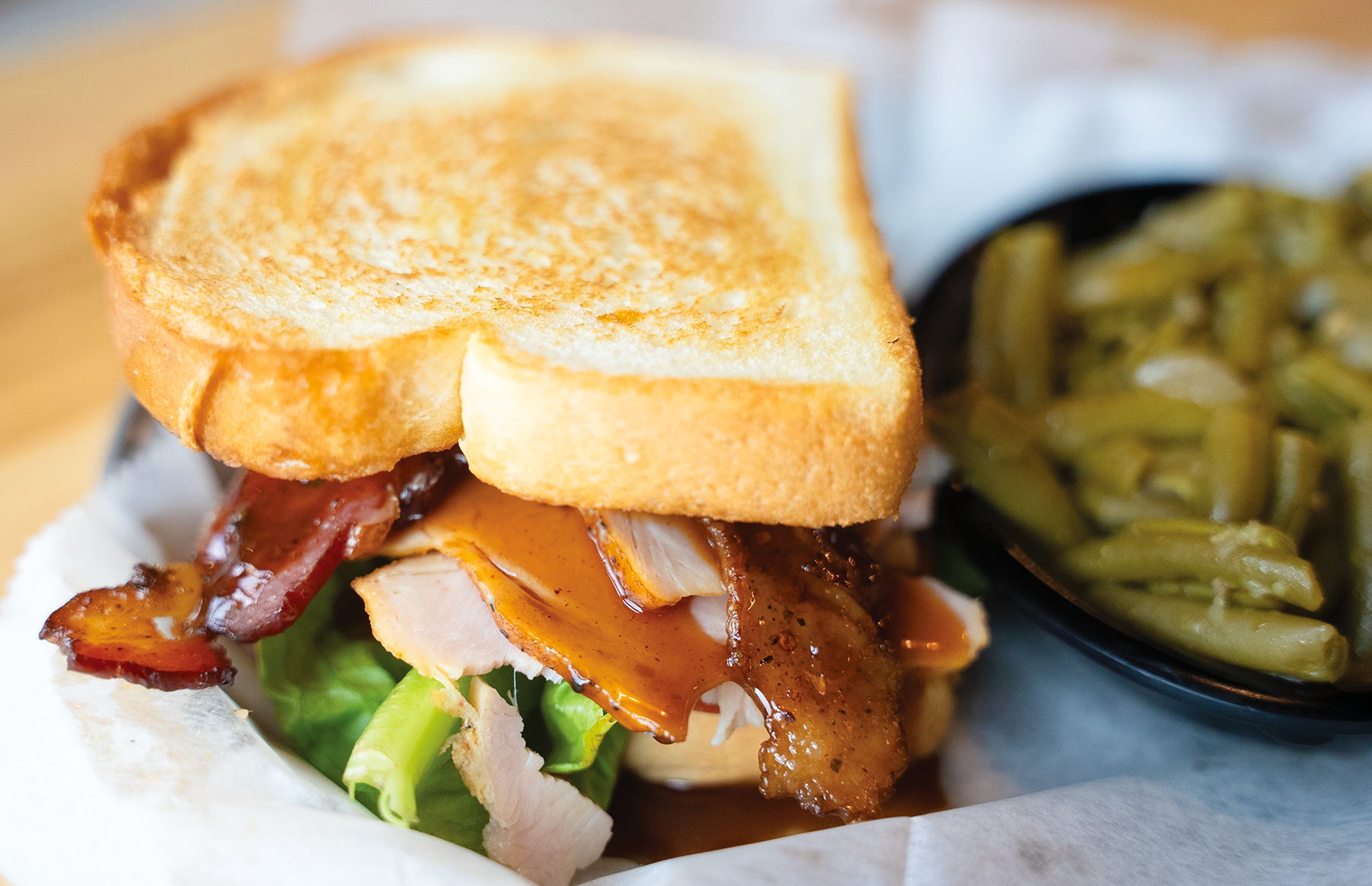
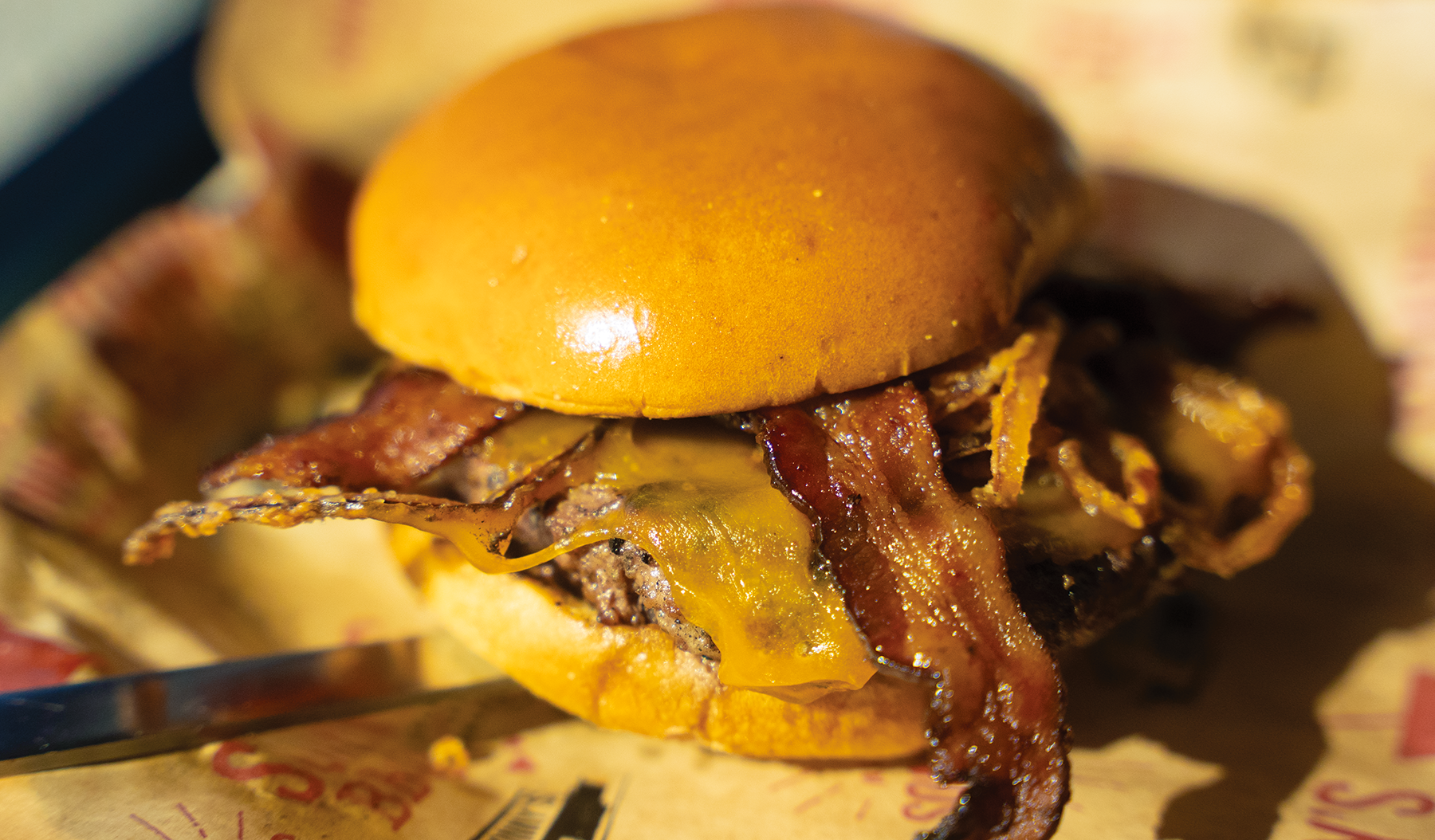
Snell likes to show off the seasonal menu, with items that aren’t always available — like the maple BBQ turkey club sandwich (left) and the maple BBQ pork burnt ends (above right), which were my favorites of the seasonal items. There’s also a pulled pork stack on “corncakes” (cornbread “waffles”), sweet potato fries, pulled pork mac & cheese and seasonal wings tossed in maple or golden BBQ sauce.
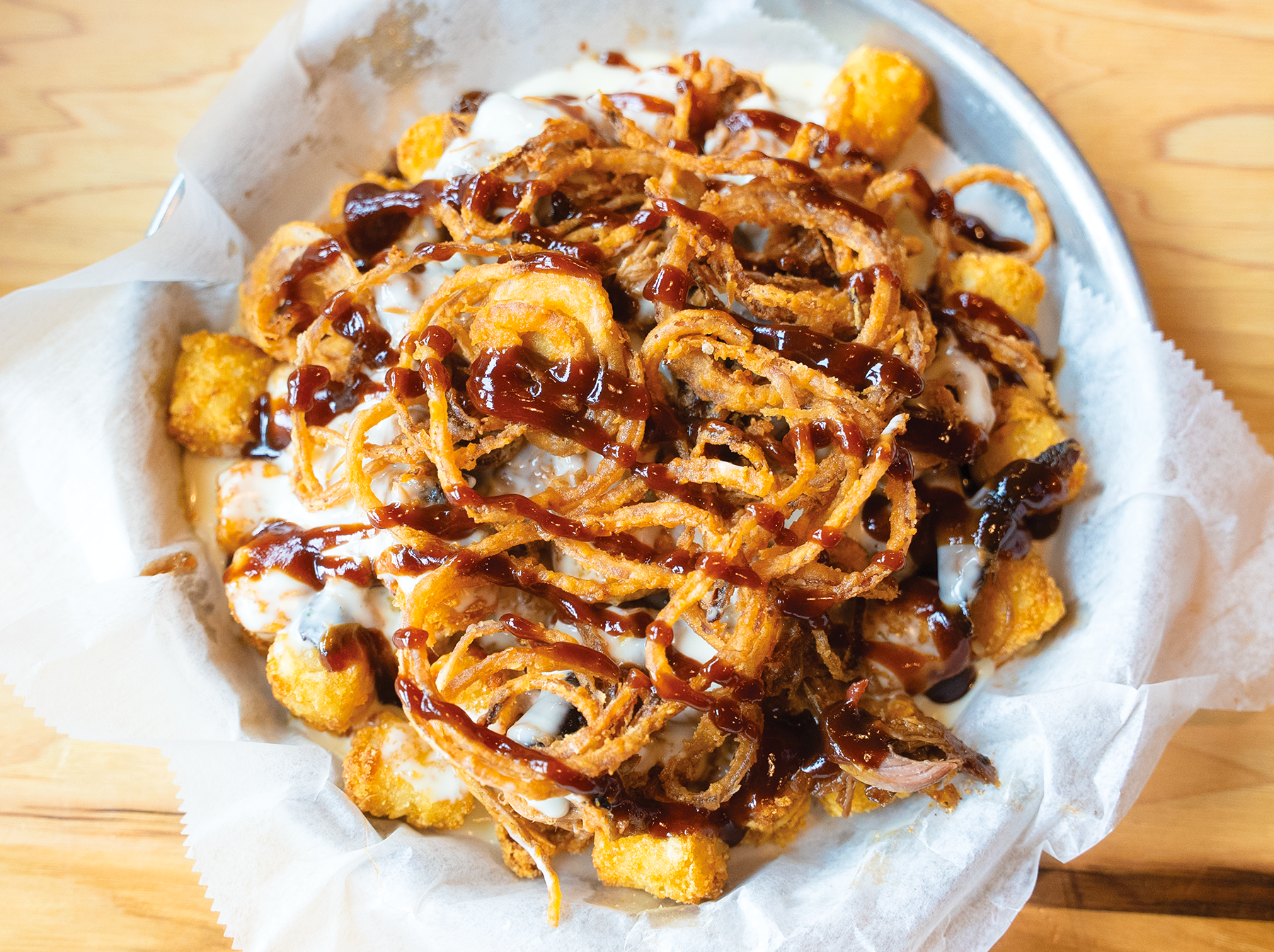
My favorite thing at Sonny’s, since BBQ sauce doesn’t always agree with me, are the grilled steakburgers (like the candied bacon burger below right) and the new loaded tots (topped with crispy onion straws, queso & drizzled with BBQ sauce, top left). We added some pulled pork because the tots just didn’t seem messy enough (just kidding — they were definitely messy!).
Every attendee at the ribbon cutting also received a free “Pork Big Deal” with any other entrée purchase. It included a big pulled pork sandwich, a side and a drink.
And of course, Sonny’s — “Pitmasters since ‘68” — also still has “Signature BBQ” like St. Louis-style and baby back pork ribs, beef brisket and more. We believe Snell is going to do great at his Wesley Chapel location!
Sonny’s BBQ (5324 BBD Blvd.) is open every day for lunch & dinner (11 a.m.-9 p.m.). For info, call (813) 994-8989 or visit SonnysBBQ.com. — GN
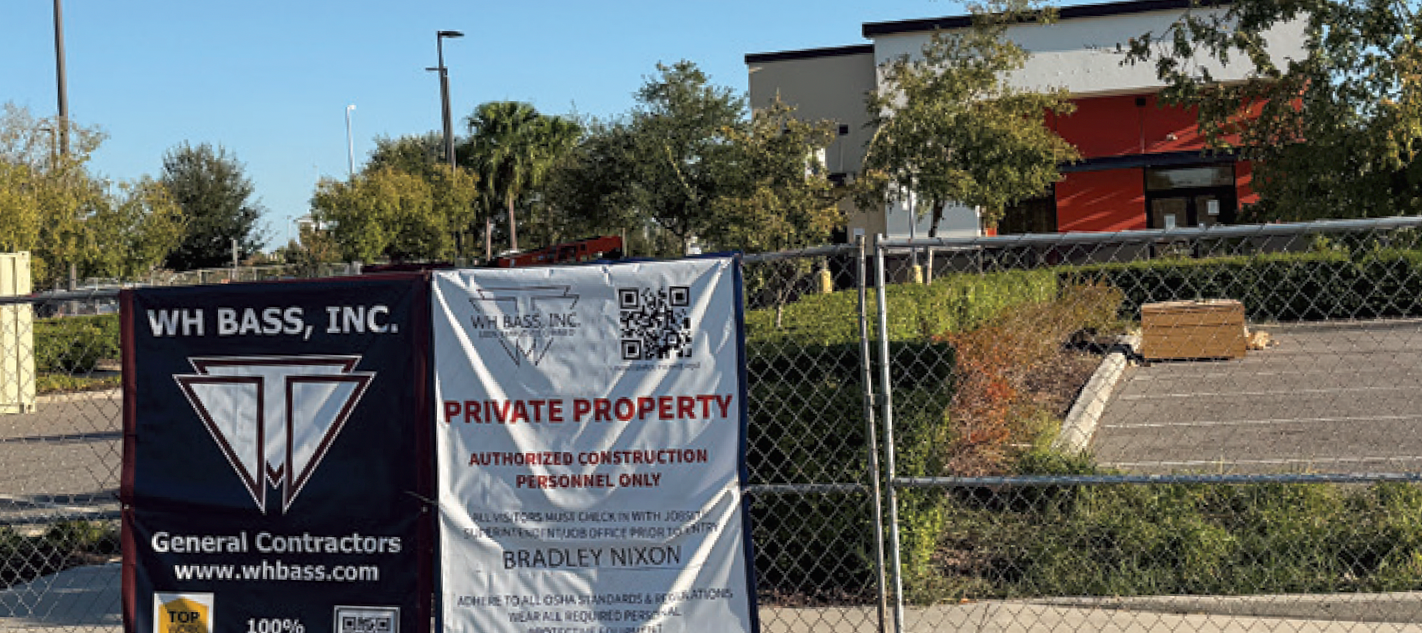
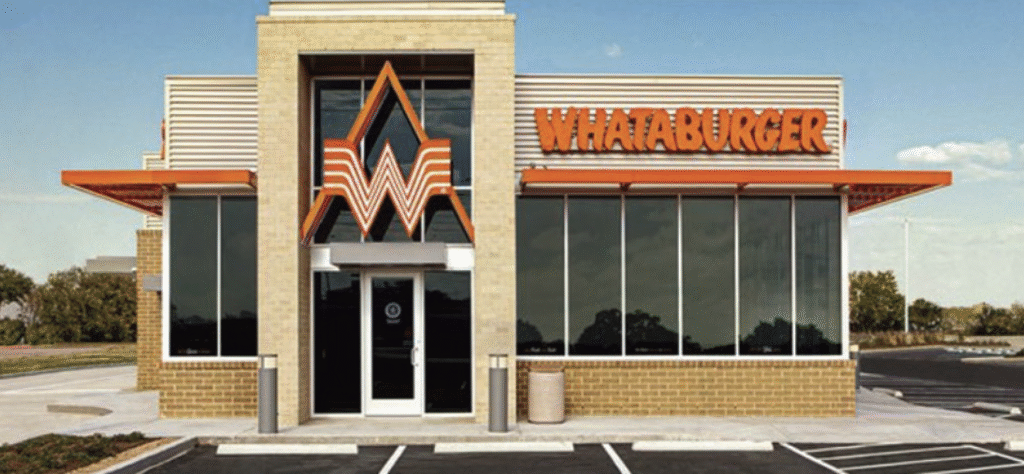
Although there previously were two locations in Zephyrhills and others around the Tampa Bay area that closed, Whataburger, the Texas-based fast hamburger chain with nearly 1,200 U.S. locations, has begun the interior renovations at the former Aussie Grill, located at 25340 Sierra Center Blvd., between Walk-On’s and Bonefish Grill.
The first new Whataburger in the Tampa Bay area in years will actually open soon in Largo, but the 2,800-sq.-ft. Lutz/Wesley Chapel location is expected to open by the summer of 2026.
The $1.3-million renovation will be led by general contractor WH Bass, Inc. which recently fenced in the former Aussie Grill. The new Whataburger is expected to hire 80-100 people. — GN
You only have to look at today’s mobile phones and the advent of artificial intelligence (AI) in both workplaces and schools to understand how quickly our technology is evolving.
That’s why the advent of electric bicycles, aka “e-bikes,” has become an important “should I or shouldn’t I?” issue for the parents of teens and even pre-teens clamoring for ebikes this holiday season. These motorized bicycles also are a hot topic for insurance companies now dealing with a rise in accidents for riders of all ages on these e-bikes, as well as for the Florida Motorcycle Safety Coalition (FMSC), which included a seminar about electric bicycles at its quarterly meeting held Nov. 13-14 at the Hyatt Place Tampa-Wesley Chapel hotel on the north side of S.R. 56.
Yes, there is clearly a growing concern about e-bikes and the regulations governing them — everything from properly defining what an e-bike is to discussing possible legislation to address these problems, especially with under-age, unlicensed drivers. All of these concerns were at least discussed, if not completely addressed, during the session at the FMSC meeting.
An electric bike, or “e-bike,” is defined in Florida Statutes Chapter 316 as, “A bicycle or tricycle equipped with fully operable pedals, a seat or saddle for the use of the rider, and an electric motor of less than 750 watts which meets the requirements of one of the following three classifications:
(a) ‘Class 1 electric bicycle’ means an electric bicycle equipped with a motor that provides assistance only when the rider is pedaling and that ceases to provide assistance when the electric bicycle reaches the speed of 20 miles per hour.
(b) ‘Class 2 electric bicycle’ means an electric bicycle equipped with a motor that may be used exclusively to propel the electric bicycle and that ceases to provide assistance when the electric bicycle reaches the speed of 20 miles per hour.
(c)‘Class 3 electric bicycle’ means an electric bicycle equipped with a motor that provides assistance only when the rider is pedaling and that ceases to provide assistance when the electric bicycle reaches the speed of 28 miles per hour.”
These speed limit requirements and the presence of pedals on e-bikes are what keep them classified as bicycles rather than another type of motor vehicle. The problem with these definitions is that, as more and more new e-bikes continue to enter the market that are able to exceed the 28 mph limit set by the Florida Statutes, a legal limbo arises as to how these faster e-bikes should be classified.
In order to be considered a “street legal” electric motorcycle, the e-bike must have safety features like turn signals, headlights, brake lights, and be registered and license-tagged. Vehicles exceeding the electric bike definition, but that do not have these features, might only be considered for “off-road use,” like how gasoline powered dirt bikes have been classified for many years.
E-Bikes vs. Mopeds vs. Motorcycles
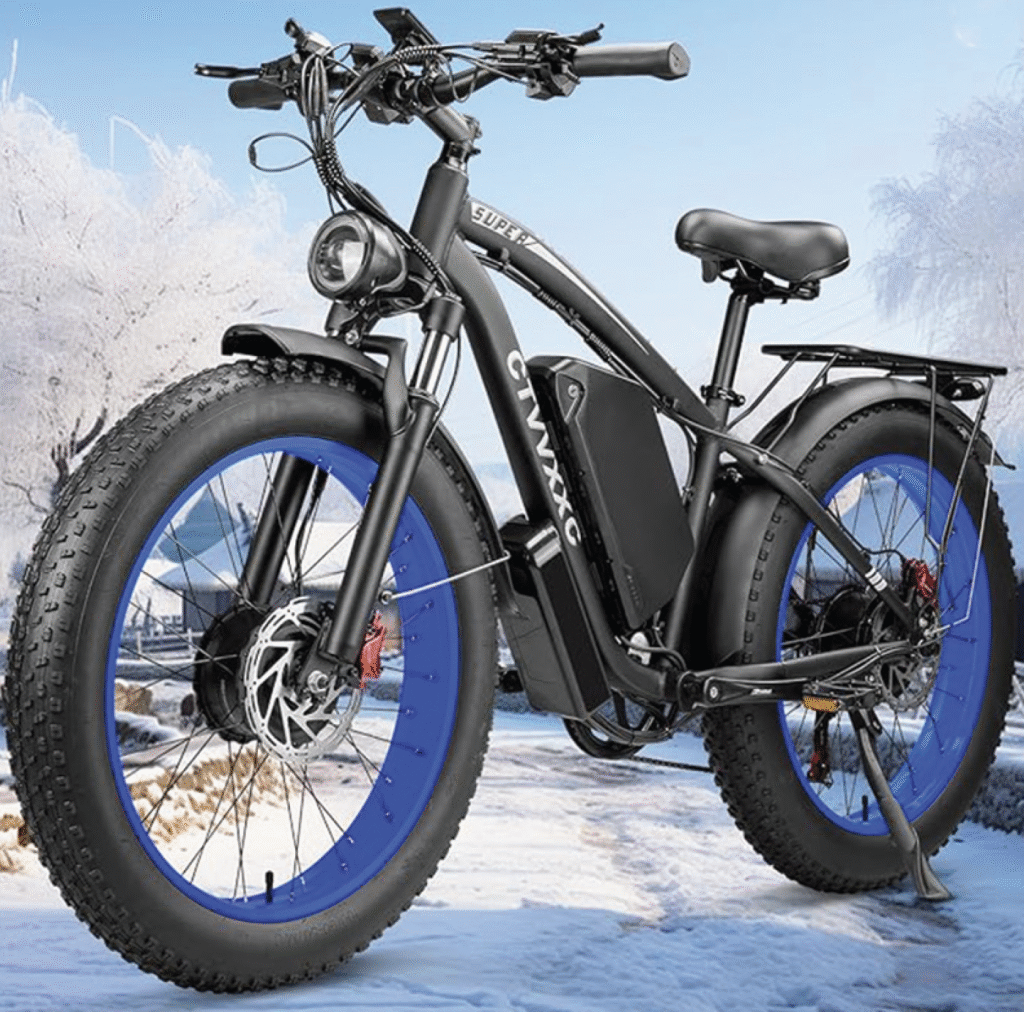
This $555 (on Amazon.com) CTVVXXC-brand “Electric Bike,” which has dual 3000-watt motors and can reach speeds of 47 mph, would be considered to be an “electric motorcycle” by the State of Florida if proposed House Bill 243 becomes law. Unlicensed drivers could then be ticketed just for operating this “e-bike.”
When an e-bike is capable of reaching speeds of up to 29-30 mph, it enters a legal gray zone in which it is closer to a “moped” — if it meets statutory requirements.
The Florida statutory definition of a moped is, “any vehicle with pedals to permit propulsion by human power, having a seat or saddle for the use of the rider and designed to travel on not more than three wheels, with a motor rated not in excess of 2 brake horsepower and not capable of propelling the vehicle at a speed greater than 30 miles per hour on level ground and with a power-drive system that functions directly or automatically without clutching or shifting gears by the operator after the drive system is engaged. If an internal combustion engine is used, the displacement may not exceed 50 cubic centimeters.”
But if an e-bike or moped is able to reach speeds in excess of 30 mph, it can be classified as an unregistered motor vehicle or a motorcycle.
“So, if you have an e-bike that is doing 40 miles an hour, it really classifies as a motor bike,” said Bill Milton, the chief counsel for the Florida Highway Patrol (FHP) and co-speaker for the state’s “e-bike definition, HB243, SB382, and More Panel,” at the FMSC meeting on Nov. 13. “There’s nothing else that classifies it. It would be a motor vehicle because a bicyclist, even on a human power bicycle, is still a vehicle.”
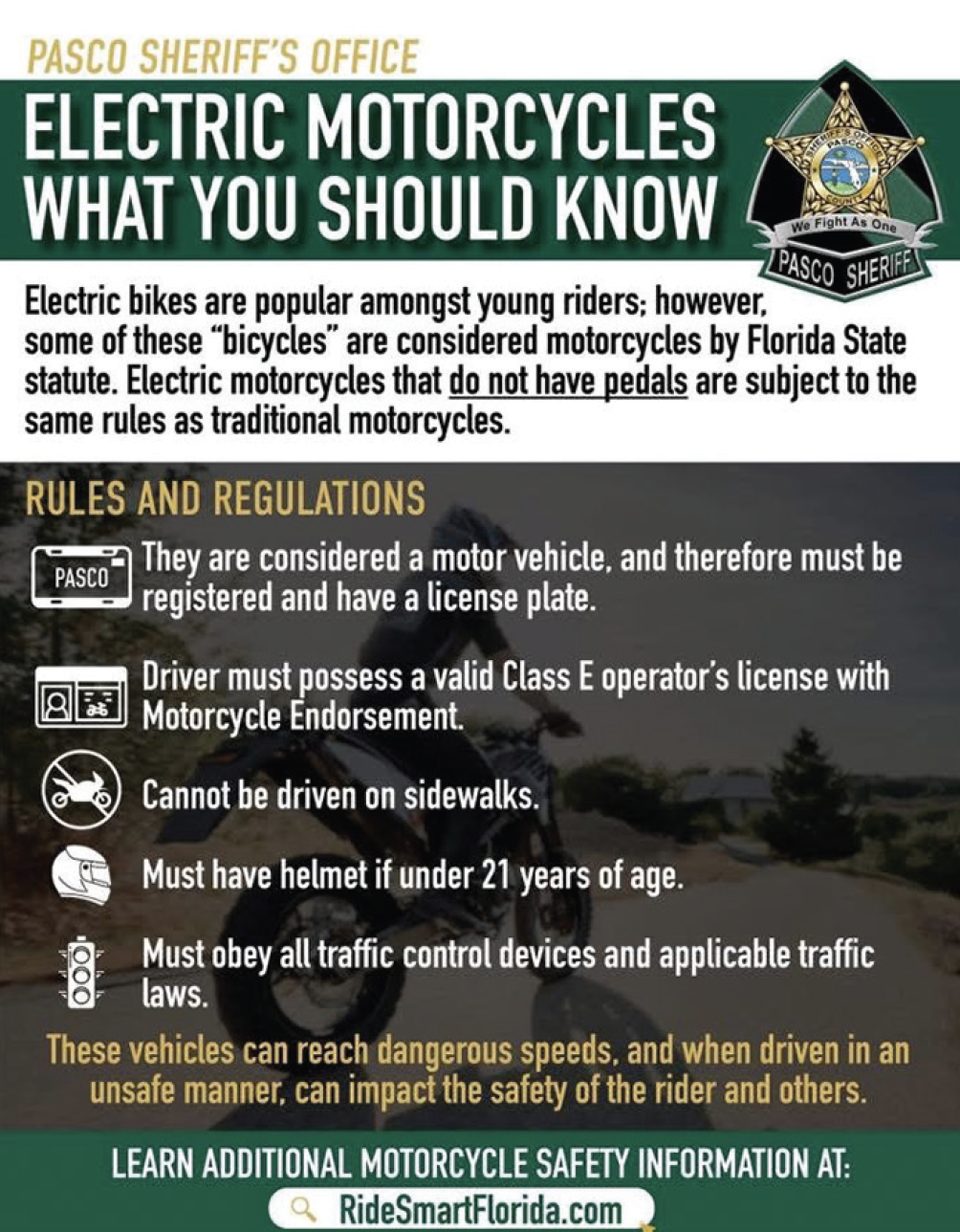
The consensus of the presentation was that, as of right now in Florida, any e-bike exceeding the 28 mph defined limit may fall under motor-vehicle law, creating uncertainty and confusion for not only the law enforcement community, but also for the parents of the young, often unlicensed children begging them to buy an e-bike. Attendees at the FMSC meeting discussed how law enforcement is trying to deal with e-bikes statewide, including Pasco County, which had a flyer distributed at the FMSC meeting (top photo).
“I’ve talked to a few law enforcement officers in Wildwood and they have a small department, but they’re out there with lasers and they’re clocking [the e-bikes],” said one attendee. “I asked [one officer], ‘are you making the correct charge? Are you writing them up?’ and he said, ‘we’re going to write them up, and we’re going to let the judge decide.’”
Meanwhile, the Pasco County Sheriff’s Office has created a safety flyer reminding people that some e-bikes are considered motorcycles by Florida State Statute and must follow the same rules as traditional motorcycles including: having proper registration and license plate, have a Class E (non-commercial) license, obey traffic laws, must wear a helmet (unless over 21 years old) and are prohibited from driving on sidewalks. Also required for these higher-speed e-bikes are “MOTORCYCLE ALSO” or “MOTORCYCLE ONLY” license endorsements.
The flyer also warns that, “These vehicles can reach dangerous speeds, and when driven in an unsafe manner, can impact the safety of the rider and others.”
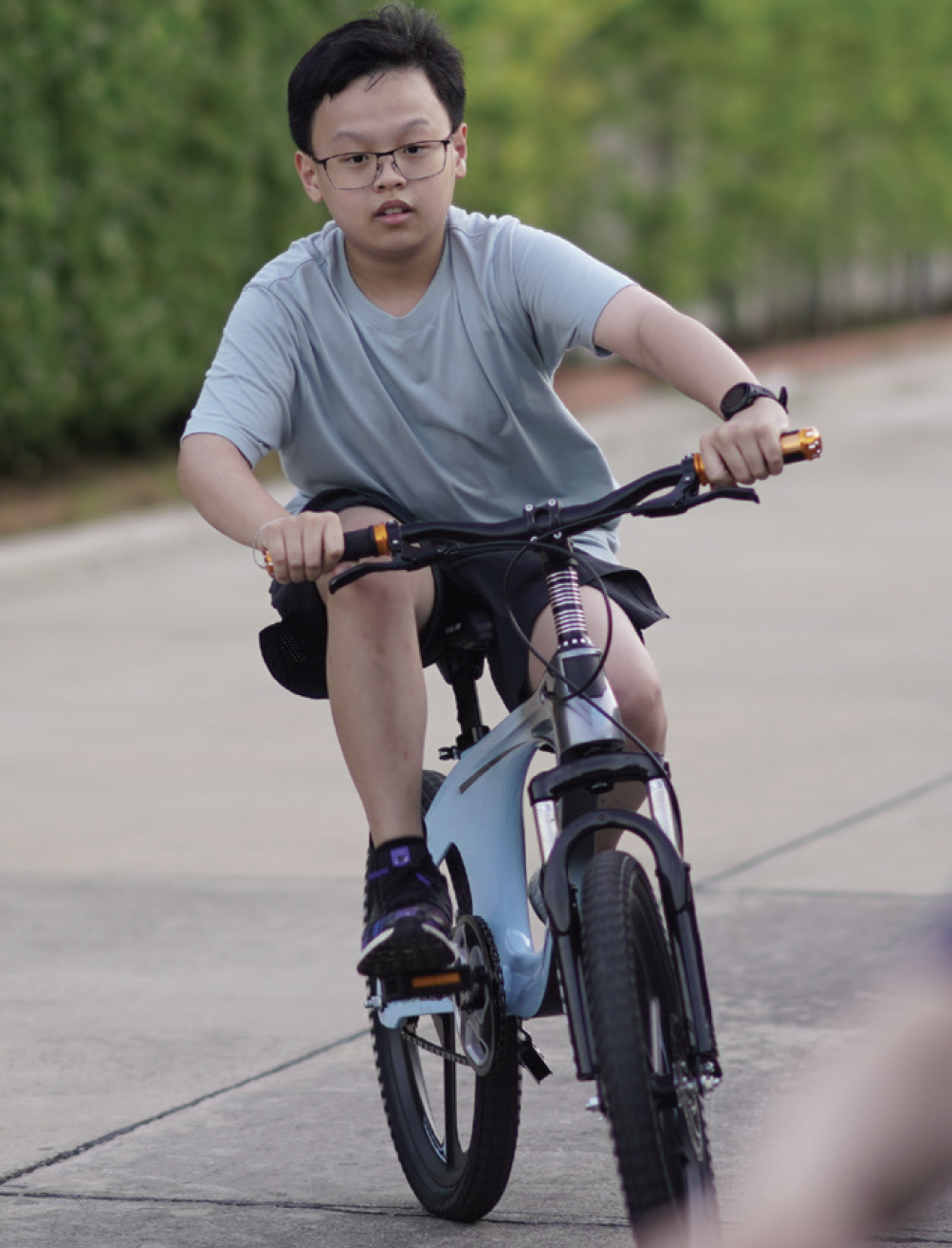
Young e-bike riders in Florida are not required to have a drivers license because e-bikes that can not exceed 28 mph have the same legal rights as traditional bicycles. This means young e-bike riders can still use sidewalks and bike lanes, unless local law restricts such actions. The state also does not enforce a statewide minimum age restriction on who can ride an e-bike, meaning that anyone is allowed to ride them, regardless of their age.
New E-Bike Bill Proposed
Unlicensed riders under age 18 must wear a helmet when operating an e-bike, even those that reach speeds of 28 mph or less. (Photo source: istockphoto.com)
As concerns among Florida citizens grow about the possible dangers e-bikes pose to streets, lawmakers are now proposing a solution to address the problem.
House Bill 243, sponsored by State Representatives Yvette Benarroch (R-Collier County), Kim Kendall (R-St. John’s County) and Omar Blanco (R-Miami), addresses Florida’s rising e-bike concerns by modifying the state’s current definition of e-bikes.
If passed, this bill will update the current list of definitions for e-bikes and motorcycles.
Under this proposed bill for the 2026 Legislative Session, e-bikes that exceed 28 miles per hour will no longer be defined as such and will fall under the new definition of “electric motorcycle.” The proposed definition defines “electric motorcycles” as “any motorcycle powered by an electric motor of 750 watts or more that is capable of a speed greater than 28 miles per hour.”
Additionally, the bill will modify the existing definition of a motorcycle by including “electric motorcycle and an autocycle” into it.
For e-bikes, the new bill adds an amendment to Section 316.068 of the Florida Statutes regarding crash reports, stating that when describing the vehicle in a crash they must, “include whether the crash involved a motorized scooter, an electric bicycle, or an electric motorcycle.”
For education about e-bike safety, the bill adds that on the examination people take to obtain a Class E (non-commercial) driver’s license exams are required to have, “At least five of the 25 questions addressing bicycle and pedestrian safety must specifically cover safe electric bicycle and motorized scooter operation for all road users.”
On the manufacturing side of e-bikes, the bill also will require manufacturers and distributors to affix a permanently visible label to each e-bike that states the classification number, top speed and motor wattage. The bill adds that owners of e-bikes are not allowed to add modifications to increase speed, and that, “Any person who knowingly modifies an electric bicycle as provided in this subsection commits a noncriminal traffic infraction, punishable by a fine of $100. Any person who commits a second or subsequent violation of this subsection within 3 years after a previous violation commits a noncriminal traffic infraction, punishable by a fine of $250.”
Regarding who may operate or rent a Class 3 e-bike, the bill states that the individual must have a valid learner’s or driver’s license and must have it in their possession at all times. A person who is caught without a license will get a verbal warning and, if the individual is still not compliant, they may be charged with a noncriminal traffic infraction.
It is important to note that while HB243 offers clearer information on e-bike definitions and safety, it is still currently just a bill and has not yet been passed into law. For current e-bike riders and parents of young riders, it is crucial to stay informed about the latest laws and ensure that all state regulations and safety guidelines are followed.
About Insurance
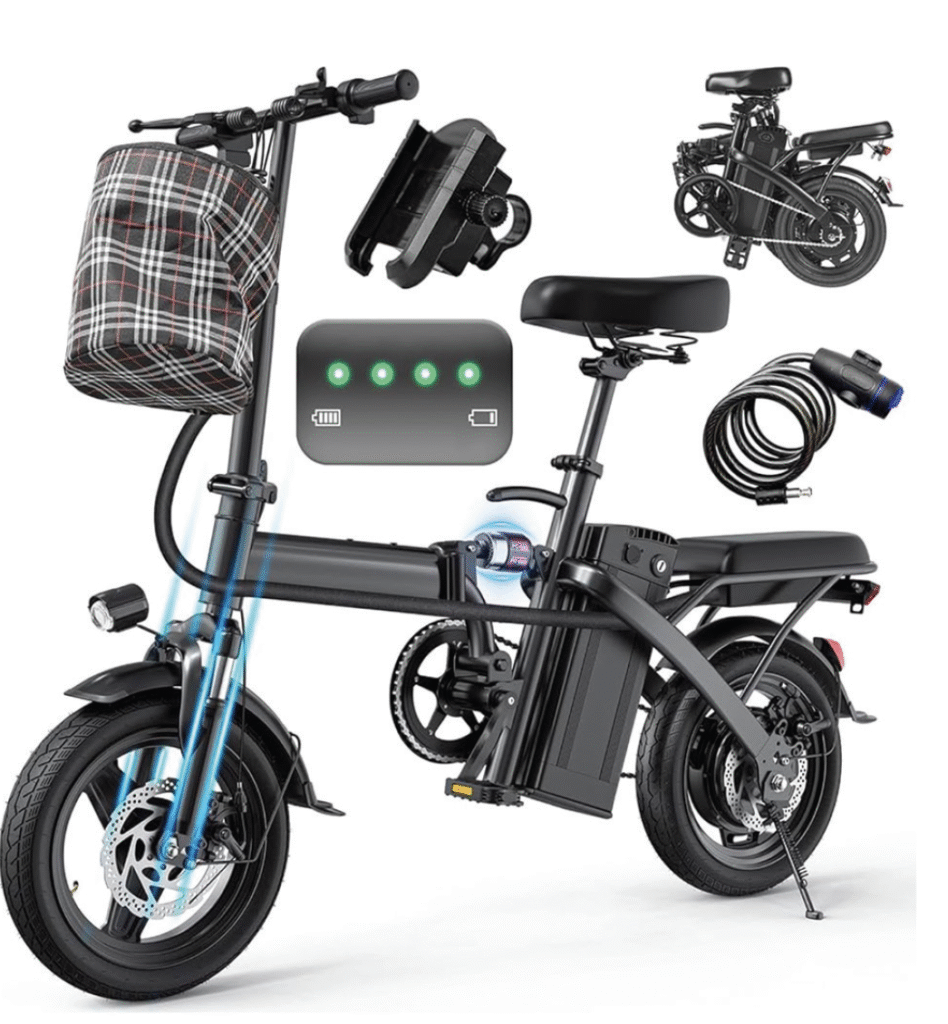
Although the least expensive e-bikes we found on the websites of local bicycle shops ranged from about $1,200 to more than $10,000, we found this T5-Pro folding e-bike on Amazon.com, which has a 560-watt motor and can reach assisted speeds of only 24 mph, was on sale for only $168.99 (regular price: $199.99).
Because of the increase in the number of e-bikes on the road, both single-vehicle accidents and collisions with other vehicles and pedestrians involving e-bikes are definitely on the rise.
In fact, according to a Google search, the number of e-bike injuries doubled every year between 2017-22 and 2024 (the most recent year with data) shows, “a continued surge in injuries, especially among children and adolescents, including fractures, head trauma [and others].”
As such, people are starting to invest in insurance for their e-bikes, although Manny Saldana, the owner of Crown Insurance Group says that the only carrier he knows for sure is writing e-bike policies is Progressive. I went on Progressive.com and found that at my age, with a clean driving record the past three years, insurance for an e-bike that can’t go faster than 28 mph was $202 per year, which would give me $10,000/person or $20,000/accident in bodily injury and $10,000 in property liability coverage, plus $2,500 medical coverage (for me) and more.
“We have seen a large influx of claims involving e-bikes over the past year,” Saldana told me. “The biggest problem seems to be that even if the e-bike rider is using the sidewalk, vehicles coming out of a side road are looking for other vehicles coming from the street as they cross or try to make a turn, not an e-bike coming from the sidewalk. Especially with inexperienced, unlicensed e-bike riders, it’s becoming a pretty big issue.”
For more info about current e-bike definitions and safety regulations, visit Leg.State.FL.US or RideSmartFlorida.com (the latter is the state’s official website for all motorcycle-related resources).
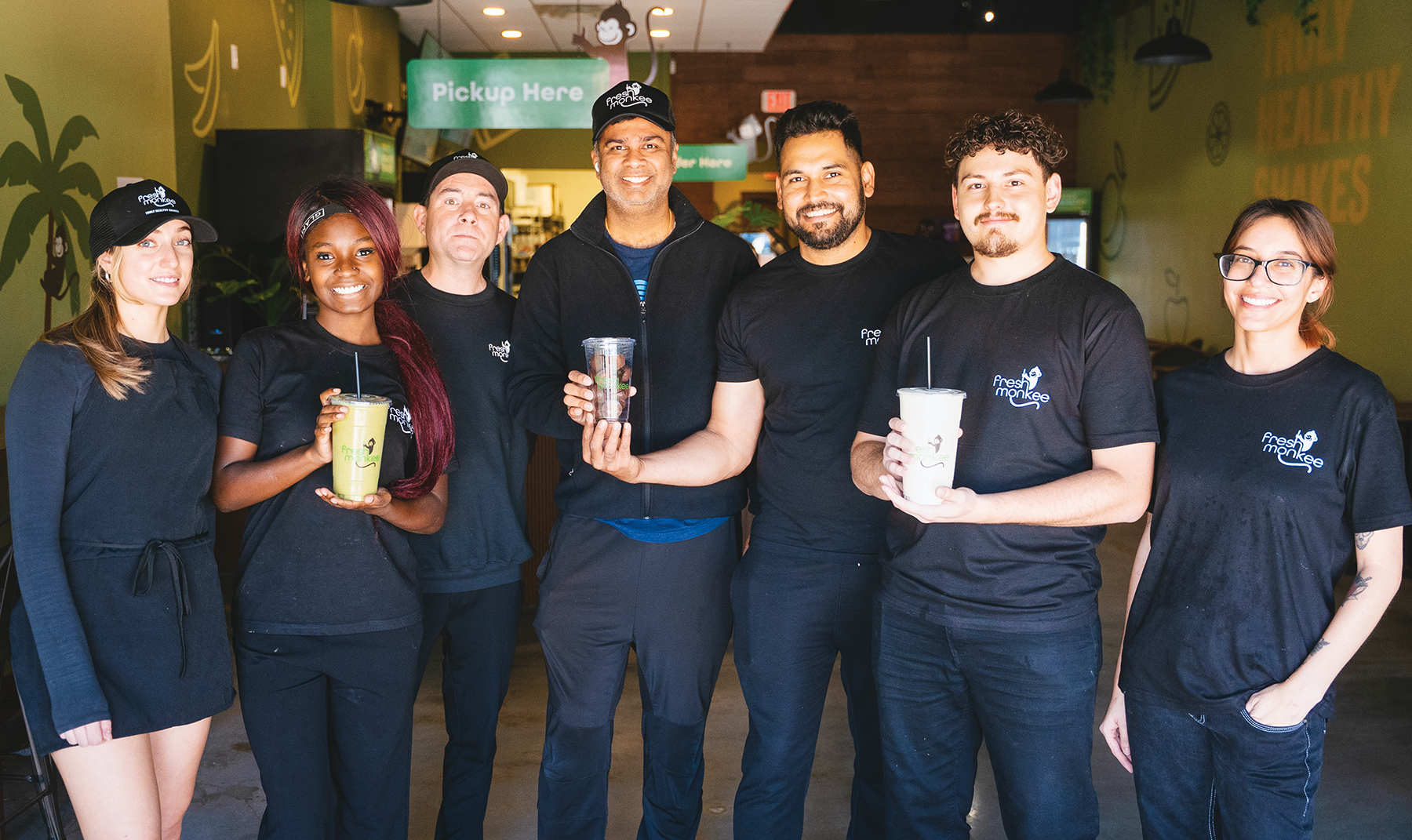
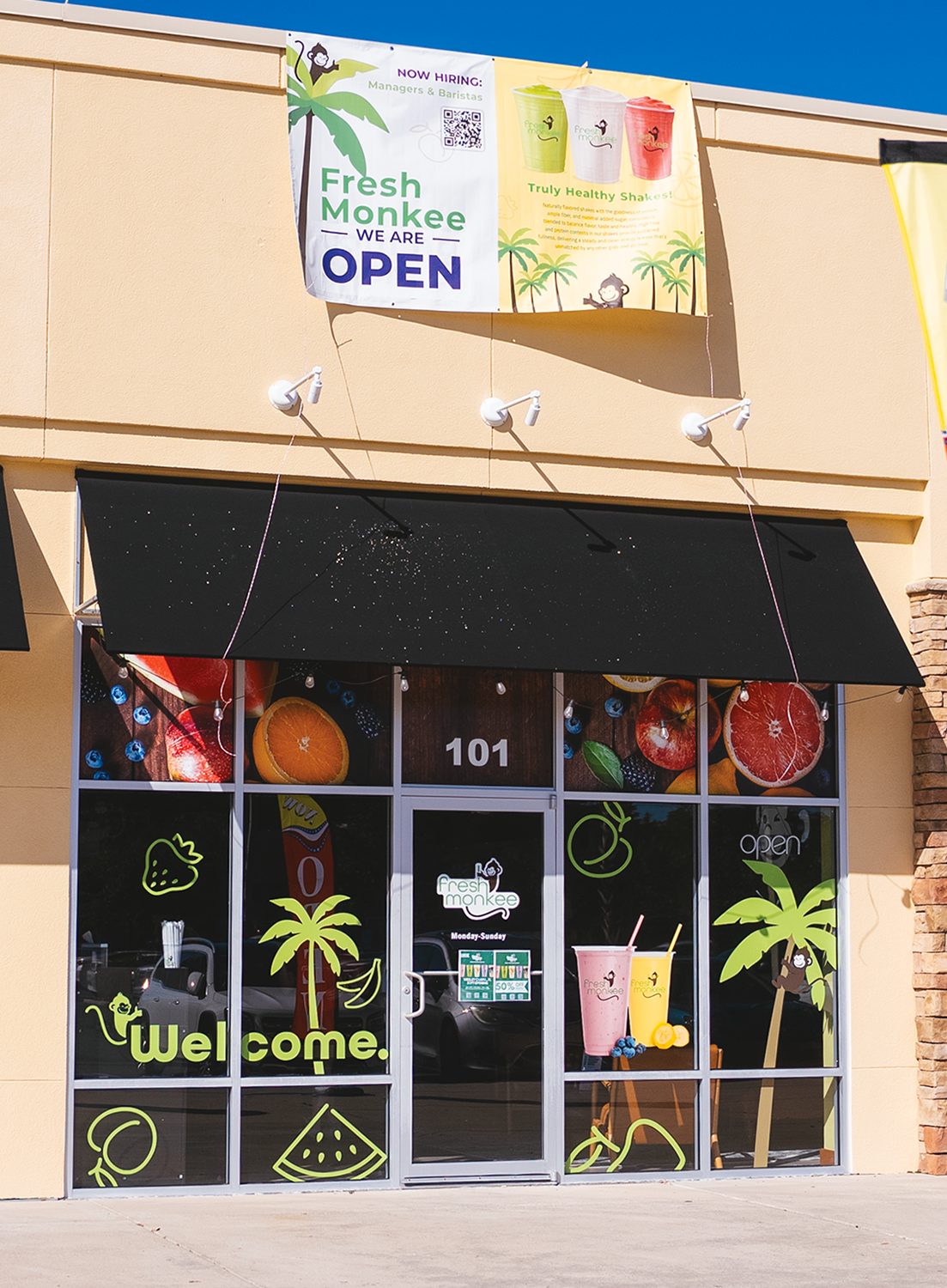
Congratulations go out to Phani Mukkavilli (center person holding a cup in the photo, above) and Keerthi Gollamudi (not in the picture), the franchise owners of the new Fresh Monkee Wesley Chapel “healthy shakes shop,” located at 6417 E. County Line Rd., Suite 101 (which, we know, is actually in New Tampa, not Wesley Chapel) — in the same plaza as LA Fitness, in the spot previously occupied by Island Fin Poké Co.
Fresh Monkee is a growing brand that differentiates itself from the usual “smoothie” shops because it doesn’t rely on sugary fruit blends and strange powders. Founder Judy Flynn started in 2014 with “10 recipes and $5,000” in a 650-sq.-ft. space in Wethersfield, CT. Although nine of its current 28 locations (in 14 states) are in Connecticut, the New Tampa/Wesley Chapel location is the first in the Tampa Bay area. There are 27 more locations listed as “Coming Soon” on TheFreshMonkee.com, including Palm Harbor.
Flynn said on the website that her vision for Fresh Monkee was simple: “Start every shake with high-quality protein, good carbs, healthy fats and, most importantly, real ingredients like the ones in your own kitchen. And make each shake to order — fast, convenient, and healthy.”
Perfect for the LA Fitness crowd next door, there are 25 “Protein Shakes” on the menu, from the “Chunkee Monkee” — vanilla (or milk chocolate) protein, banana and natural peanut butter (shown left) — to “Antioxidant Berry” (water, splashes of pomegranate, or “pom,” juice, orange juice and milk, with vanilla protein, spinach and mixed berries) and so many more.
There also are green shakes, like the “Ultimate Green” shown below left, with water, splash of pom juice, spinach, cucumber, green apple, banana, chia, flax, pineapple, ginger and your choice of lemon, orange or lime. Charmaine was a little surprised by how much she liked it.
There also are “Mass Shakes” to help increase mass, like “Mass PB Cookie” and “Mass Strawberry Oats.” There’s even a “Protein Iced Coffee.”
Also available for your shakes are coconut and almond milk and more than 30 different “Add-Ons,” from agave and almonds to macro greens and turmeric.
But, Charmaine and I were both super-impressed with the 130-calorie, 13 grams of protein “Monkee Ballz” (center cup in photo, above)) that are made in-house and taste like a healthy version of the peanut butter Buckeyes you find at Cracker Barrel and other stores. They are made with natural peanut butter, oat flour, chocolate whey protein, maple syrup and vanilla extract, rolled in semi-sweet chocolate chips and coconut oil and come in 6- and 12-packs. The store also has a small selection of pre-packaged healthy snacks.
Phani says that the shop is planning to host a North Tampa Bay Chamber ribbon-cutting event sometime soon and that he really hopes the communities of New Tampa and Wesley Chapel will come to check out Fresh Monkee and discover why it’s truly a different…animal.
Fresh Monkee is open Monday-Friday, 7 a.m.-5 p.m. It is closed on Saturday & Sunday. For more info, visit TheFreshMonkee.com or call (813) 838-8306. — GN, photos by Charmaine George
On Oct. 30, at around 10 a.m., a tragic, fatal motorcycle crash occurred on I-75 in Wesley Chapel, resulting in the rider’s death:
“Vehicle 1, a Kawasaki motorcycle, operated by a 17-year-old male from Land O’Lakes, was traveling southbound on I-75 in the outside lane. Vehicle 2, a tractor-trailer, driven by a 65-year-old Crystal River man, was traveling southbound on I-75 in the center lane,” the crash report from the Florida Highway Patrol (FHP) said. “North of CR-54, the motorcyclist changed lanes and collided with the passenger side of the tractor-trailer. The motorcyclist overturned and was struck by the under-carriage of the tractor-trailer. The motorcyclist suffered fatal injuries at the scene of the crash.”
Unfortunately for those who live in and near Wesley Chapel, especially those who regularly travel I-75 and I-275, the news of tragic and fatal crashes involving motorcycles are not uncommon, a concern highlighted at the most recent Florida Motorcycle Safety Coalition (FMSC)’s quarterly meeting, held Nov. 13-14 at the Hyatt Place Hotel Tampa-Wesley Chapel on the north side of S.R. 56.
Dr. Chanyoung Lee (photo), the program director of motorcycle injury prevention and senior research associate at the Center for Urban Transportation Research (aka CUTR) in the College of Engineering at the University of South Florida, shared some of the data he has gathered from fatal motorcycle crashes that shows everything from the awge groups most likely to be involved in a fatal crash to the other factors (speeding, helmet use, intoxication, who was deemed at fault by law enforcement, etc.).
Dr Lee’s fatal motorcycle crash findings were based on data gathered during the 36 months between April 2022 and March 2025.
When it comes to particular age groups, Dr. Lee said, motorcycle riders between the ages of 26-30 accounted for the most significant number of fatal motorcycle deaths in Florida during that three-year period, at 237, followed closely by 21-25-year-olds at 236. Nearly half of the motorcycle fatalities in Florida involved riders younger than age 35, and around 85% of the fatal riders were below age 60. When comparing the data to the same three-year period from a decade prior (2012-14), fatality rates in some age groups have gotten much higher. In 2012-14, the number of fatalities for people ages 71-75 was 19, but Dr Lee’s recent data shows that number increased by more than 100%, to 41.
Additionally, the types of motorcycles recovered from these fatal crashes varied significantly by age group. As you might expect, young motorcyclists, ages 20-30, tend to opt for high-speed, maneuverable bikes, like sports bikes, while older bikers (ages 40+) tend to ride touring motorcycles or cruisers.
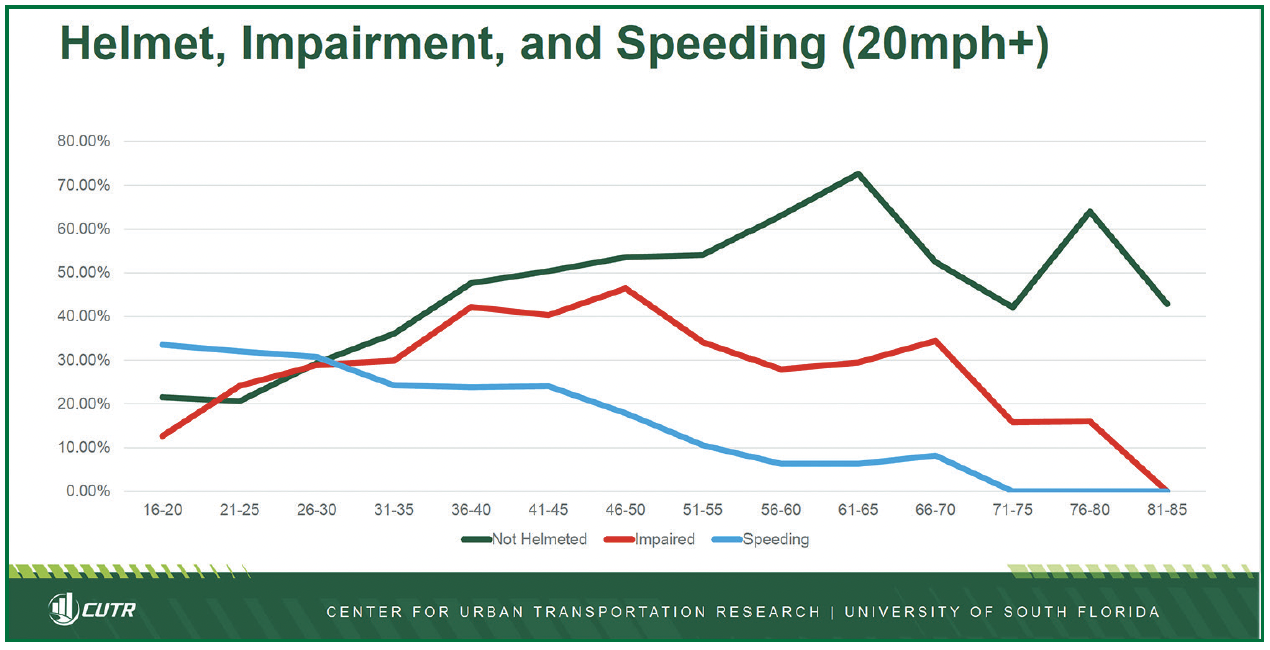
Dr. Lee’s data on the behavioral risk factors — intoxication, lack of helmet use and speeding (graphic below) — in fatal crashes shed light on the risky behavioral patterns certain age groups have. For improper helmet use, riders aged 16-25 have the lowest rate of non-helmet use fatalities, at around 20%. From there, the percentage steadily increases throughout adulthood and peaks with riders aged 61-65 at around 70%. Perhaps somewhat surprisingly, when it comes to impairment fatalities on motorcycles, riders aged 16-20 had the lowest percentage, at roughly 10%. The intoxication fatality rates increase with age and peaks for riders ages 46-50, at more than 40% of the motorcycle fatalities.
Less surprising is that younger riders between the ages of 16-20 had the highest rate of speeding-related fatalities, at more than 30%. The percentage steadily decreases as the rider’s age increases.
Fault analysis in these motorcycle accidents also revealed age-related patterns. Riders under age 30 were statistically more prone to being found at fault by law enforcement, with 50-62% of single- and multi-vehicle accidents credited to the motorcyclist. Riders between ages 31-40 have a higher probability of another vehicle being at fault in a crash, at between 44-45%. Data regarding the at-fault driver stabilizes among riders ages 41-65, with roughly 54-62% of fatal crashes being their own fault and 30-45% caused by another vehicle.
“So, the interesting portion that you can compare is, if you’re getting a multi-vehicle crash of one age group versus another, it’s quite different,” Dr. Lee said. Younger guys, when they get involved in a crash with a car (or truck, etc.), they are more likely to be at fault.”
“When you compare that with someone over age 55 involved in a crash with another driver, the [other vehicle] driver is more likely to be at fault.”
Ultimately, Dr Lee’s findings indicate that while there are motorcycle safety concerns for all age groups on the road, young riders are still statistically far more likely to be involved in a fatal motorcycle crash than their older counterparts
While Dr Lee did not mention what is being done to prevent these percentages from rising — as the more recent three-year period definitely showed an increase overall in motorcycle fatalities over ten years ago — it’s clear that addressing the high risk for young motorcyclists is the first step in reducing fatalities and improving overall traffic safety.
The FMSC, per their mandate, will use this data to better target their efforts to improve motorcycle safety to reduce crashes, injuries and deaths. But of course, there is little anyone can do about distracted and/or intoxicated drivers, speeding and other risky behaviors by both motorcyclists and drivers of other vehicles.