Understanding The New Real Estate Rules — And How They Affect You 

The real estate industry in the U.S. has weathered many permanent changes since it first began. These changes typically have translated to greater protections and transparency for buyers and sellers, and has kept the industry innovating and moving forward. 

There are more major changes proposed for the national real estate market this summer, and they could end up affecting everyone. These likely changes are the outcome of a pending settlement in a national class action lawsuit, brought against the National Association of Realtors (NAR) organization by the plaintiffs, a group of home sellers from the Midwest who listed their homes for sale on the MLS (Multiple Listing Service) using real estate Brokers. 

In order to try to better understand what’s happening, let’s first break everything down to the basics. 

What Is A Real Estate Brokerage? 

In order to legally practice real estate in Florida, a real estate agent must have an “active” license, working under a Broker or be the Broker (an experienced agent who’s gone through additional licensing requirements and runs a brokerage) themselves. The Broker and his or her agents all work under the brokerage (real estate company). Among the many well-known national brokerages are RE/MAX, Keller Williams and HomeServices of America, all of which were named in the suits. 

Exceptions for those who are able to engage in real estate transactions but who are not under a brokerage are the following — real estate attorneys, agents who are employed by home builders in community sales offices, agents in leasing offices and buyers or sellers who represent themselves in their own real estate transactions. 

What Is The NAR? 

As real estate records began being tracked in the U.S. around the end of the 1800s, there was inconsistency and dubious practices among some in the profession. To curb the problems, 19 various city real estate boards and the California State Realty Federation organized and created the National Association of Real Estate Exchanges in 1908. That name was later changed to the National Association of Realtors (NAR). 

In 1913, the Association adopted its ‘Code of Ethics’ with the “Golden Rule” as its guiding principle. Shortly after, in 1916, the term “REALTOR” was created for those who were members of the National Association and who went through extended training to learn and pledge to uphold its strict code of ethics. 

Now, NAR is the largest trade organization in the U.S., with nearly 1.5 million members. 

What Is The MLS? 

NAR also controls and regulates most of the 800 local and regional Multiple Listing Services (MLS) throughout the country. These MLSs serve as the primary databases where information (including photos) about current local real estate for sale or rent is uploaded, listed and then shared with potential buyers. Popular websites like Zillow.com and Homes.com (photo above) pull most of their information from MLS. 

From very early on, in order to list on an MLS, NAR required a written listing agreement, which meant that the seller would specify who (which Broker or agent) could list his or her property and the specific commissions that would be paid, and to whom, in order to avoid later disputes and build trust among those in the early profession. 

This early requirement stuck. The commissions are currently either specified in the listing agreement as a percentage of the total sale price, or as a flat dollar amount. 

What Happened With The Case? 

Previously, NAR’s “Participation Rule” required that for a property to be listed on MLS at all, some compensation (even as little as $1) must be offered to the buyer’s agent. The plaintiffs in the case claimed that some of the nation’s largest real estate brokerage firms used this rule to collude with NAR to fix prices and artificially raise the amount of home sale commissions, even though commissions had always been negotiable. 

The jury sided with the plaintiffs at the end of last October (2023), and awarded them approximately $1.8 billion in damages. After the ruling, NAR immediately changed its Participation Rule so that seller listings could offer as little as $0 commission to a buyer’s agent, and in November, Stellar MLS (the local MLS that covers the entire Tampa Bay area) updated its rules and regulations so the local system could accept $0 in that commission input field. 

When Was The Settlement Reached? 

On March 15, 2024, a smaller settlement in the amount of $418 million was reached between the parties. According to Katie Johnson, the chief legal officer of NAR, “This settlement would resolve the claims brought against NAR.” This settlement is the document all parties agreed to, but this isn’t the end. Johnson stated that, “Like all settlements of class action litigation, it is subject to court approval.” 

What this means is that the proposed settlement terms and changes to real estate policies might not take effect until July of this year, at the earliest. 

The settlement also came with a cap, meaning only large brokerages with residential transaction volumes of $2 billion or more in 2022 were liable to pay into the settlement fund, and ones with volumes below $2 billion were released from liability. The brokerage HomeServices of America, however, chose to not participate in the settlement, and has now become the lone defendant, wanting to fight it out and take its chances, potentially pushing the case to the U.S. Supreme Court. 

What Are The Proposed Changes? 

There are two primary changes that will affect the entire real estate landscape: 

From the Stellar MLS public website: 

1. “Compensation offers moved off the MLS: NAR has agreed to put in place a new rule prohibiting offers of compensation (to be listed) on the MLS.” As was mentioned before, NAR had already changed its policy to allow for offers of $0 compensation to the buyer’s agent on the MLS, but currently, most sellers are still opting to include some type of commission in that field. But, this change would strictly prohibit ANY commission being offered in the MLS listing at all. 

The intent was to level the playing field to make sure there was no steering, so buyers’ agents would show them every potential house, regardless of the commission, because they wouldn’t know what it might be up front, as they historically have been able to know. 

This doesn’t prohibit the agents from negotiating concessions behind the scenes, but the hope and goal of the settlement was that increasing negotiations at this step, and at the initial written representation agreements (see below), would overall reduce total commissions paid nationwide, saving consumers money. 

Also from Stellar MLS public website: 

2. “Written agreements for MLS participants acting for buyers: MLS participants [agents/Brokers] working with buyers will be required to enter into written representation agreements with their buyers.” 

These written and signed agreements are typically known as Buyer Agency Agreements and specifically might be referred to as Exclusive Buyer Broker Agreements (EBBA), which are already required in more than a dozen states, but are optional in the rest. These are meant to ensure that home buyers know in advance what their agent will charge for their services, if the seller doesn’t offer concessions to compensate them. 

Also, the seller may still offer concessions, but instead of a commission being paid directly to the buyer’s broker from the seller (like it had been traditionally done in the past), a concession might go to the buyer, and then the buyer would pay their agent the rate listed in the agreement. So, if the seller were offering 2% concessions, but the agreement between the buyer and their agent was 3%, then the buyer may have to come up with the remaining 1% themselves. 

This, of course, could cause the buyer to reconsider that particular property or take concessions more into consideration, now that they might have to participate in paying for their real estate agent’s services. 

What Are The Concerns? 

This settlement has caused concern for certain categories of home buyers who may be at a disadvantage, given current restrictions and budgets. For example, a first-time home buyer with less buying power might be more swayed by certain properties based solely on the concessions they are offering in order to pay their agent, and sellers may not even entertain the buyer’s offers if they ask for too much in concessions. 

Other buyers who might be affected more than others are those who may use Veterans Administration (VA) loans, which are reserved for U.S. Armed Forces active duty service members, veterans, reservists, or their surviving spouses (under certain circumstances) that meet the minimum active-duty service requirements set forth by the U.S. Department of Veteran Affairs. Many buyers who qualify might choose to use a VA loan over other types of loans because the terms are typically much better. 

However for VA loans, current restrictions on certain fees would not be compatible with the proposed national change. On March 27, NAR president Kevin Sears wrote a letter to the VA and shared his concern about this, stating, “In this exceedingly competitive market, we are concerned that the VA’s current policies place veterans at a significant disadvantage compared to traditional buyers. Under VA policies, buyers using their home loan benefit are prohibited from compensating their professional representative directly. In situations where no offer of compensation is offered from a seller, VA buyers are immediately at a disadvantage, potentially forcing them to forego professional representation, lose a property in an already limited inventory, choose a different loan product, or exit the market entirely.” 

No one knows exactly what this all will look like moving forward, or what things will have to change in order to make it all work, but there is a timid yet optimistic outlook from real estate professionals that things will work out for the best, as they have many times in the past. 

Rep. Driskell Looks Back At The Legislative Session & Ahead To November 

District 67 State Rep. Fentrice Driskell (photo) is in an unenviable position — but it’s a position she handles with class and dignity. 

As the Minority Leader in the Florida House of Representatives — where her Democratic party faces a Republican super-majority of 84 Republican to 36 Democratic seats held — Rep. Driskell says she is still encouraged by the most recent State Legislative session, which ended in March. 

She also is gearing up for her fourth (and she says final, at least for her current position) legislative campaign — since first winning election to State House District 63 over then-incumbent Shawn Harrison by more than 4,500 votes in 2018. Rep. Driskell was reelected to the Dist. 63 seat in 2020 (when she was unopposed and did not have to appear on the ballot) and, in 2022, she defeated Lisette Bonano (R-New Tampa) by just under 3,700 votes to win the re-drawn Dist. 67 seat. Bonano is again on the ballot against Rep. Driskell for the Dist. 67 seat in November. At our press time, neither candidate was set to face a Primary Election opponent in August. 

Rep. Driskell, who earned her Bachelor of Arts degree in Government from Harvard University in 2001 and her Juris Doctor (law) degree from Georgetown University in 2004, was elected by her Democratic colleagues to serve as the State House Minority Leader and was named by new House Speaker Paul Renner to be the Democratic Ranking Member of the House Appropriations Committee in 2023, so she serves an important role in the House’s state budget process. 

“It is a thankless job, but it’s an important one,” she says of being the Minority Leader against a Republican super majority. “We face a lot of pressure from the other side of the aisle. But, I have tried to lead my caucus in such a way that we put forward policies that any family in Florida would appreciate. Every Floridian deserves the chance to be healthy, prosperous and safe. What I have found is that my constituents are tired of the culture wars — they don’t want book bans and attacks on history.” 

When asked whether or not the culture wars have been fought by both sides, Rep. Driskell responded, “We have to remember that the Republicans have been in charge in the legislature and the governor’s mansion for years and they pushed the culture wars. The legislature has been pushed by Governor (Ron) DeSantis to ban Critical Race Theory, which is not taught in our schools. I view it as my job to say, ‘What’s going on here? What’s O.K. and what’s not?’ I don’t care about the parties, I care about the people. I can work with anybody. But, you have to pick your battles carefully because the other side, in most cases, doesn’t need our votes.” 

She added that there were very few of what she calls “Jump Balls” in this year’s session. “They only need us when their caucus is split on an issue, like the bill to regulate short-term rentals, like Airbnbs (Senate Bill 280 passed both houses and is waiting for Gov. DeSantis’ signature). There were legislators pushing in both caucuses on both sides of that issue.” 

Despite her party’s disadvantage in the State House, Rep. Driskell is still proud of the bills she either sponsored, co-sponsored or supported. 

“I was able to secure $10 million for sickle cell disease (House Bill 7085, which creates a Sickle Cell Disease Research & Treatment Grant Program within the Department of Health),” she says. “It’s the first such program in the U.S., as Florida has close to 8,000 people afflicted with sickle cell disease, one of the biggest populations in the country.” 

Other successes she points to in this year’s legislative session include: 

‱ A $250,000 grant to study infant health and mortality. “There’s a consortium of universities studying that together,” she says. “It could save some lives.” 

‱$1 million for a historic cemeteries program in the Dept. of State. “The grants are open now,” she says. “I designed the bill so the state works with USF and its black cemetery network
so it helps USF, too.” 

‱ She also advocated for (but didn’t sponsor) $1.7 million in USF funding, including USF’s Florida Mental Health Institute’s autism program. 

‱ $14,000 for the New Tampa Players, as part of the cultural & museum grants program. “There are institutions across the state who get money from that program,” she says. 

‱ Helped get $1 million for the Ronald McDonald House, here in Tampa Bay. “There is a need for a new house,” she says. “The current one is on Columbia Dr. on Davis Islands, but this will help them put one a new house in a more central location.” 

‱ $1 million for SOF (Special Operations Forces) Missions, which helps veterans with PTSD. “I helped them get their first state appropriation a few years ago,” she says. “I am honored to have helped support that, too.” 

Rep. Driskell also is proud to have advocated “for reducing the waiting list for the Agency for Persons with Disabilities. We have 22,000 people in Florida waiting for their benefits. But, Senate Bill 58 provides funding to move some people off that wait list.” 

No Help On Transportation Tax $ 

As for some results she wasn’t happy with this year, Rep. Driskell mentioned the $570 million raised by the most recently passed (and overturned) Hillsborough Transportation Tax. 

“Unfortunately, it’s not coming back to the community in the form of funding for transportation projects that we voted for,” she says. “About $256 million is coming back in the form of road resurfacing and about $162 million will go towards a Sales Tax Holiday that we haven’t fully flushed out as to what that’s going to look like. I pushed for it come back for transportation projects, but at least we got the resurfacing.” She added that the remainder of the money — close to $170 million — will be used to pay for legal fees associated with the case and to pay expenses and for valid tax refund claims. 

“It’s outrageous that it’s going for something other than what we voted for,” she says. “I worked with my committee’s Republican vice chair Lawrence McClure to come up with a plan for it. But, it’s a done deal; it’s just waiting for the Governor’s signature on the entire budget.” 

She adds, “We’re sent to Tallahassee to do serious work and I take it very seriously. We have to put aside partisan differences to get work done. We don’t abandon our values but you have to be willing to work in a collaborative way.” 

As for what’s coming up in November, she says, “We are working hard on elections. My job as leader is to lead the strategy and raise the resources necessary to win the five seats we need to get out of the super minority. It’s a tall order — five is a lot to win. But, my team and I think we have a strategy to do it. In January, I led the effort to win a special election in Central Florida — 70% of voters voted for our candidate — by focusing on things like property insurance rates and abortion access.” 

On Abortion Access & More 

Speaking of abortion access, Rep. Driskell says, “I never thought we would live in a time where the U.S. Supreme Court would take rights away
their job is to protect them. Florida’s six-week ban takes effect at the end of next month. We have the ability to vote on Amendment 4 in November and the legislature also can overturn it — seven Republicans voted against it. We need people to get out and vote, however they feel about it.” 

Other bills that passed that she wasn’t happy about include House Bill 49, which weakens protections on child labor. 

“My caucus and I at least got it watered down. The bill would have allowed kids under age 18 to work overnight shifts — treating them like adults. Now, they will have breaks and no overnight shifts.” 

She also had a problem with House Bill 433, which preempts local governments from passing heat stress ordinances. “There were workers in South Florida who died from heat stress,” she says, “so Miami put a new ordinance into effect. But this law, which the Gov. already signed, overturns any local laws.” 

And finally, she says she is trying to find new ways to stay in touch. “So, every Tuesday at 8 p.m., I do a live stream, where I talk about what’s happening in Tallahassee, politics and more.” For more info, visit FentriceforFlorida.com or @FentriceForFL on Instagram, Facebook, YouTube or X. 

Hamilton Oaks To Extend Zephyrhills Bypass East Of Chapel Crossings 

By Gary Nager & Joel Provenzano  

A little less than a year ago (in July 2023), we gave you an update on the Chapel Crossings community, located on the north side of S.R. 54. That article, which focused on the fact that Curley Rd. somehow had two terminuses on 54, included a discussion of the Zephyrhills (Zhills) Bypass, a long-awaited connection between Wesley Chapel and Zephyrhills that one day will be taking traffic off of the recently widened S.R. 54. That article mentioned that the first portion of the Zhills Bypass had finally opened, with the opening of the new Story Wesley Chapel apartments, at the westernmost entrance to Chapel Crossings. 

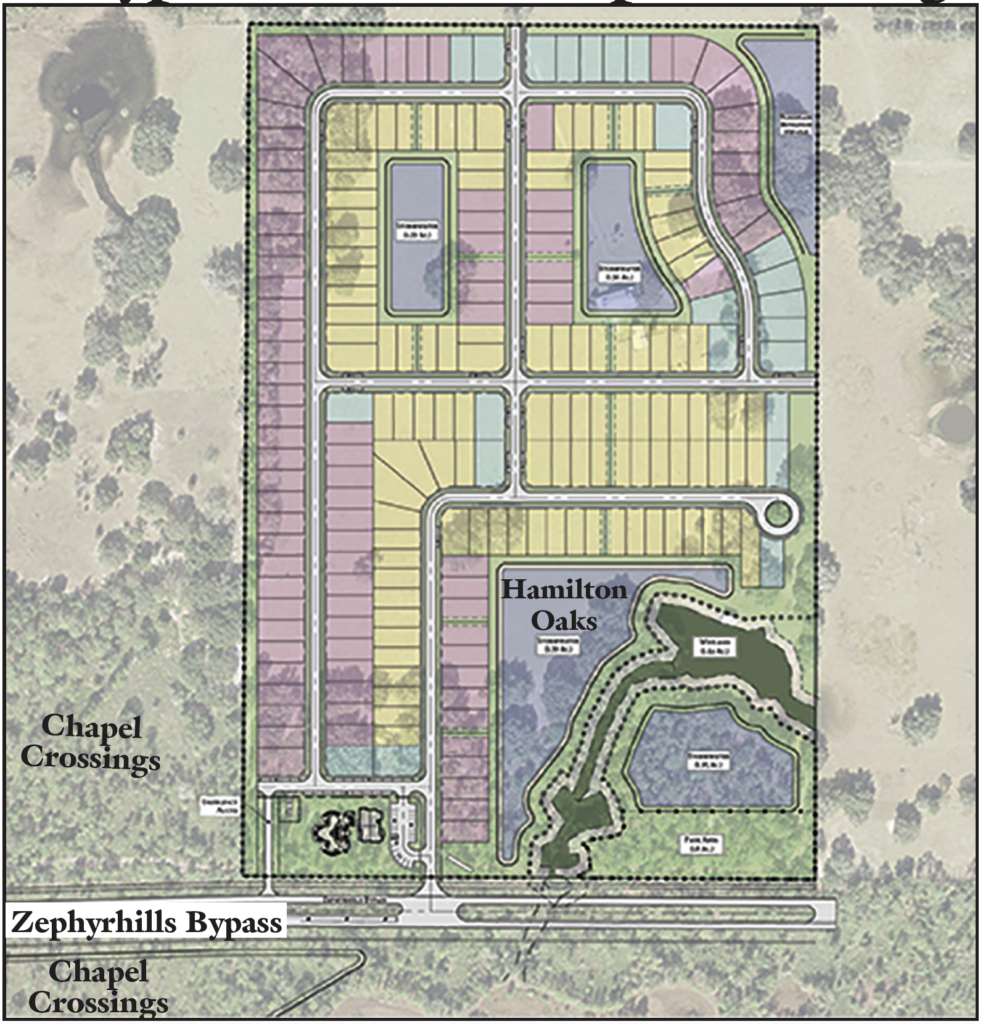
Well now, another new development, to be located directly to the east of Chapel Crossings (but only north of the Zhills Bypass, whereas Chapel Crossings has neighborhoods under construction both north and south of the as-yet-unfinished Bypass road), may be getting ready to begin building. 

The new development will be called Hamilton Oaks, and one of the most important things about it (at least from our perspective) is that the developer of Hamilton Oaks will be responsible for building the next segment of the Zhills Bypass to the east of Chapel Crossings, although there will still be several miles of that roadway that will need to be constructed before the connection to Zephyrhills will have been completed. 

Pasco County’s comments on the conceptual site plan were sent to the applicant on Feb. 29 of this year and it appears that the county doesn’t see any major issues/problems with the new project. 

This land went through a residential rezoning as ‘Hamilton Oaks MPUD’ in 2022. It is approved for 224 single-family units on 61 acres (see site map, above). The property owner is listed with Pasco County as William D. Brown and the applicant is listed as Jeff Oligschlaeger of AMH, AMH Living, American Homes 4 Rent. We had no further information as to when Hamilton Oaks is expected to begin building or when residents may be able to begin moving in. 

The main thing, which is already shown on the site plan, is that the development will be required to convey any needed right-of-way and build the portion of the Zephyrhills Bypass roadway up to the project’s eastern property line. That road currently dead-ends at Cason Blvd in Chapel Crossings. 

Eventually, the Bypass will be extended east to connect with River Glen Blvd. (in Avalon Park Wesley Chapel), then ultimately be extended to Handcart Rd. and connected to Eiland Blvd. with a realignment that will provide vehicular traffic with an alternative direct travel route into Zephyrhills. 

The large, mostly empty parcel (labeled as Depue Ranch by the Pasco property appraiser’s office) immediately to the east of this development has not yet submitted any development or rezoning requests to the county. 

Pasco Hernando State College’s Porter Campus Turns 10! 

 The Porter Family’s Land Donation Celebrates A Decade Of Adding Skilled Workers To The Local Economy! 

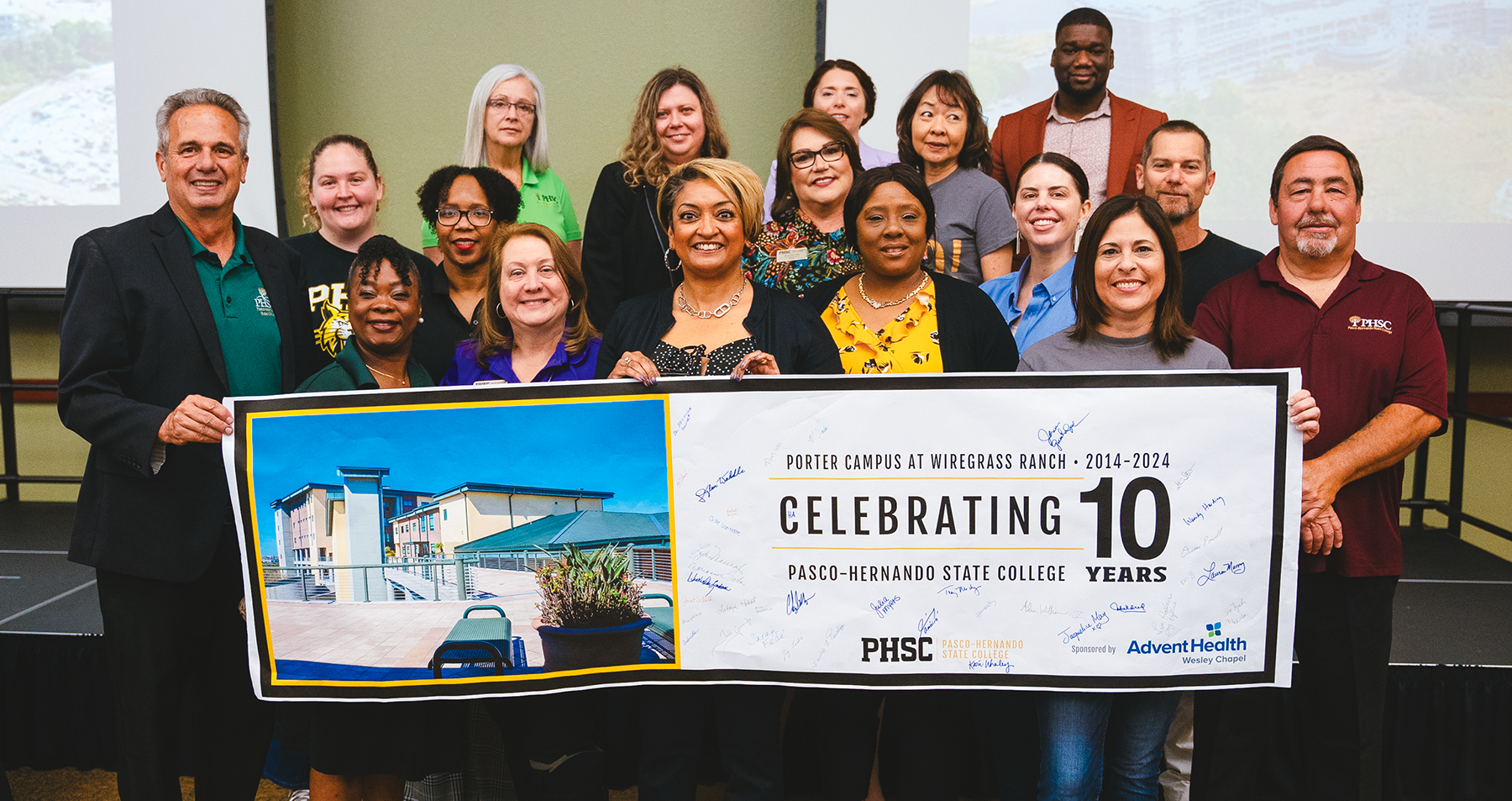
Many of the people in this picture have been with the Porter Campus of Pasco Hernando State College since PHSC first opened back in January of 2014. Current Provost Dr. Davina Jones (second from left) hosted an outstanding 10th Anniversary Celebration for the Porter Campus on April 6. Holding the sign, front and center in this picture, is Sonia Rodriguez Thorn, who was the first Associate Dean for Academic Affairs at the Porter Campus under the campus’ first Provost Dr. Stanley Giannet. (Photos by Charmaine George) 

When Sonia Rodriguez Thorn first arrived in 2013 at the not-yet-open Porter Campus at Wiregrass Ranch of what was then called Pasco Hernando Community College (PHCC), her name was only Sonia Rodriguez, as she was not yet married. 

Sonia’s last name was still Rodriguez when the school’s Porter Campus opened in January 2014 as the fifth campus of the freshly renamed Pasco Hernando State College (PHSC) and she served as the first Associate Dean for Academic Affairs at the Porter Campus, and the right hand to the Porter Campus’ first Provost, Dr. Stanley Giannet. Sonia did get married in December of that year, so both she and the school had new names to start the Porter Campus’ second year. 

“It’s an honor to come back here, after 30 years of service and especially, opening this campus,” Sonia said when she was introduced by the current Provost of the Porter Campus Dr. Davina Jones, “when my first hire Mildred (Santiago Diaz) and I couldn’t even get into the building yet. Mildred (who is one of several employees introduced by Dr. Jones as having been at the Porter Campus for all ten years of its existence) and I and all of our new hires were housed in one room, with six tables and chairs, at the West Campus in New Port Richey until this building (at seven total stories, the tallest in Pasco County) opened.” 

She added, “I’ve been involved with this institution in one form or another since 1991 and it’s been a blessing and a privilege for me to serve not only the community and our stakeholders but also the institution that helped develop me both personally and professionally and I’m very honored by that. So, to come here today is really special for me, to see all that the Porter Campus has done for the Wesley Chapel community and Pasco County. Thank you so much!” 

“Sonia gave us her best,” said Dr. Jones, who introduced her to those in attendance on Apr. 6, prior to the festivities celebrating the Porter Campus’ tenth anniversary as a PHSC campus. 

“So, of course, we invited her back to be here for this event today.” 

Next, Dr. Jones mentioned that the three previous Porter Campus Provosts — Dr. Stanley Giannet, Dr. Bonnie Clark and Dr. Kevin O’Farrell — also were immortalized in the new PHSC “Hall of Fame” with a commemorative photo framed and displayed in the Provost’s conference room. 

“We are also going to send each of them a photo of this tribute,” Dr. Jones said. ‘We just think it’s important that the Porter Campus never forget the excellence and the greatness that led this place.” 

She also related a story she had heard about Dr. Giannet: “I heard that when he pulled up to this campus, he had a car full of beautiful art he brought with him and placed it all around the “A” Building and donated it. That is the mark of excellence that he brought to this campus…So, we want to continue to celebrate and honor all of our Provosts.” 

She also gave gifts to each member of the campus’ inaugural staff and, before concluding the introduction to the day, Dr. Jones received a surprise herself. She handed off the microphone to Ann Coppola, the associate director of the library at the Porter Campus, who mentioned that Dr. Jones also was an original member of the campus’ faculty, as a public speech communication professor. 

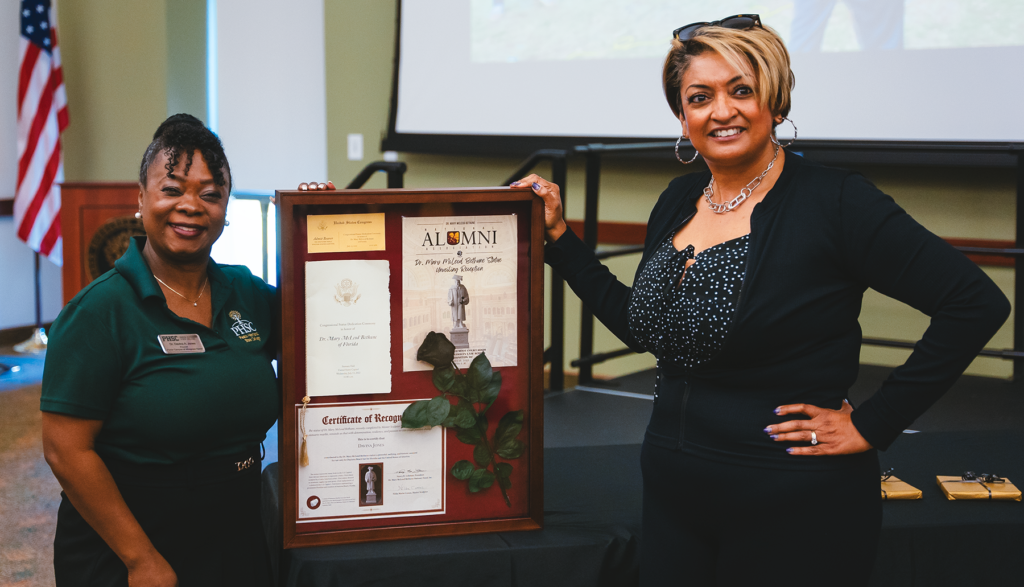
Current PHSC Porter Campus Provost Dr. Davina Jones (left) and Somia Rodriguez Thorn pose with the special shadow box presented to Dr. Jones by her staff. Dr. Jones was named by U.S. Rep. Kathy Castor at a ceremony in Washington, D.C. in 2022 as someone who inspired the replacement of a statue of a Confederate general in the U.S. Capitol statuary hall with one of Dr. Mary McLeod Bethune. 

“Since then, your talent for diplomacy, your love of education and students and your strong work ethic has placed you as our campus leader and we could not be more fortunate to have you as Provost. You strive for excellence unapologetically, you advise personal accountability, you advocate for staff, faculty and students with pure intentions and most importantly, you do all of this with civility and kindness…Your core team has learned so much from you… and your leadership sets the tone for this campus.” 

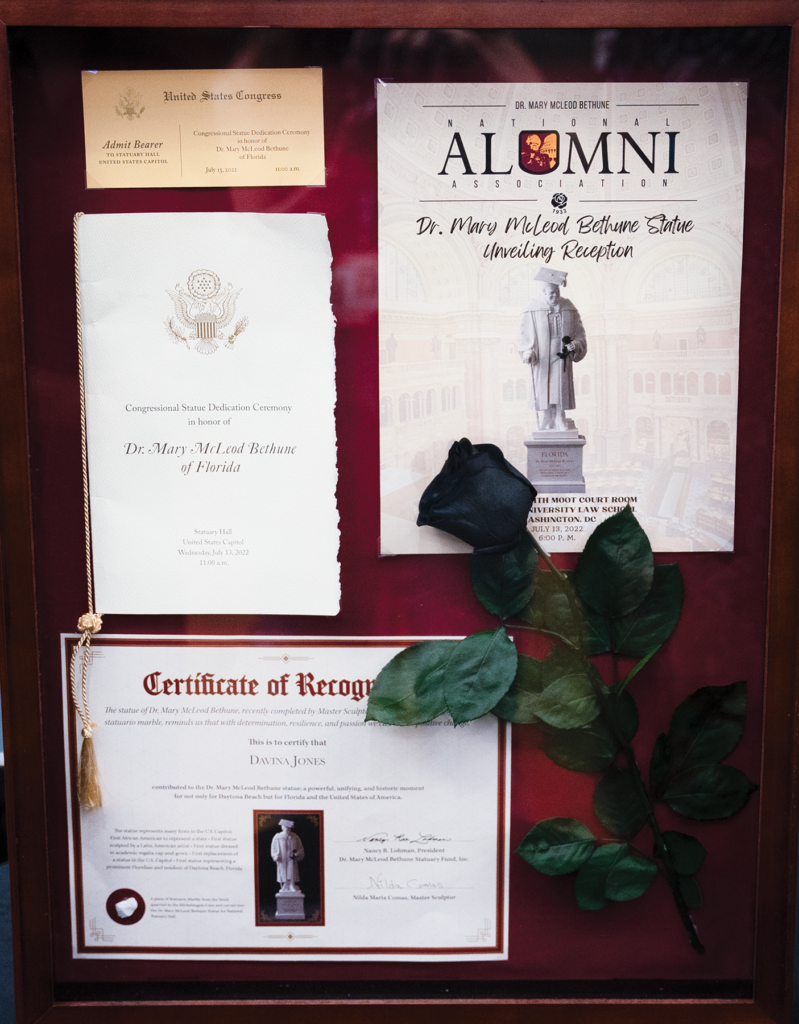
To that end, Ann mentioned that, at the dedication ceremony of the statue honoring Dr. Mary McLeod Bethune at the U.S. Capitol in July 2022, a statue that replaced one of a Confederate general that stood at the Capitol since the Jim Crowe era, Dr. Jones’ contribution to making that statue a reality was mentioned by U.S. Rep. Kathy Castor. 

“Dr. Jones served as a front-line partner, as Florida and our nation prepared to receive and embrace this historic statue in the Statuary Hall at the U.S. Capitol. Dr. Jones advocated for the statue of Dr. Bethune as a far superior representative of the values and diversity of the Sunshine State.” 

Ann added, “We curated this shadow box (photos above and right) to honor the work you did and still do for education. Thank you.” Dr. Jones was clearly moved by the impressive gift. 

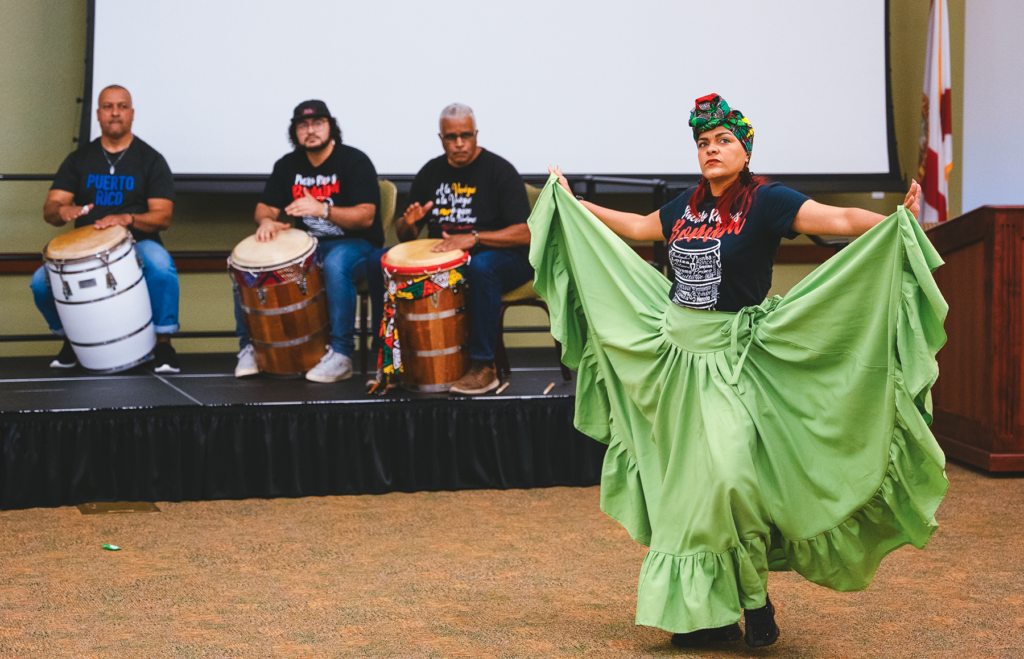
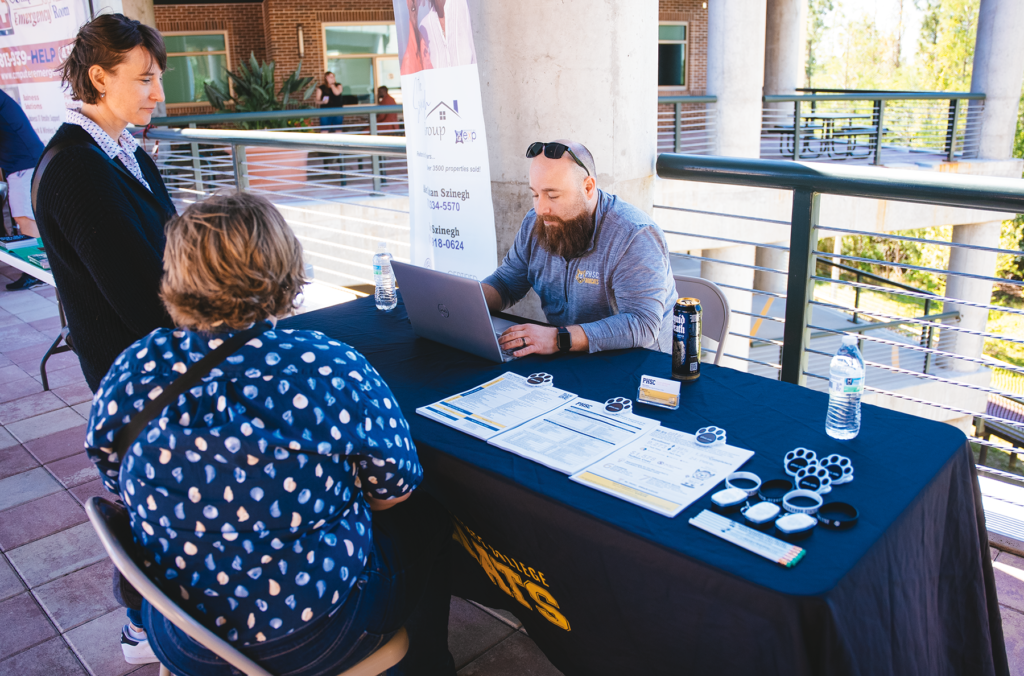
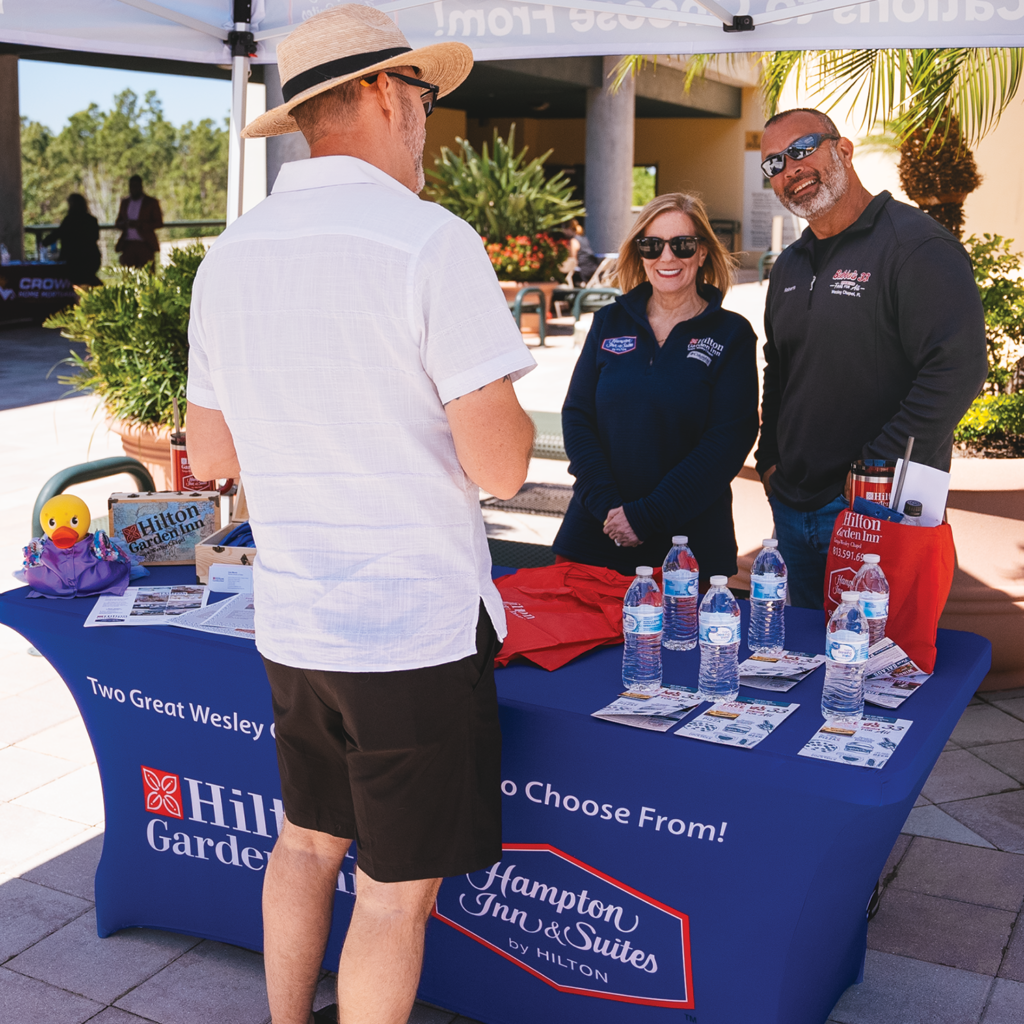
After that, she posed for a group photo with all of the original, former and current faculty members on hand and told everyone in attendance about the Business Expo and free food out on the school’s promenade, the tours (including virtual simulations) of the campus’ renowned nursing department and “Bomba” Afro- Latin dance lesson (see photos on next page). 

Meanwhile, Wiregrass Ranch developer JD Porter, whose family trust donated the 65 acres upon which the Porter Campus sits, said that he was sad he wasn’t able to attend the festivities. 

“My family couldn’t be more proud of the Porter Campus and its students, faculty and staff,” Porter said afterwards. “I believe it is the most successful of the five PHSC campuses — and for good reason. It’s a great resource, and not just for the hospitals and medical offices throughout Wiregrass Ranch, but also the local business community. If you need to update your technical training for pretty much any type of business, we have this amazing local resource right here. PHSC has room to expand the Porter Campus and I am confident that will happen sooner than later.” 

Pasco Breaks Ground On Wesley Chapel Library at Seven Oaks

(Photos by Charmaine George)

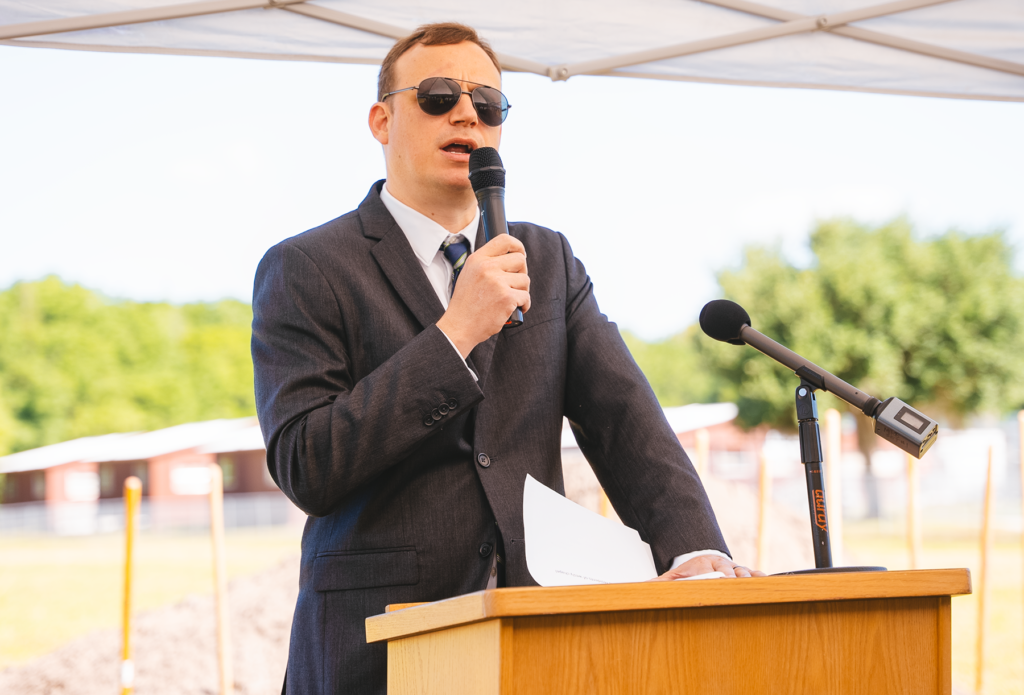
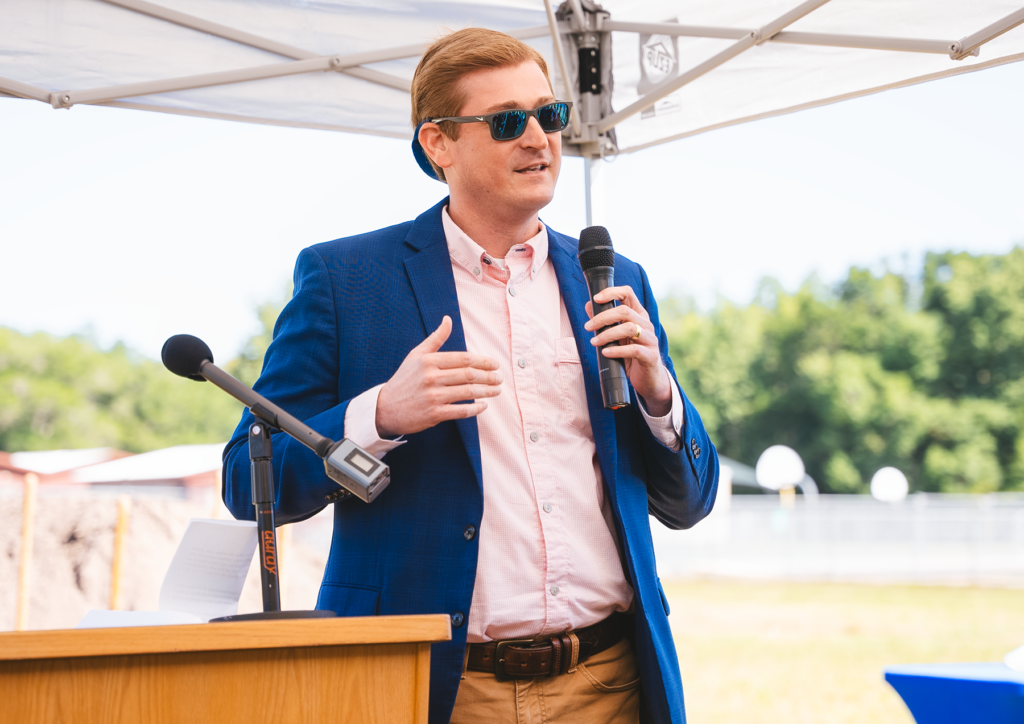
“The mission of a library is one of connection,” said Pasco County Library System director Sean McGarvey at the groundbreaking event for the Wesley Chapel Library at Seven Oaks — to about 50 people in the audience — on Apr. 12. “We connect people to what is important
in four fundamental ways. We connect people to knowledge, to the culture of the community, to economic opportunity and, most importantly, we connect people to each other.”

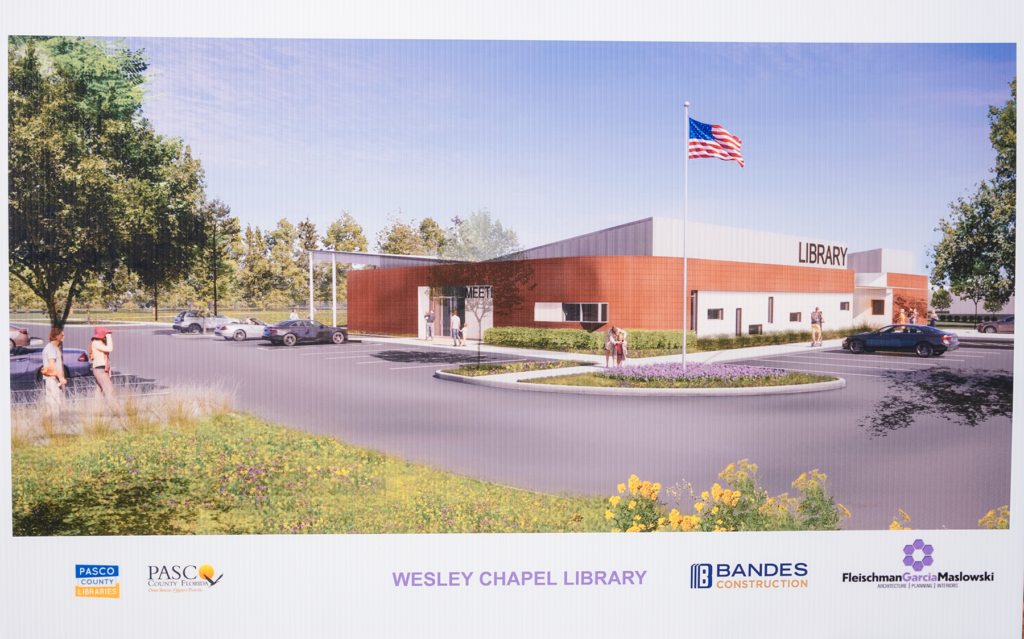
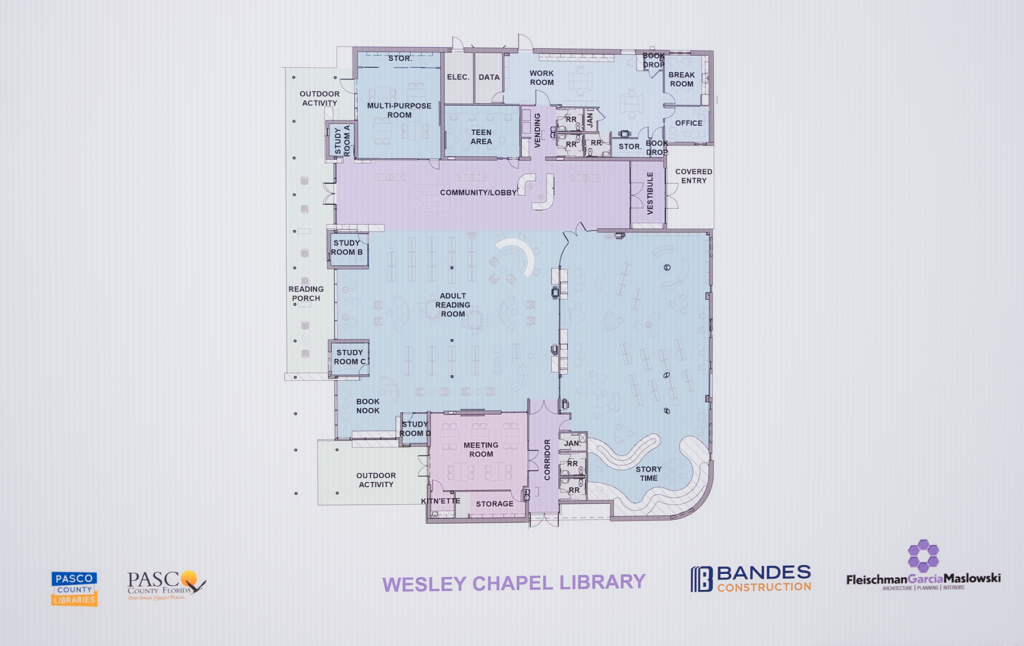
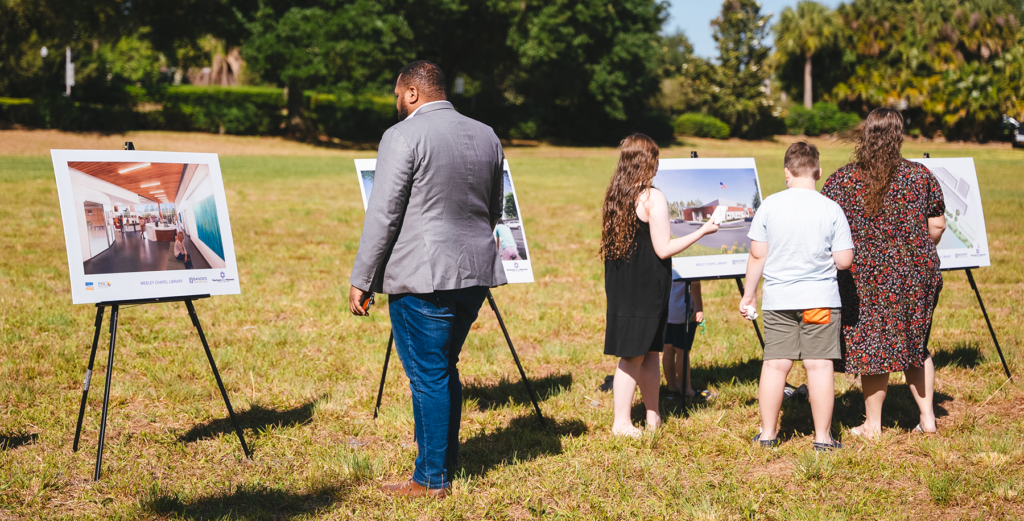
McGarvey served as the Master of Ceremonies for the groundbreaking event to showcase the architectural renderings for the new library, which will begin construction within the next month or so on a vacant lot adjacent to Seven Oaks Elementary. The 14,000-sq.-ft., $11 million library, designed by Fleischman Garcia Architects, is being built by Bandes Construction and will have a number of unique features that will make it a “hub of the world,” according to McGarvey, who also introduced the groundbreaking event’s other speakers.

Pasco County Library System director Sean McGarvey

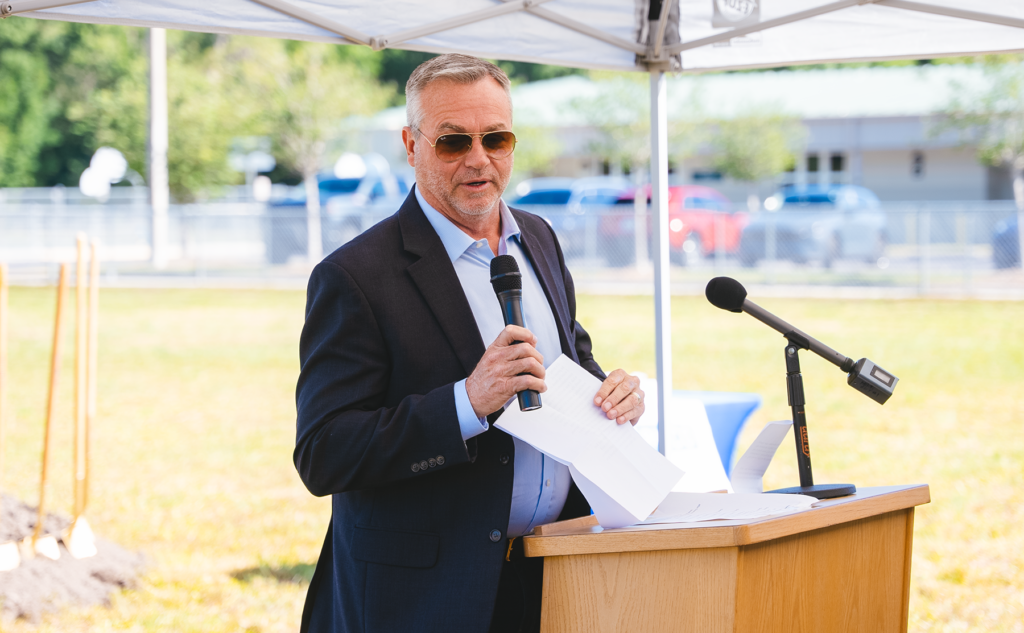
The first was Pasco County Board of Commissioners (BOC) chair Ron Oakley, whose District 1 includes part of Wesley Chapel.

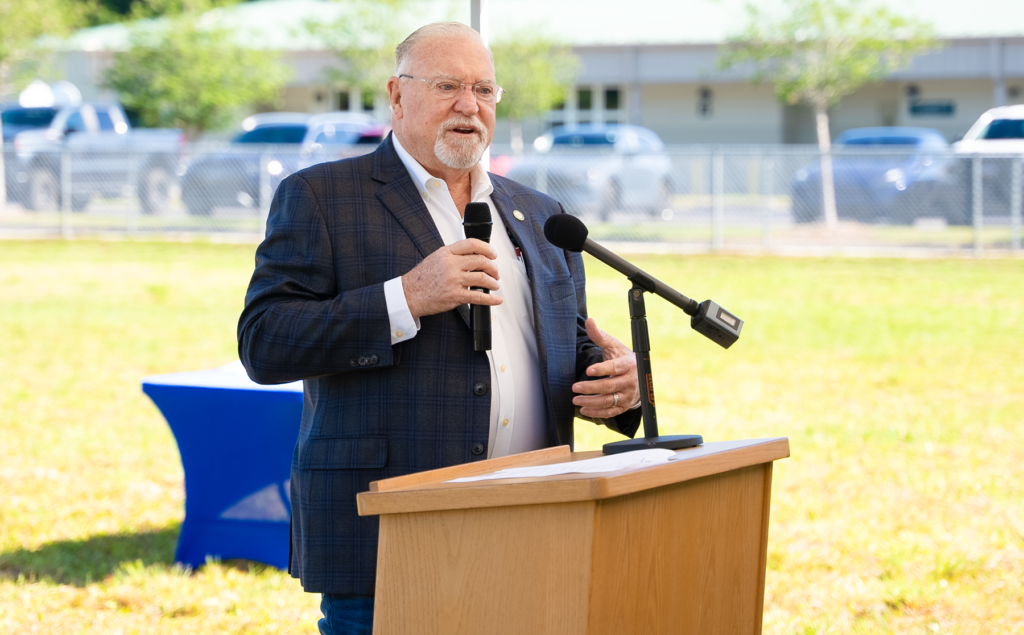
Oakley said that when he first became a county commissioner eight years ago, he was told, “We need to save money in the county, so we need to cut out libraries. They’re not needed
everybody’s got a computer. But, I said, ‘I personally think everybody doesn’t have a computer and all of our citizens love libraries. It’s just amazing what is provided by our library system. The use of this library here in this community is going to be amazing.”

Before then introducing Commissioner Seth Weightman, whose District 2 includes all of Seven Oaks, McGarvey said, “I can not wait to see what the stories of the connections that this building will build for everybody else who will use it
from the kids at the school next door, to the citizens of Pasco County to the members of this community, to the business community at large. I can not wait to see what this building will create for the community.”

District 1 Commissioner Ron Oakley

Weightman then thanked retired Pasco Commissioner Mike Moore (Weightman’s Dist. 2 predecessor), “for allowing me to be here today and celebrating the work that you did over the course of your time to (make this library happen). What a fantastic community ‘add’ here to Seven Oaks. And, to the citizens of Seven Oaks, because of your community and your drive and your watchful eye, we’re proud to bring this to all the folks here in Wesley Chapel.

Weightman then introduced former Comm. Moore, “because this was his baby.”

Moore said, “This (library) was a long time in the making. Part of the Seven Oaks development agreement back then (in 2004) was this site, which was always supposed to be a library. The county commission was very, very supportive of this project when I was on the Board and what I’m most grateful for is that once I left, the next Board came

in and continued with the project. Sometimes, what we see in government, is that when people leave, sometimes projects don’t move forward and they stall, but they (the new BOC) saw the benefit of having this library.”

The former commissioner added, “This library is going to be a meeting place, a place where adults and kids alike will learn, a place where you’ll have gatherings
there will be social events, civic events
and classes for seniors, adults and children.”

Moore also thanked the team from Bandes Construction, “that is actually going to build this facility. Hopefully, it won’t take a year and a half, since materials are easier to get now
.but thank you so much for all the support. And, we really are excited as a community that this is going to service not just Seven Oaks, but all of Wesley Chapel and Pasco County.”

Moore also thanked his former aide Andy Taylor, for his part in making the library happen.

District 2 Commissioner Seth Weightman

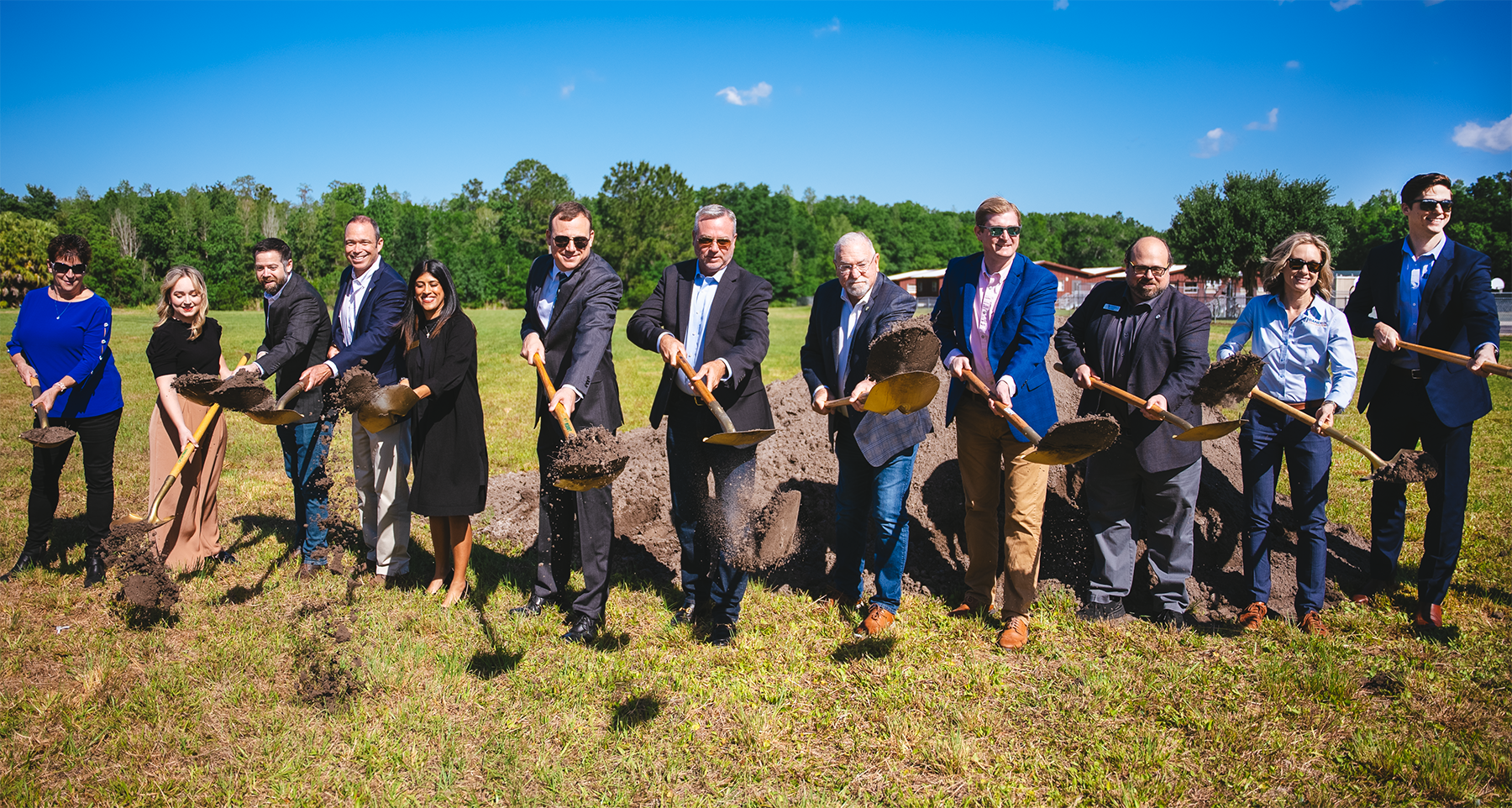
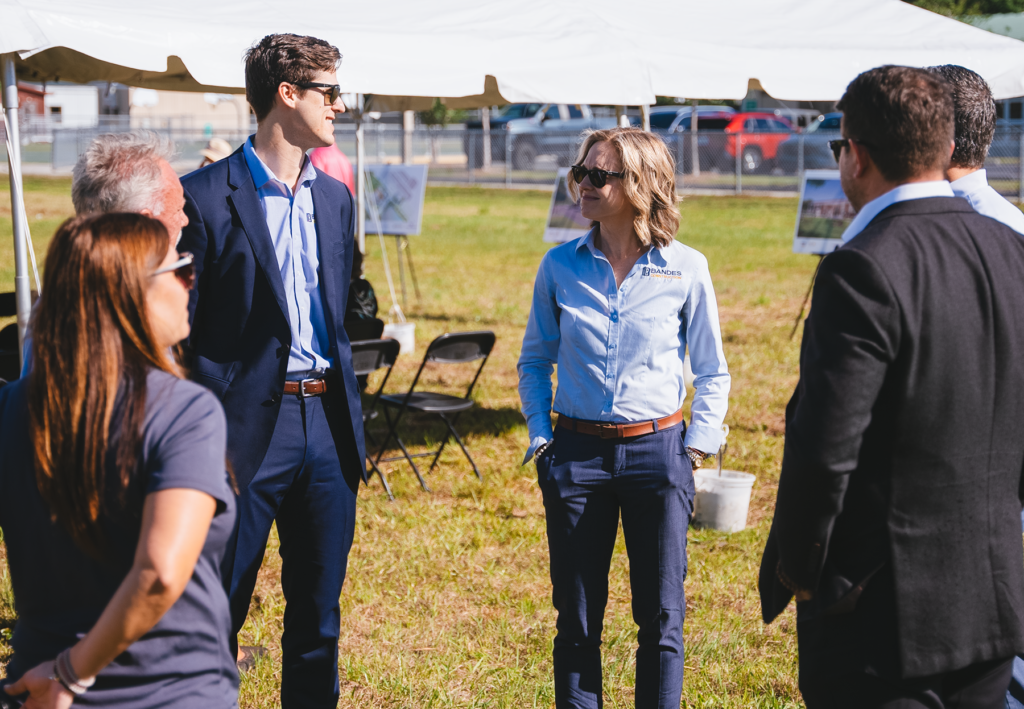
McGarvey then called up all of the speakers, plus county administrator Mike Carballa, Taylor, the representatives on hand from not only Bandes Construction, but also from U.S. Rep. Laurel Lee and State Sen. Danny Burgess’ offices, as well as other Pasco Library System employees for the ceremonial tossing of the dirt.

After the ceremony, McGarvey told the Neighborhood News that actual construction of the Wesley Chapel Library at Seven Oaks would begin later this month and that the expected completion date for it was the end of 2025.

Paula Wahl, the business compliance & contracts manager for the Pasco Library System, said that among the new library’s unique features will be a separate construction project of a trail that will be artistically designed to look like you’re walking through the pages of a book. There also will be, “an outdoor ‘reading porch’ overlooking the walkway. We also will have a flexible space that will be able to host ‘maker activities.’ Where many of our other libraries have very specific makerspaces — woodshop, video production studio, cooking programs and so on — this library actually will have a special parking space for our mobile makerspace, similar to the van we have here today, specially outfitted to bring activities from each of those out into the community. All of those other library makerspaces have mobile activities that we can bring out into the community here.”

For more information, visit PascoLibraries.org.