If you were thinking there couldn’t possibly be more “stuff ” coming to Wesley Chapel this year (or at least by early 2027), think again.
Among the projects that are well underway but that we don’t have any kind of timelines for include:
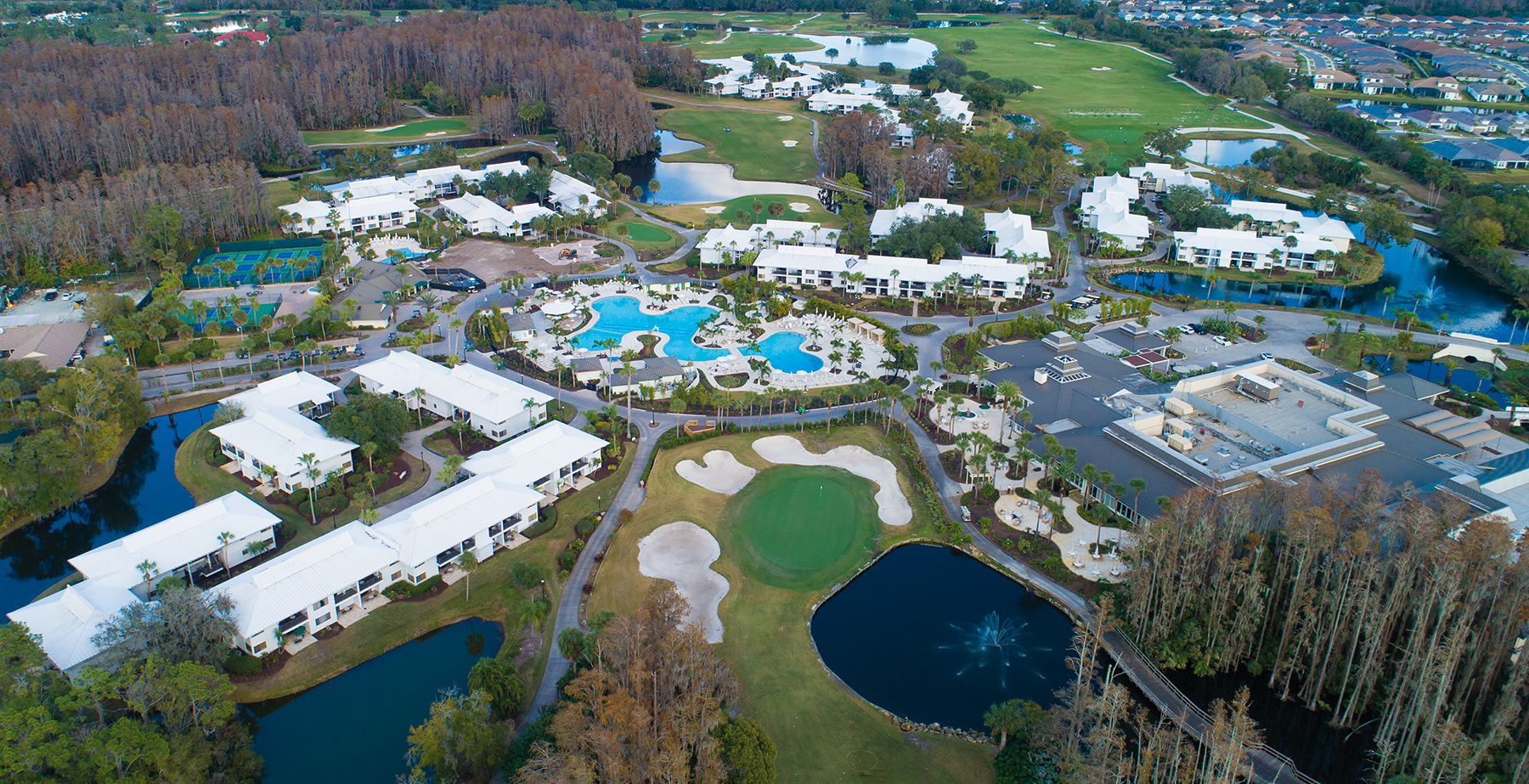
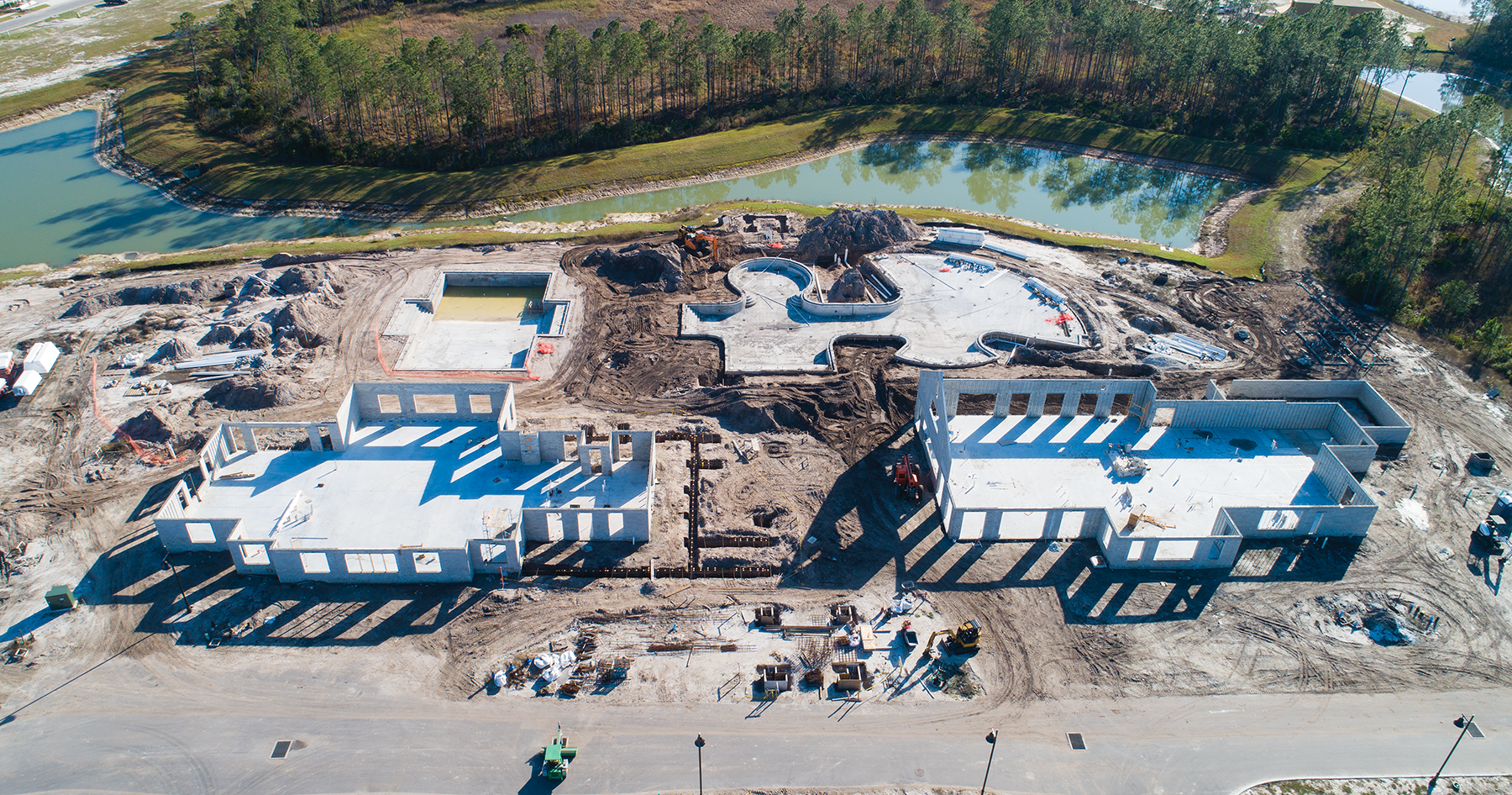
• The completion of Mast Capital’s $92 million improvements to Saddlebrook Resort (above). We showed you the improvements that have already been completed in our last couple of issues, but there is still plenty more to come.
Since the Brew coffee shop and Rare 1981 restaurant opened, the Palm House Grill out by the resort’s revamped Superpool also recently opened. We’ll show you pictures of the Palm House’s food and beverages next issue. We also were told that all 27 holes of Saddlebrook’s golf courses also are open.
Still to come this year? The Sports Tavern off the resort’s lobby and the Saddlebrook National private club for members only. We’ll update you about all of these improvements in future issues.
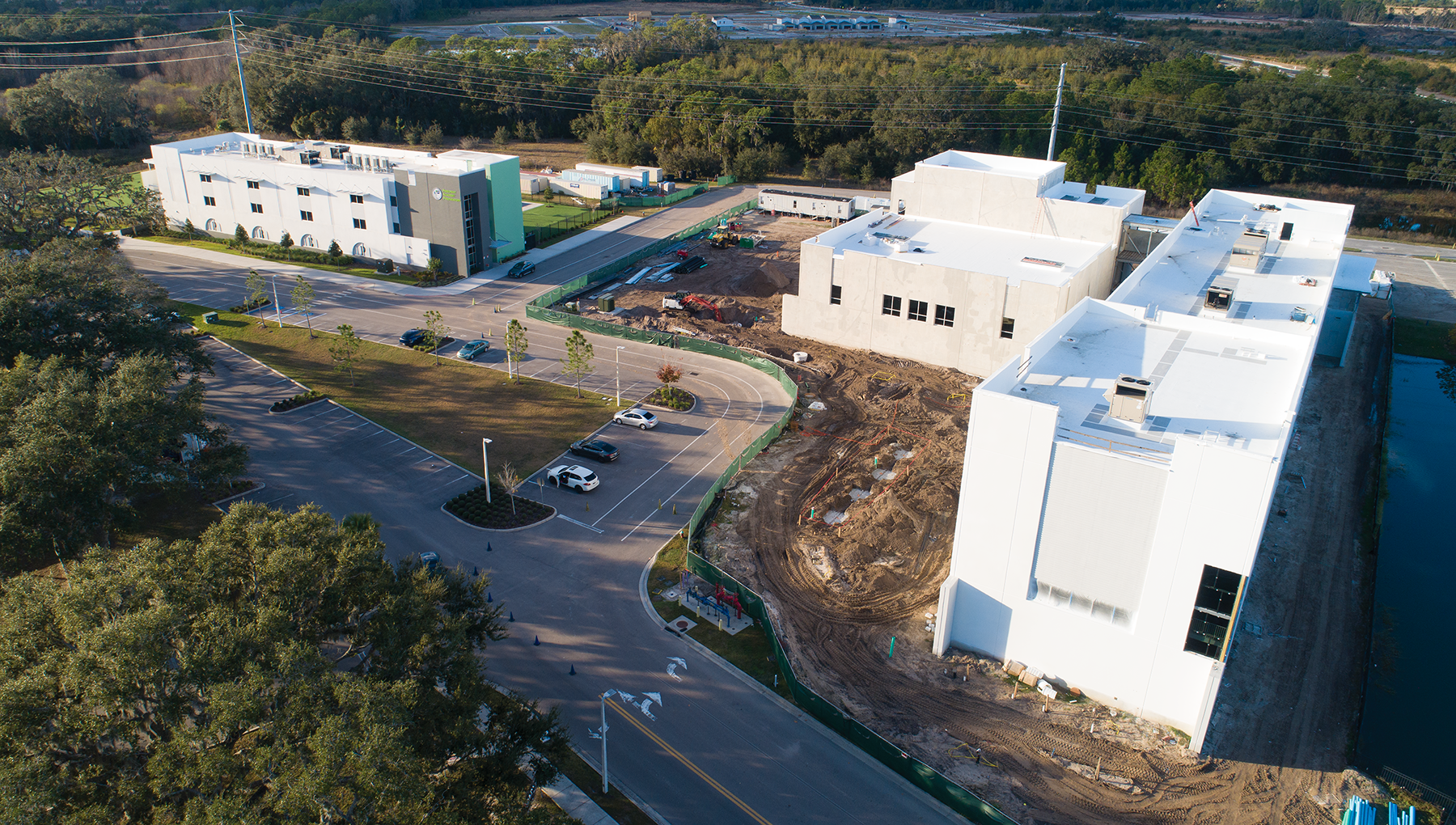
Pinecrest Academy High School
Here & There, This & That…
Avalon Park — In addition to Phase 2 of Avalon Park’s downtown expected to begin building, Avalon Park Blvd., connecting the community’s single-family subdivisions with the downtown area, could be completed any day now and may even be open as you’re receiving this issue.
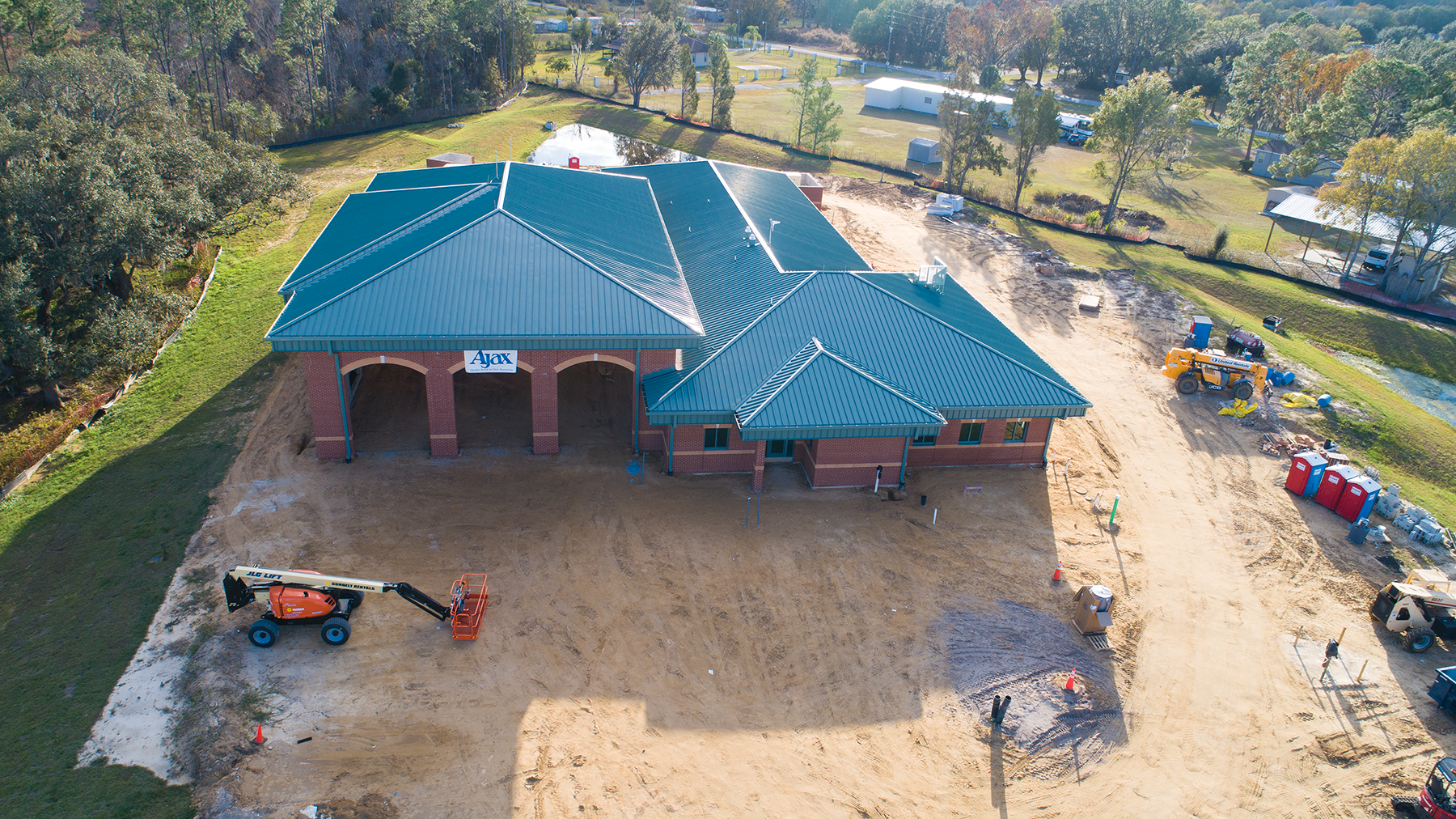
Pasco Fire Rescue Station No. 2
In addition, although the existing buildings at the Pinecrest Academy charter school are already serving kids in grades K-11, the separate, new Pinecrest Academy High School will open to grades 9-12 for the 2026-27 year, which will allow kids in Pinecrest Academy’s middle school (Grades 6-8) to have their own building.
Pasco Fire Rescue Station No. 2 — The much-needed new fire station on S.R. 54, less than a mile east of the new AdventHealth Meadow Pointe Emergency Room, should be ready to open before the end of this year.
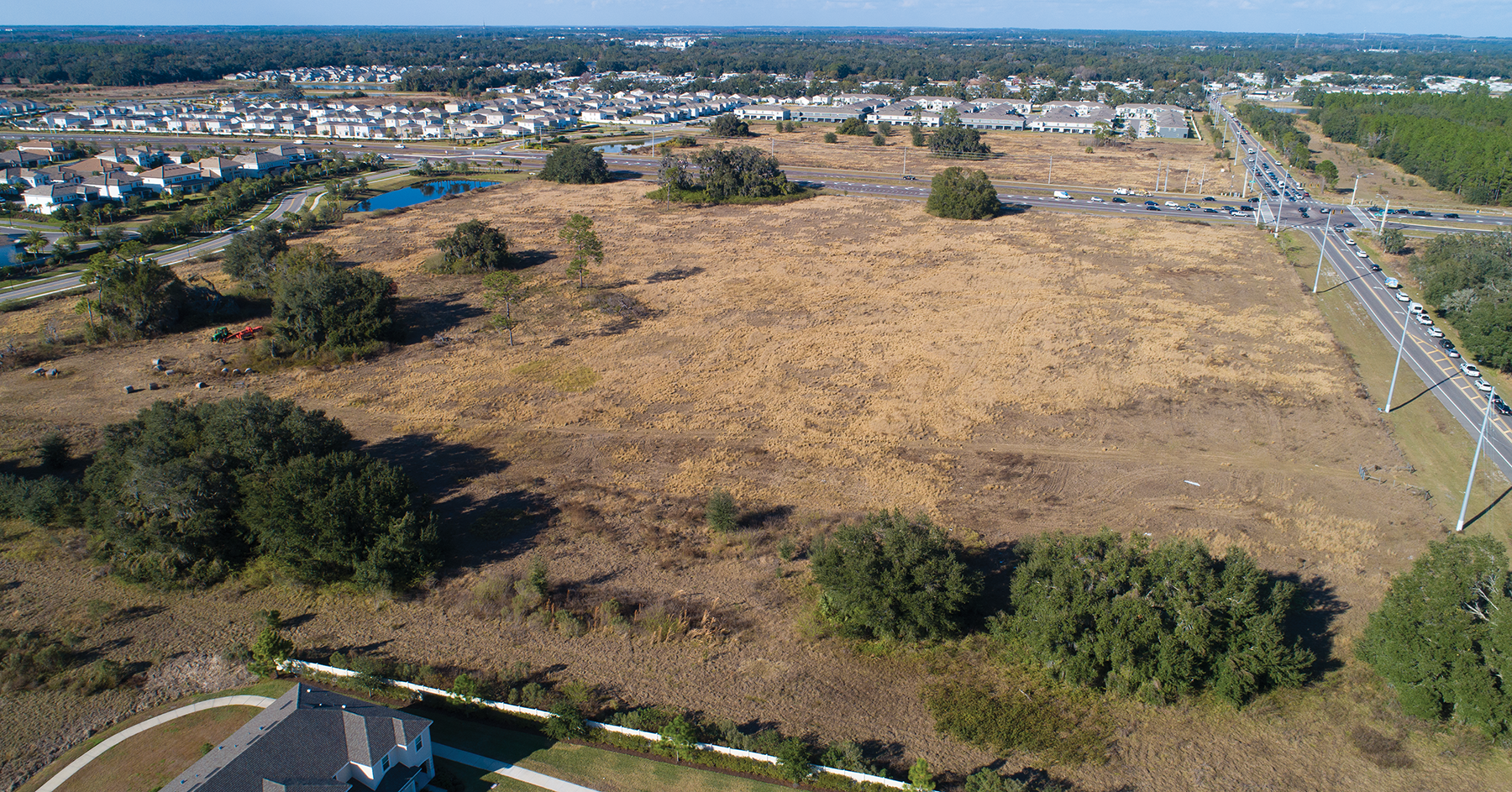
New Walmart (Morris Bridge Rd @ S.R. 56)
New Walmart — Located southwest of the intersection of Morris Bridge Rd. and S.R. 56, Wesley Chapel’s second Walmart store hasn’t broken ground yet, so it’s possible that it may not be completed by the end of 2026, but it should at least begin building this year.
Two Rivers Updates — Even though Two Rivers is all technically located in Zephyrhills (with a portion in Thonotosassa south of the Pasco-Hillsborough county line), the private club to be called The Landing at Two Rivers is well under way and could be completed before the end of 2026. We have no further updates on the planned Peak Surf Park in Two Rivers, but will try to update that story in an upcoming issue. — GN
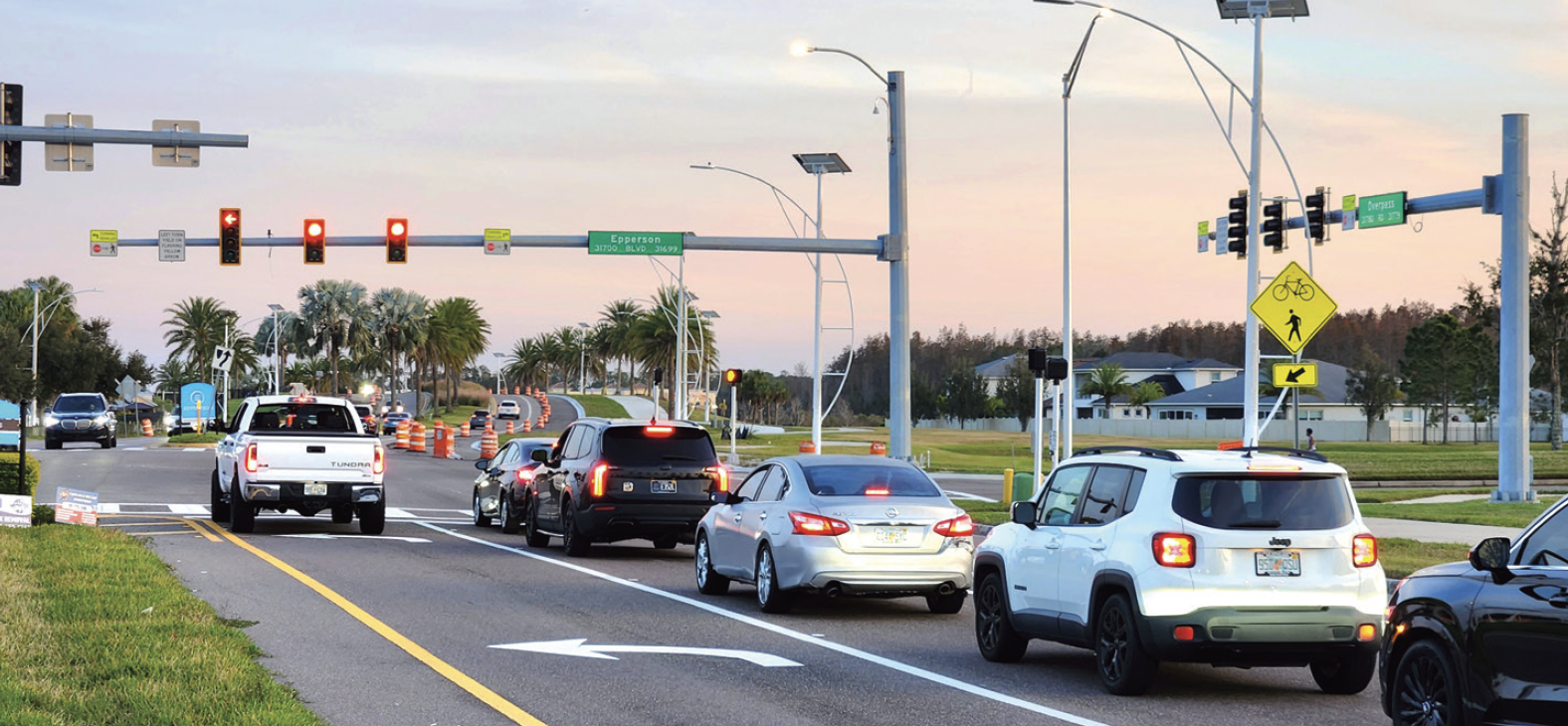
The new traffic signal at the intersection of Overpass Rd. & Epperson Blvd. has replaced the former four-way stop. (Photos by Joel Provenzano)
Residents and commuters traveling through the Epperson community are beginning to see long-anticipated improvements finally taking shape along Overpass Rd., the main east–west corridor connecting Epperson Blvd. to Curley Rd.
Construction is currently under way to widen this short, but critical stretch of roadway, a project that aims to significantly improve traffic flow, safety, and daily travel times for the growing northern Wesley Chapel area.
When finished, the work being completed by Epperson developer Metro Development Group will allow this portion of Overpass Rd. to transition from its current two-lane divided configuration to a four-lane divided roadway, with an additional through lane added in each direction.
This expansion reflects the rapid growth of the Epperson community and surrounding areas and the increasing traffic volumes, especially during peak morning and afternoon hours.
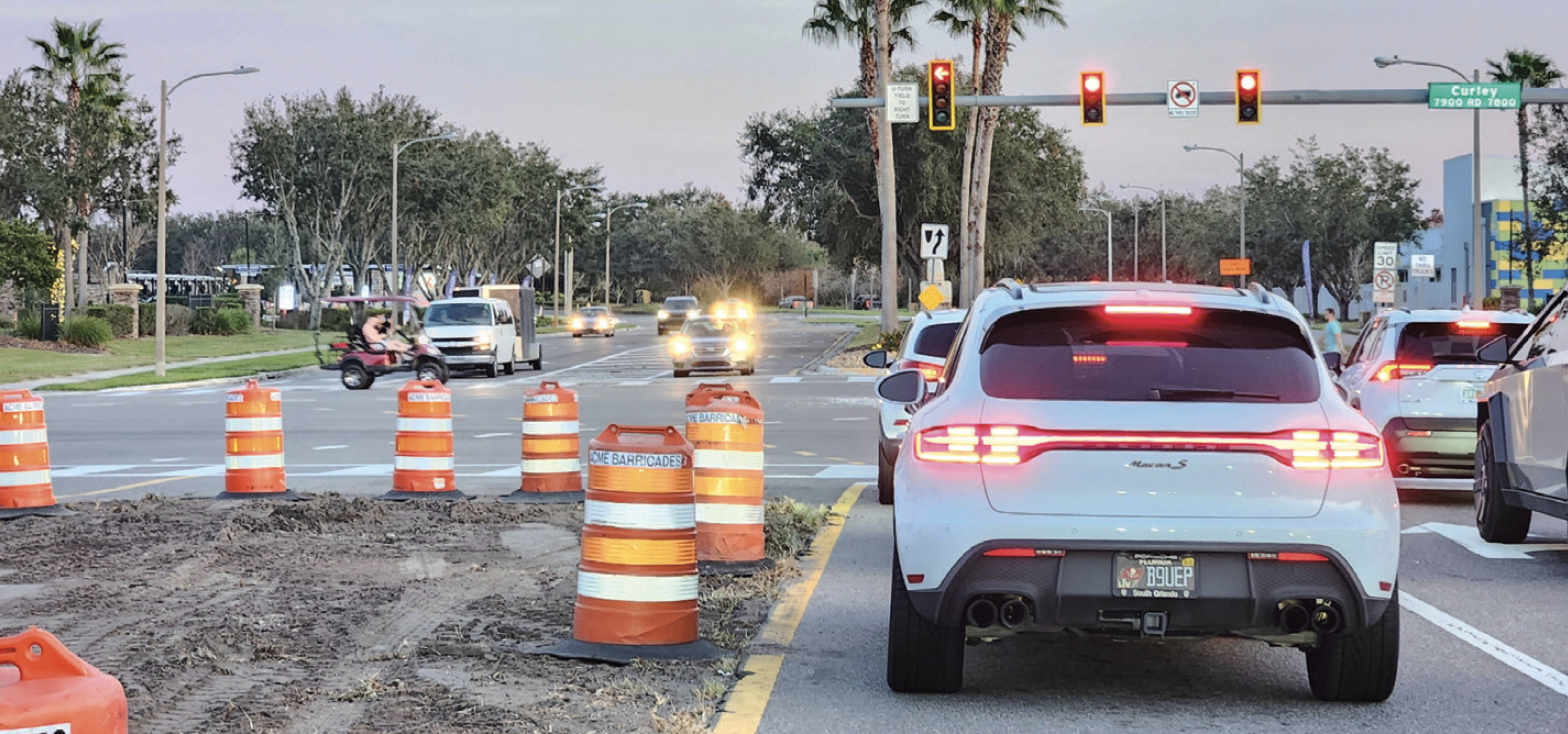
One of the most impactful changes is occurring at the signalized intersection of Overpass Rd. and Curley Rd. Additional eastbound left-turn lanes are being added so that two eastbound through lanes will be able to continue straight through the intersection.
This improvement will align the roadway configuration with the existing layout on the opposite side of Curley Rd. in the Watergrass development, eliminating a common bottleneck that has caused backups during busy times of day.
Additional turn & through lanes are being added at the intersection of Overpass Rd. & Curley Rd.
In conjunction with the widening project, a new traffic signal has been installed at Overpass Rd. and Epperson Blvd., replacing the former four-way stop located in front of the entrance to the Epperson lagoon. This signalization is expected to enhance safety and improve traffic operations at one of the community’s most active entrances, benefiting residents, visitors, pedestrians and bicyclists alike.
Perhaps the most welcome news for daily commuters is what comes next. Once construction has been completed, the existing eastbound right-turn-only lane along Overpass Rd. (approaching the new signal) will be re-striped and converted into an additional through lane.
This change will allow traffic to move more efficiently eastbound, particularly during peak travel hours, and should substantially reduce the delays that drivers have been experiencing.
While construction can, of course, be just as inconvenient, these improvements represent a major investment in the area’s transportation infrastructure — facilitated with private funds instead of taxpayer dollars.
The expanded roadway, improved intersections and upgraded signalization are designed to support continued growth while making everyday travel smoother and safer.
Motorists are encouraged to remain patient during the construction, follow posted signage and exercise caution while crews complete the work. Although we don’t know exactly when the work is expected to be completed, it will be in 2026, so residents can look forward to a more efficient and commuter-friendly drive through the heart of their Epperson community soon.
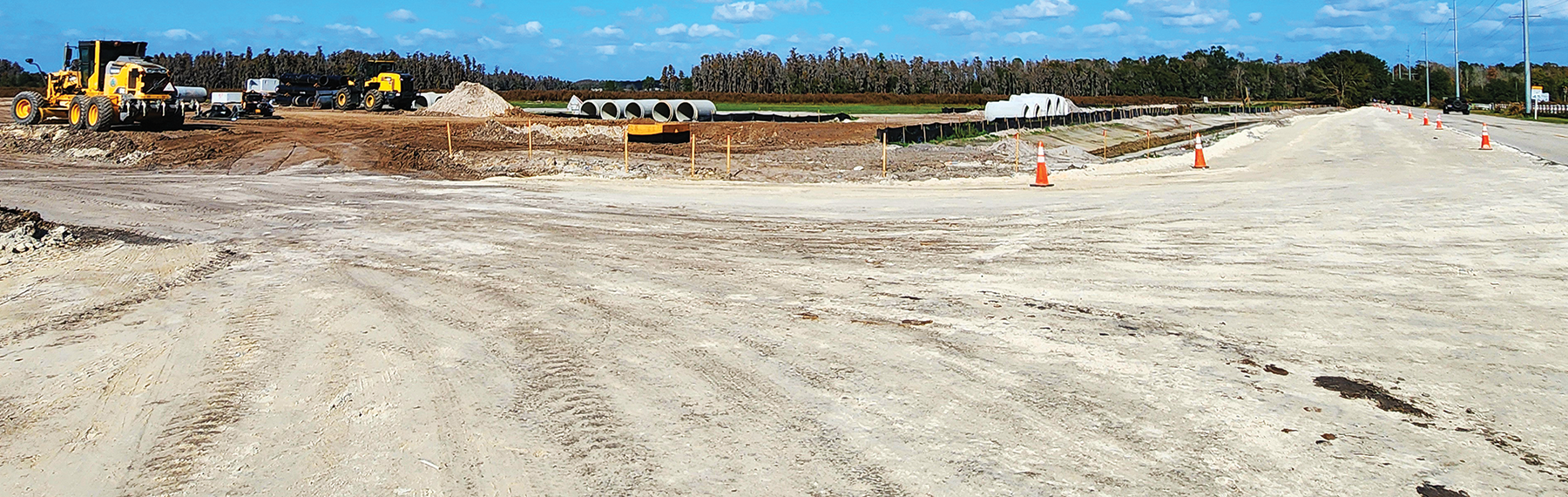
Construction at the intersection of K-Bar Ranch Pkwy. at MB Rd. (Photo by Joel Provenzano)
If it feels like Morris Bridge Rd. (MB Rd.) has been in a constant state of change lately, you’re not imagining it. From New Tampa through Wesley Chapel, this important north–south corridor, once considered little more than a two-lane country road, has seen closures, construction crews, and long-awaited reopenings — with even more changes on the horizon.
As Neighborhood News has reported over the past several years, MB Rd. is gradually transforming from a quiet rural connector into a critical link between several fast-growing communities in Hillsborough and Pasco counties.
Here’s a closer look at what’s recently been completed, what’s under way, and what’s still to come — with a focus on three intersections that are shaping the future of the MB Rd. corridor.
MB Rd. At Future K-Bar Ranch Pkwy.
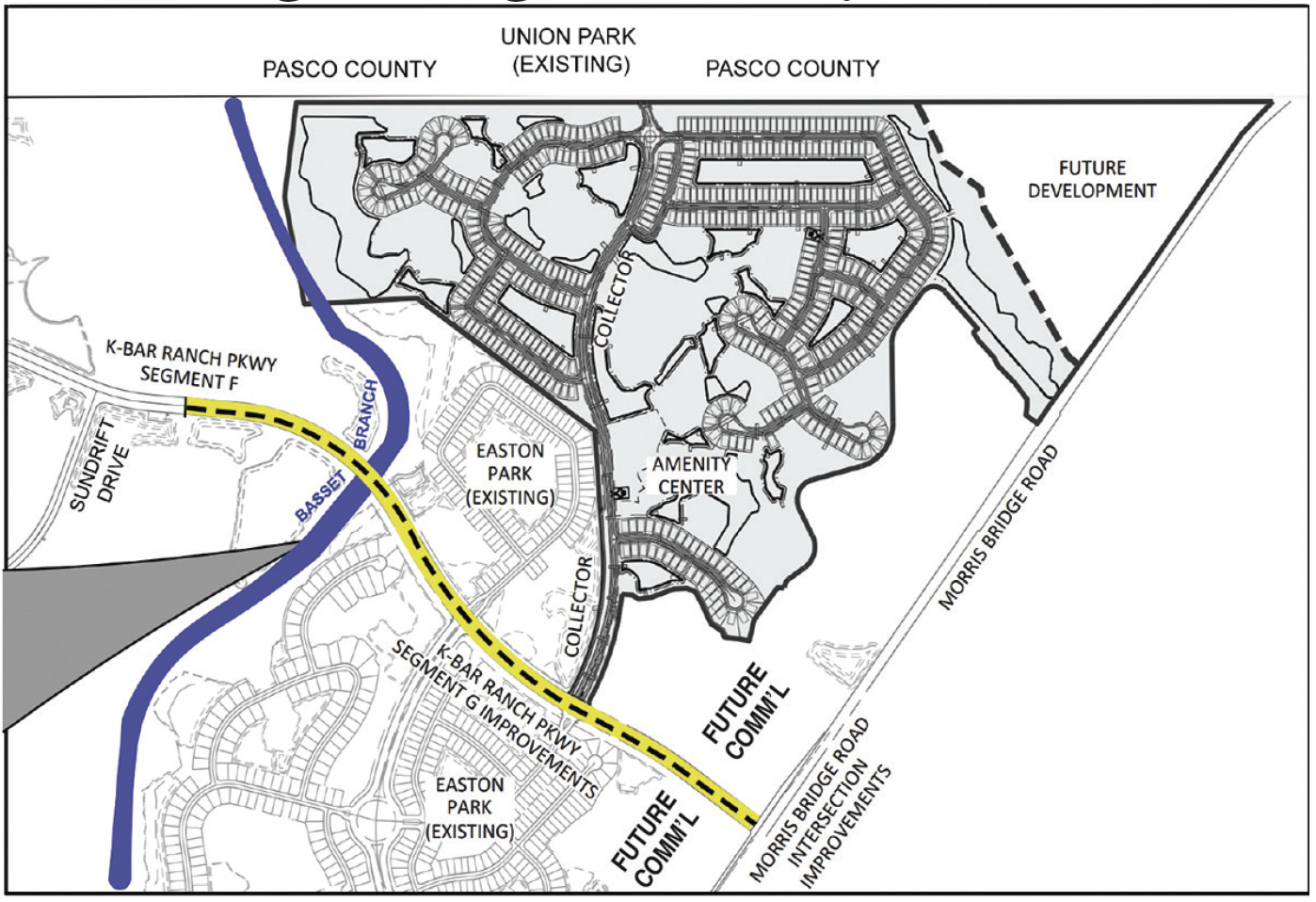
As we first reported in April 2024, the final phase of K-Bar Ranch in Hillsborough County is more than just another residential expansion — it’s a long-planned transportation connection that will finally open all of K-Bar Ranch to MB Rd., benefiting both New Tampa and Wesley Chapel residents alike. That vision is now becoming reality.
Construction is under way on the eastward extension of K-Bar Ranch Pkwy. past Easton Park to MB Rd. Once completed, this connection also will allow access from Wesley Chapel, including from Union Park and Meadow Pointe, via the planned Wyndfields Blvd. extension to the south and the existing Meadow Pointe Blvd. extension.
The map of the planned K-Bar Ranch Pkwy. extension we ran in Apr. 2024. (Source: NN)
Although the Neighborhood News first told our readers the story of this future connection about a year and a half ago (see map), crews are now actively building the new phase of K-Bar Ranch, and the collector road that will extend Wyndfields Blvd. south into the New Tampa development. For Union Park residents in particular, this means a new and more direct route into Tampa — and fewer bottlenecks on already-crowded roads.
Turn lanes are currently being added along MB Rd. at the future K-Bar Ranch Pkwy. intersection (top photo), and a traffic signal will follow. The signal is required under the developer agreement and will help manage the increased traffic once the road opens.
According to the K-Bar Ranch III CDD Preliminary Engineer’s Report (Jan. 2025), construction on the overall final build-out is planned to run from Mar. 2025 through December 2028, and is broken into two phases.
Phase 1 includes 471 single-family homes, followed by 188 townhomes in Phase 2. Based on issued permits and the pace of construction, it’s likely the road connection will be completed before Phase 2 even begins — possibly even this year.
In short, the long-anticipated direct connection between K-Bar Ranch, Union Park, Meadow Pointe and MB Rd. is now closer than ever.
MB Rd. At Bonnet Hole Dr.
Just north of Cory Lake Blvd. (less than two miles south of Cross Creek Blvd.), the Hillsborough County section of MB Rd. reopened the week of Christmas after a full closure that frustrated many residents — particularly those still remembering the road’s prolonged shutdown following Hurricane Milton in Oct. 2024.
The Dec. 8-Dec. 22 closure was necessary to complete stormwater drainage repairs between Apache Dr. and Bonnet Hole Dr., as Hillsborough County explained in a public release. To put it plainly — collapsing and aging culverts under the roadway had to be fully replaced.
Although only a small segment of MB Rd. was actually shut down, detours were lengthy due to the lack of alternative routes. During our communications, county officials acknowledged the inconvenience to residents.
Typically, fully closing the road allows crews to complete the work much faster than staged lane closures would have, especially on two-lane roads where it’s harder to shift traffic and breakup the digging into two phases, due to limited space.
Chris Wilkerson, senior media relations strategist for Hillsborough’s Public Works Dept., told us this single stormwater project cost approximately $240,000. When asked if more closures are coming, Wilkerson confirmed that two additional stormwater-related closures are expected on MB Rd. in 2026 — one just north and one just south of the recent work area — so residents will need to keep an eye out for when those closures are announced.
MB Rd. at Chancey Rd. (Pasco)
Meanwhile, in Pasco County, the long-closed intersection of MB Rd. between S.R. 56 and Chancey Rd. finally reopened just before Christmas, ending months of detours and speculation about what went wrong.
Despite early rumors of the closure being caused by a “sinkhole,” Pasco officials clarified that the issue was actually a damaged, buried 16-inch water main. When the main failed, it washed away soil beneath the roadway, creating a large underground void that looked like a sinkhole, but was not a traditional limestone collapse.
The unexpected discovery of the water line — struck during routine work — complicated the repair. Replacement parts had to be specially ordered, delaying construction for months. Pasco officials had warned residents back on Sept. 19 that delivery and installation of the water main alone could take at least eight weeks, followed by another five to eight weeks to rebuild the road.
In the end, the project was completed almost exactly within that extended timeframe.
But, while the intersection is now open, some residents have been disappointed to see no new left-turn lanes added. According to Pasco officials, those improvements are part of a larger widening project that is still in development.
The county’s current Capital Improvement Projects (CIP) list, adopted in June 2025, shows plans to widen MB Rd. to a four-lane divided roadway between S.R. 54 and S.R. 56. Construction is tentatively scheduled in two phases:
2028 – From S.R. 54 south through the Chancey Rd. intersection
2029 – From south of Chancey Rd. to S.R. 56
Of course, the project has already been delayed once and timelines could change again.
The Big Picture
Taken together, these three intersections tell the story of MB Rd. today — a corridor under pressure from rapid growth, environmental challenges and aging infrastructure — but also one that’s steadily being improved.
Some work is finished, some is still under way and more is coming in the next few years. For residents of New Tampa and Wesley Chapel alike, the changes along MB Rd. promise better connectivity in the long run, even as the short-term disruptions unfortunately continue.
As always, the Neighborhood News will keep you updated with what’s happening with the MB Rd. corridor — one closure, one construction zone and one reopening at a time.
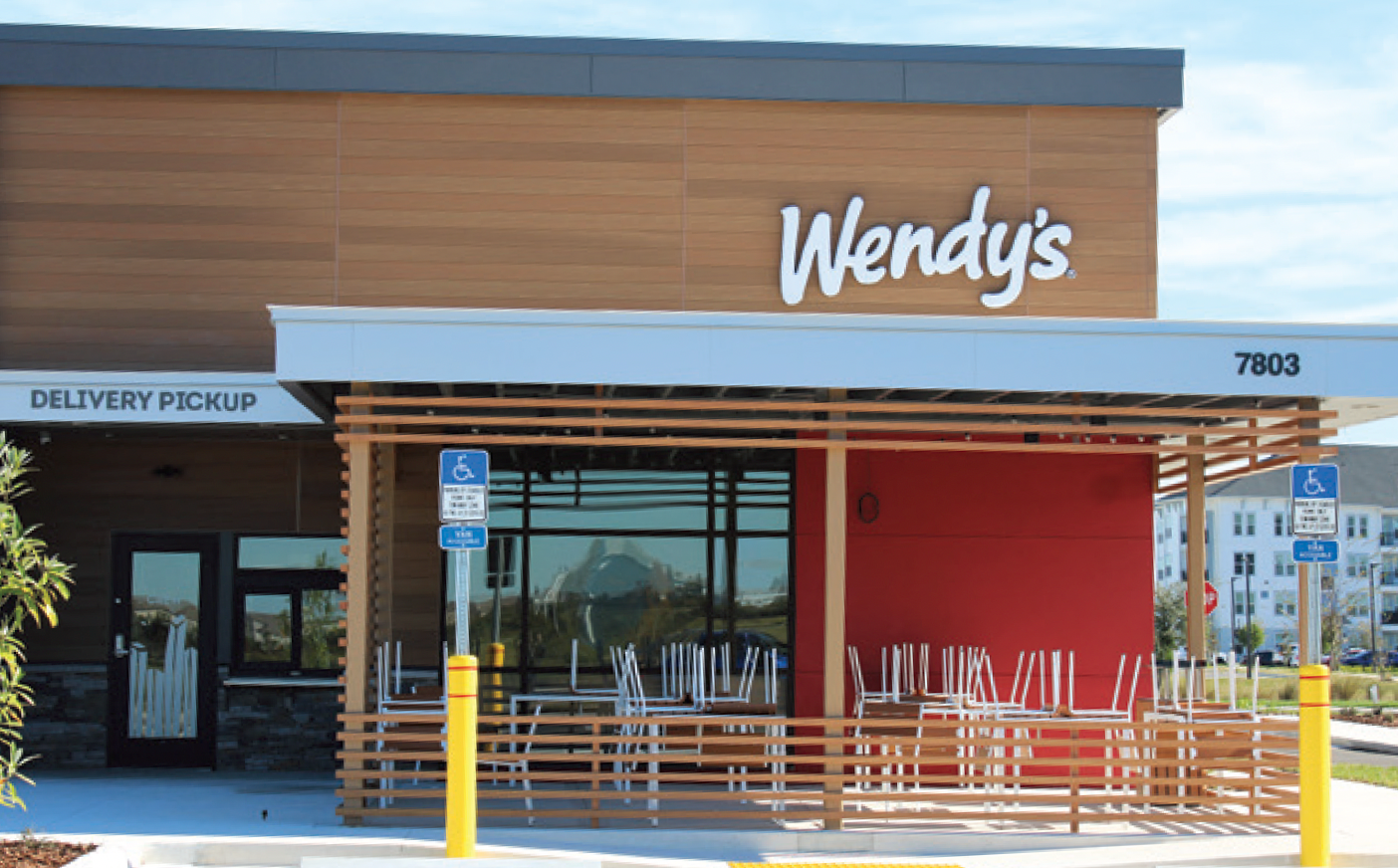
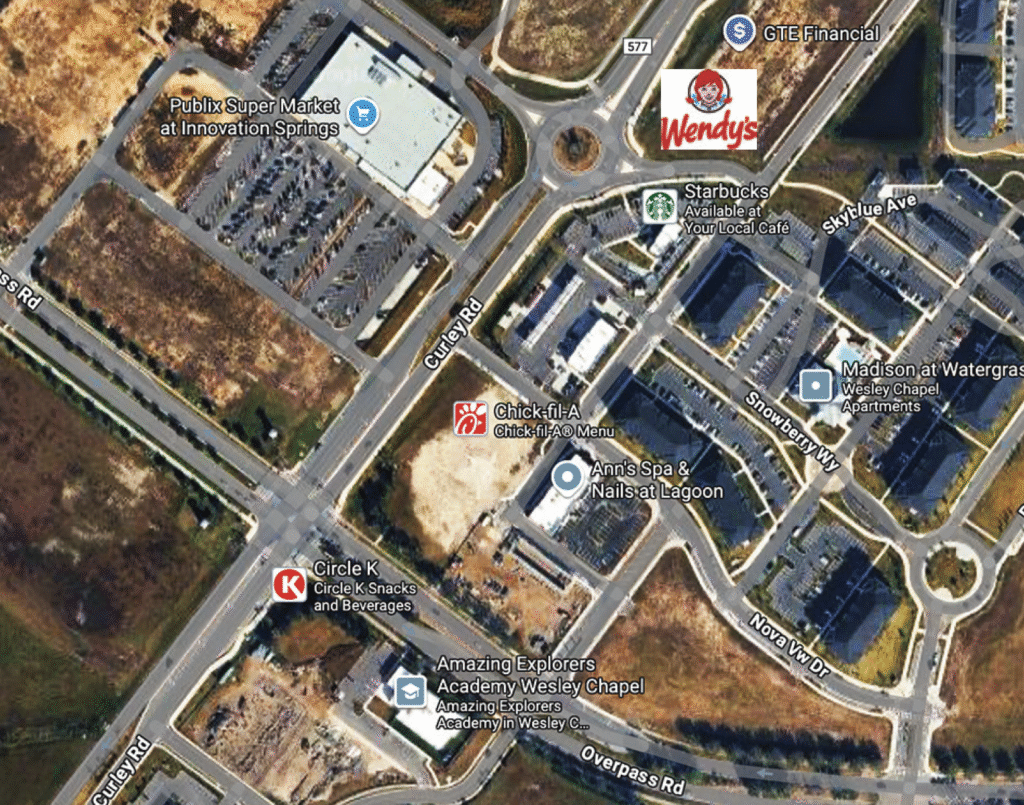
This location at 7803 Curley Rd. at Victory Crossing Dr. (near the Starbucks north of Overpass Rd.; see map) appeared to be ready to open (see photo) a couple of weeks ago, as the electronic menu boards were already operational. But, as of today, the new Wendy’s still looks no closer to opening. The restaurant, featuring a covered outdoor patio, is 2,239 sq. ft. and will have the usual Wendy’s fare, from breakfast items to burgers and chicken sandwiches to Frostys.
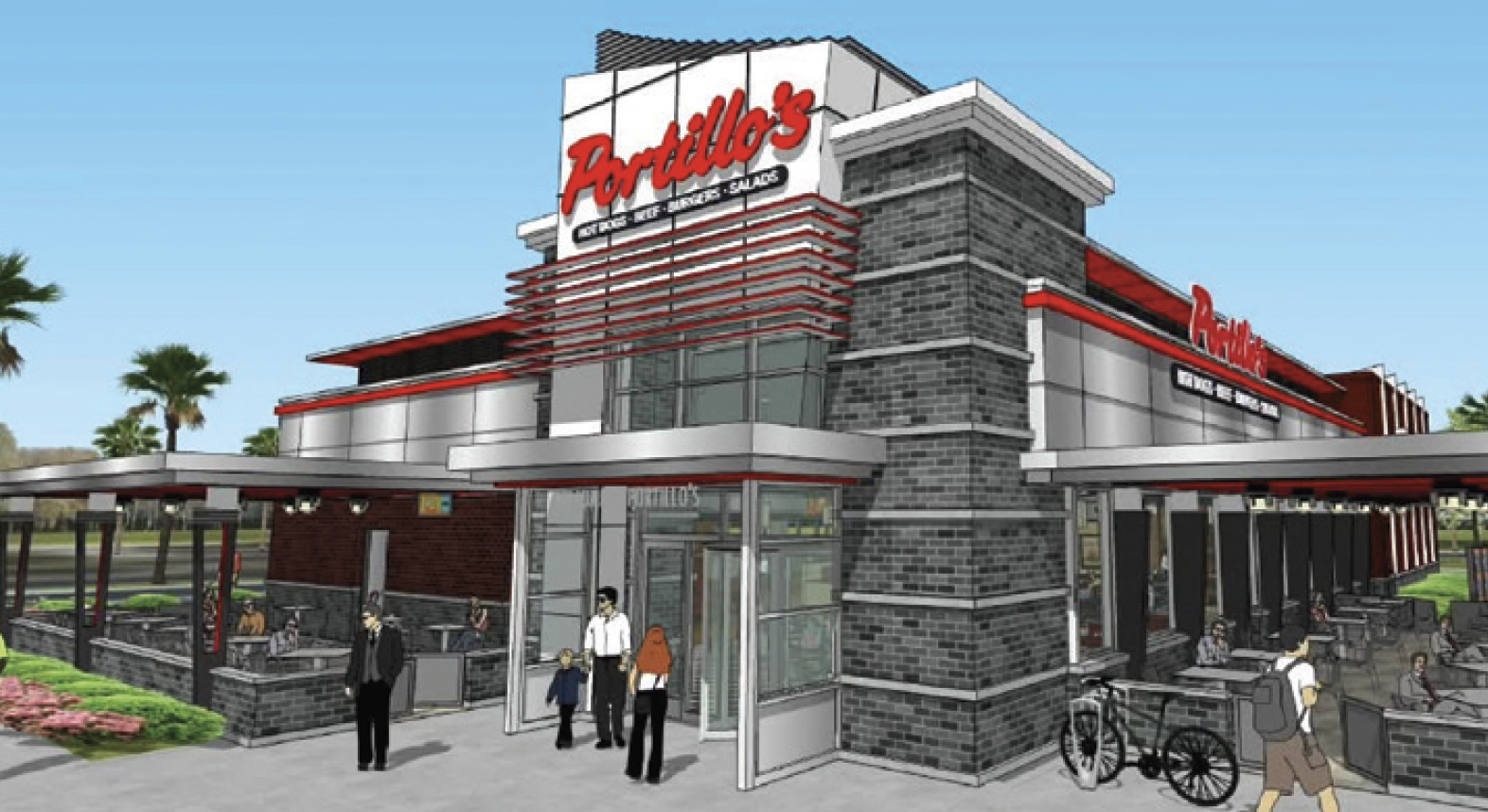
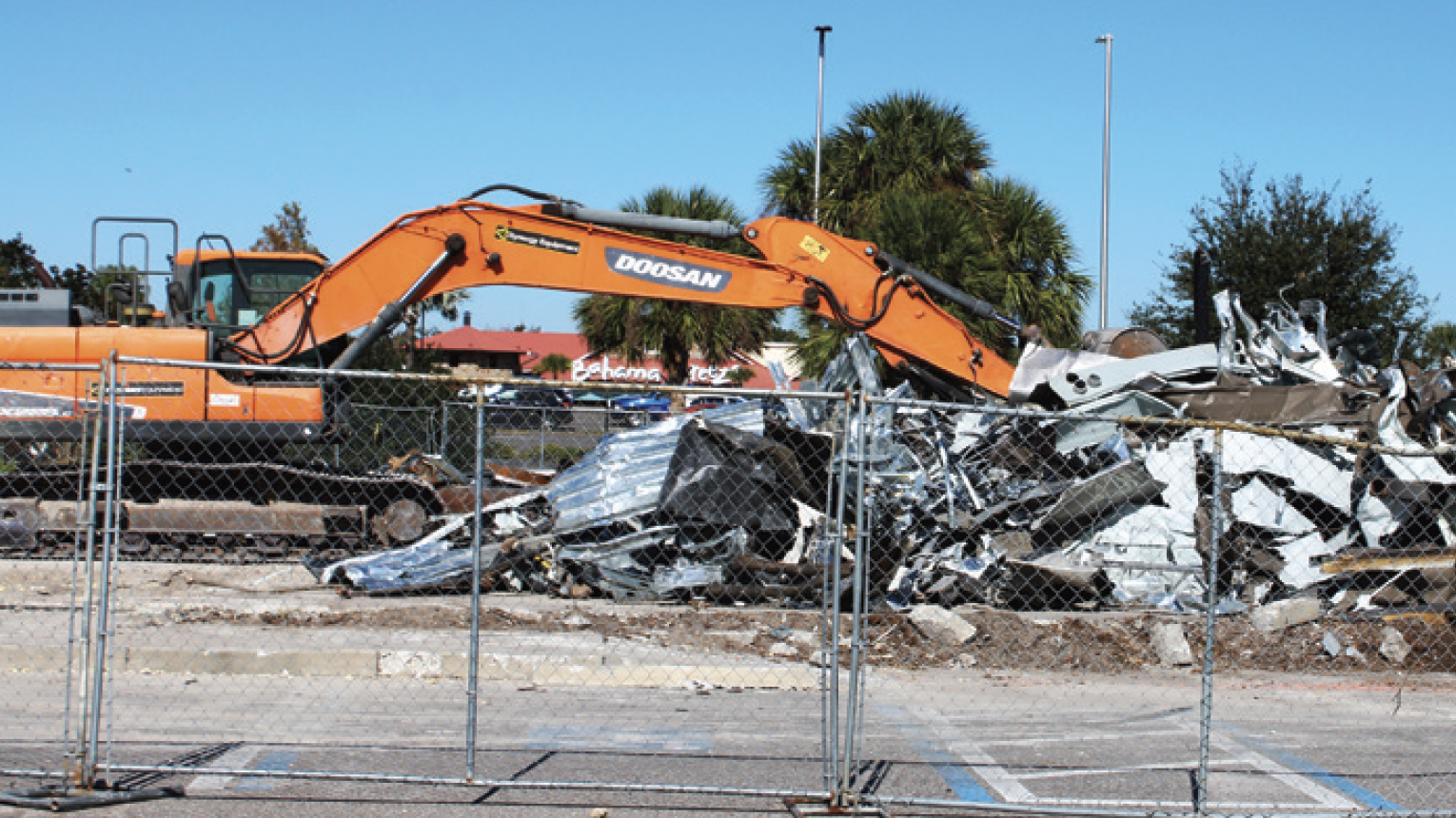
For those of us still lamenting the loss of Rock & Brews, which has now been demolished (photo), there is some small consolation that Portillo’s, the 6,160-sq.-ft. (with a 415-sq.-ft. outdoor patio) Chicago-style hot dog, sausage and burger place, will replace the giant guitar on S.R. 56. Although there will be no full-liquor bar (sigh), Portillo’s does serve beer to go with its Chicago-inspired fare. The Lutz/Wesley Chapel location will feature Portillo’s “Restaurant of the Future” design (rendering).
There currently are 77 Portillo’s locations in 10 states (including the closest location to us — on E. Fowler Ave. in front of the University Mall — and the company is in the process of an aggressive expansion plan to add approximately 920 more restaurants over the next 20 years, including both full-scale restaurants and pickup-only locations. Approximately 800 of these will be full-scale restaurants and the remainder will be pickup or drive-thru locations. We have no further information on when Portillo’s will open, but you can check Portillos.com.