It’s All On The Avenue We’re Taking You To (Or Near?) — 42nd St.!

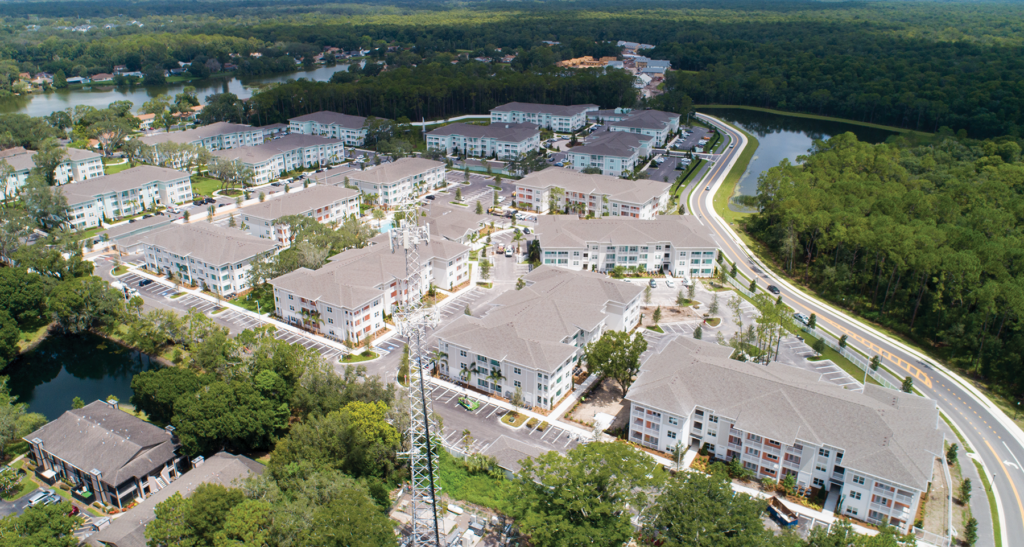
Drone photo of Cypress Cay Blvd. (road at far right). In front are the Lantana apartments. The bluer buildings behind them are the Sage apartments & the orange roofs near the top are the Cottages at Cypress Cay. To the south, Cypress Cay Blvd. attaches to where 42nd St. meets Bruce B. Downs Blvd. (Photos by Charmaine George)

For years, whenever anyone headed southwest from Tampa Palms on Bruce B. Downs (BBD) Blvd. towards the Lake Forest subdivision, there really wasn’t much between the two on the west side of BBD other than a gas station, a flower shop (A Special Rose Florist, now located in Tampa Palms), a do-it-yourself car wash, an Ob/Gyn office and the North Oaks condominiums.


(Top) For about 50 years, the for-lease Palma Verde apartments at the corner of Bruce B. Downs Blvd. & 42nd St. were the only buildings on 42nd St. But, eight years ago, the Angels Senior Living Assisted Living & Memory Care residence (middle and bottom photos) opened, and the beautiful lobby area has been welcoming residents to its 102 studio, 1- and 2-bedroom and 24 memory care apartments ever since.

Just north of North Oaks, a street labeled as 42nd St. already was home to the Palma Verde apartments, a small rental apartment development built in 1965 made up of ten one-bedroom units in five buildings.

Then, roughly eight years ago, Angels Senior Living at New Tampa Assisted Living & Memory Care, which has a sign at the corner of 42nd and BBD, near the Palma Verde apartments (which are managed by Martino Chillura Management), became the second establishment to open on 42nd St., and both Angels and Palma Verde have Tampa addresses in zip code 33613.

The 42nd St. location, which offers 102 beds and 89 total units (including 24 secured memory care apartments), is one of eleven senior living facilities the Angels Senior Living parent company operates throughout the Tampa Bay area. Photographer Charmaine George and I toured Angels and I will say that it is quaint, super-clean and provides its seniors with home health care, therapy, pharmaceutical services, adult day care, respite care and a lovely place to live.

What prompted me to write this story, however, was the fact that until more of the property on BBD began being cleared a couple of years ago, to add more than 750 total additional rental units (see below), I honestly didn’t even know Angels was there. Yes, we had published stories about the new apartment units that had begun construction at that time, but now, as you head north on 42nd St. from Angels, you realize that not only are there sparkling, new apartments for rent, but also that the street seems to change names to what is now called Cypress Cay Blvd. 

This mile-or-so-long stretch of Cypress Cay Blvd. actually does have a separate curb cut on BBD just north of 42nd St. In addition, even though Palma Verde and Angels are located in zip code 33613, the new apartment communities — the separate Lantana and Sage at Cypress Cay rental communities located north of Angels — actually have Lutz addresses in zip code 33559. 

Cypress Cay Blvd. continues past the 252-unit Lantana (which just welcomed its first residents a couple of weeks ago and is not yet 100% completed) and 304-unit Sage (which has been open for about a year) communities and winds its way towards a new multi-family development known as the Cottages at Cypress Cay, which will include 198 total additional rental units in 71 buildings.

Although we don’t yet have much information about the Cottages at Cypress Cay, based on the photo of its sign (below), it appears that, like Lantana and Sage, it also will be seeking to reach upscale apartment renters. Lantana and Sage feature 1-, 2- and 3-bedroom apartments ranging from $1,800 to more than $3,000 per month. And, while they are located near USF, these are not your usual student apartments, with their beautiful lobby areas, upscale amenities and gated security.

Both Lantana and Sage are being developed by RangeWater Real Estate, which has developed dozens of apartment communities  in 11 states, including Ascend Grove West and Beacon Epperson in Wesley Chapel. We were told that Sage, which is nearing its capacity, is now under contract to be sold.

Meanwhile, The Cottages are being developed by Capstone Communities, which also has developed thousands of units in over half the U.S. (including 8 projects in Florida), but is making its debut in the Tampa Bay area.

And, just northeast of where Cypress Cay Blvd. meets BBD (see map on next page), there is an undeveloped commercial lot. We don’t yet know what is planned for that site, but will update that for you in a future issue.

Wiregrass Ranch Blvd. To Officially Open & Other Community Updates 


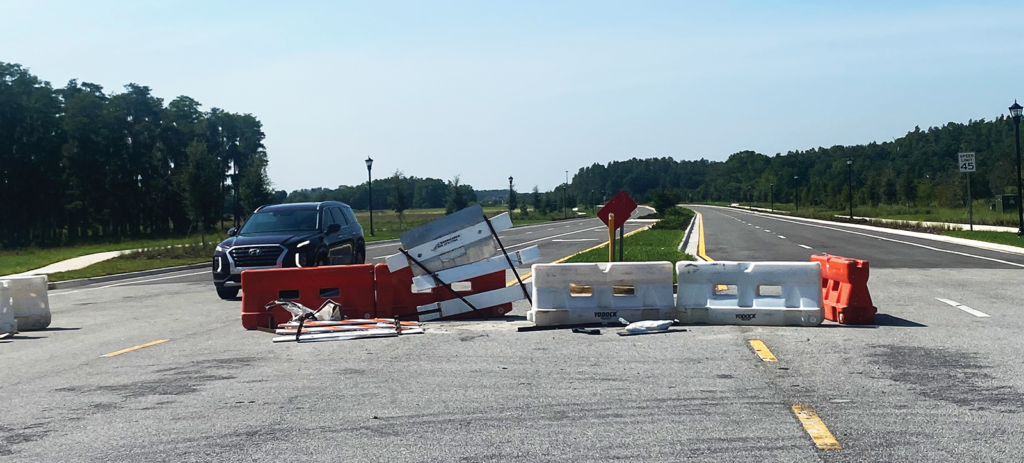
People have been driving past the barricades on Wiregrass Ranch Blvd. just behind the Walmart on S.R. 54, for months, but the word is that the roadway should officially open to traffic within the next couple of weeks. 

Considering how long people have been driving through the barricades “blocking” the nearly two-mile-long stretch of Wiregrass Ranch Blvd. from north of Chancey Rd. to just south of the Walmart fronting S.R. 54, it would be nice if the road finally could be declared “officially” open. 

Well, a source close to the project who asked not to be identified has told the Neighborhood News that although no exact date can yet be revealed, Wiregrass Ranch Blvd. should be officially open to traffic within the next couple of weeks, with conveyance to Pasco County expected to follow shortly thereafter.” Our source has confirmed that the landscaping along Wiregrass Ranch Blvd. is what has been holding up the opening. 

I personally saw people moving the barricades both near Walmart and north of Chancey as long as three months ago, so being able to legally drive the important connector roadway will certainly be welcome by those who live in the Wiregrass Ranch community. 

The same source also provided a number of other updates, including: 

‱ The Wiregrass Ranch developers hope to start construction on the 4th (the eastern) leg of the roadway extending from the new (northern) Eagleston Blvd. signal (opposite the new Jacobs Mitsubishi of Wesley Chapel dealership) within about a year from now. Our source says that the construction of this portion of Eagleston is being held up by the drainage permit. 

‱ The developers also have begun work on the east-west extension of Chancey Rd., which should be done by the end of this year. 

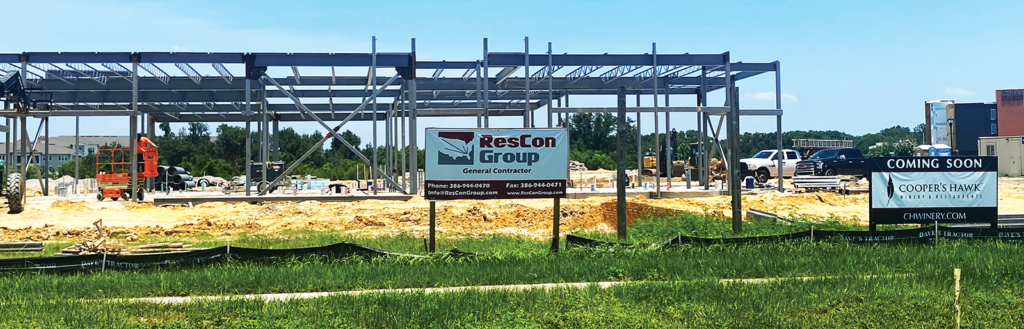
The construction of the Cooper’s Hawk Winery & Restaurant has gone vertical. 

‱ Now that the construction of the Cooper’s Hawk Winery and Restaurant has gone vertical (photo above), the hope is that the long-awaited restaurant and wine tasting bar should be open by sometime this fall. 

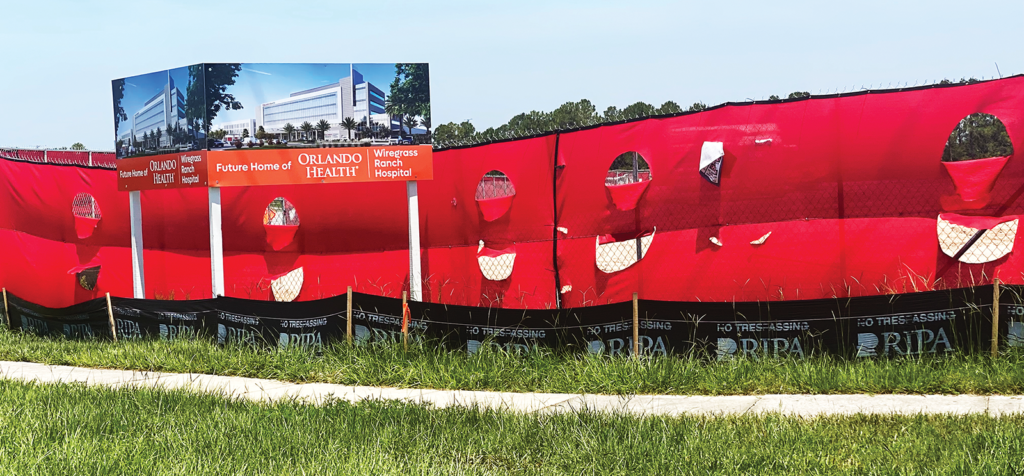
The clearing of the ground for the Orlando Health Wesley Chapel hospital has begun.

‱ For those who haven’t been able to figure out yet exactly where Wesley Chapel’s third major hospital will be located, you now can’t miss the red silt fence (photo right) just east of Wiregrass Ranch Blvd. on S.R. 56 or the sign denoting that Orlando Health Wesley Chapel is currently under construction. 

Although the 300- bed hospital has not yet gone vertical, the ground has begun being cleared and we have been told that Wesley Chapel’s largest hospital (with more beds than AdventHealth Wesley Chapel and BayCare Wesley Chapel combined) should be completed by late 2024. 

Of course, we’ll keep you posted! 

TP Blvd. Repaving Nears Completion; Is New Tampa Blvd. Next?

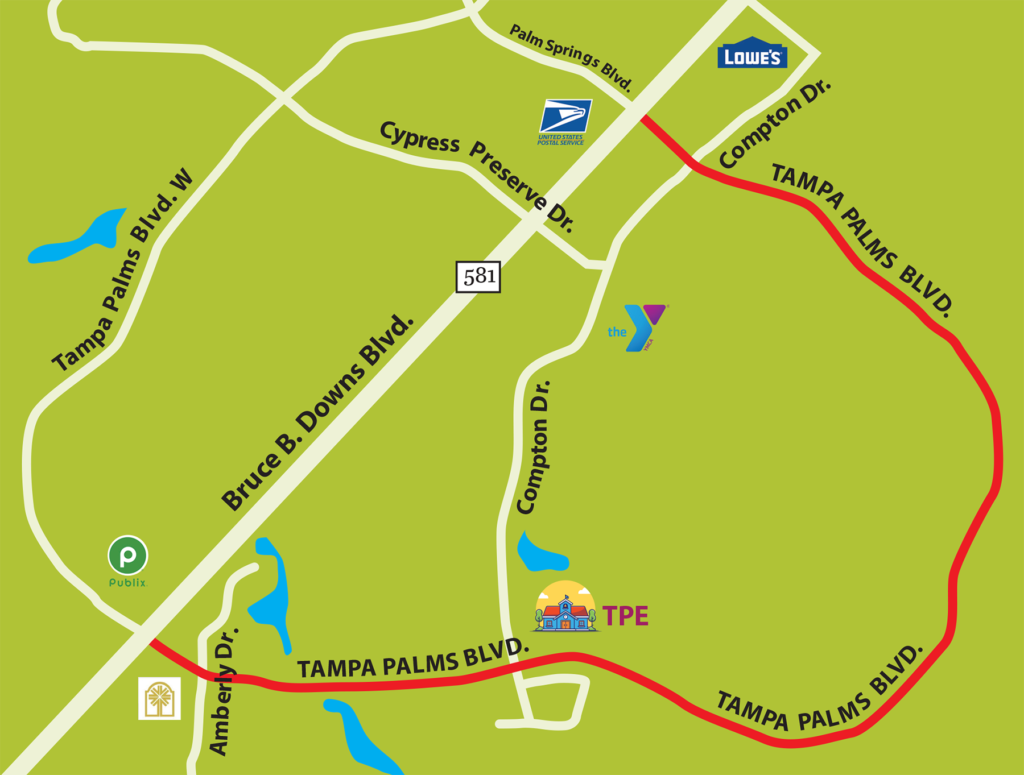
The long-awaited repaving of the east side of Tampa Palms Blvd. (in red on map) is well under way and the City of Tampa expects to complete the repaving project by August or September of this year.

The safety of our children and families is a high priority, not only for the residents of New Tampa, but also for our District 7 Tampa City Council member Luis Viera, who always is looking for ways to make the City of Tampa — and especially, the community where he lives — safer.

To that end, Viera helped the city secure a grant to pay for not only the repaving of the circular portion of Tampa Palms Blvd. that winds its way through Tampa Palms Areas 1 & 3 (on the east side of Bruce B. Downs, or BBD, Blvd.), but also is already providing for the installation of eight traffic-slowing speed tables on Tampa Palms Blvd. from the southern intersection of BBD (near Florida Executive Realty (bottom left gold logo on map above) all the way around the 2.91-mile stretch to Tampa Palms Blvd.’s northern intersection with BBD, near Lowe’s Home Improvement (see map above). 

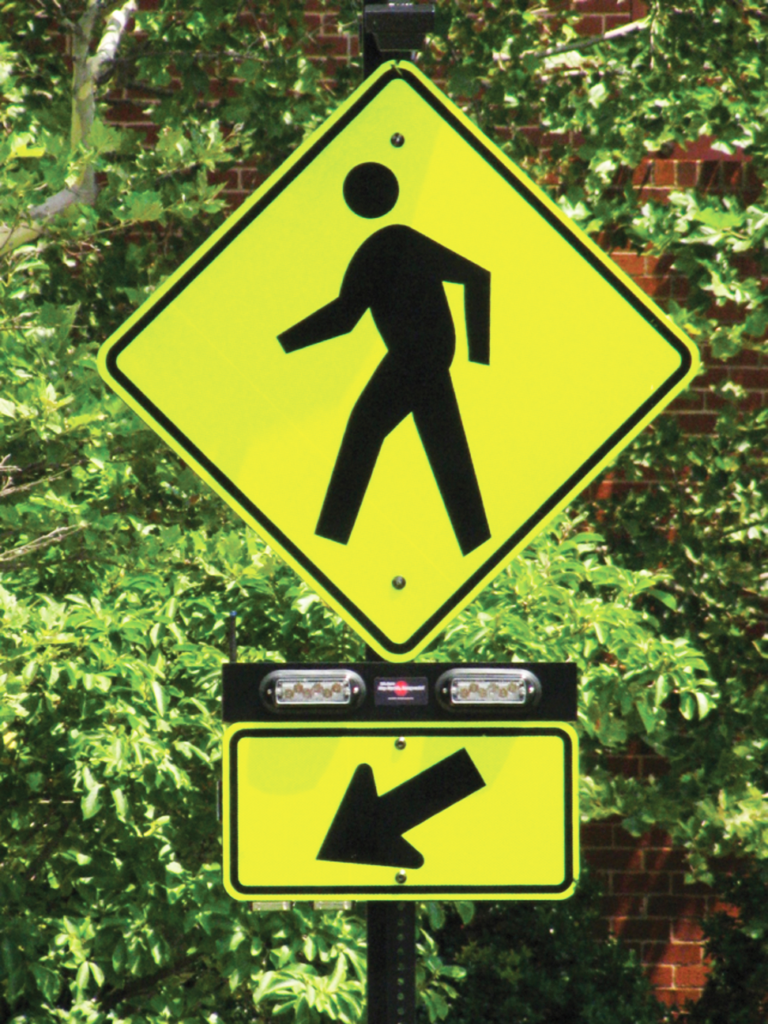
Above is an example of an RRFB (Rectangular Rapid Flashing Beacon) like the ones on back-order for the Tampa Palms Blvd. repaving project. At right is one of the eight speed tables being installed to slow traffic on the roadway.

The construction of the $4.9-million project already has begun and, when it is fully completed — which Viera and Lara Bouck, the city’s chief production engineer for mobility, believe should be by August or September of this year — the project also will add two sets of three (six total) Rectangular Rapid Flashing Beacons (or RRFBs), which will provide rapidly flashing beacons at marked crosswalks. They believe the RRFBs definitely will enhance pedestrian and bicycle safety at those intersections. There also will be Americans with Disabilities Act (ADA)-compliant ramps installed as part of the project and Bouck says the crews from the project’s contractor — CW Roberts Contracting — currently are installing the speed tables and signs and revising the permanent pavement markings.

Unfortunately, Bouck says, there currently is a 12-20-week wait on the RRFBs. “The latest we heard is that the (RRFB) bases will be shipped to the contractor by the end of July.” However, Bouck says that the bulk of the remaining construction of the project should be completed by May of this year. 

“We got the funds for Tampa Palms Blvd. from a combination of ARPA (American Rescue Plan Act) and Local Option Gas Tax funds,” says Viera. “I have to thank U.S. Rep. Kathy Castor (who represents Florida’s 14th Congressional district) for helping us secure the ARPA funds.”

And, although there was some discussion about narrowing the travel lanes to provide for additional traffic calming through this area, Bouck says, “Travel lanes were not narrowed as a part of this project.”

Is New Tampa Blvd. Next?

Viera says that he is equally concerned about implementing speed-calming improvements on New Tampa Blvd., the main thoroughfare through the West Meadows community.

“New Tampa Blvd. is number one on my priority list for New Tampa for repaving, as I believe it’s long overdue,” Viera says. “So, it’s on the list as next and we have begun seeking some design funding for it, but nothing is concrete yet. However, while we have had (I believe) design forwarded for this for funding, most construction projects for mobility have been put on hold, if they were connected to the penny sales tax and that includes this one.”

Bouck confirms that the New Tampa Blvd. project is not currently funded in the city’s Capital Improvement Program (CIP), but Viera says, “We continue to pursue funding (grants, etc.) to address the resurfacing backlog throughout the city.”

Of course, voters across Hillsborough County passed a 1-cent sales tax referendum (with 57% of the voters voting for it) to fund its capital improvements in 2018, only to have the referendum shot down in court due to ballot language issues. A similar referendum on the Nov. 2022 ballot was not passed by the voters, but millions in 2018 sales tax funds were already being collected. It is now up to the state to decide how those funds should be distributed. Once that issue is resolved, however, Viera is hopeful that the city will receive enough of the money to fund the improvements for New Tampa Blvd. We’ll keep you posted.

BBD Update — Done By End Of Year!

It’s easy to recognize the progress being made on the widening of Segment D of Bruce B. Downs Blvd. (above). The final phase of the BBD widening is expected to be completed before the end of 2018.

The seemingly never-ending widening of Bruce B. Downs (BBD) Blvd., a project talked about and debated — and even cursed — for two decades, could be “substantially” finished by the end of October 2018.

While the mounds of dirt, yellow construction trucks working behind orange traffic barrels and the winding roads with sometimes confusing lane switches seem to contradict that claim, Hillsborough County’s Public Works Department says that all eight lanes of Segment D — the last of the four segments of the BBD project — will be operational in October.

That doesn’t preclude periodic daytime lane closures, as contractors complete punch list items, but the end, thankfully, is finally near.

The final full completion of the segment is scheduled for sometime in November.

The widening of Segment D — a 1.44-mile stretch from Pebble Creek Dr. to County Line Rd. — from a 4-lane divided roadway to an 8-lane divided roadway also will include a landscaped median, sidewalks, a multi-use path and upgraded traffic signals.

The final segment of BBD widening began construction in October of 2016.

According to the county’s website, Segment D’s cost was estimated at $24 million, which was funded through the Public Works Transportation Capital Improvement Program (CIP) and was awarded $5 million from the Transportation Regional Incentive Program (TRIP) by the Florida Department of Transportation (FDOT).

Segment A, which was once the most congested area of BBD and extends from Bearss Ave. to Palm Springs Blvd. in Tampa Palms, was a $54-million project that wrapped up last year.

Segments B and C, which bracket the work that was done around the same time I-75 was widened, were considered the most difficult (and costly) of the segments geographically, but were completed together first.

The two inside southbound lanes of Segment D have been completed, and plans were to finish the two outside northbound lanes, and then shift traffic by the end of August.

When the traffic shift has been completed, work will begin to complete the two inside turn lanes, as well as the median northbound and southbound.

As we reported last issue, county engineers recently showed results of a signal-timing project they say has improved traffic on BBD (and its side roads) south of Cross Creek Blvd., and said when the construction is done, some of those same signal-timing improvements will be applied to Segment D.
Also, a new traffic signal has been added at the intersection of BBDs and Trout Creek Dr. (just north of the Burger 21) in an effort to alleviate congestion off the side roads in that area. That signal was not yet operational at our press time.

While residents have complained about perceived inactivity on BBD at most of the traffic-related townhalls and forums held in New Tampa the past year, all of the previous segments had their own challenges. The completion of Segment D has had to overcome some construction and weather issues that have delayed progress at times.

Last year, Hurricane Irma (and other lesser storms) dumped enormous amounts of rain on the New Tampa area, and the usual summer-time showers this year also have provided some delays.

“The toughest aspects of the project so far have been the weather impacts,” wrote the county’s Public Works Department, responding to questions from the Neighborhood News. “All construction projects must utilize temporary drainage measures to address the rain. This project is unique because the installation of the main drainage line must connect to the adjacent drainage lines on the south end of the project first, to allow the entire project to drain properly.”

While the Segment D project is designed with the temporary drainage measures in place to handle the rain, “unusually quick and heavy” rains can overwhelm the drainage system, making it unable to drain the water from the roadway and causing backups.

The project also has faced obstacles like locating underground utilities, which in most cases can be traced as a straight line, but there are unexpected deviations that required a redesign.

“When coordinating multiple utility companies to install, relocate, and remove, it is challenging, especially when the majority of this work is completed by other companies all trying to fit in narrow areas,” the county says.

But, the delays haven’t been enough to change the much-anticipated completion date, which remains the end of 2018. The end of a two-decades-long wait draws ever closer.

Fixing Bruce B. Downs Traffic | Solutions & Study

To appreciate what local drivers endure every day and to find ways to fix our traffic problems, traffic engineer Jerry Wentzel had a computer-equipped car make more than 180 runs driving the speed limit through the Bruce B. Downs (BBD) Blvd. corridor in New Tampa collecting data.

And, perhaps, a few choice words by those frustrated that the car was driving the speed limit.
“If you did see the car, I hope you’re not the people that were giving us obscene gestures,” Wentzel joked. “A lot of drivers in your community don’t think 45 is the right speed limit.”

But, by the end of his presentation to roughly 50 people at Compton Park in Tampa Palms on July 25, the only gesture Wentzel — the Southeast Regional manager for DKS, a transportation planning and engineering firm that recently completed a traffic light study in New Tampa — received was a thumbs up.

Wentzel and Vik Bhide, the chief traffic management engineer for the City of Tampa, told an audience of New Tampa residents, as well as a handful of political hopefuls that not only are changes in the traffic light cycles speeding things up, plans for three additional turn-only signals will continue to ease congestion.
“You should be able to recognize there has already been an improvement,” said Wentzel.

The traffic light study was hatched to address a number of concerns, primarily helping move traffic through side streets like Cross Creek Blvd., Amberly Dr. and Tampa Palms Blvd. onto and off of BBD and facilitating a steady traffic flow during peak hours that would make the roads safer, not just for cars but for cyclists and pedestrians as well.

The lights are also now timed to favor busier traffic at certain times. For example, in the morning, the lights will favor southbound traffic, and in the evening, they will favor northbound traffic.

“In the past
.BBD was one giant green (light),” Bhide said. “You were running four-and-a-half-minute cycles. If you were on Bruce B. Downs and got the first green light, you were great. If you were on a side street, you were waiting for a very long time. Our goal was to reduce the delay for everyone.”

Three corridors were studied for improvements in the weekday a.m., midday and p.m. hours, as well as Saturday morning and evening hours. The Saturday results were applied to Sunday, which was not specifically studied.

“In some cases, the signals were really way off,” said Wentzel. “The timings were changed dramatically.”
The four-mile stretch from I-75 to E. Bearss Ave., which has nine traffic signals, saw the largest improvements.

According to the study, by recalibrating the cycles of the signals from an average of 222 seconds (3:42) to 146 seconds (2:26), the average delay was reduced from 139 seconds (2:19) to 73 seconds, or 1:13.

The BBD widening project allowed weekday PM cycle lengths to be reduced from 254 seconds (4:14) to 130 (2:10).
“Because it’s now four lanes, it allowed us to reduce the cycle length and give more time to the side streets and cut the delay for coming off the side streets,” Wentzel said.

The changes also helped increase the average travel speed along BBD from 31.6 miles per hour to 37.6 mph, suggesting a smoother flow of traffic. The biggest increases were seen in the weekday midday hours (31.5 to 39 mph) and Saturday p.m. hours (32 to 43).

“That’s pretty dramatic,” Wentzel said. “People in that corridor should feel the changes, should be driving better, stopping less and spending a lot less time in traffic.”

Requiring minor tweaks in the cycle lengths was the corridor along Cross Creek Blvd. between BBD and Morris Bridge Rd. Improvements there helped reduce the average delay for drivers by 37 percent. Delays getting off the side streets were not as much of an issue, so the improvements focused on the east-west movement along Cross Creek Blvd.

“From one end to the other was 134 seconds (2:14), now down to 85 seconds (1:25),” Wentzel said. “That’s a pretty big reduction and something the average person should feel. We felt those were good results, very positive results.”
The third corridor studied, BBD from Cross Creek Blvd. to I-75, was the trickiest, Wentzel said.

While the signals clearly favored BBD traffic, it did not recognize that 40 percent of the traffic in the corridor was coming off Cross Creek Blvd. The result has been significantly longer cycle times for traffic turning south onto BBD from Cross Creek. That has slowed the average speed in that corridor by 1 percent and increased the average delay by 10 percent, numbers that Wentzel called insignificant.


Statistics from study regarding signal timing changes at the Cross Creek/BBD Intersection (Graphic Design: Gavin Olsen)

“If you look at the study results, it didn’t really benefit BBD traffic, because the intention was to help Cross Creek,” he said.
While the study may produce small numbers measured in seconds and minutes, when you multiply that one car by days and then times per month, you get a bigger, brighter picture (see graphic above).

“The cumulative savings to the community are significant, and to the environment are significant” Bhide said.
Bhide also said the light signal changes also will benefit bicyclists and pedestrians, who tend to take risks crossing when they are stuck at long cycles favoring BBD.

Combined with the significant amount of time saved by motorists, as well as the environmental benefits, Bhide said this light study was a success.

“We don’t always see these kind of dramatic results from signal changes,” he said. “This just happened to be a pretty good story for us to tell.”

Right-Turn Signals To Be Added!
In addition to the recently completed traffic light changes, right-turn signals will be installed at northbound BBD and Cross Creek Blvd., as well as eastbound Highwoods Preserve Pkwy. and BBD (where p.m. traffic from the business campuses behind the AMC Highwoods movie theater complex can stretch on and on) over the next 80-90 days.

An Aerial Shot of the Cross Creek & Bruce B Downs Blvd. Intersection in New Tampa. (Photo: Eagle Fly Media)

Both lanes are choke points during peak traffic hours in the evening, and the BBD/Cross Creek Blvd. location in particular has drawn the ire of many local residents.

“We’ve done what we can with signal timing, but the right turns could be going at the same time the lefts are going if we had a signal for it,” Wentzel said.

As for a third left turn lane off Cross Creek Blvd., Wentzel and Bhide both said that’s just a matter of time, and money. While Bhide works for the city, that intersection is a county asset that the city maintains, per an interlocal agreement.

“We have talked to the county about putting that as a project in their capital improvement plan, and tentatively, they are reviewing that and will try to get it funded in the next few years,” Bhide said.

The traffic signal study was hosted by the New Tampa Council (NTC). Along with District 7 Tampa City Council member Luis Viera, who founded the NTC, the crowd also included a handful of political candidates running for seats, either in the upcoming “mid-term” elections in August and November, or in March 2019, that will represent New Tampa — Angela Birdsong (running for Hillsborough County Commissioner District 2), Joseph Caetano and Joe Citro (Tampa City Council Dist. 1) and Fentrice Driskell, who is running against incumbent Shawn Harrison for the Florida House of Representatives Dist. 63 seat.