Biographies of Candidates for Pasco Voters on the August 23 Primary Ballot
U.S. Congress, District 12 (Republican Primary only)
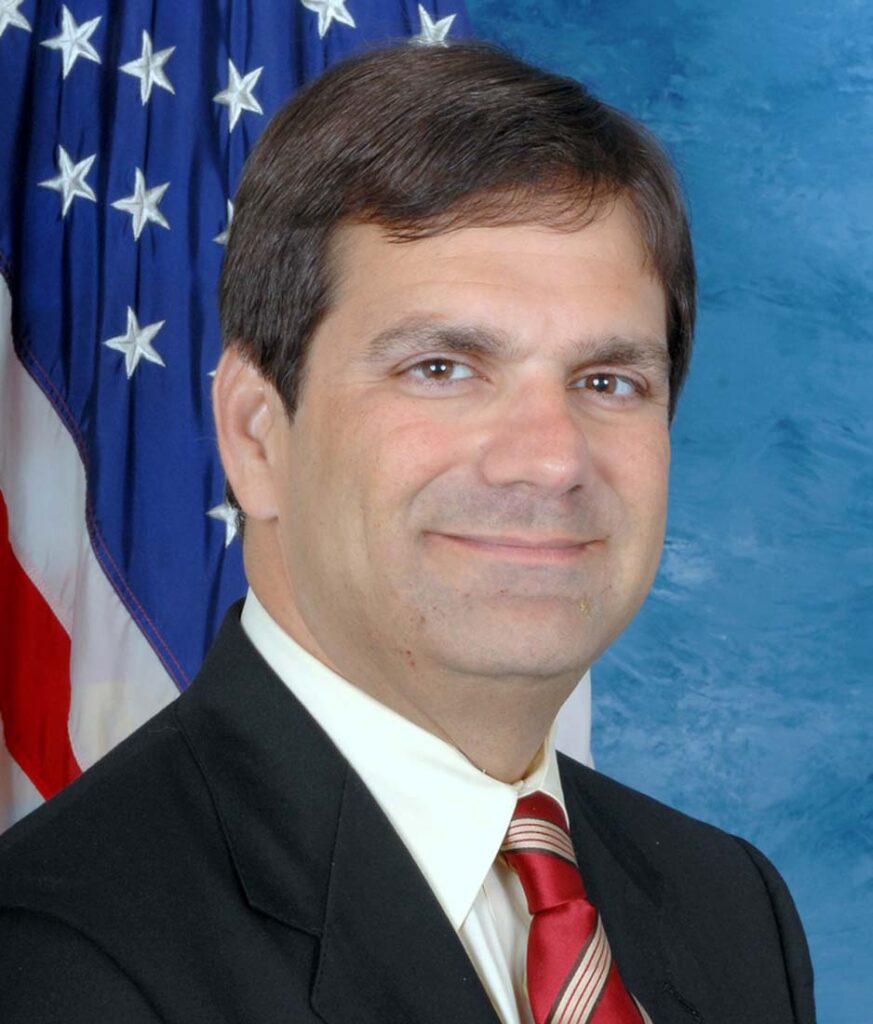
Gus M. Bilirakis (incumbent)
Congressman Gus M. Bilirakis is a Republican representing Florida’s 12th Congressional District, which includes all of Pasco and northern parts of Pinellas and Hillsborough counties. According to his Ballotpedia profile, he was first elected to Congress on November 7, 2006.
Gus serves on the House’s Energy and Commerce Committee. He is the Ranking Member of the Consumer Protection & Commerce Subcommittee and a Member of the Health Subcommittee and Communications and Technology Subcommittee.
With 38 bills he authored signed into law since 2015, Congressman Bilirakis was recently designated as the Most Effective Republican Lawmaker in the State of Florida by the Center for Effective Lawmaking at Vanderbilt University.
Chris Leiser
Chris Leiser is a fourth generation Floridian born in Bartow in Polk County 1978 and graduated Countryside High in Clearwater in 1996. On a Ballotpedia candidate survey, he said, “God has been making a way for me before conception. By the grace of God I know him, first and foremost I am a believer, a father, a husband and a patriot with a deep sense of obligation to we the people & our constitution.” He also has been an entrepreneur since childhood. “I have always enjoyed problem solving, engineering and building things. I have been in the construction industry for over 24 years, (involved with) projects exceeding billions. In 2003 I married my high school love, Tina. We have two beautiful children, Channing & Madison.”
From 2004-06, Chris was an instructor at Sinclair Community College. He says, “Through the majority of my career, I had the privilege to serve the US Army of Corp of Engineers, constructing projects from Fort Polk, Fort Benning, Fort Bragg, Fort Stewart, Fort Campbell, multiple AFB and VA hospitals.” He added, “Politicians are supposed to always put us, the constituents first (their bosses), America & Americans first. This has not been the case for a very long time and President Trump brought that to everyone’s attention.”
Jack Martin
Jack Martin was born in Newark, NJ. According to his Ballotpedia profile, Martin studied at Union County College and Zion Bible College and earned a Bachelor’s degree from Central Bible College in 1983. His career experience includes working as a Senior Pastor, county fire department Chaplain, and member of the Florida ESF-8 emergency response team. Martin has been affiliated with the Assemblies of God, the Republican Party of Florida, the NRA, the Republican Liberty Caucus, and Liberty Pastors.
Brian Perras
Brian Perras is a Christian conservative, native Pasco County resident who lives in his childhood home. Brian graduated from Ridgewood High in 1996. He’s a third generation military veteran. He enlisted in the Navy in 1997, however; his military career was cut short after sustaining an injury. He served on the USS Enterprise and received an honorable discharge. Thereafter, he graduated from SCUN with a Bachelor of Arts degree.
He lives by his oath to protect and defend the Constitution against ALL enemies, foreign and domestic. The state our Republic is in is what prompted Brian to run for Congress.
To learn more about his campaign, please visit Perras4Congress.com or Facebook.com/brianperrasforcongress.
“We are no longer being represented or protected. I’m an America First Constitutionalist who is willing to serve and protect WE, THE PEOPLE at any cost!”
Sid Preskitt
Sid Preskitt was born in Birmingham, Alabama. According to his Ballotpedia profile, Sid earned a vocational degree from the College of Oceaneering in 1973. Preskitt’s career experience includes working in commercial diving. As of 2022, Preskitt was the operations director of a commercial diver training facility.
His campaign website (Preskittfor Congress.com) promises “No Compromises on” the US Constitution’s original intent, the 2nd Amendment, border security/legal immigration, military readiness, education reform, election integrity, energy independence, no medical mandates, health freedom & term limits.
He says, “Evil is powerless if the good are unafraid.”
*****
Pasco County Commission, District 2 (Rep. Primary only)
Troy Stevenson
According to his TroyForPasco.com website, Troy believes in responsible & sustainable growth, multimodal transportation and infrastructure, supporting first responders and fostering community engagement. Troy is a conservative who values God, family, and country. He has personally raised funds to help families in need, and also made it his mission to support our law enforcement men and women by raising the funds needed for the Pasco Sheriff’s Office to acquire three K-9 Police dogs.
Troy has been an active member of the Pasco County community for over 20 years. For the past 16 years, Troy has been an active First Responder for NDMS (National Disaster Medical Services) and has served during Hurricane Katrina, Maria, SuperStorm Sandy, and various vaccination and relief efforts. He is a dedicated family man who has been married to his wife Iris for more than 27 years. He is an active member of his church: Life Church in Wesley Chapel. He is on the Board of Directors of the Wesley Chapel Rotary and the North Tampa Bay Chamber of Commerce.
Troy owns Acme on the Go, a LED mobile billboard Truck Fleet, that markets local business. He has donated his Trucks and Services to hundreds of community events.
Seth Weightman
According to his SethWeightman.com website, Seth was appointed by Gov. Ron DeSantis to the Southwest Florida Water Management District (SWFWMD) Board and voted to cut your taxes two times on the SWFWMD Board. He is a small business owner and active community servant who says he is a “common sense leader, who brings the knowledge and skills needed to help Pasco thrive.”
Seth and his wife, Jessica — both Pasco natives — are proudly raising their two children in Pasco and are ready to tackle the issues that matter to our community.
On the issues, Seth says he will work to strengthen our local economy, invest in sustainable infrastructure, promote public safety and preserve Pasco’s identity with smart growth. Continuing a family legacy of service, Seth is actively involved in our community and ready to stand for us as Pasco County Commissioner.
Christie Zimmer
According to her ZimmerForPasco.com website, Christie says, “Public service was instilled in me from an early age. My mother, Bonnie Zimmer, served Pasco County on both the County Commission and the School Board. And, for over 20 years, I have worked to better manage growth in Pasco as Chair, Vice-Chair and member of the Citizens Advisory Board for the Pasco MPO. But, I have learned that, ultimately, the decisions on where to locate new neighborhoods and apartment complexes, and at what density, rests with the County Commission. For too long those decisions have been dominated by development interests with heavy checkbooks.”
She adds that, “With me on the County Commission, we will have an experienced business woman, who knows the development code, fighting for communities who want to retain their character and fighting to keep from having more people than we have roads, schools and water to accommodate.”
Christie is a past president of both the East and Central Pasco Assn. of Realtors, a member of the Pasco 54 Corridor Study, and was a Founding Member of the Nature Coast Volunteers for Veterans.
*****
Pasco County Commission, District 4 (Rep. Primary only)
Gary Bradford
According to his VoteGaryBradford.com website, Gary has over 38 years of experience in the first responder community, primarily serving the Tampa Police Dept. from 1982 to 2007 as a law enforcement officer. After retirement in 2007, Gary started Bradford Group, a government relations firm specializing in advocacy for the men and women of the first responder community.
Gary has been working closely with the first responder community advocating for the first responders in Tallahassee, various county commissions and city councils. In Tallahassee, he is part of the Florida Benevolent Association’s lobbying team that represents over 33,000 law enforcement officers, sheriff’s deputies, corrections officers, probation officers, Florida Wildlife Commission officers, Florida Highway Patrol troopers and various other first responder units. Gary served his fellow first responder community in Tallahassee until he retired in 2022.
Gary rose through the ranks to major management community relations positions. These positions included various assignments such as Police Officer, Field Training Officer, School Resource Officer, Hostage Negotiator (Tactical Response Team), Patrol District Corporal, Community Relations Corporal, and Senior Detective. Gary and his wife Deborah have called Land O’Lakes home for 20+ years.
Christina “Fitzy” Fitzpatrick (Incumbent)
According to her ChristinaFitzpatrick.com website, Commissioner Christina Fitzpatrick is committed to building a better future for Pasco County and its citizens.
Christina was born in Yonkers, NY, but moved to New Port Richey, FL, 33 years ago. She has spent most of her life in Pasco County; she went to school, worked, started businesses, and created non-profits here. Christina has a strong love for education. She believes that solid academics form a basis for a strong life. Christina attended Ridgewood High and graduated with honors. She then earned her Associate of Arts degree from Pasco Hernando Community College. Next, she earned her Bachelor of Arts degree in Business Administration from the University of South Florida.
Hard work and determination helped create Christina’s success. In addition to her duties as a Pasco County Commissioner, she also manages the operations of Miracles Schools. Miracles is a Pasco-based school, dedicated to giving quality education to children with special needs. She serves as administrator and principal of the school.
Shannon J. Wittwer
According to her Shannon4PascoCC.com website, Shannon says, “The responsibilities of county commissioners are immense. As our county continues to grow, we have one chance to get it right. This requires clear vision… new eyes. Eyes that can see that our county is in desperate need of new leadership and ears that can hear the voice of the people and what’s important to them. We need someone who is NOT a politician. We need someone who is willing to fight on behalf of the people. We need someone who isn’t afraid to say, “NO” and who will ask the tough questions. That is me!”
Shannon’s top priorities for Pasco are balanced growth, keeping taxes low, safeguarding the community, community involvement and supporting small businesses, veterans and seniors.
She says, “I am a Christ follower, wife, mom of 2, owner of a construction/remediation company, and a constitutional conservative. I have lived in Pasco County for seven years and almost 20 years in Florida.
“I never saw myself getting involved in politics until recent events opened my eyes, and I realized that change was needed. Putting my hat in the ring was not any easy decision to make, but one that I felt compelled to do.”
*****
Pasco County School Board, District 1 (Non-Partisan)
Al Hernandez
According to his AlHernandez.org website, Al says he is running because, “It is all about our children’s fundamental education, the overall well-being of the families in our community, and the hard working staff of a District who is balancing policy and safety in order to take care of our students and their families. While I can passionately speak to reasons like financial literacy, workforce creation, and my continued advocacy for parents to have the ability to take an active role in their children’s education, most importantly is my drive to see my community full of culture and solid education.”
Al, who has been married for 27 years, graduated from Miami Senior High; obtained an Associates of Arts degree from Miami-Dade Community College; earned a Bachelor’s degree in Business Management and a Master’s degree in International Business & Finance, both from Nova Southeastern University. He also taught economics, marketing, and business management as an Adjunct Professor for Florida National University.
“I am a firm believer that God helped me through each stage of my life for a purpose. I also am a proud product of the public education system. I value a family rooted in faith, a strong education, hard work, and a solid moral compass.”
Stephen A. Meisman
According to his Steve4PascoKids.com website, Steve says, “My pronoun is MAN. I identify as a husband and father and I plan to remove the WOKE agenda from Pasco Schools!”
He adds that, as a parent, small business owner, taxpayer and community member, he is running for Pasco County School Board District 1 because he is “fed up with the corruption in our current system. I know the only way to make a change is to stand up and become the force behind the change we want to see.”
In addition, Steve, who is married and has two school-aged children, says he will “bring a unique parents’ point of view to Pasco Schools.” As a father who has both home-schooled his kids and taught them in Public School, Steve has experienced first-hand how the District is leaving the students of Pasco County unprepared, uneducated and he is standing up to fix it.
He says his goals are to “remove Cultural Marxism from Pasco County Schools, and begin teaching Pasco students HOW to Think, not WHAT to think.”
James Washington
According to his Vote4JamesWashington.com website, James says, “For too long, our District has focused on the growth along the SR 54 corridor, while ignoring the impending growth of east Pasco. Growth is important. As a District, we should be working with the State Legislature, the County Commission, and local businesses and nonprofits to meet that growth by building new schools, as well as provide resources to our established schools.”
James, who has been an educator for 27 years, 16 of which have been in Pasco County schools, is a graduate of Anclote Elementary, Gulf Middle School and Gulf High. He has a B.A. degree in English Education and an M.Ed. degree in reading, both from St. Leo (College, now) University.
James is a two-time Teacher of the Year who has taught at Pasco, Gulf and Zephyrhills high schools, and was a District runner-up for Pasco Teacher of the Year. His mother is a retired Pasco County teacher, his wife is a current Pasco County teacher and one of his three sons is a freshman at Cypress Creek High. He says, “I will improve the quality or our children’s education while creating an atmosphere where teachers don’t feel limited and all families are welcomed and involved.”
*****
Pasco County School Board, District 3 (Non-Partisan)
Cynthia Armstrong (Incumbent)
Although we couldn’t find a website for her, Cynthia first won election to the Pasco School Board in 2010. The New Port Richey real estate agent and three-term incumbent, (according to a Tampa Bay Times July 6 profile), “acknowledged that some actions made residents unhappy. But initiatives such as repurposing some schools and altering bus routes have been necessary during financially tight times.”
The Times profile also says she, “wants to continue efforts such as expanding choice offerings and providing more rigorous courses. She also has advocated for stronger District funding, including the property tax referendum to boost employee pay.”
Matt Geiger
According to his Ballotpedia profile, Matt was born in Pennsylvania. He earned a Bachelor’s degree from La Roche University in 1996 and a graduate degree from Slippery Rock University in 2001. He earned a second graduate degree from the California University of Pennsylvania in 2007.
Matt’s career experience includes working for 25 years as a teacher, guidance counselor, teacher union rep, school and District administrator. He has sat on multiple boards, including the Boy Scouts of America, YMCA, local nonprofits and neighborhood boards. He has been married for 21 years and has three school-aged children.
“My platform is to listen and fight for the rights of students and parents, increase teachers salaries and seek an independent Financial Audit to find wasteful spending in the District. I also want to create an information hub where parents & students can get educational/career planning outside of the school day. I will hold the Pasco School District administration accountable, make all schools safe and have a positive culture, increase transparency, performance in all low-performing schools and create a parent council.”
*****
Pasco County School Board, District 5 (Non-Partisan)
Megan Harding (Incumbent)
Megan was elected to the Pasco School Board in November 2018, bringing keen insight into the education system and a commitment to put children first — passions central throughout her life and work, first as a young student herself, as well as a sister, teacher, volunteer, and actively engaged citizen.
Raised in Pasco County and educated in its public schools, she holds a Bachelor’s Degree from the University of South Florida and a Master’s Degree in Reading K-12 from Saint Leo University. She taught in Pasco County Schools for seven years before deciding to run for the School Board with the aim to give a greater voice to students, teachers, staff, and community.
Once elected, she resigned her teaching position to focus on School Board priorities and, today, she is actively involved in the schools and wider Pasco community. Megan spends her time inside schools and working within the District as an advocate and volunteer, while teaching part-time in the Elementary Education Dept. at Saint Leo University, and serving on the Board of Directors for the Florida School Board Association. She is married to Jeromy Harding, and the couple lives in New Port Richey with their dog, Piper.
Charles Phillip Touseull
According to his VoteDoctorT.com website, Charles (or “Dr. T”) says he, “will foster an environment which respects parental rights and provides District accountability while keeping families informed.”
Originally from Hicksville, NY, Charles made Florida his home in 1990. He’s been married to his wife Susie for 15 years and they have three children and five grandchildren, with two attending Pasco schools.
He says he has, “always been a strong advocate for education” and has taught in the Pasco School system. Charles has earned an A.A.S. degree from Nassau (NY) Community College, a B.S. in Medical Biology from C.W. Post College (NY) and a Doctor of Chiropractic degree from the NY Chiropractic College. He has owned and operated chiropractic practices in NY and FL.
“I am a follower of Jesus Christ, a fighter for the family, a constitutional conservative and a believer that we must invest in children, so they can live a prosperous life!”
*****
Circuit Judge — 6th Judicial Circuit, Grp. 22 (Non-Partisan)
Nicholas “Nick” Fiorentino
Nick graduated from Clearwater High, St. Pete College, the University of South Florida and Stetson College of Law. He has been practicing law in the Sixth Circuit for nearly 2 decades.
He says, “When selecting judges, it is important that candidates have a wide variety of experience in and out of the courtroom. I have represented clients and litigated matters in all major areas of law that a Circuit Court Judge may be assigned, including family, probate, civil, and criminal. I am a Florida Supreme Court Certified Mediator (in Family Law), a Parent Coordinator, and a Florida Supreme Court Qualified Arbitrator.
I chose to run for Circuit Court Judge because it is important for us to have judges who will work hard for the citizens they serve, will treat everyone before them with respect and will make timely and consistent rulings in the cases before them. Judges should serve the community in and out of the courtroom, and my legal and community experience shows that I will do that if elected. Please visit my website at Fiorentino4Judge.com to review my qualifications, experience and community service.
Cynthia Newton (Incumbent)
A member of the St. Petersburg and Clearwater Bar Associations, Judge Newton earned a B.A. degree in Philosophy from the University of South Carolina in 1989 and her Juris Doctor (J.D.) degree from the Gonzaga University School of Law in 1994. She was admitted to the Florida Bar and the Middle District of Florida in 1994 and served as Assistant Public Defender (1995-2004), where she spent eight years handling felony cases and litigated over 100 jury trials as lead counsel.
Judge Newton’s CynthiaNewton4Judge.com website says she was elected Circuit Court Judge in 2004 and served in the Family Law Division in Clearwater (2005-07), Criminal Division in Clearwater (2008-15), the Civil Division in St. Petersburg (2015-18), Family Division (2019-20), Civil Division in St. Petersburg (2021-present) and has presided over 100 jury trials as a judge, with just as many non-jury trials.
She says, “St. Petersburg has been my hometown since I was eleven years old, and in that time, I’ve been proud to be a part of its unique heritage and culture, as well as its tradition of excellence in athletics. That’s a tradition I carried on with me to college athletics, and even today as a triathlete.”
*****
Pasco County Judge, Group 4 (Non-Partisan)
Clementine “CC” Conde
Clementine “CC” Conde is a native Floridian. She attended the University of Miami in Coral Gables, where she earned her B.A. degree in Political Science. She earned her Law Degree from the Western New England University School of Law in Massachusetts.
“CC” has served as a Law Clerk for the late Honorable Judge Salmon in the 11th Judicial Circuit, Dade County. After the clerkship ended, “CC” worked in the Pinellas-Pasco Public Defender’s Office for 13 years. She has been in private practice handling criminal, civil and immigration law for the past 17 years.
“CC” has also been an instructor in evidence and trial practice for Pasco-Hernando State College. She has been lead counsel in over 200 jury trials in her 30-year career.
“CC” has a rating as an AV preeminent lawyer by Martindale Hubble. Only 5% of attorneys in the country enjoy this distinction.
Patrick Moore
Patrick Moore is a former Pasco County prosecutor and current Senior Assistant Attorney for Pasco County. He has handled hundreds of criminal and civil trials and spent thousands of hours in the courtroom, dedicating his entire legal career to the citizens of Pasco and keeping our community safe. He has handled misdemeanors to murders and everything in between, as well as complex civil litigation, appeals, federal litigation, and providing legal guidance to quasi-judicial and administrative boards.
Patrick is supported by Pasco’s professional firefighters and first responders, many respected local attorneys, elected officials, professional Realtor organizations, prosecutors, the Public Defender, and more for his experience, fairness, integrity, and even temperament. He is the only candidate in this race who currently lives in Pasco County, works in Pasco County, and is raising his family in Pasco County.
Please visit PatrickMooreForJudge.com for more information about Patrick’s background, qualifications, and experience.