Beefing Up Kinnan-Mansfield

The connection of Kinnan St. in K-Bar Ranch to Mansfield Blvd. in Meadow Pointe continues to be a problem, according to some area residents.

A number of emails sent to Pasco County District 2 Commissioner Mike Moore suggest that far too many cars have been making their way around the barrier, which is a mechanical arm designed to only let first responders and emergency vehicles through. 

As a result, Pasco County is taking action. Moore says the county will be installing security cameras and additional barriers to prevent any more cars from sneaking through the small opening.

Chris Dillinger, a member of the Meadow Pointe II CDD, says he also has heard the complaints, including by some who feel the connection is the first step towards opening the connected roads to all traffic. But, he says as long as Pasco County controls the gate, which is part of the agreement with Hillsborough County, which constructed the connection, he is confident the roads will remain closed and adjustments will be made to stop cars from circumventing the barriers.

After years of debate over connecting the roads, it was finally decided last year to make a connection that would only be accessible by law enforcement, fire and other emergency vehicles, and to police it with a barrier gate arm. New, wider bike paths and sidewalks also were added to the connection for cyclists and pedestrians.

However, those wider paths are being used by cars, according to critics.

The Neighborhood News has received some emails making the same charge. As a result, we visited the connection, and witnessed a small black car slipping through the bike path on the east side of the gate, where a generous gap exists (photo), and crossing from New Tampa into Wesley Chapel.

You can see by looking at the picture above that there is still room for smaller cars to get through, although it is a fairly tight fit.

“While there are supposedly things in place to prevent traffic from entering the road…especially on the Mansfield side, it is not effective,” one emailer who did not want to be identified told us. “Those of us who use it for walking, running and cycling were so excited that we would not have to be exposed to a lot of fumes from vehicles. But, no matter what time I walk in that area, there are always vehicles that enter from Kinnan and Mansfield. There are vehicles that, from the Mansfield side, can successfully drive slowly and carefully through there…and there are enough violators for me to be concerned. This road is not closed to traffic; it’s being used more frequently than you know.”

Commissioner Moore contacted both Ken Hagan, the Hillsborough County Commissioner for District 2 which includes Kinnan St., and District 7 Tampa City Council member Luis Viera, who represents the New Tampa area that includes K-Bar Ranch.

“The gate is a good idea,” Viera says. “It helps emergency vehicles and first responders get through and it will save lives. Let’s hope we don’t let a few people ruin that.”

K-Bar Couple Takes A Chance On Career Change

Brian and Amy Makarski had the safe life, with secure, well-paying  jobs in Baltimore working in the copier industry, in the middle of a pandemic when many people were losing jobs and too many of those who weren’t were living in fear.

However, while everyone else may have been hanging onto their jobs for dear life, Brian and Amy decided to do the opposite.

They let go.

They took their hobby of cooking and catering, married it to an investment in a food truck and moved full-time to New Tampa to start Charm City Eats, a mobile eatery specializing in authentic Maryland crab cakes — broiled, not fried, and don’t forget the Old Bay seasoning — and other tasty regional dishes.

“We were incorporated in June, left our jobs to concentrate full-time on it and started distributing food to focus groups in Maryland to get the recipes just right,” said Brian. “Then, we sold our house in October.”

Neither of them have any regrets. Amy says they have never worked harder in their lives, and are physically exhausted by the end of most days. Some days, she says it feels like they have worked all 24 hours.

“I wore heels and a suit and ran a sales team, sold high-ticket items, but this, this is physically taxing,” says Amy, who was born in Baltimore. “The amount of dishes, the amount of prep sauces, it’s physically demanding. But, it’s more fulfilling working for yourself.”

Brian, a New Jersey native who attended the University of Central Florida in Orlando, had been commuting back and forth from K-Bar Ranch to Baltimore, where Amy lived, for the past decade or so. In fact, he says he was one of the first K-Bar residents in 2012 when he built the home that is now the Makarskis’ full-time residence.

When Covid hit, however, the family — they have four kids ages 7, 9, 13 and 14 between them — was in Baltimore and quarantined, not leaving the house for months. When they finally did leave, it was for a new life.

“Everyone seems to be shocked that we would do that,” Brian says. “Giving up (nearly mid-six figures) to run a food truck? But, we felt we were stable enough financially to do this. We planned it out. We had all the angles covered. A lot of people thought we were a bit nuts. But if we don’t do it now, we’re never gonna do it” 

Even before moving to Florida, Amy had arranged bookings for their first two months in Tampa Bay. She and Brian took advantage of a Pasco Economic Development Council (EDC) food business incubator in Dade City to help launch, and business has been even better than they expected. After meticulously laying out a business plan with reasonable projections, Brian says that, after four months, Charm City Eats was way ahead of our forecast. Our success, we feel, has been spectacular.”

Brian says they are filling a void. On his many trips to the Tampa area, he couldn’t help but notice the lack of true Maryland fare in the area. He and Amy even did a tour of Tampa Bay and Orlando, trying every crab cake they could find and found them all lacking.

Brian says the food sold at Charm City Eats is as authentic as it comes. Nothing is frozen, and they prepare everything fresh daily in a commercial kitchen they rent space from in Lutz. Everything is made from scratch — and even the actual food truck was built from scratch.

In addition to focus groups in Maryland, the Makarskis say their own creativity helped forge their menu.

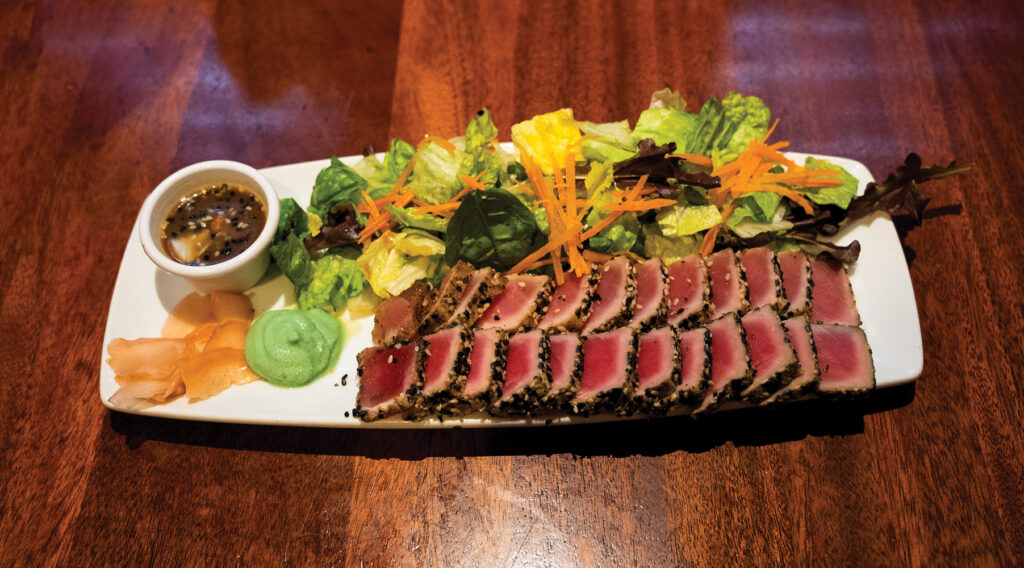
The crab cakes are the food truck’s specialty. Two of their most popular menu items are The Double Down Sandwich, a crab cake topped with hot blue crab dip, and the Crabby Patty is a quarter-pound grass-fed Angus beef burger topped with the blue crab dip. The dip is Amy’s grandmother’s secret recipe, and Amy says she makes up to 16 quarts of it a day.

While the name of their food truck is a nod to one of Baltimore’s nicknames —  “Charm City” — so are some of the menu items. The Wire is a nod to the legendary HBO crime drama series, which is based in Baltimore. The pickle-brined, double-dredged Sweet Heat chicken sandwich, with tangy cole slaw, is a best seller. Brian said he spent six months perfecting the sweet heat chicken.

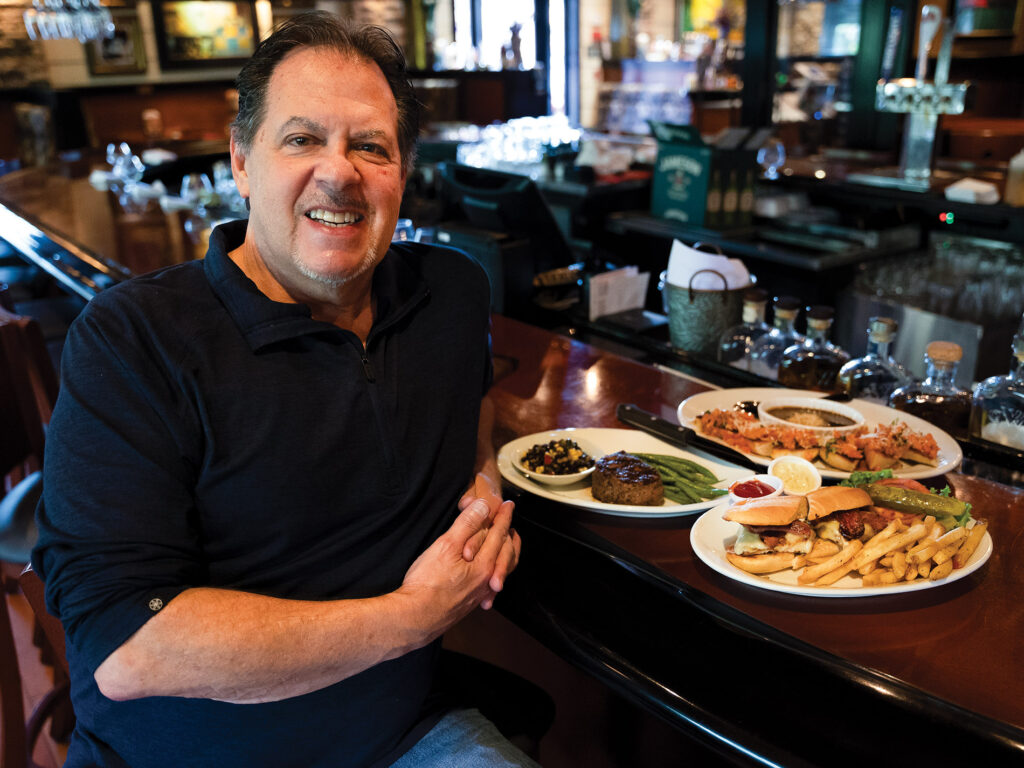
Though you’ll have to ask for it because it’s not on the menu, Brian and Amy (left) say The Gronk sandwich has been a top seller since the Tampa Bay Bucs started their Super Bowl run.

And, The Gronk has become a best seller as well, but it’s not on the menu. You just need to be in the know to order it. Named for Tampa Bay Bucs’ tight end Rob Gronkowski, The Gronk is truffle crab Mac and Cheese stuffed inside a Crabby Melt.

“It’s probably been our best seller since football season,” Brian says.

While Amy and Brian spend a lot of time in the truck, they have two cooks who work full-time as well. 

“Amy and I have certain expectations,” he says. “(The food) needs to look the way I want it to look.”

Amy and Brian don’t intend to spend the rest of their lives in front of a fryer. This is not their end game, they say. They are already close to opening a second Charm City Eats truck in Las Vegas, where they finalized expansion plans and got married this past New Year’s Eve. 

They see a lot more major expansion in their future. And no, they have no interest in opening a brick-and-mortar restaurant. 

“We nixed that idea before we were even incorporated,” Brian says.

Chappie Friess

Instead, the Makarskis take great pride in finding unique, popular spots to set up their truck. Trying to zig while everyone else is zagging, Brian says. They have been to various breweries (including Florida Ave. Brewing Co. on S.R. 56), dozens of local neighborhoods (such as Epperson Ranch, Arbor Greene and Cory Lake Isles), festivals like the Great American Redneck Biker Bash in New Port Richey and private catering events.

As small business owners, Brian says it’s hard work and there are certainly endless obstacles to overcome. But, they have never been happier. He says a good night in the truck is more satisfying than his last $10,000 commission check with the copier company. And sure, he misses his ties and suits, but when someone stops by to pick up dinner for the family because the food is so good, he bursts with satisfaction.

“When someone tells us our food takes them back home and should be illegal it’s so good, that gives us more joy than selling a copier ever did,” Brian says. 

If you want to check out where Charm City Eats will be next, or see what else is on the menu, visit CharmCityEats.com

Eye-Catching Green Lanes Providing Bike Safety On BBD

Some bicycle lanes at and near intersections on Bruce B. Downs Blvd. have been painted green to help make cycling on New Tampa’s busiest major roadway safer. (Photos: Charmaine George.)

New Tampa’s busiest road, whose most identifiable traits are usually cars and congestion, is catching some eyeballs with a new look at some of its busier intersections:

Some sections of the Bruce B. Downs (BBD) Blvd. bike lanes have been painted bright green.

The green bike lanes are noticeable at busy intersections with right turns on BBD. The bike lanes, usually marked with just a single white line, are bright green (with thermoplastic, as opposed to actual paint) as the intersections draw near, to indicate they are for bicycle use only. 

Then, the solid green transitions into dashes, indicating that vehicles can cautiously move over to make a right turn, but cyclists should still have priority. The lanes then become solid green again.

The green bike lanes are tough to miss. And, that’s the whole idea.

“It sounds like it’s doing its job getting people’s attention,” says Josh Bellotti, Hillsborough County’s director of engineering and operations. “That’s what it is supposed to be doing, alerting drivers that there is a bike lane.”

BBD is among the first county roads to get the colorful lanes, although some similar bike lanes have been in existence in downtown Tampa for a while.

Bellotti says that when all of the painting is done, 94 intersections across the county will have the green bike boxes. There will be 19 total in New Tampa, and will also include some at busy intersections on Cross Creek Blvd., where bike lanes cross right turn lanes.

“We are trying to put them in areas where, when you’re approaching an intersection, there might be some potential conflict,” Bellotti says.

But, do they work?

Well, Teagan Myhre would tell you yes.

The Chiles Elementary fifth-grader did a science project last year on the effectiveness of painted bike lanes, called “Ride in Green to be Seen,” and discovered that, indeed, the green lanes do make an impact on drivers’ habits.

Teagan’s project earned the only Superior rating in the Behavioral Science category for fourth graders at the Hillsborough County STEM (Science, Technology, Engineering & Math) Fair, and was named Best of Fair for the 4th grade. The project also won a Creative Problem Solving Award, and a Science Award from the College of Behavioral & Community Sciences at USF.

Teagan, whose father Randy owns Oliver’s Cycle Sports in The Walk at Highwoods Preserve plaza and is an avid cyclist and bike safety activist, started with the hypothesis that motorists would be more likely to see the painted bike lane and give cyclists more room as a result.

So for one week, Teagan sat at the corner of Cypress Preserve Dr. and Tampa Palms Blvd. and watched cars drive by an unpainted bike lane. After 50 tests, she got permission from the City of Tampa and painted the same bike lane green (with old fashioned spray paint) and re-ran her tests.

When the lane wasn’t painted, Teagan found that 4.5 out of every 10 cars had a tire completely inside the bike line or on the white painted line.

With the green lane, that number was reduced to just 1 in 10.

Teagan Myhre won “Best of Fair” and other awards at the 2020 Hillsborough County STEM Fair for her “Ride in Green to be Seen” science project. Even though her project may not be the reason it was done, Teagan is happy that Hillsborough County has painted intersections on BBD green.

Teagan’s project gained some momentum after the annual STEM Fair, and she was even asked to come present her project to the Metropolitan Planning Organization Hillsborough County Bicycle/Pedestrian Advisory Committee — which was once chaired by Tampa Mayor Jane Castor — before Covid hit and it had to be canceled.

Teagan’s project wasn’t the reason behind the new green lanes in New Tampa, but the two ideas did seem to cross paths at the same time. Randy is happy to see the portions of painted bike lanes, and says Teagan gets a kick out of seeing them on drives along BBD. 

“She thinks it’s great,” Randy says, adding that all the feedback they have gotten has been positive.

And, some parents at Chiles admitted that they didn’t even realize there was a bike line in front of the school until it was painted green.

“That really validated Teagan’s thesis,” Randy says.

Bike safety continues to be an important issue in Tampa, and New Tampa, which has some bike-friendly areas like Flatwoods Park but isn’t generally considered to be very bike friendly overall. In recent years, Tampa-St. Petersburg has been named one of the most dangerous areas for bicyclists in the U.S. by a number of studies, including one by The Wall Street Journal.

Colored treatments on bicycle lanes have been growing in popularity the past decade all across the United States. According to the Florida Department of Transportation (FDOT), a number of studies have been conducted to determine the effectiveness of color-treated bicycle lanes in intersections and intersection-related areas, where 50%-70% of reported motor vehicle crashes with bicycles occur.

A study of the effectiveness of green lanes used in St. Petersburg, with the area observed and videotaped over multiple days, concluded that an increased percentage of motorists yielded to bicycles, and likewise, a higher percentage of bicyclists looked for vehicles and signaled their intention to turn right after the green-colored pavement had been installed. 

According to most of the studies, the changes in both motorist and cyclist behavior and increased awareness have been the primary benefits of the green lanes.

While having a protected bike lane with some kind of physical barrier is widely considered the safest, the cost makes that solution a harder sell.

But, this is a start.

“While we look for long-term safety measures, this is something we can do quicker with what we have,” Bellotti says. “This will provide some additional safety.”

Court Ruling Puts Kink In New Tampa Plans

Tampa City Council member Luis Viera recently hosted a Q-n-A session with transportation and engineering officials to discuss needed road improvements in Tampa Palms and other areas of New Tampa.

A gathering of roughly 30 mostly Tampa Palms residents showed up at Compton Park on Feb. 24 for an outdoor meeting with City of Tampa officials to discuss speeding along Tampa Palms Blvd., but the conversation turned to plans to repave the road and add some traffic-calming measures — perhaps two roundabouts or some traffic lights — with money collected from a 1-cent tax amendment passed in 2018.

Most of those in attendance seemed pleased with the plans for safety improvements for Tampa Palms Blvd.

But, before their coffee even had time to cool off the following morning, those plans had come to a screeching halt because the money to pay for them is now in limbo.

On Feb. 25, the Florida Supreme Court voted 4-1 that the 1-cent transportation tax amendment, which passed with 57% of voter support, was unconstitutional because it restricted where and how the money could be spent. District 4 Hillsborough County Commissioner Stacy White, who filed the lawsuit, argued that All For Transportation (AFT), the group that led the fight to pass the amendment, dictated how local governments could spend the money, usurping the authority of the county commission.

The transportation tax already has raised $500 million intended to fix many of Hillsborough’s transportation woes, as well as improve the City of Tampa’s bus service.

More than $50 million of that amount was earmarked for City of Tampa projects, including the Tampa Palms Blvd. improvements, as well as enhancements like the much-needed repaving of New Tampa Blvd. in West Meadows.

“The ruling is a big hit to our community,” said District 7 Tampa City Council member Luis Viera. “When it comes to the most pressing issue of traffic and congestion, we are running so far behind. This is just devastating.”

Viera says he will support putting a replacement tax on the ballot in 2022. He has also scheduled a town hall with Tampa Mayor Jane Castor for April 21 from 6-7 p.m. at the New Tampa Recreation Center, for those who want to ask what’s next for the needed roaded improvements in New Tampa.

Cal Hardie, a transportation engineer for the City of Tampa, told the Compton Park gathering that the design of the changes for Tampa Palms Blvd., which cost $600,000, was already paid for and under way. But, the actual construction, which would cost $3-$4 million and include restoration of the road’s surface from the Wellington subdivision to Bruce B. Downs Blvd., bike lanes, safer crosswalks and traffic-calming mechanisms, was reliant on the transportation tax monies.

Similar work would be completed on New Tampa Blvd. as well, perhaps at the same time, Hardie added.

Without that money, Hardie said the City of Tampa would have to look into finding federal funds, which can take longer, or multi-modal transportation impact fees, but suggested “the coffers are pretty dry.”

Hardie said the traffic calming on Tampa Palms Blvd. could come in the form of two roundabouts at the north intersection of Tampa Palms Blvd. and Compton Dr., with another roundabout another closer to Tampa Palms Elementary. 

The cost of a roundabout is roughly $450,000-$500,000, Hardie said, which is not that much more than the price tag for a traffic signal, which is around $350,000.

“A roundabout reduces accidents 60 percent more than a traffic light,” Hardie said. “It also reduced accidents 80 percent more than a stop sign.”

But, that is up to the designers and the public, who will get their say in public meetings once the plans are completed.

And by then, maybe the money to complete the construction will materialize.

Viera assured everyone at the meeting that if the Supreme Court knocked down the tax, he would pursue other funding. 

Raj Finds A Kidney Donor!

After six months on a strict diet, Raj Guntuku enjoys a potato chip after receiving a new kidney from Joel Morales. 

It was an ordinary December day and Joel Morales was getting ready to put the latest issue of the Neighborhood News into the recycling bin.

But first, he wanted to see what was going on in New Tampa, and maybe pick up a suggestion for a place to grab some dinner. Since moving to K-Bar Ranch from Ohio in late 2019, Joel and wife Shelby had practically been quarantined the whole time due to Covid. Maybe this night would be the one they would finally venture out.

So, he started thumbing through the pages.

Then, he stopped. A picture of a 13-year-old boy named Raj Guntuku, and his 70-pound Golden Doodle Benji, caught his attention. “I’ll probably never forget it,” Joel says. “It was such a cute picture.”

Joel read the story. Raj needed a kidney. His parents were desperate. 

Then, the strangest darned thing happened. Almost immediately, Joel decided he was going to give Raj his kidney. 

On March 4, just a few weeks after meeting for the first time and passing all of the required tests, Joel was wheeled into an operating room, and four hours later, his kidney had been transplanted into Raj.

“A miracle,” says Raj’s mother Radha. 

Just a few days later, both Raj, who friends and family call “Bunny,” and Joel returned home from the hospital, and they were online playing Fortnite together on the Xbox. 

“Joel is so happy to see him happy,” Radha says. “I don’t know if we will ever meet anyone like that in this world again, but we are so fortunate to have him.”

Raj has a new lease on life, and Joel is glad he could help.

So, the question remains, why did he?

“It seems strange to say, but when I read the article, it just seemed like the obvious thing to do,” says Joel. “I had done a tiny bit of research after I read the article, just to see the long-term impacts of donating a kidney, and it was surprising to me. It seems like there’s really nothing I have to watch out for or need to be careful of. I can’t take any more ibuprofen, and I have to eat enough protein, but to me it’s just life as normal. It just seemed obvious that there’s this poor 13-yr-old kid with his life ahead of him, and I should do what I can to help. Thank God I ended up being a match.”

Joel Morales

A wholesaler for Nationwide Insurance, Joel says he doesn’t regret his decision, even if some of his friends and co-workers questioned his sanity. 

“My boss said, ‘Hold on, let me see if I understand this — you have never met this boy, you never met this family, you have no relationship with them whatsoever, and you just decided to give your kidney to him?,’”  Joel says. “That was the moment I probably understood it was a little bit crazy.”

But, the only person he really had to convince was Shelby, and her primary concern was what if their 2-year-old son Leo, or another family member, needed a kidney one day?

“My thought process was, if you look at the stats, the chances of one of our children or someone in our family needing a kidney are extremely low,” Joel says. “But, the chances of Raj needing a kidney is 100 percent. He needs one. He might not get one.”

It was only a 10-minute conversation. Joel said he probably had that look in his eyes, where Shelby knew he wasn’t going to be talked out of it. Besides, he reasoned, “Hopefully now, we’ve got some good karma coming our way.”

Radha says Joel certainly deserves it. Before he read the article about Raj in the Neighborhood News, she had been relying on a growing list of 15 or so potential donors who had stepped forward after a television report on Thanksgiving Day.

More names were added as time went on. The Neighborhood News article about Raj’s plight hit mailboxes on December 8.

“You put in a great article which was super detailed,” Radha says. “When I read it, I even started to get emotional, even though it is our own story. So many people told us they read it.”

However, day by day, many potential donors had dropped out. Some were talked out of it, others were worried about being able to afford missing work, and some just changed their minds. 

Raj and Joel meet for the first time. 
(Photo courtesy of the Guntuku family)

Soon, a carefully curated spread sheet which, Radha says, had as many as 30 names on it at one point, had red lines through most of those potential donors, and only four remained.

Then, Joel called. He asked Nehru, Raj’s dad, to explain the process. Joel says he told Nehru it sounded as if he had explained all this before, and Nehru said he had. But, few had followed through, and it was becoming frustrating.

Joel, however, was in it to the finish. He filled out the paperwork, got tested and, on Feb. 24, was approved to be Raj’s donor. The surgery was scheduled.

The families finally met at Raj’s Tampa Palms home a few days later. 

Everyone was too nervous to eat, and they just ended up nibbling at the Olive Garden and Liang’s Bistro takeout Radha had picked up. Raj, however, was bursting with joy. 

It was a great night, both families say. Raj and his sister Bhavika, a senior at King High, thought Joel was “cool,” Shelby spent the night cracking jokes and Joel left knowing that he had a made a great decision. 

On the way home, he turned to Shelby and said he hoped the Guntuku family liked him.

“You’re giving Raj a kidney,” Shelby said. “I think they like you fine.”

And they both laughed.

On March 4, Raj and Joel went in for the surgery. Joel was home after two days, while Raj came home on March 9. The families have spoken via FaceTime every day since.

Thanks to Joel, Raj has a functioning kidney and was able to enjoy a happy homecoming after the successful kidney transplant surgery earlier this month.  

Raj had been sick for much of 2020. In early September, he vomited after waking up one morning, and it happened again a few weeks later. He went and had bloodwork done, and the results concerned his doctor. In October, Raj was diagnosed with chronic kidney disease (CKD), which is characterized by the gradual loss of kidney function. He was Stage 5 at the time, and his kidneys were operating at less than 10 percent of their normal function.

Raj has been on a strict diet ever since, and will need to watch what he eats now that he has a new kidney. He told Joel the first thing he was going to do after receiving his kidney was eat a slice of cheese pizza. 

However, his diet will have to be limited. He will need to eat healthier, but Radha says Raj is ready for that challenge. At a Super Bowl party a month before his surgery, everyone was celebrating the Tampa Bay Bucs’ victory with cupcakes. 

“I would like to eat,” Raj said, “but sadly, I cannot. No thank you.”

Raj’s immunity will be lower than it used to be, and special care will need to be taken for the next 90 days. He is on seven medications, gets his blood tested twice a week, and has to stay out of the sun. 

He is eager to shoot some hoops, but contact sports like soccer and football are off limits. His dream to be a grand master at karate, which he has been taking since he was 4, may be in peril, but Radha says they will have to decide on that later.

It is likely that Raj will have to go through this process again, in 20 or 30 years, so he needs to maximize the health of this kidney. “He knows he needs to be careful,” Radha says.

As for Joel, he was off the pain medication in a week and doctors say he’ll be fully recovered in 4-6 weeks.

“They really just said stay away from contact sports, so my future NFL career is no longer an option at the ripe age of 28,” Joel says.

He’s back at work, and every once in a while he thinks about the selfless decision he made. He doesn’t regret it for a second.

“I don’t think I knew, even today, just how big a deal this was, which probably helped with the nerves,” Joel says. “I  genuinely just felt like this was the obvious thing to do. I may not have thought about it as much as I probably should have, but even if I had, I still think the outcome would have been the same. It was definitely well worth it.

“I’d say I’d do it again, but I can’t. You can only do this once.”