Siyana Khan (left) & Nicole Huynh started “Hydrating for Hope” to help vulnerable Florida residents better deal with the upcoming summer heat. (Photos provided by Siyana Khan)
While some Floridians grew tired of the prolonged cold we experienced in the early weeks of 2026, Wiregrass Ranch High (WRH) sophomores Siyana Khan and Nicole Huynh know the heat is coming. Soon. Fast. Difficult for those without air conditioning and, especially, proper hydration, to survive.
As student athletes, Siyana and Nicole have both experienced some of the consequences of dehydration. “I’ve had sunburns, heat exhaustion and even strong nausea from not hydrating myself completely,” says Nicole, who is a member of the WRH color guard.
Siyana had lived in New Jersey for 10 years and wasn’t used to the heat, so playing flag football in Florida proved to be overwhelming for her. “When I moved to Florida, I wasn’t hydrating properly,” Siyana says. “I actually passed out and had to go to the ER, and was diagnosed with orthostatic hypotension (abnormally low blood pressure) because of dehydration.”
The girls teamed together and used their shared experiences to consider how others may need help when Florida’s heat takes hold.
“We created ‘Hydrating for Hope,’” Siyana explains. “It’s a local community service initiative dedicated to hydrating and serving those around us. Many vulnerable communities around Tampa Bay suffer in this hot environment, making them more susceptible to [several] heat-related illnesses.”
They began collecting heat-related essentials and also raised $1,260 through GoFundMe to purchase additional supplies.
Their efforts have allowed them to purchase nearly 1,200 items, including bottles of water, reusable water bottles, Gatorade, sunglasses, hats and portable electric and paper fans.
These items will be donated to homeless shelters and organizations that help vulnerable populations, such as Better Together, a Naples, FL-based nonprofit organization with a Tampa Bay-area chapter that is focused on preventing foster care by supporting families in crisis.
“I was genuinely moved by [Siyana and Nicole’s] passion for serving their community,” says Joy Harris, executive director of Better Together. “It was clear in our conversation that this initiative is coming from a place of deep compassion and a desire to make a tangible difference for others.”
Siyana and Nicole also worked with 100 students, including their peers at WRH and some at John Long Middle School, as well as The Learning Experience of New Tampa, to create 140 handwritten cards (above) for family members who are being served by Better Together.
The recent Hydrating for Hope event at WRH.
“Their efforts not only provide encouragement to those receiving the cards,” Joy says, “they also inspire others to step up and look for ways to support their neighbors. I am grateful for the opportunity to partner with students like these and for the chance to see the next generation lead with such heart and intentionality.”
The girls have become close friends through their time at the WRH Future Business Leaders of America (FBLA) club. They plan to enter a statewide FBLA competition for community service projects this summer. They also are considering creating their own 501(c)(3) nonprofit organization to be able to continue doing the work they’ve started through their Hydrating for Hope project.
“We hope to hold more events, like when we held an event to write cards,” Siyana explains, “and also make bracelets or other crafts, too.”
They hope their initiative will not only help those who are vulnerable, but will also provide awareness of heat-related problems for all of those living in Florida.
To learn more about Hydrating for Hope, visit Hydrating4Hope to link to its Instagram, GoFundMe, donation list on Amazon and more.
Editor’s note — The motivation for writing this story came from a post by Kelly Gilroy on her outstanding Pasco County Development & Growth Updates Facebook page. Former Florida Department of Transportation engineer — and, of course, Neighborhood News correspondent Joel Provenzano agreed that it was worth a deeper dive into what Kelly so perfectly presented. — GN
If you’ve driven around Wesley Chapel lately, you don’t need a traffic study to know one thing: Pasco County is growing fast. New neighborhoods, shopping centers, hospitals and medical offices and industrial parks seem to pop up overnight. With all of that growth comes an obvious question:
Who actually pays for the roads, sidewalks, and transportation infrastructure we all use?
The simple answer, of course, is “all of us,” but one of the biggest pieces of that answer is something called “mobility” (aka “impact”) fees.
What Are Mobility Fees, Anyway?
Mobility fees are one-time charges paid by developers each time a new building permit is issued. These fees help pay for the transportation improvements needed to support new growth, such as:
• New or widened roads
• Turn lanes and intersections
• Sidewalks and bike paths
• Other transportation facilities tied to development
In simple terms: new development helps pay for the new infrastructure it requires — and Pasco County has some of the highest impact fees of any county in Florida.
These fees don’t replace gas taxes or sales taxes, but they work alongside them to fund transportation
It’s also important to note that mobility fees are just one type of impact fee charged on new development in Pasco County. New construction is also subject to school impact fees, which help fund new schools and classroom capacity. And, park impact fees are used for land acquisition and creating new recreational facilities.
Together, transportation, school and park impact fees make up the bulk of the one-time charges paid when new homes and commercial projects are built. When combined, Pasco County’s total impact fee burden is often cited as among the highest in the region, reflecting both its rapid growth and the scale of infrastructure needed to support that growth
Why Are Mobility Fees Going Up?
Construction costs have skyrocketed in recent years. Roadway materials, labor and engineering costs have all increased — often sharply. Because of this, mobility fees have to be periodically updated to reflect the real cost of building roads today, instead of the costs from ten years ago.
Pasco County is allowed to update its mobility fee schedule every four years, and those updates are reviewed and recommended by the county’s Planning Commission, which looks at growth projections, construction costs and long-term transportation needs.
According to the county, Pasco is projected to add approximately 330,000 new residents over the next 20 to 25 years, requiring roughly 950 new lane miles of roads. Even with existing revenue sources, projected funding falls short of the need —which is why mobility fees matter.
How Much $ Are We Talking About?
Here’s a concrete example that helps put things in perspective:
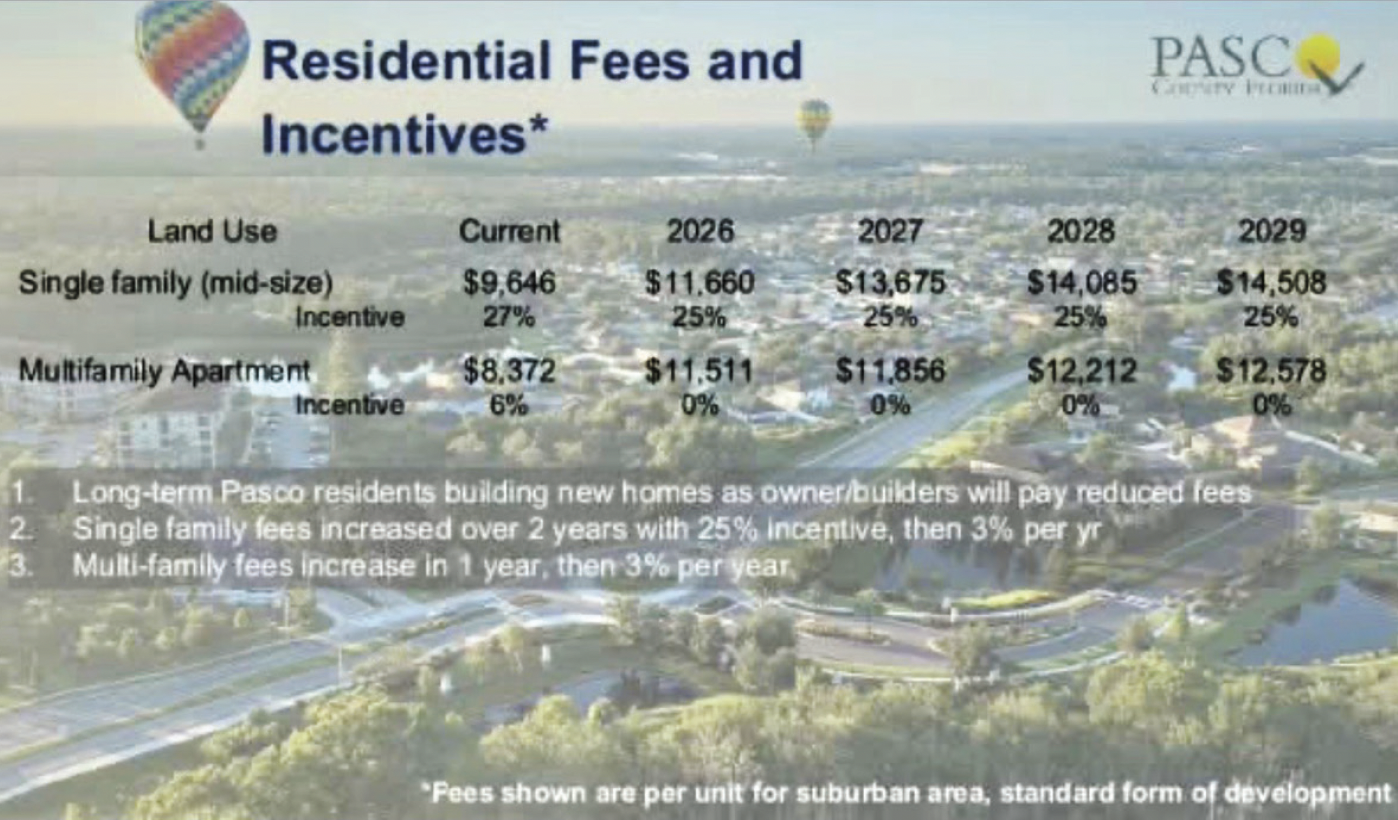
• A single-family home built in Pasco in 2026 will carry a one-time mobility fee of $11,660 that is paid by the builder.
• That money goes into county coffers for roads, sidewalks and transportation facilities.
The fee is paid once — not annually, and not by the homeowner directly at tax time. A common question is whether mobility and other impact fees on new homes are ultimately passed along to homebuyers. While opinions vary, there is little evidence this is happening in today’s market.
In many cases, new-construction homes in Pasco are priced equal to — or even less than —c comparable resale homes, which carry no such fees. Builders are also routinely offering substantial incentives, including covering large portions of closing costs and providing builder-financed mortgages with rates currently as low as 3.99% for 30 years.
Based on current pricing trends and transaction data, impact fees do not appear to be quietly “added back” elsewhere in the deal. As a result, despite these one-time development fees, new construction remains one of the most competitive and accessible options for buyers today.
Why Some Businesses Pay Nothing
This is where things get nuanced — and are often misunderstood by homeowners.
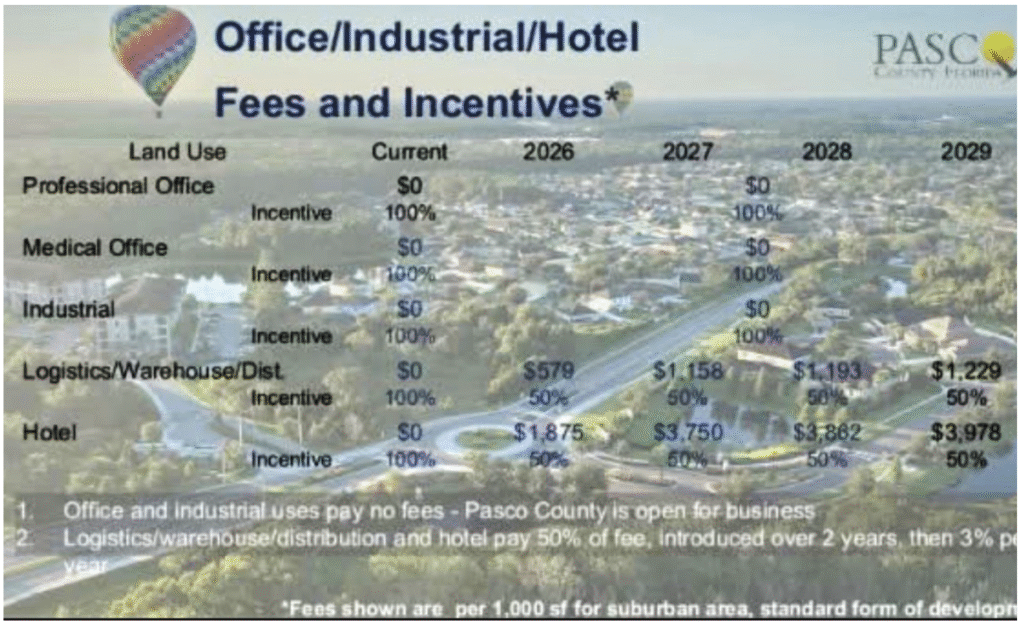
Pasco County doesn’t charge the same mobility fees to every type of development. Instead, it offers incentives to encourage certain kinds of businesses that bring higher-paying jobs and long-term economic growth, including medical & professional offices, industrial, logistics, warehouses, distribution centers and hotels
These uses currently receive a 100% incentive, meaning they pay $0 in mobility fees.
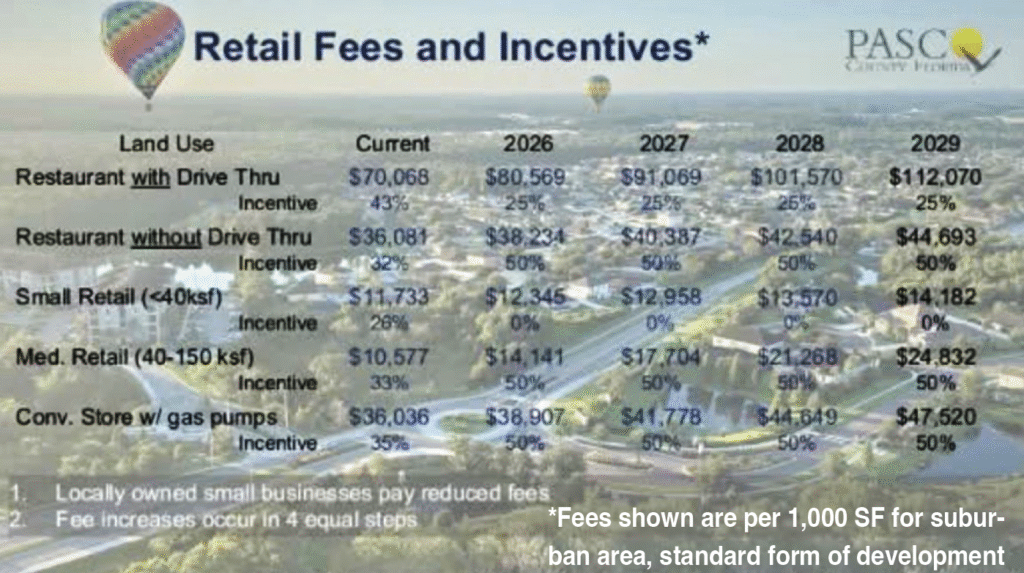
On the other hand, a fast-food restaurant with a drive-through might be charged a mobility fee of around $80,569, because it receives only a 25% incentive.
Why the difference? County officials have been clear about their goal: “Pasco is open for business,” especially for industries that diversify the tax base and bring higher-wage jobs to the county.
Who Covers The Rest Of The Cost?
This is where something called Tax Increment Financing (TIF) comes in.
TIF is often mentioned alongside mobility fees, but they work very differently:
• Mobility fees are one-time payments made upfront by developers.
• TIF uses future property tax growth to fund infrastructure over time.
Pasco County, “locks in” property tax values at a base year (2012 for unincorporated Pasco). As development happens and property values rise, the increase in tax revenue — the “increment” — is set aside.
About 33% of that increment is dedicated specifically to transportation improvements.
Those TIF funds are then used to “buy down” mobility fees for targeted developments like offices, industrial sites and hotels. In other words, the county — and its taxpayers — still funds the roads, but with future tax growth instead of charging those businesses up front for them.
Other Ways Infrastructure Is Built
Mobility fees aren’t the only way roads and infrastructure come online:
• Developers often build roads, turn lanes and/or sidewalks themselves as part of their residential or commercial projects and dedicate them to the county.
• If those improvements benefit more than just the residents of those developments, the developers can apply for mobility fee credits.
• Some communities (including many in Wesley Chapel) are built with Community Development Districts (CDDs) — quasi-governmental entities that maintain roads, sidewalks and landscaping within the developments themselves, rather than the county taking on that responsibility long-term.
This approach shifts some maintenance costs away from the county and onto the developments that directly benefit from them.
Why This Should Matter To You!
At the end of the day, mobility fees are about matching new growth with new infrastructure — and making sure existing residents aren’t left paying the full bill for new development.
Mobility fees are imperfect, complex and often controversial. But without them, Pasco County would face even larger funding gaps, even slower road improvements and even more pressure on general taxes.
As Pasco continues to grow, understanding how these fees work can help you better engage in conversations about development, transportation and the future of our community.
The growth is coming, no matter what. The real question is how we plan and pay for it.
And, most people sitting in traffic every day in Wesley Chapel believe that they are the ones paying for it — and that whatever money is coming in isn’t either not enough or not being spent fast enough to keep up — and no, they’re not wrong.
If you were thinking there couldn’t possibly be more “stuff ” coming to Wesley Chapel this year (or at least by early 2027), think again.
Among the projects that are well underway but that we don’t have any kind of timelines for include:
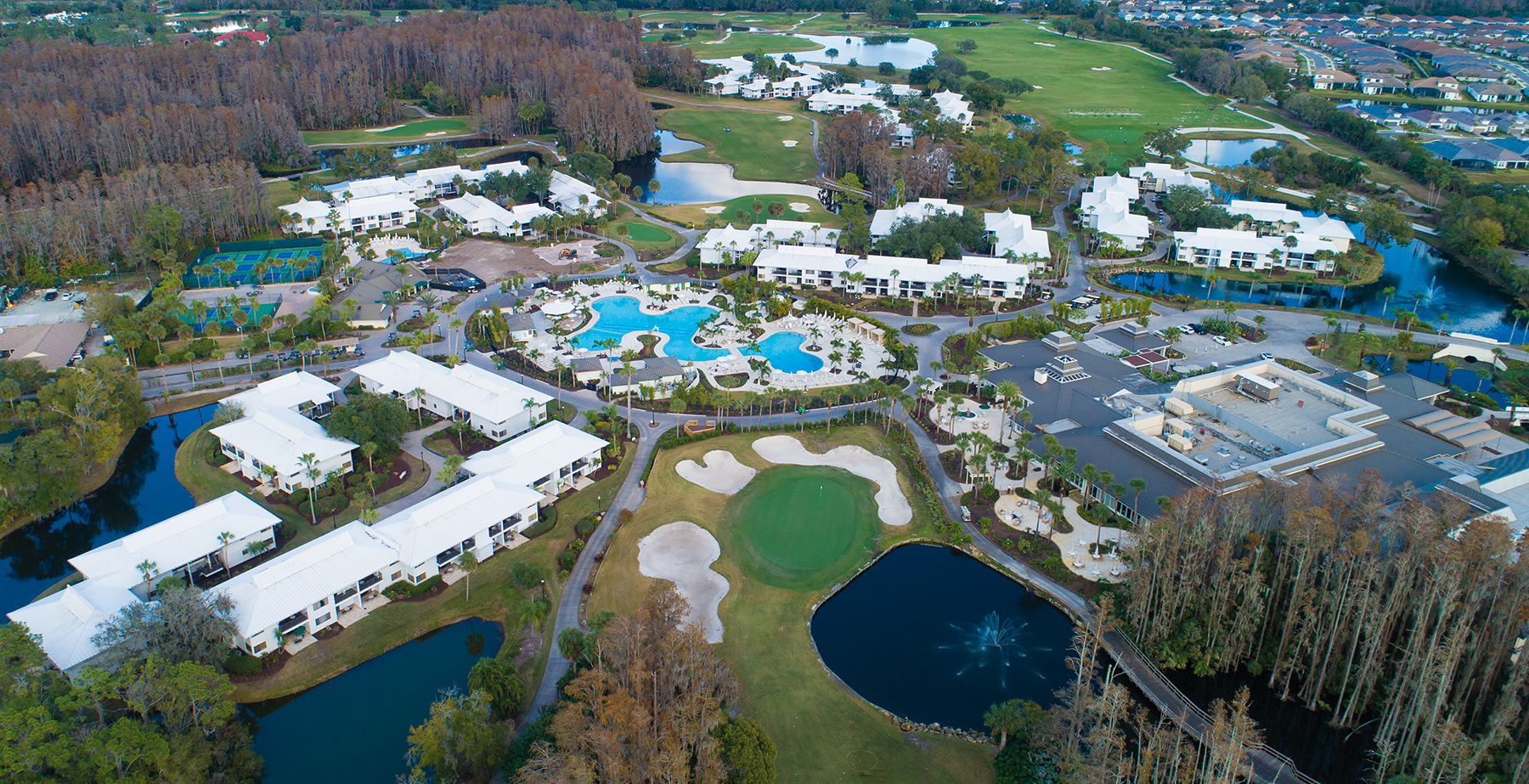
• The completion of Mast Capital’s $92 million improvements to Saddlebrook Resort (above). We showed you the improvements that have already been completed in our last couple of issues, but there is still plenty more to come.
Since the Brew coffee shop and Rare 1981 restaurant opened, the Palm House Grill out by the resort’s revamped Superpool also recently opened. We’ll show you pictures of the Palm House’s food and beverages next issue. We also were told that all 27 holes of Saddlebrook’s golf courses also are open.
Still to come this year? The Sports Tavern off the resort’s lobby and the Saddlebrook National private club for members only. We’ll update you about all of these improvements in future issues.
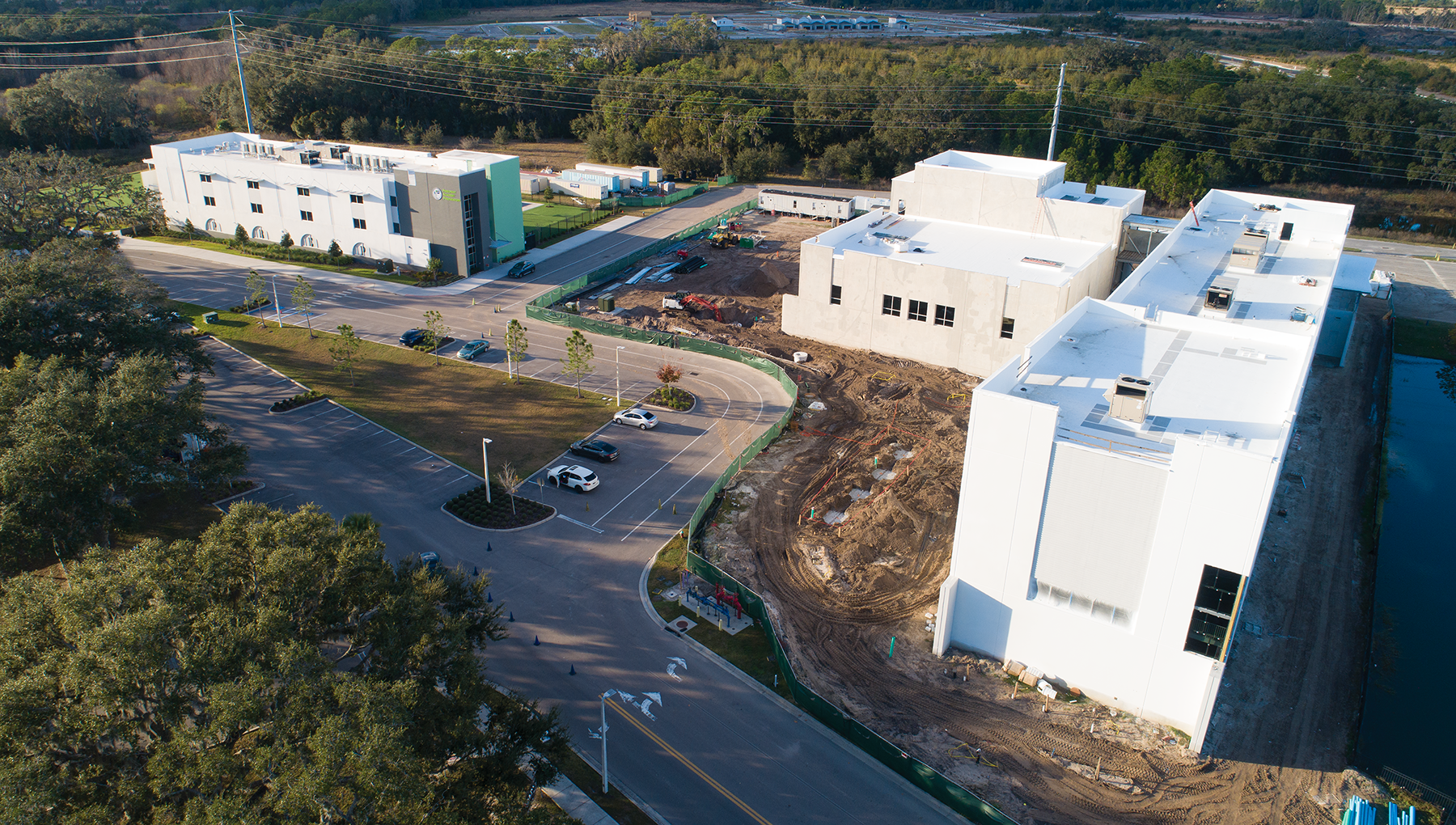
Pinecrest Academy High School
Here & There, This & That…
Avalon Park — In addition to Phase 2 of Avalon Park’s downtown expected to begin building, Avalon Park Blvd., connecting the community’s single-family subdivisions with the downtown area, could be completed any day now and may even be open as you’re receiving this issue.
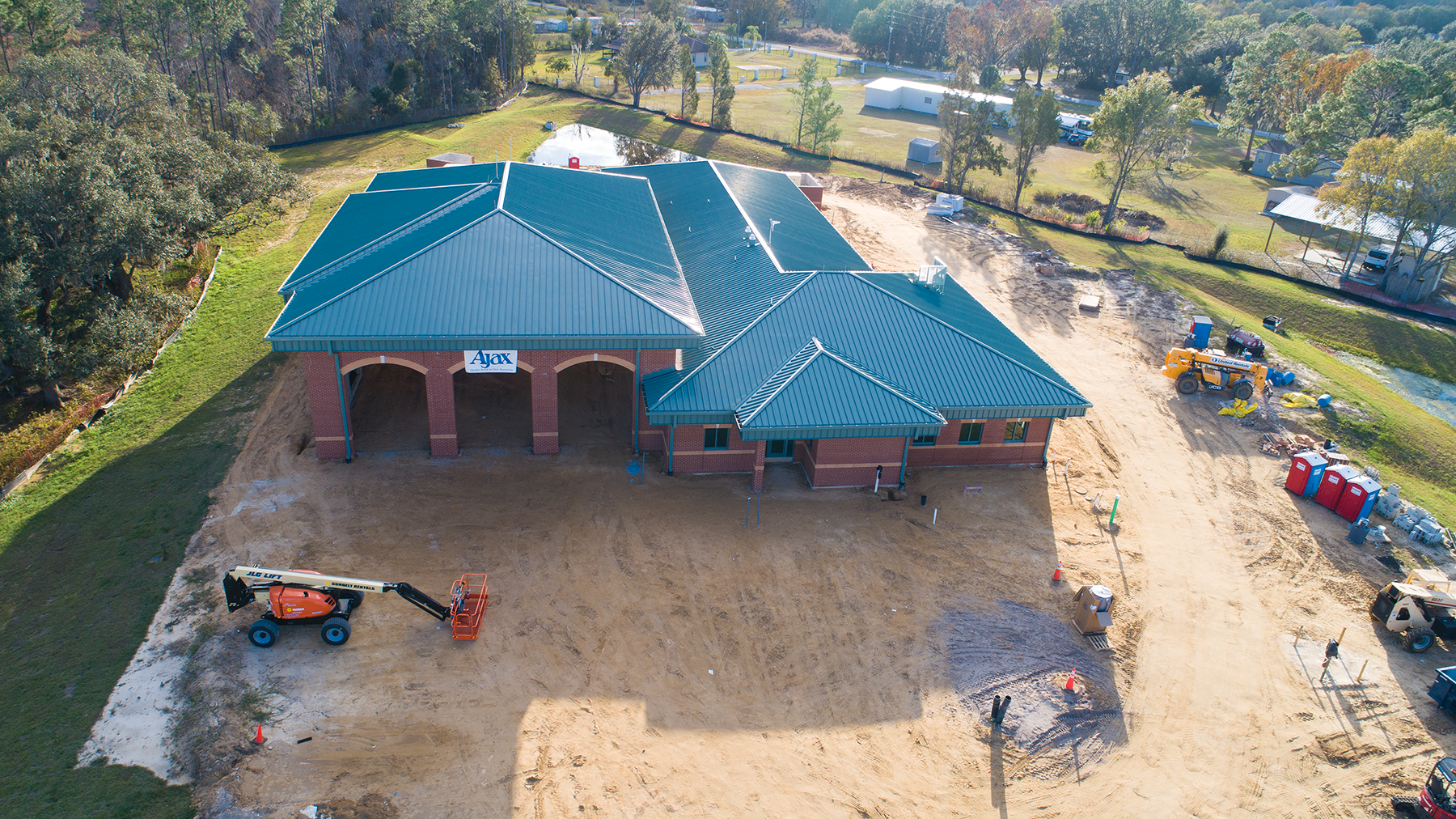
Pasco Fire Rescue Station No. 2
In addition, although the existing buildings at the Pinecrest Academy charter school are already serving kids in grades K-11, the separate, new Pinecrest Academy High School will open to grades 9-12 for the 2026-27 year, which will allow kids in Pinecrest Academy’s middle school (Grades 6-8) to have their own building.
Pasco Fire Rescue Station No. 2 — The much-needed new fire station on S.R. 54, less than a mile east of the new AdventHealth Meadow Pointe Emergency Room, should be ready to open before the end of this year.
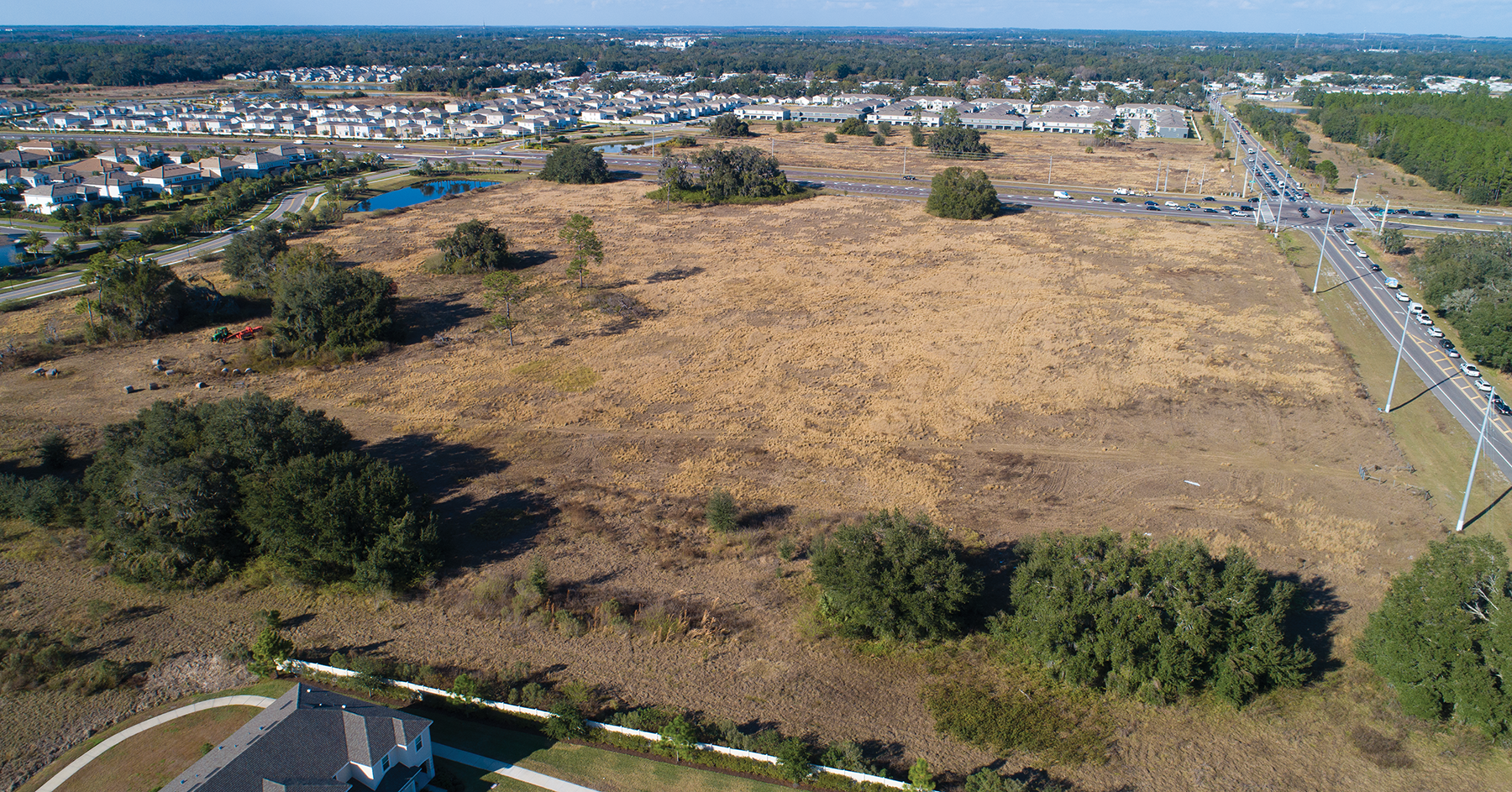
New Walmart (Morris Bridge Rd @ S.R. 56)
New Walmart — Located southwest of the intersection of Morris Bridge Rd. and S.R. 56, Wesley Chapel’s second Walmart store hasn’t broken ground yet, so it’s possible that it may not be completed by the end of 2026, but it should at least begin building this year.
Two Rivers Updates — Even though Two Rivers is all technically located in Zephyrhills (with a portion in Thonotosassa south of the Pasco-Hillsborough county line), the private club to be called The Landing at Two Rivers is well under way and could be completed before the end of 2026. We have no further updates on the planned Peak Surf Park in Two Rivers, but will try to update that story in an upcoming issue. — GN
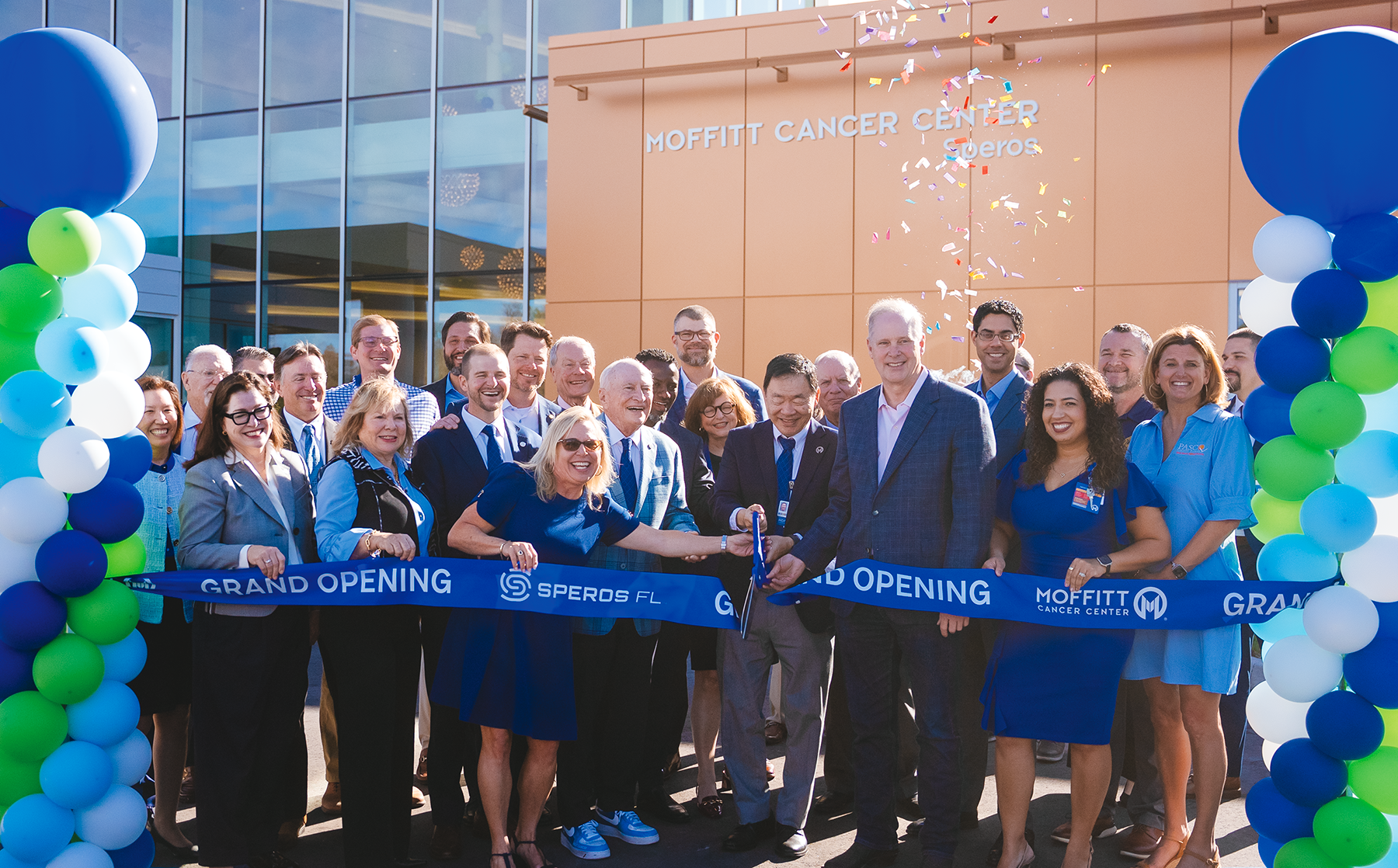
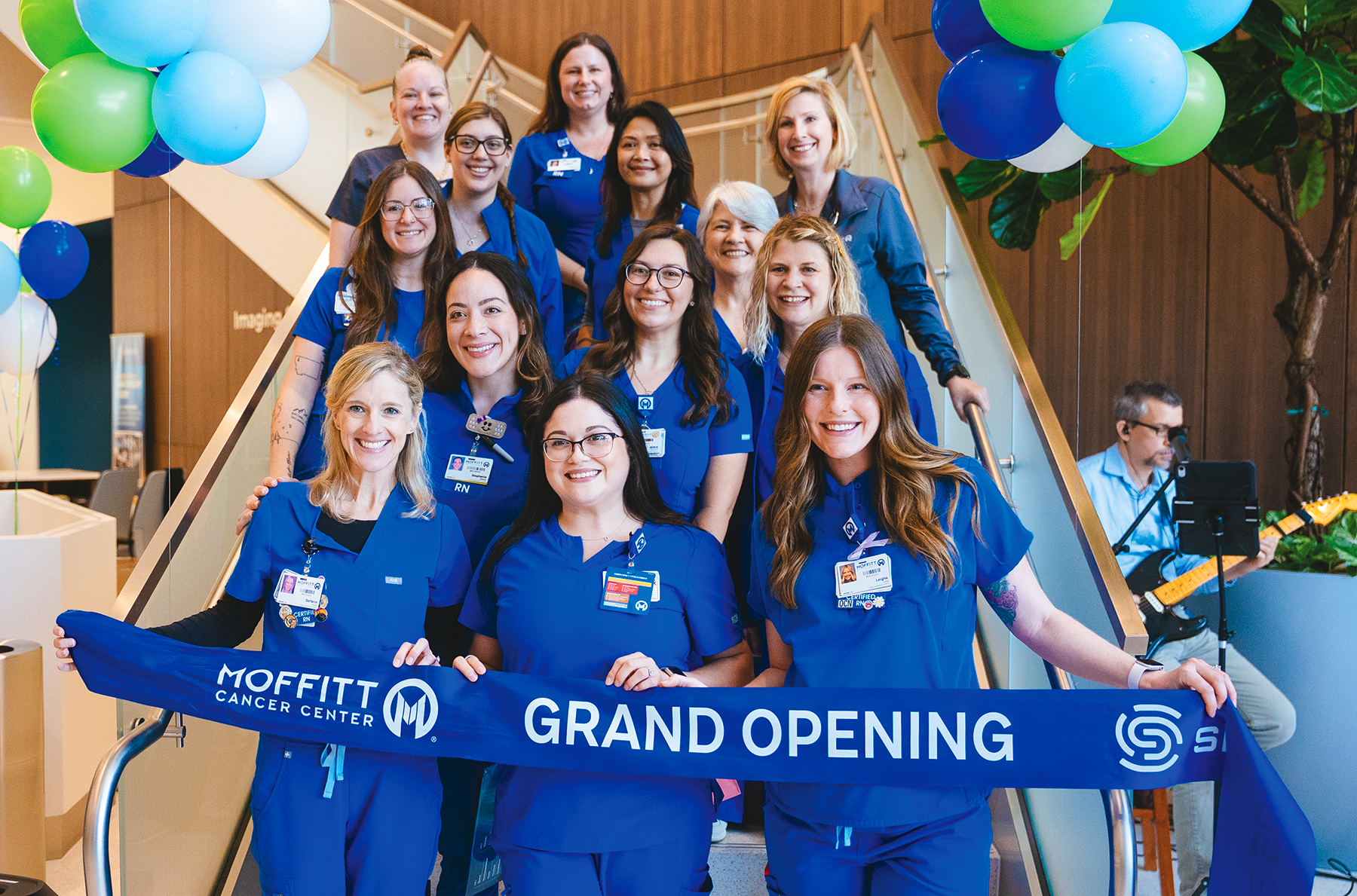
The Jan. 9 ribbon-cutting event and Grand Opening of the Moffitt Speros Outpatient Center in Land O’Lakes. (Photos by Charmaine George)
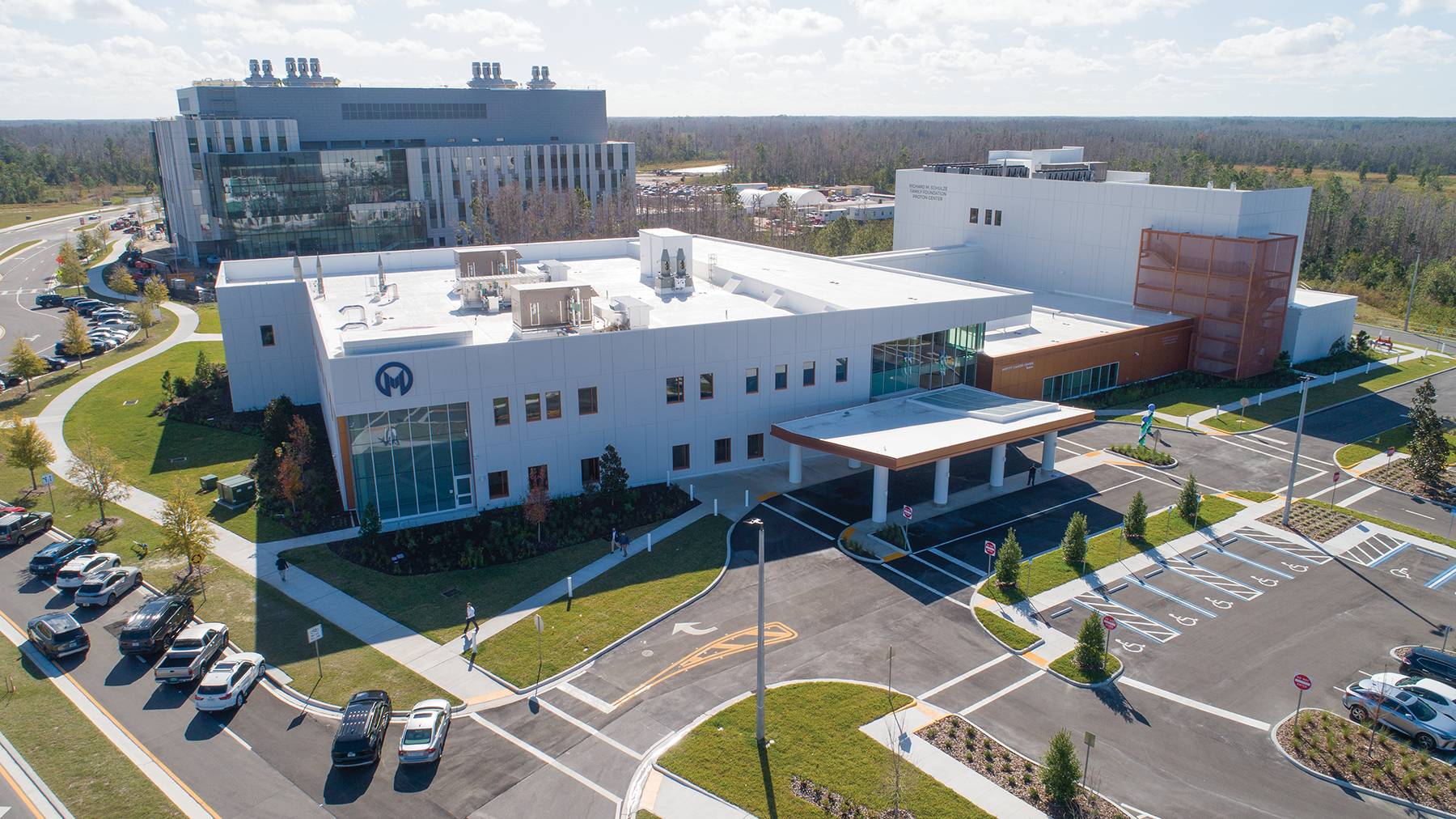
Even though it’s located at least 20 miles from any part of New Tampa, perhaps the biggest news story in Pasco County for 2026 is the opening of the sprawling new 775-acre Speros FL campus of the Moffitt Cancer Center — the only National Cancer Institute-designated Comprehensive Cancer Center based in Florida — located on Wilton Way in Land O’Lakes.
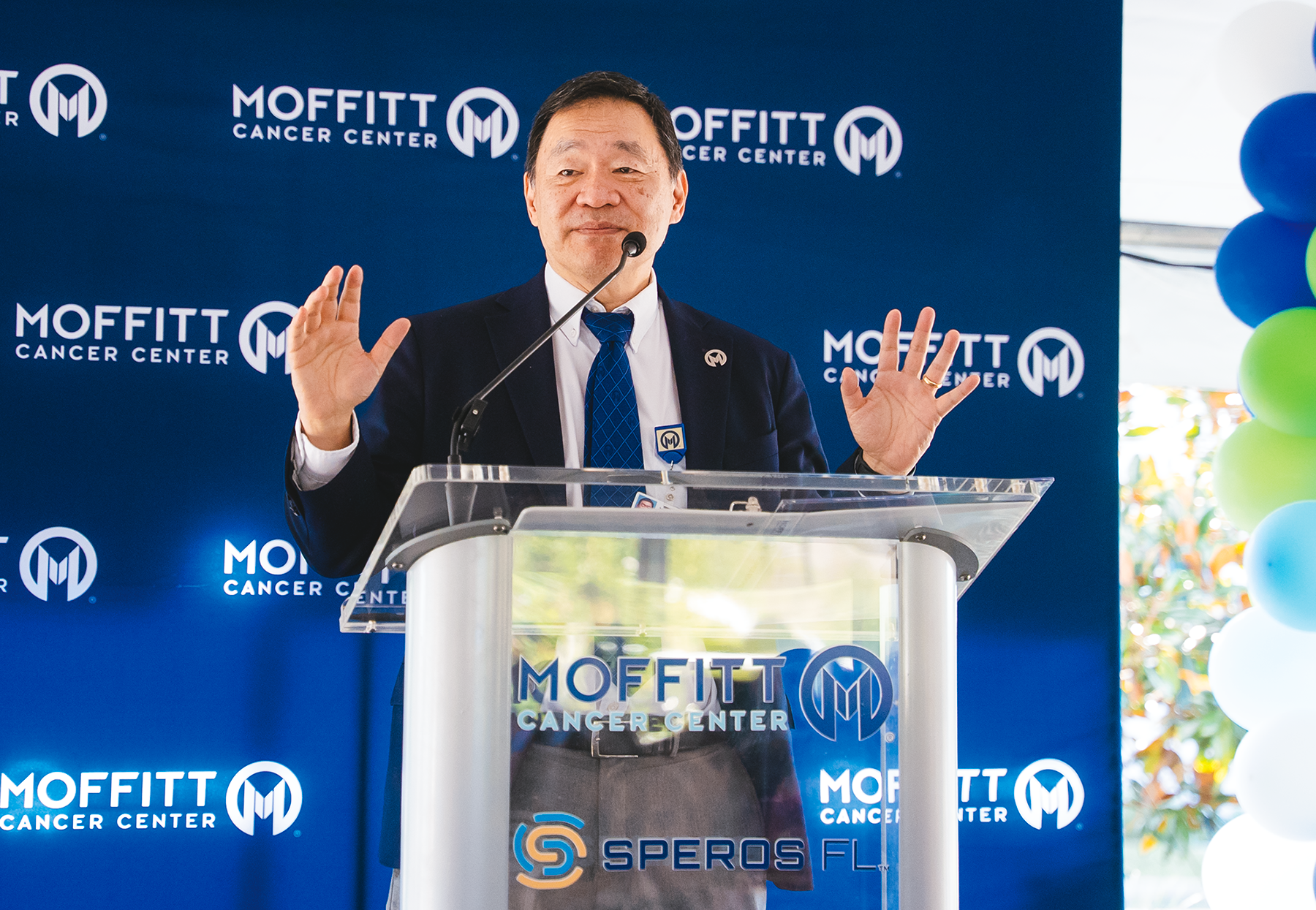
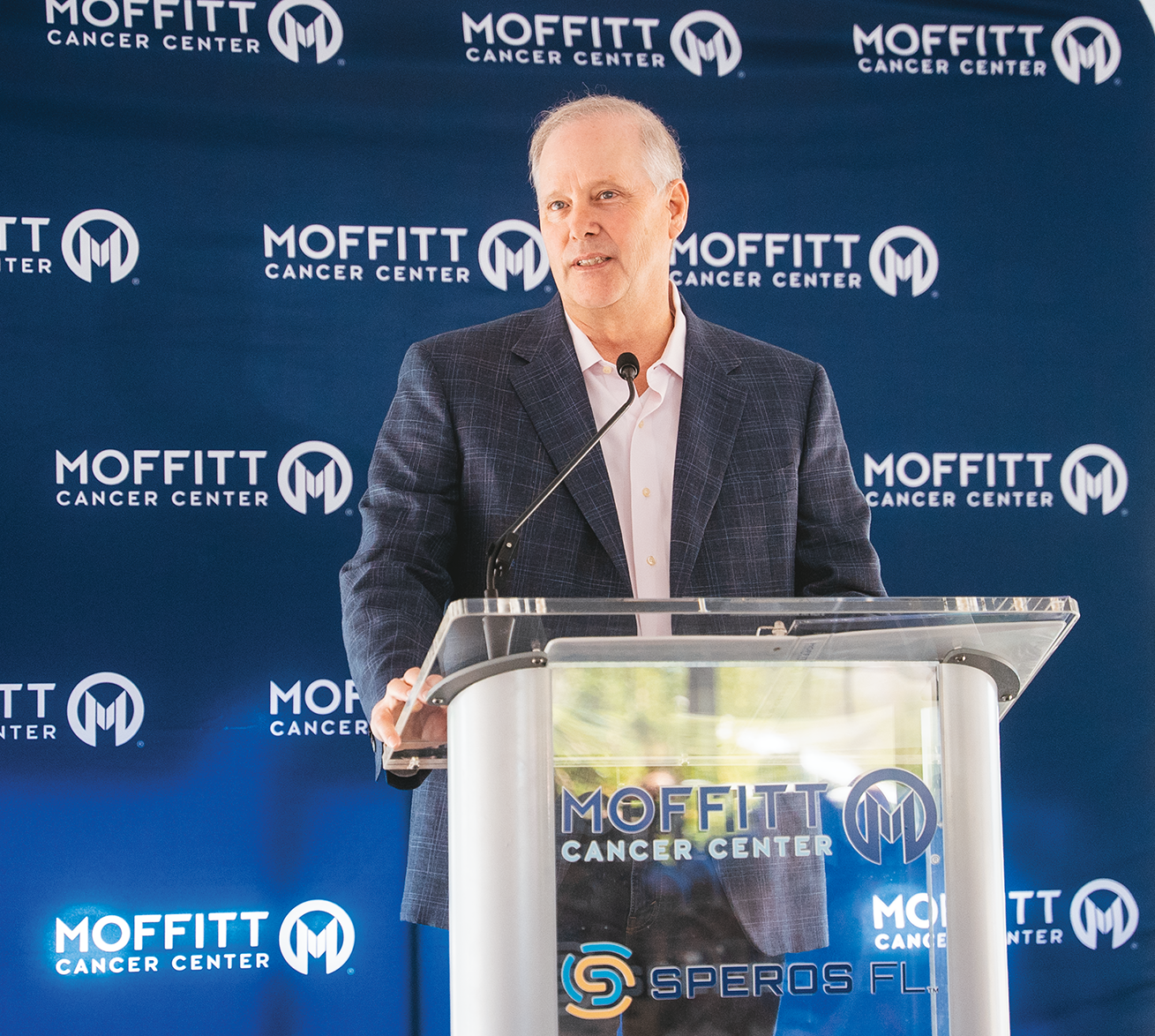
Moffitt Pres. & CEO Dr. Patrick Hwu
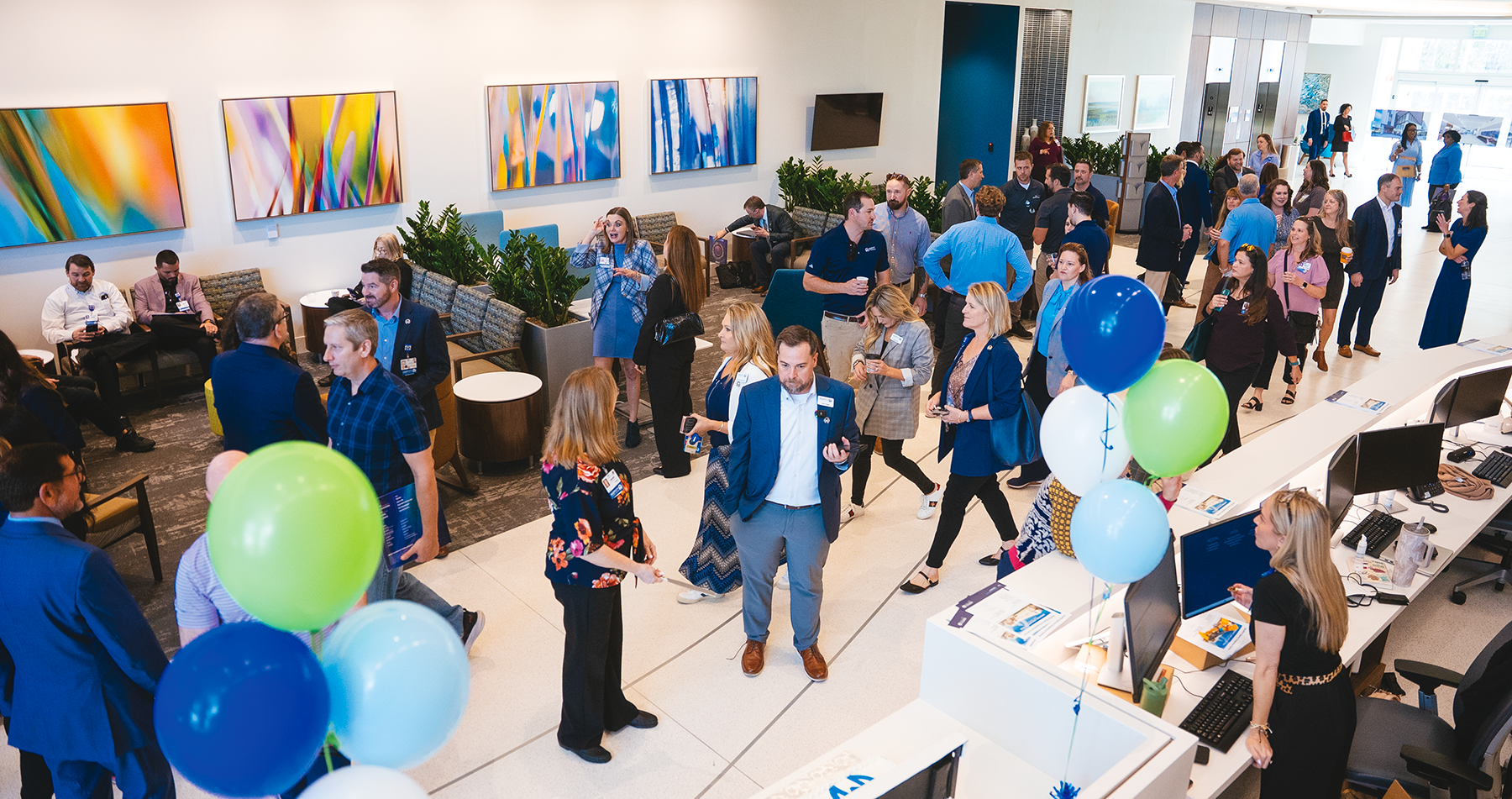
The first building to open in this amazing innovation hub, where science, technology and patient care will converge in the fight against cancer, is the 120,000-sq.-ft. Moffitt Speros Outpatient Center, which was introduced to an invited crowd on Jan. 9 with a huge event attended by an estimated 500 people, including Florida Secretary of Agriculture Wilton Simpson, State Senator Danny Burgess, State Rep. Kevin Steele, all five Pasco County Commissioners and 84-year-old former Speaker of the Florida House of Representatives H. Lee Moffitt, the man who founded the nonprofit cancer center named for him.
The event included the following speakers:
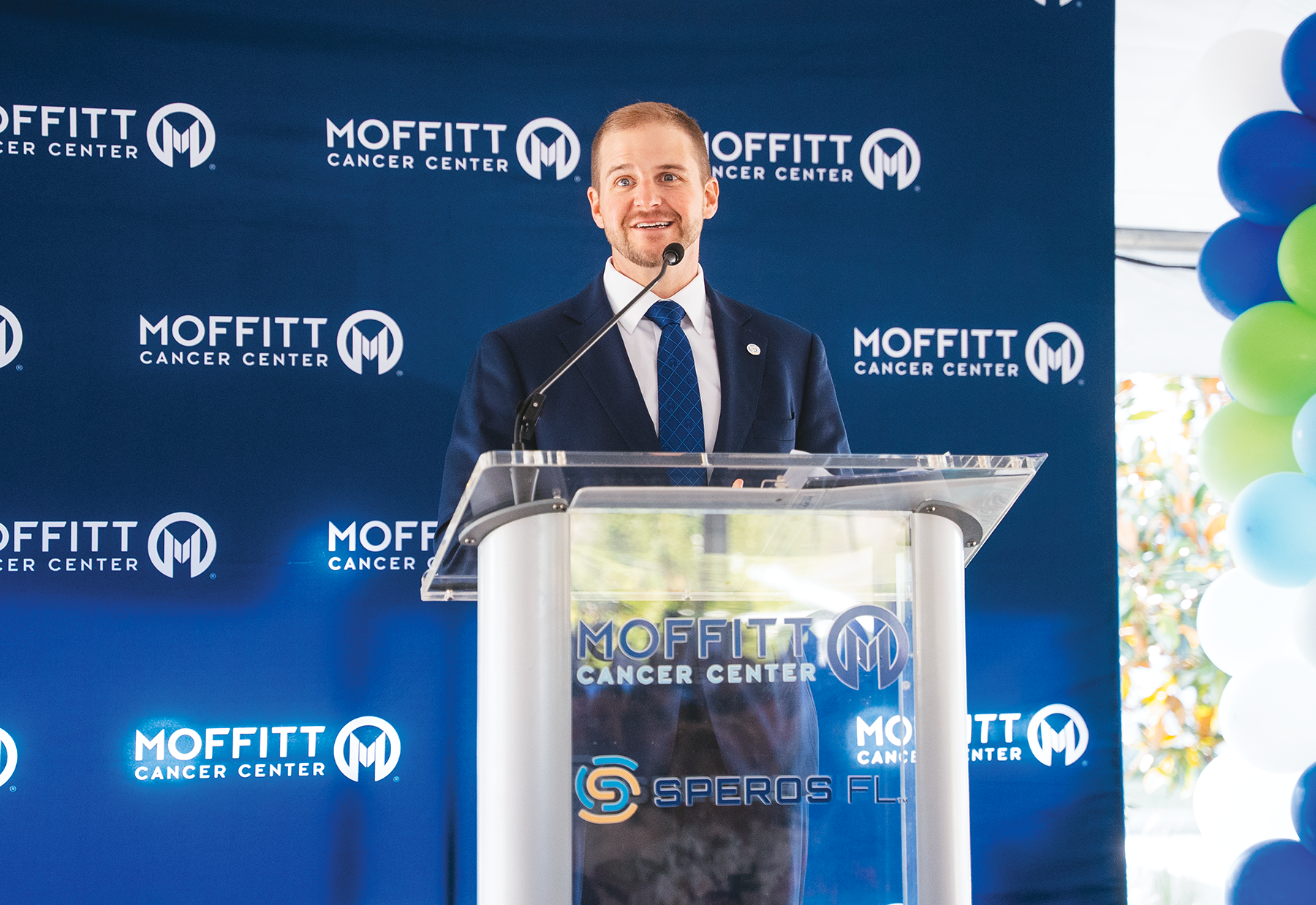
Speros Pres. Dr. Josh Carpenter
• Dr. Patrick Hwu, the president & CEO of Moffitt, who noted that 2026 is the cancer center’s 40th anniversary year. Dr. Hwu also played the keyboards in the Speros band following the ribbon-cutting ceremony. He also noted that the next building to open in the Speros campus will be the Richard M. Schulze Proton Center, which will open in just a few months and will be home to one of only three proton radiation machines in Florida. That opening will be followed by the opening of the 100,000-sq.-ft. research center. Dr. Hwu also noted that the first patients will begin being treated at the outpatient center, “within a few weeks.”
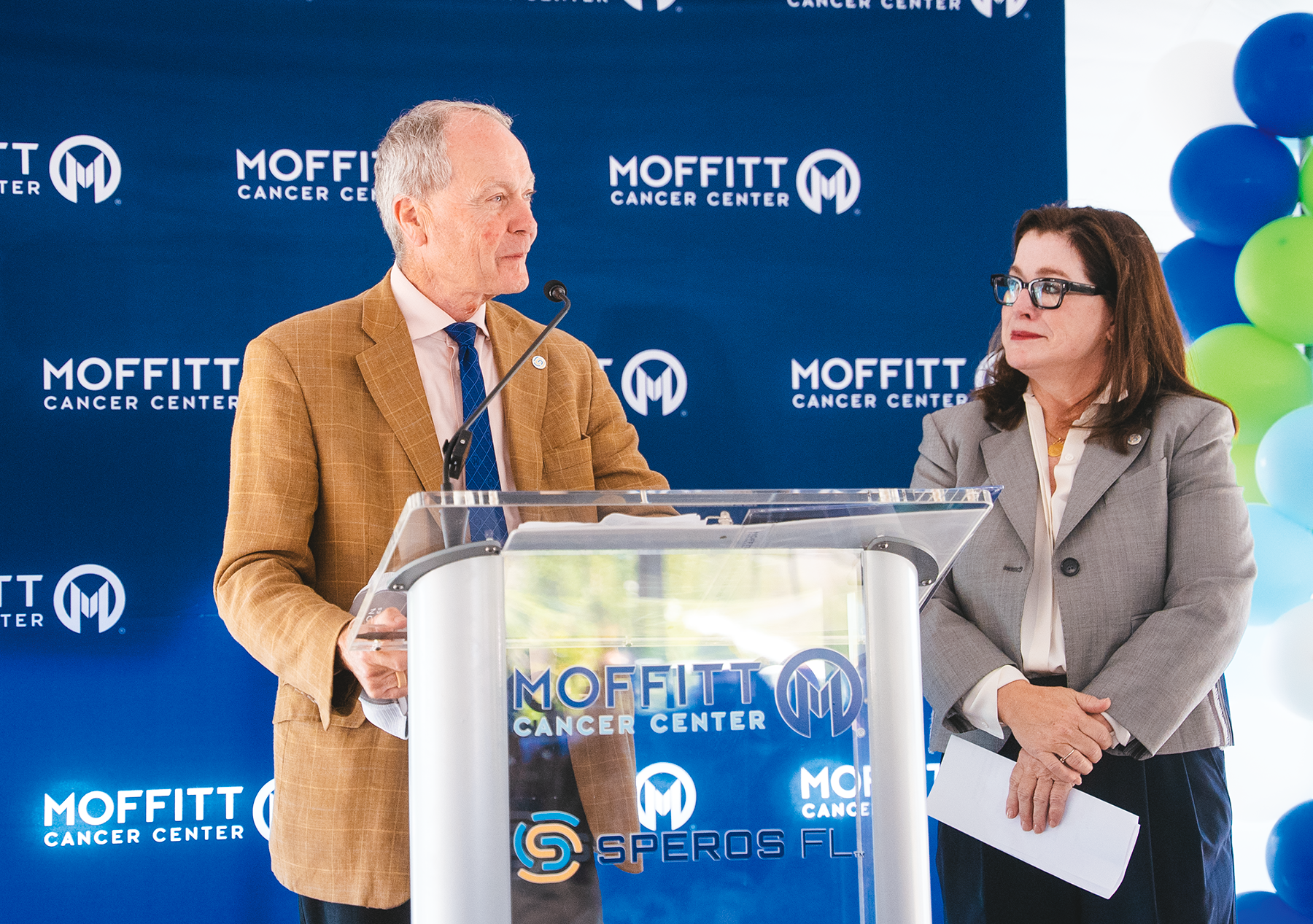
Speros & Moffitt Board members Tim Adams and Marty Lanahan
• Dr. Josh Carpenter, the president of Speros who also is the VP & chief integration officer of Moffitt and who noted that Speros means “hope.” Dr. Carpenter thanked everyone who played a part — and those still playing a part — in the construction and opening of the many buildings coming to the Speros campus.
• Speros Board chair Marty Lanahan, the executive VP of First Horizon Bank, who introduced Moffitt Cancer Center’s Institute Board chair Tim Adams. Adams said that Lee Moffitt charged him with the task to cure cancer and sent him to Tallahassee in 2005 to talk to Simpson, who was then a State Senator who was going to be the president of the Florida Senate within three years. “Wilton told me that he’s had his eye on Moffitt for a long time,” Adams said, “but if we really want to cure cancer, you’re going to have to start thinking a lot bigger than a 20-acre campus in Tampa.”
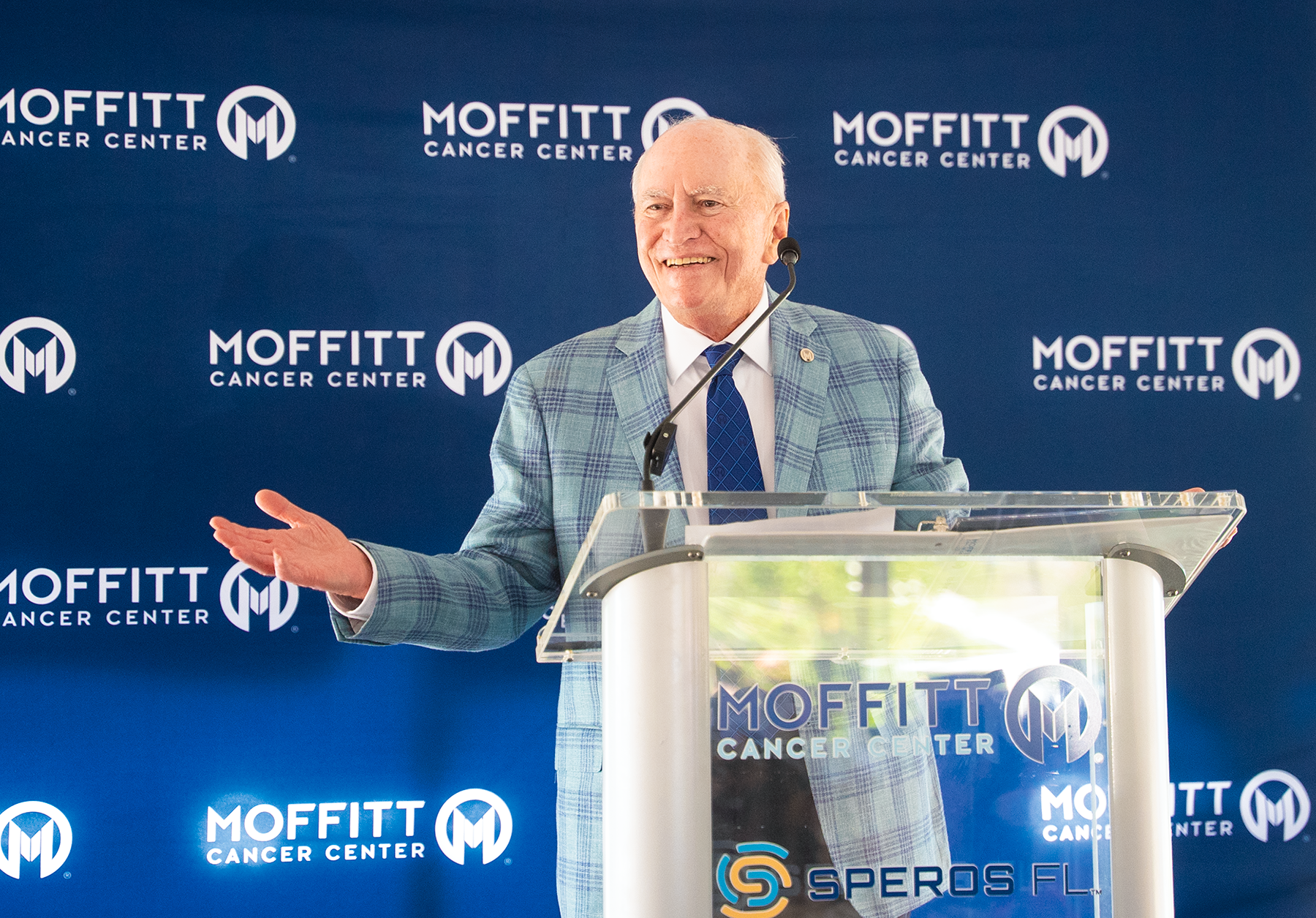
Wilton Simpson H. Lee Moffitt
• Commissioner Simpson, who said he knew Pasco had the land to “do something like this and that people could fly into Tampa International from all over the world and be here in 30 minutes to get treatment. I’m very proud of the tens of thousands of lives, starting now, that we’re going to be saving on an annual basis. How many grandparents will now get to see their grandchildren get older? How many children are going to be cured? How many moms and dads will see their kids get married because of the work that Moffitt will be doing on this site?”
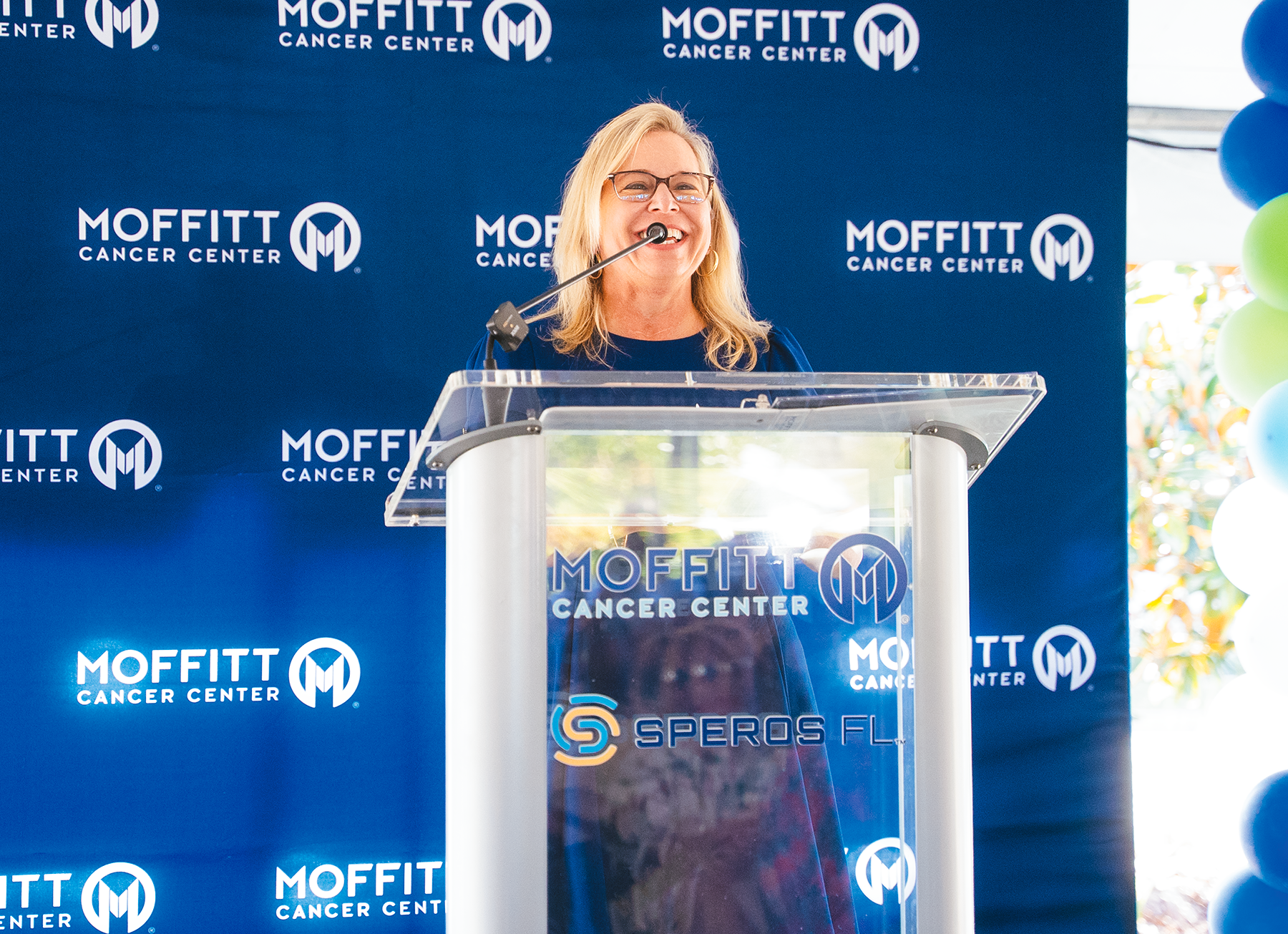
Debra Schulze
• H. Lee Moffitt himself, who said, “What a day! The reason we’re here is because of the hard work of every single person in this audience and I can not thank you enough for your dedication, zeal and vision to help us get to where we are today. I would like to thank and applaud the efforts of all of our friends that have worked for us since I started the cancer center 40 years ago and embraced our mission and contributed to the prevention and cure of cancer. By golly, we are making a difference and I appreciate all of your efforts in this quest!”
• The final speaker was Debra Schulze, speaking on behalf of her father Richard M. “Dick” Schulze, the founder of Best Buy Co., the largest electronics store in the U.S. Dick Schulze was unable to attend the event himself, but his family’s foundation supported the Speros Center with a $15-million investment in the campus’ Proton Therapy Center, “which is more than just advanced technology,” Debra Schulze said. “It is a place where skilled clinicians, dedicated researchers and hope-filled patients will come together in the pursuit of healing and progress. On behalf of my father, our family, and our foundation, thank you to the Moffitt leadership and staff. We are proud to stand alongside you and share in the excitement and the impact that this Richard M. Schulze Family Foundation Proton Therapy System Center will have on the future of cancer care.”
For more information about Moffitt’s Speros Outpatient Clinic and the Richard M. Schulze Family Foundation Proton Center (16370 Wilton Way, Land O’Lakes), visit Moffitt.org.
The Speros FL nurses The packed Speros FL lobby during the Jan. 9 Grand Opening event Aerial drone shot of the Speros FL campus
The area near The Grove at Wesley Chapel has been busy, with both the new Target store, Woody’s Wash Shack and now, the Belk Market all opening recently. And yes, there have still been many changes in the KRATE at The Grove container park, too.
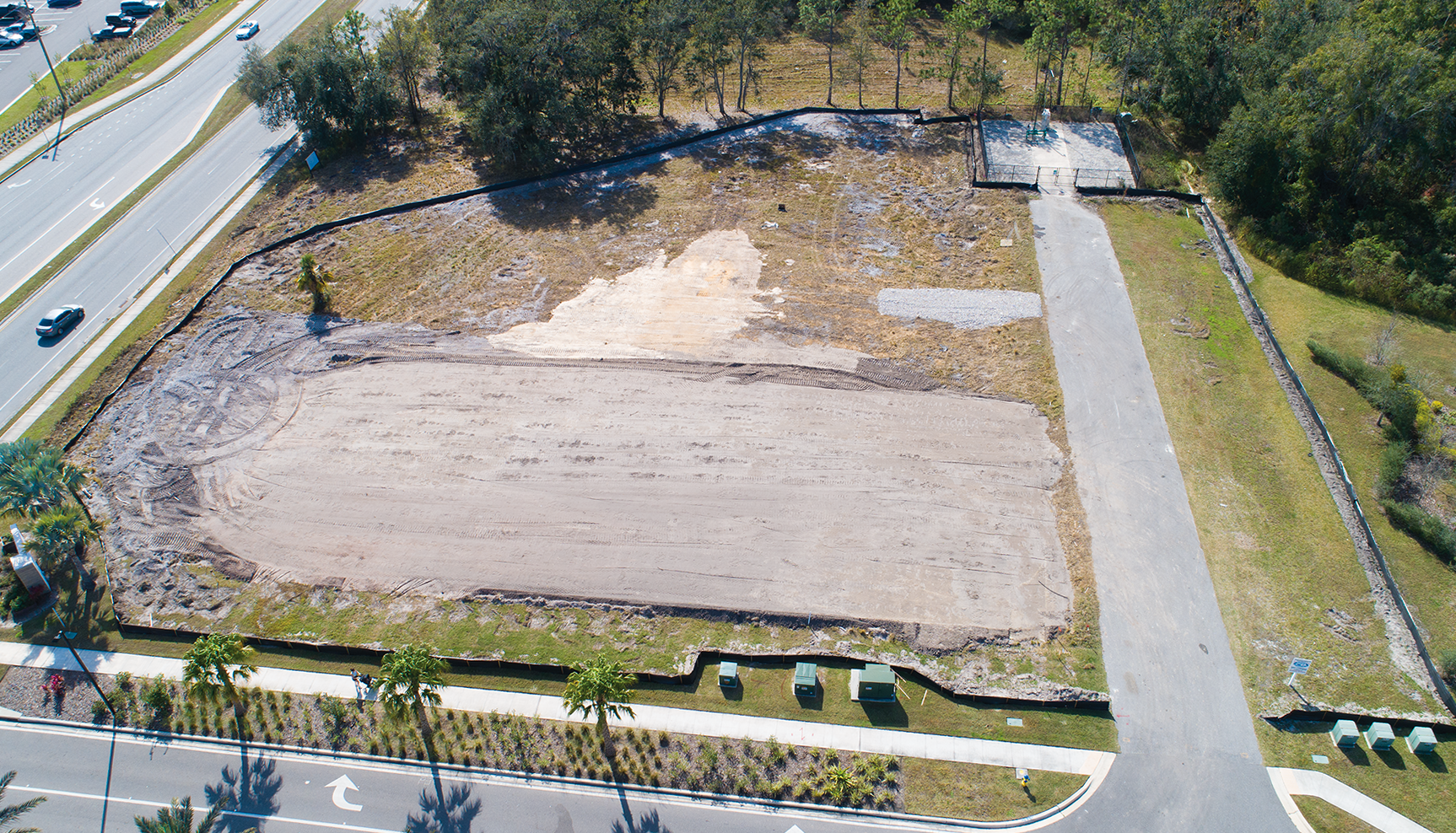
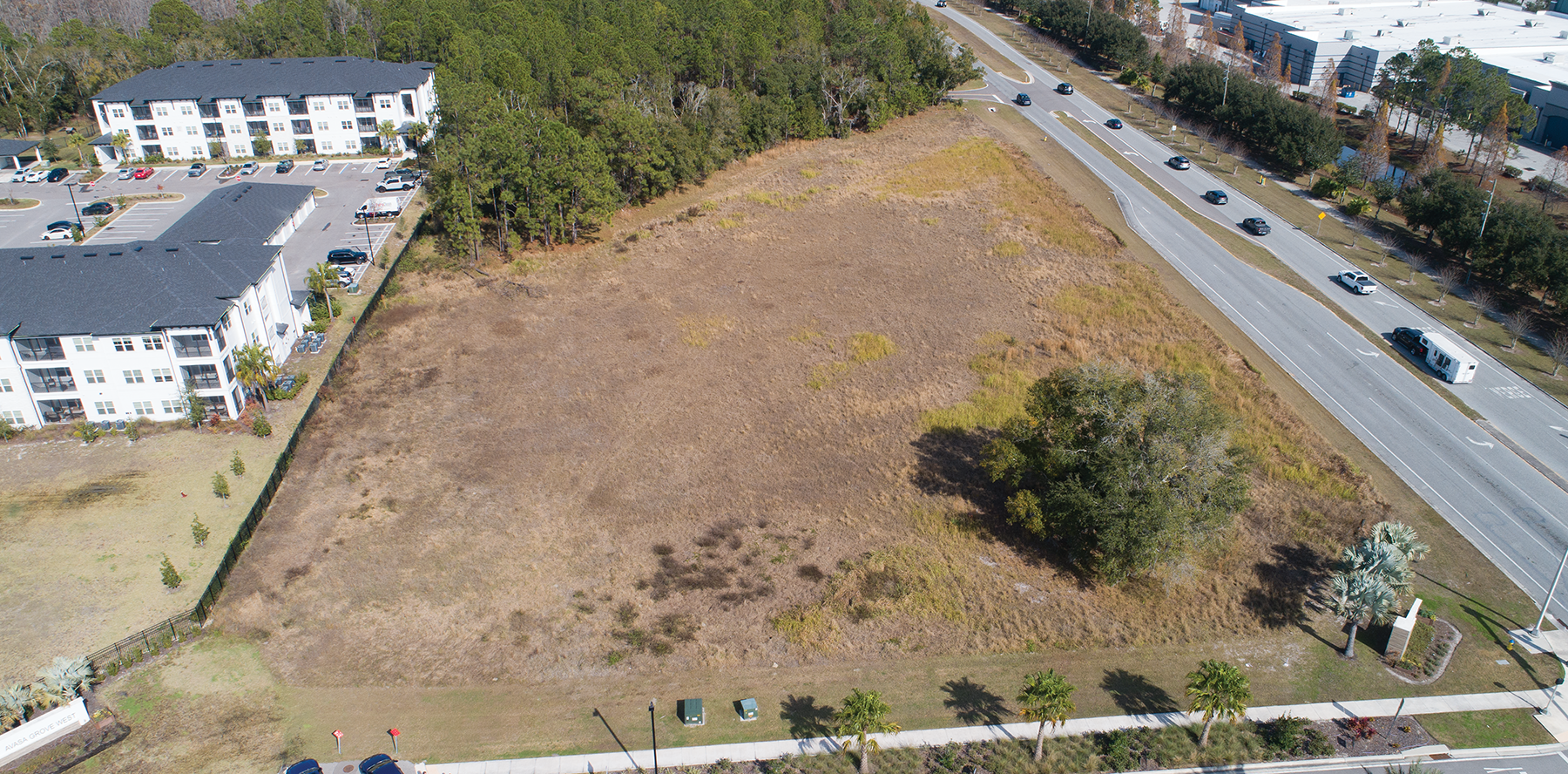
But, while it’s possible that neither of these projects — both of which are located across Oakley Blvd. from the entrance to The Grove (both also are in front of the Avasa West apartments) — will be completed before the end of 2026 (since only one of them has broken ground), we also wanted to tell you about them.
Oakley Place Skilled Nursing Facility
We’ve already mentioned the planned 202-bed Oakley Place Skilled Nursing Facility at the northwest corner of Oakley Blvd. and Grove Isle Dr., but we recently heard that the facility may be getting ready to break ground soon. Of course, we’ll keep you updated, but a large additional skilled nursing facility would be a welcome addition to the area.
We also recently saw that The Goddard School-Oakley — which will be the second Goddard School private pre-school in Wesley Chapel (the other is off Bruce B. Downs Blvd., across from AdventHealth Wesley Chapel — has cleared the land in preparation of getting ready to build on the southwest corner of the same intersection, across from the Goddard School.
New Clubhouse At Valencia Ridge
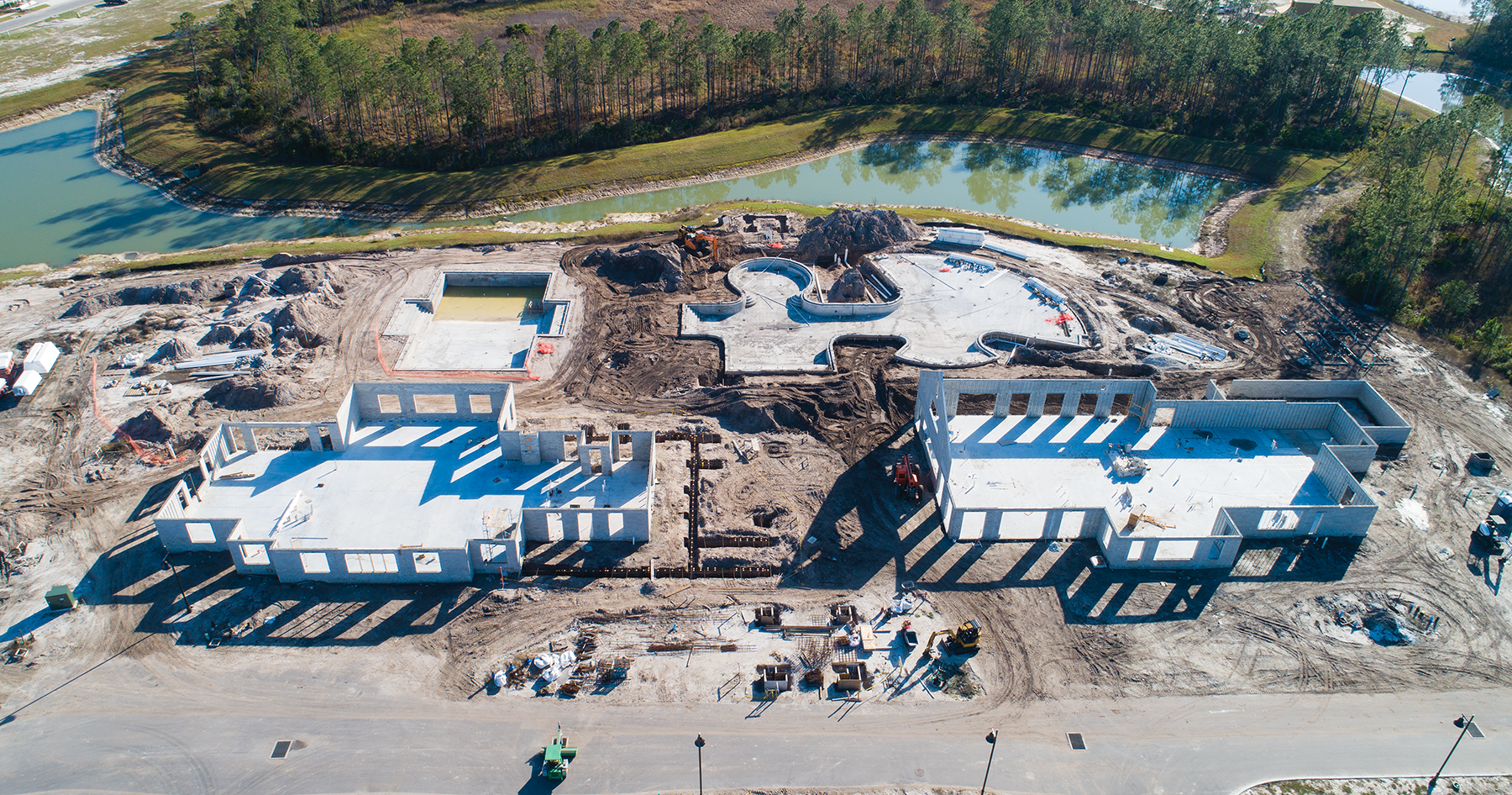
The upscale Valencia Ridge community being developed by GL Homes (next to the builder’s successful Winding Ridge community) is getting an equally upscale 29,000-sq.-ft. clubhouse on a 7-acre recreational complex. The facility will include on-site dining, a poolside bar, sports lounge, racquet club & pro shop, resort-style pools, a shaded yoga garden, fitness center, exercise studio, massage room and more.
Swig #2 Coming To Epperson
The day before we went to press with this issue, correspondent Joel Provenzano found that Swig Drinks had received its site development placard from the county in December, which means that construction of the area’s second Swig (the other, of course, is between Academy Sports & PopStroke on the north side of S.R. 56) could begin any day now off Curley Rd. Joel said that plans for the new Swig were not downloadable at our press time, but we’ll keep you posted.
Whole Foods & Lifetime Fitness
And of course, we also had to show a drone shot of the progress on the new plaza on Bruce B. Downs Blvd. north of Aronwood Blvd. in Meadow Pointe that will be home to both Whole Foods and Lifetime Fitness. We just provided a big update on this plaza — which also will have a Pop-Up Bagels, CAVA Mediterranean, Naked Farmer, Petfolk, Tox wellness spa & a nail salon in our Dec. issue or this would have been one of this issue’s biggest stories!
Feel free to let me know anything we’ve left out of this issue and we’ll try to cover it in our next edition! — GN