
Retired Gen. Remo Butler Celebrates The Army’s 250th Birthday! 

The Cory Lake Isles Resident’s Storied Career Includes Being The First Black General Of The U.S. Special Forces! 

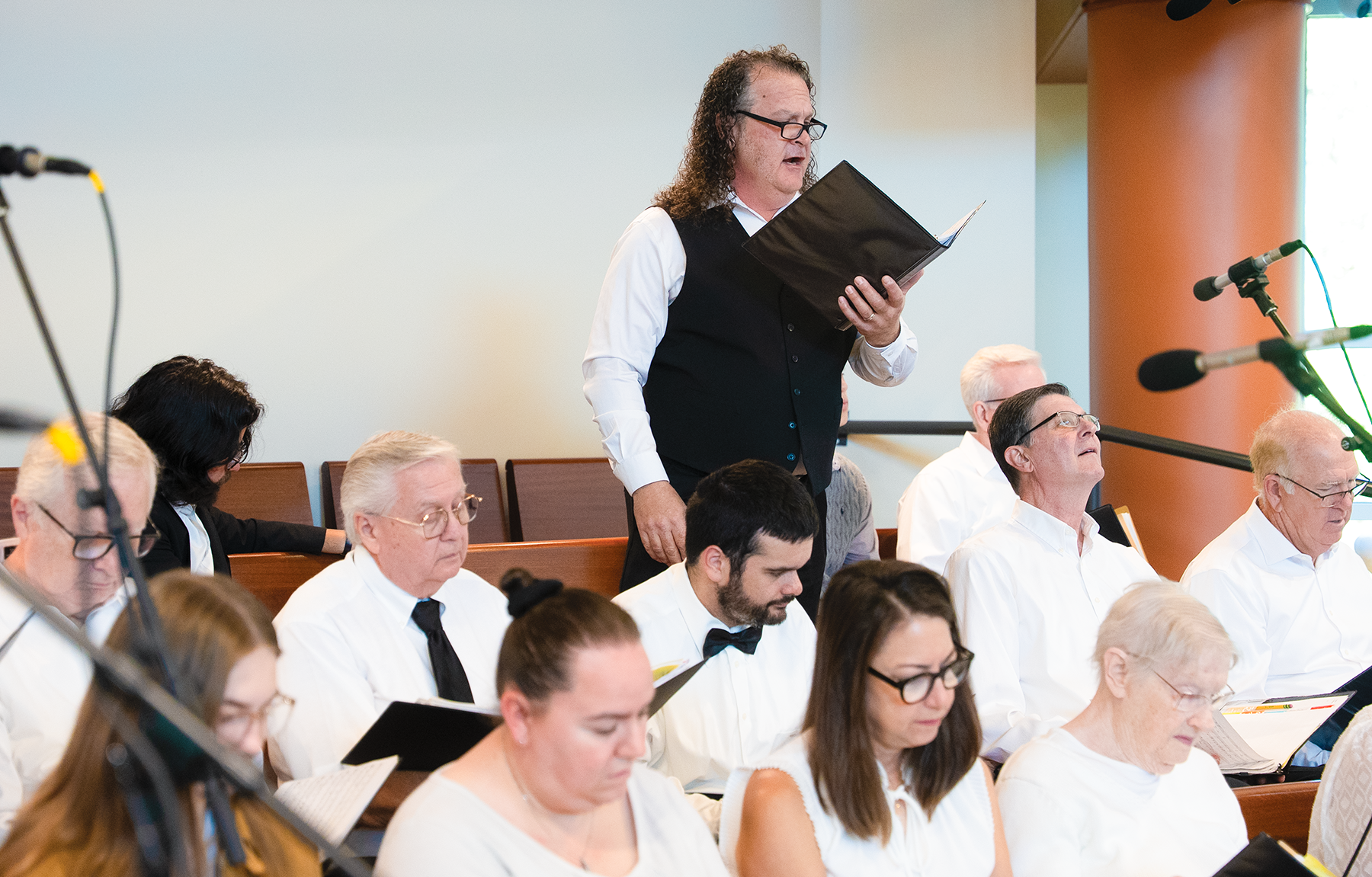
Retired U.S. Army Special Forces Brigadier General & Cory Lake Isles resident Remo Butler (right) and his wife Mylitta celebrated the Army’s 250th Birthday on June 14. (Photos by Charmaine George) 

 I had the honor and privilege of interviewing the first-ever Black General of the U.S. Special Forces — Brigadier (1-star) General Remo Butler — the same day the U.S. Army celebrated its 250th birthday — June 14, 2025. 

Gen. Butler, who commanded honorably and admirably at every level for 29 years in the Army, was first commissioned as a Second Lieutenant in 1974, after graduating from Austin Peay State University in Clarksville, TN, as the Vietnam War was winding down. He and his wife Mylitta are long-time Cory Lake Isles residents who invited photographer Charmaine George, Jannah and yours truly into their beautiful home shortly before they had to get ready to attend Tampa’s celebration of the Army’s sestercennial anniversary in downtown Tampa. 

“The Army is more than a year older than our country (the U.S. won’t celebrate its 250th birthday until July 4, 2026),” Gen. Butler says, “and it was an honor for me to serve. When people ask me if I miss being in the Army (he retired in 2004 as the Chief of Staff for the U.S. Special Operations Command at MacDill Air Force Base in South Tampa), I always say that my body, especially my knees, don’t miss it at all. But, I do miss the great people I got to serve with. It wasn’t really my first choice of a career, but I don’t regret a minute of it. I took pride in everything I did.” 

Although Gen. Butler, now age 73, was always able to move up the ranks in the Army, he says he still encountered racism along the way. 

“I know I’m a role model for Black men and women in the military because many people have told me that in the years since I retired,” he says. 

In fact, according to an article published in 2010 on the website ResearchGate.net, “Over the past two decades, U.S. War College students have written several papers touching on the experiences of black officers as they relate to representation, promotions, influence, and culture. Interestingly, only Gen. Remo Butler’s paper (1997), which was one of the first to be written, has received any widespread attention. Butler found that, ‘Black officers are falling behind their white counterparts in promotions at and above the rank of lieutenant colonel at a disconcerting rate.’ Specifically, Butler suggested that Black officers were failing in two areas: (1) promotion to the ranks of lieutenant colonel and higher, and (2) selection for battalion and brigade command.’” 

Gen. Butler says he is particularly proud of that nearly-30-year-old essay. “Where a lot of the other War College graduates were writing about the future of the military on Mars or in the Andromeda Galaxy, I wanted to help future Black officers to understand that to succeed, you have to bring pride and integrity to everything you do.” 

“Two years into college, I’m looking at some of my friends who had graduated,” Gen. Butler recalls. “Some had Master’s degrees, some just had regular degrees, and they weren’t doing well because there was a recession going on. So, these guys were having a hard time finding jobs. 

I went to Sears one day, and there was my high school chemistry teacher selling shoes and I’m like, “Wow, that is not what I wanna do.” 

So, one day, he runs into someone who was in ROTC, “And this guy said, ‘You know, by doing ROTC, you’re gonna have a job. You’ll be an officer in the Army.’ My father was in the Army, so I decided to look into it. But, I really wasn’t excited about it, because during those days I wanted to have the big Afro and kind of do what I wanted.” 

He adds, “But, common sense took over and I said to myself, ‘Hey, do you wanna eat?’ So, I joined ROTC. And, some of the instructors didn’t like me and I didn’t like them either. When it was time to go to summer camp, the PMS (Professor of Military Science) calls me in because he really didn’t like me and he said, ‘Listen, we’re gonna send you to summer camp, against my better judgment. But, if you don’t maintain at least a ‘B’ average, you’re out of here.” So, summer camp ends and I came back with a straight-’A’ average, so he was stuck.” 

Butler started looking down the road and thought, “I might wanna do this for a while. I’ll go in [to the military] for two or three years, put it on my resume, get a little experience, and then go do something else. And, when I went in, I did a couple of years, went to a few places I’d never been, went to Korea and Panama, and, I said, ‘OK, this is not so bad. So I stayed a while, got promoted, came back to the advanced course in Fort Benning, (Georgia) and ran into some really good people. One of them, who turned out to be a lifelong mentor for me, was Sidney Shachnow, a retired Major (2-star) General who passed away (in 2018 at age 83). He was a Holocaust survivor who had spent two years in a concentration camp, but he made it out, came to the U.S. and joined the Army. He was a great man who was the first real mentor I ever had. And I had enjoyed Special Forces.” 

He adds, “So one day — at that time he was Colonel Shachnow — he tells me, ‘Your command is going to be here at Fort Benning, but I’m going back to Fort Bragg (in North Carolina). I have some issues here, but if you can take care of this one issue here for me, I’ll get you to Fort Bragg with me.’ I said, ‘Done deal. I took care of his issue and about a year and a half later, I got orders to go to Fort Bragg and I was back in Special Forces.” 

(Note-Gen. Butler explained that every military branch has its own Special Force. The Navy has the Seals. The Air Force has its Special Operations Command, the Army has Special Forces and Army Rangers, Marines have Marine Raiders and Force Reconnaissance units, and the Coast Guard has Deployable Specialized Forces.) 

“But anyway, I was already getting promoted. And the best thing, though, was that I met a lot of great people and just enjoyed working with them. When I got in, it was still Vietnam, which was ending, so they weren’t sending many of us there by ‘74…and I kept sticking around.” 

He completed the Special Forces Qualification Course in 1977 and was assigned as a detachment commander in Company C, and later as executive officer of Company A, 3rd Battalion, 7th Special Forces Group (Airborne), Panama. In 1980, he attended the Infantry Officer Advanced course and later commanded Company C, Infantry Training Group, in Fort Benning. He returned to Fort Bragg and Special Forces in February 1984 and served as company executive officer and Battalion S-3 before assuming command of Company C, 2/7th Special Forces Group (Airborne). 

Then, after completing the Armed Forces Staff College, Butler was assigned in 1988 to Special Operations Command South, Panama, as director J3 and as a special operations plans officer. He was also a participant in “Operation Just Cause,” to liberate Panama from the never-elected dictator General Manuel Noriega. 

Gen. Butler left Panama in July 1991 to become an instructor at the Armed Forces Staff College until December 1992. He then returned to Fort Bragg to command the 1st Battalion, 7th Special Forces Group (Airborne) from 1993-95. He then was assigned as deputy chief of staff to U.S. Army Special Forces Command until his departure to the United States Army War College in Pennsylvania. 

After completing the War College, he was assigned as chief, Special Operations Coordination Element, XVIII Airborne Corps. Gen. Butler commanded the 1st Special Warfare Training Group (Airborne), U.S. Army Special Warfare Center & School, from 1997 through 1999. He was reassigned as the deputy commanding general, U.S. Army Special Operations Command, at Fort Bragg 1999-2000. His most recent assignment was as the commanding general, Special Operations Command South, from June 2000 to July 2003. 

“So, one day I in 2001, I was in Fort Bragg, and I was working out with a friend of mine who was a Brigadier General, and he said, ‘I’m going someplace else and you’re going to be taking my place here.’ And I’m like, ‘No, you obviously got something wrong. You got it confused.’ But, a few days later, it turned out that I was going to be taking his place. And, at that time, you gotta figure that after 29 years of carrying heavy ruck sacks and jumping out of airplanes, my body was revolting,. We used to do a monthly run, and it was only about a three- or four-mile run. But, at the end of that run for the next two or three days, I had to ice down my knees and try to rest.” 

He added, “But, to me, a leader leads from the front and I was still leading from the front, but it was getting harder and harder. So, I retired in 2004 and went to work for some great companies, and I’ve never looked back.” 

As for the racial difficulties he encountered, Gen. Butler says, “When I was a Second Lieutenant, I got stationed in Korea and there were a lot of racial problems going on in the military, and the first unit I was assigned to had just had an Inspector General (IG) inspection. 

“And, even though I had just gotten there and the inspection was before I got there, the company XO (Executive Officer) kept pointing out things in the report, saying, ‘Lieutenant Butler, you messed up real bad on this. This [problem] here is yours,’ but I was clueless as to what he was talking about. I decided to educate myself on physical block security, which was a big thing, because we were going to be reinspected. And by educating myself, I became the battalion’s de facto expert in these fields.” 

He added, “In any unit, there’s a hierarchy and everybody knows who’s at the top and who’s at the bottom. And, among the Lieutenants, this Lieutenant named Mark, who was a great guy, and I became good friends because we were Lieutenants #1 and #2, depending on what day it was. But, it was a very friendly rivalry with no animosity between us. We used to hang out together and drink together, even though he graduated from West Point and I didn’t. 

“So, in those days, you got a 60-day OER (Officer Evaluation Report) and I knew what I had done, and everybody knew what I had done. We all knew what everybody had done because we were a small unit. So, we all got our 60-day OERs back in the mail at about the same time. Mark opened his first and he got what he deserved. Another guy opened his and he was in the middle of the group and then this other guy opened his and it wasn’t a real good report, but it was what he deserved and we all knew that. And then, I opened mine and I only got one point above what this lowest guy got. 

“So, Mark says, “Hey, something’s wrong here. You need to go talk to the old man ([he XO, our Captain]. So, I knock on the door and he says, ‘Hey, Lieutenant, how you doing? What can I do for you?’ 

“I said, ‘I want to talk to you about the OERs. I took a lot of time working on that OER for you but sir, you only gave me one point higher than so-and-so and 10 or 15 points less than so-and-so.’ 

“He said, ‘How do you know that?’ and I said, ‘Because we all went around and looked at all our results.’ He looked at me and said, “Lieutenant, those scores are a private, personal thing. You don’t share them with anyone. You need to understand that. But, you should know that I did not give you that score because you’re Black.” 

“And, even though bells and alarms went off in my head, I just said, ‘OK,’ and I walked out. 

“I was still new there. I didn’t know jack. But I was concerned about the conversation and I didn’t know what to do. 

“And, because of all the racial issues back then, there was an office called Equal Opportunity, where you could make a complaint. But I didn’t know how to do it. So, I talked to another Lieutenant who said, ‘Go talk to this guy. He’s a Black Captain. And, this Captain said, ‘I was waiting for you come see me. I knew what was gonna happen to you because I know him.’ 

“He said, ‘If I was evaluating you, this is what I would have given you.’ But, he couldn’t give me a lot of help, because, you know, he didn’t want to get himself in trouble. So, this other Special Forces Captain, who was a battalion commander, he calls me and says, ‘Let me tell you what you need to do.’ He laid it out step by step and one of my commander’s friends saw me and said, ‘Look, you know, I’m not in this, but I’m just telling you that so-and-so stuck it to you. So, what are you doing about it?’ And I said, ‘I’m writing to the XO.’” 

But, as it turned out, Butler says, “The IG inspection was good for me because everything that we flunked really badly [before] that he gave to me was re-inspected and I had only two minor deficiencies out of everything, which was good. Plus, I became the battalion’s resident expert in certain things, so the units would call me and say, ‘Hey, can you come help us do this?’” 

After that, Gen. Butler says he went to see his commander, a Colonel, “who wanted to talk to me about what was going on. I tell him and he says, ‘Well, I’ve talked to some people here and most everyone has a high opinion of you. So, I’m going to get you out of here because I need to protect you.’ 

“I said, ‘Number One, I’m not running. I don’t run from anybody and I’m not gonna start now. I appreciate you wanting to protect me, but I don’t need protection. I’ll take care of it myself.’” 

But, the Colonel knew that the XO was going to, “look for some way to ambush me. Some of the other Captains there who knew this guy came to me on the side and said, ‘Listen, be careful, because he’s gonna try to get you’ and these were that XO’s friends telling me this.” 

“So, one day [the XO] calls me in about my next OER. It was ten times better than the first one but it still wasn’t what I thought I deserved. And, the XO says, “I just wanna make sure you’re happy. Lieutenant.’ And, I’m looking at this piece of crap and I said, ‘OK.’ But, when my appeal came back, the XO lied and said, ‘I just made a mistake.’ So, even though it didn’t hurt me, as you can tell, it did sour me a lot on the Army. But, one of the reasons I was in Special Forces, was because of those two captains who helped me. Both of them were great Special Forces guys who walked me through how to do things.” 

He says that when he went to Special Forces school, “It was one of the hardest things I’ve ever done in my life. But, I graduated and, at that time, there were very few Black officers in the Army and almost none in Special Forces, although there were some Black enlisted men. Then, when I went to Panama, there were two black officers, and later, there were three. 

“And, back then, some folks would throw the ‘N’ word around, which was the quickest way to get my fist in your mouth. But, because it was a different time, even a guy and his wife who ended up being my youngest daughter’s godparents once said to me and my wife, ‘Black people should marry Black people and White people should marry White people.’ But, we became an inseparable group anyway.. Those are the kinds of relationships you establish in Special Forces.” 

Another time, when Gen. Butler was a Colonel who was commanding a training group, he says, “My secretary came in, and had this crazy look on her face, and went back out. I didn’t know what was going on. Anyway, this guy comes in and looks around, and I heard her say to the guy, ‘No, sir, he’s in there. I told you that’s Colonel Butler,’ but the guy, I guess, wasn’t expecting someone Black to be a Colonel.” 

He added, “I tell folks all the time, people have expectations of what you should be. I push my own son and tell him ‘You have to look the part and talk the part. If you can’t speak [proper] English, people are going to downplay you.” 

Another time, Gen. Butler says he went for a job interview in West Virginia. 

“I went up there and it was a big table, and they had about 20 people sitting around this table, with one Black guy at the table. One of the guys said, “I want you to tell me why we should put you in this position.’ I looked at him and I said, ‘Well, I’ve been sitting here [telling you] for over two hours, so if you can’t figure it out, I don’t need to work for you.’” 

The guy responded, “Oh, wait a minute. That’s not what I meant.’ Then, the guy who recommended me [for the job] was taking me back to the airport. And he said ‘You know, General. I just never knew you were that articulate.’ 

“I said, “I feels like I knows what you guys talks about.’ And, he understood what I was saying. But, a lot of people look at you and they expect certain things and I try never to give you what you expect.” 

“So, the guy says, ‘I’m sorry, sir. But, I’ve talked to a lot of people about you, and nobody ever told me you were Black.’ But at some point, people will stop looking at you as the Black officer, and just look at you as the officer.” 

When I asked about the Army’s 250th birthday, Gen. Butler said, “It signifies to me that 250 years ago, our military was formed, and has been serving the United States and the government for 250 years.” 

He noted, however, that even during the Revolutionary War against England, “There were many Blacks who fought on both sides. The first man who was killed during the War, Crispus Attucks, was Black. Some of the slave owners told their slaves , “If you fight for us against the British, I will set you free. The British did the same thing by sending their people out to talk slaves into fighting for them to earn their freedom.” 

Gen. Butler also knows that there were no Black officers in the U.S. military until after the Civil War, when Henry Ossian Flipper graduated from West Point in 1877. 

“I tell my son, hat if people do not know and understand their history, they will not last long. So, I always wanted to know our history. And I want him to know our history.” 

He is proud to have studied our history and he and Mylitta also are proud to be New Tampa residents. “After I came back from working for Halliburton in Iraq after I retired, we were looking for a house [in the Tampa Bay area]. We were riding around, and came across [Cory Lake Isles]. And, back in those days, there were still a lot of trees everywhere and you could drive to Wesley Chapel and look at farms and cows. And I said, ‘You know, this looks like a nice area. And, this house just happened to be the San Remo model, and I was like, whoa, I like this! And we’ve been very happy here ever since.” 

Despite his many other accomplishments, Gen. Butler says that his article “Why Black Officers Fail” is one of his greatest achievements. 

“I didn’t want to write about esoteric things, like war in outer space in the year 5250,” he says. “I wanted to write something real. And, I still get emails and texts from people saying, ‘Thank you for writing that article. You helped save my career.’ 

He adds, “In War College, when I was still a Colonel, we had active-duty faculty members who would help with each class. But, after three or four of them told me they couldn’t help me,I went to see Dr. Nagami, a Japanese American, who said, ‘Are you sure this is what you want to write about?’ I said, ‘Yes,” and she said, ‘I’m going to tell you a story. Two years ago, a Black MP (Military Police) officer wrote something similar and after he got out of War College, the military was downsizing and he was one of the ones to go.’ 

“But I said, my record speaks for itself, so I don’t think they could do that to me.’ So, Dr. Nagami helped me and we wrote it and it was a very good paper. Everybody who was Black in the War College loved it. A big percentage of the white guys loved it. I had a lot of guys ready to lead a brigade ask me, ‘How do you suggest I bring the Black guys into the fold? How do you recommend I make my Black officers to feel a part of it?’ These were serious questions, which was good. 

But, even so, he says, there was still a spectre of racism hanging over the essay. 

“The day of our graduation ceremony from War College, they were giving out writing awards and everybody Black just knew I was going to get a writing award. Dr. Nagami just knew I was getting a writing award. But, at the end of the day, I didn’t get an award. Nor was I expecting on because [the article] was controversial. So, Dr. Nagami went and asked why I didn’t get an award and one of the guys said, ‘Well, you know, it wasn’t that well written.’ She said, ‘Wait a minute. I was in the meeting and you guys were all talking about how well written it was.’ I told her, ‘Don’t worry about it.’ But the thing for me is that almost 30 years later, people are still reading it, but I guarantee they’re not reading the papers about wars on Mars. I’ll always be proud of that.” 

As if to prove his point, the ResearchGate. com article from 2010 I found online said, “This paper is an extension of Butler’s paper in that it seeks to determine what, if anything, has changed in the years since Butler published his paper, using Butler’s original research methods. The author’s working hypothesis for the paper is that little has changed and that African Americans are ‘still’ failing in today’s Army. The findings overall suggest that Black officers are getting promoted to the ranks of Lieutenant Colonel and Colonel at higher levels than in 1996. Furthermore, Blacks are being selected for both battalion and brigade levels command at higher rates than 1996. However, Blacks are stilling failing to rise to the strategic decision-making levels of the Army. In trying to come to grips with this, the author has found that there are some limitations to this paper. The first is that this study does not employ a rigorous methodological approach to understanding senior officer perceptions. Instead it relies on anecdotal evidence, like Butler’s thesis, to support the contentions herein. Also, like Butler’s paper, this paper takes a myopic black-white approach to understanding why black officers [still] fail.” 

Thank you so much for your service, General Butler, and for sharing a few minutes of the Army’s big 250th birthday with me. 

Viera On The Passing Of Gwen Henderson & The Repaving Of New Tampa Blvd. 

Gwendolyn Henderson (Photo source: Tampa.gov) 

My City Council colleague Gwendolyn Henderson (above) has passed on (only five days after attending the kickoff event for Viera’s campaign to be the next Dist. 67 State Representative; see story below). Gwen was many things — a fighter who was hilarious, independent and stubborn and a woman with a beautiful heart. 

Councilwoman Henderson was raised in Carver City — a Tampa community created for returning black veterans in the 1950s. Her Dad, Asbury Henderson, was a Korean War veteran. Her mother, Gladys Henderson, was a caring woman of faith. Gladys was descended from Sam Hightower — an enslaved man who was emancipated in Georgia in 1865 and would die in 1932. 

Gwen owned the Tampa Heights Black English bookstore. If you want to see the heart of Councilwoman Henderson, go to Black English bookstore. It is a love letter to Black History and people like Sam Hightower and Asbury and Gladys Henderson. 

She was proud to be a member of the Delta Sigma Theta Sorority, Inc. (a sisterhood comprised primarily of Black, college-educated women with more than 1,050 chartered chapters worldwide), and a Carver City woman. She was proud to be a Dragon from Jefferson High School. She was proud of her Christian faith. She was proud to be a mom. And, she was proud to be a public servant representing the community where Gladys and Asbury Henderson raised a family. 

She was also hilarious. I sat next to her [at City Council meetings] and laughed a lot. But, she was a tough lady, too. She endured some mean political attacks and never flinched. Public service can be a pleasure — but there are those who take the cheapest of all shots from the cheapest of all seats. Councilwoman Henderson punched back against those cheap shots. 

I last saw her at an event she put on for young people attending Historically Black Colleges and Universities (HBCU). I told her: “Look at all of these young people, you are doing what you were meant to do.” 

She brought a passion to the plight of everyday families like the one raised by Gladys and Asbury Henderson. She had a beautiful heart and will be missed. 

New Tampa Blvd. — home to God knows how many potholes and broken tires — is finally in line to be repaved. 

This $2.5-million mobility project will repave 1.8 miles of the main road through the West Meadows community — from Meadow Pine Dr. to Bruce B. Downs (BBD) Blvd. The project will include pedestrian accessibility features with safety and ADA improvements. 

This work will begin in Quarter 2 of 2026 and is set to be finished by the end of 2026. 

I am glad we are finally getting here. Had the 2018 penny sales tax not been struck down in court, New Tampa Blvd. would have been repaved long ago. As it stands, I had to fight hard to get it in the budget — and I thank Mayor Castor and my fellow Council members for the support. 

I would be remiss if I did not give a shout out to my long-time friend, Brad van Rooyen of West Meadows, who has been pushing for this project for years. If Brad is Captain Ahab, then West Meadows is his Moby Dick. 

Not long ago, we got portions of Tampa Palms Blvd. repaved. We will finish the rest of Tampa Palms Blvd., too. Remember folks, like the Johnny Cash song goes: “One piece at a time.” Until we get better funding sources for mobility, it’ll have to be just one piece at a time. 

The Fourth of July is coming up and I look forward to marching in some Independence Day parades. I love the Fourth of July for many reasons — for sentimental reasons and because I was raised in the 1980s. 

And, I love how it is a good time to celebrate our country. A former President once said: “What is right with America can help heal what is wrong with America.” This Fourth of July, think about what is right with our country and how that good can help overcome what is wrong with our country. It has in the past and it will again. 

Know what a real pleasure it is to represent you all in public office. 


Viera Kicks Off Campaign To Succeed Rep. Driskell 

As we told you back in April, District 7 Tampa City Councilman and New Tampa resident Luis Viera has announced that instead of running for Mayor of Tampa, a citywide Council seat or a spot on the Hillsborough County Commission, he is instead seeking the position currently held by his long-time friend and Dist. 67 Florida Rep. (and State House minority leader) Fentrice Driskell. 

Viera officially kicked off his campaign for the seat at a fund-raising event held at the Columbia Centennial Museum in Ybor City on June 5 that was attended by more than 200 people, including Richard Gonzmart (at microphone, left), the chairman of the 1905 Family of Restaurants (including the original Columbia Restaurant adjacent to the museum), who introduced Viera to the crowd, as well as fellow City Council members Gwendolyn Henderson (who passed away suddenly a few days after the event) and Charlie Miranda and Dist. 1 Hillsborough Commissioner Harry Cohen. 

Unable to attend the campaign event was Leader Driskell herself, who was (and is) still in Tallahassee with the rest of the State Legislature trying to get a Fiscal Year 2026 budget passed. 

Viera, who was actually the second Democrat to enter the race for Driskell’s seat, no longer faces a primary election, as retired U.S. Air Force Colonel William “Will” Atkins, the first candidate to file for the seat, pulled out of the race after reading my profile of Viera (photo, right) — at least, that’s what Will told me when I saw him at the YMCA groundbreaking in Wesley Chapel last month. 

“I come from the heart,” Viera told the crowd at the event. “I always tell people I’m the same guy on Saturday night that I am on Sunday morning. That means that I’m the same guy I was before I got elected, and [I’ll be] the same guy when I go to Tallahassee that I am now. And by the way, I’m gonna be the same guy in the primary that I am in the general election, because you don’t put your finger in the wind on your values. Your values count when they are rock-solid. They come with you, and they don’t change based upon what’s happening. I always believe in dignity for all, which is the idea that you’re entitled to dignity and respect — the idea that we all do better when we all do better.” 

For more information or to make a donation, visit VieraforFlorida.com. — GN 

Sushi Masa Premium Is Open In Former Red Lobster Location In Tampa Palms!

Photos by Charmaine George
Sushi Masa in Tampa Palms has a huge variety of Japanese cuisine, including a sashimi variety display (bottom photo), chicken & Steak teriyaki, fried rice & Udon or Soba noodles (above), tempura cheesecake (below left), assorted sushi rolls & gyoza (below left). All Items on this page, except the sashimi display, are included on the all-you-can eat dinner for $36.95 or lunch for $23.95.

Congratulations to owner Ryan Chen and his team (photo below) for finally opening the beautiful new Sushi Masa Premium in the former Red Lobster location (at 17021 Palm Pointe Dr.) in Tampa Palms. Jannah, photographer Charmaine George and her friend Austin and I got to sample pretty much everything on Sushi Masa’s all-you-can-eat (AYCE) menu (for $36.95 for dinner, $23.95 for lunch) the day before it opened and we agreed that the sushi rolls (maki), sashimi (no rice) and nigiri (sashimi on rice) were all fresh and delicious — especially the tuna and yellowtail options. The appetizers, like the assorted tempura (not shown) and gyoza dumplings (below) were excellent and the Udon and Soba noodles (we all preferred the latter), the fried rice and chicken and steak teriyaki were all pretty tasty, too. And, save room for dessert (also included) — the tempura cheesecake, fried Oreos and green tea ice cream were all delish.

The only items not included on the AYCE menu are the hibachi/teppanyaki entrées — veggie, chicken, salmon, steak & shrimp, plus combos —  and the alcoholic beverages at the spacious bar, but Ryan, who also owns the Lakeland location (there are now ten total) is off to a great start! Love the fast service, too! For more info, call (813) 252-9302 or visit SushiMasaUS.com— GN   

Driskell’s ‘Hindu-American Month’ Bill Passed By The Legislature! 

(L.-r.) Puja Patel, State House Minority Leader Fentrice Driskell and Rasesh Patel were all in Tallahassee to celebrate the May 1 passage of Rep. Driskell’s resolution to declare Oct. 2025 at “Hindu American Heritage Month” in Florida. (Photo provided by Rashesh Patel)

Although the Florida Legislature was still in an extended (until June 6) regular session — trying to pass a State Budget and some related items — while I was finalizing this issue, State House Minority Leader Fentrice Driskell (D-Tampa) led a tribute on the House floor on May 1 recognizing the vital contributions of Hindu-Americans across the state of Florida. 

Joined by several of her colleagues, Leader Driskell (who serves in State House District 67, which includes New Tampa) celebrated the adoption of her resolution — House Resolution 8053, which designates October 2025 as “Hindu-American Heritage Month.” The resolution was officially adopted by publication in the House Journal on April 17. 

To mark the occasion, Rep. Driskell welcomed a group of Hindu-American leaders to the House Chamber — including New Tampa-based pharmacist Rasesh Patel and his daughter Puja, where these Hindu-American leaders were honored and presented with a framed copy of the resolution (photo). 

“As a representative of a vibrant and diverse district with a significant Hindu-American population, I’m proud to introduce HR 8053,” said Leader Driskell. “This resolution acknowledges the profound contributions of Hindu-Americans to Florida’s cultural richness, educational excellence, economic vitality and philanthropic spirit. It was a joy to celebrate this moment with constituents and Hindu-American leaders from across the state.” 

Rasesh Patel, who is the Consultant Pharmacist and Community Relations Lead with BAPS (Bochasanwasi Akshar Purushottam Swaminarayan), located on E. Fowler Ave. in Thonotosassa. It is a Hindu religious organization and a denomination within the Swaminarayan Sampradaya Swaminarayan Mandir. His daughter Puja, who was the youngest attendee of the event celebrating the adoption of the resolution, is a proud USF graduate in Data Analytics. 

“House Resolution 8053 is more than a symbolic gesture,” Patel says. “It is a meaningful acknowledgment of the values, contributions and cultural heritage that the Hindu-American community brings to Florida. This resolution serves as a bridge — fostering mutual understanding, respect, and celebrating the diversity that strengthens our democracy.” 

He adds, “For Hindu-Americans, especially our youth, this recognition sends a powerful message: your story matters, your culture is honored, and you belong. I am sincerely grateful to Representative Fentrice Driskell for championing this initiative. Her leadership paves the way for future generations to embrace both their American and Hindu identities with pride. Florida’s recognition of Hindu-American Heritage Month is a vital step toward building a more inclusive narrative — one that reflects the rich tapestry of communities that make up the American fabric.” 

With Rep. Driskell’s resolution in place, Rasesh says, “Approximately ten prominent Indian organizations — each with a statewide presence in Florida and representing religious, professional, cultural, and social communities — will come together to celebrate Diwali (on Oct. 20) at the Capitol in Tallahassee. This marks yet another meaningful milestone in honoring the growing contributions of the Hindu-American community across the state.” 

Patel also notes that Rep. Driskell, who has attended and actively participated in major festivals hosted by the BAPS Shri Swaminarayan Mandi, including Diwali, one of the most significant celebrations in the Hindu faith, not only signals solidarity with, but also demonstrates genuine interest in understanding and honoring Hindu traditions and values.” 

He also says that Leader Driskell’s collaboration with BAPS Charities has further deepened this bond. In the aftermath of Hurricane Milton, she personally joined volunteers in the University area to help distribute over 1,200 sandwiches and critical daily supplies to affected families — a moment of service that reflected both compassion and leadership. 

“Rep. Driskell’s support also extended to BAPS Charities’ annual Walkathon, which raises funds for local charities and civic causes,” he adds. “By endorsing and participating in these initiatives, she continues to uplift efforts that benefit communities across faiths and backgrounds.” 

With her history of meeting with Hindu leaders, attending cultural events, and championing inclusivity through legislative action, Patel says. “Rep. Driskell stands out as a public servant who doesn’t just represent — she connects, participates, and uplifts. Her relationship with Florida’s Hindu community is not performative; it is personal, purposeful and profoundly appreciated.” — Special to the Neighborhood News 

Spotlight On Luis Viera! 

Now Running For The State Legislature, New Tampa’s City Councilman Is Still Out There Working For You! 

District 7 Tampa City Councilman Luis Viera has announced his plans to run for the State Legislature in 2026 but, in the meantime, he’s still out there working for New Tampa! (Photo by Charmaine George) 

 For those of you who don’t know the story, District 7 Tampa City Council member Luis Viera and I had never met prior to his first run for his City Council seat back in 2016. 

Viera was running against Dr. Jim Davison, who was my neighbor in the same subdivision in Hunter’s Green for more than a decade (until I moved out in 2006). I also knew Dr. Jim from attending many City of Tampa and Hillsborough County governmental meetings with him, especially on transportation issues. 

I was the moderator for the debate between Dr. Jim and Luis, the top two finishers in the special election in November 2016 (Davison was first, by nearly 2,500 votes; Luis was second). They both advanced to the runoff election in December because neither one received 50% of the Nov. vote. 

During that debate, I asked a question about whether or not the candidates would support New Tampa seceding from the City of Tampa and incorporating as its own city, an idea originally floated by former Dist. 7 Councilman (and Tampa Palms resident) Joseph Caetano. 

While Viera said “Absolutely not. I’m running for Tampa City Council,” Davison said that although he wasn’t in favor of the idea, he didn’t think seceding from the city should be taken off the table. The Tampa Bay Times wrote an unfavorable editorial about Davison’s comments following the debate and Viera won the Dec. runoff — where fewer total votes were cast than either candidate received in Nov. — by 65 votes. 

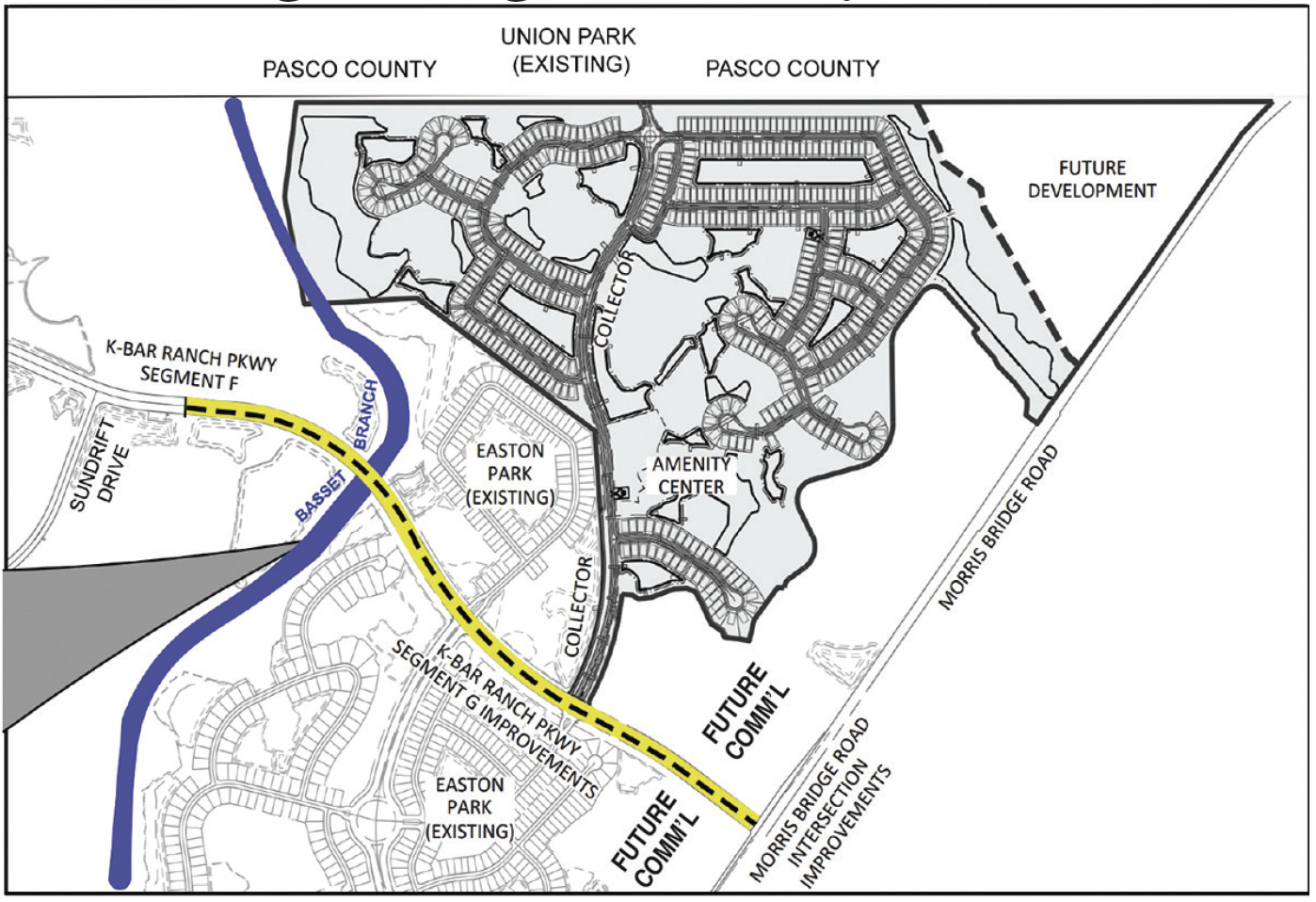
Since then, Viera has kept his promise to be a hard-working councilman who builds bridges across political aisles. He also finally got the city to fund the expansion of the New Tampa Recreation Center in Tampa Palms and build the city’s first All-Abilities Park on the Rec Center property. Viera also is still fighting for a Tampa Fire Rescue station in K-Bar Ranch on or near Morris Bridge Rd., in order to improve response times in that community, since response times from TFR Station No. 23 on Cross Creek Blvd. (more than two miles away from the entrance to K-Bar) are too slow. 

But, fighting for New Tampa (and North Tampa, the other part of his district) is nothing new for Viera. He says he will continue to fight for our area if he wins his next election in Nov. 2026 — for the District 67 State House seat currently occupied by his friend (and State House Minority Leader) Fentrice Driskell, who is term-limited in 2026. 

Unlike many elected officials, who really only make pubic appearances when they are actively running for office, Viera has hosted more community meetings/Town Halls — around 85 — in his tenure as a City Council member than pretty much any “politician” I’ve met in my 31 years as the editor of this publication. 

His most recent community meeting was at Easton Park on Apr. 15, where Viera said the #1 issue for most of the residents was “Morris Bridge (MB) Rd. People were just expressing frustration over Morris Bridge, with the main idea being that there’s so much construction and development that’s happened and yet, the road hasn’t really kept up with that, so there’s a lot of concern there.” 

Viera says he told those in attendance about the county’s plans to improve MB Rd., as we reported in our last issue, “And people were very, very happy about that. $2 million is great but my main issue I stress to people is that I want to put Morris Bridge on the radar of the City of Tampa, because even though it’s a county road, it affects our [city] residents. A lot of times, we defer exclusively to the county on Morris Bridge. I’m not calling out Hillsborough or Pasco, I’m actually saying that the City of Tampa needs to step up and be collaborative on this road for our constituents because it does have an effect on our city residents.” 

In addition, Viera said that many city residents who attend Cypress Pointe or Heritage Baptist Church, the Islamic Society of New Tampa Mosque or the Sikh Gurdwara of Tampa Bay on the road, “have an interest in seeing Morris Bridge Rd. widened and made safer.” 

He added that the residents in attendance at the Easton Park meeting said they feel that MB Rd. is, “very unsafe. They want to see incremental and structural changes — like short-term impact and long-term evaluation changes. So, they were very happy with the short-term changes that the county is doing and I, of course, shared those changes with them in detail.” 

He said that long-term, however, several of the residents wondered what can be done long-term “to transform Morris Bridge Rd. from the ‘rural’ road it still is today to a more modern road. And, those are questions that transportation engineers and professionals have got to answer.” 

He also noted that one of the most important things the city can do is, “continue to have law enforcement presence out there, because a lot of the problems out there are caused by bad actors — speeding, distracted driving, unsafe passing — if we can take care of that, we can take care of a lot of the issues. But, the truth is that we can’t just blame individuals. We’ve got to look at the road itself and be prepared for people who are bad actors.” 

Viera also said that he is going to propose composing a letter from the city to the county asking, “if it’s feasible to build a sidewalk from Easton Park to the Mosque and to Cypress Pointe Church. That is very important because a lot of people walk to their house of worship. It’s not my jurisdiction, but we can at least request that to the county. I believe we’re all on the same team. We all want to protect our constituents.” 

In addition to MB Rd., Viera said that several people at the Easton Park meeting were interested in Viera’s efforts to get some sort of emergency vehicle somewhere near the connection of MB Rd. and K-Bar Ranch Pkwy. to try to get better response times for the K-Bar and Easton Park communities. “They were very interested in that,” Viera says. “I actually texted [Tampa Fire rescue] Chief [Barbara] Tripp about that re-zoning we approved almost a year ago to get a status update on whether that ‘safety connection’ you guys reported about will be made.” 

“We also had Tampa Police Department officers (photo) on hand at the meeting to talk about crime. People always are happy to get updates from the police on that.” 

One issue Viera knows he has to deal with is that, now that he’s announced he’s going to run for a different office, how does he continue to see his pet projects and ideas through to fruition? 

“Well, I do have another year and a half or so on City Council, so I’ve got plenty of time to get things done,” he said. “But of course, we will have an election for my seat and many of the things I’ve been fighting for, including Morris Bridge Rd., are real issues so it’s important for my constituents to talk to these candidates and make sure New Tampa’s issues are on the minds of the candidates.” 

In addition to Morris Bridge., Viera says he has had constituents come to him about, “stormwater issues, getting a [city] pool for New Tampa and others,” he says. “These are issues that I can work on now, to a degree, but some of them will have to be done or followed up by the next councilman. So, it’s important for these candidates to have these issues stressed to them by residents.” 

And, speaking of elections, Viera said that several of the residents were interested in getting more involved in city politics. 

“I said, ‘Good!,” Viera says. “Take a look at the voting record in New Tampa in city elections. The numbers aren’t very good. New Tampa needs to get involved in city elections.” 

Viera admits that he has, “wielded a very big hammer on behalf of New Tampa, but we need to have a bigger voice from the people. We vote OK in even-year elections (county and state) but not in odd-year city elections.” 

His proposal to move city elections to even-numbered years, which he says would save the city “about a million dollars every four years per election, got one vote — mine. It’s one of those fights I’ve fought where I’ve said, ‘We fought the good fight, but we don’t got it.” 

As for his announcement about seeking Leader Driskell’s seat, Viera says the reaction so far has been, “Very positive. A ton of elected officials have given me their support. State Legislators haven’t been able to endorse yet, because they’re in session in Tallahassee, but I will keep everyone updated on my supporters as we go through the process. It seems that a lot of people were happy to hear that although I’m term-limited out of City Council, that I’m not planning to leave politics.” 

He added, “Look, a lot of politicians, when they run for office, they step it up — going to community events and such. But, I do that in the course of my work in office. I’m always meeting with constituents. This is how I’m built. I’m the son of Cuban immigrants, so I work hard and that’s what I’m going to do, God-willing, in Tallahassee, with the support of people in the New and North Tampa areas.” 

One of the issues he didn’t have to fight for was that Viera made a motion to rename the New Tampa All Abilities Park in honor of Harrison Boonstoppel, the 20-year-old innocent bystander who was fatally shot in an Ybor City gunfight on Oct. 29, 2023, after a fight broke out. Harrison and his friends had just arrived in Ybor City minutes before the shots rang out. In all, 16 people were injured and another 14-year-old youngster also was killed. 

On Mar. 28, Viera made the motion to rename the All Abilities Park for Harrison, whose life was, “a testament to resilience and determination, exemplifying the power of hard work, along with the support of his family. Despite facing many physical and developmental challenges, Harrison overcame many obstacles with unwavering perseverance. He graduated from Pepin Academies in 2022, a remarkable achievement. Honorably remembering Harrison shows that with hard work, support and positive outlook, one can overcome much adversity.” 

Harrison, who was born premature and barely survived his first few months in the neonatal ICU, needed a feeding tube until he was three years old. He developed a hearing disorder and would wear a cochlear implant at age 5. He began middle school weighing only 60 pounds and was developmentally delayed at school. 

Viera, who has gotten to know Harrison’s mother Brucie and his twin sister Ava, has a developmentally disabled brother Juan, so, “This is very near and dear to my heart.”