Superintendent John Legg Endorses Dr. Gino Collura, But There Are Three Other Candidates, Too
Into by Gary Nager
Story by S.P. Gordy & GN
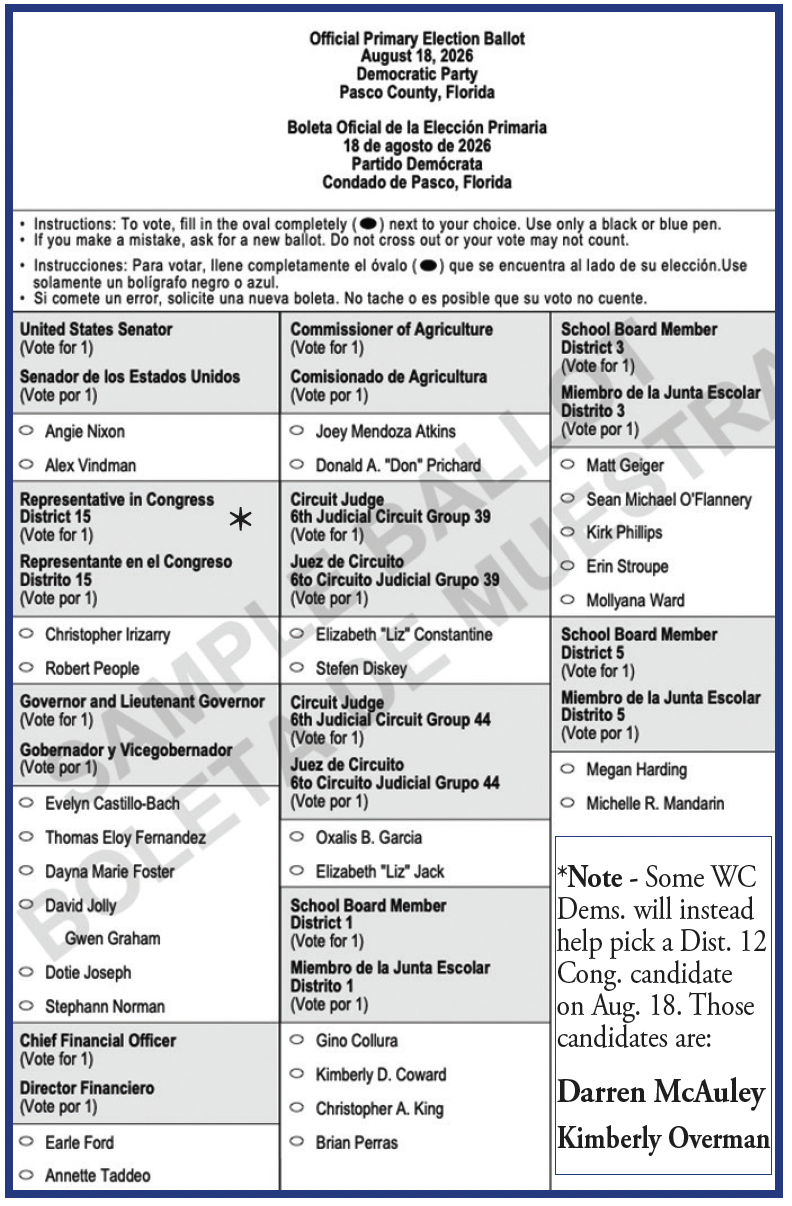
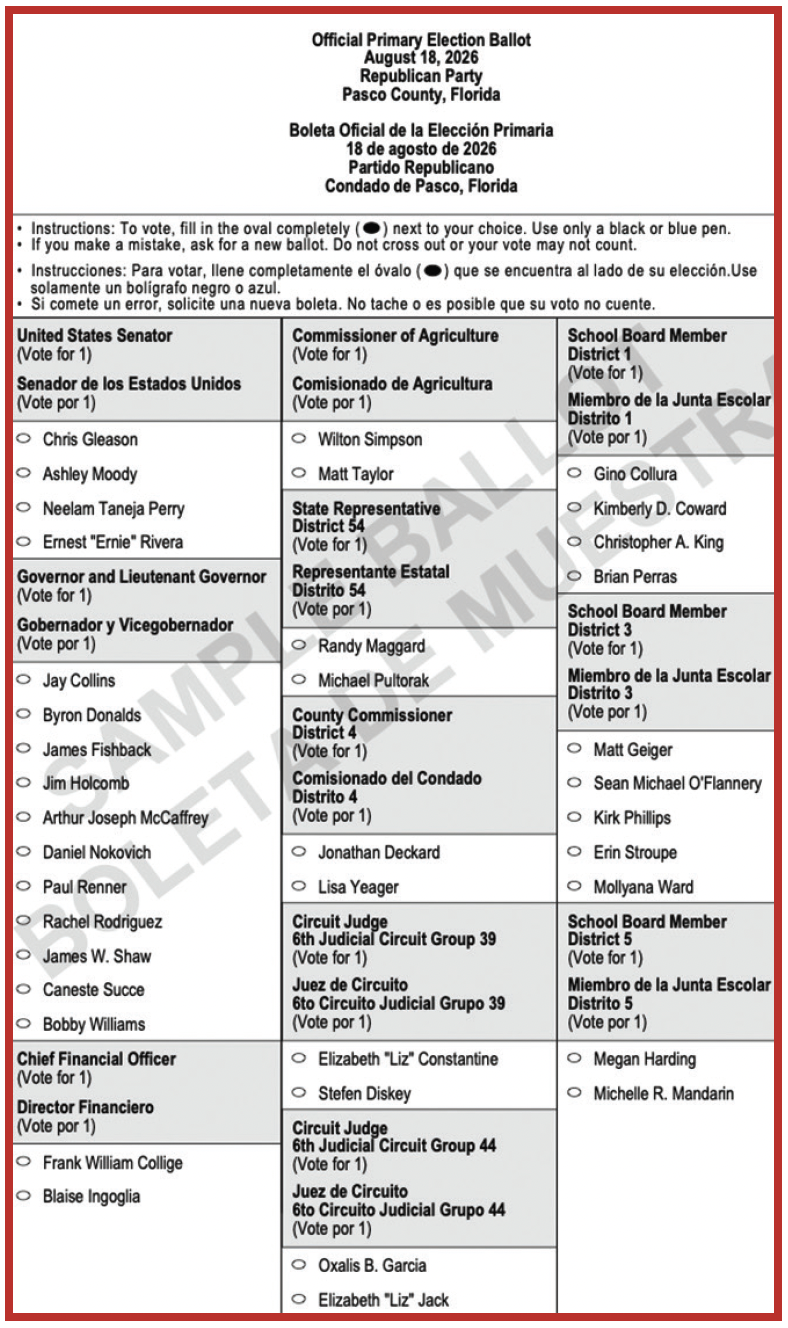
There are actually three seats on the Pasco County School Board that will either be filled (or at least narrowed down to two candidates) at the Primary Election on Tuesday, August 18.
The District 1 race, which has four candidates — none of whom has served on the School Board before (incumbent Al Hernandez is not seeking reelection) — is the only one that includes Wesley Chapel residents. Dist. 2, which isn’t being contested this year, is Wesley Chapel’s other district, but like all County Commission races (see page 4), all School Board members are elected countywide and the races are all Nonpartisan, which means that if you are registered to vote and live anywhere in Pasco County, you are eligible to cast a ballot to help fill all three of these seats on Aug. 18.
Unfortunately, we didn’t have enough time, manpower, nor even the space in this issue to interview all eleven candidates for the three available seats on the Board for this issue.
We hope to be able to preview the Dist. 3 and Dist. 5 races in our August 4 issue.
Dist. 1 Candidates (in alphabetical order)
Dr. Gino Collura
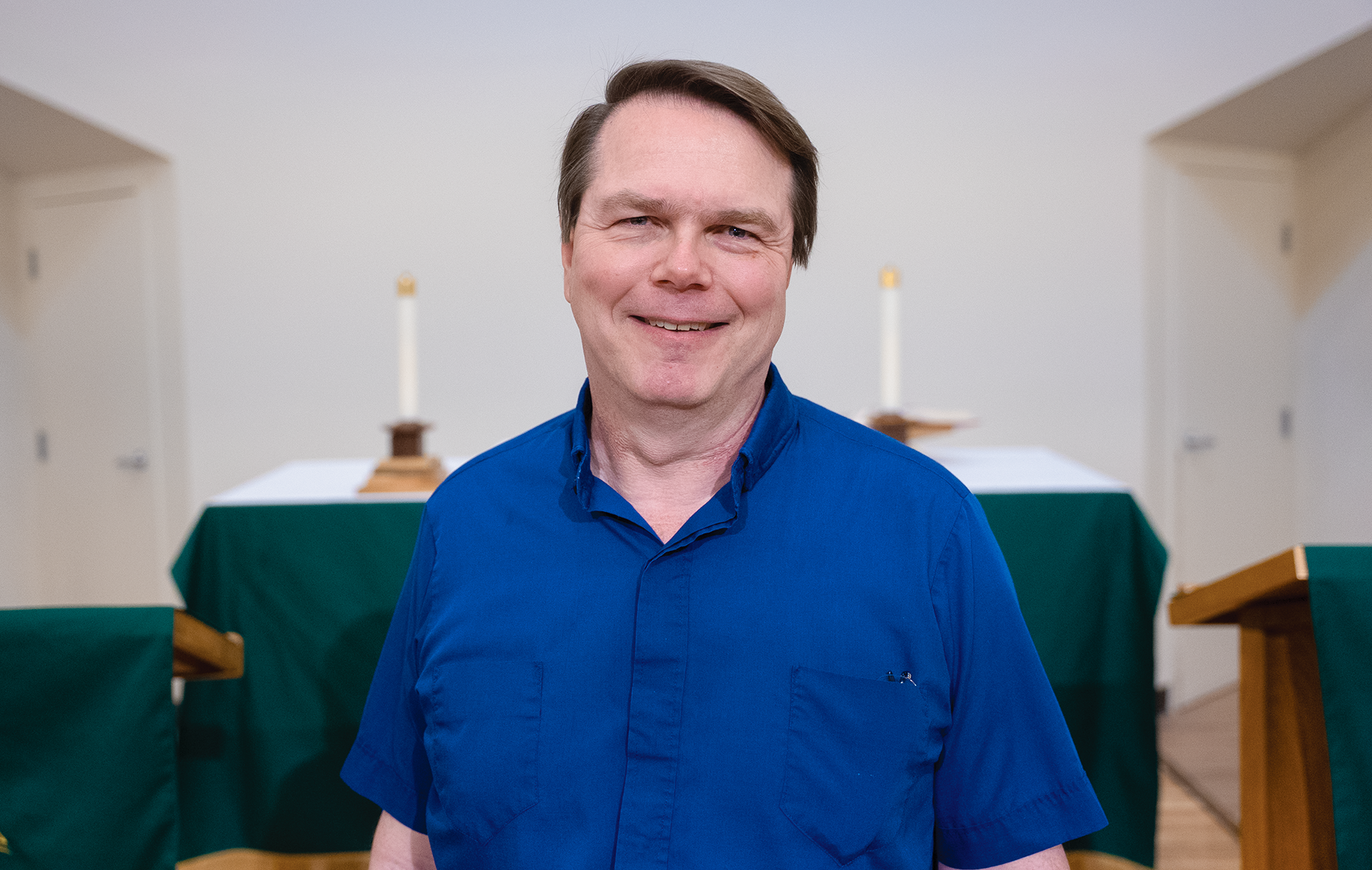
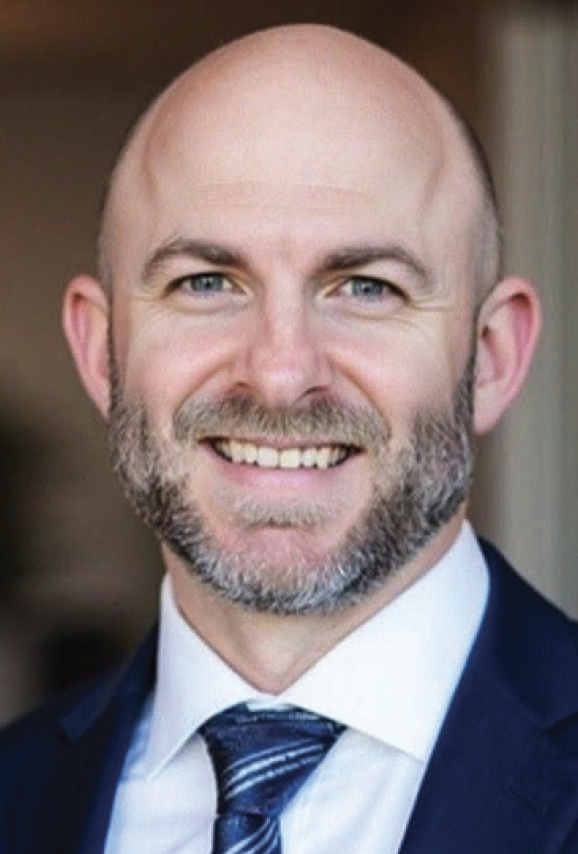
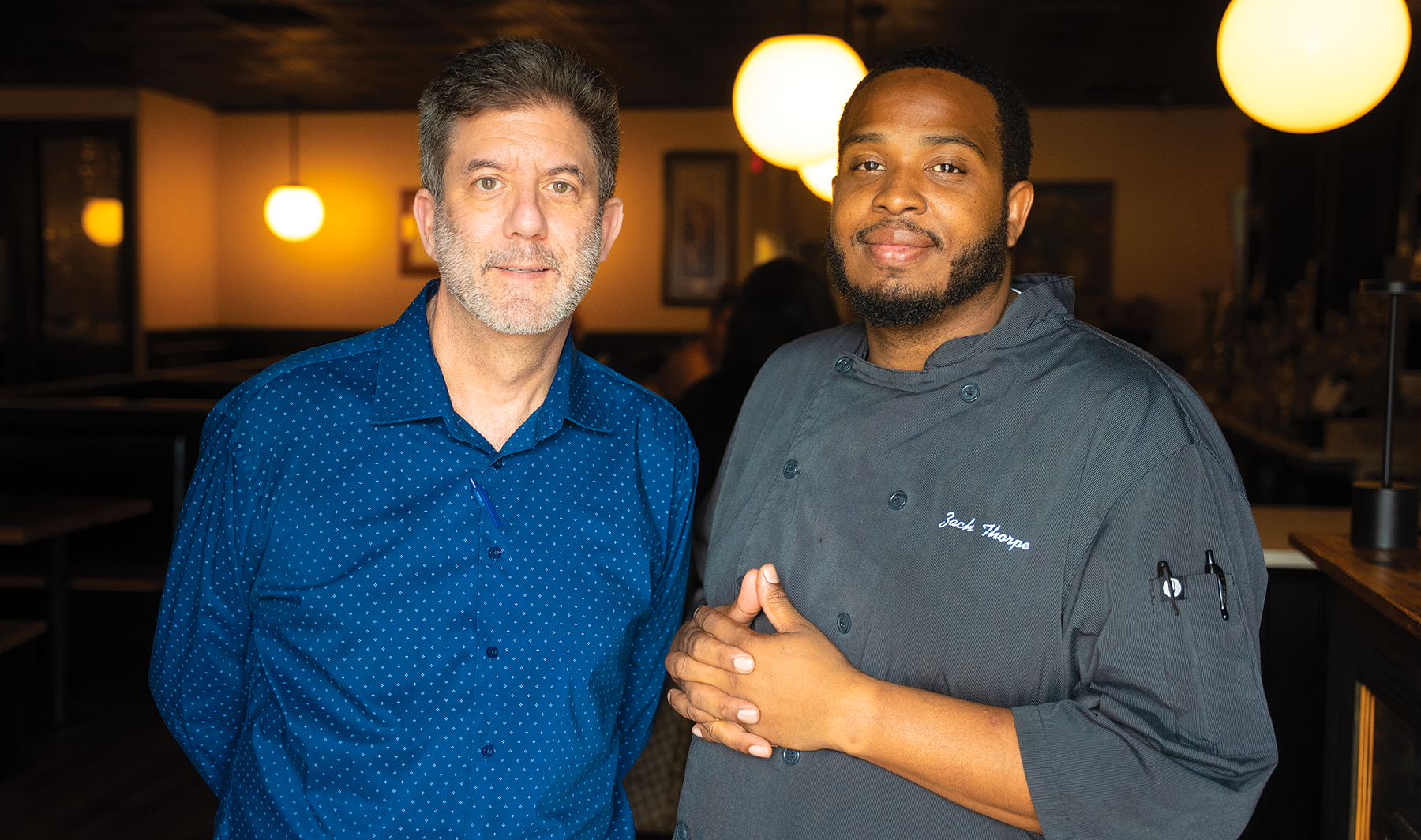
Local businessman and former teacher Dr. Gino Collura, 40 (left), lives in San Antonio. This will be his first time running for public office, but he has a long history in Pasco and deep ties across the state. Dr. Collura’s campaign has managed to garner some high-profile endorsements, including outgoing Pasco County Sheriff Chris Nocco, Florida’s Commissioner of Agriculture Wilton Simpson and, perhaps most notably, Superintendent of Schools Dr. John Legg — who has, somewhat surprisingly, made endorsements in all three of these School Board races. Collura’s campaign also had raised $20,750 at our press time, the most of the four Dist. 1 candidates.
Collura earned his Bachelor’s, Master’s and Ph. D. degrees from the University of South Florida in Tampa. He specialized in a subfield of Applied Anthropology called Neuroanthropology, which is a fusion of psychology and cultural anthropology. Collura taught 7th and 8th grade reading and social studies at Pasco Middle School in Dade City in 2008 and then taught 10th and 11th grade English and reading at Sunlake High in Land O’Lakes in 2009. He currently sits on the Pasco-Hernando State College District Board of Trustees, a position he was appointed to by Governor Ron DeSantis. He also sits on several advisory and community boards, including at both Saint Leo University and USF.
Collura says, “Pasco County has appointed me so many opportunities, my experiences have helped me understand the difference between school administrations and parents. I’ve been exposed to how things work in Tallahassee, at the state level. Having a doctoral degree, I know what it takes to achieve excellence. There are so many changes happening, I want to help the county grow with those changes, in a safe environment, and nurture parents and educators.”
On the topic of school safety, Collura says he spent some time working in Latin America in high-stakes security, specializing in threat assessment. “I want to focus on proactive security measures, not reactive — like conducting behavioral threat assessments and open-source intelligence gathering. I want to find out how dialed-in we are on things being posted in public internet spaces. I want to find more ways to paint a full picture of what’s happening at home and take more preventive measures for school safety.”
Collura admits he hadn’t heard that there is a medical magnet school coming soon to Wesley Chapel, but says, “We need to do anything and everything we can to give students options to learn before they start paying tuition in college. You have to go and try things, you have to make sure it’s speaking to you.” Considering the upcoming medical magnet school is also expected to help alleviate some overcrowding in Wesley Chapel, Collura mentioned he is a supporter of school choice, and touched on enrollment issues.
“Home schooling and charter schools have boomed; parents reserve the right to choose,” he says. “We have to think smart and strategic to maximize the resources we have. We may have to shut some schools down because of changes happening in the area. I’m wide-open to possibilities, as long as all students are getting the same opportunities,.”
Although he didn’t specifically mention Dr. Legg’s endorsement, he did generally address the high-profile endorsements he has received. Collura says, “It’s a compliment and says a lot about trust. They know I honor my commitments, and endorsements create that additional line of trust. At the end of the day, it’s about the work, you put yourself out there, and it’s a sacrifice of time. Look, you don’t run for School Board because you want to advance your career, it’s because you want to serve. And, if it’s your true calling, you’ll show-up and be honored to serve. It’s the people’s voice that matters, the will of the people. I respect it 100%.” — SG
Dr. Kimberly Coward
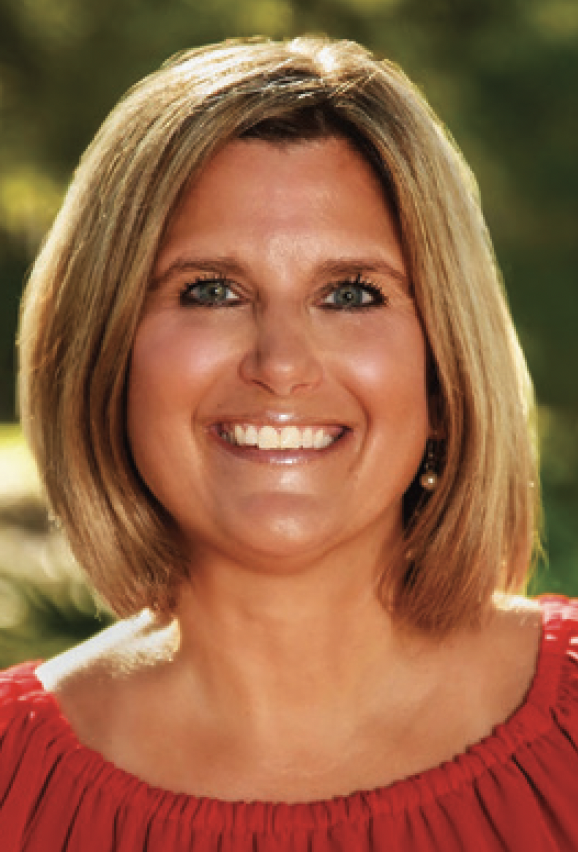
Dr. Kimberly D. Coward, 47 (left), lives and was born and raised in Dade City, where she attended Pasco High, back when it was called Pasco Comprehensive High. She received her Bachelor’s in Psychology, and Master’s in Education degrees from the University of Florida in Gainesville. Her campaign has thus far raised $16,510, second among the four Dist. 1 candidates.
Dr. Coward served in the U.S. Air Force for more than a decade, including 9-1/2 years as a JAG (Judge Advocate General) at Tampa’s MacDill Air Force Base, which she calls “One of the most influential times in my life. [Being] a JAG Officer in the Air Force gave me the opportunity to learn leadership and discipline. It was a unique opportunity that consisted of hands-on work, running the legal office at my base. It really stepped-up my leadership skills a notch.”
Dr. Coward recently completed her Ph.D. degree in Education Management at Hampton University, in Virginia, after which she worked as a Guidance Counselor at Land O’ Lakes High for one semester, and at Wesley Chapel High for a year.
She says she has always wanted to help make changes in the lives of children, but she realized that she could better serve them by impacting policy. “When I decided I wanted to serve on a School Board, I wanted to go back home to Pasco County to do that. I have been preparing myself for this run. I believe in student success and student achievement. Pasco County is not just where I’m from, it’s where I’m called to serve.”
On the subject of Wesley Chapel schools, Coward says, “I can see why they are attractive for people. They are diverse across the spectrum, politically and socio-economically. That culture will continue to evolve. People are moving to Wesley Chapel from all over the place.”
She also admits to not knowing too much about the medical magnet school coming to Wesley Chapel, but says,“I am curious. I think it will be beneficial to growth, and provide access and opportunity. It could also help with overcrowding.”
Coward is a supporter of school choice, but is concerned about enrollment at lower performing schools. “I want to identify issues about declining enrollment and school closures, and mergers. I want families to have more access and opportunity. I want to see what the budget looks like and be a good steward of the finances. If it helps students to do well, I support school choice, I support parent choice. If there is a ‘D’ school and an ‘A’ school, can I really be upset at a parent for choosing the ‘A’ school? We need to provide high-quality education, so parents don’t have to make those tough choices. All of the schools, including in Wesley Chapel, should be at a level where students are receiving a high-level education. We have to make sure our teachers are paid better, [so] maybe choice wouldn’t be such a hot topic.”
On the issue of political endorsements in a school board race, Coward says, “It’s nothing new; honestly, they are becoming more common. Although this is a nonpartisan race, political endorsements become the ‘tell.’ It concerns me. When I think of why I’m in this race, I think of what fault people would have with my views. Teachers, families, vulnerable populations, but we can all agree on protecting our children. The politicization of that threatens the goal and the purpose. It threatens the nonpartisan nature of the position. That nonpartisan nature is supposed to maintain a student focus.
“I don’t think those political endorsements will affect me at all, if I’m elected. I learned in my dissertation research that trust is the most influential. It is important to work on those relationships, but I’m here for the children. You can trust that I will always make the best decision for the students.” — SG
Christopher King
Christopher King, 44, also is a candidate for the District 1 seat.
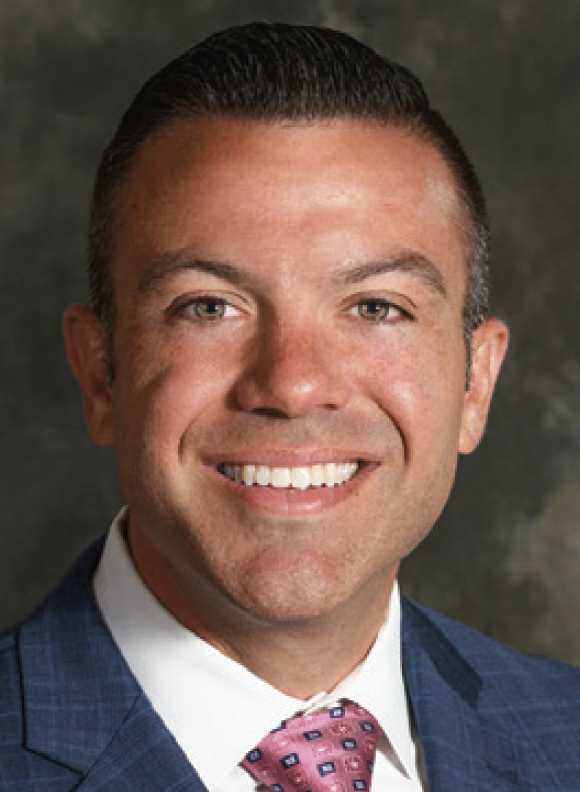
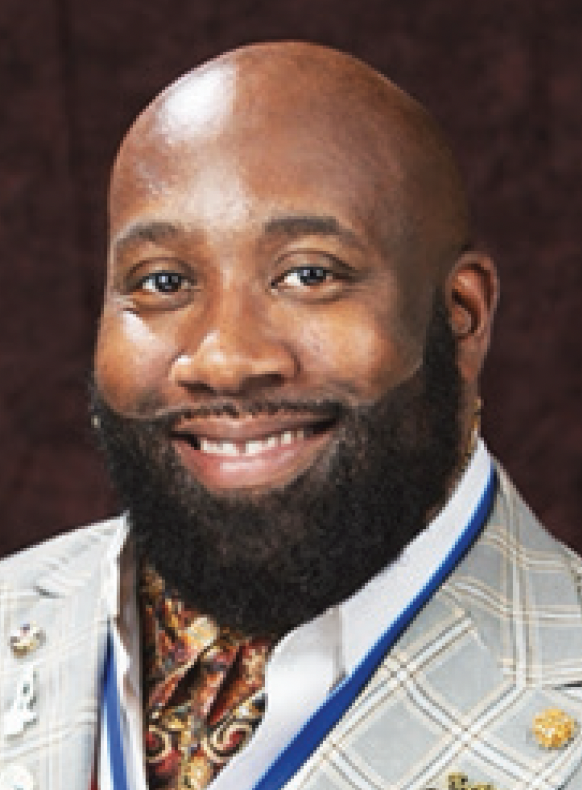
King (left) served 10 years in the U.S. Marine Corps, including four combat deployments. He is the founder and CEO of The Gentlemen’s Course — an organization that has taken him inside schools, working directly with students. The Gentlemen’s Course serves 1,700 students across five Florida counties. The students learn about leadership development, workforce readiness, etiquette, human rights education and human trafficking prevention. He has been running The Gentlemen’s Course for the last 11 years.
King also sits on several boards and committees, including GTE Financial, the Wesley Chapel Black Chamber of Commerce, and he is Vice President of the Pasco County NAACP. King also serves as the State President at United for Human Rights Florida. He has also received awards for his service, including the President’s Volunteer Service Gold Medal for four consecutive years, and the Presidential Volunteer Lifetime Achievement Award, in 2001.
King, whose campaign has so far raised $3,870 (or about $300 more than fellow candidate Brian Perras), explains how his history of service ties into his ambition to run for the Pasco County School Board.
“For me, this isn’t a career move, it’s a continuation of the work I’m already doing,” King says. “For more than a decade, I’ve been walking the halls of schools, speaking to students, partnering with principals, supporting teachers, and working alongside families. I’ve seen firsthand what’s working, and I’ve also seen where we can do better. I’m not running because I suddenly became interested in education. I’m running because education has already been my life’s work. I believe every student deserves to graduate with more than a diploma. They should graduate with confidence, character, leadership skills, career opportunities and hope for their future. As a School Board member, I want to strengthen academics, support our teachers, improve communication with families, expand career pathways and make sure our schools continue preparing students for the real world.”
King also shared his thoughts about Wesley Chapel’s schools, saying that many of the students he has been working with through The Gentlemen’s Course were from Wesley Chapel.
“One thing I’ve learned is that Wesley Chapel families are deeply invested in their schools,” he says. “Parents expect excellence, and our educators work incredibly hard to provide it. At the same time, the community continues to grow at an incredible pace. That growth creates challenges with enrollment, transportation, staffing and classroom capacity. I don’t view those as problems, I view them as opportunities to plan better. The decisions we make today will shape what education looks like 10 years from now.”
King says he is aware of the medical magnet school coming to Wesley Chapel. “I think it’s the kind of forward-thinking investment we need,” he says. “Healthcare is one of the fastest-growing industries in our region. Giving students the opportunity to begin preparing for medical careers while they’re still in high school creates tremendous opportunities. What excites me most isn’t just the building; it’s the partnerships. I want to see our schools working alongside hospitals, healthcare providers, colleges, universities and local businesses so students graduate with certifications, internships, college credit and real career opportunities. Education should connect directly to opportunity.”
King also talks about overcrowding in Dist. 1, saying that it can’t be solved after it’s already happened. “You solve it through planning,” he says. “As someone who spends time inside schools, I’ve seen how growth affects classrooms, teachers, transportation and students. I support using growth projections to stay ahead of development, building schools before capacity becomes a crisis, reviewing attendance boundaries transparently, expanding specialty programs and continuing to recruit and retain outstanding teachers. Most importantly, parents deserve a seat at the table before decisions are made, not after.”
As for Superintendent Legg’s endorsement of Dr. Gino Collura for Dist. 1. King says, “I respect anyone’s right to endorse the candidate they believe in. School Board elections are different. This race isn’t about political parties. It’s about children. I hope voters spend less time looking at who endorses us and more time looking at what we’ve actually done. I have spent the last eleven years serving students inside schools, not during campaign season, but year after year. I believe that record speaks louder than any endorsement ever could. If I win, I don’t think I will be impacted by those endorsements. I’ll work with anyone who wants what’s best for the children, regardless of who they supported during the campaign. Leadership requires listening, building relationships, and bringing people together. That’s exactly how I’ve led throughout my career, and that’s how I’ll serve on the School Board.” — SG
Brian Perras
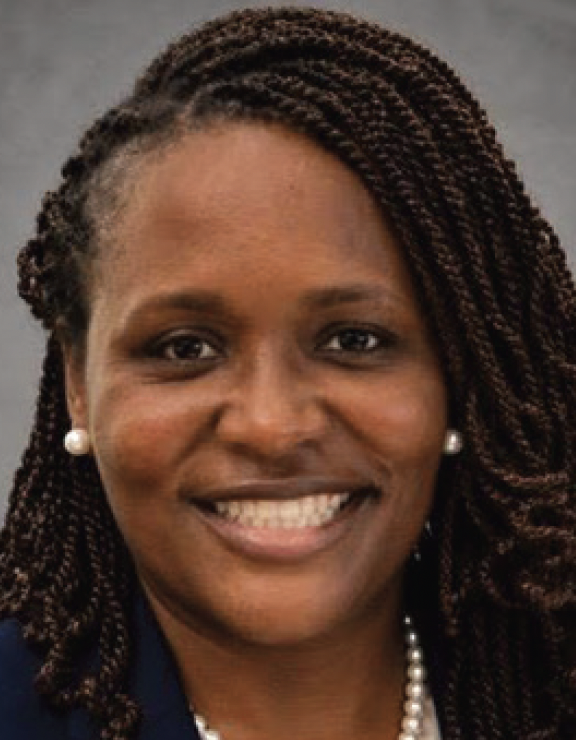
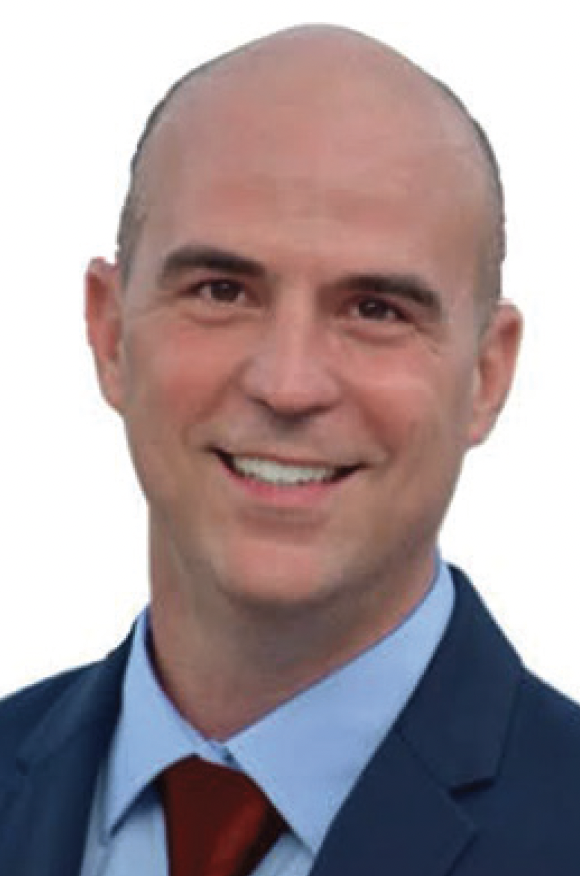
Brian Perras, 48, is no stranger to the political scene. His first attempt at winning an election was in 2004, when he ran unsuccessfully for a seat on Pasco’s Mosquito Control Board. He moved to California, where he worked as a model and actor, before running for Congress in California’s 29th Congressional Dist. in 2020. After that election, he returned to Pasco County in 2021, where he was born and raised. He ran in 2022 as a Republican candidate against incumbent Gus Bilirakis for the then-Dist. 15 seat, but did not appear on the ballot. He also considered a run for the Superintendent of Schools seat ultimately won by Dr. John Legg in 2024.
Perras served in the U.S. Navy from 1997- 99, but was honorably discharged following an injury suffered on the U.S.S. Enterprise, the world’s first nuclear-powered aircraft carrier.
Although School Board elections are Nonpartisan, Perras is an unapologetic conservative Republican. He served as a substitute teacher in Pasco for several years, but was banned by the District for participating in a protest against having to wear masks on campus during the Covid-19 pandemic in 2021.
“But, what I found when I taught,” he says, “is that many of the students weren’t learning anything of value — no basic life skills, no financial fundamentals, nothing that would help them in the next stage of their lives.”
Perras feels that students in Pasco’s public schools are being “indoctrinated. I just want kids to learn the right way, get back to common sense and critical thinking. School should be about reading, writing, arithmetic and basic life skills.”
He adds, “I also think it would be great for them to learn how to grow their own food. I have local farmers ready to teach these kids how to grow food — plant fruit trees and gardens at all the different schools, so kids and teachers have access to good, healthy food.”
Perras also says that he is very concerned, “about the safety aspect. There are a lot of bullies in our schools, and no real discipline. I think we need to implement a system where kids are told that they either straighten up or ship out. If it were up to me, they wouldn’t be bullying or causing violence against students or teachers, or cursing them out and being disrespectful. You want to do that, you can’t be part of the school system. You’re going to have to learn from home.”
On the subject of Superintendent Dr. John Legg’s endorsement of candidates in all three School Board races, Perras says, “I honestly wasn’t surprised about it. It seems that all of the [political] establishment in Pasco is trying to get behind certain candidates in all of these races, for whatever reasons. Lobbyists are funding them and I believe it’s because they want to be able to control the School Board and dictate and tell them what to do. But, you can’t control certain people.”
He adds, “I actually think it might hurt the people who are endorsed, who wanted that endorsement. I just don’t think other politicians should be jumping into everybody else’s races. They should ‘stay in their own lanes,’ race-wise, focus on what they do. But, I know it’s all a big, ‘good old boy’ system that they want to continue to cycle through. They just select the next person to take over so they can continue that power grab. Grab that money, which is the root of all evil, so they can stay in power.”
Perras says his only endorsement thus far is from “Stand for Health Freedom,” a 501(c)(4) nonprofit health freedom advocacy group, which also endorsed him in his 2022 campaign.
“I haven’t chased any endorsements, though,” he says, “I just want to be endorsed by the people of Pasco County.”
As for what he knows about Wesley Chapel’s schools, Perras said that, “a lot of those schools are overcrowded and the transportation/ bus situation is terrible over there.”
As for the plan to build a medical magnet high school in Wesley Chapel, Perras says, “I’m a big trades guy. I believe we need to implement way more trade schools for sure — teach things like welding, plumbing, electrical work, auto and aircraft repairs and things like that, which can lead to high-paying jobs right out of high school.”
In fact, he adds, “There was an airline repair pilot program at Hudson High. I’d like to bring that back to Zephyrhills, because they have an airport over there.
“So, whatever trade and technical programs schools are up for — whether it’s nursing, medical or whatever — I think we need to focus on that, because not everybody is meant to go to college.
“Instead of a useless piece of paper, you can graduate high school and get a good job or even start your own company. These are the kinds of things that can help preserve our future.”
And finally, Perras says schools should get back to basics, teach “the Constitution and what it means to be an American citizen. This country isn’t perfect, but it’s still the best in the world.”