Fresh Market-Anchored Development Moves Forward At Wiregrass Ranch

One Of The Largest Undeveloped Corners Along S.R. 56 Is Moving Towards Finalizing Its Design 
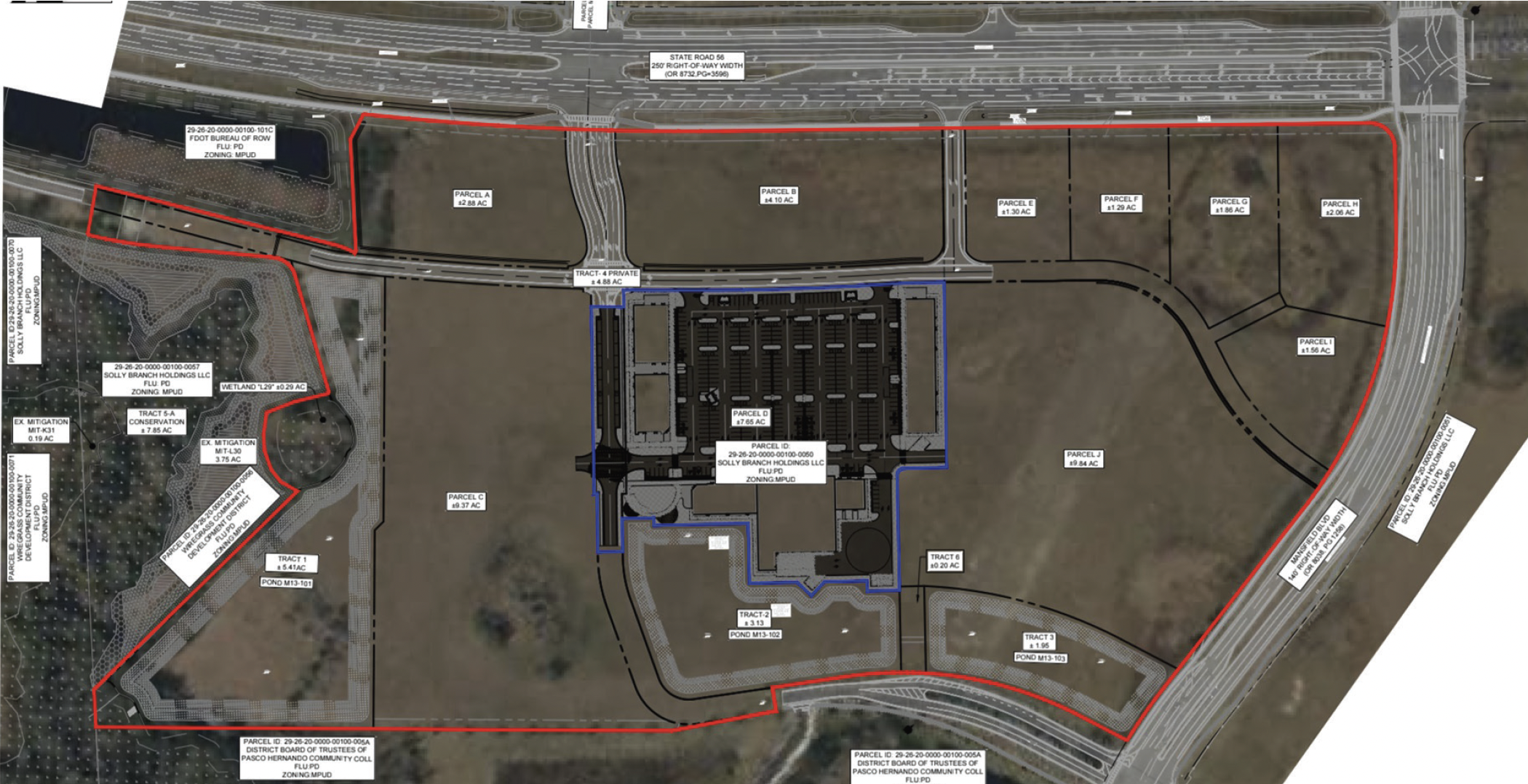
The site map above was submitted to Pasco County for Parcel M13 of the Wiregrass Ranch Master Planned Unit Development. The three parcels with development plans mentioned in this article are Parcel D (with the dark parking area at the center of the map), Parcel A (smaller rectangular lot to the north & west of Parcel D) & Parcel B (to the east of Parcel A). (Map source: Regency Centers of Tampa)Β 

A 59-acre cow-field located between Pasco-Hernando State College and S.R. 56, on the southwest corner of the signal with Mansfield Blvd., is set to become Wiregrass Ranch’s next major commercial development. 

Plans were officially submitted to Pasco County starting on June 19, confirming that development activity is preparing to begin on land that has remained largely untouched for years. 

For many longtime Wesley Chapel residents, the project is hardly a surprise. The property has long been designated for future development within the Wiregrass Ranch Master Planned Unit Development (MPUD). 

Still, there is a sense of nostalgia among some residents, as yet another stretch of open pasture land and cattle fields gradually gives way to additional growth. 

The development was first publicly discussed during a community presentation in April, when longtime Locust Branch, LLC (the development wing of the Wiregrass Ranch MPUD) chief operating officer Scott Sheridan shared several upcoming projects planned throughout Wiregrass Ranch β€” as reported in detail in our Apr. 14 issue. 

While the project was mentioned at that meeting, Sheridan declined to discuss additional details for this article beyond acknowledging that plans had recently been submitted to the county. 

That lack of comment initially raised questions about whether the project had changed at all since the April presentation. County permits do not specifically identify The Fresh Market by name, and the grocery chain has not yet made any public announcement regarding a Wesley Chapel location. 

However, several pieces of evidence strongly suggest that The Fresh Market remains the new development’s planned anchor tenant: 

The applicant and developer listed on the permit documents is Seth Lane, VP of Regency Centers, a Tampa company that has extensive experience developing shopping centers anchored by The Fresh Market. Additionally, the proposed grocery space β€” Parcel D in the center of the site map above β€” shown on the site plans measures 26,187 square feet, which is almost exactly the size of a typical Fresh Market store. 

Combined with the company’s recent expansion efforts across Florida, there is strong reason to believe that The Fresh Market is still moving forward as the centerpiece of the project. 

For residents unfamiliar with the brand, The Fresh Market is an upscale, European-style β€œgreen” grocery chain known for its boutique shopping experience, premium meats, high-quality prepared foods, fresh produce (much of it organic), wine selections and specialty grocery items. 

Unlike traditional supermarkets, The Fresh Market operates smaller-format stores designed to create an old-world market atmosphere. Stores typically average around 25,000 square feetβ€” roughly half the size of a standard Publix. 

Online reviewers frequently praise the chain’s USDA Prime steaks, seafood selection, freshly prepared hot foods and salads and made-daily sushi offerings. Many customers also use the store as an alternative to cooking at home, thanks to its extensive selection of ready-to-heat meals. 

The chain is already established in the Tampa Bay region with four stores β€” with the closest existing location to New Tampa or Wesley Chapel situated near the intersection of N. Dale Mabry Hwy. and W. Fletcher Ave. in the Carrollwood area. 

The Fresh Market: 26,187 sq. ft. (Boutique/Small-Box Grocery) 

Under-Construction Wesley Chapel Whole Foods (Aronwood Blvd. at Bruce B. Downs Blvd. in Meadow Pointe): 35,518 sq. ft. (Mid-Sized Organic Grocery) 

Typical Publix: Approximately 50,000 sq. ft. (Traditional Full-Service Grocery) 

The total scale of this development may surprise some residents. 

The overall property is roughly comparable in size to The Shops at Wiregrass and will ultimately be divided into 10 separate parcels and outparcels. So far, plans have only been submitted for three of those parcels (see map above for reference), meaning much of the project’s future remains unknown. 

Parcel D – 7.65 Acres: 

This will serve as the development’s primary retail center and is planned to include: 

β€’ The Fresh Market grocery store (proposed as the parcel’s anchor tenant β€” 26,187 sq. ft.) 

β€’ 28 separate retail & restaurant plaza suites 

β€’ Spaces ranging from 1,220-4,230 sq. ft. 

β€’ The plans for Parcel D currently show 54,985 total sq. ft. of retail space & 17,390 sq. ft. of restaurant space

Parcel B – 4.10 Acres 

The plans for this outparcel include: 

β€’ One 5,750-sq. ft. sit-down restaurant 

β€’ One 8,000-sq. ft. sit-down restaurant 

β€’ One 3,075-sq. ft. fast-food restaurant with drive-through 

Parcel A – 2.88 Acres 

The plans for this outparcel include: 

β€’ One 3,000-sq.-ft. restaurant or 

office building 

β€’ One 8,000-sq.-ft. sit-down restaurant 

At this stage, no additional tenants have been publicly identified for any of these parcels. 

While the currently submitted plans are significant, they represent only a fraction of this overall project. 

Site plans indicate that seven additional outparcels remain undeveloped, representing approximately 27.28 additional buildable acres. As those parcels move through the approval process in the coming years, residents can expect additional retail, restaurant, office, commercial, and residential uses to be announced. 

In other words, what has been submitted so far is likely only the first phase of what could become one of Wesley Chapel’s largest upcoming commercial β€” and restaurant β€” destinations. 

As with nearly every major project along the S.R. 56 corridor, the traffic implications of this new project already represent the biggest concern being discussed by local residents. 

Current transportation standards limit where median openings can be located along S.R. 56. Under existing conditions, a full median opening is shown at Yaupon Lane, while a future full-access signalized intersection is anticipated at Lajuana Blvd. β€” the same median opening currently serving Cooper’s Hawk Winery & Restaurant and Audi Wesley Chapel across S.R. 56. 

Plans also call for a future reverse-frontage road that would connect this development to that signalized intersection. 

One question that remains unanswered is whether transportation officials will eventually require modifications to Wiregrass Ranch’s existing full median opening configuration. 

If changes are required, some drivers traveling eastbound could find themselves needing to make U-turns at the existing signalized intersection until that reverse frontage road is extended west to the future signal (which is expected to be added to that Lajuana Blvd. intersection soon) in front of Cooper’s Hawk. 

Those details will likely become clearer as the project moves through the county and state review process. 

For years, residents driving along S.R. 56 have looked across open fields and wondered what would eventually be built there. Now, many of those answers are emerging. 

While some will miss the remaining cattle pastures that once defined Wesley Chapel’s landscape, others will welcome the additional dining, shopping and grocery options in one of the community’s fastest-growing corridors. 

Either way, the latest plans confirm that another major chapter in the ongoing development of Wiregrass Ranch is officially under way.

1916 Irish Pub Opens In Former Beef O’Brady’s Location On WC Blvd.

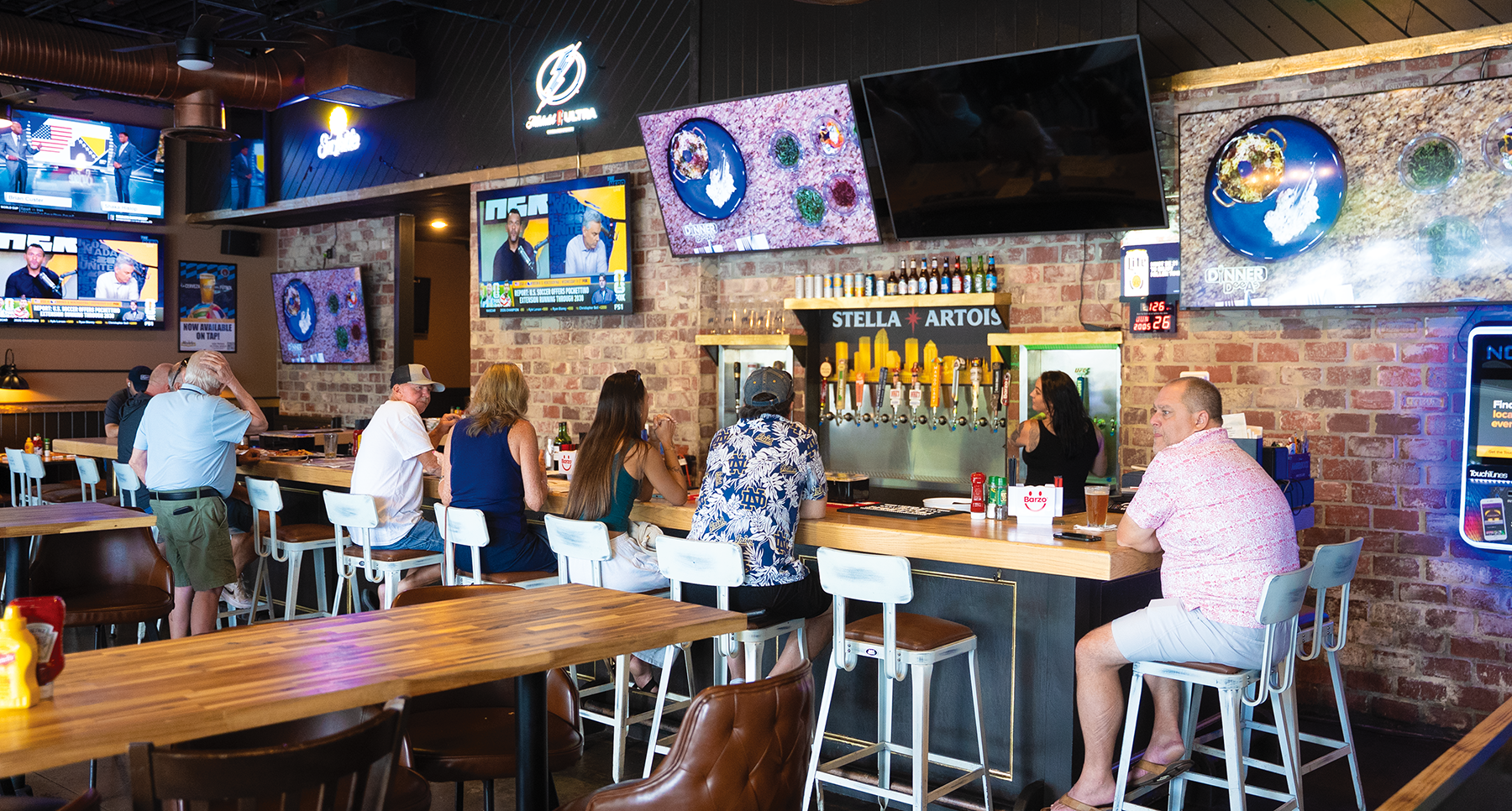
Although it doesn’t look that different inside (above photo) from the Beef O’Brady’s that it has now replaced, the new 1916 Irish Pub we first told you about last issue is now open at 27315 Wesley Chapel Blvd. (at Old Pasco Rd.), in the Towne Centre at Wesley Chapel plaza that had long been home to Winn-Dixie.Β 

And yes, 1916 is an upgrade over Beef’s menu-wise, at least in one editor’s opinion. 

Owner Chuck Jamieson, who also owns 1916 Irish Pub locations in Brandon, Plant City and Lakeland, says that his goal was always to create an Irish pub with an upgraded menu β€” he also owns Second Plate Catering β€” and Jannah, photographer Charmaine George and I agree that he is already achieving that goal. 

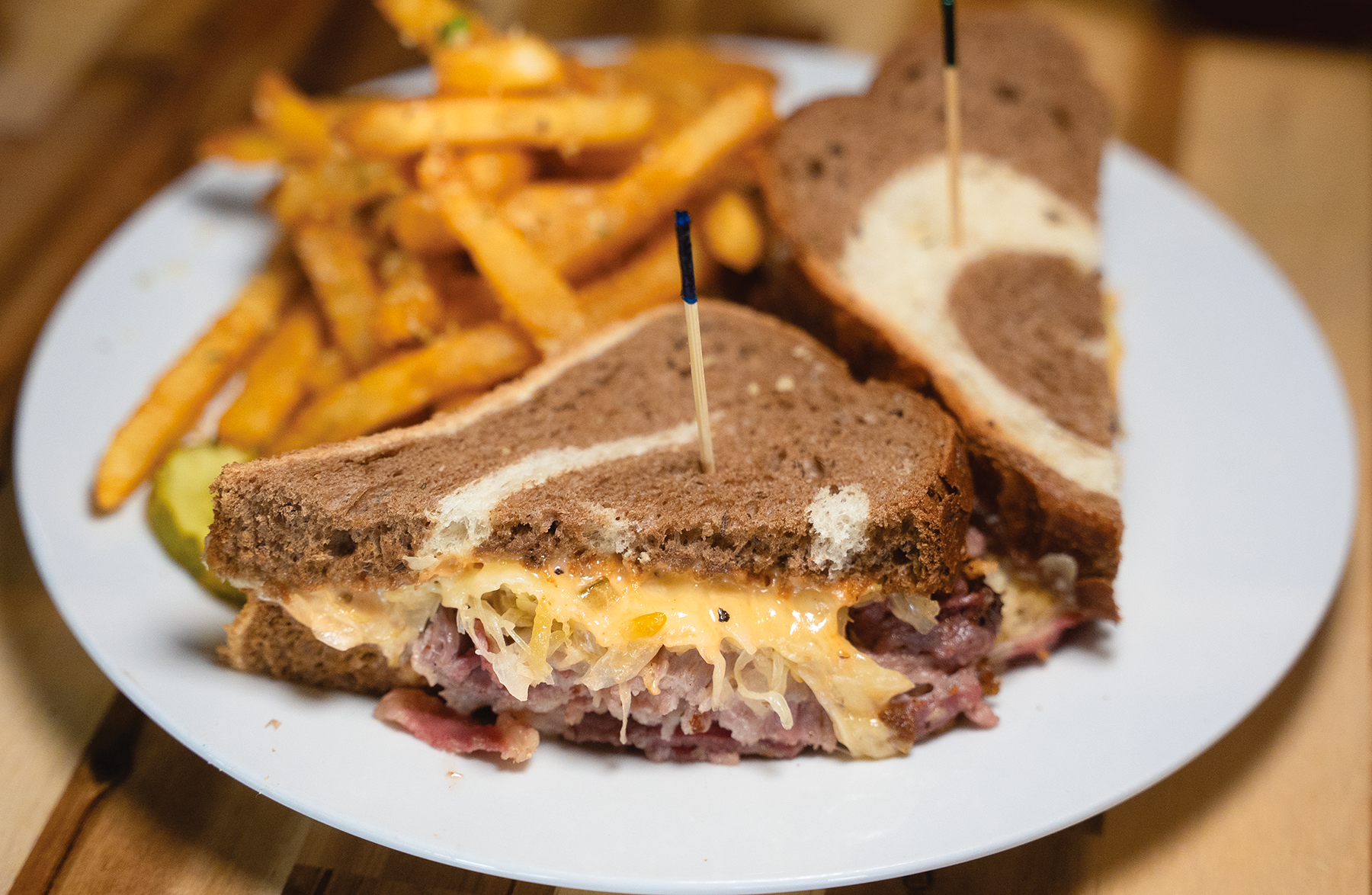
To date, we’ve sampled three of 1916’s Irish favorites and we all gave them thumbs-up β€” the haddock fish & chips (right), the Rebel’s Reuben (tasty corned beef, sauerkraut, melted Swiss cheese and house-made Thousand Island dressing; below left) and my favorite of the three, the Irish stew in a garlicky sourdough bread bowl (bottom right). The stew has marinated braised beef, slow-cooked in red wine, Guinness and house brand demi-glace, with celery, carrots and onions and topped with creamy mashed potatoes. And, the regular and parmesan fries and tater tots were all extra-crispy and were definitely addictive.Β 

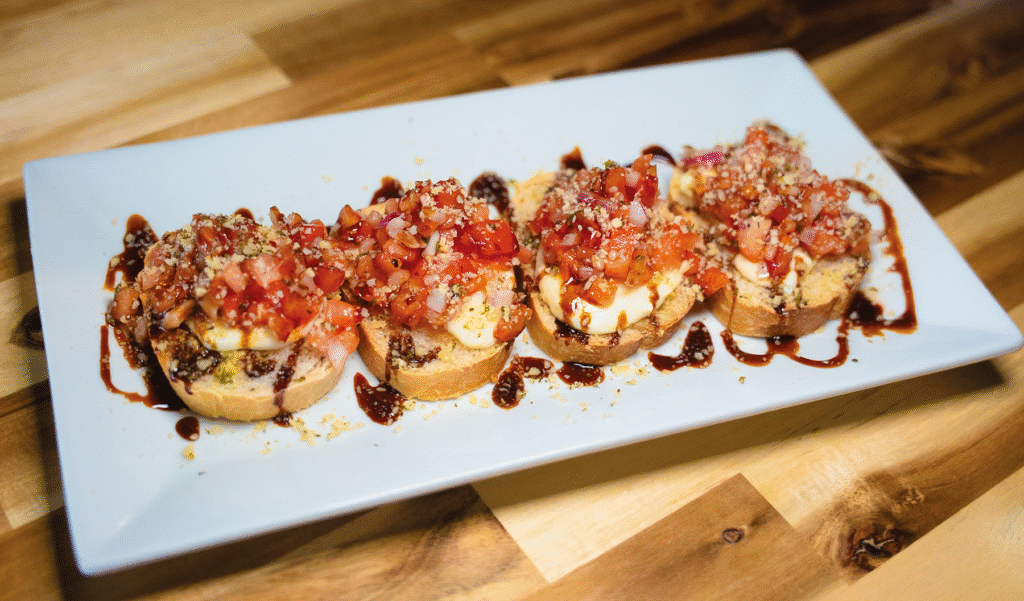
But, perhaps our favorite dishes so far have been the bruschetta appetizer (below left, the melted mozzarella was a unique touch), the Irish Lamb Jam (a tasty take on a traditional gyro sandwich, bottom left) and the crisp-crusted meat lover’s flatbread (below right).Β 

1916 has a full-liquor bar and lots of beers on tap, plus different specials every day β€” from $6.99 burgers on Monday to Trivia and $6.99 wings on Wed. and $3 mimosas for Sat. & Sun. brunch β€” and Chuck says that, in addition to a Grand Opening celebration on Friday, June 24, 6 p.m., there will soon be live music and more. β€œWe want to be your neighborhood hangout,” he says. β€œCome give us a try!” 

For more information, call (813) 991- 4747 or visit 1916IrishPub.com. 

Check Out The Wesley Chapel Theater Group’s 2nd Annual β€˜One-Act Festival!’

Submitted to the Neighborhood NewsΒ 

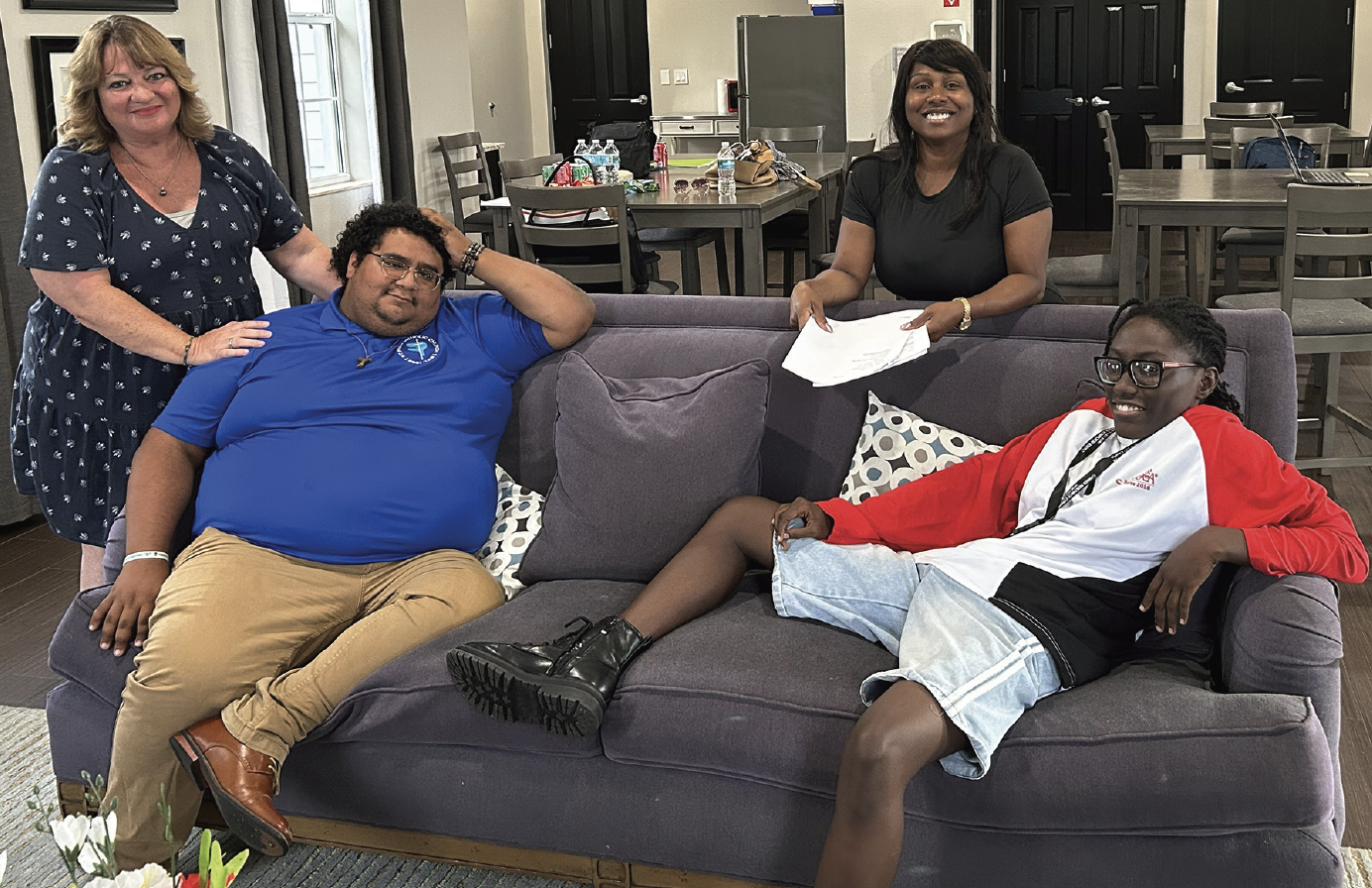
A scene from β€œZoe’s Party” by Lois Findlay. (Photos provided by Wesley Chapel Theater Group)

What do an elephant in a train station, a Beanie Baby, an unexpected visitor, a Florida hurricane and a grown man who believes in Santa Claus all have in common? They’re all integral parts of the Wesley Chapel Theater Group (WCTG)’s second annual One-Act Festival β€” Seven plays. Seven stories. One unforgettable afternoon of theater. 

This year’s One-Act Festival features seven original short plays by talented Florida playwrights. Directed and performed by local artists, this unique collection showcases some of the most creative original storytelling that can be found throughout our state. 

Audiences will enjoy an eclectic mix of both comedy and drama, with each 10-minute play offering a one-of-a-kind story. With everything from laugh-out-loud moments to heartfelt, thought-provoking scenes, this year’s One-Act Festival is sure to have something for everyone. It is a celebration of new works, local voices and the power of live theater to entertain, inspire and connect communities. 

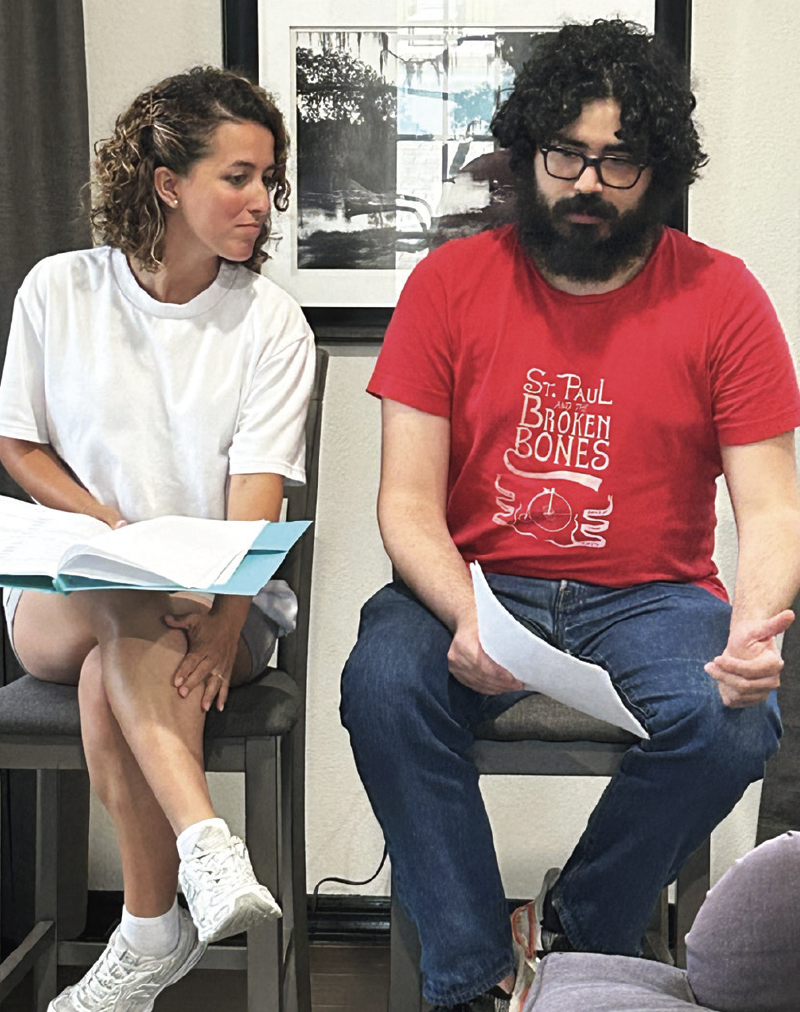
A scene from β€œOn the Likelihood of Elephants” by Brian S. Brijbag, Esq.

This year, WCTG took in more than 50 play submissions. 

β€œNarrowing it down to seven shows was not easy,” says WCTG spokesperson Samantha Grahn. β€œWe feel that we have an exceptional lineup. We are especially excited to welcome back playwrights Jessica Burchfield and Keith Whalen, whose works were featured in last year’s production. This collection of shows explores themes of family, enduring friendship and the moments that remind us not to take ourselves too seriously. It is truly a festival you won’t want to miss!” 

This year’s Featured One-Act Plays include: 

β€’ β€œTwelve Books” by Philip Middleton Williams 

β€’ β€œFinding Help” by Marj O’Neill-Butler 

β€’ β€œZoe’s Party” by Lois Findlay 

β€’ β€œOn the Likelihood of Elephants” by Brian S. Brijbag, Esq. 

β€’ β€œPriceless” by Samara Siskind 

β€’ β€œNon-Weight Bearing” by Jessica Burchfield 

β€’ β€œComing to Town” by Keith Whalen 

Both performances of the 2026 β€œOne Act Festival” will be held at the Starkey Ranch Theatre Library Cultural Center, located at 12118 Lake Blanche Dr., Odessa β€” on Saturday, July 18 & Sunday, July 19, both at 2 p.m. Tickets, which cost $15 for students and seniors and $20 for general admission, may be purchased at WesleyChapelTheaterGroup.org.Β 

For additional information, scan the QR code in the advertisement below or visit WesleyChapelTheaterGroup.org.Β 

Two Years After Milton, Atonement Lutheran Church’s Sanctuary Finally Reopens!

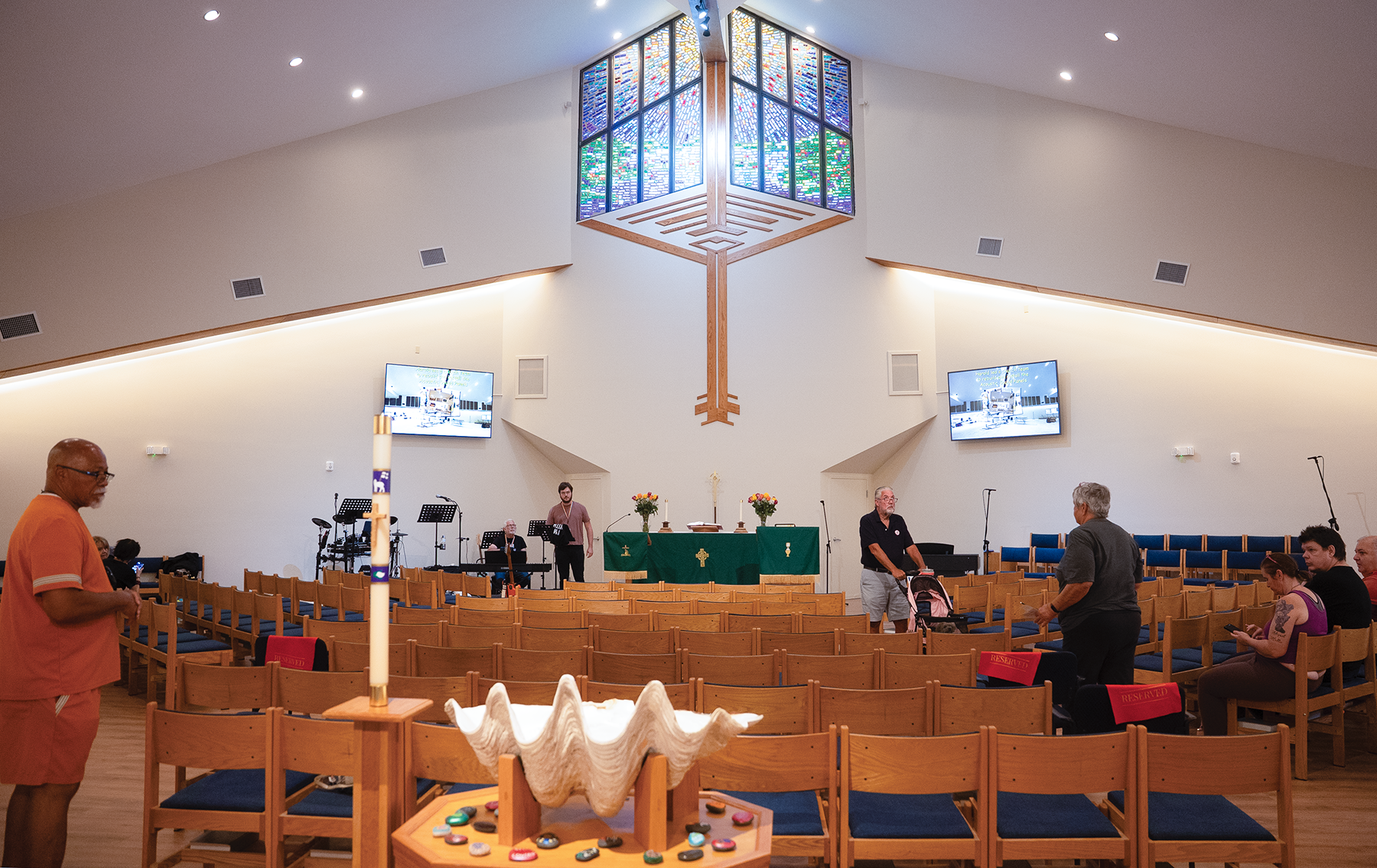
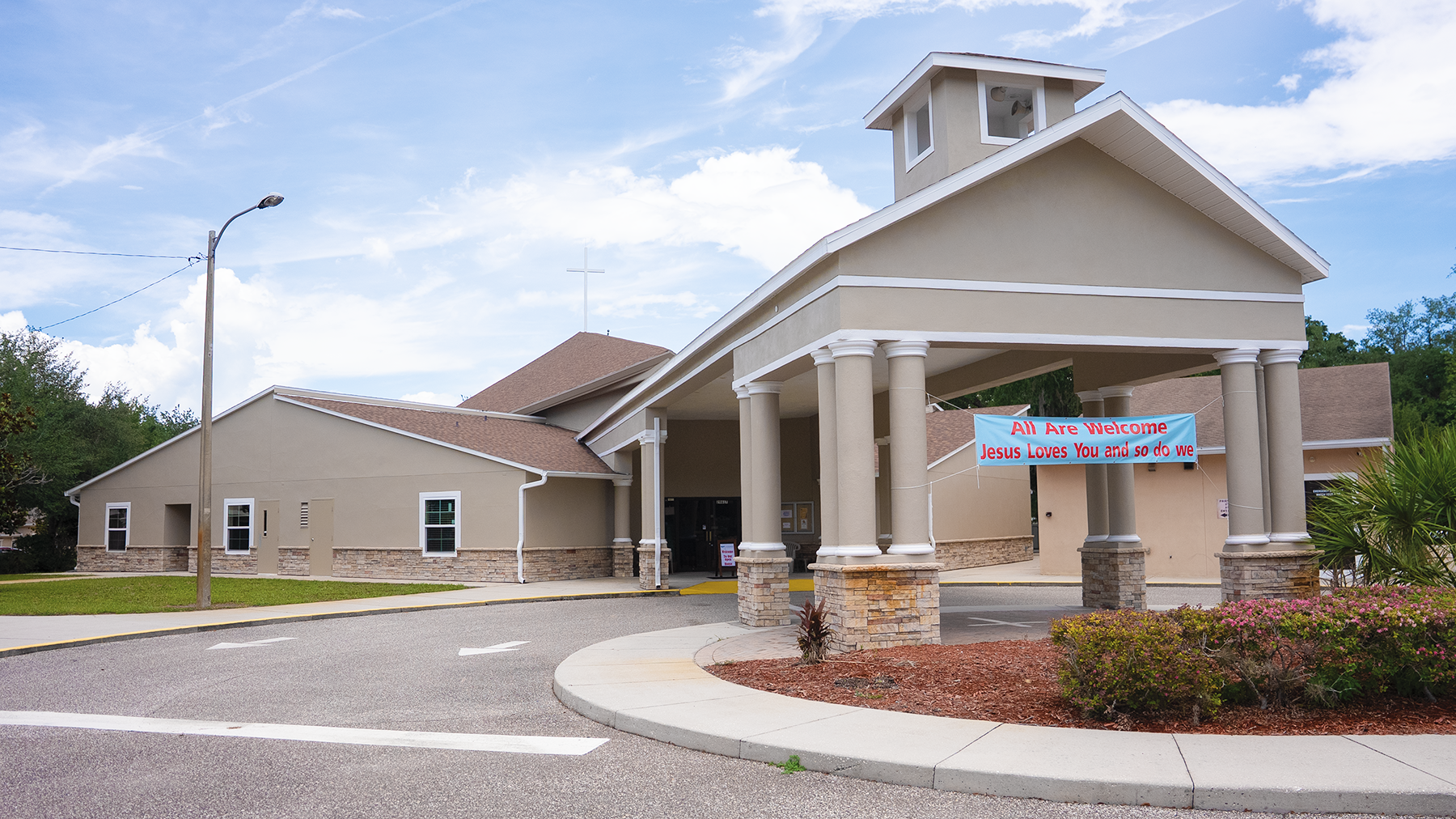
In Oct. 2024, Hurricane Milton tore through Atonement Lutheran Church in Wesley Chapel, ripping away a large section of the roof, and scattering insulation, wood, and nails across the street. Fortunately, the beautiful stained-glass windows above the altar and the cross on the roof of the Church were spared. 

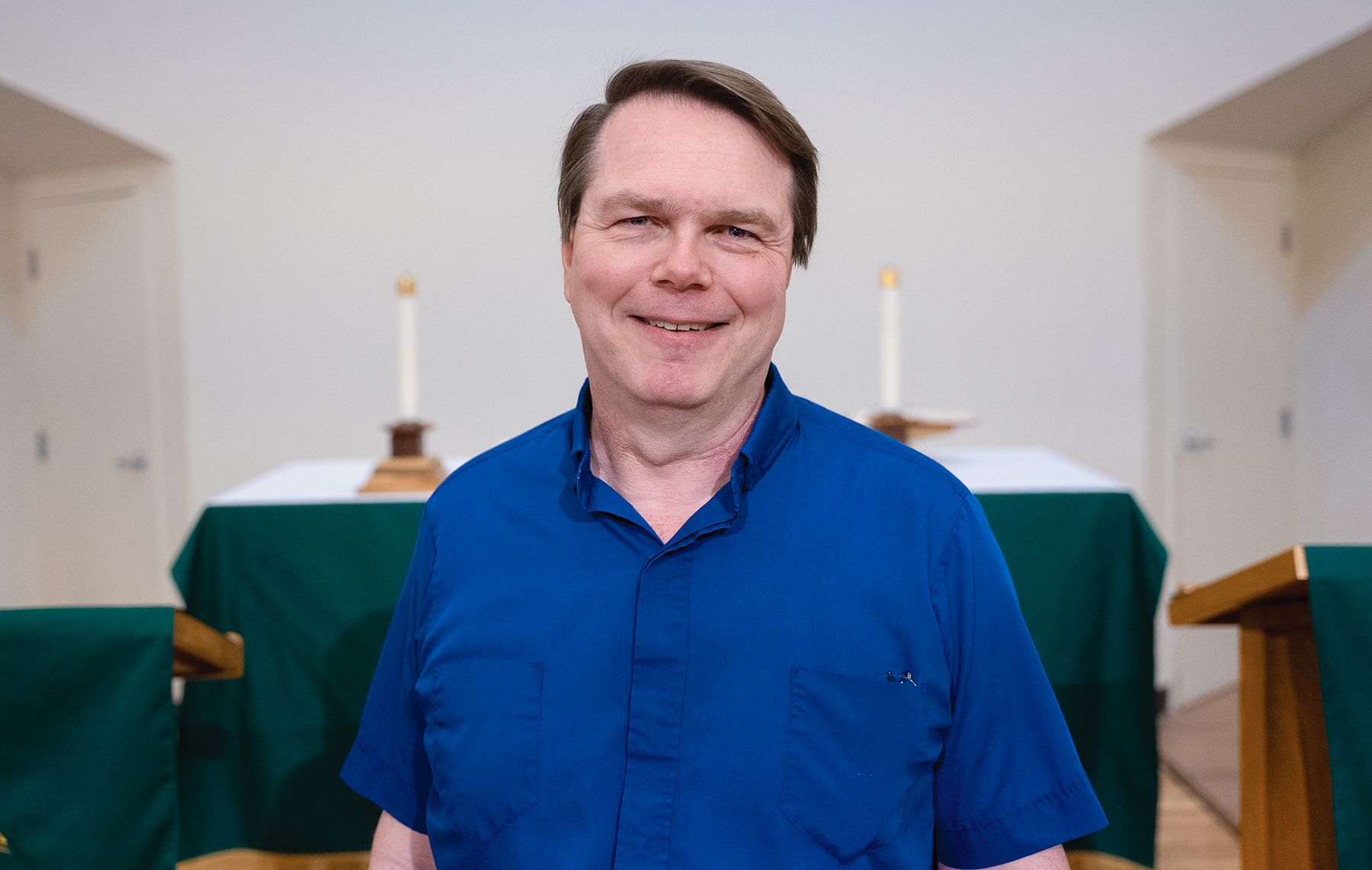
Atonement Lutheran Pastor Scott Lindner (right photo) hoped that the Church would make it through Milton without any damage, as it did with Hurricane Helene, which also hit the Tampa Bay hard area two weeks prior, but it was not to be. Pastor Lindner’s wife Susan says that she and her husband were not initially aware of the damage, explaining that, β€œOne of our members who was driving to work saw the damage. He pulled into the parking lot, took pictures, and then called his wife and told her to let us know.” 

After Milton, it wasn’t possible to hold services in the Church itself. β€œLuckily, we had just finished renovations to the Friendship Hall,” Lindner says, β€œand we were able to use that. However, the first week’s services were actually held outside, due to the fact the power had not yet come back on inside. 

Pastor Lindner says that the community really came together to help the church. 

β€œThe Saturday after Milton hit,” he says, β€œthere was debris everywhere outside. We had a clean-up day. We advertised it on our marquee and we invited other local churches. We had over 100 people participate. We found out that we had friends we didn’t know we had.” 

Looking at the sanctuary now it is hard to believe there had been so much damage. Pastor Lindner says the contractor, β€œDid an amazing job.” Even though Lindner and his congregants had hoped to have everything completed by last Christmas, it wasn’t until June 14 that Atonement Lutheran was finally able to have the first Sunday worship service inside, and the church held an Open House to show off the renovations to the community the day before that first service, which also included the rededication of the sanctuary. 

The damage doesn’t seem to have affected the number of people who have wanted to join the Church. Since October, Atonement Lutheran has welcomed about 20 new members, increasing the church’s total membership to 225. β€œIt was very unexpected,” Lindner says. 

In addition to the structural damage to the roof, the woodwork throughout the sanctuary needed refinishing and there also was mold found that needed to be mitigated. The process included β€œA lot of waiting,” says Lindner. Because the church had to wait for the permits and the funding to pay for everything, repairs that may have been able to wait had to then be completed, due to the ongoing damage, including replacing the floors throughout the church and recovering the chairs in the sanctuary. The delays also resulted in the Church having to receive financing. 

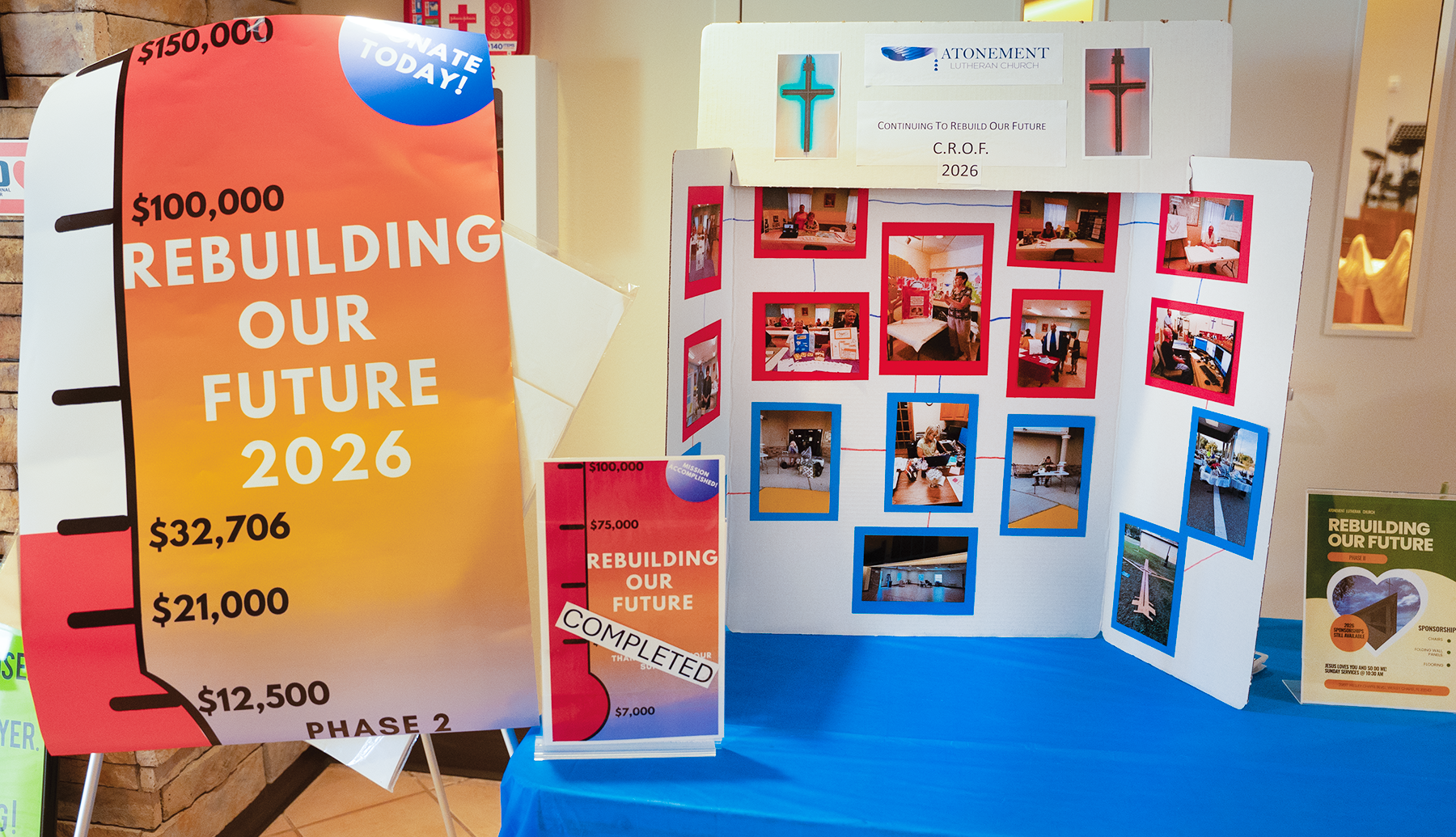
Lindner says that the cost of the initial phases of construction has been about $1 million. The Church did have insurance, but it unfortunately didn’t cover wind damage. Atonement Lutheran did receive $100,000 from the Florida-Bahamas Synod, the church’s governing body. Other local churches also have pitched in to help, donating the proceeds from various fund raisers to Atonement. There was even a $10,000 donation from a church in Arizona. The Church also has held raffles and other events over the past year and will continue to do so this year. 

Atonement Lutheran also applied to the Federal Emergency Management Agency (FEMA) for assistance. In discussing the Church’s application to FEMA, Pastor Lindner says: β€œWe went through this [assistance request]at the worst possible time.” 

Around the same time the church submitting its application to FEMA, the new administration in Washington, DC, began reviewing all government agencies and programs, looking for inefficiency and waste and FEMA was among the main targets of those efforts. Lindner says, β€œThe first person they (FEMA) sent was a contractor working under FEMA; he was the best. He spent a lot of time with us working through the initial process.” 

But then, with the reorganization processΒ Lindner says that contractor was transferred and they were assigned a brand-new person who was not familiar with the case, particularly the mold mitigation process.Β 

To date, Lindner says, β€œFEMA has provided about $19,000 in cost-sharing which is based on the documentation of volunteer hours and donated services.” 

Lindner adds that the church could be waiting a while for any additional assistance from FEMA. β€œEverything stopped for a while because FEMA was not working on any of the cases from Milton; cases from Hurricane Helene were being reviewed first.” 

Delays in FEMA itself receiving its funding also has stalled the process. β€œA few weeks ago, we heard that they would start reviewing cases from Milton and just last week we got an email requesting documentation for their case.” While Lindner says that this news was a bit frustrating, since the church had previously submitted this documentation, it looks like things might finally be moving forward. He adds that Atonement Lutheran is hoping to receive about $300,000 by the end of the year which will go towards the rebuilding fund. 

With the sanctuary now usable, Lindner says that the final phase of construction will include the following projects. 

Finish Restroom Renovations β€” Pastor Lindner says of the restrooms: β€œThey are usable, but they need to be replumbed. There is a lot that needs to be done there.” 

Redoing The Kitchen Space β€”The Church has a small kitchen which is not really being used, especially as the Church will no longer be running a food pantry, which was, unfortunately, another casualty of the hurricane. The plans are to gut the kitchen and repurpose the space. 

Church Entrances & Freedom Hall β€” Pastor Lindner says he remembers when he first became the Pastor at Atonement Lutheran 20 years ago that, β€œ54 was a two-lane road and the business park next door was not built yet. All these things changed the nature of our grounds.” He adds that, β€œThe front door is not really our front door anymore; people [usually] enter the church from the side instead of walking all the way around from the parking lot.” He also says that the remodeling will include adding double doors to the side of the Church with a canopy. β€œThe entrance would become the new Narthex or Welcome Center.” 

We wish the Church luck with their continued restoration and fingers crossed that this year’s Hurricane season passes us all by. 

Atonement Lutheran Church is located at 29617 Wesley Chapel Blvd. Sunday worship services are held at 10:30 a.m. The office is open Monday-Friday, 10 a.m.-3 p.m. For more information, call (813) 973- 2211 or visit DiscoverALC.com.Β 

Previewing The District 4 Pasco Board Of County Commissioners Election

Incumbent Lisa Yeager Faces Jonathon Deckard, But Only Republicans Will Get To Vote In The PrimaryΒ 

The 2026 Midterm Primary Election is quickly approaching β€” it will be held on Tuesday, August 18 β€” and while most eyes in Florida will be focused on the gubernatorial and U.S. Senate elections, the Neighborhood News will be focused on the local races impacting us right here in Wesley Chapel β€” including the race for the District 4 seat on the Pasco County Board of County Commissioners (BOC). 

Please note that even though part of Wesley Chapel is located in District 1 and the other part in District 2, those seats are not up for grabs on Aug. 18 (although the Dist. 2 election between incumbent Republican Seth Weightman and Democratic challenger Stephanie Vazquez will be held on Nov. 3). However, all Pasco BOC and School Board seats are elected countywide. 

In the Aug. Primary Election, only registered Republican voters in Pasco will be eligible to vote for one of the two declared Republican candidates in Dist. 4 β€” incumbent Commissioner Lisa Yeager and businessman and U.S. Marine Corps veteran Jonathon Deckard, thanks to the last-day-to-qualify entry of write-in candidate Louie Rodriguez, who will not be able to receive votes on Aug. 18, but his addition to the race makes the Republican contest a β€œClosed Primary,” meaning no one other than registered Republicans will be able to vote in Aug. in Dist. 4. 

The winner of Yeager vs. Deckard will face off against Rodriguez β€” whose name will not even appear on the Nov. 3 General Election ballot. 

Rodriguez’s late entry as a write-in for the second time in four years has generated some controversy. Had Rodriguez not filed, all registered Pasco voters would have been eligible to vote in Aug. for Yeager or Deckard in Dist. 4. 

Rodriguez, a registered Republican, doesn’t live in Dist. 4 β€” just as he didn’t live in Dist. 2 in 2022, when he ran for that seat as a write-in. Dist. 2 Commissioner Seth Weightman won that closed Republican primary and Rodriguez dropped out shortly after the primary, which allowed Weightman to be elected without having to run in the General Election, since neither the Democrats nor any other third party ran a candidate. Rodriguez did not respond by our deadline to our request for an interview, so none of his information is included with this story. 

Republican Executive Committee of Pasco chair Troy Stevenson would not speak on the record about the ongoing tactic of his party turning what should be Open Primaries, where all registered voters get to decide who should be elected to any seat, into Closed Primaries with candidates whose names do not even appear on the ballot, who have no chance of winning and will likely again drop out after this Primary. 

Notes – 1) We asked both Republican candidates almost all of the same questions, so their separate answers will both be listed following our questions. 2) The fund-raising numbers listed in this story for both candidates are from the Pasco County Supervisor of Elections website β€” PascoVotes.gov β€” and were accurate as of June 28. 

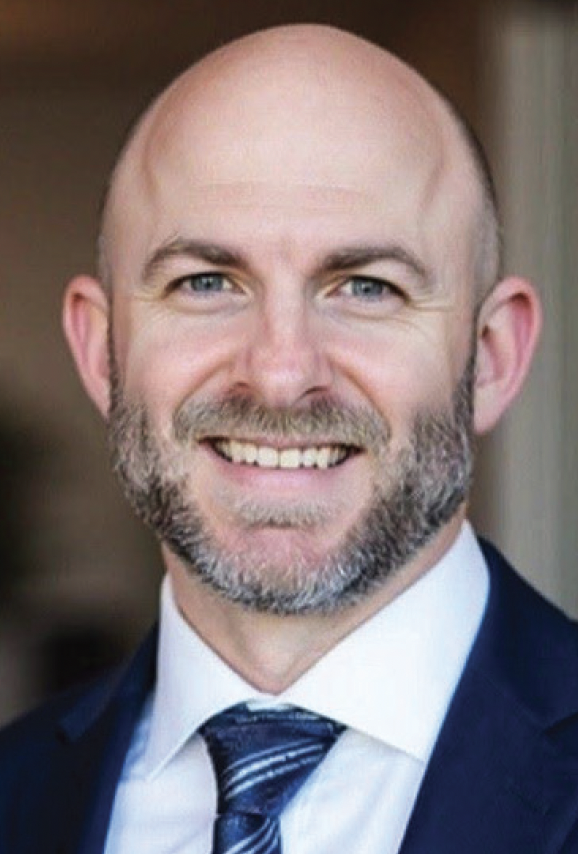
Deckard (right) is a Marine Corps veteran and small business owner. He has worked in the automotive service industry for more than a decade and ran his own mobile auto repair company before selling the business. A first-time candidate seeking to defeat an incumbent, Deckard has raised just under $12,800 for his campaign.Β 

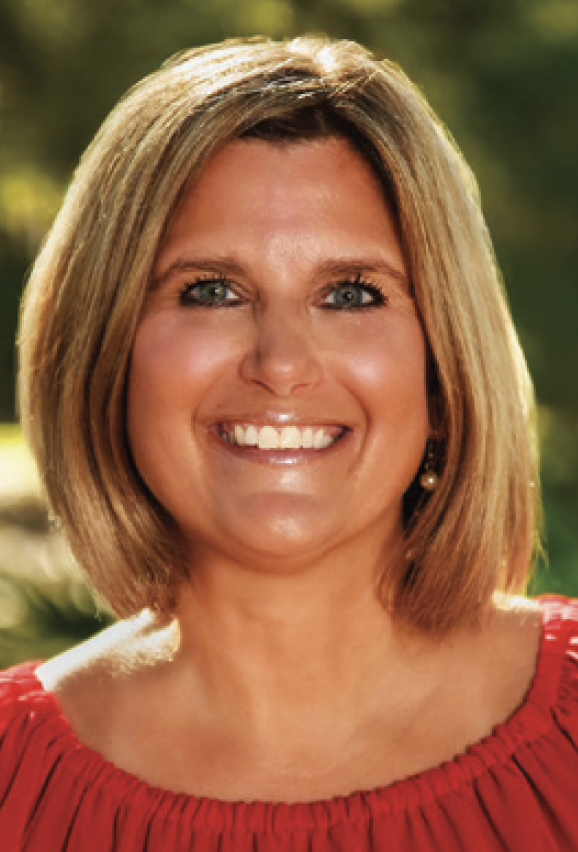
Yeager (left), who was first appointed to the Dist. 4 seat by Governor Ron DeSantis in 2024, following the passing of Commissioner Gary Bradford, is running for her first full term as County Commissioner. With her incumbent advantage. Yeager has raised $56,350 for her campaign, making her the favorite to retain the seat. Prior to her appointment to the Pasco County Board of County Commissioners, she was the director for a decade of the Teen Parent Program at Pasco County Schools. 

Yeager’s husband, Brad Yeager, is the State Rep. for Florida House Dist. 56. 

1) Neighborhood News (NN): Tell our readers about your background and why you’ve decided to run for Dist 4 County Commissioner. 

Jonathon Deckard (JD): I am a U.S. Marine Corps veteran, father of three, husband, business owner and native Floridian. I was born in Dunedin and raised in Palm Harbor, and seven years ago, I made New Port Richey my home. Since then, I’ve seen firsthand the impact of rapid over-development, overcrowded roads and decisions that don’t prioritize the people who live here. My service in the Marine Corps instilled in me the values of integrity, accountability and the courage to stand up and fight for what’s right. 

Lisa Yeager (LY): I ran for County Commission because I believe our residents deserve a leader who not only serves them, but fights for them. As a small business owner and someone who spent years working with at-risk youth, I have witnessed firsthand the challenges families face as they struggle to make ends meet, recover from hardship, and create opportunity for the next generation. County government should help people succeed β€” not stand in their way. 

That means lowering taxes, protecting our quality of life from unchecked growth, strengthening our community against flooding and storms and creating opportunities for our children and families to thrive. These principles have guided every decision I have made during my first two years on the Commission, and they will continue to guide me as I seek the privilege of serving a full term. 

2a) NN (for JD only): Should you be elected, what would be an idea or policy that you would like to get passed your first year in office? 

2a) JD: I would like to prioritize infrastructure. I will work to put a temporary moratorium on new residential developments that are more than a few units to allow us to focus on an infrastructure-first plan. Primarily, road development and water supply issues, since we are so far behind. 

2b) NN (for LY only): As the incumbent in this race, you’ve been at the forefront of a variety of issues impacting Pasco County. What would you say has been your biggest accomplishment so far and what are you hoping to accomplish should you retain the seat? 

2b) LY: I am most proud that during my first two years on the County Commission, we didn’t just talk about problems β€” we tackled them. Whether it was responding to Hurricanes Helene and Milton, helping establish senior food programs, launching Pasco’s first low-barrier homeless shelter, revitalizing Moon Lake, or cutting through red tape for small businesses, I have focused on delivering results that improve people’s everyday lives. 

I believe government works best when it is efficient, accountable and action-oriented. That’s why I fought to roll back the tax rate, partnered with the School District to expand parks and athletic facilities while saving taxpayers money and championed economic development projects that are creating jobs and strengthening our local economy. From neighborhood cleanups that removed hundreds of tons of debris to major investments like Moffitt’s Speros campus and new manufacturing opportunities in Pasco, I have worked every day to be the kind of commissioner who rolls up her sleeves, gets things done and never forgets who she works for. 

3) NN: A common complaint we hear from our readers is that Pasco County is being overdeveloped or developed too quickly, often causing infrastructure and public safety to lag behind. Do you agree with that assessment and what do you think needs to be the future of Pasco County as it pertains to development? 

3) JD: Yes, I 100-percent agree. I think we need to prioritize slowing residential development in the future, after a temporary moratorium is completed, for new residential development. We need to require larger lot sizes per house to maintain green space throughout the county and be more strict on tree removal and replenishment. 

3) LY: Development is happening fast, too fast in many cases. The growth we have experienced puts pressure on our infrastructure, our ability to plan smartly and to keep Pasco County affordable for our residents. Growth should be smart, thoughtful, consider future needs and be truly in the best interests of Pasco residents. 

4) NN: Some readers have raised concerns about write-in candidate Louie Rodriguez’s entry into the race, thus closing off the GOP Primary to independents and Democratic voters who believe they aren’t getting a voice in the race. Other readers agree that the Republican candidate should be selected only by Republican voters. Where do you fall on this issue? 

4) JD: I believe every registered voter deserves a voice in choosing their elected officials. 

When a race has only Republican candidates, Florida’s Closed Primary law normally allows all voters to participate if the winner will effectively take office. However, when a write-in candidate qualifies for the General Election, the Primary is closed to non-Republican voters, even if the write-in campaign is minimal. 

Four years ago, Louie Rodriguez qualified as a write-in candidate, raised no campaign funds, and later withdrew after the Primary. If he is willing to publicly campaign, participate in debates and demonstrate that he is genuinely seeking to serve the people, then I have no issue with him appearing on the General Election ballot. 

But until then, I believe this is simply a tactic that closes the Primary and prevents many Pasco County residents from having a voice. 

A large portion of our county is made up of independent voters who lean conservative and regularly support Republican candidates. Because of this situation, they are denied the opportunity to vote in what is effectively the election that decides their county commissioner. 

Whether you’re Republican, Democrat, independent, or belong to another party, I believe every American deserves the opportunity to vote when an elected office is being decided. That’s not a Republican issue or a Democrat issue; it’s a fairness issue. 

4) LY: I don’t have comments on the other candidates in this race. I stand on my own merit and welcome the opportunity to make my case to Republicans countywide that I am in the best position to protect our conservative values and help make Pasco County the best place in Florida to raise a family, start a business, or retire. 

5) NN: Pasco County, like many other counties across Florida, is considering a data center moratorium. What are your thoughts on data centers and what should be done to address concerns residents have about them? 

5) JD: I oppose bringing large AI data centers to Pasco County and will work to prevent them from being built here. 

Virginia’s rapid expansion of AI data centers has shown the enormous strain these facilities can place on local communities. They require tremendous amounts of electricity, consume significant water resources, and in some proposals, have been paired with large on-site natural gas power plants to meet their energy demands. Researchers have found that these power plants can increase air pollution and negatively impact public health. 

Florida is not the right place for this type of development. Our priority should be protecting our aquifer, preserving our natural environment and ensuring our infrastructure serves our residents first, not accommodating energy-intensive projects that place additional demands on our land, water and electrical systems. 

Other parts of the country are better suited for large-scale AI data centers. Pasco County should focus on attracting businesses that create quality jobs while protecting the health, natural resources, and quality of life of the people who already call this community home. 

5) LY: I support the moratorium on data centers. There are too many unanswered questions and uncertainty [about] data centers for Pasco residents. We need to ensure that the health and safety of our residents are protected.