New Townhome Community In Epperson May Get An Elam Rd. Entrance After All

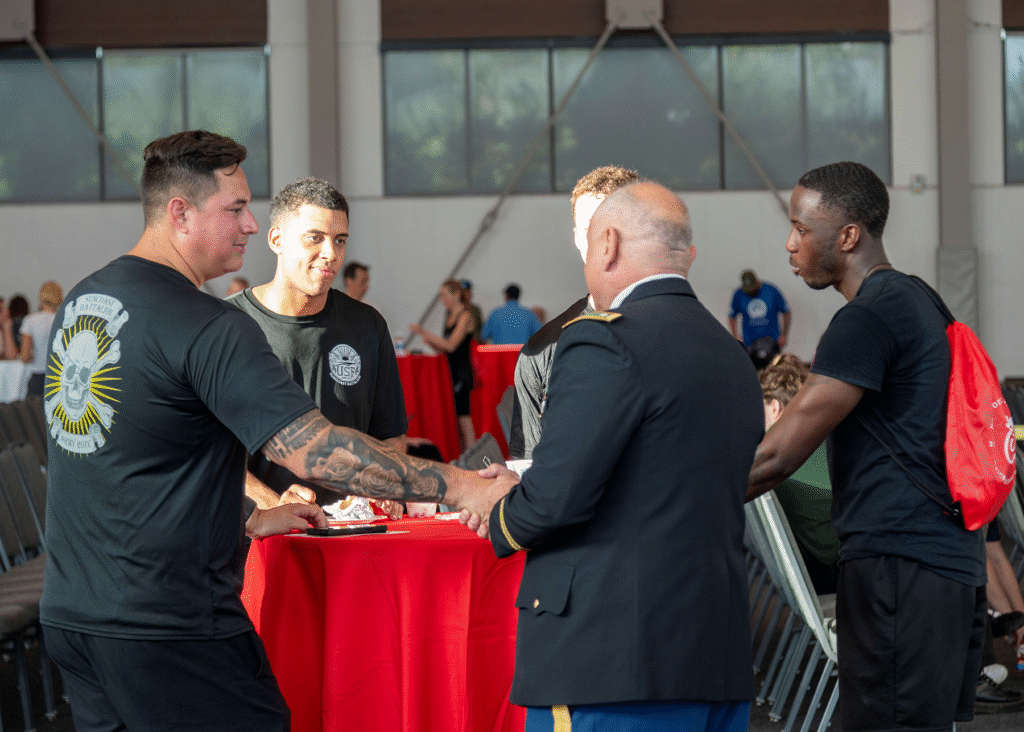
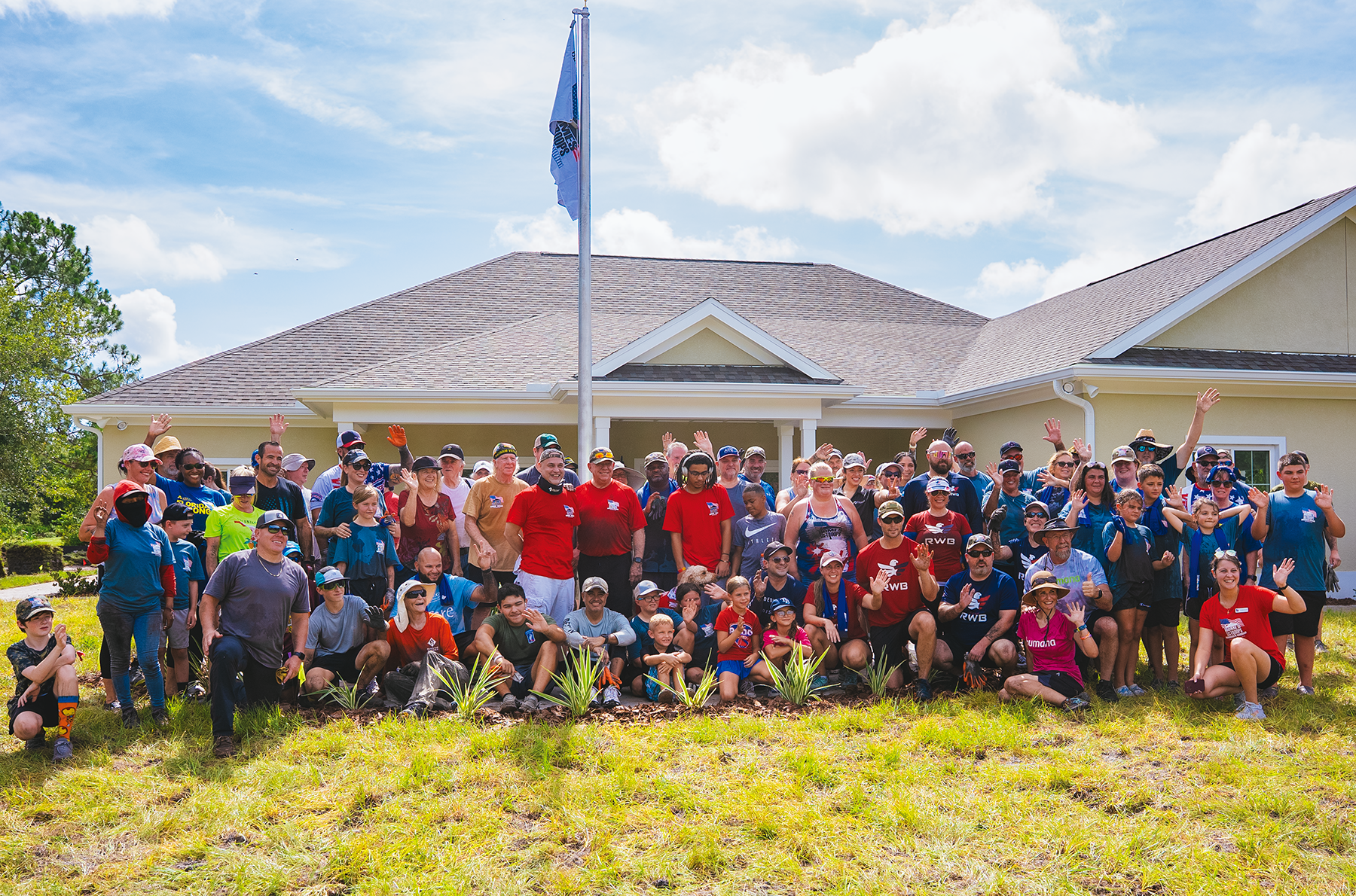
Residents of Abby Brooks Circle (ABC) in the Epperson II CDD met with Pasco Planning Dept. director David Engel (blue suit) and Development Services director David Allen (gray suit) during the May 6 Board of County Commissioners meeting to discuss alternatives to using ABC as the only access point to a new townhome community in the Epperson North CDD.  

Even though the county attorney’s office told Pasco County’s Board of County Commissioners (BCC) on May 6 that there was nothing they could do about Metro Development Group’s plan to put the only entrance to a new townhome community —  located in the Epperson North Community Development District (CDD), through a quiet Epperson II CDD community along Abby Brooks Cir. (ABC) — the residents who live on ABC have been encouraged by the possibility that a possible solution appears to be on the horizon.

As of today, the efforts of ABC residents Candice and Mark Alfieri, Danielle Polovich, Alexandra Lewis, Erin Totaro, the Epperson II CDD Board and many of the 120 total affected families on ABC and Lily Arbor Way — who met twice the week before the May 6 BCC meeting to put together a strategy to protect their quiet neighborhood full of children — seem to have been fruitful, as a Metro spokesperson told the Neighborhood News that the details of an agreement for a possible second entrance to the JK2 townhome community off Elam Rd. is in the works, but is not yet finalized, and released only the following statement:

“Metro has heard the concerns raised by residents regarding access for the Epperson North townhome community, and we want to assure you we are working with local officials to devise the best possible plan for everyone involved. We ask for your patience as we navigate a solution. Metro prioritizes resident safety and neighborhood connectivity. We’re committed to thoughtful planning and collaboration to ensure the long-term success of the Epperson community.”

Abby Brooks Circle (ABC) resident Alexandra Lewis was one of nearly two dozen residents living on ABC in the Epperson II CDD who asked the Pasco Board of County Commissioners for help regarding an approved entrance through their quiet street for a new townhome community in the Epperson North CDD.  

The current plan — which was approved administratively by the county staff using the State of Florida’s new Land Use Equivalency Matrix, without a BCC vote — has Elam Rd. as an emergency-only entrance to the townhome development. 

In other words, the townhome site, which was originally donated to the Pasco County School District for an elementary school, did not need a BCC vote to be rezoned for JK2’s 186 planned townhomes after the School District gave the site back to Metro and said it didn’t plan to build a school on it.

County attorney Jeffrey Steinsnyder told the commissioners on May 6 that there was nothing they could do to change the development plan, but commissioners Jack Mariano, Kathryn Starkey and Lisa Yeager all said that they supported the efforts of the two dozen ABC residents who spoke or planned to speak at that meeting. 

Representatives of the ABC group then met with Pasco Planning Dept. director David Engel and Development Services Dept. director David Allen while the May 6 BCC meeting was still taking place to see if, in reality, anything could be done to keep ABC from being the townhome community’s only (or main) entrance.

A week or so later, even though the future townhome residents currently are still planned to also have access through ABC, the main entrance to the JK2 community could now be shifted to Elam Rd., which is much more capable than ABC of handling the additional (estimated) 1,000 or more trips per day the 186 townhomes are expected to generate. 

Look for another online update as soon as any agreement is finalized, as well as a fully updated story in the June 10 edition of Wesley Chapel Neighborhood News.


Pasco Seeking Park Site In Connected City; Plus, Epperson II Townhome Concerns 

Although the meeting happened a little more than a month ago as you’re receiving this issue, there were two important new pieces of information that came out of the presentations about the 7,800-acre “Connected City” (CC) development made to the Pasco Board of County Commissioners (BCC) by Metro Development Group principal Kartik Goyani and the county staff on Apr. 9. 

The first had to do with the number of single-family entitlements still available in CC. William Vermillion of Pasco’s Planning & Economic Growth department, who oversees MPUDs in Pasco, said that a recent study by the county found that there are still 44% of the single-family detached home entitlements left in CC. 

“Even though you were told a couple of years ago that there were no more single-family (SF) entitlements left,” Vermillion said, “there actually are still about 4,400 remaining [of the 10,583 SF homes originally approved for CC]. We also have about 50% of the multi-family, which includes townhomes and garden-style homes for the higher density areas. We also still have roughly 37% of our commercial left and 75% of the office. And, we have roughly 26% of the land remaining.” 

Dist. 2 Comm. Seth Weightman told me after that meeting that although he was shocked the staff had been giving the commissioners the wrong figure for so long, he didn’t believe the “mistake was intentional on anyone’s part. We’ve had a lot of turnover in our staff.” 

But, had Comm. Weightman known there were still SF entitlements available, would he still have voted to allow other developers within CC to convert their plans from SF to multi-family (MF)? 

“No, I would not have voted to convert them [to MF] had I known the correct figures,” he said, adding that he remembered that one of the conversions he reluctantly voted for, “felt like chewing on a mouthful of sandspurs.” 

As for CC’s current Park Service Areas, Vermillion said on Apr. 9 that if you combine “all of the parks in [CC], there are 115 acres of neighborhood parks already built, not inclusive of the planned VOPH (the adjacent Villages of Pasadena Hills development) Superpark or the Wesley Chapel District Park” (neither of which are in CC). 

But, Weightman noted that the 240-acre (previously reported as 300-acre) VOPH Superpark, “isn’t going to be as ‘super’ as we anticipated. We’re going to fall short on a few areas of uses, and, with the age of the people moving to the area growing younger, I really feel we need to revisit the diverting of [CC] funds to the VOPH Superpark.” 

He added, “With the [WC] District Park already at capacity, we need to find a way to have a similar style park within [CC] and whether we reallocate funds from the shortfall that the Superpark is going to have, or we restructure the way that funding mechanism works, I think it needs to be done because [CC] is here today. The youth and their parents are demanding that we have field space now for a variety of sports. The people are here now, so the 40 acres we have in the site we [Pasco] already owns [in CC]…that footprint needs to be doubled and we need to figure out the funding between VOPH and [CC] because something needs to happen sooner than later in the [CC} corridor.” 

Pasco Parks Dept. director Keith Wiley then responded that Comm. Weightman was correct. 

“And, the question is,” Wiley said, “Where should we locate the other park facilities in [CC]? We’d have to ‘swap’ projects in order to have a district park, since a community park doesn’t really get it done. We’d have to decide which of the 21 capital projects identified need to be removed.” 

Board chair & Dist. 3 Comm. Kathryn Starkey said she would like Wiley to look into using the site Pasco owns near the future CC Town Center Hub, either for a land swap or to build a District Park on property that had originally been slated for a utilities maintenance area. 

Wiley added, however, that the county’s Master Parks Plan was done more than a decade ago and could be updated, “rather quickly” to see if there are locations within CC that could accommodate a District Park. At our press time, we had not heard if that update had been completed. 

Dist. 1 Comm. Ron Oakley, whose district includes CC, cautioned, however, that the entire county needs more ball fields, not just the [CC], “and we can’t build more parks without having the money to maintain them.” 

On May 1, I attended a meeting of the Epperson Ranch II Community Development District (CDD) Board of Supervisors, which is, “the only CDD in Epperson that has no parks and no amenities whatsoever,” said CDD Board chairman Joseph Murphy (as well as several of the 50 or so Epperson II residents in attendance during the three-hour meeting). 

“And the site in Epperson II that previously was designated as a school site has been rezoned for 186 townhomes and the one entrance and exit for that townhome community is now Abby Brooks Circle (see map), which is a quiet, residential neighborhood that can’t handle the 400 additional vehicles per day from those townhomes. The entrance to that townhome community should be off Elam Rd., which is already a main road through Epperson, and which was designated as the entrance to the school site. But, when the property was converted to townhomes, the Board of County Commissioners agreed to change that to only allow emergency vehicles to access the townhome community using Elam Rd.” 

The Epperson II residents who spoke at that CDD meeting all voiced their displeasure, concern and fear for the safety of their children if the townhome community was able to proceed with the plan to use Abby Brooks Cir. as its only ingress and egress point. Although the next BCC meeting was on May 6, two days after we went to press with this issue, the residents shared with me a resolution drafted by the CDD’s new lawyer, Jere Earlywine of Kutak Rock, which was sent to every commissioner on May 2, asking that the BCC reconsider its decision to not allow regular vehicular access to Elam Rd. and to commission a new traffic study — since the previous study was conducted in 2015, when the townhome site was still a school site. 

The CDD resolution says, “…In order to protect the health, safety, and welfare of the [Epperson II] District and its residents, guests, and constituents, the Board hereby declares its objection to the proposed change of roadway configuration for the Former School Parcel, specifically as it relates to authorizing a single point of ingress and egress to and from the Former School Parcel, and without a primary access from the Former School Parcel to and from Elam Road. The Board hereby directs District Staff to transmit this Resolution to Pasco County, Florida, and respectfully requests that Pasco County take all appropriate action to rectify the improper change of roadway configuration for the Former School Parcel, to conduct and/ or re-conduct a traffic study in order to determine the impact of the anticipated traffic on the existing roadways and residents of Epperson Ranch II CDD, and to modify and/or revoke any development approvals related thereto.” 

The only Epperson II CDD supervisor to vote against drafting and sending the resolution to the BCC was Mike Lawson, who also is the only CDD supervisor who works for Metro. Lawson is the director of operations for the CC developer. 

The BCC didn’t have anything about Epperson II on its May 6 agenda, so no action could be taken, but the residents of Epperson II, particularly those who live on Abby Brook Cir., were planning to show up at that meeting in force to again express their concern, this time to the county commissioners. 

We’ll keep you posted.

Stephanie Vazquez To Challenge Seth Weightman For Dist. 2 Commission Seat 

District 2 Pasco County Commission candidate Stephanie Vazquez and her family. (All photos for this story were provided by Stephanie Vazquez) 

The next election for the Pasco County Board of County Commissioners (BCC) isn’t until November of 2026, so why is Wesley Chapel resident Stephanie Vazquez already declaring that she is going to run as a Democrat to oppose current Republican District 2 Pasco Commissioner Seth Weightman? Stephanie is the first candidate to throw a hat into the race to unseat Weightman for the Dist. 2 seat. Here’s why: 

If you’re unfamiliar with Pasco County government or new to the area, Pasco is divided up into five districts, with District 2 including a large portion (but not all) of Wesley Chapel, as well as about half of Land O’ Lakes, and small (but important) portions of unincorporated Zephyrhills and Lutz. 

Vazquez, who has been a resident of District 2 since 2013 (there will be more on this later in this story), moved to our area from Pittsburgh, PA. Like many northerners, she primarily wanted to escape the snow. 

With Wesley Chapel being the fastest-growing area of not just Pasco, but also one of the most quickly expanding areas of Florida and the entire nation, Vazquez believes that the time is now for a change in county leadership. 

“I’ve thought about running for several years,” she says, adding that even though she’s new to politics, her background has prepared her for leadership and, “The time is now.” 

Vazquez currently works as a remote marketing manager for Northeastern University in Boston, MA, but she also is enrolled as an online student at the school, as she is working towards her second Master’s degree, this one in Public Administration, and expects to graduate in 2026. She believes that degree is helping to prepare her for the job she’s now seeking. 

She earned her first Master’s degree, for Entrepreneurship in Applied Technologies, in 2016 from the University of South Florida and she previously earned her Bachelor of Science degree in Behavioral Sciences from Bellevue University in Bellevue, NE, in 2010. 

But, Vazquez says, her decision to run is about a lot more than just her educational background. Most of her recent work experience, beginning with her service in the U.S. Air Force as a Senior Airman, working in airfield management, both in the states and overseas in Germany, is about public service. When she left the military, she says she wanted to continue fighting, but on two different kinds of battlefields most people never see. 

Vazquez (second from left) appearing on “10 News” WTSP-TV as a panelist on a discussion about human trafficking. 

The first was her seven-year service as an Advisory Board member for the Post 9/11 Veterans Corp., a 501(c)(3) nonprofit organization that focuses on, “providing a platform, a starting point, and a place of belonging, where veterans are encouraged to integrate into their local communities and inspire through actions.” 

The more recent battle was against Human Trafficking. As a vice president of the U.S. Institute Against Human Trafficking and a Board member of both the Pasco County Commission on Human Trafficking and the NISSI Project (which provides housing for verified adult female victims of human trafficking) for six years, Vazquez says she helped build these national and local programs to tackle exploitation at its roots: opening a safe house, building recovery programs and training thousands to recognize and stop injustice. 

She later honed her public speaking and writing skills while holding a public servant government position as a public information officer for the City of Zephyrhills. 

Vazquez says she hasn’t had it easy, explaining that growing up poor helped build her character, not just once, but twice in her life. Born in Flint, MI, her dad was a young Marine veteran who worked part-time at a local drug store while also going to college part-time to try to earn a basic degree. Meanwhile, her mother was a stay-at-home mom, but both of her parents’ families came from generational poverty, so between her dad’s paycheck and essential government services like food stamps, she said it was barely enough to keep them from going hungry. 

She remembers growing up having to “do without” most of the time, as her family stretched everything they had, often having to eat the same one meal multiple times in row. 

“The most disgusting thing was the powdered milk, mixed with water,” she says, “because real milk was too expensive for us. I can still taste it.” 

Years later, Vazquez found herself in a similar situation, just out of a relationship that wasn’t working. As a single mom of three, she moved to Florida, with kids who were 4, 3, and 3 months old. She was unable to afford child care or find a job that paid enough to put them in daycare, so she found herself below the poverty line, receiving government assistance. 

“I used to take my kids to Walmart so they could play with toys,” she says, “because we couldn’t afford to buy any.” But, these struggles forced her to develop the ability to get by, and evolve, leaning on her experience from the military. She says that when you’re poor and struggling, “you don’t think about politics, you think about how to survive.” That experience makes her want to stand up for working class families. 

“Pasco deserves better than business as usual,” she says. “Our families are paying the price while a handful of insiders cash out. I’m not a politician. I’m a veteran, a mom and a community advocate who believes Pasco should work for the people who live here, not for the powerful few calling all the shots.” 

But, why should people vote for her? 

“The incumbent was hand-picked by insiders, and swept-in through a closed primary,” Vazquez says, adding that the current commissioners, including her opponent, continue to vote to allow more and more growth, “before the county is ready for it. But, I’m not part of the county political machine, I’m part of this community.” 

She says that Weightman was, “a strategically chosen candidate” by the local powers that be. “But, I want clean government, not back-rooms deals, with decisions made in the open, with transparency and accountability.” 

Here are the issues Vazquez says her campaign her campaign will be about: 

• Fixing broken roads, drainage and outdated storm systems. 

• Preparing for future challenges like flooding and climate change. 

• Establishing term limits to break the cycle of insider control. 

• Curbing reckless growth that strains neighborhoods and schools. 

She and her husband Yamani Vazquez Martinez have built their life in Pasco, raising a blended family of six children. All of their kids have either graduated from, or currently attend, Pasco’s public schools and Yamani currently is serving as an assistant principal at Cypress Creek Middle School. 

Vazquez believes strongly in the power of education, and personally feels that new large-scale developments should be required to include school sites, so that the children living in those communities can go to schools in or near their own neighborhoods, as well as to keep class sizes appropriate and have fewer portable classrooms throughout the district. Vazquez says that overcrowding of classrooms can be avoided through, “proper, thoughtful planning. If the population is increasing, we need to prioritize schools, and developers need to pay their fair share.” 

But, speaking of paying their fair share, Vazquez says, “In August 2024, Commissioner Weightman was the only Pasco commissioner to vote against raising school impact fees, which are one of the few ways to hold developers accountable and fund schools as costs rise. He chose developers over Pasco‘s kids.“ 

Vazquez also has posted a video to her social media opposing House Bill 5101 — legislation that would reduce public school funding statewide. The video, which breaks down the bill’s potential impact on local classrooms, has garnered more than 40,000 views and hundreds of comments from educators, parents and concerned voters. 

“I’ve spent years fighting for people who have been overlooked or outright ignored — including our teachers,” Vazquez says. “I didn’t expect the video to take off, but I think it hit a nerve. People are tired of watching public education be gutted while our kids and teachers are left behind.” 

She acknowledges that if she was to be elected, there may not be much she can do to directly help increase teacher salaries, which are controlled by the Pasco School Board, but says that helping to fund schools with BCC-controlled development impact fees would be her top priority, with #2 being funding for new and improved roads, and #3 being flood mitigation and drainage projects. 

These school issues hit close to home for Vazquez, because Yamani has been an educator for 15 years. Education, administration and school athletics are important to him, as he previously was the head coach of Wiregrass Ranch High’s softball team for eight years. 

Stephanie Vazquez says it’s time for a change in Pasco County leadership.

Vazquez wants voters to know that she is NOT anti-development. She just wants the BCC to consider three important questions: 

“Do we need it? Does it put the people of Pasco first? Are we ready for it?” 

She feels that these questions would help the county avoid the “Gold Rush Mentality,” where developers just want to make money and then leave, sticking taxpayers with gridlocked roads, overcrowded schools and neighborhoods that flood with every storm. She says that this type of reckless development, which seems to be running rampant in Pasco, “favors insiders over families. But, enough is enough.” 

As for what she envisions District 2 to look like 10 years from now, Vazquez she says that our area already is becoming the hub for health care in Pasco County and should continue to do so, with more new hospitals and medical offices continuing to be added to the local landscape. She sees this medical hub being surrounded by thriving communities, with schools, walkable green spaces and family-centered resources. She also believes that Pasco, and by proxy District 2, as “Florida’s Sports Coast” is a good idea and that she, “would love to see that continue to grow.” 

“That would include more year-round sports people can play, facilities that offer good-paying jobs and more options for youth sports programs,” as some in our area (like the Wesley Chapel Athletic Association’s youth baseball and softball programs) can’t handle all of the kids who want to play. She believes that the Wesley Chapel District Park is at maximum capacity, saying that although it’s a great facility, parking and traffic “can be challenging.” 

“We need more [sports] options in the District. The Wiregrass Ranch Sports Campus has been fantastic,” but its primary function is to provide a location for sports tourism. “What we need are more green spaces and fields throughout the area.” 

She says that if proposed large-scale developments are unwilling to include parks and school sites in their communities, she would, “Vote No!” She believes that the BCC is responsible for the over-development of Pasco County and Wesley Chapel in particular. “Yes, a lot of people have been moving here, and leadership has been swept up in that,” she says, but the commissioners should have tried harder to control Pasco’s growth. 

For Vazquez, this race isn’t really about politics. “It’s personal,” she says. “I’m not backed by big money. I’m not here to make deals behind closed doors. I’m here to fight for every family who feels like their voices have been drowned out. Pasco belongs to all of us, it’s time to take it back.” 

She adds, however, that she knows it won’t be an easy fight to win. 

“Since there is currently a Republican majority, not only in Pasco County, but in Florida and the Federal Government,” she says, “I know it can feel like we’re just little blue dots in a sea of red, but the truth is, there are more of us than we realize. And I’m not just talking about Democrats. Voters with no party affiliation, independents and even longtime Republicans are starting to move away from the noise and division and toward something better: people over party, progress over politics and community over chaos. We all want the same basics — strong schools, safe neighborhoods and honest leadership. And those aren’t red or blue issues. They’re people issues. Win or lose, I’m proud to be fighting for that.” 

When asked about working across the aisle, with an otherwise red majority, Vazquez says that her background proves she’s capable of doing just that. “I worked with (District 1 Commissioner) Ron Oakley successfully for many years when I was with the Pasco County Commission on Human Trafficking. It’s about the work we’re doing and who we’re doing it for.” 

She adds, “I listen to everyone, regardless of who they voted for, and what political leanings they have.” In other words, she says, “Many issues are by-and-large nonpartisan,” she says. “So, if you want different, vote for me!” 

But, considering that the seat Vazquez is eyeing has not seen Democratic representation yet in this millennium, the stage is set for what could be one of Pasco County’s most closely watched commission races — especially in light of the fact, Vazquez says, that Weightman won his first election, even though he may have been living outside the district in which he was elected, which would be a violation of a Florida Constitution mandate. 

“Commissioner Weightman bought a property with a mobile home in District 2 during his campaign, but a lot of people in Pasco say he doesn’t actually live there, and that he still lives at his longtime home in Dade City, which is outside the district. It’s raised real concerns about whether he’s truly representing the community he was elected to serve and that he may be violating residency requirements for holding the seat.” 

If you’d like to meet Vazquez, she will officially launch her campaign at a public kickoff event on Tuesday, May 20, 6 p.m., at Meals on Wheels, 38112 15th Ave., Zephyrhills. The program will begin at 6:30 p.m. and attendees are encouraged (but not required) to bring nonperishable food donations to support Meals on Wheels. 

At the event, Vazquez said she will have what she describes as a “Vision Board” — not something with her vision, but a blank board where attendees can write how they envision a better Pasco County. “I like public feedback,” she says. 

If you’re not able to attend that event but would like to hear Vazquez’s viewpoints and opinions on certain topics, search “Stephanie Vazquez Pasco” on Instagram, where she posts often. Or, scan the QR code (left) to access her campaign kickoff event page. 

News About Restaurant Openings & Closings Continue To Increase Our Readership 

Anyone who actually knows me will tell you that even though I don’t love the term, I am a genuine “foodie.” 

Whenever I’m out and about, whether in New Tampa, Wesley Chapel or elsewhere, I’m always on the lookout for signs that new restaurants — whether chains or mom-&-pops — are opening, as well as, of course, those that are closing or have already gone out of business. 

And, I’m obviously not alone in my quest to keep up with openings and closings of places to eat. Jannah and I get recognized a lot when we go anyplace local to eat and people often ask me things like, “What new restaurants are opening?,” “Did you hear about this new place?” and “Whatever happened to such and such place?” 

In this issue ‘s dining section alone, there are stories about the new management and direction of Café Zorba at the KRATEs, the opening of the new Rudraksh Indian Cuisine in Downtown Avalon Park, the new chef at The Grill at Morris Bridge, the coming-soon Remington’s Steak & Seafood just south of Tampa Palms, the reopening of the super-popular Bagels Plus just west of Bruce B. Downs (BBD) Blvd. on E. Fletcher Ave., the addition of Breakfast Kitchen & More to the Kabob Café in Highwoods Preserve and the soon-to-open latest entry into our local fried chicken wars — Kay’s Kitchen Authentic Chicago-Style Fried Chicken (which, I’ll admit, I didn’t know was a thing). 

And yet, there is so much more dining news to tell you about, I couldn’t fit it all at the ever-popular back section of this issue. Hold on tight! 

The container park continues to be tough to keep up with as, in addition to the new management (and Bosnian cuisine?) at Café Zorba, the nearly adjacent Tutti Frutti Café, owned by the same owner (Eddie Nasr), has closed, as has the Indian Street Kitchen, which is owned by the same owners as Persis Indian Grill. This comes on the heels of the two changes we told you about last issue — PeppaJak replacing the Bacon Boss HQ and Grilltopia opening in the former Yummy Tablas spot. 

As far back as October of 2024, 365 CafĂŠ Italiano owner (at both the KRATEs and the Shops at Wiregrass) Tarek Yordi had announced that 365 Woodfired Pizza was going to “open soon” in the plaza anchored by Abdoney Orthodontics behind the Jammin’ Car Wash on Windcrest Dr., off BBD Blvd. There’s no word yet on when 365 Pizza will open, but someone at the location said “maybe next month” a few weeks ago. 

Even further back, an adjacent spot in that same building also was supposed to be home to a new location of Provisions Coffee &Wine Bar, but not only hasn’t Provisions opened, the space still has a dirt floor and the door is always propped open, with no progress. We were told that Provisions is no longer going in the space. 

Speaking of pizza, just as the location of MOD Pizza closed in front of the Tampa Premium Outlets, the second Wesley Chapel location (the other is in front of the Super Target on BBD at County Line Rd.) of Little Caesar’s Pizza was just about ready to open (at 5450 Post Oak Blvd., next to Jimmy John’s), and could be open by the time (or soon after) this issue reaches your mailbox. 

Just around the interior road from the former MOD Pizza location is the long-awaited first-ever Brazilian steakhouse in our area — Rodizio Grill, which franchise owner Charlie Haney has announced is expected to open on Wednesday, May 28. Until then, visit Rodizio Grill-Wesley Chapel on Facebook by May 20 to win free Rodizio for you and a guest once a month for a year (photo). 

I was alerted by readers Marisa and Theo Panopoulos to the sign on BBD (in the same plaza as Nutrition Smart) that Einstein Bros. Bagels is getting ready to open. So, I had a nice chat with Kurt, a Wesley Chapel resident who is the general manager of the closest currently open Einstein Bros. location, on E. Fowler Ave., near USF. 

Kurt told me that although the Einstein Bros. corporate entity (both of these locations are corporate-owned, not franchises) was hoping to have the Wesley Chapel location open by the end of May, “It looks like sometime in late July or early August is more likely.” Kurt also said he believes he will end up moving to become the GM at the new store. 

We have not yet heard of the opening date for the Los Chapos Tacos Wesley Chapel on S.R. 54 in Lutz (in the same plaza as Fazoli’s) but the last announcement we saw had it opening sometime last month, so it should be soon. 

Check our Facebook page every day for updates on these stories and more! Bon appetit! 

Meadow Pointe II & III Residents Sound Off On Proposed Wrencrest Dr. Gate 

The residents of Meadow Pointe II (MPII) and Meadow Pointe III (MPIII) have been down this road before. A gate went up on Wrencrest Dr., the main thoroughfare through the Wrencrest communities which exist in both MPII and MPIII back in 2020 and Pasco County ended up telling MPII that the gate had to come down because it wasn’t properly permitted. 

The residents of MPIII thought that the discussion of a gate at the entrance to MPII on Wrencrest Dr. from the MPIII side was over, but it clearly was not. 

On Apr. 23, the MPII Community Development District (CDD) hosted a “Neighborhood Meeting” at the MPI clubhouse on County Line Rd. — “a neutral location with a much larger meeting room than the rooms at either MPII or MPIII,” according to MPII CDD district manager Jayna Cooper of Inframark Community Management (at microphone in photo above) — where the idea of erecting a new gate, similar to the one where Kinnan St. in New Tampa meets Mansfield Blvd., also in MPII, was again the main topic of discussion. 

“This is not a CDD meeting,” Cooper told those in attendance as she read the following statement, “Meadow Pointe II’s goal in going through this process is fully focused on safety enhancement and the security of all residents, including in both MPII and MPIII. The goal in submitting an application to the county is to receive approval to construct an emergency gate on Wrencrest Dr. between Blanchard Ct. and Rensselaer Dr. (see photo below) to cut down on the excessive traffic and the speedway this road has become. The road was never intended as a regional framework roadway for regional transportation uses. The policy goal is instead to return its use to as a neighborhood internal roadway we are all paying for as residents while still allowing for emergency access for emergency services.” 

Cooper then introduced Jerry Whited of BDI Engineering, who said, “We did do a traffic study that confirms our findings and proposal that a large volume of the traffic that is coming to the west side of Wrencrest is traffic coming from the MPIII side but also from traffic that is accessing MPIII from outside of the community. It’s being used as a major cut-through for residents who are coming from MPIII who should be accessing Mansfield Blvd. via Beardsley Dr., which is a much more pertinent roadway to be using for this type of vehicular traffic. It is a larger roadway, less narrow and has less pedestrian traffic and no driveways, while there are hundreds of driveways on Wrencrest Dr.” 

Roughly two dozen speakers, mostly from MPII but some from MPIII, were given three minutes each to speak. 

And, while there were a couple of MPII speakers who acknowledged that speeding is happening in both neighborhoods and agreed that installing strategically-spaced speed tables along the full length of Wrencrest Dr. might be just as, if not more effective, most of the MPII speakers mentioned the two MPII Wrencrest residents who were seriously injured and had to be airlifted because of speeders and said that installing the gate was the only real solution to the problem. 

MPII Wrencrest resident Kathy Jimenez read a moving statement written by her neighbor Ray Quinones, who was one of those airlifted after being hit by a car that had passed fellow neighbor Marla Mitchell “doing at least 45 mph” and both expressed sadness over how Quinones had suffered since the accident, writing, “The worst part is the memory loss. Chunks of my life are gone.” 

But, almost all of the MPIII residents who spoke at the meeting said that adding speed tables, narrowing the road and even adding trees along the portions of Wrencrest Dr. with no homes would be a much more effective way to slow down the traffic in both communities. 

In fact, MPIII Wrencrest resident Michael Jenkins said, “It makes no sense to think that the best way to solve the problem is to cut off the community from the main thoroughfare. We can do better than this. The members of the boards of both MPII and MPIII have allowed this to become a spiteful, back-and-forth match between the two CDDs.” 

Updates from the MPII legal counsel were expected to be provided at the MPII CDD Board meeting scheduled for May 7, or two days after this issue went to press, but our phone call to Cooper to ask if the MPII CDD Board would actually vote on the issue at that meeting was not returned before we went to press. 

Even if the MPII CDD Board votes tonight to move forward with approving the gate between the Wrencrest neighborhoods in Meadow Pointe (MP) II & MP III, the final decision would still be in the hands of the Pasco County Board of County Commissioners (BCC), which would have to add the vote to a BCC agenda at a future date.

Commissioners Get ‘Connected City’ Updates

Editor’s Note – The original version of this story appeared in our Apr. 15 Wesley Chapel issue, which went to press before Metro Development Group and the Pasco County Planning Department staff held a presentation for the Pasco Board of County Commissioners (BCC) at the BCC’s regular meeting on Apr. 9.

The purpose of that presentation was to update the commissioners on the progress of both the 7,800-acre Connected City (CC) development — which Metro calls “The First Smart Gigabit Community in the U.S.” — and the adjacent Villages of Pasadena Hills (VOPH) planning area.

And, despite what some critics are claiming, Metro principal Kartik Goyani says that CC, which was approved as a Pilot Program for the entire state and by Pasco in 2015 and began development with Metro’s Epperson community in 2017 — is only in year eight of a 50-year plan and, in his estimation, the CC development is proceeding according to plan.

Goyani provided an overview of the overall CC project — how it came to be, Metro’s part in it and the progress of the project itself — for the commissioners.

“I’m here to represent everyone who’s part of the Connected City planning area,” Goyani said as he began his presentation. “Your staff  said to me, ‘Why did we even create the [CC]? Well, that was 10 years back, so maybe it’s time to go back and see what was the goal and was it a good idea all along? I don’t have all the answers, so I’m going to do my best to walk you through the journey we went on…and the thinking behind it.” He also said that the need for the presentation to the BCC started, “with the chatter online” (more on this below).

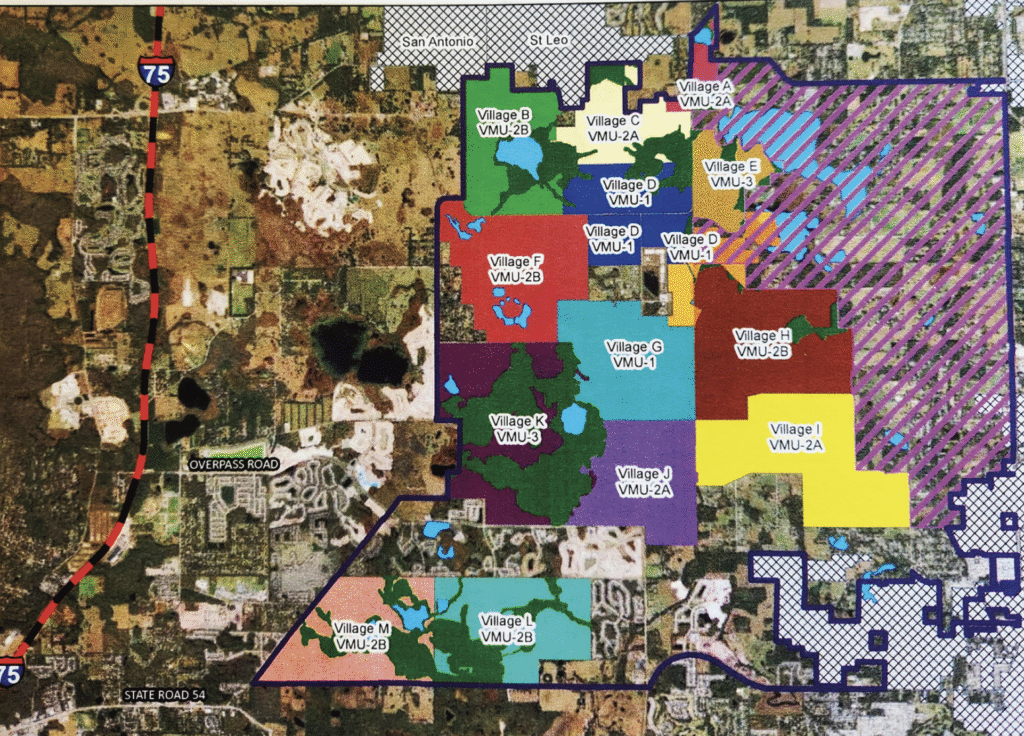
Goyani first showed the boundaries of the Connected City planning area (see map).  The orange lines on the map, which Metro provided to me for my original version of this story, indicate the boundaries of what is called CC, of which only the western boundary follows a specific roadway — I-75.

The northern boundary extends to a little north of S.R. 52 in San Antonio, with several important commercial developments and yet another (as yet unnanounced) AdventHealth hospital to be located in this northernmost section. (Note-Goyani told me when I interviewed him for the original version of this story that AdventHealth has owned that property since 2019 or 2020.) 

“But, it wasn’t the S.R. 52 we drive on today,” Goyani told the commissioners. “It wasn’t the four-lane divided highway. It was two lanes, undivided and it kind of jogged, [and that part is now] C.R. 52.” 

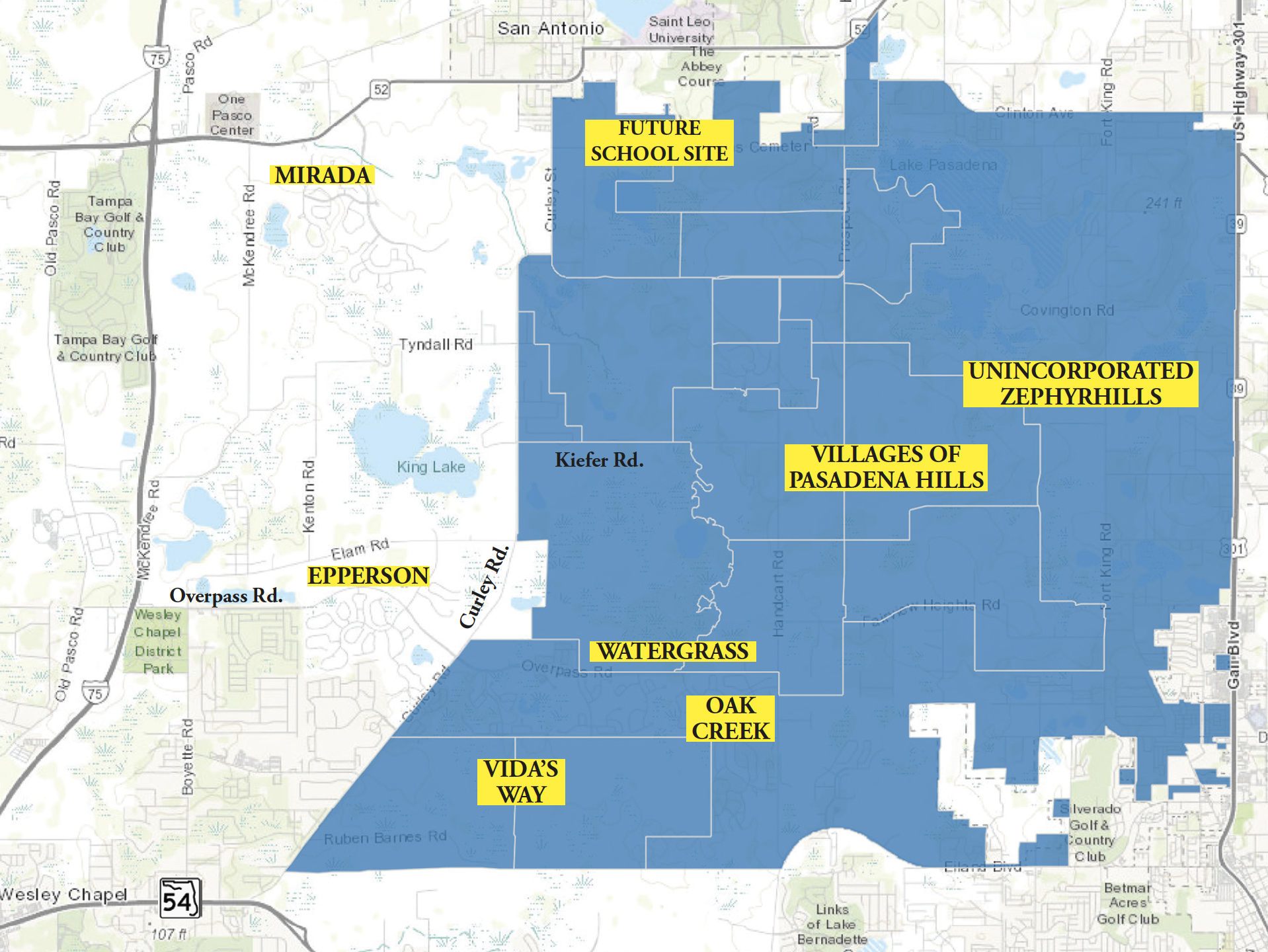
Curley Rd. forms most of the CC’s eastern border, although a portion of it extends east of Curley — between Elam Rd. to the north and just north of the eastern portion of Overpass Rd. to the south. It is worth noting that the Watergrass community, which includes property both north and south of that eastern extension of Overpass Rd., is not part of CC.

And, speaking of Overpass Rd., everything north of it from I-75 to the entrance of Epperson is within the CC boundary, but that boundary also extends south of Overpass to include all of the Epperson development, but not the pre-existing Palm Cove or Bridgewater communities.

Goyani also reminded the commissioners that there was no exit off I-75 at Overpass Rd. when CC first started and Curley Rd. was just two lanes. “And, at that time, the discussion kept coming up, mostly led by the then-county administrator (Michele Baker), based on an Urban Land Institute (ULI) study that the county had commissioned during the last downturn in 2008, which was, ‘We need jobs in Pasco County,’ which at that time, was a bedroom community (for Tampa), with ULI estimates of 70,000 cars heading south every day — and something needed to change.”

He added, however, “There was only one problem at that time. We only owned 900 acres in Epperson (with 3,000 residences), and 2,000 acres in Mirada (with 4,500 residences), which is only about 40% of the land and 20% of the planned residences in [CC}. And, just to set the stage — we had our entitlements and approvals already. We could have just built a regular community, with the cookie-cutter housing which none of you like. Or, we could change.”

He then noted that the “Connected City” name is just a placeholder, but the idea was, “Why don’t we create a new town from the internet up that becomes an economic engine that attracts the jobs and gets the healthcare and the fiber connectivity. And, the $14 billion [transportation] funding shortfall that everyone is talking about…maybe ask those private guys to pay up a little bit more than what they were paying in impact fees. Great idea, but no one is going to come to this area unless we put it on the national and international map.”

And, Goyani said, “Everyone we met with said, ‘Why do something only for two projects — meaning the land we had?’ Let’s do something bigger, which is what led to creating this 7,800-acre ‘Special Planning Area.’ The county had laid the foundation for this type of area, having already approved a long-term plan for [VOPH} to the east of [CC].”

In other words, Goyani said that although Metro’s intent, when the CC pilot program was approved by the state in 2015, was to have the CC connected by both high-speed internet and walkways and multimodal transportation opportunities, the developer’s primary focus was the internet.

“From a fundamental standpoint,” he said, “counties and developers usually focus on the physical infrastructure — roads, water lines, waste water, electrical, because you can’t have a community without those — but no one else was working on the digital infrastructure. That’s how this story ended up evolving.”

As for CC’s physical infrastructure, Goyani said that when CC began development, no other developers were interested in improving S.R. 52 or creating an Overpass Rd. interchange off I-75. “But, by bringing [CC] to Pasco, S.R. 52 is now vastly improved and the Overpass Rd. intersection is open, meaning that the physical infrastructure for [CC] is now in place. That is a big reason why we have been able to attract so many employment centers to this development.”

Regarding parks and trails, Goyani told the BCC, “I can only speak to the parks and trails that we do in our communities. But, we worked with [county] staff to create the 50-year master plan with the goal being that people [other developers in CC] are going to carry this thinking forward and hopefully make it better.”

And, although some current CC residents (see below) say it’s not enough, Goyani showed the BCC photos of golf carts, jogging paths and tot lots for kids. He also noted that the Wesley Chapel District Park already existed at that time just to the south of CC and the county had set aside land for its 300-acre “Superpark” in VOPH, just east of CC.

“The Board made the great decision at that time to take all of the funds for parks in [CC} and put it towards the Superpark to create a truly regional destination.”

He also said that the average home in CC pays $4,687 in additional impact fees for infrastructure, schools and technology, and those fees have raised “a total of more than $30 million in additional impact fees to date.”

Goyani also mentioned, both to me and at the Apr. 9 meeting, that, “Back when we first started planning [CC ] in 2013, we looked at the amount of new commercial construction for all of Pasco County and I believe the total amount from east to west at that time was only 300,000 sq. ft.

“So, as we started laying out the goals for our 50-year plan. Our goal was to see at least 3 million sq. ft. of commercial over the 50-year plan for the Connected City,” Goyani said. “But, as we started talking, we felt that was too small of a goal, so why not plan to do something — in one small area — that’s 50 times what the entire county does in one year? That’s how we ended up with a goal of 12.8 million square feet. “

He also said that last year, Metro commissioned a study by PFM Financial Advisors LLC out of Orlando, which showed that Pasco is now “the fastest growing commercial corridor in Florida. There is now 36+ million sq. ft. of non-residential uses in different stages, which is more than any other county in the state of Florida, and I’m like, ‘Wow, that is exciting. Maybe we’re onto something here. If I were to bet, I’d say we’re going to run out of commercial entitlements throughout the Connected City because I think more is still going to happen, based on the plans.”

Another major commercial project within CC is the Double Branch/Pasco Town Center, a 965-acre mixed-use project just east of I-75 at S.R. 52 that is already under development and will include up to 4.5 million sq. ft. of industrial space at its build-out. Phase 1 of that project, which is expected to begin delivering finished buildings later this year, includes three industrial buildings totalling nearly 500,000 sq. ft. There also are plans for 1 million sq. ft. of office space, a 1.6.-million-sq.-ft. distribution center and a 400,000-sq.-ft. “cross-dock facility,” which is a logistics hub designed for the rapid transfer of goods to minimize storage time. Double Branch is being developed by Columnar Investments, which also is planning to have 500,000 sq. ft. of retail uses, 3,500 residential units and 200 acres of parks and trails.

Some of the other privately owned portions of CC also have commercial entitlements (or are asking for them from the county), such as the Abbey Crossings/Park 52 Logistics piece that will bring 500,000 sq. ft. of light industrial uses to north of S.R. 52 and neighborhood commercial and a hotel to south of 52. 

I’ll admit that the non-residential CC numbers shocked me. They include not only the Johns Hopkins All Children’s Hospital that just broke ground in the Wildcat-Bailes property in CC’s southwest corner (see separate story on pg. 8), but also the not-yet-announced AdventHealth hospital just north of S.R. 52, as well as a large BayCare medical office complex that will not only help staff the expandable BayCare Wesley Chapel Hospital a few miles south of CC, but also focus on wellness to help people in CC live healthier and longer.

Also located on the outskirts of CC is the Kirkland Ranch Academy of Innovation, which started in 2022 with a high school and now also has grades K-8. Two years earlier, Innovation Preparatory Academy (aka InPrep), a charter school, opened for the 2020-21 school year and Prodigy at Epperson Early Learning Center is now open south of the CC border just south of InPrep.

Goyani ended his presentation to the BCC citing the following figures: 

“The 2065 (50-year) goal for residences in CC was 37,345, with more than 19,000 (51%) already built. The non-residential goal was 12.8 million sq. ft., and nearly 12 million of that (93.5%) has already been approved. There also is another 1.7 million sq. ft. of commercial in areas adjacent to CC.” 

The county’s presentation on Apr. 9 started with William Vermillion of the Planning & Economic Growth department. Vermillion, who oversees MPUDs in Pasco, said that a recent study by the county found that there are still 44% of the single-family detached home entitlements left in the Connected City. 

“Even though you were told a couple of years ago that there were no more single-family entitlements left,” Vermillion said, “there actually are still about 4,400 remaining [of the 10,583 SF homes originally approved for CC]. We also have about 50% of the multi-family, which includes townhomes and garden-style homes for the higher density areas. We also still have roughly 37% of our commercial left and 75% of the office. Industrial entitlements are shown as 0% remaining because of the Double Branch development, which originally opted out of [CC] because they wanted more industrial entitlements than what was originally contemplated. And, we have roughly 26% of the land remaining.” 

Dist. 2 Comm. Seth Weightman told me that although he was shocked the staff had been giving the commissioners the wrong figures, he didn’t believe the “mistake was intentional on anyone’s part. We’ve had a lot of turnover in our staff. But no, I would not have voted for the conversions from single-family to multi-family in Connected City had I known the correct figures.” He remembered saying that one of the conversions he voted for, “felt like chewing on a mouthful of sandspurs.”

Vermillion also showed an SPA (Special Planning Area) checklist for CC with green check marks next to the items that are proceeding according to the CC’s comprehensive plan and red dashes for those that aren’t, in each zone. 

“We can see that the North Innovation Zone is accomplishing what was set out in the comprehensive plan,” Vermillion said, “including commercial, retail and single-family detached, hotels, medical and civic uses.”

Moving on to the South Innovation SPA Zone, Vermillion said, “The dash mark next to the high-density multi-family in that zone is only speaking to the fact that the comprehensive plan for [CC] doesn’t directly prescribe what, in fact, high-density multi-family is. There is already multi-family approved in MPUDs within the South Innovation Zone. However, because the [CC] comprehensive plan doesn’t prescribe the density range for that high-density, we felt it was worth noting that to the Board.”

As for the Community Hub SPA zone, Vermillion said, “There are two red dash marks, the first being for cultural. It’s worth noting that, in both the Tall Timbers MPUD that’s going to be coming before you next month and in the Kenton Rd. MPUD, there are conditions of approval which encourage public art that can serve that focus that’s spoken to by the Community Hub. And, that dash by “Civic” uses, while there are no currently approved civic uses within the Community Hub zone, just to the south, within Watergrass, we did allocate a 7-acre library site which can accommodate those residents for that civic use.”

And finally, Vermillion said that in the two highest density and intensity SPA zones — the Business Core and Urban Core zones — the [CC] comp plan is being met and “Mr. Kartik did a great job of addressing all of the non-residential land uses within these two SPA zones.”

Vermillion also noted a county study from 2023 of the volume of traffic on S.R. 52. “That explosion happened once we finally started having development within [CC], post-Covid, from 2020 until now, but despite that spike, no road [in CC] exceeds the current [volume] threshold acceptable by the county. In other words, the infrastructure is keeping up with the number of entitlements that are being approved within [CC].”

As for CC’s current Park Service Areas, Vermillion said if you combine “all of the parks in [CC], there are 115 acres of neighborhood parks already built, not inclusive of the VOPH Superpark or the Wesley Chapel District Park.” 

But, Weightman noted that the 240-acre VOPH Superpark, “isn’t going to be as ‘super’ as we anticipated. We’re going to fall short on a few areas of uses, and, with the age of the people moving to the area growing younger, I really feel we need to revisit the diverting [of CC] funds to the VOPH Superpark. With the District Park already at capacity, we need to find a way to have a similar style park within [CC] and whether we reallocate funds from the shortfall that the Superpark is going to have, or we restructure the way that funding mechanism works, I think it needs to be done because [CC] is here today. The youth and their parents are demanding that we have field space now for a variety of sports. The people are here now, so the 40 acres we have in the site we [Pasco] already own…that footprint needs to be doubled and we need to figure out the funding between VOPH and CC because something needs to happen sooner than later in the [CC} corridor.”

Pasco Parks Dept director Keith Wiley then responded that Comm. Weightman was correct.

“And, the question is,” Wiley said, “Where should we locate the other park facilities in [CC]? We’d have to ‘swap’ projects in order to have a district park, since a community park doesn’t really get it done. We’d have to decide which of the 21 capital projects identified need to be removed.”

Board Chair & Dist. 3 Comm. Kathryn Starkey said she would like Wiley to look into using the site Pasco owns near the future Town Center Hub, either for a land swap or to build a District Park on property that had originally been slated for a utilities maintenance area.

Wiley added, however, that the county’s Master Parks Plan was done more than a decade ago and could be updated, “rather quickly” to see if there are locations within CC that could accommodate a District Park.  

Dist. 1 Comm. Ron Oakley, whose district includes CC, cautioned, however, that the entire county needs more ball fields, not just the [CC], “and we can’t build more parks without having the money to maintain them.”  

Prior to the Apr. 9 meeting, I also spoke with Realtor® and CC resident Michael Pultorak, whom we have featured in these pages before. Pultorak created the Facebook group known as the “Pasco Connected City Residents Group (PCCRG).” The group quickly built up to 1,600 members, as he and the group members have consistently appeared at Pasco BCC and Planning Commission meetings to ask questions and/or complain about the way CC is being developed, even though many of the concerns expressed have been about the development plans of some of the CC land owners other than Metro.

Pultorak has already met with four of the five commissioners to discuss his concerns, some of which below do also revolve around Metro’s portions of the development. And, some of these concerns were addressed on Apr. 9, but others were not:

• The open space & recreational areas detailed in the CC Master Plan have been moved to east of Handcart Rd. (outside of the CC boundaries) 

• The walking/jogging trails promised to Mirada and Epperson residents were not delivered and the trails were not in the engineering plans nor created in the execution of the development

• The innovative lagoons are private and for-profit amenities

• There are no promised cultural facilities or libraries of any kind yet planned in CC

• Stormwater concerns at the head of the Cypress Creek watershed with upcoming CC development applications

• King Lake (a 263-acre lake and the largest body of water in CC) flooding issues for current CC residents. (Note – Pultorak says that King Lake has been beyond flood stage since Metro began digging the nearby Epperson lagoon)

• Planned roadways within CC that topographical maps show will be under water

• No schools actually located within the CC boundaries (Goyani said that InPrep and Prodigy actually are within the CC boundaries)

• The large park planned to be within CC has been moved to the adjacent VOPH

• Multi-family apartments and townhomes being approved by the Pasco BCC that are in portions of CC that, according to the Master Plan approved by the state, should not be allowed

• The approved plan for the five Special Planning Area (SPA) Zones within CC has not been adhered to by Pasco, especially with regards to approvals for multi-family apartments

“We are not against responsible growth and development,” Pultorak said. “However, developers need to be held accountable to the residents of Pasco County to fulfill the promises they make before they take profits and move on or unexpectedly cause flooding of existing residents and communities. That’s why we formed this group.”

Many of the concerns outlined above were presented in our previous story about CC, when the Planning Commission first voted to send the Tall Timbers MPUD on to the BCC for final approval. After giving the nod to Tall Timbers 4-3 on Jan. 9, however, the Planning Commission then voted 6-1 at the same meeting to put a one-year moratorium on all future CC development agreements, site approvals, building permits and zoning changes. 

But, since the Planning Commission is only an advisory panel, the final say on both Tall Timbers and any possible CC moratorium still lies with the BCC. Those votes were originally supposed to be held at the BCC meeting on Feb. 11, but the discussions and votes have now been continued twice — first to Mar. 11 and now until the BCC meeting on Tuesday, May 6.

But, while Goyani still can’t speak to what the other CC land owners are doing, his primary response to most of the complaints is that, “We are only still in year eight of a 50-year plan. We knew before we started that it would be hard to make everyone happy with this unique development but we believe — and we are proud — that we are helping to put Pasco County on the map with [CC].”