New Tampa’s All-Abilities Park Renamed For Harrison Boonstoppel!

The Special Needs Young Man Tragically Killed In Ybor City Receives A Well-Deserved  Tribute   

(Above, l.-r.) Former State Sen. Tom Lee, Dist. 7 Tampa City Councilman Luis Viera, Nicholas, Karel, Ava & Brucie Boonstoppel, Pepin Family Foundation exec. dir. Tina Pepin, Tampa State Atty. Suzy Lopez & Tampa Police Chief Lee Bercaw were all on hand for the renaming & ribbon-cutting ceremony at Tampa’s Harrison Boonstoppel All-Abilities Park in Tampa Palms on Mar. 21. 

When District 7 Tampa City Council member Luis Viera first told me that he was lobbying to have his pet project — the City of Tampa’s first All-Abilities Park, at the New Tampa Community Park in Tampa Palms — renamed for Harrison Boonstoppel, his unique name didn’t immediately ring a bell. I basically asked Luis “Why him?”

“Harrison was the 20-year-old special needs young man who was shot and killed in a mass shooting Halloween weekend in Ybor City in 2023,” Luis told me. “Even though his family lives in South Tampa, I can’t think of anyone more deserving of the honor, can you?” 

I had to agree that a young man who 1) had spent 40 days in the NICU when he and his twin sister Ava were born, 2) had to be fed through a tube at age 5 and was so tiny that people thought Ava was years older than him, 3) had cochlear implants in his ears because he suffered severe hearing loss, and 4) had overcome all of these challenges through the early stages of his life to graduate from the special-needs Pepin Academy in Tampa and was finally living a similar life to most people’s young adult children — only to be cut down as an innocent bystander among 18 shooting victims when he and his friends (who will never be the same) had only gotten out of their cars for a few minutes to see people in Halloween costumes — definitely embodied the spirit of everything the All-Abilities Park was built to stand for in our community.

Flash forward to March 21, 2026. I was proud to be on hand for the renaming ceremony and the unveiling of the plaque officially celebrating the new Harrison Boonstoppel All-Abilities Park, where a string of dignitaries, including Viera, Tampa Police Chief Lee Bercaw, State Attorney Suzy Lopez, Tina Pepin, the executive director of the Pepin Family Foundation, Harrison’s former teacher Patrick Morton and Harrison’s mom Brucie and sister Ava all spoke. Also in the audience for the event were former State Senator Tom Lee, Visit Tampa Bay president & CEO Santiago Corrada and his wife Shana, who is good friends with Brucie Boonstoppel, and others.  

Viera, who thanked his fellow City Council members, Mayor Jane Castor and everyone at the Tampa Parks & Recreation Dept. for making this event happen, said that because his brother Juan has been special needs his whole life, he felt Harrison was well deserving of the honor because “special needs isn’t only about children.”

State Atty. Lopez called Harrison’s legacy, “a source of inspiration” for her team’s work on gun violence and victim advocacy. (Note-Harrison’s alleged killer Kayden Abney, who was 14 at the time of the shooting, is awaiting trial on a second-degree murder charge.)

Chief Bercaw, whose department arrested Abney and others after the shooting, said he was proud to stand with the Boonstoppel family and that the park “symbolizes kindness winning” and called Harrison “a testament to greatness.” 

Tina Pepin said that Harrison was loved by his teachers and peers at Pepin and truly thrived in the school’s inclusive environment. 

Before the next speaker, Ava organized a release of butterflies from envelopes that everyone in attendance was given to release (photos below). It was beautiful, but difficult for me to photograph to do it justice.

Then, one of the most moving speeches among many was Patrick Morton, the Pepin 

Academies teacher who met Harrison when he was in the seventh grade at Pepin, and who called Harrison “Booney,” as well as “one of God’s gifts.”

“Over the years, I was able to build a cherished relationship with him,” Morton said, “first as his teacher, then his summer camp counselor, his golf coach, his tutor and his mentor. I fell in love with the way Booney moved through the world and faced life’s challenges. He had a fearless way of exploring life, not loud or flashy, except for his car, which we all know, but with a quiet confidence that came from deep within.”

He recalled “Booney” climbing to the top of the high dive at Copeland Park during summer camp. “He was maybe 5’-2”, 100 pounds. So, me and my brother, you know, we run over like mad men, worried his mom is gonna kill us, because he’s about to jump in the water with his [cochlear] implant in. He kind of looks down at us and laughs and takes it out and gives it to us, and we threw it in a bag. By this time, the whole pool’s turned around and is looking at what’s going on — a teenager’s worst nightmare, but not Booney’s. With no hesitation, he calmly walks out two big steps, a leap, and like a trained Olympian, hugs a perfect double front flip into a dive. He comes out of the water and looks at us, like it was nothing and says ‘What?’ That was Booney.”

But, the speech by Brucie Boonstoppel was so impressive that I honestly didn’t think I could do it justice, so I decided to just run the entire speech in this space. I hope you’ll read it and understand why this family, and this mom, are so special.

“You know, I love to talk about Harrison.

Today, I am here with my family and friends to share the story of Harrison Boonstoppel. Harrison was taken from us too soon by gun violence, but his life of 20 years will forever be known and continue with kindness, happiness and hope.

My son Harrison and his twin sister Ava were born prematurely in June of 2003. They were welcomed to our family by my husband Karel and I, their big brother Nicholas, plus a large extended family and community of friends.

The path ahead wasn’t always an easy one for Harrison. He barely survived his first few months in the NICU, as he had contracted a staph infection through the breathing tube, which he needed to survive. The doctors weren’t sure he would make it.

And the first miracle of the little engine that could started the journey.

After 40 days in the NICU, Harrison was home for a short few days with his twin Ava and our family. He was then sent back to the hospital for a month of testing and the insertion of a feeding tube for all his eating nutrition for the next three years.

Back at home, even as a baby, [he had] speech therapy and occupational therapy and physical therapy. He did therapies five times a week and it was actually wonderful. 

Harrison’s mom Brucie Boonstoppel. 

He began his journey surrounded by his loving parents and siblings, and we were supported by many, saying it was our strength that made it happen for Harrison.

I prefer to use the phrase said to me, “I poured into Harrison, along with my family, for his whole life.” And now, Harrison is pouring into us. And the truth is, I am thankful to all of the people that poured into him through his 20 years. The doctors and nurses in the NICU would welcome a call in the middle of the night from us to see how Harrison was doing. His therapists, that were a huge part of his life — [and were] loving him, optimistic with his progress when the future was still in question.

His teachers, his friends, his siblings, and now today, the wonderful organizations and foundations that are part of a world that cares and [are] actively trying to bring hope to all.

To learn how to walk, he was fitted with leg braces. And, at age three, Harrison began a month long of feeding therapies at All Children’s (Hospital) because everybody said, ‘Just give him ice cream.’ But that’s not how it works. He had to re-learn eating.

And then, following that, the testing for the ELP program at Roosevelt Elementary, and then testing for public school, where we discovered he had severe, profound hearing loss in both ears.

At age five Harrison was surgically fitted with a cochlear implant that allowed him to hear and grasp language.

Perhaps because of his experiences with his challenges, he could be somewhat quiet, even shy in new situations. But, once he felt more at ease, the floodgates would open, and his exuberant love for life, for people and for adventure would open as wide as his amazing smile.

Harrison was gifted with the amazing capacity for empathy and compassion. This is a quality that is very appealing to those who may have their own struggles with shyness and uncertainty.

Harrison had a passion for adventure, for motion and for speed. When he was a boy, he discovered the joys of skateboarding, he pushed his abilities to the utmost. And, when something caught his attention and interest, he had a strong focus and started researching and learning everything he could about all of the details involved.

People everywhere had no problem warming up to Harrison as a service assistant at the Oxford Exchange. He was a hard-working, diligent and kind colleague. During the two years he worked there, his manager said he was the ‘quiet boy,’ until two weeks on the job, they spoke, and Harrison had that huge smile, and just like that, they were no longer strangers.

Harrison’s challenges may have meant that things that seem simple for other kids weren’t as easy for him, but that didn’t discourage him from seeing life as an adventure. He lived at full speed. He loved camping, trips, hiking and fishing with his friends. He skateboarded, he biked, and when he was old enough to drive, he picked out a bright blue Subaru that he absolutely loved.

He was a source of laughter and love for all those that knew him, and he was well known for his kindness and beautiful smile.

Harrison’s life ended on October 29, 2023. He and his friends had gone out after a usual evening of driving. They liked to drive their cars. I’ve had the Life 360 app which tracks where your kids are and how fast they are driving, for all of my children. So, I would say that at the end of the evening, his tracking was like a spider web, all over town. I mean, that’s what they did. They drove somewhere, hung out, then went on.

In fact, when we went to Davis Islands to throw flowers for Harrison, one of his friends goes, “I’m excited to see this.” And I go, “Well, you guys were here all the time.” And he goes, “Yes, but, we didn’t get out of the car.”

So, Harrison, with his two friends, Jordan and Nate, went to Ybor City to watch people dressed up for Halloween. He was only there 10 minutes, going up 7th Ave. and then back again to the garage where they parked.

Eighteen people had their lives changed forever that day, and Harrison was shot in the leg and was killed by a second bullet that went through his spleen, his lungs and finally, through the back of his heart.

Harrison’s former teacher and mentor at Pepin Academies, Patrick Morton. 

My son, an innocent bystander, had only been standing there for a few minutes, when he was killed by a 14-year-old boy.

His loss has broken the hearts of our family and everyone who knew him. That moment took away my bright, beautiful son, but it’s led to recognition of his kindness and his legacy — “Let kindness win.” Harrison’s life ended only a year after he graduated from Pepin Academies, so there’s no misinterpretation of how hard life can be for all of you — how you have [to] and will go through many things.

But, as you can see from Harrison’s example about the beauty of pushing through with joy, I want each of you to know that you have a purpose and the ability to make things better through kindness. A small ripple will be felt.

I know many of you are kind, loving, people, sometimes maybe feeling invisible to those around you. Your words, emotions and feelings are all part of making a difference in your daily life. You can share a smile or be a listening ear to a friend, to your classmates, your family and even strangers.

The human need for connection and empathy is real, and is something that has disappeared from our world. Just by relating my story to many people, I’ve made many friends. Showing empathy to others, connecting and valuing their conversation, because the connecting strength is here to lift us all up. Everything done with kindness can make a difference in the world, and the reflection of your acts will fuel your soul.

The story of the bracelet: “Go where you feel most alive?” Harrison was on the Appalachian Trail with about eight of his good friends, and it was just like the perfect video. I think it was sunset. And he was walking away on the edge. You could see the clouds. 

One of his friends, I forget which one, made the bands for us at the funeral. And it has become our way of including people in  our lives and making people feel like they’re always part of the Foundation that we have.

So, the post was, “Go where you feel most alive.” And it is about being mindful of your day, because we all know how much this world puts at us every day, and it’s taking away our joy. So, I want everybody to get a bracelet today and what you do with these is, you put a piece on, which Harrison always seem to be showing in his pictures with the bracelet. You take the picture, and then you hash tag it to “LLHBoon.” We’ve been doing this for two years and it’s just a reminder every day. You guys are kind — you’re here and I love it. But we need to…we have to do more.

I believe love never dies, and the energy of our loved ones is all around us. They want to be energy around us, and have many hellos and signs around us. Each day, we’ve all seen signs, which are so comforting, because I just know it’s Harrison. 

It can be as simple as butterflies. It can be on a walk, looking at the sky, the sunset, the clouds. If all of you look up and take it in, you’re appreciating your life. So, don’t let this world steal it from you. I’m not letting [it steal it from me].

So again, with the signs that I’ve seen from Harrison — sunsets, the color blue, like in our park, his Subaru WRX, sounds and butterflies.

One of the first signs…it was at Christmas, just after he was killed, and we were devastated. Ava and I were talking to each other and I was just crying about how badly I need a sign from him. So anyway, we went to these shops across the street from my dance school. They’re like antiques, but there’s just tons of junk in them.

So, we went in there looking for something for her boyfriend, Jordan, who is here, too — a gift for him. There’s stuff all over the walls, we’re going around and then I looked at this key chain it was a ‘J’ and I said to Ava, “Do you think this is something he would like?” And she said ‘I’m not sure. It’s kind of big, but yeah.’ The tag said, ‘Sterling Silver,’ and on the other side it said ‘HB.’ Of course, we gasped and cried. I mean, the very first thing. That’s how I know he’s there.

One night, all of us — Nick and my husband and Ava — we were in the kitchen, of course, discussing things about Harrison. And I opened the back door at night to let the dog out. And then this butterfly came into our house, and it just flew around in the kitchen and circled a few times, and we all were like “Harrison!”

Another beautiful sign I also had in my many posts, sharing the heart and love for my son and our family — I found out one day that I could post a song. So I look through the list and I pick the song, “Let It Be,” by the Beatles. It just felt right for me. So, that night, Ava and I went to a concert for Kacey Musgraves at Amalie Arena. It was a beautiful concert. She sings from her soul and with meaning. It was beautiful. At the end of the evening, when it was over, they brought the lights up and they played “Let It Be.”

Again, you just have to open your eyes. It’s not the same as having our loved ones here, but it is nice to know they are still part of our lives — they still want everything to go well for us. They do.

I do want to mention, too, how important Pepin Academies was for Harrison. He started from fifth grade to graduating. It made all the difference for him. He had some processing difficulties, and it’s just not a lot of kids that have that. But also with not hearing, he was literally hearing for the first time at age five.

Anyway, in fifth grade, he was awarded the ‘Principal’s Award’ at Pepin Academy. It was amazing. And it’s funny too, cause when the principal, at that time (he has passed since then), when he announced Harrison and all the fifth graders were sitting there. And then, of course, as you’ve heard, this little, teeny, scrawny boy comes up with a big smile on his face, shakes hands, and then looks at me and smiles. It was something just so special.

I have another story from Pepin Academies. They sent out a note to everybody at Pepin, and it said — and this was back is in 2017:

‘Dear Parents —

Oscar Wilde once said that imitation is the sincerest form of flattery.

While we can’t take credit for the original idea of this letter, we are taking the idea and running with it. We, the seventh-eighth grade team here, at Pepin, as your kids approach exams, that your children are so much more than just a test result. We have seen them make friends, struggle, flourish and rise to the challenges of being middle schoolers. We admire their tenacity, their grit and their determination.

In particular, Harrison Boonstoppel is one of the kindest people we know. He has a smile that brightens the room, and he shows excellent effort every single day. We are proud of him. —               — The seventh grade team’

“I’m just going to finish with, all these people here and all the good people. There are so many of them. We have to give them voice, too…We have to be appreciative to them. We will all take joy in being part of making this world a better place.

And I owe it all to Harrison, and of course, my other kids are my life. But, we can make a difference. You can still make a difference.

And for Tampa, those ripples will go out, and kids will hear about it and understand that they can have a purpose to their life. They don’t have to accept what we are giving them. They can have purpose. And that purpose is in connecting to others and looking at each other face to face.

Because, when they start doing that, that’s when you connect. And I want kids to have hope. Even though this world has let us down, we can still be part of it. And I thank you so much for being here. I want to cry every time I look at your faces. You are part of it. And together, we’re going to help people. Thank you.”

Before the plaque was unveiled (see top of page) and the ribbon was cut, Ava closed with:

“Listening to everyone speak, I’m reminded of just how much space Harrison filled of our lives. As his twin. I was lucky enough to experience every stage of life, right at his side.

Harrison had this incredible way of pulling me out of my shell, challenging me to be bolder, and making sure I never had to face the world alone. Standing here in an [his] All-Abilities park, I can’t help but think how much that reflects on who he was.

This is a place where every barrier is removed, and every person belongs — values Harrison lived by every day. This dedication marks the very beginning of our journey in celebrating Harrison’s life and ensuring his legacy lives on in a place defined by joy and community.

We want to use this moment to share something that we’ve been working on — the Harrison Boonstoppel Foundation.

We lost Harrison to an act of senseless gun violence in 2023, a tragedy that changed our lives forever. We refuse to let that be the end of his story. Our mission is to take the light he brought into this world and use it to foster a safer, kinder future for our youth, through community action, education and genuine connection. We are dedicated to building a world where kindness is the default, not the exception.

Before we officially close today’s ceremony, I want to say a massive thank you to every single one of you who has shown up for us, and for him. Your support is the fuel for our Foundation and the reason we know we can make a difference.

Harrison may not be standing next to me today, but looking at this park and all of you, I know he is still pulling us all together. Thank you for keeping his legacy alive.”

He may not have been a New Tampa kid, but I’m proud to now be part of Harrison’s legacy — and you can be, too!

I hope you will visit the Harrison Boonstoppel All-Abilities Park anytime the New Tampa Community Park is open. 

I also hope you will make a donation to the Foundation named in his honor, (visit HarrisonBoonstoppel.org). You’ll find out how to get a “Go Where You Feel Most Alive” bracelet (photo, above left; sorry that I couldn’t fit the entire bracelet in the picture) and post a picture @HarrisonBoonstoppelFoundation on Instagram, either alone or with your friends, flashing the “V” for “Victory” (or “Peace”) sign wherever “YOU Feel Most Alive” and hash-tag it #LLHBoon!

Two Rivers Planning To Add A Third Brewery To The Wesley Chapel Area?

Growth in and around Wesley Chapel can feel a little scary/unwanted at times, as new roads, new rooftops and new developments seem to continue to pop up in the local landscape almost overnight. 

But, alongside that rapid change comes something exciting — a glimpse of what our community might look like in the future. 

One of the latest ideas quietly floating around in development plans could bring something many local residents already enjoy — a new brewery. If the concept comes to life, it would mark what would effectively become the third brewery serving Wesley Chapel and the nearby surrounding area. 

Local craft beer fans already know the two that helped put our area on the map: Florida Avenue Brewing Co. on S.R. 56 and Double Branch Artisanal Ales at The Grove. 

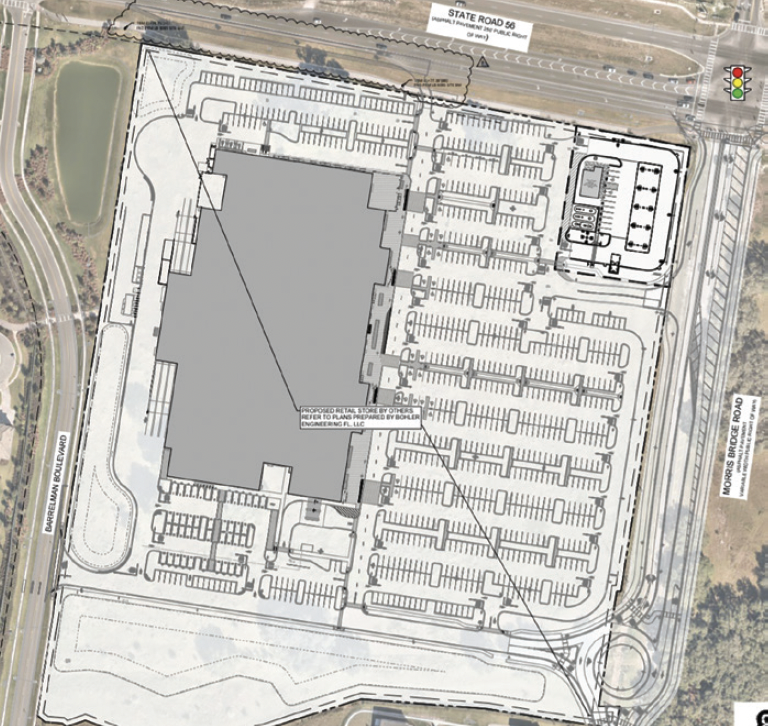
Now, plans emerging from the massive Two Rivers development — located just east of Morris Bridge Rd. in Zephyrhills, but looking very much like an extension of Wesley Chapel — hint that another brewery could eventually join the local lineup. 

The potential site of the new brewery is inside the Two Rivers community, specifically in the Two Rivers West section (see map). 

According to conceptual plans (see rendering above), the brewery would be located roughly a quarter of a mile behind a proposed Publix on S.R. 56, and just off the roundabout that leads residents to an upcoming resort-style private club known as “The Landing.” 

But, the brewery itself might only be part of the story. The concept appears within a planned village-style retail district called Hawthorn Village (labeled “SITE” on the map), which is being developed by Two Rivers developer the Eisenhower Property Group. 

Leasing materials from Colliers describe the village center as a 42,000-square-foot hub for specialty restaurants and boutique retail. 

At the heart of the project would be an outdoor event lawn designed to host community gatherings, holiday celebrations and al fresco dining. The hypothetical brewery concept even suggests it could share space with a coffee shop and restaurant on the same property, creating more of a social hub than just another place to grab a pint. 

In many ways, that’s the bigger story. 

Village-style centers like this are becoming a defining feature of many modern master-planned communities. Instead of long commercial strips, these smaller walkable hubs are designed to bring neighbors together for food, entertainment, and local events. 

Two Rivers itself is being planned with 13 distinct villages and a long list of lifestyle amenities, including the aforementioned The Landing private social club, a Pasco K-8 school, the Peak Surf Park, a proposed golf course on the Hillsborough side of Two Rivers, plus miles of scenic nature trails, kids’ play areas and resort-style pools. 

If Hawthorn Village does eventually land a brewery, it would certainly be a welcome addition for many residents. 

But, more important is that it signals the continued evolution of our area — from a quiet suburban crossroads into a place building its own identity, gathering spaces and community traditions. While many long-time local residents aren’t happy about this transformation, it is happening. 

And, if that new identity happens to include a few good local beers along the way, many neighbors probably won’t complain. 

Homes For Our Troops Celebrates Two More Homes Under Construction In Our Area

(Above, l.-r.) Gen. Tom Landwermeyer & Cpls. Eddie Ward and Roberto Cruz-Arocho. 

Even though their homes are being built in San Antonio (near St. Leo University), the Neighborhood News was proud to again be on hand for the introduction ceremony for the next two recipients of mortgage-free homes provided by Homes For Our Troops (HFOT) — retired Army Cpls. Eddie Ward and Roberto Cruz-Arocho, both of whom were seriously combat-wounded (Ward in Afghanistan and Cruz-Arocho in Iraq). 

Cpl. Ward and his father Elijah Petty. (seated) 

On hand for HFOT — a top-rated military nonprofit organization that has provided more than 420 of these specially-adapted homes for U.S. military vets injured since 9/11 — was the organization’s president & CEO, retired Army Brigadier General Tom Landwermeyer, who again reiterated that HFOT receives no government funding and that nearly 90 cents of every dollar raised by the nonprofit directly benefits the wounded veterans. 

The custom-designed homes — which will each include as many as 40 special adaptations for these two wounded vets — are being built by Elizabeth Evans Custom Homes, which previously also provided two HFOT homes in Wesley Chapel. 

Cpl. Ward and Cpl. Cruz-Arocho both expressed their appreciation for HFOT and for the 100 or so local people in attendance. For more info about HFOT, visit HFOTUSA.org. — GN 

Big Brother Or Better Traffic Safety? The Truth About Roadside Devices

If You Want To Know What All Those Roadside Cameras & More Are & What They Actually Do & Don’t Do, Read On! 

If you drive around Wesley Chapel and New Tampa long enough, you’ll notice all kinds of devices mounted on poles, arms and cabinets along our roadways. 

We’re sure you’ve seen those cameras, sensors, flashing signs, small towers — and may have been wondering what they all actually do. 

Before I began writing for this publication, I spent 22 years in civil and transportation engineering and planning, including 19 years specializing in traffic operations engineering, including for the Florida Dept. of Transportation (FDOT). 

I’ve worked on everything from single-family homes and bridges to diverging diamond interchanges and large-scale community developments. Most importantly, I designed and implemented Intelligent Transportation Systems (ITS) throughout the Tampa Bay area. 

In that time, I’ve heard nearly every guess imaginable about what tall of these roadside devices are capable of. Let’s clear up some of the most common misconceptions and explain what you’re actually seeing out there — and whether actual speed cameras may be on the horizon. 

These are probably the most misidentified roadside devices — and they have nothing to do with traffic control. 

Because they’re allowed in the public right-of-ways, many people assume they’re traffic-related. In reality, these short roadside poles (above) are 5G “small cells” or microcells. They’re compact antennas, usually 10–30 feet tall, mounted on utility poles, streetlights, or even traffic signal structures. 

They provide high-speed cellular and internet service in a limited radius. Since 5G signals have shorter range and are easily blocked by buildings and trees, these units must be installed more densely in urban and suburban areas like ours. Bottom line: They’re for your phone — not for monitoring your driving. 

When people see cameras at intersections, many immediately assume they’re red light cameras. Most of the time, they are not. PTZ CCTV cameras (both photos, left & right) are commonly used for roadway monitoring. You’ll see them mounted on poles, on mast arms near signal heads, or on tall “high mast” structures. 

They allow city, county, and state staff inside traffic management centers to actively monitor traffic conditions — crashes, congestion, disabled vehicles, or signal timing issues. 

Here’s the key point: These cameras typically do not record. They are live-view tools. You can identify them by the large rotating base that allows 360-degree movement and zoom capability. 

Important: These cameras do not record video. They function strictly as detection devices.

If you see a camera at a signal without that large rotating base, it’s likely not for surveillance — it’s probably a traffic detection camera (see below). 

These cameras (right) are becoming increasingly common as older loop systems (below) are phased out. Unlike older directional cameras, these units look down over an entire intersection with a wide field of view. 

Typically, two are installed at opposite corners, mounted high for maximum accuracy. 

They create “virtual detection zones.” When your vehicle enters one of those zones, it tells the traffic control device that a car is waiting and may trigger a signal change. 

What about those rectangular or oval cuts (left) in the pavement near stop bars? Those are “inductive loops” — the oldest and still very reliable method of detecting vehicles at signals. 

They are not weight sensors. They function like large metal detectors. A coiled wire embedded in the pavement creates an electromagnetic field. When a vehicle moves over the loops, it disrupts the field, signaling the control device that a vehicle is present. 

Note-If loops are present, your vehicle MUST be positioned over them to receive a green light. 

If you see similar small loops as those above further back from a high-speed intersection, those may be dilemma zone detectors. These detect vehicles approaching during the critical moment when the light is about to change from green to yellow. 

If a vehicle is detected in that “decision zone,” the system may extend the green phase to prevent abrupt braking or red-light violations. 

If loops are located away from signals or just downstream of an intersection, they are likely permanent traffic count stations (photo right). These record vehicle totals to help engineers determine roadway usage and future expansion needs. 

These pole-mounted MVDS radar units (left) are part of modern Intelligent Transportation System (ITS) deployments. Often called “side-fire radar,” they use low-power microwave signals to measure vehicle speed, lane presence, volume and even detect backups. 

MVDS are non-invasive — meaning no pavement cuts are required — and provide valuable real-time data to improve operations and detect incidents. 

These small black vertical devices mounted near signal heads (right) are extremely important. Opticom systems allow emergency vehicles — fire trucks, ambulances, and law enforcement — to request a green light as they approach an intersection. 

Using infrared, radio, or GPS-based communication, they signal the traffic control device to provide priority. This reduces response times and improves safety for both emergency responders and the public. 

You may have seen poles with large solar panels near their bases (left) set up along busy roads. These are video traffic counters used for planning studies and monitoring. 

They use high-mounted, low-resolution cameras and AI software to count vehicles, classify them (cars, trucks, bikes, pedestrians), and track turning movements. 

Note-These traffic counters do not read license plates, nor do they record faces. 

Their sole purpose is for traffic analysis — often in preparation for development reviews or roadway improvements. If you see a unit with a much smaller solar panel mounted directly on top of a camera, that’s likely something different. 

Those black cameras (right), with smaller top-mounted solar panels, are typically Flock Safety License Plate Readers, used by law enforcement agencies such as the Pasco County and Hillsborough County Sheriff’s Offices, as well as some HOAs and CDDs. 

These systems scan license plates and vehicle characteristics in real time and compare them to databases for stolen vehicles, wanted suspects, or AMBER alerts. 

They are not used for traffic signal timing or speed enforcement. Their primary role is crime prevention and investigation. 

Despite popular belief, not every camera near an intersection is a red light camera. 

In Florida, red light cameras (left photo) must be clearly identified by a roadside sign stating “Photo Enforced” (right photo below) in advance of the intersection. 

Only a limited number of intersections in our area have them, including locations like Bruce B. Downs Blvd. at E. Fletcher Ave. 

It’s also important to understand that traffic signals include what engineers call “All- Red Time” — a brief interval, typically 1 to 6 seconds, where all approaches display red after the yellow phase. This provides time for vehicles to clear the intersection before opposing traffic receives a green. 

Unfortunately, I’ve seen drivers slam on their brakes at yellow lights out of fear of these red light cameras, which can create rear-end crash risks. The safest action is always controlled, predictable driving. 

Those large stainless-steel boxes near intersections (left) house the brains of the traffic control system. They are typically bare, but might be painted or wrapped. Inside are controllers, power supplies, communications equipment and detection processors. The signal controller manages everything — signal heads, pedestrian indications, detection inputs, and coordination with adjacent intersections. 

You’ll often see a power meter beside the cabinet, just like on a home. Smaller attached (or standalone) cabinets typically house battery backup systems (UPS units), which can place signals into flash mode during power outages. 

After major storms or hurricanes, you may also see generators plugged in to keep intersections operational during extended outages. 

Wrong-way driving prevention used to rely solely on static “Wrong Way” and “Do Not Enter” signs. Today, it’s some of the most advanced roadway technology in use. Modern systems use radar, video, or both (photo right) to detect vehicles entering exit ramps in the wrong direction. When activated, the sign perimeter flashes red lights, and alerts are automatically sent to law enforcement — including the Florida Highway Patrol. 

In many cases, nearby CCTV cameras automatically turn toward the ramp so traffic operators can monitor the wrong-way vehicle’s movement. 

These systems can record short video clips upon activation — one of the only permanent roadside technologies that does record, but only when triggered by a wrong-way event. 

These clips are sent to the control centers (along with an automated alert) to see if the vehicle turned around on the ramp to go back in the correct direction. 

These radar-based warning signs detect the speed of approaching vehicles and display it back to the driver. If you exceed the desired speed, the sign may flash your speed. At higher thresholds, it may flash “Slow Down” more aggressively (left). 

These devices can record speed data — but not video — to help engineers evaluate driver behavior and determine whether the sign is improving safety. 

They are commonly used on curves, in school zones, and on corridors where speed-related issues are a concern. 

As of this writing, there are no traditional roadside speed enforcement cameras operating in Wesley Chapel or New Tampa. However, school zone speed enforcement is a developing topic. Under Florida House Bill 657, municipalities and counties are now authorized to implement school zone speed detection systems. 

The Tampa City Council voted 6-1 on Feb. 19 to partner with the same vendor used by the Hillsborough Sheriff’s Office for a school zone speed camera program. If approved, Tampa could begin installing and using cameras that issue citations for speeding in school zones. 

The City of New Port Richey is the only Pasco municipality using school speed zone cameras. 

The Beautiful, New Wesley Chapel Seven Oaks Library Is Finally Open!

Photos by Charmaine George

The Pasco County Libraries’ newest addition — the Wesley Chapel (WC) Library at Seven Oaks — is finally open (after nearly two full years of construction) and pretty much everyone we spoke with since the library opened on Feb. 23 has been thrilled with the cozy new 14,000-sq.-ft. (with a 13,000-sq.-ft. interior; the other 1,000 sq. ft. is a covered outdoor “reading porch”), $11-million library. 

“It’s a little smaller than I expected,” said one young mom, “but this children’s reading area (photo, above and below left picture) is amazing!” 

Although branch manager Julie Shepherd (at right in right photo) couldn’t tell me on opening day exactly how large that children’s area is, but, by my estimate, it is somewhere in the neighborhood of 5,000-sq.- ft. If accurate, that would mean it takes up more than a third of the library’s inside space, with shelves full of cool kids books and interesting spaces for parents to read to their kids. 

But, the library’s overall size is a little small, especially when compared with the Land O’Lakes Library (18,000+ sq. ft.) or the New Tampa Regional Library (25,000-sq. ft.). 

“But, I think it’s a wonderful space,” said Roz Fenton (below right photo), the president of the countywide Friends of the Library, who was on hand for the opening. “Did you see the art on the entrance walls? That was all done by Pasco County Library staff members. Fabulous, right?” 

In addition to books, magazines and the “Library of Things” — a collection of non-traditional, check-outable items, including adaptive toys, Wi-Fi hotspots, ukuleles, bird-watching kits and board games designed for enrichment and exploration — the library also features public computers, printers, collaborative spaces, a gallery wall in the lobby, an outdoor event lawn and a multi-purpose room for makerspace and other activities. 

Pasco Library Friends president Roz Fenton 

There’s also a sizable meeting room, and a number of study rooms, including a specially-designed teen study room. Drive-up services also are available at this location, which has its entrance on Mystic Oak Blvd., next to Seven Oaks Elementary. 

There’s no doubt that the opening day was a soft opening, attended by only a few dozen people — many of whom (including Jannah and yours truly) were signing up for library cards — and that all of the new library’s programming wasn’t yet in place. 

Here are the activities scheduled for the rest of March & April at the WC Library: 

Thursday, March 19, 4 p.m. — Wesley Chapel Book Club: The Anthropocene Reviewed by John Green 

Every Tuesday, 10:30 a.m. — Preschool Story Time 

Every Friday, 10:30 a.m. — Toddler Story Time 

Monday, March 23, 4 p.m. — Teen Advisory Board & Volunteer Info Session 

Wednesday, March 25, 6 p.m. — Adult Volunteer Info Session 

Wednesday, April 15, 4:30 p.m. — Adult Literacy New Tutor Training 

Thursday, April 16, 4 p.m. — Wesley Chapel Book Club: The Ministry of Time by Kaliane Bradley 

Wednesdays, April 22 & 29, 6 p.m. — English Conversation Corner 

Wednesday, April 29, 5 p.m. — Adult Volunteer Orientation 

“We’re going to be hosting our ‘Mobile Makerspace’ at the Wesley Chapel branch,” Shepherd told me the day the WC Library opened. “The idea is to bring the best of all of our other makerspaces to Wesley Chapel and offer a variety of different services.” 

Among those makerspaces, each of which will be making appearances at the WC Library in the future, are the following: 

“The Loft” studio arts, painting, photo digitalization and arts & crafts, from the Centennial Park Library 

“The Ingenuity Lab” STEAM area, with KEVA planks & LEGO® bricks, from the Hugh Embry Library 

“Studio H” multimedia studio for record demos & podcasts and to practice instruments, from the Hudson Library 

Part of the Pasco Library staff Art Show 

“The Foundry” complete wood shop, plus fabric arts & crafts center, from the Land O’Lakes Library 

“Discovery Gardens” community garden, butterfly garden & gardening demonstrations, from the New River Library 

“Regency Fresh” full test kitchen with cooking demonstrations and the chance to try new recipes, from the Regency Park Library 

“Clayworks” ceramics studio, from the Starkey Ranch Theatre Library Cultural Center 

Shepherd also said that the large lawn outside of the library will be able to host a variety of cultural events, including concerts, movie nights and more. “And, we definitely will have a great relationship with the [Seven Oaks] elementary school next door,” Shepherd said. “The children’s reading area will be open anytime the library is and we will be able to host story times and even kids’ performances in that room.” 

The Wesley Chapel Library at Seven Oaks is located at 27531 Mystic Oak Blvd. It is open Mon. & Wed. 10 a.m.-8 p.m., 10 a.m.- 6 p.m. on Tues. & Thur. & 10 a.m.-5 p.m. on Fri. & Sat. It is closed on Sun. For more info, visit PascoLibraries.org